¶ Piracetam
| Type | Synthetic Nootropic (Racetam) |
| Active Cmpd | Piracetam |
| Source | Synthetic |
| Dose Range | 1,200–4,800 mg/day |
| Half-life | ~5 hours |
| Main Benefit | Cognitive impairment (limited evidence) |
| Absorption | High (~100% oral bioavailability) |
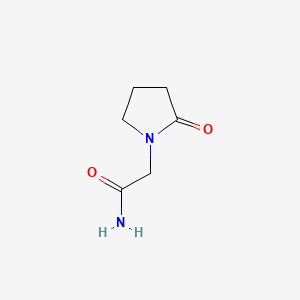
Piracetam (2-oxo-1-pyrrolidineacetamide) is a cyclic derivative of gamma-aminobutyric acid (GABA) and acts as the prototype for the racetam class of nootropic agents. Widely utilized in European and Asian clinical practice for cognitive impairment, cortical myoclonus, and post-stroke rehabilitation, contemporary systematic evaluations show that its therapeutic efficacy in global memory and cognitive enhancement remains highly limited and characterized by clinical inconsistency.
¶ At a glance
¶ Aliases
- Brand names / Common names: Nootropyl, Myocalm, Dinagen, Normabrain
- Chemical name: 2-Oxo-1-pyrrolidineacetamide
- Category: Synthetic pyrrolidone derivative (Racetam nootropic)
¶ Key points
- Insufficient Evidence for Memory Impairment: A rigorous 2024 systematic review and meta-analysis of clinical trials concluded that available evidence is insufficient to prove a definitive positive effect of piracetam on memory function in adults experiencing memory impairment[1].
- Limited Post-Stroke Aphasia Utility: Meta-analytic evidence indicates piracetam does not provide a statistically significant benefit over placebo for overall language recovery or global severity of post-stroke aphasia, though a modest, specific benefit has been reported for written language rehabilitation[2].
- Potential Post-CABG Cognitive Protection: Short-term, perioperative administration of piracetam may help reduce the magnitude of acute cognitive decline and preserve neuropsychological function in patients undergoing coronary artery bypass graft (CABG) surgery[3].
- Pharmacological Repurposing for Pain: Emerging pharmacological and mechanistic analyses suggest piracetam modulatory effects on NMDA receptors can decrease central sensitization, offering novel, non-addictive pathways for neuropathic and chronic pain management[4].
- Risks of Unregulated Self-Enhancement: Epidemiological monitoring of online nootropic communities reveals widespread non-medical use of piracetam as a performance and image-enhancing drug (PIED), frequently involving the self-administration of high, unregulated doses and unsupported compound stacking without clinical supervision[5].
¶ What people use it for
- Main goals: Mitigation of age-related cognitive decline, post-stroke language and motor rehabilitation, intraoperative neuroprotection during cardiac surgery, and self-directed cognitive/alertness enhancement.
- Evidence quality (overall): Low to Moderate, constrained by substantial clinical heterogeneity, mixed endpoints, and a historical lack of rigorous, large-scale randomized controlled trials.
¶ What is Piracetam?
Piracetam is a synthetic, small-molecule pyrrolidone compound first synthesized in 1964 by Dr. Corneliu Giurgea at the Belgian pharmaceutical company UCB. Dr. Giurgea coined the term "nootropic" (derived from the Greek words noos, meaning mind, and tropein, meaning to turn) specifically to describe piracetam's pharmacological profile: the ability to enhance learning and memory while protecting the brain from physiological insults (such as hypoxia) without exerting sedation, motor impairment, or toxicity.
¶ Historical and Regulatory Context
Although structurally derived from the inhibitory neurotransmitter GABA, piracetam does not bind directly to GABA receptors (GABAA or GABAB), nor does it undergo metabolic conversion into GABA or affect GABAergic neurotransmission. Historically prescribed across dozens of countries for age-associated cognitive decline, vascular dementia, dyslexia, and vertigo, its clinical use has decreased in some jurisdictions as newer compounds have emerged.
Currently, piracetam is regulated as a prescription medication in many European, South American, and Asian nations, where it is often prescribed in high doses under the trade name Nootropyl. In the United States, piracetam is not approved by the Food and Drug Administration (FDA) as either a prescription drug or a dietary supplement, positioning it as an unscheduled, unregulated compound primarily acquired through online vendors.
¶ What are Piracetam’s main benefits?
The clinical efficacy of piracetam has been evaluated across several neurological and cognitive domains. While preclinical models initially suggested robust neuroprotective and memory-enhancing capabilities, human trials have yielded mixed, domain-specific results.
¶ 1. Cognitive Function in Memory Impairment
- Outcome: Global cognitive scoring, memory retention, and mental clarity.
- Direction of effect: Unclear / No consistent positive effect.
- Magnitude: Negligible to small.
- Population studied: Adults with memory deficits, age-associated memory impairment, and cognitive decline of varied etiologies.
- Evidence quality: Low.
- Summary: A 2024 systematic review and meta-analysis of clinical trials comprehensively analyzed the cognitive effects of piracetam in adults with memory impairment. The study concluded that the current evidence base is insufficient to definitively support piracetam’s ability to improve memory performance, highlighting significant methodological limitations and small-study biases in the historical literature[1:1].
¶ 2. Post-Stroke Aphasia Rehabilitation
- Outcome: Rehabilitation of verbal communication, comprehension, and language mechanics.
- Direction of effect: Modest benefit restricted to written language; no statistically significant benefit for global language recovery.
- Magnitude: Small.
- Population studied: Patients undergoing speech and language therapy following ischemic or hemorrhagic stroke.
- Evidence quality: Moderate.
- Summary: While historically popular as an adjunct to speech therapy, a systematic review and meta-analysis of randomized controlled trials (RCTs) demonstrated that piracetam failed to show a statistically significant benefit over placebo for overall language recovery or global aphasia severity. However, a sub-analysis revealed a modest, statistically significant improvement specifically in written language rehabilitation outcomes[2:1].
¶ 3. Neuroprotection during Coronary Bypass Surgery (CABG)
- Outcome: Prevention of post-operative cognitive dysfunction (POCD) and preservation of neuropsychological parameters.
- Direction of effect: Positive (mitigation of post-operative cognitive decline).
- Magnitude: Small to Moderate.
- Population studied: Patients undergoing highly invasive coronary artery bypass graft (CABG) surgery under cardiopulmonary bypass.
- Evidence quality: Low to Moderate.
- Summary: Clinical trials evaluating the intraoperative and immediate post-operative administration of high-dose piracetam have indicated a protective effect. A meta-analysis reported that perioperative piracetam therapy significantly reduced the magnitude of acute cognitive decline and helped safeguard neuropsychological performance in patients recovering from bypass surgery[3:1].
¶ 4. Chronic and Neuropathic Pain Modulation
- Outcome: Modulation of hyperalgesia, allodynia, and central pain sensitization.
- Direction of effect: Positive (primarily mechanistic and preclinical evidence).
- Magnitude: Unclear in human pain cohorts.
- Population studied: Clinical repurposing models and animal pain paradigms.
- Evidence quality: Very Low (due to a paucity of direct human clinical trials).
- Summary: Contemporary pharmacological reviews highlight a novel role for piracetam in pain medicine. Through its ability to modulate central NMDA receptor pathways and downregulate central sensitization, piracetam is being actively explored as a repurposed agent for chronic and neuropathic pain management, offering a highly favorable toxicology profile compared to conventional NMDA antagonists[4:1].
¶ Evidence summary table (human outcomes)
The following matrix summarizes the strength and consistency of human clinical evidence for piracetam across primary therapeutic targets:
| Outcome / Goal | Effect | Consistency | Evidence quality | Trials | Notes (population, duration, dose) |
|---|---|---|---|---|---|
| Memory Impairment Recovery | Low | Low | Systematic Review (2024) | High-quality contemporary trials are missing; evidence is insufficient to prove positive memory outcomes[1:2]. | |
| Written Language (Post-Stroke) | Moderate | Moderate | Meta-analysis of RCTs (2016) | Showed modest, specific efficacy for written language processing, though not for overall global aphasia recovery[2:2]. | |
| Post-CABG Neuroprotection | Moderate | Low | Meta-analysis (2014) | Short-term perioperative administration helped mitigate acute post-operative cognitive decline[3:2]. | |
| Neuropathic / Chronic Pain | Low | Very Low | Pharmacological Analysis (2026) | Emerging evidence for NMDA-receptor modulation of central sensitization; direct human pain trials are limited[4:2]. |
¶ How does Piracetam work?
Piracetam's pharmacology is characterized by non-receptor-specific, pleiotropic mechanisms that target cell membrane physical properties, excitatory neurotransmitter systems, and microvascular blood flow.
¶ 1. Restoration of Membrane Fluidity and Lipid Dynamics
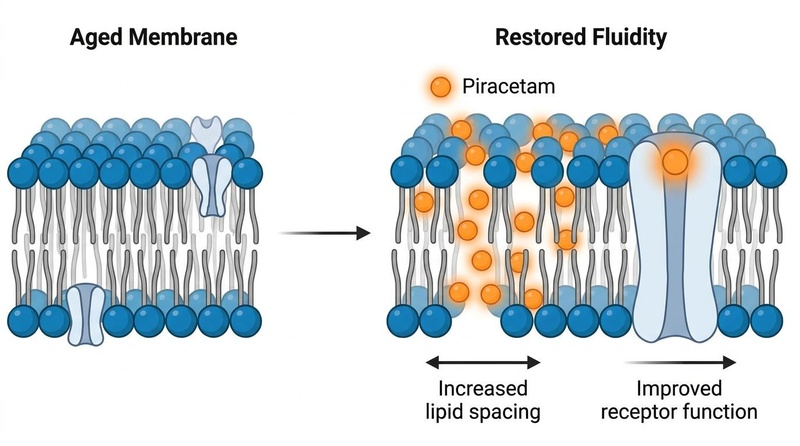
The primary and most widely accepted molecular mechanism of piracetam is the restoration of cellular membrane fluidity:
- Piracetam binds physically and reversibly to the polar, hydrophilic head groups of phospholipids within the cell membrane bilayer.
- This physical interaction stabilizes the membrane and induces a reorganization of lipids, increasing lipid mobility and restoring membrane fluidity.
- This effect is highly prominent in aged, hypoxic, or damaged membranes that have become rigid or compromised. By restoring fluidity, piracetam optimizes the physical microenvironment required for the proper conformation and function of transmembrane proteins, including ion channels (such as Ca2+ and K2+ channels), transport proteins, and neurotransmitter receptors[1:3][4:3].
¶ 2. Glutamatergic and NMDA Receptor Modulation
Piracetam acts as a positive allosteric modulator of specific neuroreceptors, particularly those involved in synaptic plasticity:
- NMDA Receptors: Piracetam modulatory effects on NMDA receptor subunits help regulate calcium influx into post-synaptic neurons, supporting long-term potentiation (LTP)—the cellular basis of learning and memory.
- Central Sensitization: In neuropathic pain states, piracetam’s NMDA modulation has been shown to downregulate aberrant central sensitization, limiting the hyper-excitability of dorsal horn neurons in the spinal cord without producing the severe adverse effects associated with channel-blocking NMDA antagonists (such as ketamine)[4:4].
¶ 3. Cerebral Microcirculation and Rheological Properties
Piracetam improves cerebral perfusion and microvascular blood flow through physical effects on blood constituents rather than direct vasodilation:
- Erythrocyte Deformability: It increases the flexibility and deformability of red blood cells, allowing them to pass more easily through narrow capillary networks.
- Anti-platelet Aggregation: It reversibly inhibits platelet aggregation and reduces elevated plasma viscosity, reducing microvascular resistance.
- This hemorheological activity helps protect cerebral tissue during periods of acute hypoxia or surgical ischemia, such as during cardiopulmonary bypass surgeries[3:3].
¶ Pharmacokinetics Basics
- Bioavailability: Extremely high, with near 100% absorption following oral administration.
- Distribution: Piracetam is highly water-soluble, does not bind to plasma proteins, and readily crosses the blood-brain barrier.
- Metabolism: It is not metabolized or biotransformed in the human body.
- Elimination: Excreted entirely unchanged by the kidneys via glomerular filtration. The elimination half-life is approximately 5 hours in healthy adults, but is significantly prolonged in patients with impaired renal function.
¶ Effects on different systems
¶ Brain & Mental Health (Cognition, Mood, Sleep)
- Cognitive Decline: Clinical trials evaluating piracetam's long-term utility in dementia and mild cognitive impairment show a high degree of clinical inconsistency, with recent meta-analyses questioning its clinical significance for memory retrieval[1:4].
- Stroke and Trauma Recovery: Piracetam has historically been used to accelerate recovery following ischemic brain injury. While global recovery markers are often unaffected, modest, highly specific rehabilitative benefits (such as written communication processing) are documented[2:3].
- Epidemiological Risk in Nootropic Communities: Surveillance of online drug forums and harm reduction databases indicates that piracetam is heavily diffused as a non-prescription cognitive enhancer. Users frequently self-administer unregulated, high doses (sometimes exceeding 10–15 grams daily) or combine it with other active agents ("stacking"). This self-directed use carries risks of acute cognitive hyper-excitation, anxiety, sleep architecture disruption, and minor withdrawal-like symptoms[5:1].
¶ Neuropathic and Somatosensory Systems
Piracetam's interactions with NMDA receptor pathways and spinal sensitization mechanisms suggest a clinical utility in pain medicine. Pharmacological analyses support its potential repurposing to treat neuropathic pain, trigeminal neuralgia, and central pain syndromes, aiming to reduce hyperalgesia with a highly favorable toxicological profile compared to standard pain-modulating agents[4:5].
¶ Cardiovascular and Hematological Health
Through its rheological properties, piracetam decreases platelet aggregation, reduces blood viscosity, and improves microvascular perfusion. It has been shown to reduce post-operative neuropsychological deficits following coronary artery bypass graft (CABG) surgery, likely by maintaining adequate microvascular perfusion in the brain during cardiopulmonary bypass[3:4].
¶ Dosage and how to take it
¶ Standard Dosing in Studies
- Clinical Daily Range: Typically ranges from 1,200 mg to 4,800 mg per day for chronic cognitive or neurological indications.
- Dosing Schedule: Due to its 5-hour half-life, the total daily dose is strictly divided into 2 to 3 administrations (e.g., 800 mg or 1,200 mg taken three times daily) to maintain stable therapeutic plasma levels.
- Acute / Perioperative Dosing: In acute clinical settings (such as post-stroke recovery or intraoperative CABG neuroprotection), much higher doses (ranging from 8 g to 12 g or more daily) have been administered intravenously under direct clinical supervision[2:4][3:5].
¶ Forms and Bioavailability
Piracetam is available in several oral formulations, including compressed tablets, gelatin capsules, oral solutions, and bulk crystalline powder. Due to its excellent water solubility and complete oral bioavailability, it can be taken with or without food.
¶ Special Populations
- Renal Impairment: Because piracetam is cleared exclusively via renal excretion, dosage adjustments are strictly mandatory based on glomerular filtration rates (GFR). It is contraindicated in patients with severe renal failure (creatinine clearance < 20 mL/min).
- Older Adults: Age-related declines in kidney function require close monitoring and cautious dose titration in elderly patients.
- Pregnancy and Lactation: Piracetam crosses the placental barrier and is excreted in breast milk. Due to a lack of robust human safety data, its use is not recommended during pregnancy or breastfeeding.
¶ Safety and side effects
Piracetam possesses a highly favorable toxicological profile, with a high median lethal dose (LD50) in animal models and low acute toxicity in humans.
¶ Common Side Effects
When administered within standard clinical dose ranges (1.2–4.8 g/day), adverse effects are typically mild and transient:
- Hyperkinesia (psychomotor agitation or restlessness)
- Nervousness or anxiety
- Weight gain (reported in long-term psychiatric cohorts)
- Insomnia or sleep architecture disturbances
- Somnolence or mild daytime drowsiness
¶ Less Common / Serious Concerns
- Hemorrhagic Risk: Due to its inhibition of platelet aggregation and reduction of blood viscosity, very high doses of piracetam may prolong bleeding times and increase hemorrhagic risk, particularly when combined with other blood-thinning agents.
- Excitation and Agitation: Unregulated high doses self-administered for cognitive enhancement can trigger severe anxiety, irritability, and cognitive overstimulation[5:2].
¶ Who Should Avoid It
- Severe Renal Impairment: Contraindicated in patients with end-stage renal disease or significant kidney dysfunction.
- Active Hemorrhage: Contraindicated in patients with cerebral hemorrhage, gastrointestinal bleeding, or other active hemorrhagic conditions.
- Huntington's Disease: Piracetam can worsen the motor and cognitive symptoms of Huntington's Chorea and should be strictly avoided.
¶ Drug and supplement interactions
¶ Pharmacokinetic Interactions
Piracetam does not undergo hepatic metabolism and does not inhibit or induce cytochrome P450 (CYP) enzymes (such as CYP3A4, CYP2D6, or CYP2C9). Consequently, pharmacokinetic interactions involving altered drug metabolism or clearance are highly unlikely.
¶ Pharmacodynamic Interactions
- Anticoagulants and Anti-platelets: Concurrent administration with warfarin, aspirin, clopidogrel, or direct oral anticoagulants (DOACs) can produce additive anti-platelet and rheological effects, significantly increasing the risk of mucosal bleeding, bruising, or gastrointestinal hemorrhage.
- Thyroid Hormones (T3/T4): Concomitant use with thyroid extracts or synthetic levothyroxine has been associated with reports of confusion, sleep architecture disruption, and profound irritability.
- Excitatory / NMDA Modulators: Co-administration with other substances that modulate NMDA or AMPA glutamatergic pathways may result in unpredictable, synergistic effects on central neurotransmission, potentially compounding risks of overstimulation[4:6].
¶ Combining Piracetam with other supplements (“stacks”)
In non-medical self-enhancement communities, piracetam is rarely used in isolation and is frequently incorporated into multi-compound protocols.
¶ 1. The Choline Stack
- Rationale: The most common stack pairs piracetam with a bioavailable choline donor (such as Alpha-GPC or CDP-Choline). The underlying theory posits that racetams upregulate cholinergic receptor density and accelerate the utilization of acetylcholine in the hippocampus. When systemic choline availability is low, this elevated demand is hypothesized to deplete acetylcholine stores, causing the classic "racetam headache."
- Evidence Level: While universally accepted in online user forums, this mechanism and the therapeutic synergy of the choline-piracetam stack have not been validated in human clinical trials[5:3].
¶ 2. Multi-Nootropic Stacks
- Rationale: Users frequently combine piracetam with other synthetic nootropics (such as Noopept or Phenylpiracetam) or central nervous system stimulants (like caffeine).
- Evidence Level: Unsupported by clinical safety data. Epidemiological surveillance warns that such unmonitored combinations significantly elevate the risk of psychiatric side effects, including acute anxiety, panic, insomnia, and cognitive hyper-excitation, without providing proven synergistic benefits[5:4].
¶ Practical questions (FAQ)
How long does it take for Piracetam to work?
For acute clinical indications, such as perioperative neuroprotection during CABG surgery, piracetam is loaded rapidly via intravenous infusion to achieve immediate therapeutic plasma levels[3:6]. In trials evaluating recovery from post-stroke aphasia or cognitive decline, therapeutic endpoints are typically evaluated after 6 to 12 weeks of continuous, divided daily oral dosing[1:5][2:5]. There is no clinical evidence to support immediate, acute cognitive enhancement in healthy, unimpaired individuals.
Can I take Piracetam long-term?
Clinical studies in post-stroke and cognitive decline cohorts have utilized piracetam continuously for up to 6 to 12 months under medical supervision, reporting a stable safety profile and low cumulative toxicity. However, long-term safety, tolerance, and receptor dynamics in healthy populations utilizing piracetam for self-directed cognitive enhancement have never been established in placebo-controlled clinical trials[5:5].
Does Piracetam help with pain?
Emerging pharmacological research indicates that piracetam can reduce central sensitization by modulating spinal and cortical NMDA receptor pathways[4:7]. While this mechanism provides a strong scientific rationale for repurposing piracetam to treat chronic and neuropathic pain, direct, large-scale human clinical trials in pain populations are still in the preliminary stages.
Is Piracetam useful if I am otherwise healthy?
Although piracetam is widely discussed online as a performance-enhancing agent for healthy individuals[5:6], robust clinical data demonstrating that it improves memory, attention, or executive function in healthy, young, unimpaired adults is lacking. Most clinical benefits are documented in populations with existing neurological injury, microvascular impairment, or pathological cognitive decline.
¶ How we evaluated the evidence
This monograph was compiled by prioritizing systematic reviews, meta-analyses of randomized controlled trials (RCTs), and peer-reviewed clinical pharmacology guidelines (Tier 1 and Tier 2 evidence). In accordance with wiki editorial standards for evidence-limited interventions:
- Claims regarding memory and global cognitive function are strictly anchored to contemporary, high-quality systematic reviews (such as the 2024 Gouhie meta-analysis) to avoid overstating historical efficacy claims[1:6].
- Sub-analyses of rehabilitative and surgical outcomes (such as post-stroke aphasia and post-CABG neuroprotection) are specified and restricted to the distinct populations and endpoints evaluated in the literature[2:6][3:7].
- Preclinical mechanism-of-action data and emerging therapeutic concepts (such as pain repurposing) are explicitly distinguished from verified human clinical efficacy[4:8].
- Public health surveillance and epidemiological monitoring of non-medical usage patterns are utilized to contextualize real-world use and safety risks[5:7].
¶ References
Gouhie FA, Barbosa KO, Cruz ABR, Wellichan MM, Zampolli TM. (2024). Cognitive effects of piracetam in adults with memory impairment: A systematic review and meta-analysis. Clinical Neurology and Neurosurgery. https://pubmed.ncbi.nlm.nih.gov/38878641/ ↩︎ ↩︎ ↩︎ ↩︎ ↩︎ ↩︎ ↩︎
Zhang J, Wei R, Chen Z, Luo B. (2016). Piracetam for Aphasia in Post-stroke Patients: A Systematic Review and Meta-analysis of Randomized Controlled Trials. CNS Drugs. https://pubmed.ncbi.nlm.nih.gov/27236454/ ↩︎ ↩︎ ↩︎ ↩︎ ↩︎ ↩︎ ↩︎
Fang Y, Qiu Z, Hu W, Yang J, Yi X, Huang L, Zhang S. (2014). Effect of piracetam on the cognitive performance of patients undergoing coronary bypass surgery: A meta-analysis. Experimental and Therapeutic Medicine. https://pubmed.ncbi.nlm.nih.gov/24396419/ ↩︎ ↩︎ ↩︎ ↩︎ ↩︎ ↩︎ ↩︎ ↩︎
Dhama N, Kumar A, Singh L, Kumar S, Khan SA, Fuloria NK, Fuloria S. (2026). Targeting NMDA receptors in pain management: therapeutic innovations through piracetam repurposing. Naunyn-Schmiedeberg's Archives of Pharmacology. https://pubmed.ncbi.nlm.nih.gov/41359055/ ↩︎ ↩︎ ↩︎ ↩︎ ↩︎ ↩︎ ↩︎ ↩︎ ↩︎
Corazza O, Bersani FS, Brunoro R, Valeriani G, Martinotti G, Schifano F. (2014). The diffusion of performance and image-enhancing drugs (PIEDs) on the internet: the abuse of the cognitive enhancer piracetam. Substance Use & Misuse. https://pubmed.ncbi.nlm.nih.gov/24827869/ ↩︎ ↩︎ ↩︎ ↩︎ ↩︎ ↩︎ ↩︎ ↩︎