¶ Quercetin
Quercetin is a dietary flavonoid belonging to the flavonol subclass, widely recognized for its robust antioxidant and anti-inflammatory properties. In human clinical research, it has demonstrated significant benefits for cardiovascular health and metabolic regulation, and it is currently a primary candidate in geroscience for its potential senolytic activity when used in combination protocols. [1][2]
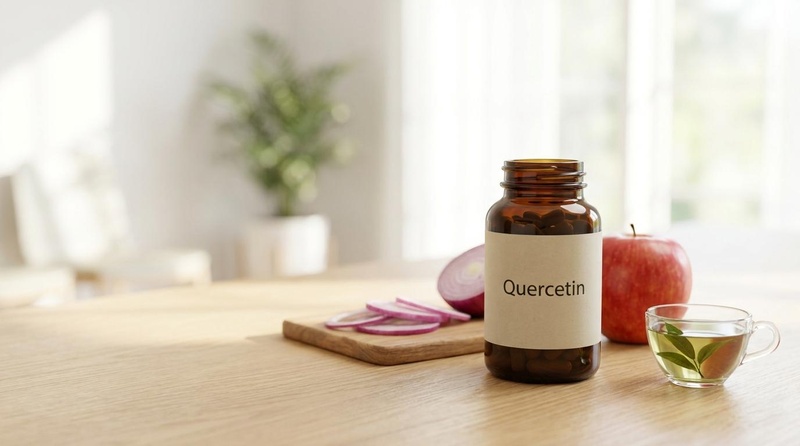
| Type | Plant Flavonoid (Flavonol) |
| Active Cmpd | 3,3',4',5,7-pentahydroxyflavone |
| Source | Red onions, apples, capers, green tea |
| Dose Range | 250–1,250 mg/day |
| Half-life | ~11–28 hours |
| Main Benefit | Cardiovascular and metabolic support |
| Absorption | Low (Standard); High (Phytosome) |
¶ At a glance
Aliases
- Also known as: Sophoretin, Meletin, Quercetine
- Chemical / botanical name: 3,3',4',5,7-pentahydroxyflavone
- Category: Flavonoid (Flavonol)
Key points (high-level summary)
- Blood Pressure: Meta-analyses show significant reductions in systolic and diastolic blood pressure, particularly in hypertensive individuals at doses >500 mg/day. [1:1]
- Inflammation: Effectively reduces circulating C-reactive protein (CRP) levels, especially in patients with diagnosed underlying conditions. [3]
- Lipid Profile: Demonstrates significant improvements in total cholesterol, LDL, and triglycerides in overweight and obese populations. [4]
- Senolytic Potential: While effective in preclinical models for clearing senescent cells, human evidence is currently limited to small pilot studies, primarily in combination with Dasatinib. [5][6]
What people use it for
- Main goals: Blood pressure regulation, lipid profile optimization, inflammation management, exercise recovery, and senolytic protocols.
- Evidence quality (overall): Moderate
¶ What is Quercetin?
Quercetin is a polyphenolic flavonoid found abundantly in the plant kingdom. It serves as a major dietary antioxidant and is one of the most extensively researched phytochemicals in human health. [2:1]
- Definition: A yellow plant pigment and flavonol that occurs naturally in various glycosylated forms.
- Natural sources: Highest concentrations are found in red onions (especially the outer layers), apples, capers, berries, kale, and green tea. [2:2]
- Traditional / historical use: Historically used in botanical formulations for its astringent properties and as a general tonic for vitality and health.
- Current regulatory status: Widely available as a dietary supplement; Generally Recognized as Safe (GRAS) in the United States for food uses.
- Key pharmacological property: Pleiotropic antioxidant, anti-inflammatory, and potential senolytic compound (often compared with Fisetin). [5:1]
¶ What are Quercetin’s main benefits?
Quercetin provides reliable support for cardiovascular and metabolic health, supported by multiple meta-analyses of human randomized controlled trials (RCTs). [1:2][3:1][4:1]
- Cardiovascular Health: Significant reductions in both systolic and diastolic blood pressure have been confirmed in hypertensive subjects. [1:3]
- Metabolic Health: Quercetin modestly improves fasting plasma glucose and significantly enhances lipid profiles (TC, LDL, TG) in overweight populations. [7][4:2]
- Inflammatory Markers: Meta-analytic data indicate a consistent reduction in systemic C-reactive protein (CRP) levels. [3:2]
- Exercise Recovery: Supplementation promotes recovery after exercise-induced muscle damage by reducing soreness and improving functional performance. [8]
- Viral Defense: Clinical evidence suggests quercetin may reduce hospitalization rates and symptom duration in mild-to-moderate viral infections, such as COVID-19. [9][10]
¶ Evidence summary table (human outcomes)
| Outcome / Goal | Effect* | Consistency** | Evidence quality | Trials*** | Notes (population, duration, dose) |
|---|---|---|---|---|---|
| Systolic Blood Pressure | High | High | 7 RCTs | -3.04 mmHg reduction; effect seen at >500 mg/day [1:4] | |
| Diastolic Blood Pressure | High | High | 7 RCTs | -2.63 mmHg reduction; most significant in hypertensive adults [1:5] | |
| C-Reactive Protein (CRP) | Moderate | Moderate | 7 RCTs | Significant systemic reduction in underlying inflammatory states [3:3] | |
| Lipid Profile (TC, LDL, TG) | Moderate | Moderate | 9 RCTs | Reductions observed in overweight and obese populations [4:3] | |
| Fasting Glucose | Moderate | Moderate | 9 RCTs | Modest reduction in fasting plasma glucose over long durations [7:1] | |
| Exercise Recovery | High | Moderate | 13 RCTs | Reduced muscle soreness (VAS) after strenuous exercise [8:1] | |
| COVID-19 Clinical Outcomes | Moderate | Moderate | 7 RCTs | Lowered hospitalization rate and reduced length of stay [9:1][10:1] | |
| Senescent Cell Burden | Low | Low | 3 Pilots | Combined with Dasatinib; pilot human data only [5:2][11] |
- *Effect: Compact renderer encoding:
dir=u|d|e|q,mag=0|1|2|3,impact=p|n|x. - **Consistency: Low (results conflict), Moderate (mixed), High (most trials agree)
- ***Trials: Number of RCTs or total trials informing this outcome.
¶ How does Quercetin work?
Quercetin exerts its effects through a variety of molecular pathways, primarily acting as a modulator of oxidative stress and inflammatory signaling. [2:3][12]
- Primary targets: Inhibits enzymes such as cyclooxygenase (COX-2) and lipoxygenase (LOX), and modulates pathways including NF-κB, AMPK, and SIRT1. [12:1][13]
- Core mechanisms:
- Antioxidant Action: Directly scavenges reactive oxygen species (ROS) and activates the Nrf2 pathway to enhance endogenous antioxidant enzymes. [2:4]
- Senolytic Activity: Specifically when combined with Dasatinib (D+Q), it targets senescent cell anti-apoptotic pathways (SCAPs), inhibiting BCL-2 and BCL-xL proteins to selectively induce apoptosis in senescent cells. This therapeutic approach is a major pillar of cellular senescence interventions aimed at targeting the key hallmarks of aging, specifically cellular senescence. [5:3][11:1]
- Metabolic Modulation: Activates AMPK and SIRT1, which enhances mitochondrial biogenesis and insulin sensitivity. [13:1]
- Evidence source:
- Pharmacokinetics basics: Standard quercetin dihydrate has poor solubility and low oral bioavailability (~2–5%). Metabolism occurs primarily in the liver (glucuronidation, sulfation). Novel formulations, such as quercetin phytosomes, utilize lecithin to increase absorption by up to 20-fold. [16][17]
¶ Effects on different systems
¶ Metabolic health (glucose, insulin, lipids)
Quercetin has been shown to improve glycemic control and lipid parameters. A meta-analysis of randomized trials found that quercetin supplementation can modestly reduce fasting blood glucose, particularly when taken for durations exceeding 8 weeks. [7:2] In overweight and obese individuals, it consistently improves total cholesterol, LDL-C, and triglyceride levels. [4:4]
¶ Cardiovascular health (blood pressure, vascular markers)
The most robust human evidence for quercetin lies in its ability to lower blood pressure. It reduces both systolic and diastolic blood pressure in individuals with hypertension, with the most pronounced effects seen at doses above 500 mg per day. [1:6] Preclinical meta-analyses also suggest potential anti-atherosclerotic effects by reducing plaque formation and improving endothelial function. [15:1]
¶ Brain & mental health (cognition, mood, sleep)
Preclinical evidence strongly supports neuroprotective effects, including reduced neuroinflammation and improved cognitive performance in models of Alzheimer's and Parkinson's disease. [12:2][18] Human pilot studies using the senolytic combination of dasatinib and quercetin (D+Q) have shown feasibility and safety in improving mobility and cognitive signals in older adults at risk for Alzheimer's. [11:2][19]
¶ Exercise and Recovery
Quercetin is effective for reducing exercise-induced muscle damage. A meta-analysis of 13 RCTs concluded that quercetin supplementation significantly reduces muscle soreness and promotes the recovery of muscle strength after strenuous activity. [8:2]
¶ Other domains (Lung, Kidney, Liver)
Preclinical data suggest anti-fibrotic effects in the lungs [14:1], renal protection against drug-induced toxicity [20], and improvements in metabolic dysfunction-associated steatotic liver disease (MASLD). [21] It also exhibits multi-target anti-allergic effects by inhibiting mast cell degranulation and IgE release. [22]
¶ Dosage and how to take it
Standard dosing in studies
- Typical daily dose range: 500–1,000 mg/day for general health benefits. [1:7][4:5]
- Common dosing schedules: Usually split into two doses (e.g., 500 mg twice daily).
- Senolytic protocols: Pilot clinical trials have used 1,000–1,250 mg for 2 consecutive days intermittently (e.g., every 2 weeks). [5:5][11:3]
- Study durations: Most clinical trials range from 4 to 12 weeks. [1:8][3:5]
Forms and bioavailability
- Common forms: Quercetin dihydrate (standard), Quercetin anhydrous, and Quercetin phytosome.
- Relative differences: Quercetin phytosome (a lecithin-based delivery system) has significantly higher bioavailability compared to standard dihydrate. [16:1]
- With or without food: Absorption is generally improved when taken with a fat-containing meal due to its lipophilic nature. [17:1]
Special populations
- Kidney or liver impairment: Limited safety data; caution is warranted due to the potential for metabolite accumulation.
- Older adults: Well-tolerated in pilot trials of older populations for senolysis. [11:4]
- Pregnancy and breastfeeding: Safety has not been established for supplemental doses; intake should be limited to food sources.
¶ Safety and side effects
Common side effects
- Gastrointestinal: Mild GI upset, including nausea or abdominal discomfort, particularly at high doses. [2:6]
- Neurological: Headaches or tingling sensations in the extremities (paresthesia) have been reported in some clinical trials. [2:7]
Less common / serious concerns
- Nephrotoxicity: Potential for kidney damage has been noted with very high-dose intravenous administration in animal models, though oral doses used in trials appear safe for those with healthy kidney function. [20:1][23]
Who should be especially cautious or avoid it
- Pre-existing Kidney Disease: Individuals with severe renal impairment should use quercetin with caution. [20:2]
- Iron Deficiency: Quercetin can chelate non-heme iron and may interfere with iron absorption if taken concurrently.
¶ Drug and supplement interactions
Pharmacokinetic interactions
- CYP450 Enzymes: Quercetin may inhibit enzymes such as CYP3A4 and CYP2D6, potentially increasing the blood levels of drugs metabolized by these pathways (e.g., certain statins, calcium channel blockers). [2:8][24]
- P-glycoprotein (P-gp): May inhibit P-gp, affecting the transport and absorption of drugs like digoxin. [2:9]
Pharmacodynamic interactions
- Anticoagulants/Antiplatelets: May have mild anti-aggregatory effects on platelets; use with drugs like warfarin or aspirin may theoretically increase bleeding risk. [2:10]
- Hypoglycemic Agents: May have additive effects with blood-glucose-lowering medications, necessitating monitoring of blood sugar. [7:3]
- Antihypertensives: Additive blood-pressure-lowering effects may occur. [1:9]
¶ Combining Quercetin with other supplements (“stacks”)
- Dasatinib: The most famous "senolytic stack" (D+Q). Used to synergistically clear senescent cells. Evidence is robust in preclinical models and currently in pilot-stage human trials. [5:6][11:5]
- Vitamin C: Often combined to enhance antioxidant regeneration and potentially improve quercetin absorption. [25]
- Bromelain: Frequently stacked for anti-inflammatory and anti-allergic purposes, as bromelain may enhance the systemic absorption and efficacy of quercetin. [26]
¶ Practical questions (FAQ)
-
How long does it take for Quercetin to work?
Blood pressure and inflammatory marker improvements are typically observed after 4–8 weeks of consistent daily supplementation. [1:10][3:6] -
Can I take Quercetin long term?
Human trials have demonstrated safety for up to 12 weeks at doses of 1,000 mg/day. Long-term safety data beyond 6 months are limited. [2:11] -
Does Quercetin help with weight loss?
While it improves lipid profiles and metabolic markers in overweight individuals, it does not appear to be a potent weight-loss agent on its own. [4:6] -
Is Quercetin useful if I am otherwise healthy?
The strongest evidence for blood pressure and CRP reduction is in populations with underlying metabolic or hypertensive conditions. Benefits in healthy, normotensive individuals are less clear. [1:11][3:7]
¶ How we evaluated the evidence
Evidence was prioritized based on meta-analyses of human randomized controlled trials (Tier 1) and clinical guidelines (Tier 2). Preclinical data (Tier 3) were used to elucidate mechanisms and identify potential future therapeutic directions. Grading of evidence followed the Longevidence framework:
- High: Consistent results from multiple meta-analyses or large RCTs.
- Moderate: Findings from smaller RCTs or meta-analyses with some inconsistency.
- Low: Primarily pilot trials, observational data, or animal models.
- Very Low: Mechanistic theories or in vitro data only.
¶ References
Serban MC, et al. (2016). Effects of Quercetin on Blood Pressure: A Systematic Review and Meta-Analysis of Randomized Controlled Trials. Journal of the American Heart Association. https://pubmed.ncbi.nlm.nih.gov/27405810/ ↩︎ ↩︎ ↩︎ ↩︎ ↩︎ ↩︎ ↩︎ ↩︎ ↩︎ ↩︎ ↩︎ ↩︎
Devi V, et al. (2024). Therapeutic Potential and Clinical Effectiveness of Quercetin: A Dietary Supplement. Recent Advances in Food, Nutrition & Agriculture. https://pubmed.ncbi.nlm.nih.gov/38258783/ ↩︎ ↩︎ ↩︎ ↩︎ ↩︎ ↩︎ ↩︎ ↩︎ ↩︎ ↩︎ ↩︎ ↩︎
Mohammadi-Sartang M, et al. (2017). Effects of supplementation with quercetin on plasma C-reactive protein concentrations: a systematic review and meta-analysis of randomized controlled trials. European Journal of Clinical Nutrition. https://pubmed.ncbi.nlm.nih.gov/28537580/ ↩︎ ↩︎ ↩︎ ↩︎ ↩︎ ↩︎ ↩︎ ↩︎
Guo W, et al. (2019). Quercetin Actions on Lipid Profiles in Overweight and Obese Individuals: A Systematic Review and Meta-Analysis. Current Pharmaceutical Design. https://pubmed.ncbi.nlm.nih.gov/31465275/ ↩︎ ↩︎ ↩︎ ↩︎ ↩︎ ↩︎ ↩︎
Yamaura K, et al. (2023). Therapeutic potential of senolytic agent quercetin in osteoarthritis: A systematic review and meta-analysis of preclinical studies. Ageing Research Reviews. https://pubmed.ncbi.nlm.nih.gov/37442369/ ↩︎ ↩︎ ↩︎ ↩︎ ↩︎ ↩︎ ↩︎
Hickson LJ, et al. (2019). Senolytics decrease senescent cells in humans: preliminary report from a clinical trial of dasatinib plus quercetin in individuals with diabetic kidney disease. EBioMedicine. https://pubmed.ncbi.nlm.nih.gov/31542391/ ↩︎
Ostadmohammadi V, et al. (2019). Effects of quercetin supplementation on glycemic control among patients with metabolic syndrome and related disorders: A systematic review and meta-analysis of randomized controlled trials. Phytotherapy Research. https://pubmed.ncbi.nlm.nih.gov/30848564/ ↩︎ ↩︎ ↩︎ ↩︎
Rojano-Ortega D, et al. (2023). Quercetin supplementation promotes recovery after exercise-induced muscle damage: a systematic review and meta-analysis of randomized controlled trials. Biology of Sport. https://pubmed.ncbi.nlm.nih.gov/37398956/ ↩︎ ↩︎ ↩︎
Ziaei S, et al. (2023). The effect of quercetin supplementation on clinical outcomes in COVID-19 patients: A systematic review and meta-analysis. Food Science & Nutrition. https://pubmed.ncbi.nlm.nih.gov/38107099/ ↩︎ ↩︎
Cheema HA, et al. (2023). Quercetin for the treatment of COVID-19 patients: A systematic review and meta-analysis. Reviews in Medical Virology. https://pubmed.ncbi.nlm.nih.gov/36779438/ ↩︎ ↩︎
Justice JN, et al. (2025). A pilot study of senolytics to improve cognition and mobility in older adults at risk for Alzheimer's disease. eBioMedicine. https://pubmed.ncbi.nlm.nih.gov/38479376/ ↩︎ ↩︎ ↩︎ ↩︎ ↩︎ ↩︎
Cho IH, et al. (2026). Neuroprotective effects of quercetin in animal models of neurodegenerative diseases: A systematic review and meta-analysis. Journal of the Science of Food and Agriculture. https://pubmed.ncbi.nlm.nih.gov/42121268/ ↩︎ ↩︎ ↩︎
Song Q, et al. (2026). Quercetin in metabolic diseases: mechanisms, therapeutics, and multidimensional frontiers. Frontiers in endocrinology. https://pubmed.ncbi.nlm.nih.gov/42051459/ ↩︎ ↩︎
Rashmi R, et al. (2026). Systematic review and meta-analysis of protective effects of quercetin in animal models of lung fibrosis and possible mechanism. International Immunopharmacology. https://pubmed.ncbi.nlm.nih.gov/42284759/ ↩︎ ↩︎
Chen D, et al. (2026). Evidence Synthesis and Mechanism Analysis of Quercetin Treatment for Atherosclerosis: A Preclinical Systematic Review and Meta-Analysis. International Journal of Molecular Sciences. https://pubmed.ncbi.nlm.nih.gov/41516399/ ↩︎ ↩︎
Naso M, et al. (2025). Quercetin and Its Lecithin-Based Formulation: Potential Applications for Allergic Diseases Based on a Narrative Review. Nutrients. https://pubmed.ncbi.nlm.nih.gov/40362785/ ↩︎ ↩︎
Graefe EU, et al. (2001). Pharmacokinetics and bioavailability of quercetin glycosides in humans. Journal of Clinical Pharmacology. https://pubmed.ncbi.nlm.nih.gov/11354394/ ↩︎ ↩︎
Islam MR, et al. (2025). Targeting signaling pathways in neurodegenerative diseases: Quercetin's cellular and molecular mechanisms for neuroprotection. Animal models and experimental medicine. https://pubmed.ncbi.nlm.nih.gov/39843406/ ↩︎
Cho IH, et al. (2026). Neuroprotective effects of quercetin in animal models of neurodegenerative diseases: A systematic review and meta-analysis. Journal of the science of food and agriculture. https://pubmed.ncbi.nlm.nih.gov/42121268/ ↩︎
Yazdanpanah Z, et al. (2026). Quercetin and Nephrotoxicity: A Narrative Review of Cellular Pathways and Therapeutic Possibilities. Journal of biochemical and molecular toxicology. https://pubmed.ncbi.nlm.nih.gov/42257475/ ↩︎ ↩︎ ↩︎
Jin D, et al. (2025). Effects of Quercetin on Metabolic Dysfunction-Associated Steatotic Liver Disease: A Systematic Review and Meta-Analysis. Food science & nutrition. https://pubmed.ncbi.nlm.nih.gov/41404533/ ↩︎
Lv Z, et al. (2025). Quercetin exhibits multi-target anti-allergic effects in animal models: a systematic review and meta-analysis of preclinical studies. Frontiers in pharmacology. https://pubmed.ncbi.nlm.nih.gov/41357894/ ↩︎
Zeng YF, et al. (2023). Preclinical evidence of reno-protective effect of quercetin on acute kidney injury: a meta-analysis of animal studies. Frontiers in pharmacology. https://pubmed.ncbi.nlm.nih.gov/38186644/ ↩︎
Chen JY, et al. (2024). Effect and mechanism of quercetin or quercetin-containing formulas against COVID-19: From bench to bedside. Phytotherapy Research. https://pubmed.ncbi.nlm.nih.gov/38479376/ ↩︎
D'Andrea G. (2015). Quercetin: A flavonol with multifaceted therapeutic applications? Fitoterapia. https://pubmed.ncbi.nlm.nih.gov/26190209/ ↩︎
Shoskes DA, et al. (1999). Quercetin in men with category III chronic prostatitis: a preliminary prospective, double-blind, placebo-controlled trial. Urology. https://pubmed.ncbi.nlm.nih.gov/10626245/ ↩︎