¶ Rhodiola Rosea (Golden Root)
¶ At a Glance
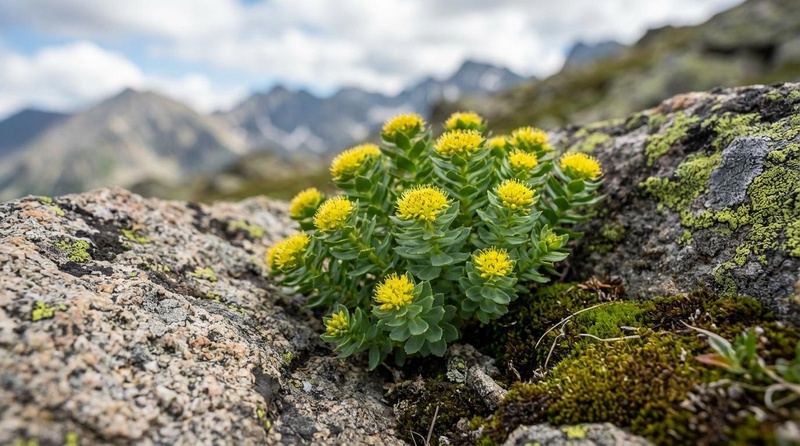
Rhodiola rosea (commonly known as Golden Root or Arctic Root) is an adaptogenic herb that grows in cold, high-altitude regions of Europe and Asia. Unlike classical stimulants like caffeine that push the nervous system (often resulting in a subsequent "crash"), Rhodiola acts by modulating the body's stress response systems. It is arguably the most well-researched adaptogen for combating physical and mental fatigue, particularly in the context of burnout, shift work, and chronic stress.
¶ Safety "Traffic Light"
- Red (Do Not Take): Do not combine with SSRI antidepressants (e.g., Paroxetine, Escitalopram) or MAOIs due to a theoretical and documented risk of serotonin syndrome [1].
- Yellow (Caution): May inhibit the CYP2C9 metabolic enzyme [2]. Use caution if taking drugs with a narrow therapeutic index metabolized by this pathway, such as phenytoin or warfarin.
- Green (Safe): Generally recognized as safe for up to 12 weeks of continuous use in healthy individuals when taken at standard doses (200-600mg) [3].
¶ Protocol Card
- Form: Root extract standardized to 3% rosavins and 1% salidroside (such as the clinically studied SHR-5 extract).
- Dosage: 200–600 mg per day.
- Timing: Take in the morning or early afternoon. Late doses often interfere with sleep due to mild stimulatory effects.
- Cycling: To prevent tolerance, many protocols suggest a cycle of 3 weeks on, 1 week off, or taking weekends off.
¶ Bottom Line
Rhodiola is highly effective at reducing perceived fatigue and preserving cognitive function during periods of acute stress or prolonged exertion. It is not a limitless pill for already-rested individuals, but rather a "buffer" that raises your threshold for exhaustion.
¶ The "Why" (Benefits)
Rhodiola is most prized for its ability to rescue performance when the body or mind is taxed.
- Combats Burnout: In clinical settings, it has been shown to reduce emotional exhaustion, somatic symptoms of stress, and chronic fatigue in patients suffering from burnout syndrome [4].
- Protects Cognition Under Duress: Studies on night-shift workers and medical students have demonstrated that Rhodiola prevents the typical drop in short-term memory, concentration, and associative thinking that occurs during sleep deprivation or intense exams [5].
- Enhances Physical Endurance: By modulating perceived exertion and supporting mitochondrial energy production, it is often utilized by athletes to improve time-to-exhaustion during aerobic activities [6].
¶ Reality Check / Context
- Human Reality vs. Hype: It is important to distinguish Rhodiola's effects from those of amphetamines or high-dose caffeine. It will not make you hyper-focused if you are already well-rested. Its primary utility is restoring baseline function when you are operating at a deficit.
- Commercial Context: The active compounds are highly dependent on the plant's origin and extraction method. The SHR-5 extract is the most heavily studied in clinical trials. Supplements that do not list a standardization of "3% rosavins and 1% salidroside" are often ineffective or derived from different Rhodiola species (Rhodiola crenulata, for instance, contains salidroside but lacks rosavins).
- Bioavailability: The effects are generally felt acutely (within 1-2 hours), but cumulative benefits for burnout and chronic fatigue build over 1-4 weeks of consistent supplementation.
¶ Practical Integration
- The Adaptogen Stack: Rhodiola is frequently stacked with Ashwagandha. Because Rhodiola is generally stimulating and Ashwagandha is more relaxing, users often take Rhodiola in the morning to blunt the cortisol awakening response and provide energy, and Ashwagandha in the evening to wind down.
- With Caffeine: Combining Rhodiola with caffeine can yield synergistic effects for athletic performance and explosiveness [7]. However, for individuals prone to anxiety, this combination can lead to overstimulation and jitteriness.
¶ Mechanism of Action
The exact physiological mechanisms of Rhodiola are complex and multi-targeted, primarily driven by its unique phenylpropanoids (rosavins) and phenylethanol derivatives (salidroside).
- Monoamine Modulation: Rhodiola acts as a mild, reversible inhibitor of the enzymes monoamine oxidase A and B (MAO-A and MAO-B). By inhibiting the degradation of these neurotransmitters, it increases the availability of serotonin, dopamine, and norepinephrine in the cerebral cortex and brainstem [8].
- HPA Axis Regulation: It modulates the hypothalamic-pituitary-adrenal (HPA) axis. Under acute stress, it blunts the excessive release of cortisol and prevents the depletion of stress-responsive neurotransmitters [5:1].
- ATP Synthesis: Preclinical evidence suggests it stimulates the synthesis of ATP and creatine phosphate in the mitochondria of muscle and brain cells, directly supporting cellular energy reserves.
¶ Evidence summary table (human outcomes)
| Outcome | Efficacy | Grade | Notes | References |
|---|---|---|---|---|
| Fatigue & Burnout | Moderate-High | Moderate | Consistent evidence shows significant reductions in self-reported fatigue, emotional exhaustion, and burnout symptoms over 4-12 weeks. | [5:2], [4:1], [3:1] |
| Cognitive Function (in stress) | Moderate | Moderate | Prevents performance decrement in concentration and memory during night shifts and exam periods. | [5:3], [3:2] |
| Athletic Endurance | Low-Moderate | Low | Mixed results; some trials show improved time-to-exhaustion and reduced perceived exertion, while others show no significant difference. | [6:1] |
| Depression Symptoms | Low | Low | May offer mild mood support due to MAO inhibition, but inferior to standard pharmacological treatments. | [8:1] |
¶ Comprehensive Safety & Toxicology
Rhodiola is generally well tolerated, but its pharmacological activity means it is not inert.
- Side Effects: The most commonly reported side effects are mild and include dizziness, dry mouth, sleep disturbances (if taken too late in the day), and occasional jitteriness [3:3].
- Cytochrome P450 Interactions: A human trial demonstrated that commercial Rhodiola extract inhibits the metabolic capacity of CYP2C9. It did not significantly affect CYP1A2, CYP2C19, CYP2D6, or CYP3A4 [2:1]. This modest CYP2C9 inhibition could increase the blood levels of drugs like phenytoin, warfarin, or losartan.
- Serotonergic Syndrome: Due to its MAO-inhibiting properties, co-administration with Selective Serotonin Reuptake Inhibitors (SSRIs) like paroxetine has resulted in case reports of serotonin syndrome (characterized by agitation, tachycardia, and hyperreflexia) [1:1].
¶ Comparisons & Engagement
- Vs. Ashwagandha: Both are adaptogens, but they serve different primary functions. Ashwagandha (especially KSM-66) is inherently relaxing and anxiolytic, making it better for stress-induced insomnia and anxiety. Rhodiola is stimulating, making it superior for stress-induced fatigue and lethargy.
- Vs. Caffeine: Caffeine blocks adenosine receptors to prevent sleepiness and forces an adrenaline release. Rhodiola does not block adenosine; it optimizes cellular energy metabolism and neurotransmitter balance, resulting in "cleaner" energy without a subsequent crash or severe tolerance buildup.
¶ References
Maniscalco, I., et al. (2015). The interaction of Rhodiola rosea and antidepressants. A case report. Pharmacopsychiatry, 48(1), 36-38. https://pubmed.ncbi.nlm.nih.gov/25413939/ ↩︎ ↩︎
Thu, O. K., et al. (2016). Effect of commercial Rhodiola rosea on CYP enzyme activity in humans. European journal of clinical pharmacology, 72(3), 295-300. https://pubmed.ncbi.nlm.nih.gov/26613955/ ↩︎ ↩︎
Ishaque, S., Shamseer, L., Bukutu, C., & Vohra, S. (2012). Rhodiola rosea for physical and mental fatigue: a systematic review. BMC complementary and alternative medicine, 12(1), 70. https://pubmed.ncbi.nlm.nih.gov/22643043/ ↩︎ ↩︎ ↩︎ ↩︎
Kasper, S., & Dienel, A. (2017). Multicenter, open-label, exploratory clinical trial with Rhodiola rosea extract in patients suffering from burnout symptoms. Neuropsychiatric disease and treatment, 13, 889-898. https://pubmed.ncbi.nlm.nih.gov/28367055/ ↩︎ ↩︎
Olsson, E. M., von Schéele, B., & Panossian, A. G. (2009). A randomised, double-blind, placebo-controlled, parallel-group study of the standardised extract shr-5 of the roots of Rhodiola rosea in the treatment of subjects with stress-related fatigue. Planta medica, 75(2), 105-112. https://pubmed.ncbi.nlm.nih.gov/19016404/ ↩︎ ↩︎ ↩︎ ↩︎
Lu, Y., Deng, B., Xu, L., et al. (2022). Effects of Rhodiola Rosea Supplementation on Exercise and Sport: A Systematic Review. Frontiers in nutrition, 9, 856287. https://pubmed.ncbi.nlm.nih.gov/35464040/ ↩︎ ↩︎
Lu, Y., et al. (2024). Combined effects of Rhodiola rosea and caffeine supplementation on aerobic endurance and muscle explosiveness: a synergistic approach. Frontiers in nutrition, 11, 1335950. https://www.frontiersin.org/journals/nutrition/articles/10.3389/fnut.2024.1335950/full ↩︎
Panossian, A., Wikman, G., & Sarris, J. (2010). Rosenroot (Rhodiola rosea): traditional use, chemical composition, pharmacology and clinical efficacy. Phytomedicine : international journal of phytotherapy and phytopharmacology, 17(7), 481-493. https://pubmed.ncbi.nlm.nih.gov/20378318/ ↩︎ ↩︎