¶ Sauna and Ice Baths
Sauna bathing and cold water immersion are prominent environmental stress interventions studied for their roles in health optimization and longevity. These contrasting thermal therapies activate distinct, yet complementary, adaptive pathways that may contribute to an extended healthspan and reduced mortality risk.
| Type | Thermal Hormesis (Environmental) |
| Active Cmpd | Heat Shock Proteins, UCP1, Norepinephrine |
| Source | Sauna (Heat), Ice Bath/Cold Immersion |
| Dose Range | Sauna: 15-20 min @ 80-100°C; Cold: 2-10 min @ 10-15°C |
| Main Benefit | Cardiovascular health, metabolic health, stress adaptation |
| Absorption | N/A (Environmental Intervention) |
Regular sauna use has demonstrated significant associations with cardiovascular protection and all-cause mortality reduction, while cold exposure activates brown adipose tissue thermogenesis and metabolic adaptations. Together, these practices engage adaptive responses that enhance cellular resilience and systemic function.
¶ At a glance
Aliases
- Also known as: Contrast Water Therapy, Thermal Stress Adaptation
- Category: Environmental Intervention, Biohacking Protocol
Key points (high-level summary)
- In middle-aged Finnish men, frequent sauna use (4-7 times/week) is associated with a 40-63% reduction in cardiovascular and all-cause mortality[1].
- Cold exposure enhances insulin sensitivity and activates brown adipose tissue, which is beneficial for metabolic health[2][3][4].
- Contrast water therapy (alternating hot and cold) can significantly reduce post-exercise muscle soreness and improve recovery[5].
- Both heat and cold exposure induce hormetic stress, activating protective cellular responses that enhance resilience to future stressors[6].
What people use it for
- Main goals: Cardiovascular health, metabolic health, cognitive function, exercise recovery, stress resilience, longevity.
- Evidence quality (overall): High for sauna's cardiovascular benefits; Moderate for metabolic and cognitive effects; Moderate for cold exposure's metabolic benefits and exercise recovery.
¶ What are Sauna and Ice Baths?
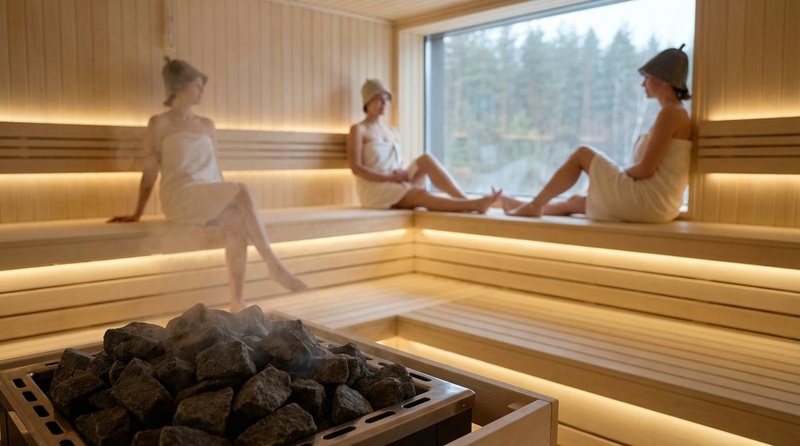
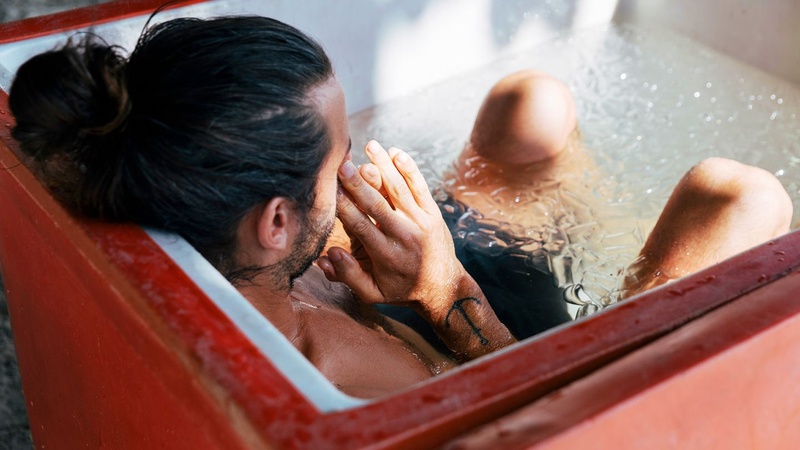
Sauna bathing involves exposure to dry heat, typically 80-100°C (176-212°F) for 5-20 minutes per session. Cold water immersion, including ice baths, typically uses temperatures between 10-15°C (50-59°F) for brief periods of 2-10 minutes. Both are forms of hormetic stress, mild stressors that activate protective cellular responses and enhance resilience[6:1].
These interventions trigger adaptive mechanisms such as heat shock protein activation, enhanced cardiovascular function, improved metabolic flexibility, and strengthened stress response systems and improved pelvic and physical wellness[7]. These adaptations collectively contribute to reduced mortality and improved health outcomes observed in regular practitioners.
¶ What are Sauna and Ice Baths' main benefits?
¶ Cardiovascular Health and Mortality
Regular sauna bathing is strongly associated with longevity benefits. Large-scale longitudinal studies show significant reductions in cardiovascular and all-cause mortality. A Finnish study found that men using saunas 4-7 times weekly had a 63% reduction in sudden cardiac death and a 40% reduction in all-cause mortality over 20 years[1:1]. These benefits are dose-dependent and involve improved endothelial function, reduced blood pressure, and enhanced cardiac output[6:2][8].
¶ Metabolic Health and Insulin Sensitivity
Both sauna and cold exposure positively impact glucose metabolism and insulin sensitivity. Heat therapy increases insulin sensitivity by upregulating glucose transporter type 4 (GLUT4) in skeletal muscle[6:3]. Cold exposure activates brown adipose tissue (BAT), which enhances glucose uptake and improves metabolic flexibility through increased mitochondrial uncoupling protein 1 (UCP1) activity[2:1][3:1][4:1]. Short-term cold acclimation has been shown to increase peripheral insulin sensitivity by ~43% in individuals with type 2 diabetes[2:2].
¶ Neuroprotective Effects and Cognitive Function
Regular sauna use is associated with a reduced risk of dementia and Alzheimer's disease. One cohort study reported a 66% lower risk of dementia and 65% lower risk of Alzheimer's disease in frequent sauna users compared to infrequent users over 20 years[9]. These benefits may be linked to improved cerebral blood flow, reduced inflammation, and enhanced production of brain-derived neurotrophic factor (BDNF) with heat exposure[6:4].
¶ Exercise Recovery and Muscle Soreness
Contrast water therapy (alternating hot and cold immersion) has been shown to significantly improve recovery from exercise-induced muscle damage. A systematic review found that contrast therapy led to greater improvements in muscle soreness (DOMS) at 24, 48, and 72 hours post-exercise compared to passive recovery, along with superior recovery of muscle function and strength[5:1]. Cold water immersion alone also reduces muscle soreness and aids in recovery of athletic performance[10].
¶ Evidence summary table (human outcomes)
| Outcome / Goal | Effect* | Consistency** | Evidence quality | Trials*** | Notes (population, duration, dose) |
|---|---|---|---|---|---|
| Cardiovascular Mortality | High | High | Cohort Study | 4-7 sauna sessions/week for 15-20 min @ 80-100°C [1:2][11] | |
| All-Cause Mortality | High | Moderate | Cohort Study | 4-7 sauna sessions/week for 15-20 min @ 80-100°C [1:3][11:1] | |
| Dementia Risk | Moderate | Moderate | Cohort Study | Frequent sauna use over 20 years [9:1] | |
| Alzheimer's Disease Risk | Moderate | Moderate | Cohort Study | Frequent sauna use over 20 years [9:2] | |
| Insulin Sensitivity (Type 2 Diabetes) | Moderate | Moderate | 1 RCT | 10 days cold acclimation (14-15°C, 6h/day) [2:3] | |
| Glucose Homeostasis | Moderate | Moderate | 1 RCT | Acute cold exposure in healthy men with BAT [3:2] | |
| Post-Exercise Muscle Soreness (DOMS) | High | Moderate | Systematic Review of RCTs | Contrast Water Therapy (CWT) or Cold Water Immersion (CWI) post-exercise [5:2][10:1] | |
| Sickness Absence from Work | High | Moderate | 1 RCT | Daily cold showering for 30 days [12] |
¶ How do Sauna and Ice Baths work?
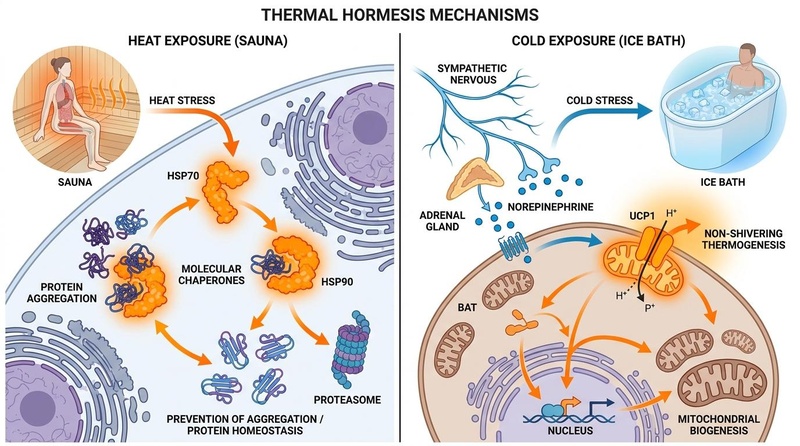
Both heat and cold exposure operate through hormetic stress, activating adaptive cellular responses that enhance resilience. The primary targets include heat shock proteins (HSPs), uncoupling proteins (UCP1), various neuroendocrine pathways, and autophagic lysosomal enzymes[13].
- Heat Mechanisms: Sauna exposure triggers a thermoregulatory response that mimics moderate physical exercise. This includes increased heart rate, cardiac output, and blood flow, improving cardiovascular function. Heat stress also induces the expression of heat shock proteins (HSPs), such as HSP70 and HSP90. These chaperones help maintain protein integrity, prevent misfolding and aggregation, and promote cellular repair, which is crucial for cellular longevity and protection against neurodegenerative diseases. Heat exposure can also enhance nitric oxide bioavailability, improving endothelial function and reducing blood pressure[6:5][8:1].
- Cold Mechanisms: Cold exposure, such as ice baths, activates the sympathetic nervous system, leading to the release of norepinephrine[14]. This neurotransmitter stimulates brown adipose tissue (BAT), increasing its metabolic activity. Within BAT mitochondria, uncoupling protein 1 (UCP1) facilitates non-shivering thermogenesis by uncoupling oxidative phosphorylation from ATP production, generating heat. This process increases glucose and fatty acid uptake, improving metabolic flexibility and insulin sensitivity. Cold exposure also activates cold shock proteins and promotes mitochondrial biogenesis, enhancing cellular resilience and energy efficiency[2:4][3:3][4:2][15].
- Pharmacokinetics (N/A): As environmental interventions, sauna and ice baths do not involve pharmacological absorption, metabolism, or half-life in the traditional sense. Their effects are mediated by direct physiological responses to temperature changes.
¶ Effects on different systems
¶ Metabolic Health (Glucose, Insulin, Lipids)
Both thermal therapies contribute to improved metabolic health. Sauna use can enhance insulin sensitivity, potentially through GLUT4 upregulation. Cold exposure significantly impacts glucose and lipid metabolism by activating BAT, increasing glucose uptake, and improving insulin sensitivity. Studies show a decrease in triglycerides and an increase in HDL with regular cold exposure[2:5][3:4][4:3][15:1].
¶ Cardiovascular Health (Blood Pressure, Vascular Markers)
Sauna bathing is particularly beneficial for cardiovascular health. Regular use is associated with lower blood pressure, improved endothelial function, reduced arterial stiffness, and a decreased risk of cardiovascular disease. The physiological response to heat mimics cardiovascular exercise, contributing to these benefits[1:4][11:2][6:6][8:2].
¶ Brain & Mental Health (Cognition, Mood, Sleep)
Sauna bathing has neuroprotective effects, reducing the risk of dementia and Alzheimer's disease. Heat exposure may enhance cerebral blood flow and increase BDNF levels. Cold exposure can also influence mood and mental well-being by activating the sympathetic nervous system and potentially altering neurotransmitter levels, though specific cognitive benefits for longevity require more research[9:3][6:7].
¶ Exercise Recovery & Musculoskeletal Health
Contrast water therapy and cold water immersion are effective strategies for post-exercise recovery. They help reduce delayed onset muscle soreness (DOMS), inflammation, and perceived fatigue, facilitating faster return to peak performance. These benefits are attributed to effects on blood flow, reduction of edema, and modulation of inflammatory pathways[5:3][10:2].
¶ Dosage and how to take it
Standard protocols for thermal therapies vary, and individual tolerance should guide practice.
Standard dosing in studies
- Sauna: Typically 4-7 sessions per week, each lasting 15-20 minutes, at temperatures between 80-100°C (176-212°F). Cooling periods, often with a cold shower, are typically included between sessions[6:8].
- Cold Immersion: Typically 2-3 sessions per week, each lasting 2-10 minutes, in water temperatures of 10-15°C (50-59°F). Progressive titration of cold exposure duration and temperature is utilized clinically to mitigate cold-shock risk and allow autonomic adaptation[15:2].
- Contrast Therapy: Involves alternating between hot (sauna or hot bath) and cold (ice bath or cold shower) exposures. Common protocols suggest 15 minutes of heat followed by 2-3 minutes of cold, repeated 2-3 cycles[5:4].
Special populations
- Cardiovascular Conditions: Patients with a history of unstable angina, recent myocardial infarction, severe aortic stenosis, or advanced heart failure require careful clinical assessment prior to thermal exposure due to the risk of severe hemodynamic stress and adverse cardiac events[6:9][15:3].
- Pregnancy and Breastfeeding: Clinical data regarding thermal extremes during pregnancy or lactation are limited; exposure is generally restricted due to potential risks of maternal hyperthermia or sudden hemodynamic shifts.
¶ Safety and side effects
Both dry heat and cold water immersion therapies represent profound environmental stressors; understanding the physiological responses is necessary to prevent adverse events.
Common side effects
- Sauna: Dehydration, dizziness, and orthostatic hypotension (especially upon exiting). Excessive heat exposure can lead to heat exhaustion or heatstroke if proper hydration and cooling are not maintained[6:10].
- Cold Immersion: Cold shock response (involuntary gasping, hyperventilation), shivering, hypothermia (with prolonged exposure), and potential for arrhythmias in susceptible individuals. Skin redness or irritation is also common[15:4].
Less common / serious concerns
- Cardiovascular Events: Hemodynamic responses to thermal stress pose risk to patients with unstable cardiovascular conditions, including advanced coronary artery disease or decompensated heart failure[6:11][15:5].
- Electrolyte Imbalance: Significant fluid loss from sweating in saunas can lead to electrolyte disturbances if not replenished[6:12].
Clinical Contraindications and Precautions
- Unstable Cardiovascular Pathology: Absolute contraindications include unstable angina, recent myocardial infarction, severe aortic stenosis, and uncontrolled hypertension, where sudden peripheral vasodilation (heat) or severe vasoconstriction (cold) can precipitate cardiovascular events.
- Vasoactive Medications: Concurrent use of vasodilators or antihypertensives can potentiate orthostatic hypotension during sauna egress.
- Raynaud's Phenomenon: Cold water immersion can trigger severe vasospastic episodes in patients with peripheral vascular disorders.
¶ Drug and supplement interactions
While direct drug interactions are less defined for environmental therapies, indirect physiological effects may be relevant.
Pharmacodynamic interactions (additive / opposing effects)
- Antihypertensive Medications: Both sauna and cold exposure can affect blood pressure. Individuals on antihypertensive drugs should monitor their blood pressure closely, as additive hypotensive effects are possible with sauna, and initial hypertensive responses can occur with cold[6:13][15:6].
- Diuretics: Increased fluid loss from sauna use can exacerbate dehydration and electrolyte imbalances in individuals taking diuretics.
- Stimulants/Vasoconstrictors: Cold exposure causes vasoconstriction and sympathetic activation. Combining with stimulant medications could potentially exaggerate cardiovascular responses, though this is largely theoretical.
¶ Combining Sauna and Ice Baths with other supplements (“stacks”)
Thermal therapies can be integrated into broader wellness protocols to enhance the effects of other interventions.
- Mitochondrial Support: Pairing thermal therapies with supplements that support mitochondrial function (e.g., CoQ10, NAD+ precursors like NMN or NR, PQQ) may synergize with the mitochondrial biogenesis effects of cold exposure and the cellular stress response of heat[6:14][4:4].
- Anti-inflammatory Agents: Combining with anti-inflammatory supplements (e.g., curcumin, omega-3 fatty acids) could complement the anti-inflammatory effects observed with both heat and cold exposure, particularly for exercise recovery[5:5][10:3].
- Hydration and Electrolyte Support: Given the fluid and electrolyte shifts induced by sweating in saunas, stacking with electrolyte supplements (e.g., magnesium, potassium, sodium) and ensuring adequate hydration is crucial for safety and optimal performance[6:15].
¶ Practical questions (FAQ)
-
How long does it take to see benefits from sauna and ice baths?
Some benefits, like reduced muscle soreness, can be seen immediately or within 24-72 hours after sessions[5:6]. Long-term benefits, such as cardiovascular protection and reduced mortality, emerge with consistent practice over years[1:5][9:4][11:3]. Metabolic improvements (e.g., insulin sensitivity) may become apparent within weeks of regular cold exposure[2:6]. -
Can I do sauna and ice baths every day?
Regular sauna use (4-7 times per week) is associated with the greatest benefits[1:6]. Daily cold exposure is also practiced by some, but individual tolerance and recovery needs should be considered. For muscle recovery, 2-3 times per week of cold or contrast therapy appears effective[5:7][15:7]. -
Is one better than the other (sauna vs. ice bath)?
They offer complementary benefits. Sauna has stronger evidence for cardiovascular and all-cause mortality reduction[1:7][11:4], while cold exposure is well-regarded for metabolic health (BAT activation, insulin sensitivity) and exercise recovery[2:7][3:5][4:5][10:4]. Combining both (contrast therapy) may offer synergistic effects[5:8]. -
What is the ideal temperature for an ice bath?
Most studies use temperatures between 10-15°C (50-59°F). Beginners should start at the warmer end and with shorter durations, gradually decreasing temperature and increasing exposure time as tolerance improves[15:8]. -
Are there any contraindications for these therapies?
Relative and absolute contraindications are primarily cardiovascular, including unstable angina, severe aortic stenosis, and uncontrolled hypertension. Vasospastic conditions like Raynaud's phenomenon are relative contraindications for cold water immersion.
¶ How we evaluated the evidence
Our evaluation prioritizes human randomized controlled trials (RCTs), systematic reviews, and large prospective cohort studies. Evidence quality is graded as follows:
- High: Multiple high-quality RCTs or meta-analyses with consistent results, low risk of bias, and adequate sample sizes (e.g., sauna for cardiovascular mortality).
- Moderate: Some RCTs with minor limitations, or consistent results from otherwise high-quality observational studies (e.g., sauna for dementia risk, cold exposure for metabolic markers).
- Low: Few RCTs, significant limitations in study design, small sample sizes, or inconsistent results.
- Very low: Only observational studies, case reports, or animal/in vitro data, or serious flaws in available trials.
We assess sample size, risk of bias, consistency of findings across studies, directness of evidence to human outcomes, and reported effect sizes to determine clinical relevance. This page will be updated as new meta-analyses or large RCTs become available.
¶ References
Laukkanen T, Khan H, Zaccardi F, Laukkanen JA. Association Between Sauna Bathing and Fatal Cardiovascular and All-Cause Mortality Events. JAMA Internal Medicine. 2015;175(4):542-548. https://jamanetwork.com/journals/jamainternalmedicine/fullarticle/2130724 ↩︎ ↩︎ ↩︎ ↩︎ ↩︎ ↩︎ ↩︎ ↩︎
Hanssen MJ, Hoeks J, Brans B, et al. Short-term cold acclimation improves insulin sensitivity in patients with type 2 diabetes mellitus. Nature Medicine. 2015;21(8):863-865. https://pubmed.ncbi.nlm.nih.gov/26147760/ ↩︎ ↩︎ ↩︎ ↩︎ ↩︎ ↩︎ ↩︎ ↩︎
Chondronikola M, Volpi E, Børsheim E, et al. Brown adipose tissue improves whole-body glucose homeostasis and insulin sensitivity in humans. Journal of Clinical Investigation. 2014;124(3):1413-1417. https://doi.org/10.1172/JCI77426 ↩︎ ↩︎ ↩︎ ↩︎ ↩︎ ↩︎
Ouellet V, Labbé SM, Blondin DP, et al. Brown adipose tissue oxidative metabolism as a recipient of acute cold exposure in humans. Journal of Clinical Investigation. 2012;122(2):548-557. https://doi.org/10.1172/JCI60433 ↩︎ ↩︎ ↩︎ ↩︎ ↩︎ ↩︎
Deslauriers F-D, Bleakley CM, et al. Contrast Water Therapy and Exercise Induced Muscle Damage: A Systematic Review and Meta-Analysis. PLoS One. 2013;8(4):e62356. https://pmc.ncbi.nlm.nih.gov/articles/PMC3633882/ ↩︎ ↩︎ ↩︎ ↩︎ ↩︎ ↩︎ ↩︎ ↩︎ ↩︎
Laukkanen JA, Laukkanen T, Kunutsor SK. Cardiovascular and Other Health Benefits of Sauna Bathing: A Review of the Evidence. Mayo Clinic Proceedings. 2018;93(8):1111-1121. https://www.mayoclinicproceedings.org/article/S0025-6196(18)30275-1/fulltext ↩︎ ↩︎ ↩︎ ↩︎ ↩︎ ↩︎ ↩︎ ↩︎ ↩︎ ↩︎ ↩︎ ↩︎ ↩︎ ↩︎ ↩︎ ↩︎
Qaoud Y, et al. A systematic appraisal of emerging alternative therapies in men's health and wellness. Canadian Urological Association Journal. 2025. https://pubmed.ncbi.nlm.nih.gov/41406341/ ↩︎
Ketelhut S, Ketelhut RG. The blood pressure and heart rate during sauna bath correspond to cardiac responses during submaximal dynamic exercise. Complementary Therapies in Medicine. 2019;44:293-297. https://doi.org/10.1016/j.ctim.2019.05.002 ↩︎ ↩︎ ↩︎
Laukkanen T, Kunutsor S, Kauhanen J, Laukkanen JA. Sauna bathing is inversely associated with dementia and Alzheimer's disease in middle-aged Finnish men. Age and Ageing. 2017;46(2):245-249. https://academic.oup.com/ageing/article/46/2/245/2667818 ↩︎ ↩︎ ↩︎ ↩︎ ↩︎
Higgins TR, Greene JR, Baker D. The Effects of Cold Water Immersion and Contrast Water Therapy for Recovery From Team Sport: A Systematic Review and Meta-analysis. Journal of Strength and Conditioning Research. 2016;30(1):241-263. https://pubmed.ncbi.nlm.nih.gov/27398915/ ↩︎ ↩︎ ↩︎ ↩︎ ↩︎
Kunutsor SK, Laukkanen T, Laukkanen JA. Sauna bathing is associated with reduced cardiovascular mortality and improves risk prediction in men and women: a prospective cohort study. BMC Medicine. 2018;16(1):223. https://link.springer.com/article/10.1186/s12916-018-1198-0 ↩︎ ↩︎ ↩︎ ↩︎ ↩︎
Buijze GA, Sierevelt IN, van der Heijden BC, et al. The Effect of Cold Showering on Health and Work: A Randomized Controlled Trial. PLoS One. 2016;11(9):e0161749. https://journals.plos.org/plosone/article?id=10.1371/journal.pone.0161749 ↩︎
Mila-Kierzenkowska J, et al. Effects of thermal stress on the activity of selected lysosomal enzymes in blood of experienced and novice winter swimmers. Scandinavian Journal of Clinical and Laboratory Investigation. 2012;72(6):491-496. https://pubmed.ncbi.nlm.nih.gov/23061673/ ↩︎
Leppäluoto J, et al. Some endocrine responses to sauna, shower and ice water immersion. European Journal of Applied Physiology and Occupational Physiology. 1989;58(5):543-547. https://pubmed.ncbi.nlm.nih.gov/2789570/ ↩︎
Knechtle B, Waśkiewicz Z, Sousa CV, et al. Cold Water Swimming—Benefits and Risks: A Narrative Review. International Journal of Environmental Research and Public Health. 2020;17(23):8984. https://www.mdpi.com/1660-4601/17/23/8984 ↩︎ ↩︎ ↩︎ ↩︎ ↩︎ ↩︎ ↩︎ ↩︎ ↩︎