¶ Triphala
| Type | Polyherbal Formulation |
| Active Cmpd | Gallic Acid, Ellagic Acid, Tannins, Vitamin C |
| Source | Amalaki, Bibhitaki, Haritaki fruits |
| Dose Range | 1,000–3,000 mg/day |
| Half-life | Unknown / Variable |
| Main Benefit | Digestive health, bowel regularity, oral hygiene |
| Absorption | Moderate (highly dependent on gut microbiota) |
Triphala is a legendary Ayurvedic three-fruit polyherbal formulation that serves as a cornerstone for gastrointestinal health, metabolic regulation, and mucosal cellular resilience. Supported by a robust body of systematic reviews and clinical trials, Triphala exhibits strong therapeutic efficacy in improving bowel regularity, optimizing lipid and glucose profiles, and serving as a natural alternative for oral hygiene.
¶ At a glance
Aliases
- Also known as: Triphala Churna, Three Fruits, Triphala Rasayana
- Chemical / botanical name: Combination of Emblica officinalis (Amalaki), Terminalia bellirica (Bibhitaki), and Terminalia chebula (Haritaki)
- Category: Botanical polyherbal formulation
Key points (high-level summary)
- In adults with constipation or metabolic syndrome, Triphala significantly improves bowel movement frequency and optimizes lipid and glucose profiles [1][2].
- Meta-analyses demonstrate that Triphala mouthwash is as effective as chlorhexidine in reducing dental plaque and gingival inflammation across both adult and pediatric populations [3][4].
- Its primary limitation is the high variability in bioavailability, which is heavily dependent on the individual's gut microbiota for the conversion of tannins into bioactive metabolites [2:1].
- Triphala is generally safe but may interfere with medications metabolized by the Cytochrome P450 (CYP450) enzyme system [5].
What people use it for
- Main goals: Bowel regularity, detoxification, metabolic support (weight, cholesterol, glucose), oral health, and anti-aging/rejuvenation.
- Evidence quality (overall): Moderate
¶ What is Triphala?
Triphala is a standardized polyherbal formulation consisting of the dried fruits of three medicinal plants in equal proportions (1:1:1): Amalaki, Bibhitaki, and Haritaki.
- Definition: A "Tridoshic Rasayana" (rejuvenative formula) in Ayurvedic medicine, meaning it is intended to balance all three primary biological energies (doshas).
- Natural sources: Derived from the fruits of Emblica officinalis (Indian Gooseberry), Terminalia bellirica (Baheda), and Terminalia chebula (Harad).
- Traditional / historical use: Used for over 2,000 years in Ayurveda as a comprehensive digestive tonic, mild laxative, and longevity promoter.
- Current regulatory status: Marketed globally as a dietary supplement; listed in the Ayurvedic Pharmacopoeia of India.
- Key pharmacological property: A multi-target antioxidant and prebiotic polyphenol complex with prokinetic and anti-inflammatory properties [2:2].
¶ What are Triphala’s main benefits?
Triphala's clinical benefits are primarily focused on the gastrointestinal tract, metabolic health, and mucosal protection.
- Digestive Health: Triphala acts as a mild prokinetic and bulk-forming laxative, significantly increasing bowel frequency and improving stool consistency in functional constipation [1:1][2:3][6].
- Metabolic Support: Systematic reviews of human trials show significant reductions in total cholesterol, LDL cholesterol, and triglycerides, alongside modest improvements in fasting blood glucose and waist circumference [1:2].
- Oral Hygiene: Clinical meta-analyses confirm that Triphala mouthwash provides equivalent anti-plaque and anti-gingivitis efficacy compared to 0.2% chlorhexidine, but without the risk of tooth staining or altered taste [3:1][4:1].
- Mucosal and Gynecological Health: Topically, Triphala serves as a potent antimicrobial and anti-inflammatory agent for mucosal conditions, including vaginal discharge and candidiasis, by promoting epithelial healing and pathogen suppression [6:1].
¶ Evidence summary table (human outcomes)
| Outcome / Goal | Effect* | Consistency** | Evidence quality | Trials*** | Notes (population, duration, dose) |
|---|---|---|---|---|---|
| Bowel Regularity | High | Moderate | Multiple RCTs | Significant improvement in frequency and consistency in functional constipation [7][2:4] | |
| LDL-C & Total Cholesterol | High | Moderate | 12 RCTs | Reduces LDL and TC in adults with metabolic risk factors; 1-3g/day for 8-12 weeks [1:3] | |
| Fasting Blood Glucose | Moderate | Moderate | 12 RCTs | Significant reduction observed in meta-analysis of type 2 diabetes and metabolic syndrome [1:4] | |
| Dental Plaque (Adults) | High | Moderate | Meta-analysis | Equally effective to chlorhexidine mouthwash in reducing plaque and gingivitis [3:2] | |
| Dental Plaque (Children) | High | Moderate | Meta-analysis | Non-inferior to chlorhexidine in pediatric oral hygiene; p=0.96 for plaque accumulation [4:2] | |
| Endodontic Bacterial Load | High | Moderate | Systematic Review | Comparable to sodium hypochlorite and chlorhexidine in primary tooth root canal irrigation [8][9] | |
| Weight & BMI | Low | Low | 12 RCTs | Modest reductions in body mass index and waist circumference under specific conditions [1:5] |
- *Effect: ↑ (increase), ↓ (decrease), = (no effect), ? (unclear). (p) = positive, (n) = negative, (x) = neutral.
- **Consistency: High (most trials agree), Moderate (mixed), Low (conflicting results).
- ***Trials: Number of RCTs or total trials informing this outcome.
¶ How does Triphala work?
Triphala functions through a complex synergy of its three constituent fruits, targeting multiple pathways simultaneously.
- Primary targets: Gut microbiota composition, NF-κB inflammatory signaling, and intestinal smooth muscle receptors (prokinetic action).
- Core mechanisms:
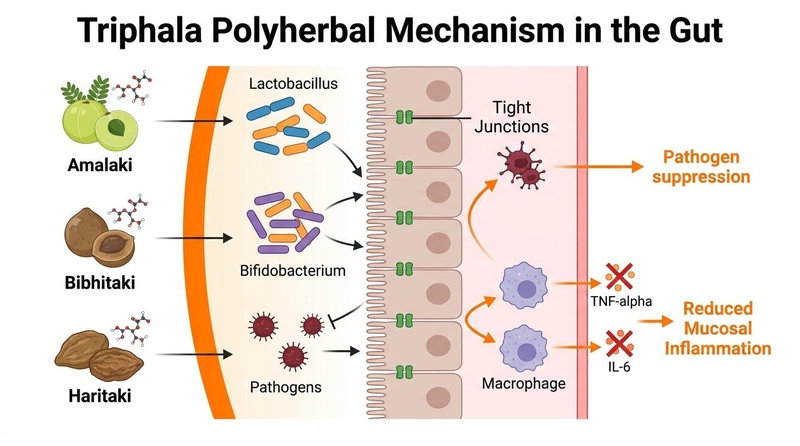
- Prebiotic Modulation: Triphala stimulates the growth of beneficial Lactobacillus and Bifidobacterium species while inhibiting the proliferation of pathogens like Enterococcus faecalis and Candida albicans [2:5][6:2].
- Antioxidant & Anti-inflammatory: Downregulates pro-inflammatory cytokines such as TNF-α, IL-6, and IL-1β by inhibiting the NF-κB pathway [2:6]. It also scavenges free radicals directly via its high phenolic and tannin content (gallic and ellagic acids) [7:1][5:1].
- Gastrointestinal Motility: Acts as a mild prokinetic, stimulating intestinal peristalsis and improving colonic transit time without the harsh side effects of stimulant laxatives [2:7].
- Evidence source:
- Pharmacokinetics: Triphala’s polyphenols and tannins are poorly absorbed in the small intestine; they are metabolized by colonic bacteria into smaller bioactive compounds (like urolithins), making the therapeutic effect highly dependent on the individual's gut microbiome health [2:9].
¶ Effects on different systems
¶ Gut & digestion
Triphala is most famous for its gastrointestinal benefits. It improves bowel frequency, stool consistency, and reduces symptoms of functional gastrointestinal disorders by acting as a gentle laxative and prebiotic [2:10][6:3]. It protects the intestinal mucosal barrier and reduces inflammation within the gut lumen [2:11].
¶ Metabolic health (glucose, insulin, lipids)
In populations with dyslipidemia and metabolic syndrome, Triphala significantly lowers total cholesterol, LDL cholesterol, and triglycerides. It also provides modest blood glucose-lowering effects, likely through the inhibition of carbohydrate-digesting enzymes and improvement in insulin sensitivity [1:7][7:2].
¶ Oral health and dental applications
Clinical evidence strongly supports Triphala as a natural alternative to chlorhexidine mouthwash. It is equally effective in reducing plaque and gingival inflammation in both adults and children [3:4][4:4]. In endodontics, it serves as an effective root canal irrigant with comparable antimicrobial efficacy to sodium hypochlorite but with significantly lower cytotoxicity to the pulp tissue [8:1][9:1].
¶ Gynecological and mucosal health
Topical applications of Triphala have been reviewed for managing gynecological disorders like vaginal candidiasis and leucorrhea. Its antimicrobial and anti-inflammatory properties promote mucosal healing and inhibit the growth of common vaginal pathogens [6:4].
¶ Cellular longevity and rejuvenation (Rasayana)
As a "Rasayana" formulation, Triphala is traditionally used to promote longevity. Modern research suggests this is mediated by its potent antioxidant capacity, its ability to reduce chronic "inflammaging," and its protective effects on cellular DNA and mitochondrial function [5:3].
¶ Dosage and how to take it
¶ Standard dosing in studies
- Oral Capsules/Tablets: 1,000–3,000 mg per day, often split into two or three doses [1:8][6:5].
- Powder (Churna): 3–6 grams daily, traditionally mixed with warm water or honey.
- Mouthrinse: 0.6%–10% extract used twice daily for 30–60 seconds [3:5][4:5].
¶ Forms and bioavailability
- Standardized Extract: Look for extracts standardized to at least 40%–50% tannins or polyphenols.
- Traditional Churna: Provides the full spectrum of fruit fibers and nutrients, which may enhance prebiotic effects.
- Bioavailability: Absorption is improved when taken on an empty stomach (traditionally before bed or early morning) with warm water to aid solubility.
¶ Special populations
- Pregnancy & Breastfeeding: Traditional advice suggests avoidance due to its mild laxative effect and potential to stimulate uterine contractions, although high-quality human safety data are lacking [7:3].
- Children: Clinically studied and safe for use as a mouthwash in children [4:6].
¶ Safety and side effects
Triphala is generally classified as safe and non-toxic, with a long history of traditional use [5:4].
¶ Common side effects
- Gastrointestinal: Mild abdominal cramps, gas, and loose stools, particularly at higher doses or during the first few days of use [7:4][2:12].
- Laxative dependency: Unlike stimulant laxatives (like senna), Triphala is not typically associated with dependency, but prolonged high-dose use should be monitored.
¶ Less common / serious concerns
- Liver enzymes: Some reports suggest it may inhibit the Cytochrome P450 enzyme system, potentially altering the metabolism of certain pharmaceuticals [5:5].
¶ Who should be especially cautious or avoid it
- Acute Diarrhea: Should be avoided by those with active diarrhea or dysentery.
- Chronic conditions: Individuals on blood-sugar-lowering or blood-thinning medications should monitor for additive effects.
¶ Drug and supplement interactions
¶ Pharmacokinetic interactions
- CYP450 System: Triphala may inhibit certain CYP450 isoforms, which can lead to increased serum levels and potential toxicity of drugs metabolized by these pathways (e.g., certain statins, blood thinners, and psychiatric medications) [5:6].
¶ Pharmacodynamic interactions
- Antidiabetics: May have additive effects with metformin or insulin, increasing the risk of hypoglycemia [1:9].
- Anticoagulants: High doses may theoretically increase bleeding risk if combined with warfarin or aspirin due to its antioxidant and anti-inflammatory properties [7:5].
¶ Combining Triphala with other supplements (“stacks”)
- Gut Health Stack: Often combined with probiotics or other Ayurvedic herbs like Psyllium husk for synergistic effects on bowel regularity and microbiome diversity.
- Metabolic Stack: Can be stacked with Guggul or Turmeric (Curcumin) for enhanced lipid-lowering and anti-inflammatory effects.
¶ Practical questions (FAQ)
-
How long does it take for Triphala to work?
Laxative effects are typically felt within 6–12 hours. However, metabolic benefits like cholesterol reduction and glucose stabilization require consistent use for 8–12 weeks [1:10]. -
Can I take Triphala every day?
Yes, it is traditionally used as a daily tonic for long-term health maintenance. Clinical trials have studied daily use for up to 3 months with high safety [1:11][2:13]. -
Does Triphala stain teeth like other mouthwashes?
No. Unlike chlorhexidine, which often causes brownish staining of teeth and tongue, Triphala mouthwash does not cause extrinsic staining [3:6][4:7]. -
Is Triphala effective for weight loss?
While it can modestly reduce BMI and waist circumference, it is primarily a metabolic regulator rather than a primary weight-loss agent [1:12].
¶ How we evaluated the evidence
This guide was built by prioritizing Tier 1 and Tier 2 evidence:
- Meta-analyses and Systematic Reviews: Four comprehensive reviews and meta-analyses covering metabolic health, oral hygiene, and gastrointestinal function [1:13][3:7][4:8][8:2].
- Clinical Reviews: Four high-quality scoping and narrative reviews documenting pharmacological actions and traditional clinical use [7:6][9:2][2:14][6:6].
- Quality Assessment: Studies were graded based on sample size, consistency of results across trials, and the presence of randomized controlled trial (RCT) data.
¶ References
Phimarn W, Sungthong B, Itabe H. Effects of Triphala on Lipid and Glucose Profiles and Anthropometric Parameters: A Systematic Review. Journal of evidence-based integrative medicine. 2021. https://pubmed.ncbi.nlm.nih.gov/33886393/ ↩︎ ↩︎ ↩︎ ↩︎ ↩︎ ↩︎ ↩︎ ↩︎ ↩︎ ↩︎ ↩︎ ↩︎ ↩︎ ↩︎
Tarasiuk A, Mosińska P, Fichna J. Triphala: current applications and new perspectives on the treatment of functional gastrointestinal disorders. Chinese medicine. 2018. https://pubmed.ncbi.nlm.nih.gov/30034512/ ↩︎ ↩︎ ↩︎ ↩︎ ↩︎ ↩︎ ↩︎ ↩︎ ↩︎ ↩︎ ↩︎ ↩︎ ↩︎ ↩︎ ↩︎
AlJameel AH, Almalki SA. Effect of triphala mouthrinse on plaque and gingival inflammation: A systematic review and meta-analysis of randomized controlled trials. International journal of dental hygiene. 2020. https://pubmed.ncbi.nlm.nih.gov/32383334/ ↩︎ ↩︎ ↩︎ ↩︎ ↩︎ ↩︎ ↩︎ ↩︎
Minervini G, Marrapodi MM, Tirupathi S, et al. Comparative anti-plaque and anti-gingivitis efficiency of Triphala versus chlorhexidine mouthwashes in children: a systematic review and meta-analysis. The Journal of clinical pediatric dentistry. 2024. https://pubmed.ncbi.nlm.nih.gov/39275820/ ↩︎ ↩︎ ↩︎ ↩︎ ↩︎ ↩︎ ↩︎ ↩︎ ↩︎
Ahmed S, Ding X, Sharma A. Exploring scientific validation of Triphala Rasayana in ayurveda as a source of rejuvenation for contemporary healthcare: An update. Journal of ethnopharmacology. 2021. https://pubmed.ncbi.nlm.nih.gov/33465446/ ↩︎ ↩︎ ↩︎ ↩︎ ↩︎ ↩︎ ↩︎
Anita, Kundra L, Verma P. Triphala as a Topical Agent in Gynaecological Disorders: A Comprehensive Review of Its Pharmacological Actions and Applications. Cureus. 2026. https://pubmed.ncbi.nlm.nih.gov/42220723/ ↩︎ ↩︎ ↩︎ ↩︎ ↩︎ ↩︎ ↩︎
Peterson CT, Denniston K, Chopra D. Therapeutic Uses of Triphala in Ayurvedic Medicine. Journal of alternative and complementary medicine. 2017. https://pubmed.ncbi.nlm.nih.gov/28696777/ ↩︎ ↩︎ ↩︎ ↩︎ ↩︎ ↩︎ ↩︎
Chavan P, Dimple P, Takate V. Comparative Effectiveness of Triphala and Conventional Root Canal Irrigants in Primary Teeth: A Systematic Review. Cureus. 2025. https://pubmed.ncbi.nlm.nih.gov/41523452/ ↩︎ ↩︎ ↩︎
Agnihotri A, Jhamb S, Shrama U. Azadirachta indica A. juss, Morinda citrifolia L. and Triphala as herbal endodontic irrigants: A scoping review. Ayu. 2020. https://pubmed.ncbi.nlm.nih.gov/35370381/ ↩︎ ↩︎ ↩︎