¶ L-Tryptophan
| Type | Essential Amino Acid |
| Active Cmpd | L-Tryptophan |
| Source | Protein-rich foods, microbial fermentation |
| Dose Range | 500–3,000 mg/day |
| Half-life | ~1–2 hours (plasma) |
| Main Benefit | Sleep quality (WASO reduction) & mood regulation |
| Absorption | High (active transport via LAT1) |
L-Tryptophan is an essential amino acid that serves as the mandatory biochemical precursor for serotonin and melatonin synthesis. High-quality human evidence, including multiple meta-analyses, supports its efficacy in improving sleep architecture (specifically reducing wakefulness after sleep onset) and enhancing mood and emotional resilience in healthy populations [1][2].
¶ At a glance
Aliases
- Also known as: Tryptophan, (S)-Tryptophan, Trp
- Chemical / botanical name: (2S)-2-amino-3-(1H-indol-3-yl)propanoic acid
- Category: Essential amino acid
Key points (high-level summary)
- In healthy adults, L-tryptophan supplementation significantly reduces "Wake After Sleep Onset" (WASO) and improves subjective sleep quality, particularly at doses exceeding 1 gram [1:1].
- Supplementation at doses between 0.14g and 3g daily has been shown to improve mood, reduce irritability, and decrease anxiety in non-clinical populations [2:1].
- Oral bioavailability for brain uptake is limited by competition with other large neutral amino acids (LNAAs) for transport across the blood-brain barrier [3].
- Concurrent use with serotonergic medications (e.g., SSRIs, MAOIs) is strictly contraindicated due to the risk of Serotonin Syndrome [4].
What people use it for
- Main goals: Sleep maintenance, mood enhancement, stress resilience, and adjunctive support for metabolic health.
- Evidence quality (overall): Moderate (High for sleep continuity, Moderate for mood regulation).
¶ What is L-Tryptophan?
L-Tryptophan is one of the nine essential amino acids that humans must obtain through diet, as the body lacks the enzymatic machinery for its de novo synthesis. It is the least abundant amino acid in the diet but plays a disproportionately large role in physiology as the starting material for several critical metabolic pathways [3:1].
- Definition: An essential proteogenic amino acid characterized by an indole functional group.
- Natural sources: Found in high-protein foods such as turkey, chicken, milk, eggs, soybeans, and pumpkin seeds [3:2].
- Traditional / historical use: Widely used as a natural sedative and mood stabilizer since the mid-20th century; its use was briefly restricted in the late 1980s due to a contamination-related outbreak of Eosinophilia-Myalgia Syndrome (EMS) [3:3].
- Current regulatory status: Generally Recognized as Safe (GRAS) in the US and widely available as a dietary supplement.
- Key pharmacological property: Obligate precursor for the neurotransmitter serotonin (5-HT) and the hormone melatonin [3:4].
¶ What are L-Tryptophan’s main benefits?
The primary clinical utility of L-Tryptophan revolves around its conversion into neuroactive metabolites that regulate the circadian rhythm and emotional state.
¶ Sleep Maintenance and Architecture
Systematic reviews and meta-analyses of randomized controlled trials (RCTs) confirm that L-tryptophan significantly improves sleep parameters. The most robust effect is on Wake After Sleep Onset (WASO), where supplementation reduces the total time spent awake during the night after initially falling asleep [1:2]. While it can modestly reduce sleep latency (time to fall asleep), its primary value lies in sleep continuity.
- Outcome: Wake After Sleep Onset (WASO)
- Direction of effect: Decrease
- Magnitude: Moderate to Large (especially at doses >1g)
- Population studied: Adults with mild sleep disturbances and healthy volunteers
- Evidence quality: High (Meta-analysis of 18 RCTs)
- Summary sentence: L-tryptophan effectively reduces nighttime awakenings and improves sleep continuity [1:3].
¶ Mood and Emotional Regulation
Supplementation has been shown to modulate emotional processing and mood in healthy individuals. It is particularly effective at reducing irritability and feelings of hostility, while increasing "agreeableness" in social interactions [2:2].
- Outcome: Subjective Mood and Irritability
- Direction of effect: Positive (Improved mood, reduced irritability)
- Magnitude: Small to Moderate
- Population studied: Healthy adults
- Evidence quality: Moderate (Systematic review)
- Summary sentence: Daily doses of 140mg to 3g improve emotional resilience and mood in non-clinical settings [2:3].
¶ Cardioprotection and Organ Preservation
Tryptophan is a critical component of specialized clinical solutions like Histidine-Tryptophan-Ketoglutarate (HTK), used during cardiac surgery and organ transplantation to protect the myocardium and preserve graft viability [5][6].
¶ Evidence summary table (human outcomes)
| Outcome / Goal | Effect* | Consistency** | Evidence quality | Trials*** | Notes (population, duration, dose) |
|---|---|---|---|---|---|
| Wake After Sleep Onset (WASO) | High | High | 18 RCTs | Significant reduction in nighttime wakefulness at doses >1g [1:4]. | |
| Subjective Sleep Quality | Moderate | Moderate | 18 RCTs | Improvements reported across diverse populations [1:5]. | |
| Mood Regulation (Healthy) | High | Moderate | 11 Studies | Reduced irritability and improved emotional resilience (0.14-3g/day) [2:4]. | |
| Cardiovascular Risk (Serum Levels) | Moderate | Low | Meta-analysis | Lower tryptophan levels are associated with increased CVD risk [7]. | |
| Myocardial Protection (HTK solution) | High | High | Meta-analysis | Used clinically in cardiac surgery to prevent ischemic damage [5:1][6:1]. | |
| Irritable Bowel Syndrome (IBS) | Low | Low | Systematic Review | Dietary restriction has been explored but human data remains inconclusive [8]. | |
| Fibromyalgia Symptoms | Low | Very Low | Scoping Review | MGBA dysregulation involves Trp, but direct supplement efficacy is unclear [9]. |
¶ How does L-Tryptophan work?
L-Tryptophan serves as a metabolic hub, entering one of three primary pathways depending on the body's physiological state (e.g., inflammation, stress, or protein needs).
- The Serotonin-Melatonin Pathway (~5%): Tryptophan is hydroxylated by tryptophan hydroxylase (TPH) to 5-HTP, which is then converted to serotonin. In the pineal gland, serotonin is further metabolized into melatonin. This pathway is the primary target for sleep and mood supplementation [3:5].
- The Kynurenine Pathway (>90%): The vast majority of tryptophan is metabolized via the kynurenine pathway, primarily in the liver by TDO or systemically by IDO. This pathway produces NAD+ and niacin (Vitamin B3). However, excessive activation (e.g., during chronic inflammation) can lead to the production of neurotoxic metabolites like quinolinic acid [10][11].
- Gut Microbiota Metabolism: Bacteria in the colon can metabolize tryptophan into indoles (e.g., Indole-3-Propionic Acid, IPA), which act as signaling molecules that support the gut barrier and have neuroprotective effects [12][13][14].
¶ Pharmacokinetics and the BBB Bottleneck
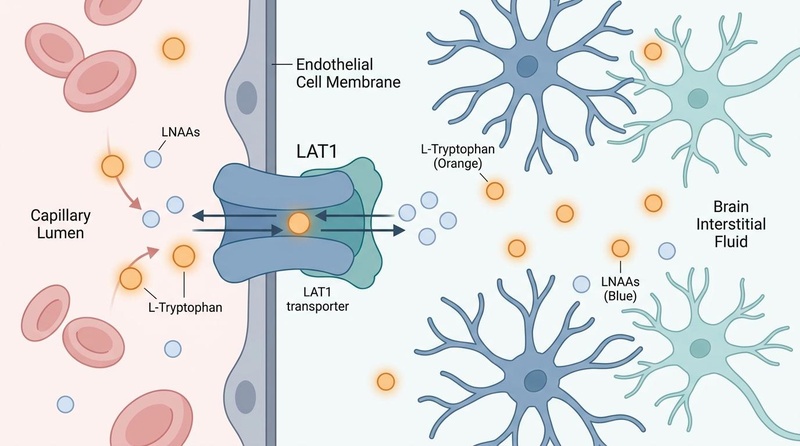
Tryptophan crosses the blood-brain barrier (BBB) via the LAT1 (Large Neutral Amino Acid Transporter). Because this transporter is shared with other amino acids (leucine, isoleucine, valine, phenylalanine, tyrosine), the ratio of tryptophan to LNAAs in the blood determines its uptake. High-protein meals actually decrease brain tryptophan uptake due to this competition [3:6].
¶ Effects on different systems
¶ Brain & Mental Health
The kynurenine-tryptophan ratio is a validated biomarker for neuroinflammation and is significantly altered in conditions like Alzheimer's disease, Schizophrenia, and Autism Spectrum Disorder [15][16][17].
- Depression: In major depressive and bipolar disorders, there is an "IDO shunt" where tryptophan is diverted away from serotonin synthesis and toward kynurenine, contributing to neurotransmitter depletion [10:1][18][19].
- Long COVID: Chronic kynurenine pathway activation has been identified as a hallmark of Long COVID, correlating with neurocognitive symptoms ("brain fog") [11:1].
¶ Metabolic and Cardiovascular Health
Gut-derived tryptophan metabolites like Indole-3-Propionic Acid (IPA) have shown potent antioxidant and anti-inflammatory properties that support vascular health and insulin sensitivity in animal models, with emerging human associations between serum tryptophan levels and cardiovascular outcomes [12:1][7:1]. Increasing plant protein sources in the diet can also modulate gut microbiota and tryptophan metabolism, leading to metabolic benefits [14:1].
¶ Cancer and Immunity
Tumors often upregulate the enzymes IDO or TDO to deplete local tryptophan levels. This creates an immunosuppressive microenvironment that paralyzes T-cells, allowing the tumor to escape immune detection. IDO/TDO inhibitors are currently a major focus of cancer immunotherapy research [20][21].
¶ Dosage and how to take it
¶ Standard dosing in studies
- For Sleep: 1,000 mg to 3,000 mg taken 30–60 minutes before bed [1:6].
- For Mood: 500 mg to 1,000 mg taken 2–3 times daily [2:5].
- Clinical cardiac protection: Administered as part of a specialized HTK cardioplegic solution during surgery [5:2].
¶ Administration Strategy
To bypass the blood-brain barrier bottleneck, L-tryptophan should be taken on an empty stomach or with a small carbohydrate-only snack. Carbohydrates trigger insulin release, which shunts competing LNAAs into muscle tissue, significantly increasing the tryptophan/LNAA ratio and facilitating brain uptake [3:7].
¶ Safety and side effects
L-Tryptophan is generally well-tolerated at doses up to 3–4 grams per day [3:8]. Observational studies in the US population indicate that typical dietary tryptophan intake up to the 99th percentile is safe and not associated with abnormal liver or kidney function biomarkers [22]. The tolerable upper limit of safe intake (ULSI) for added supplemental L-tryptophan in young adults has been proposed at 4.5 g/day [23].
Common side effects
- Mild gastrointestinal distress (nausea, heartburn) [3:9].
- Daytime drowsiness (if taken in the morning) [3:10].
- Lightheadedness or headache [3:11].
Who should be especially cautious
- The EMS Precaution: While the 1989 Eosinophilia-Myalgia Syndrome (EMS) outbreak was definitively linked to a contaminated batch from a single manufacturer (Showa Denko), users should always source pharmaceutical-grade supplements to ensure purity [3:12].
- Pregnancy: Placental tryptophan transport is strictly regulated and critical for fetal development; supplementation should only occur under medical supervision [24].
¶ Drug and supplement interactions
¶ Serotonergic Medications (Critical Interaction)
The most significant safety concern is Serotonin Syndrome. Combining L-tryptophan with any drug that increases serotonin levels can lead to a life-threatening excess.
- Drugs to avoid: SSRIs (Fluoxetine, Sertraline), SNRIs, MAOIs, TCAs, and certain pain medications like Tramadol [4:1].
- Symptoms of toxicity: Confusion, rapid heart rate, muscle rigidity, and shivering [4:2].
¶ Compare With
¶ L-Tryptophan vs. 5-HTP
- Rate-Limiting: Tryptophan conversion to serotonin is controlled by the enzyme TPH, which is the body's natural "safety valve." 5-HTP bypasses this enzyme, allowing for rapid (and potentially excessive) serotonin production [3:13].
- Systemic Effects: 5-HTP can convert to serotonin in the liver and gut, often causing more GI side effects than L-tryptophan [3:14].
- Target: L-Tryptophan is generally preferred for long-term sleep maintenance, while 5-HTP is used for more immediate mood support [3:15].
¶ Practical questions (FAQ)
-
How long does it take for L-tryptophan to work for sleep?
Most studies show improvements in WASO and sleep continuity within the first 1–3 nights of supplementation [1:7]. -
Can I take L-tryptophan with my antidepressant?
No. Combining tryptophan with SSRIs or MAOIs poses a high risk for Serotonin Syndrome [4:3]. -
Does turkey actually make you sleepy?
No. The concentration of tryptophan in turkey is not high enough to overcome the competing amino acids also present in the meat. The "food coma" is typically due to the large caloric intake and high carbohydrate load of a meal [3:16].
¶ How we evaluated the evidence
Evidence was prioritized from systematic reviews and meta-analyses published between 2020 and 2026. Claims regarding sleep and mood are supported by high-quality RCT data, while kynurenine pathway associations in specific diseases (e.g., Alzheimer's, Long COVID) are based on large-scale meta-analyses of metabolic biomarkers. The tolerable upper intake levels are supported by clinical reviews and observational studies.
¶ References
Sutanto CN, et al. (2022). The impact of tryptophan supplementation on sleep quality: a systematic review, meta-analysis, and meta-regression. Nutrition Reviews. https://pubmed.ncbi.nlm.nih.gov/33942088/ ↩︎ ↩︎ ↩︎ ↩︎ ↩︎ ↩︎ ↩︎ ↩︎
Kikuchi AM, et al. (2021). A systematic review of the effect of L-tryptophan supplementation on mood and emotional functioning. Journal of Dietary Supplements. https://pubmed.ncbi.nlm.nih.gov/32272859/ ↩︎ ↩︎ ↩︎ ↩︎ ↩︎ ↩︎
Fernstrom JD. (2016). A Perspective on the Safety of Supplemental Tryptophan Based on Its Metabolic Fates. The Journal of Nutrition. https://pubmed.ncbi.nlm.nih.gov/27934651/ ↩︎ ↩︎ ↩︎ ↩︎ ↩︎ ↩︎ ↩︎ ↩︎ ↩︎ ↩︎ ↩︎ ↩︎ ↩︎ ↩︎ ↩︎ ↩︎ ↩︎
Ravindran AV, et al. (2013). Complementary and alternative therapies as add-on to pharmacotherapy for mood and anxiety disorders: a systematic review. Journal of Affective Disorders. https://pubmed.ncbi.nlm.nih.gov/23769610/ ↩︎ ↩︎ ↩︎ ↩︎
Albadrani M. (2022). Histidine-tryptophan-ketoglutarate solution versus multidose cardioplegia for myocardial protection in cardiac surgeries: a systematic review and meta-analysis. Journal of Cardiothoracic Surgery. https://pubmed.ncbi.nlm.nih.gov/35642063/ ↩︎ ↩︎ ↩︎
Bellamy CA, et al. (2008). Comparative analysis of clinical efficacy and cost between University of Wisconsin solution and histidine-tryptophan-ketoglutarate. Progress in Transplantation. https://pubmed.ncbi.nlm.nih.gov/18831481/ ↩︎ ↩︎
Zhang J, et al. (2024). Association between tryptophan concentrations and the risk of developing cardiovascular diseases: a systematic review and meta-analysis. Nutrition & Metabolism. https://pubmed.ncbi.nlm.nih.gov/39407297/ ↩︎ ↩︎
Wang B, et al. (2024). Effect of Tryptophan Restriction in the Therapy of Irritable Bowel Syndrome: a Systematic Review. International Journal of General Medicine. https://pubmed.ncbi.nlm.nih.gov/39308964/ ↩︎
Varrassi G, et al. (2026). The microbiota-gut-brain axis in fibromyalgia: a scoping review. Clinical and Experimental Rheumatology. https://pubmed.ncbi.nlm.nih.gov/42328953/ ↩︎
Almulla AF, et al. (2022). The tryptophan catabolite or kynurenine pathway in major depressive and bipolar disorder: A systematic review and meta-analysis. Brain, Behavior, & Immunity - Health. https://pubmed.ncbi.nlm.nih.gov/36339964/ ↩︎ ↩︎
Almulla AF, et al. (2024). The tryptophan catabolite or kynurenine pathway in long COVID disease: A systematic review and meta-analysis. Neuroscience. https://pubmed.ncbi.nlm.nih.gov/39424264/ ↩︎ ↩︎
Konopelski P, et al. (2022). Biological Effects of Indole-3-Propionic Acid, a Gut Microbiota-Derived Metabolite, and Its Precursor Tryptophan in Mammals' Health and Disease. International Journal of Molecular Sciences. https://pubmed.ncbi.nlm.nih.gov/35163143/ ↩︎ ↩︎
Konopelski P, et al. (2018). Indoles - Gut Bacteria Metabolites of Tryptophan with Pharmacotherapeutic Potential. Current Drug Metabolism. https://pubmed.ncbi.nlm.nih.gov/29708069/ ↩︎
Lépine G, Davila AM, Cueff G. (2026). Increasing plant protein sources in the diet modulates gut microbiota and tryptophan metabolism in men at cardiometabolic risk. Gut Microbes. https://pubmed.ncbi.nlm.nih.gov/42199008/ ↩︎ ↩︎
Almulla AF, et al. (2022). The Tryptophan Catabolite or Kynurenine Pathway in Alzheimer's Disease: A Systematic Review and Meta-Analysis. Journal of Alzheimer's Disease. https://pubmed.ncbi.nlm.nih.gov/35786655/ ↩︎
Almulla AF, et al. (2022). The tryptophan catabolite or kynurenine pathway in schizophrenia: meta-analysis reveals dissociations between central, serum, and plasma compartments. Molecular Psychiatry. https://pubmed.ncbi.nlm.nih.gov/35422466/ ↩︎
Almulla AF, et al. (2023). The tryptophan catabolite or kynurenine pathway in autism spectrum disorder; a systematic review and meta-analysis. Autism Research. https://pubmed.ncbi.nlm.nih.gov/37909397/ ↩︎
Almulla AF, et al. (2022). The Tryptophan Catabolite or Kynurenine Pathway in a Major Depressive Episode with Melancholia, Psychotic Features and Suicidal Behaviors: A Systematic Review and Meta-Analysis. Cells. https://pubmed.ncbi.nlm.nih.gov/36231075/ ↩︎
Hebbrecht K, et al. (2021). Tryptophan Catabolites in Bipolar Disorder: A Meta-Analysis. Frontiers in Immunology. https://pubmed.ncbi.nlm.nih.gov/34093561/ ↩︎
Hu Y, et al. (2022). Tryptophan 2,3-dioxygenase may be a potential prognostic biomarker and immunotherapy target in cancer: A meta-analysis and bioinformatics analysis. Frontiers in Oncology. https://pubmed.ncbi.nlm.nih.gov/36263228/ ↩︎
Acharjee A, et al. (2025). Alterations in Tryptophan Metabolism and the Indole Pathway in Colorectal Cancer Patients: A Systematic Review and Meta-analysis. MedComm. https://pubmed.ncbi.nlm.nih.gov/41281189/ ↩︎
Lieberman HR, et al. (2016). Tryptophan Intake in the US Adult Population Is Not Related to Liver or Kidney Function but Is Associated with Depression and Sleep Outcomes. The Journal of Nutrition. https://pubmed.ncbi.nlm.nih.gov/27934652/ ↩︎
Cynober L, et al. (2016). Proposals for Upper Limits of Safe Intake for Arginine and Tryptophan in Young Adults and an Upper Limit of Safe Intake for Leucine in the Elderly. The Journal of Nutrition. https://pubmed.ncbi.nlm.nih.gov/27934658/ ↩︎
Karahoda R, et al. (2026). The placental tryptophan pathway across gestation: implications for pregnancy outcomes. Human Reproduction Update. https://pubmed.ncbi.nlm.nih.gov/41712283/ ↩︎