¶ Valerian Root
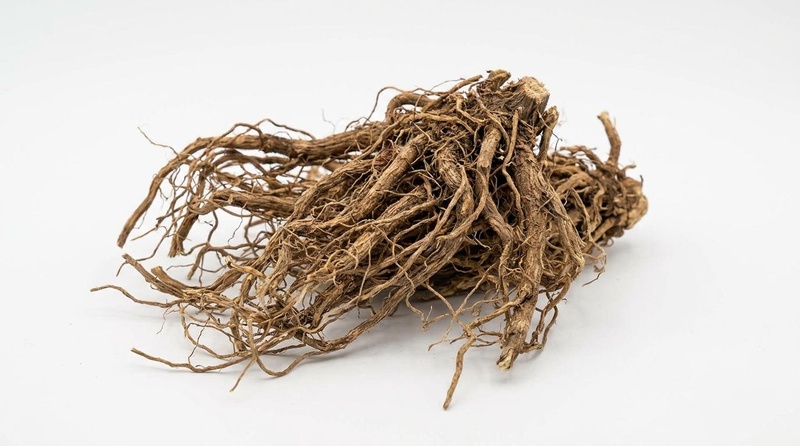
| Type | Botanical Herb |
| Active Cmpds | Valerenic acid, Valepotriates, Iridoids |
| Source | Roots/Rhizomes (V. officinalis) |
| Dose Range | 300–600 mg (Extract) |
| Half-life | ~1.1 hours (Valerenic acid) |
| Main Benefit | Sleep quality & sleep latency |
| Absorption | Rapid (Tmax 1–2 hours) |
Valerian Root (Valeriana officinalis) is one of the most widely used botanical sleep aids, recognized for its mild sedative and anxiolytic properties. While it has been traditionally used for centuries, modern evidence indicates that its primary value lies in improving subjective sleep quality and reducing sleep latency without the morning grogginess associated with pharmaceutical sedatives [1][2].
¶ At a glance
Aliases
- Also known as: All-heal, Amantilla, Setwall, Tagara (Ayurveda), Indian Valerian (V. jatamansi)
- Chemical / botanical name: Valeriana officinalis L., Valeriana jatamansi Jones
- Category: Botanical terpene and iridoid extract
Key points
- Improves subjective sleep quality: Multiple meta-analyses show statistically significant improvements in self-reported sleep quality and reduced sleep latency after 2–4 weeks of continuous use [1:1].
- No objective polysomnography benefit: Recent umbrella reviews suggest that valerian does not meaningfully alter objective sleep architecture or latency when measured via clinical polysomnography in patients with primary insomnia [2:1].
- Excellent safety and low hangover risk: Due to a very short half-life (1.1 hours), it clears the system rapidly, allowing users to wake up without the "hangover" effect typical of benzodiazepines or Z-drugs [3].
- Product heterogeneity: Clinical results are often inconsistent due to a lack of regulatory harmonization in extraction methods and standardization for active compounds like valerenic acid [4].
What people use it for
- Main goals: Subjective sleep quality, sleep latency, daytime anxiety, and nervous tension.
- Evidence quality (overall): Moderate (subjective sleep), Low (anxiety).
¶ What is Valerian Root?
Valerian root is a perennial flowering plant native to Europe and Asia, now widely cultivated for its medicinal roots and rhizomes.
- Definition: A botanical sedative and anxiolytic derived from the subterranean parts of the Valeriana genus, primarily V. officinalis (European) and V. jatamansi (Indian).
- Natural sources: The roots contain a complex mixture of over 150 identified chemical constituents, including volatile oils (sesquiterpenes like valerenic acid), iridoids (valepotriates), alkaloids (valerine), and free amino acids (GABA, glutamine) [5].
- Traditional / historical use: Its use dates back to ancient Greece and Rome, where it was prescribed by Hippocrates and Galen for insomnia, heart palpitations, and tremors.
- Current regulatory status: Regulated as a dietary supplement in the United States and as a Traditional Herbal Medicinal Product (HMP) in the European Union (EMA) [4:1].
- Key pharmacological property: Multi-target GABAergic modulator and adenosine receptor agonist.
¶ What are Valerian Root’s main benefits?
Valerian root's therapeutic effects are characterized by their cumulative nature, often requiring several weeks of consistent intake to reach peak efficacy.
-
Outcome: Subjective Sleep Quality
- Direction of effect: Increase (Improvement)
- Magnitude: Small to Moderate
- Population studied: Adults with mild to moderate sleep disturbances and insomnia.
- Evidence quality: Moderate
- Summary sentence: Significant improvements in self-reported sleep depth and refreshment upon waking have been observed across multiple systematic reviews [1:2][6].
-
Outcome: Sleep Onset Latency (Subjective)
- Direction of effect: Decrease
- Magnitude: Small to Moderate
- Population studied: General adult populations with sleep complaints.
- Evidence quality: Moderate
- Summary sentence: Continuous use for 14 to 28 days reduces the subjective time taken to fall asleep, though objective measurements often show no significant change [1:3][2:2].
-
Outcome: Daytime Anxiety and Tension
- Direction of effect: Decrease
- Magnitude: Small
- Population studied: Stressed adults and individuals with generalized anxiety symptoms.
- Evidence quality: Low to Moderate
- Summary sentence: Valerian root acts as a mild anxiolytic, reducing state anxiety scores without impairing motor function or alertness [1:4][7].
¶ Evidence summary table (human outcomes)
| Outcome / Goal | Effect | Consistency | Evidence quality | Trials | Notes |
|---|---|---|---|---|---|
| Subjective Sleep Quality | High | Moderate | 60+ studies | Significant improvement in self-reported sleep depth and refreshment [1:5][6:1] | |
| Subjective Sleep Latency | Moderate | Moderate | RCTs | Reduces time to fall asleep after 2–4 weeks of continuous use [1:6][3:1] | |
| Objective Sleep (PSG) | High | High | 8 Systematic Reviews | No significant change in polysomnographic (PSG) sleep parameters [2:3] | |
| State Anxiety | Moderate | Low | 8 RCTs | Mild reduction in subjective tension and somatic anxiety symptoms [1:7][7:1] | |
| Mental Energy / Recovery | Low | Low | 1 Scoping Review | Supports cognitive restoration associated with improved sleep [6:2] |
¶ How does Valerian Root work?
Valerian root acts via multiple neurological and peripheral pathways, primarily targeting the brain's inhibitory systems.
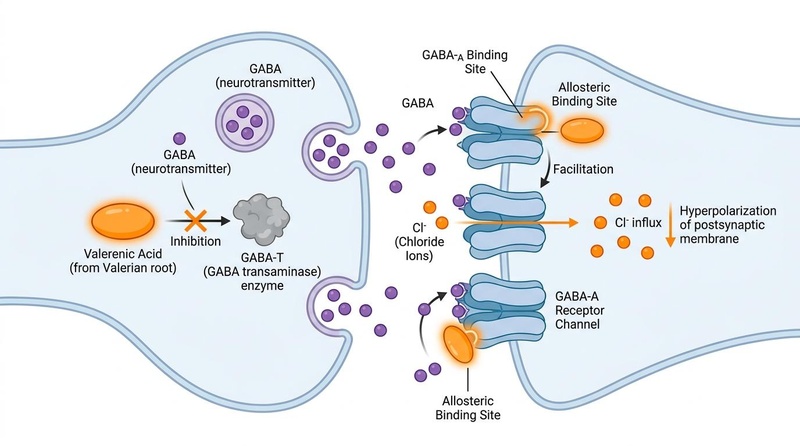
- Primary targets: GABA-A receptors (beta-3 subunit), GABA transaminase (GABA-T), Adenosine A1 receptors, and 5-HT5A serotonin receptors.
- Core mechanisms:
- GABAergic Modulation: Valerenic acid inhibits the enzyme GABA transaminase, preventing the breakdown of GABA in the synaptic cleft. It also acts as a positive allosteric modulator on GABA-A receptors, facilitating chloride influx and hyperpolarizing neurons to induce a calming effect [8].
- Adenosine Synergism: Certain constituents (lignans) act as agonists at the adenosine A1 receptor, mimicking the body's natural "sleep pressure" that builds up during wakefulness [8:1][5:1].
- Serotonergic Stabilization: Valerenic acid shows affinity for the 5-HT5A receptor, which plays a role in circadian rhythm regulation and mood stabilization [8:2][9].
- Gut-Brain Axis Integration: In species like V. jatamansi, active iridoids modulate intestinal microbiota and strengthen the intestinal barrier, potentially influencing central neurotransmission via the gut-brain axis [8:3][10].
- Pharmacokinetics:
- Absorption: Valerenic acid is rapidly absorbed with peak plasma concentrations (Tmax) reaching within 1 to 2 hours after oral administration.
- Half-life: It has an exceptionally short elimination half-life of approximately 1.1 hours. This rapid clearance ensures that the sedative effects do not persist into the following morning [3:2].
- Bioavailability: Valepotriates (iridoids) are highly unstable and often decompose during standard extraction processes, meaning many commercial products rely primarily on valerenic acid and volatile oils for efficacy [4:2].
¶ Effects on different systems
Brain & mental health (sleep, anxiety, cognition)
- Valerian root is primarily used for its CNS-depressing effects. Unlike benzodiazepines, which can disrupt sleep architecture by reducing REM and deep sleep, valerian appears to maintain normal sleep stages [3:3].
- It is particularly effective for "anticipatory anxiety" and social stress, providing a mild calming effect without the cognitive impairment seen with stronger sedatives [1:8][7:2].
Metabolic and Gut health
- Recent translational research (Yang et al., 2026) suggests that Valeriana species exert multi-organ effects, including the regulation of intestinal microbiota composition and metabolic pathways in the gut, which may contribute to its long-term neurological benefits [8:4].
- It possesses spasmolytic (smooth muscle relaxant) properties in the gastrointestinal tract, which can assist with stress-induced digestive discomfort [10:1].
¶ Dosage and how to take it
Standard dosing in studies
- Standardized Extract: 300 to 600 mg daily, standardized to 0.8% to 1.0% valerenic acid.
- Crude Root / Tea: 2 to 3 grams of dried root steeped in hot water.
- Tincture (1:5): 2 to 6 mL, up to three times daily.
Forms and bioavailability
- Dry Extracts: Most commonly used in clinical trials for their standardized active compound content.
- Essential Oils: Contain volatile compounds (bornyl acetate, valeranone) that contribute to the plant's characteristic odor and sedative properties [5:2].
- Fresh vs. Dried: The chemical composition shifts during drying, as valepotriates break down into baldrinals, which are also biologically active.
Special populations
- Pregnancy & Breastfeeding: Contraindicated. There is insufficient safety data, and some constituents (valepotriates) have shown potential mutagenic activity in vitro [3:4].
- Surgery: Stop taking valerian at least 14 days before scheduled surgery, as it can interact unpredictably with volatile anesthetics [3:5].
¶ Safety and side effects
Valerian root is generally considered safe for most adults when used at recommended doses for short-to-medium durations.
Common side effects
- Mild headache
- Gastrointestinal upset (nausea, cramping)
- Vivid dreams
- Rare paradoxical reaction (nervousness or excitability instead of sedation)
Less common / serious concerns
- Hepatotoxicity (Liver Health): Valerian is rarely associated with clinically apparent liver injury. The NIH LiverTox database notes only a few isolated cases of acute hepatitis-like injury, which were usually mild-to-moderate and resolved within 2–4 months of discontinuation [11].
- Morning Grogginess: While rare due to its short half-life, high doses (>900 mg) may cause some residual daytime sleepiness in sensitive individuals.
Who should be especially cautious
- Individuals with pre-existing liver disease.
- Patients taking other central nervous system (CNS) depressants or hepatotoxic medications.
¶ Drug and supplement interactions
Pharmacokinetic interactions
- Cytochrome P450 (CYP3A4): While in vitro studies suggest that valerian extracts can inhibit CYP3A4, human in vivo clinical trials have shown that standard therapeutic doses have no clinically significant effect on the metabolism of drugs processed by the CYP3A4 or CYP2D6 pathways [3:6][12].
- P-glycoprotein: Minimal evidence of in vivo interaction.
Pharmacodynamic interactions
- CNS Depressants: Valerian significantly potentiates the sedative effects of alcohol, benzodiazepines (e.g., Xanax, Valium), Z-drugs (e.g., Ambien), and barbiturates. Combining these is not recommended due to the risk of excessive sedation and respiratory depression [3:7].
¶ Combining Valerian Root with other supplements (“stacks”)
- The "Deep Sleep" Foundation: Valerian (450 mg) + Magnesium Bisglycinate (200 mg). Magnesium provides systemic muscle relaxation while valerian targets neurological sleep pressure.
- The Daytime Anxiolytic Stack: Valerian (120 mg) + L-Theanine (200 mg). This combination provides relaxation without excessive sedation, suitable for high-stress work environments.
- The Traditional Sedative Stack: Valerian Root + Lemon Balm (Melissa officinalis). This is a well-studied clinical combination that has shown superior results for sleep quality compared to valerian alone in some RCTs.
¶ Practical FAQ
How long does it take for Valerian Root to work?
Why does it smell so bad?
The strong, pungent odor (often compared to "dirty socks") is caused by isovaleric acid, a natural breakdown product of valepotriates. A strong smell is actually a sign of a high-quality, authentic extract [5:3].
Is it safe to take every night?
Clinical trials have used valerian for up to 6 weeks with no evidence of dependency or withdrawal. Long-term use (>3 months) has not been extensively studied, so intermittent cycling is often recommended.
Can I take it with my blood pressure or diabetes meds?
Human clinical data suggests a low risk of pharmacokinetic interaction with most medications. However, always monitor for additive sedation if you are on medications that also affect the CNS [3:9].
Is it a "natural" Ambien?
No. Unlike Ambien (a Z-drug) which forces unconsciousness, valerian root gently modulates natural calming pathways. It is more of a "sleep facilitator" than a powerful sedative [2:4].
¶ How we evaluated the evidence
Evidence for valerian root was evaluated using the GRADE framework, with a heavy emphasis on:
- Systematic Reviews and Meta-Analyses: Specifically Shinjyo et al. (2020) and the Valente et al. (2024) umbrella review.
- Clinical Guidelines: European Medicines Agency (EMA) and NIH Office of Dietary Supplements (ODS) fact sheets.
- Pharmacology and Toxicology Databases: NIH LiverTox for hepatotoxicity and clinical pharmacokinetic studies for drug-drug interaction risk.
¶ References
Shinjyo N, Waddell G, Green J. Valerian Root in Treating Sleep Problems and Associated Disorders-A Systematic Review and Meta-Analysis. Journal of evidence-based integrative medicine. 2020. https://pubmed.ncbi.nlm.nih.gov/33086877/ ↩︎ ↩︎ ↩︎ ↩︎ ↩︎ ↩︎ ↩︎ ↩︎ ↩︎ ↩︎
Valente V, Machado D, Jorge S, et al. Does valerian work for insomnia? An umbrella review of the evidence. European neuropsychopharmacology. 2024. https://pubmed.ncbi.nlm.nih.gov/38359657/ ↩︎ ↩︎ ↩︎ ↩︎ ↩︎
National Institutes of Health. Valerian - Health Professional Fact Sheet. Office of Dietary Supplements. 2013. https://ods.od.nih.gov/factsheets/Valerian-HealthProfessional/ ↩︎ ↩︎ ↩︎ ↩︎ ↩︎ ↩︎ ↩︎ ↩︎ ↩︎ ↩︎
Bilia AR, Costa MDC. Medicinal plants and their preparations in the European market: Why has the harmonization failed? The cases of St. John's wort, valerian, ginkgo, ginseng, and green tea. Phytomedicine. 2021. https://pubmed.ncbi.nlm.nih.gov/33291029/ ↩︎ ↩︎ ↩︎
Lunz K, Stappen I. Back to the Roots-An Overview of the Chemical Composition and Bioactivity of Selected Root-Essential Oils. Molecules. 2021. https://pubmed.ncbi.nlm.nih.gov/34070487/ ↩︎ ↩︎ ↩︎ ↩︎
Nieman KM, Zhu Y, Tucker M, et al. The Role of Dietary Ingredients in Mental Energy - A Scoping Review of Randomized Controlled Trials. Journal of the American Nutrition Association. 2024. https://pubmed.ncbi.nlm.nih.gov/37561965/ ↩︎ ↩︎ ↩︎
Nunes A, Sousa M. Use of valerian in anxiety and sleep disorders: what is the best evidence? Acta medica portuguesa. 2011. https://pubmed.ncbi.nlm.nih.gov/22863505/ ↩︎ ↩︎ ↩︎
Yang S, Zhang H, Chen L, et al. Valeriana species and insomnia: multi-organ mechanisms and translational perspectives. Pharmaceutical biology. 2026. https://pubmed.ncbi.nlm.nih.gov/41995686/ ↩︎ ↩︎ ↩︎ ↩︎ ↩︎
Zhao S, Ji X, Li J, et al. Valeriana Jatamansi: An Overview of Phytochemistry, Pharmacology, Clinical Prospects, and Network Analysis of Drug Targets. The American journal of Chinese medicine. 2025. https://pubmed.ncbi.nlm.nih.gov/40582718/ ↩︎
Wang Z, Shi Y, Zhang X, et al. Research progress in the ethnopharmacology, phytochemistry, pharmacology, toxicology, and quality control of Valeriana jatamansi Jones. Journal of ethnopharmacology. 2024. https://pubmed.ncbi.nlm.nih.gov/38821137/ ↩︎ ↩︎
National Institute of Diabetes and Digestive and Kidney Diseases. Valerian. LiverTox: Clinical and Research Information on Drug-Induced Liver Injury. 2018. https://www.ncbi.nlm.nih.gov/books/NBK548255/ ↩︎
Donovan JL, DeVane CL, Chavin KD, et al. Multiple night-time doses of valerian (Valeriana officinalis) had minimal effects on CYP3A4 activity and no effect on CYP2D6 activity in healthy volunteers. Drug Metabolism and Disposition. 2004. https://pubmed.ncbi.nlm.nih.gov/15328251/ ↩︎