¶ 1. At a Glance
Vitamin C (Ascorbic Acid) is an essential, water-soluble micronutrient and a potent electron-donating antioxidant. Because humans lack the enzyme L-gulonolactone oxidase, they cannot synthesize Vitamin C endogenously and must obtain it entirely through diet or supplementation [1]. Beyond its historic role in preventing scurvy, Vitamin C serves as an indispensable cofactor for numerous enzymatic reactions, notably in collagen synthesis, catecholamine production, and the epigenetic regulation of DNA and histones [1:1].
In longevity and clinical contexts, high-dose Vitamin C is utilized via oral, liposomal, and intravenous (IV) routes to counteract oxidative stress, optimize immune function, and support structural tissue integrity [2]. While basic dietary intake suffices for preventing acute deficiency, supranutritional dosing is frequently leveraged by biohackers, athletes, and clinicians aiming to reduce the severity of upper respiratory infections, support post-exercise recovery, and modulate immune responses in critical illness [3][4].
The Bottom Line: Low-dose oral Vitamin C is fundamentally safe and critical for human health. High-dose oral and liposomal forms provide marginal but measurable benefits for immune function and skin health, whereas high-dose intravenous (IV) Vitamin C is a targeted, pharmacological intervention showing complex, context-dependent effects in critical care and oncology.
¶ 2. Safety "Traffic Light"
🟢 GO: Standard Oral Doses (Up to 1,000 mg/day)
Standard oral supplementation is extremely safe for the general population. Excess water-soluble ascorbate is rapidly excreted in the urine [5].
🟡 CAUTION: High Oral Doses (2,000+ mg/day)
Doses above 2g daily may cause osmotic diarrhea, gastrointestinal distress, and an increased risk of calcium oxalate kidney stones in susceptible individuals [6]. Patients with hemochromatosis or iron-overload disorders must use caution, as Vitamin C significantly enhances non-heme iron absorption [7].
🔴 STOP: Unsupervised Intravenous (IV) Administration
High-dose IV Vitamin C (>10g) acts as a pro-oxidant rather than an antioxidant and must be administered strictly under medical supervision. It is contraindicated in patients with Glucose-6-Phosphate Dehydrogenase (G6PD) deficiency due to the risk of severe hemolytic anemia, and in patients with impaired renal function due to risks of fatal acute oxalate nephropathy [8][9].
¶ 3. Protocol Card
| Parameter | Guideline |
|---|---|
| Basic Daily Need | 75–90 mg (RDA) to prevent clinical scurvy [1:2][10]. |
| Longevity / General Health | 500 – 1,000 mg daily, ideally in divided doses or a sustained-release format to maximize tissue saturation. |
| Immune / Acute Support | 1,000 – 2,000 mg daily at the onset of symptoms (e.g., common cold) [3:1]. |
| Liposomal Delivery | 1,000 – 3,000 mg equivalent. Provides up to 1.5–2x higher peak plasma levels and intracellular delivery compared to standard ascorbic acid, bypassing gastrointestinal tolerance limits [11][12]. |
| Intravenous (Pharmacological) | Ranging from 10 g to 100 g per infusion, utilized specifically in oncology or sepsis protocols under strict clinical monitoring [5:1][13]. |
| Synergies | Synergistic with Vitamin E (regenerates alpha-tocopherol), non-heme Iron (enhances absorption by reducing Fe3+ to Fe2+), and bioflavonoids (e.g., Quercetin) [7:1]. |
¶ 4. The Contextual Narrative: Benefits & Realities
¶ The "Why" (Primary Benefits)
Immune Modulation and Defense
Vitamin C accumulates at high concentrations within leukocytes (white blood cells), specifically neutrophils, where it facilitates chemotaxis, phagocytosis, and the generation of reactive oxygen species necessary for microbial destruction. Crucially, it protects the neutrophils themselves from oxidative damage during the inflammatory response [1:3]. Regular supplementation has been consistently shown to shorten the duration and severity of the common cold, though it does not reliably prevent the onset of illness in the general population [14][3:2].
Collagen Synthesis and Skin Health
Vitamin C is an obligate cofactor for prolyl hydroxylase and lysyl hydroxylase, the enzymes responsible for stabilizing and cross-linking collagen molecules. Without adequate ascorbate, collagen structure collapses. Supplementation, as well as topical application, significantly improves skin elasticity, accelerates wound healing, and defends against UV-induced photoaging [2:1][15].
Antioxidant & Cardiovascular Support
As a potent water-soluble antioxidant, ascorbate scavenges free radicals, protecting lipids, proteins, and nucleic acids from oxidative damage. While umbrella reviews indicate that higher intake is associated with positive cardiovascular risk profiles in observational studies, massive supplemental doses have not conclusively proven to prevent cardiovascular events in randomized clinical trials [16].
¶ Reality Check: The Bioavailability Bottleneck
A critical reality of Vitamin C supplementation is tight pharmacokinetic control. The human body meticulously regulates ascorbate levels through intestinal absorption, tissue transport, and renal excretion [5:2].
- Oral Dosing: Absorption efficiency is dose-dependent. At an oral dose of 200 mg, absorption is nearly 100%. However, at a single dose of 1,250 mg, absorption plummets to less than 50%, and the unabsorbed ascorbate draws water into the gut, causing osmotic diarrhea. Oral dosing rarely pushes plasma concentrations past 70-80 μmol/L [5:3].
- Liposomal Formulations: Encapsulating ascorbic acid in lipid bilayers (liposomes) significantly bypasses intestinal active transport limits. Clinical comparisons show that liposomal Vitamin C provides superior oral bioavailability, higher peak plasma concentrations, and sustained retention compared to non-liposomal powders, making it the preferred choice for biohackers seeking high intracellular levels without GI distress [11:1][17][12:1].
- Intravenous (IV) Administration: IV infusion entirely bypasses tight intestinal control, generating pharmacologic plasma concentrations exceeding 20,000 μmol/L. At these extreme concentrations, Vitamin C ceases to be an antioxidant and instead acts as a pro-oxidant prodrug, generating hydrogen peroxide () in extracellular fluid—a mechanism exploited in adjunctive cancer therapies [5:4][13:1].
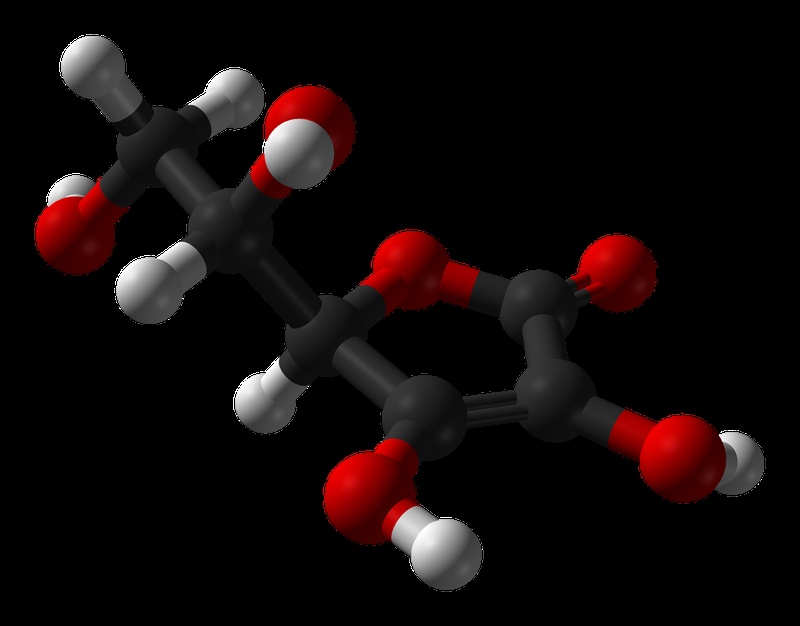
Ball-and-stick model of the L-ascorbic acid molecule.
¶ 5. The Evidence Room: Clinical Data & Outcomes
¶ Mechanism of Action
Vitamin C is fundamentally a reducing agent (electron donor). It exists in two primary forms: the reduced form (ascorbic acid) and the oxidized form (dehydroascorbic acid, or DHA).
- Redox Cycling: It donates two electrons to unstable free radicals. In doing so, it neutralizes the radical and becomes an ascorbyl radical, which is subsequently converted back into ascorbate via glutathione or thioredoxin-dependent enzymes.
- Epigenetic Regulation: Vitamin C acts as a cofactor for Ten-Eleven Translocation (TET) dioxygenases, which are responsible for DNA demethylation. By supporting TET activity, Vitamin C regulates gene expression pathways critical for stem cell pluripotency and immune cell differentiation [1:4].
- Vitamin E Regeneration: Vitamin C uniquely interacts with lipid-soluble Vitamin E at the cell membrane boundary. After Vitamin E neutralizes a lipid radical, Vitamin C donates an electron to regenerate the oxidized Vitamin E, acting as a crucial bridge between aqueous and lipid antioxidant networks.
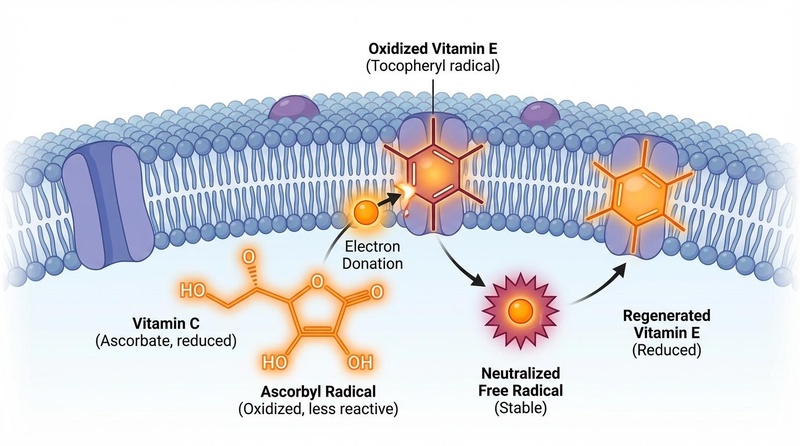
Illustration of Vitamin C acting as an antioxidant electron donor, neutralizing a free radical and regenerating Vitamin E.
¶ Evidence Summary Table (Human Outcomes)
| Condition / Outcome | Evidence Grade | Clinical Finding | References |
|---|---|---|---|
| Common Cold (Severity/Duration) | Moderate | Regular supplementation ( 1g/day) reduces the duration of colds by 8% in adults and 14% in children, and reduces severity. Does not prevent colds in the general public. | [14:1][3:3] |
| Common Cold (Physical Stress) | High | In populations under extreme physical stress (marathon runners, skiers, soldiers), prophylactic supplementation halves the incidence of the common cold. | [14:2][3:4] |
| Skin Aging & Photo-damage | Moderate | Oral and topical administration improves collagen density, skin hydration, and protects against UV damage. | [2:2][15:1][18] |
| Sepsis & Critical Care | Low / Mixed | High-dose IV protocols in ICU settings (often combined with thiamine and hydrocortisone) show highly variable results. Some trials report reduced vasopressor requirements, but large RCTs (like LOVIT and VICTAS) have shown no significant reduction in mortality. | [19][4:1][20][21] |
| Cancer Treatment (Adjunctive) | Low | High-dose IV ascorbate is safe alongside standard chemotherapy and may improve quality of life and progression-free survival in specific cohorts, but large-scale definitive trials on overall survival remain inconclusive. | [22][23][24][13:2] |
| Iron Deficiency Anemia | High | Co-administration of oral Vitamin C (e.g., 200–500 mg) with iron supplements significantly enhances non-heme iron absorption and improves hematological parameters. | [7:2][25] |
¶ Comprehensive Safety and Toxicology
While generally recognized as safe (GRAS), high-dose administration carries specific risks:
- Oxalate Nephropathy: Ascorbic acid is metabolized into oxalate, which is excreted by the kidneys. Massive doses (especially IV, or highly sustained oral doses >2g/day) can overwhelm renal clearance, leading to calcium oxalate precipitation, nephrolithiasis (kidney stones), and in severe cases, acute oxalate nephropathy and renal failure. This is particularly relevant in patients with pre-existing renal insufficiency [8:1][6:1][9:1].
- Hemolysis in G6PD Deficiency: Patients lacking Glucose-6-Phosphate Dehydrogenase are susceptible to red blood cell rupture when exposed to the massive oxidative stress induced by pharmacological IV Vitamin C.
- Iron Toxicity: Because it potently upregulates intestinal iron absorption, individuals with hemochromatosis, thalassemia, or frequent blood transfusions must avoid excessive Vitamin C to prevent iron toxicity and subsequent organ damage [26].
- Laboratory Interference: High plasma ascorbate can falsely elevate or depress various laboratory tests, including blood glucose readings (causing false-highs on continuous glucose monitors and finger-stick tests), bilirubin, and creatinine assays [1:5].
¶ Comparisons & Interactions
- Vitamin C vs. Glutathione: Both are primary aqueous antioxidants. Vitamin C acts directly on radicals and regenerates Vitamin E, while Glutathione (the "master antioxidant") frequently functions as the biochemical engine that recycles oxidized Vitamin C back to its active state. They are highly synergistic.
- Ascorbic Acid vs. "Whole Food" Vitamin C: Biohackers often debate synthetic ascorbic acid vs. whole-food derivatives (e.g., Camu Camu, Acerola). Chemically, L-ascorbic acid is identical regardless of origin. However, whole-food sources provide co-occurring bioflavonoids (like quercetin and rutin) that can enhance bioavailability and provide supplementary anti-inflammatory benefits [17:1].
¶ References
Doseděl, M., Jirkovský, E., Macáková, K., et al. (2021). Vitamin C—Sources, Physiological Role, Kinetics, Deficiency, Use, Toxicity, and Determination. Nutrients. https://www.semanticscholar.org/paper/b2ad9e56642b250eb50bc732d5575ab3bf9fd7ef ↩︎ ↩︎ ↩︎ ↩︎ ↩︎ ↩︎
Pullar, J. M., Carr, A. C., & Vissers, M. C. M. (2017). The Roles of Vitamin C in Skin Health. Nutrients. https://pubmed.ncbi.nlm.nih.gov/28805671/ ↩︎ ↩︎ ↩︎
Hemila, H. (2023). Vitamin C reduces the severity of common colds. BMC Public Health. https://bmcpublichealth.biomedcentral.com/counter/pdf/10.1186/s12889-023-17229-8.pdf ↩︎ ↩︎ ↩︎ ↩︎ ↩︎
LOVIT-COVID Investigators, et al. (2023). Intravenous Vitamin C for Patients Hospitalized With COVID-19: Two Harmonized Randomized Clinical Trials. JAMA. https://pubmed.ncbi.nlm.nih.gov/37877585/ ↩︎ ↩︎
Padayatty, S., Sun, H., Wang, Y., et al. (2004). Vitamin C Pharmacokinetics: Implications for Oral and Intravenous Use. Annals of Internal Medicine. https://www.semanticscholar.org/paper/17a8c266587da1107fc9f4f41e9306abd947e799 ↩︎ ↩︎ ↩︎ ↩︎ ↩︎
Moyad, M., Combs, M., Crowley, D. C., et al. (2009). Vitamin C with metabolites reduce oxalate levels compared to ascorbic acid: a preliminary and novel clinical urologic finding. Urologic Nursing. https://www.semanticscholar.org/paper/54a66975ee248924a2570a268ea5fc807423a94d ↩︎ ↩︎
Loganathan, V., Bharathi, A., Prince, A., et al. (2023). Treatment efficacy of vitamin C or ascorbate given as co-intervention with iron for anemia - A systematic review and meta-analysis of experimental studies. Clinical Nutrition ESPEN. https://www.semanticscholar.org/paper/758a936b5754e9bac96151fc499408799f1485b9 ↩︎ ↩︎ ↩︎
Giffen, M., & McLemore, J. (2019). Hyperoxalosis Secondary to Intravenous Vitamin C Administration as a Non-Allopathic Treatment for Cancer. Academic Forensic Pathology. https://www.semanticscholar.org/paper/0a5bb06a73ca0e7fccdb6bad2543c2b392e7d234 ↩︎ ↩︎
Fontana, F., Cazzato, S., Giovanella, S., et al. (2020). Oxalate nephropathy due to excessive vitamin C administration in two patients with COVID-19. Journal Pre-proof. https://www.semanticscholar.org/paper/95ce2e424904478cc0189f2366b53c27ba5a78e3 ↩︎ ↩︎
Figueroa-Ramos, G., Barrera-Godínez, A., & Gatica-Torres, M. (2023). Scurvy: a forgotten but still present disease. International Journal of Dermatology. https://www.semanticscholar.org/paper/d741cb3c48234bf954859d223e9c33467882b72b ↩︎
Gopi, S., & Balakrishnan, P. (2020). Evaluation and clinical comparison studies on liposomal and non-liposomal ascorbic acid (vitamin C) and their enhanced bioavailability. Journal of liposome research. https://www.semanticscholar.org/paper/c6ef039837d64c4caa0004d3a6da54d2ec282daf ↩︎ ↩︎
Żmuda, P., Khaidakov, B., Krasowska, M., et al. (2024). Bioavailability of Liposomal Vitamin C in Powder Form: A Randomized, Double-Blind, Cross-Over Trial. Applied Sciences. https://www.semanticscholar.org/paper/4d8cea33b52b05c574c48d4aedc1ae580ca790a9 ↩︎ ↩︎
Nauman, G., et al. (2018). Systematic Review of Intravenous Ascorbate in Cancer Clinical Trials. PMC. https://pmc.ncbi.nlm.nih.gov/articles/PMC6071214/ ↩︎ ↩︎ ↩︎
Hemilä, H., & Chalker, E. (2013). Vitamin C for preventing and treating the common cold. Cochrane Database of Systematic Reviews. https://bmcpublichealth.biomedcentral.com/counter/pdf/10.1186/s12889-023-17229-8.pdf ↩︎ ↩︎ ↩︎
Ryu, T. K., Lee, H., & Yon, D. K. (2022). The antiaging effects of a product containing collagen and ascorbic acid: In vitro, ex vivo, and pre-post intervention clinical trial. PloS one. https://pubmed.ncbi.nlm.nih.gov/36508415/ ↩︎ ↩︎
Ashor, A. W., et al. (2019). Limited evidence for a beneficial effect of vitamin C supplementation on biomarkers of cardiovascular diseases: an umbrella review. PubMed. https://pubmed.ncbi.nlm.nih.gov/30683434/ ↩︎
Calder, P. C., Kreider, R., & McKay, D. L. (2025). Enhanced Vitamin C Delivery: A Systematic Literature Review Assessing the Efficacy and Safety of Alternative Supplement Forms in Healthy Adults. Nutrients. https://www.semanticscholar.org/paper/89927cf70bfe77422c38bdb33d9fddf250b600dd ↩︎ ↩︎
Bowe, W. P., et al. (2025). Clinical Utility of TRPV1 Modulation for Skincare Sensitivity. Journal of drugs in dermatology. https://pubmed.ncbi.nlm.nih.gov/40196961/ ↩︎
Vandervelden, S., Cortens, B., Fieuws, S., et al. (2025). Early administration of vitamin C in patients with sepsis or septic shock in emergency departments: a multicenter, double-blind, randomized controlled trial: the C-EASIE trial. Critical care. https://pubmed.ncbi.nlm.nih.gov/40269974/ ↩︎
Busse, L. W., Schaich, C. L., & Chappell, M. C. (2024). Association of Active Renin Content With Mortality in Critically Ill Patients: A Post hoc Analysis of the Vitamin C, Thiamine, and Steroids in Sepsis (VICTAS) Trial. Critical care medicine. https://pubmed.ncbi.nlm.nih.gov/37947484/ ↩︎
Li, W., Zhao, R., & Liu, S. (2024). High-dose vitamin C improves norepinephrine level in patients with septic shock: A single-center, prospective, randomized controlled trial. Medicine. https://pubmed.ncbi.nlm.nih.gov/38608046/ ↩︎
Lee, S. J., et al. (2022). Overall and Progression-Free Survival of Patients With Malignant Neoplasm Following Intravenous Vitamin C: A Systematic Review and Meta-Analysis. PubMed. https://pubmed.ncbi.nlm.nih.gov/40613397/ ↩︎
Jacobs, C., et al. (2015). Is there a role for oral or intravenous ascorbate (vitamin C) in treating patients with cancer? A systematic review. PubMed. https://pubmed.ncbi.nlm.nih.gov/25601965/ ↩︎
Zhang, Y., Yang, H., & Chen, M. (2026). Pharmacological Vitamin C Plus Oncolytic Adenoviruses Orchestrate Immunogenic Tumor Ferroptosis. Journal of medical virology. https://pubmed.ncbi.nlm.nih.gov/41689493/ ↩︎
Garcia-Casal, M., Leets, I., & Layrisse, M. (2000). β-Carotene and Inhibitors of Iron Absorption Modify Iron Uptake by Caco-2 Cells. Journal of NutriLife. https://www.semanticscholar.org/paper/4240ec76430320c7b3780ce3d071da372feb14aa ↩︎
Gerster, H. (1999). High-dose vitamin C: a risk for persons with high iron stores? International journal for vitamin and nutrition research. https://www.semanticscholar.org/paper/20388784997db01828b79236076b6b41ebfa59cc ↩︎