¶ Zinc
Zinc is an essential trace mineral required for the structural and catalytic activity of over 300 enzymes. It plays a foundational role in immune resilience, endocrine regulation, protein synthesis, and cellular signaling, making it one of the most clinically significant micronutrients for human health.
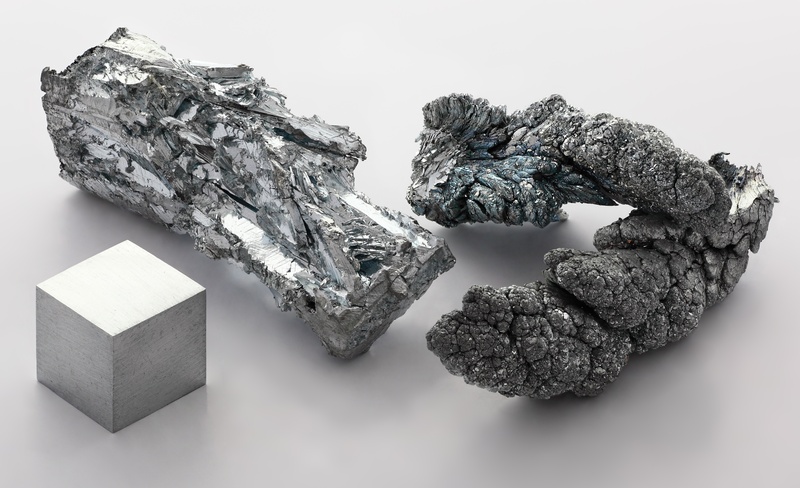
| Type | Essential Mineral |
| Active Cmpd | Ionic Zinc (Zn²⁺) |
| Source | Oysters, Red Meat, Poultry, Legumes |
| Dose Range | 8–11 mg (Maintenance); 75–80 mg (Cold) |
| Half-life | ~280 days (whole body) |
| Main Benefit | Immune defense and enzymatic catalytic function |
| Absorption | 20%–40% (Form and diet dependent) |
¶ At a glance
¶ Aliases
- Also known as: Zinc, Zn, Zn²⁺ (ionic form)
- Chemical name: Zinc
- Category: Essential Trace Mineral
¶ Key points
- Strongest Clinical Effect: High-dose zinc lozenges (>75 mg/day) reduce the duration of the common cold by approximately 33% when initiated within 24 hours of symptom onset [1].
- Endocrine Support: Effectively restores serum testosterone and improves semen quality in men with baseline zinc deficiency, though it does not provide further enhancement in replete individuals [2][3].
- Mucosal Protection: Significantly reduces the severity and incidence of oral mucositis in patients undergoing radiation or chemotherapy for head and neck cancers [4][5].
- Safety Limitation: Chronic high-dose intake (>40 mg/day) induces copper deficiency, which can lead to potentially irreversible neurological damage and sideroblastic anemia [6][7].
¶ What people use it for
- Main goals: Immune resilience, cold recovery, hormonal optimization, skin health (acne/warts), and metabolic support.
- Evidence quality (overall): High for common cold and diarrhea; Moderate for testosterone (in deficient populations) and oral mucositis.
¶ What is Zinc?
Zinc is a fundamental trace element essential for human life. Unlike fat-soluble vitamins, the human body lacks a specialized storage system for zinc, necessitating a consistent daily intake through diet or supplementation to maintain physiological steady states.
- Definition: Zinc is a metallic chemical element (atomic number 30) that functions as a mandatory cofactor for over 300 enzymes and more than 2,000 transcription factors involved in gene expression.
- Natural sources: Oysters provide the highest concentration of zinc per serving. Other rich sources include red meat, poultry, beans, nuts, and certain types of seafood (crab, lobster).
- Bioavailability: Absorption is influenced by dietary "antinutrients," specifically phytates found in whole grains and legumes, which bind to zinc and inhibit its uptake. Consequently, vegans and vegetarians may require up to 50% more than the RDA to achieve adequacy.
- Pharmacological property: A versatile enzymatic catalyst, structural protein stabilizer, and intracellular second messenger in immune signaling.
¶ What are Zinc's main benefits?
Zinc is one of the most extensively studied minerals in human clinical nutrition. Its benefits are primarily realized in the domains of immunology, endocrinology, and tissue repair.
- Immune Resilience: In addition to its role in developmental immunity, zinc provides an acute antiviral effect in the upper respiratory tract. Ionic zinc released from lozenges physically interferes with the binding of rhinoviruses to the pharyngeal mucosa [1:1].
- Metabolic Health: Meta-analyses of randomized controlled trials (RCTs) show that zinc supplementation significantly improves lipid profiles (lowering LDL and triglycerides) and enhances glycemic control (lowering HbA1c and fasting glucose) in patients with Type 2 Diabetes [8][9][10].
- Hormonal Regulation: Zinc is critical for the conversion of cholesterol to testosterone and the maintenance of the pituitary-testicular axis. In deficient men, supplementation restores normal androgen levels and improves sperm motility and count [2:1][3:1].
- Dermatological Health: Zinc is a potent agent for the treatment of viral warts and has shown efficacy in reducing inflammatory acne lesions [11][12].
¶ Evidence summary table (human outcomes)
| Outcome / Goal | Effect* | Consistency | Evidence quality | Trials | Notes |
|---|---|---|---|---|---|
| Common Cold Duration | High | High | Meta-analysis | Lozenges >75 mg/day started <24h reduce duration by ~33% [1:2] | |
| Serum Testosterone | High | Moderate | Systematic Review | Restores normal levels only in deficient men; no effect in replete men [2:2][3:2] | |
| Oral Mucositis | High | Moderate | Meta-analysis | Local administration (lozenges/rinses) reduces severity in cancer therapy [4:1][5:1] | |
| Pediatric ADHD | Moderate | Moderate | Meta-analysis | Lower baseline levels found in ADHD; supplementation reduces core symptoms [13][14] | |
| Viral Warts | High | High | Meta-analysis | Oral zinc sulfate significantly reduces recurrence and aids clearance [11:1] | |
| Lipid Profile (T2D) | Moderate | Moderate | Meta-analysis | Modest reductions in LDL, Total Cholesterol, and Triglycerides in T2D [8:1] | |
| Glycemic Control | Moderate | Moderate | Meta-analysis | Reduces fasting blood glucose and HbA1c in overweight/obese populations [9:1][10:1] | |
| Primary Dysmenorrhea | High | High | Meta-analysis | Reduces pain intensity and duration via prostaglandin inhibition [15] | |
| Tinnitus | Low | Moderate | Cochrane Review | Current evidence does not support zinc for tinnitus in general populations [16] | |
| Inflammatory Markers | Moderate | Moderate | Meta-analysis | Reduces CRP and pro-inflammatory cytokines in adults [17][18][7:1] |
* Effect: ↑ (increase), ↓ (decrease), = (no effect), ? (unclear). (p) = positive for health, (n) = negative for health, (x) = neutral.
¶ How does Zinc work?
Zinc operates through structural, catalytic, and signaling mechanisms that influence nearly every organ system in the body.
¶ 1. Structural and Catalytic Roles
Zinc is a mandated component of the "zinc finger" motif, a structural element in proteins that allows them to bind to DNA. This makes zinc a primary regulator of gene transcription. Catalytically, it is the active center of over 300 enzymes, including carbonic anhydrase (acid-base balance) and alcohol dehydrogenase.
¶ 2. Immune Signaling and Autophagy
Zinc acts as an intracellular second messenger. In immune cells, an influx of zinc ions (Zn²⁺) inhibits the mTOR (mammalian target of rapamycin) complex. This inhibition triggers autophagy (cellular "clean-up") and modulates the production of pro-inflammatory cytokines like IL-1β and TNF-α, helping to resolve inflammation [17:1][7:2].
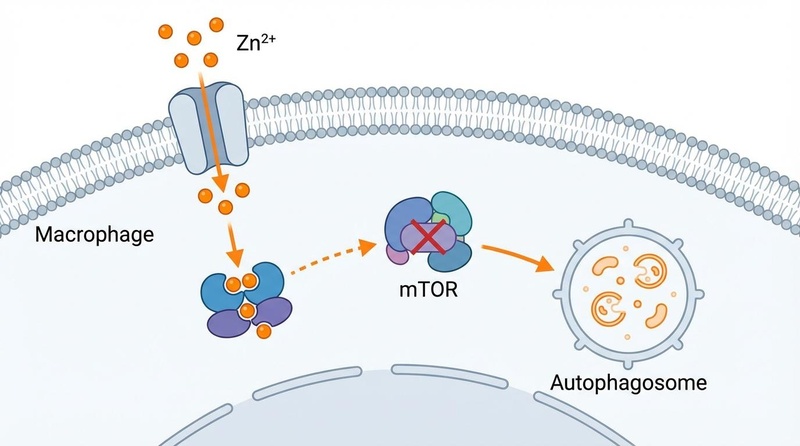
Intracellular zinc inhibits the mTOR pathway in macrophages, promoting autophagy and regulating the immune response.
¶ 3. Antiviral Mechanism (Local)
In the upper respiratory tract, ionic zinc exerts a local antiviral effect. It binds to the intercellular adhesion molecule-1 (ICAM-1) on the surface of the pharyngeal mucosa, effectively blocking rhinoviruses from entering the cells. It also inhibits the viral RNA polymerase, slowing the replication of the virus [1:3][5:2].
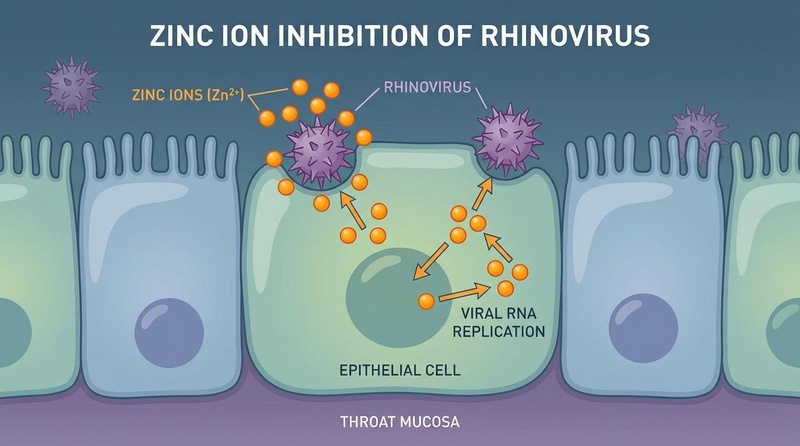
Ionic zinc (Zn²⁺) physically blocks rhinoviruses from binding to cellular receptors in the throat mucosa.
¶ Effects on different systems
¶ Immune Health and Infection
Zinc is arguably the most important mineral for immune resilience. Beyond the common cold, zinc is a standard-of-care intervention for pediatric diarrhea in developing nations, where it reduces both duration and severity [19]. It also plays a protective role in preventing bacterial infections across all age groups [20].
¶ Endocrine and Reproductive Health
Zinc is heavily concentrated in the prostate and testes. It is essential for androgen synthesis and the protection of sperm from oxidative damage. In women, zinc supplementation has been shown to significantly alleviate the pain of primary dysmenorrhea (menstrual cramps) by inhibiting prostaglandin synthesis [15:1].
¶ Metabolic Health
In populations with Type 2 Diabetes or obesity, zinc acts as an insulin mimetic and sensitizer. It improves the lipid profile by reducing LDL-C and triglycerides while moderately increasing HDL-C [8:2]. It also lowers markers of systemic oxidative stress (e.g., malondialdehyde) [21].
¶ Cognitive and Neurological Health
Zinc is a potent modulator of neurotransmission, particularly in the glutamatergic and GABAergic systems. Low zinc status is associated with pediatric ADHD, and supplementation has been shown to improve attention and reduce hyperactivity [13:1][14:1]. It may also have emerging roles in the management of migraine and the regulation of BDNF (Brain-Derived Neurotrophic Factor) [22][23].
¶ Skin and Mucous Membranes
The role of zinc in cell division makes it critical for wound healing. Oral zinc sulfate is highly effective for clearing viral warts and reducing the recurrence rate [11:2]. Additionally, local zinc administration is a primary strategy for preventing radiation-induced oral mucositis [4:2][5:3].
¶ Dosage and how to take it
¶ Standard Dosing in Studies
- Daily Maintenance: 8 mg for women, 11 mg for men.
- Vegetarians/Vegans: May require 12–17 mg/day due to phytate-induced absorption issues.
- Cold Protocol: 75–80 mg of elemental zinc (from gluconate or acetate lozenges), taken in divided doses every 2–3 hours during waking hours, initiated within 24 hours of cold onset. This high-dose protocol should not exceed 10–14 days.
¶ Forms and Bioavailability
- Zinc Picolinate / Bisglycinate: Bound to organic acids or amino acids; these show superior absorption and better gastrointestinal tolerance than inorganic forms [24].
- Zinc Gluconate / Acetate: Preferred for lozenges intended for local antiviral effects in the throat.
- Zinc Oxide: Generally poor bioavailability (~5%); largely unsuitable for systemic supplementation but effective for topical use (sunscreens).
¶ With or Without Food
Taking zinc on an empty stomach often causes severe nausea and stomach cramps. It is strongly recommended to take zinc with a meal. However, avoid taking it simultaneously with high-phytate foods (grains/legumes), high-dose iron, or high-dose calcium, as these compete for or inhibit absorption.
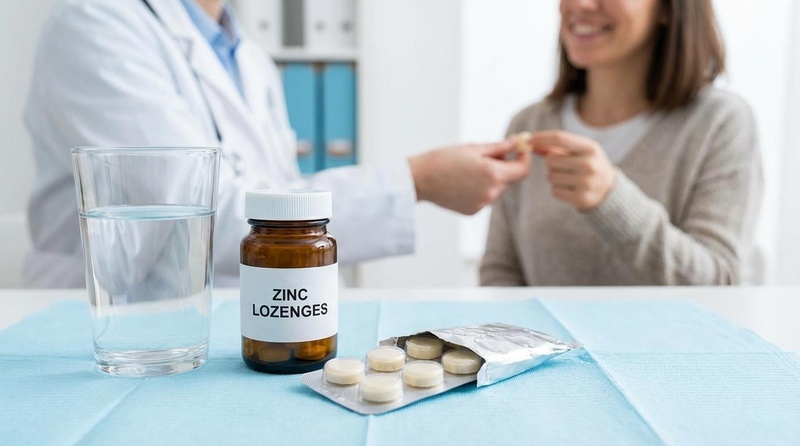
Zinc lozenges are the preferred form for acute cold relief, delivering ionic zinc directly to the pharyngeal mucosa.
¶ Safety and side effects
¶ Common Side Effects
- Nausea and Vomiting: The most common acute side effect, especially when taken on an empty stomach or at doses above 40 mg.
- Metallic Taste: Frequently reported with high-dose lozenges.
¶ The Copper Danger (Chronic Toxicity)
The most severe risk of long-term zinc supplementation (typically >50 mg/day for several weeks/months) is induced copper deficiency. Zinc stimulates the production of metallothionein in the gut, which binds copper and prevents its absorption.
- Sideroblastic Anemia: A type of anemia that does not respond to iron.
- Neutropenia: Low white blood cell count.
- Neurological Damage: Symptoms include numbness, ataxia (loss of coordination), and spasticity, mimicking Vitamin B12 deficiency. These effects can sometimes be permanent if not caught early [6:1][7:3].
¶ Who should be especially cautious?
- Head and Neck Cancer Patients: Should coordinate zinc use with their oncologist, particularly regarding the timing of lozenges [4:3].
- Individuals with Chronic Kidney Disease: May have altered trace element clearance and should use caution [25].
- Pregnant/Breastfeeding: Doses should generally not exceed the UL (40 mg) unless medically supervised.
¶ Drug and supplement interactions
- Antibiotics: Zinc significantly reduces the absorption of Quinolones (e.g., Ciprofloxacin) and Tetracyclines. Separate doses by at least 2 hours before or 4-6 hours after the antibiotic.
- Iron: High doses of supplemental iron (38 mg+) can inhibit zinc absorption if taken together.
- Copper: Zinc and copper compete for the same absorption pathways. Long-term zinc use should ideally be balanced with small amounts of copper (typically 1-2 mg copper for every 15-30 mg zinc).
- Diuretics: Thiazide diuretics (e.g., Hydrochlorothiazide) can increase the excretion of zinc in the urine.
¶ Combining Zinc with other supplements ("stacks")
- The "Immune Stack": Combining zinc with Vitamin C and Vitamin D is a popular evidence-informed strategy for seasonal immune support.
- The "ZMA" Stack: A combination of Zinc, Magnesium, and Vitamin B6, often used by athletes for sleep quality and hormonal recovery.
- Zinc + Copper: A safety-focused stack for long-term use to prevent zinc-induced copper deficiency.
¶ Practical questions (FAQ)
¶ 1. How long does it take for zinc to work for a cold?
If started within the first 24 hours of symptoms, high-dose lozenges can reduce the duration of the cold by approximately 1-3 days. You may notice a reduction in throat soreness within hours of the first lozenge.
¶ 2. Can I take 50 mg of zinc every day?
Generally, no. The Tolerable Upper Intake Level (UL) is 40 mg. Taking 50 mg or more daily for months significantly increases the risk of copper deficiency and neurological damage [6:2].
¶ 3. Does zinc help with testosterone if my levels are already normal?
There is no evidence that zinc increases testosterone in healthy men who are not deficient. It only restores levels in those with marginal or severe deficiency [3:3].
¶ 4. Which form of zinc is best for absorption?
Zinc Picolinate and Zinc Bisglycinate are widely considered the most bioavailable and gut-friendly forms for systemic absorption.
¶ 5. Can zinc help with hair loss?
Zinc deficiency is a known cause of alopecia (hair loss). In people with chronic liver disease or other causes of deficiency, restoring zinc levels can improve hair regrowth [21:1]. However, it is not a primary treatment for male pattern baldness (androgenetic alopecia).
¶ How we evaluated the evidence
Our assessment prioritized high-impact systematic reviews and meta-analyses published between 2016 and 2026.
- High Certainty: Assigned to the common cold and viral warts, where multiple meta-analyses of RCTs show consistent, large effects.
- Moderate Certainty: Assigned to testosterone restoration, oral mucositis, and metabolic markers in diabetes, where effects are population-specific.
- Low Certainty: Assigned to tinnitus and cognitive enhancement in healthy adults, where data are sparse or conflicting.
¶ References
Nault, D., et al. (2024). Zinc for prevention and treatment of the common cold. Cochrane Database of Systematic Reviews. https://www.semanticscholar.org/paper/9e71b476a5da901d9bc35c55d4dedde3e0bd169e ↩︎ ↩︎ ↩︎ ↩︎
Prasad, A. S., et al. (1996). Zinc status and serum testosterone levels of healthy adults. Nutrition. https://pubmed.ncbi.nlm.nih.gov/8875519/ ↩︎ ↩︎ ↩︎
Piao, O., et al. (2022). Correlation between serum zinc and testosterone: A systematic review. Journal of Trace Elements in Medicine and Biology. https://pubmed.ncbi.nlm.nih.gov/36577241/ ↩︎ ↩︎ ↩︎ ↩︎
Wang, J., Hu, J., & Luo, Y. (2026). Time-dependent efficacy of zinc supplements in preventing oral mucositis after chemoradiotherapy: a meta-analysis. Supportive Care in Cancer. https://pubmed.ncbi.nlm.nih.gov/41872524/ ↩︎ ↩︎ ↩︎ ↩︎
Tsao, C. S., Wang, K. Y., & Liao, C. Y. (2026). The Route of Administration Determines the Efficacy of Zinc in Preventing Radiation-Induced Oral Mucositis: A Systematic Review and Meta-Analysis. Current Oncology. https://pubmed.ncbi.nlm.nih.gov/42346271/ ↩︎ ↩︎ ↩︎ ↩︎
Dutta, A., Chaudhary, V., & Kumari, S. (2026). Zinc-Induced Hematologic Toxicities: A Systematic Review of Descriptive Studies. Biological Trace Element Research. https://pubmed.ncbi.nlm.nih.gov/42087025/ ↩︎ ↩︎ ↩︎
Hosseini, R., Ferns, G. A., & Sahebkar, A. (2021). Zinc supplementation is associated with a reduction in serum markers of inflammation and oxidative stress in adults: A systematic review and meta-analysis of randomized controlled trials. Cytokine. https://pubmed.ncbi.nlm.nih.gov/33333394/ ↩︎ ↩︎ ↩︎ ↩︎
Khajeh, M., Hassanizadeh, S., & Pourteymour Fard Tabrizi, F. (2024). Effect of Zinc Supplementation on Lipid Profile and Body Composition in Patients with Type 2 Diabetes Mellitus: A GRADE-Assessed Systematic Review and Dose-Response Meta-analysis. Biological Trace Element Research. https://pubmed.ncbi.nlm.nih.gov/38224402/ ↩︎ ↩︎ ↩︎
Yang, H. Y., Hung, K. C., & Chuang, M. H. (2023). Effect of zinc supplementation on blood sugar control in the overweight and obese population: A systematic review and meta-analysis of randomized controlled trials. Obesity Research & Clinical Practice. https://pubmed.ncbi.nlm.nih.gov/37385909/ ↩︎ ↩︎
Ghaedi, K., Ghasempour, D., & Jowshan, M. (2024). Effect of zinc supplementation in the management of type 2 diabetes: A grading of recommendations assessment, development, and evaluation-assessed, dose-response meta-analysis of randomized controlled trials. Critical Reviews in Food Science and Nutrition. https://pubmed.ncbi.nlm.nih.gov/37183697/ ↩︎ ↩︎
Wang, C. C., Wang, W. X., & Wu, P. Y. (2025). Oral zinc sulfate reduces the recurrence rate and provides significant therapeutic effects for viral warts: A systematic review and meta-analysis of randomized controlled trials. PLoS ONE. https://pubmed.ncbi.nlm.nih.gov/40334186/ ↩︎ ↩︎ ↩︎
Crainic, D., Popescu, R., & Vlad, C. D. (2025). Topical Zinc Oxide Nanoparticle Formulations for Acne Vulgaris: A Systematic Review of Pre-Clinical and Early-Phase Clinical Evidence. Biomedicines. https://pubmed.ncbi.nlm.nih.gov/41007718/ ↩︎
Wang, W., Tian, L., & Xu, H. (2026). Essential Trace Elements Zinc, Iron, Copper and Attention-Deficit/Hyperactivity Disorder in Children and Adolescents: A Systematic Review and Meta-Analysis of Case-Control Studies. Nutrients. https://pubmed.ncbi.nlm.nih.gov/42280439/ ↩︎ ↩︎
Talebi, S., Miraghajani, M., & Ghavami, A. (2022). The effect of zinc supplementation in children with attention deficit hyperactivity disorder: A systematic review and dose-response meta‑analysis of randomized clinical trials. Critical Reviews in Food Science and Nutrition. https://pubmed.ncbi.nlm.nih.gov/34184967/ ↩︎ ↩︎
Hsu, T. J., Hsieh, R. H., & Huang, C. H. (2024). Efficacy of Zinc Supplementation in the Management of Primary Dysmenorrhea: A Systematic Review and Meta-Analysis. Nutrients. https://pubmed.ncbi.nlm.nih.gov/39683510/ ↩︎ ↩︎
Person, O. C., Puga, M. E., & da Silva, E. M. (2016). Zinc supplementation for tinnitus. Cochrane Database of Systematic Reviews. https://pubmed.ncbi.nlm.nih.gov/27879981/ ↩︎
Mohammadi, H., Talebi, S., & Ghavami, A. (2021). Effects of zinc supplementation on inflammatory biomarkers and oxidative stress in adults: A systematic review and meta-analysis of randomized controlled trials. Journal of Trace Elements in Medicine and Biology. https://pubmed.ncbi.nlm.nih.gov/34560424/ ↩︎ ↩︎
Faghfouri, A. H., Baradaran, B., & Khabbazi, A. (2021). Profiling inflammatory cytokines following zinc supplementation: a systematic review and meta-analysis of controlled trials. The British Journal of Nutrition. https://pubmed.ncbi.nlm.nih.gov/33468279/ ↩︎
Ali, A. A., Naqvi, S. K., & Hasnain, Z. (2024). Zinc supplementation for acute and persistent watery diarrhoea in children: A systematic review and meta-analysis. Journal of Global Health. https://pubmed.ncbi.nlm.nih.gov/39641338/ ↩︎
De Rose, D. U., Mirotta, N., & Dotta, A. (2026). The Role of Zinc Against Bacterial Infections in Neonates, Children, and Adults: A Scoping Review. Antibiotics. https://pubmed.ncbi.nlm.nih.gov/41594103/ ↩︎
Ozeki, I., et al. (2020). The association between serum zinc levels and subjective symptoms in zinc deficiency patients with chronic liver disease. Journal of Clinical Biochemistry and Nutrition. https://doi.org/10.3164/jcbn.19-99 ↩︎ ↩︎
Agh, F., Hasani, M., & Khazdouz, M. (2022). The Effect of Zinc Supplementation on Circulating Levels of Brain-Derived Neurotrophic Factor (BDNF): A Systematic Review and Meta-Analysis of Randomized Controlled Trials. International Journal of Preventive Medicine. https://pubmed.ncbi.nlm.nih.gov/36276891/ ↩︎
Singhal, S., Dutta, S. B., & Bansal, S. (2024). Zinc as An Emerging Therapy in the Management of Migraine: A Systematic Review. Neurology India. https://pubmed.ncbi.nlm.nih.gov/39428763/ ↩︎
Blancquaert, L., et al. (2024). Comparative Absorption and Bioavailability of Various Chemical Forms of Zinc in Humans: A Narrative Review. Advances in Nutrition. https://pubmed.ncbi.nlm.nih.gov/39770891/ ↩︎
Tan, N. L. X., Young, M., & Lambert, K. (2026). Impact of Zinc Supplementation in Adults With Chronic Kidney Disease: A Systematic Review and Meta-Analysis of Randomized Controlled Trials. Nutrition Reviews. https://pubmed.ncbi.nlm.nih.gov/41651464/ ↩︎