¶ VO2 Max Training for Longevity: Deep Dive
VO2 max, or maximal oxygen uptake, represents the maximum volume of oxygen your body can utilize per minute during intense, incremental physical exercise [1][2]. As the gold-standard metric of cardiorespiratory fitness (CRF), VO2 max acts as one of the most powerful and clinically validated predictors of all-cause mortality, healthspan, and resistance to multi-system chronic disease across the human lifespan [1:1][3].
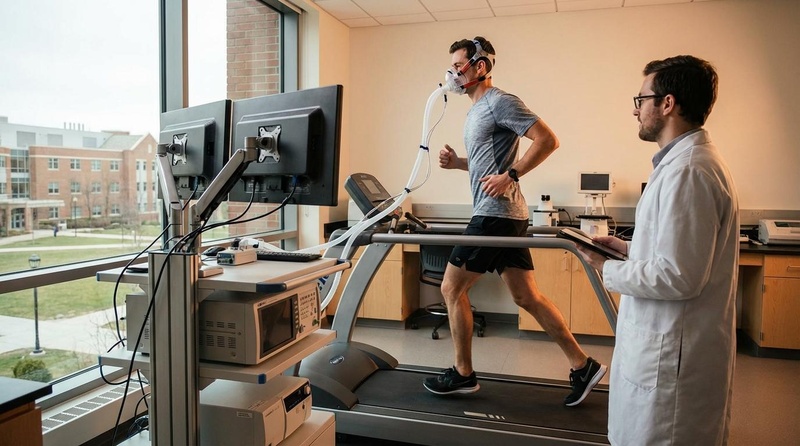
| Indication | Cardiorespiratory Fitness, Lifespan Extension, Metabolic Durability, Brain Volume Preservation |
| Access | Behavioral Intervention |
| Dosing Sched | Weekly (1–2 high-intensity sessions integrated with a Zone 2 base) |
| Safety Profile | Moderate (demands high cardiovascular and orthopedic efforts) |
| Key Marker | VO2 Max (mL/kg/min), LTHR, Resting Heart Rate, Heart Rate Recovery |
| Est. Cost | $0 to variable (clinical metabolic cart test: $150–$300) |
¶ TL;DR (5 bullets max)
- Longevity Gold Standard: VO2 max is arguably the single most robust clinical biomarker for predicting long-term survival, with higher cardiorespiratory fitness directly correlating to an extended healthspan and a delayed onset of age-related diseases [1:2][2:1][4].
- Dual Approach: Optimal VO2 max improvements combine foundational, continuous low-intensity (Zone 2) training to expand peripheral capillary and mitochondrial networks with targeted High-Intensity Interval Training (HIIT) to drive central cardiac stroke volume adaptations [5][6].
- No Upper Limit: The longevity and healthspan benefits of improving VO2 max show no clear upper limit; individuals in the "elite" and "extreme" fitness categories continue to experience incremental reductions in mortality risk compared to highly fit peers [1:3][7].
- Decelerates Aging: Advancing cardiorespiratory fitness significantly decelerates biological and epigenetic aging, helping to preserve multi-system function in older adults [8][9].
- Trackable: VO2 max can be measured accurately in a lab via gas exchange analysis or estimated longitudinally with consumer wearables, making it a highly actionable biomarker [10][11].
¶ Quick Answer (Feature Snippet style)
VO2 max represents the maximal rate at which your heart, lungs, and skeletal muscles can coordinate to transport and utilize oxygen during maximal physical exertion [12][2:2]. It is a powerful quantitative predictor of all-cause and cardiovascular mortality, with each 1-MET (3.5 mL/kg/min) increase in VO2 max associated with a 13% to 15% reduction in all-cause mortality risk [13][4:1]. Improving VO2 max requires a polarized training strategy: establishing a broad, high-volume foundation of Zone 2 cardio (60–70% of maximum heart rate) for metabolic flexibility, combined with 1 to 2 weekly sessions of Zone 5 high-intensity intervals (e.g., Norwegian 4x4 method at 90–95% HRmax) to maximize cardiac stroke volume and oxygen extraction efficiency [14][5:1].
¶ What It Is (Plain-English)
VO2 max, or maximal aerobic capacity, can be thought of as the maximum horsepower of your body's cardiorespiratory engine. It represents the upper ceiling of your body's ability to take oxygen from the air, transport it through your lungs and bloodstream, and deliver it to your muscle cells to produce energy [2:3]. Rather than representing a single organ, VO2 max is a systemic measurement that reflects the integrated performance of your pulmonary, cardiovascular, and muscular systems [12:1][15].
The physiology of VO2 max is governed by the Fick Equation:
Where:
- Central Oxygen Delivery (): Peak cardiac output, which is the product of maximum heart rate and left ventricular stroke volume (how much blood the heart can pump per beat) [5:2].
- Peripheral Oxygen Extraction (): The difference in oxygen content between arterial and venous blood, which represents how effectively your muscle cells can extract and utilize that delivered oxygen. This is determined by capillary density and mitochondrial volume within the skeletal muscle [16][17].
¶ Mechanism in 60 Seconds
When you push your physical effort to its maximum, your skeletal muscles demand a massive, rapid supply of energy (ATP). To keep pace without collapsing into anaerobic fatigue, your brain coordinates an increase in breathing rate and heart rate. High-intensity interval training (HIIT) forces the heart to its absolute pumping limit, creating a volume overload that stretches the left ventricle (eccentric remodeling), allowing it to pump more blood per beat [14:1][5:3].
Simultaneously, the sheer flow of blood and mechanical contraction inside the active muscles stimulates chemical messengers like AMPK, CaMK, and PGC-1α [17:1]. These signaling pathways spark capillarization (sprouting new blood vessels) and mitochondrial biogenesis (multiplying the tiny engines in your cells) [16:1][17:2]. This double-sided adaptation improves both how much oxygen your heart can deliver and how much of that oxygen your muscles can consume [12:2][15:1].
¶ Does It Work? (Evidence Snapshot)
Improving VO2 max is one of the most reliable and clinically validated methods to reduce the risk of non-communicable diseases and extend healthy lifespan:
| Outcome / Goal | Effect* | Consistency** | Evidence quality | Trials*** | Notes (population, duration, dose) |
|---|---|---|---|---|---|
| All-Cause Mortality | High | High | Large cohort studies | Strong dose-response curve; up to 5-fold risk reduction in elite/high vs. low fitness cohorts [1:4][7:1]. | |
| Multimorbidity Prevention | High | High | Longitudinal cohort | High cardiorespiratory fitness suppresses chronic disease accumulation by 35% over 15 years [3:1]. | |
| Epigenetic Age Deceleration | Moderate | Moderate | Epigenetic analyses | Higher cardiorespiratory fitness is associated with younger DNA methylation ages [8:1][9:1]. | |
| Cardiovascular Event Reduction | High | High | Meta-analyses | Each 1-MET increase in VO2 max is linked to a 15% reduction in cardiovascular events [13:1][4:2]. | |
| Metabolic Flexibility & Insulin Sensitivity | High | High | Intervention RCTs | Directly improves peripheral GLUT4 translocation and mitochondrial lipid oxidation [18][19]. | |
| Cognitive Volume & Preservation | Moderate | Moderate | Neuroimaging trials | Chronically elevated BDNF from aerobic training preserves hippocampal volume [20][15:2]. |
¶ Cardiorespiratory Fitness and Mortality Risk
The epidemiological data linking VO2 max with long-term survival is exceptionally robust. In a landmark study of over 122,000 patients undergoing exercise treadmill testing, Mandsager et al. demonstrated a clear, continuous, and inverse relationship between cardiorespiratory fitness and all-cause mortality [1:5]. Notably, the protective effect of high cardiorespiratory fitness was comparable to or greater than the hazards of clinical risk factors such as smoking, coronary artery disease, diabetes, and hypertension. The study found no upper limit of benefit, with elite-level fitness demonstrating the lowest hazard ratio for mortality [1:6].
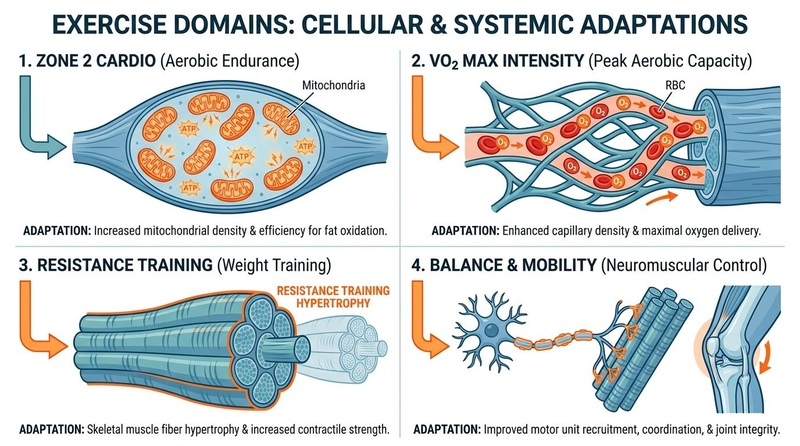
**Figure 2: Exercise domains and adaptations.** Cardiorespiratory capacity represents the integration of central oxygen delivery (heart and vessels) and peripheral oxygen utilization (mitochondrial respiration) [^3][^11][^16].
¶ Shifting the Epigenetic Clock
Recent advances in longevity science show that cardiorespiratory fitness directly influences biological age [8:2]. Large-scale epigenetic cohort studies have demonstrated that individuals with higher VO2 max values exhibit significantly younger biological ages compared to chronologically age-matched peers with lower fitness levels [8:3][9:2]. This reflects systemic cellular rejuvenation, likely driven by lower chronic systemic inflammation, preserved mitochondrial quality, and healthy telomere dynamics [5:4][8:4].