¶ Walking for Longevity: Deep Dive
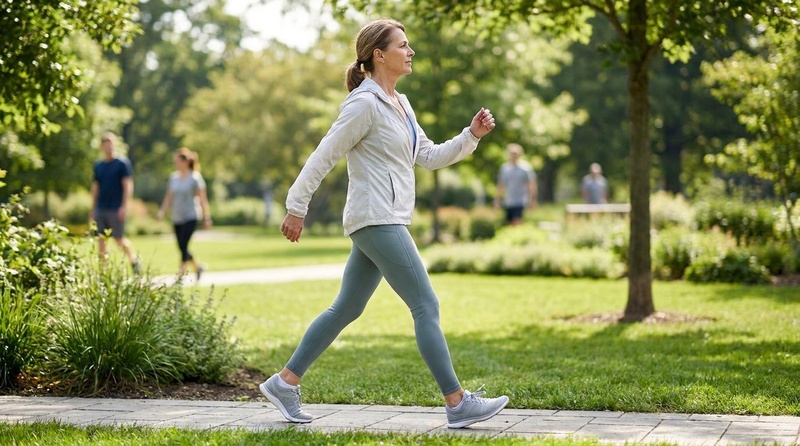
| Primary Target | Cardiovascular Health & Aerobic Base |
| Mechanisms | Capillarization, Mitochondrial Density, Shear-Stress Vasodilation |
| Dosing Schedule | 7,000–10,000 steps/day (intensity-modulated) |
| Safety Profile | Extremely Safe (low-impact joint loading) |
| Key Markers | Daily Step Count, Gait Speed, Resting Heart Rate |
| Est. Cost | $0 (Free) |
Walking is the foundational physical intervention for human movement, metabolic health, and cardiorespiratory baseline. It serves as an accessible behavioral tool for reducing cardiovascular and all-cause mortality, modulating autonomic tone, and preserving physical autonomy across the lifespan.
¶ At a glance
¶ Key Takeaways
- The Ultimate Longevity Metric: Gait speed is a powerful predictor of all-cause mortality and functional disability in older adults, serving as a functional "sixth vital sign" of physiological aging.
- The Dose-Response Curve: Daily step count is inversely associated with all-cause mortality and cardiovascular events. The benefits begin to level off at approximately 6,000 to 8,000 steps per day for older adults (60+) and 8,000 to 10,000 steps for younger cohorts.
- Intensity Matters: While total step volume is a robust metric, increasing walking pace (such as incorporating interval-based brisk walking) provides additional cardiovascular and arterial benefits independent of total step count.
- Metabolic Restoration: Regular walking breaks help manage blood sugar, reduce arterial stiffness, and support weight management, making walking a critical countermeasure to prolonged sitting.
¶ Target Goals & Evidence Quality
- Main Clinical Target: Reduction in cardiovascular and all-cause mortality, preservation of dynamic mobility, and improvement in postprandial glucose clearance.
- Evidence Quality: High (supported by extensive prospective cohort studies, harmonized meta-analyses, and systematic reviews of device-measured physical activity).
¶ Safety "Traffic Light"
- ● GREEN LIGHT (Go): Individuals of all ages looking to establish a baseline of physical conditioning, manage glycemic variability, or support active recovery between intense training sessions.
- ● YELLOW LIGHT (Caution): Individuals with moderate osteoarthritis of the knee or hip, managed peripheral artery disease (claudication), or compensated balance deconditioning. Walk on flat surfaces, wear supportive footwear, and gradually progress volume.
- ● RED LIGHT (Stop/Avoid): Individuals with acute, unhealed lower-limb fractures, severe uncompensated heart failure, or unstable angina triggered by minimal exertion.
¶ Protocol Card
| Parameter | The Daily Baseline Protocol | Interval Walking (Intensity Boost) | The Postprandial Glucose Snack |
|---|---|---|---|
| Frequency | Daily | 3 sessions per week | After major carbohydrate meals |
| Duration / Volume | 7,000–10,000 steps total | 30 minutes total | 10–15 minutes |
| Primary Tasks | Accumulate steady-state walking throughout the day. | Alternate 3 minutes of brisk walking (high effort) with 3 minutes of easy walking. | Brisk, continuous walking within 30 minutes of completing a meal. |
| Safety Setup | Wear comfortable, cushioned shoes; ensure adequate hydration in hot weather. | Perform on flat, predictable terrain to prevent tripping during high-speed intervals. | Walk outdoors or on a flat treadmill; avoid high-intensity running immediately post-meal. |
¶ Bottom Line
Daily walking of 7,000 to 10,000 steps reduces all-cause mortality risk by 40% to 50% compared to sedentary baselines, with adicional vascular and cognitive benefits gained by incorporating interval-based pace increases.
¶ The "Why" (Benefits)
¶ Curbing All-Cause and Cardiovascular Mortality
Epidemiological studies utilizing objective accelerometers confirm a dramatic, non-linear dose-response relationship between daily step counts and mortality:
- The 15-Cohort Synthesis: A major meta-analysis published in The Lancet Public Health demonstrated that compared to the lowest quartile (~3,500 steps/day), progressing to the second (~5,800 steps/day) and third (~7,800 steps/day) quartiles is associated with a 40% to 53% lower risk of all-cause mortality [1].
- Age-Specific Inflection Points: The mortality risk reduction plateaus around 6,000 to 8,000 steps per day for adults aged 60 and older, whereas younger cohorts continue to show risk reduction up to 8,000 to 10,000 steps per day [1:1].
- Cardiovascular Protection: An analysis of over 20,000 adults showed that for older individuals, accumulating 6,000 to 9,000 steps per day is associated with an 40% to 50% reduction in cardiovascular disease events compared to walking 2,000 steps per day [2].
¶ Preserving Arterial Elasticity and Joint Health
Regular walking provides localized mechanical stimulus to the vascular and joint structures:
- Reducing Arterial Stiffness: Daily step counts show a strong inverse association with pulse wave velocity (a marker of arterial stiffness), helping to maintain youthful blood vessel compliance [3].
- Cartilage Nourishment: Synovial joints (such as the knee and hip) are avascular and rely on cyclic compression and decompression during walking to circulate synovial fluid. This process delivers vital nutrients to chondrocytes (cartilage cells), preventing osteoarthritis progression [4].
¶ Reality Check & Clinical Context
¶ Gait Speed as the "Sixth Vital Sign"
While step volume is a useful behavioral target, gait speed (walking velocity) is a highly predictive clinical biomarker of aging:
- Predicting Mortality: In older cohorts, a comfortable walking speed exceeding 1.0 m/s is associated with exceptionally high survival rates, whereas a speed below 0.8 m/s serves as a clinical warning sign of frailty, cognitive decline, and increased fall risk [5].
- Translational Aging: Longitudinal studies show that age-related declines in gait speed are highly translatable across species, reflecting systemic neuromuscular, cardiovascular, and mitochondrial deconditioning [6]. Measuring comfortable gait speed over a 4-meter course is a simple, cost-effective way to track biological healthspan [5:1].
¶ Step Count Is a Baseline, Not the Ceiling
A common misconception is that achieving 10,000 steps daily is sufficient for comprehensive cardiovascular fitness.
- Aerobic Limitations: Low-intensity walking on flat ground, while excellent for metabolic health and low-grade physical activity, rarely taxes the cardiorespiratory system enough to drive significant increases in VO2 max.
- The Need for Intensity: To improve aerobic capacity, walking must periodically incorporate high-intensity, interval-based pace adjustments (brisk walking that makes conversation difficult) or elevation changes (hill walking) to stimulate cardiovascular remodeling [4:1].
¶ Practical Integration
¶ Accumulating vs. Structured Sessions
For many individuals, carving out a continuous 60-minute block for a walk is challenging. Fortunately, clinical trials demonstrate that fractional walking—accumulating steps in multiple shorter blocks throughout the day—elicits identical cardiovascular and metabolic benefits to a single long session [6:1][1:2].
- Post-Meal Integration: Breaking up your daily target into three 15-minute brisk walks within 30 minutes of your main meals is highly effective for reducing postprandial glucose spikes [6:2].
- Workplace Micro-Walking: Setting a timer to walk for 2 minutes for every hour of sitting helps maintain endothelial shear stress and prevents sitting-induced arterial stiffness [7].
¶ Mechanism of Action
¶ Shear-Stress Vasodilation and Endothelial Health
Walking stimulates forward blood flow through the lower-limb arteries, creating a mechanical drag force on the inner lining of the blood vessels, known as endothelial shear stress.
Figure 1: The mechanical and circulatory adaptations stimulated by regular walking.
- Nitric Oxide Release: This shear stress activates endothelial nitric oxide synthase (eNOS), triggering the release of nitric oxide (NO). Nitric oxide diffuses into smooth muscle cells, causing rapid vasodilation and lower peripheral vascular resistance.
- Vascular Protection: Regular exposure to shear stress upregulates antioxidant enzymes and downregulates pro-inflammatory cytokines inside the blood vessels. This process protects the arterial wall against atherosclerosis and arterial stiffening [2:1][3:1].
¶ Insulin-Independent Glucose Clearance
During walking, skeletal muscle contractions in the calves, quadriceps, and gluteals demand rapid energy production.
- GLUT4 Translocation: Muscle contraction activates adenosine monophosphate-activated protein kinase (AMPK). AMPK triggers the migration of GLUT4 glucose transporter proteins from inside the cell to the cell membrane.
- Bypassing Insulin: This process occurs independently of insulin, allowing glucose to flow freely from the blood into the working muscles. As a result, short, postprandial walks are highly effective for managing post-meal glycemic spikes, even in individuals with insulin resistance or type 2 diabetes [6:3].
¶ Evidence Summary Table (human outcomes)
| Outcome / Goal | Typical Effect | Consistency | Evidence Quality | Supporting Studies | Notes (population, duration, dose) |
|---|---|---|---|---|---|
| All-Cause Mortality Reduction | High | High | 3 Meta-Analyses, 15 Cohorts | 40% to 50% lower mortality risk at 6,000–8,000 steps/day (older) and 8,000–10,000 steps/day (younger) [5:2][1:3][8] | |
| Cardiovascular Risk Reduction | High | High | 2 Harmonized Meta-Analyses | Significant reduction in myocardial infarction, stroke, and heart failure events up to 9,000 steps/day [2:2][1:4] | |
| Arterial Stiffness Reduction | High | Moderate | 1 Systematic Review | Marked reduction in pulse wave velocity, indicating preserved arterial compliance [3:2] | |
| Postprandial Blood Sugar Control | High | High | Multiple RCTs | 10–15 minute post-meal walks significantly lower glucose spikes and overall glycemic variability [6:4] | |
| Gait Speed & Mobility Preservation | High | High | Longitudinal Cohorts | Regular walking programs help slow age-related decline in comfortable walking speed, preserving functional independence [5:3][4:2] | |
| Cognitive Decline Risk Reduction | Moderate | Moderate | 1 Umbrella Review | Accumulating >8,000 steps per day is associated with a lower risk of age-related cognitive impairment and dementia [9] |
¶ Comprehensive Safety & Clinical Guidelines
¶ Absolute Contraindications
- Acute Orthopedic Injury: Avoid weight-bearing walking in cases of unhealed stress fractures or unstable joint damage in the lower limbs.
- Severe Symptomatic Cardio-Pulmonary Disease: Avoid walking if resting chest pain is present, or in cases of severe, uncompensated valvular heart disease.
¶ Relative Contraindications (Requires Adaptation)
- Severe Peripheral Artery Disease (PAD): While walking is highly beneficial for vascular remodeling in PAD, individuals experiencing painful cramping (claudication) must utilize a structured, interval-based walk-rest-walk protocol [10].
- Moderate Balance Impairment: Walk on flat, predictable, well-lit indoor tracks or dry pavements. Avoid walking on uneven, muddy park trails unless utilizing trekking poles for stability.
¶ Comparisons & Engagement
¶ "Compare With": Daily Walking vs. Alternate Cardiovascular Modalities
| Modality | All-Cause Mortality Prevention | Glycemic Control (Post-Meal) | Joint Mechanical Loading | Cardiovascular Adaptations | Setup Complexity / Cost |
|---|---|---|---|---|---|
| Daily Walking | Excellent | Superior (highly accessible post-meal) | Very Low (low impact) | Moderate (limited maximal stimulus) | Extremely Low ($0) |
| High-Intensity Interval Training (HIIT) | Excellent | Good | High (high impact) | Superior (drives peak VO2 max) | Moderate |
| Stationary Cycling | Very Good | Good | Extremely Low (non-weight bearing) | Very Good | High (requires equipment) |
| Swimming | Very Good | Moderate | Zero Impact | Very Good | High (requires pool access) |
¶ Actionable Protocols
¶ Protocol 1: The Daily Steps Foundation
Use this protocol to systematically build a baseline step volume.