¶ Dull Skin, Enlarged Pores, and Uneven Texture
Dull skin, enlarged pores, and uneven texture are common dermatological concerns that often reflect underlying biological processes related to skin aging, environmental exposure, and individual skin characteristics. Effective management requires understanding these root causes and employing evidence-based interventions ranging from topical agents to advanced clinical procedures.
¶ TL;DR
- Multifactorial Causes: Dull skin, enlarged pores, and uneven texture stem from issues like impaired cellular turnover, excess sebum, and collagen degradation.
- Combined Approach is Optimal: Best results are typically achieved by combining topical treatments (e.g., retinoids, AHAs, BHAs, Vitamin C, niacinamide) with professional procedures (e.g., microneedling, lasers, chemical peels).
- Consistency is Key: Sustained use of appropriate skincare and consistent photoprotection are crucial for long-term improvement and maintenance.
- Patience is Required: Significant improvements in skin texture and pore size often take weeks to months of consistent treatment.
- Preventative Strategies: Daily broad-spectrum sunscreen and antioxidant use can help mitigate environmental damage that contributes to these concerns.
¶ Quick Answer
Dull skin, enlarged pores, and uneven texture are primarily caused by a combination of impaired skin cell desquamation, excess sebum production, follicular hyperkeratinization, and loss of dermal support. Effective interventions, supported by moderate to high certainty evidence, include topical agents like retinoids, alpha hydroxy acids (AHAs), beta hydroxy acids (BHAs), niacinamide, and L-ascorbic acid, which work by promoting cell turnover, reducing sebum, and stimulating collagen. Clinical procedures such as microneedling, fractional lasers, and professional chemical peels offer more intensive solutions for significant improvements in skin smoothness, radiance, and pore appearance.
¶ What It Is: Understanding the Pathophysiology
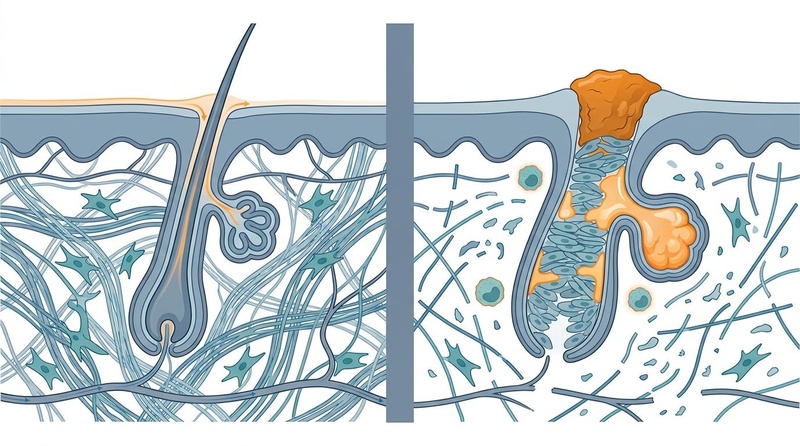
Dull skin often lacks a healthy glow, appearing lackluster or grayish, while enlarged pores are more visible due to structural changes in the hair follicle and surrounding dermis. Uneven texture refers to irregularities in the skin's surface, including roughness, fine lines, and subtle indentations. These conditions are not isolated but are often interconnected through several key biological mechanisms:
- Impaired Cellular Turnover (Desquamation Failure): As skin ages or is exposed to environmental stressors (e.g., UV radiation), the natural process of shedding dead skin cells slows down. This accumulation of corneocytes on the skin surface creates a rough, dull appearance and can contribute to pore obstruction.
- Excess Sebum Production & Oxidation: Overactive sebaceous glands produce an excess of sebum, which, when combined with dead skin cells, can enlarge pores. Sebum oxidation, triggered by UV exposure and air pollution, also contributes to a sallow, dull complexion and can worsen inflammation around pores [1].
- Follicular Hyperkeratinization: This refers to the abnormal buildup of keratinocytes within the hair follicle, leading to a plug that can trap sebum and debris, further dilating the pore and contributing to uneven texture.
- Dermal Collagen Degradation & Loss of Elasticity: The skin's structural integrity, primarily maintained by collagen and elastin fibers in the dermis, diminishes with age and sun damage. A loss of surrounding dermal support can lead to the visible sagging and elongation of pores, making them appear larger [2]. Dehydrated stratum corneum also contributes to a rough, less supple texture.
¶ Identify the Type
To choose the most effective intervention, it is critical to distinguish between the distinct subtypes of dullness, enlarged pores, and uneven texture.
| Concern / Subtype | Key Characteristics | Root Causes & Drivers | Primary Target Interventions |
|---|---|---|---|
| Oily/Sebaceous Pores | Round, visible pores centered in the T-zone, often accompanied by blackheads, sebaceous filaments, and a greasy sheen throughout the day. | Excess sebum production, follicular hyperkeratinization, and androgenic stimulation of sebaceous glands [3]. | Salicylic acid (BHA), niacinamide, topical retinoids, and clay masks. |
| Structural/Sagging Pores | Elongated, teardrop-shaped pores most visible on the lower cheeks, appearing to "sag" downwards; worse with skin stretching. | Loss of dermal collagen and elastin support due to intrinsic aging and UV-induced photoaging [2:1]. | Retinoids (Tretinoin), microneedling, fractional lasers, and chemical peels. |
| Dehydrated Dullness | Lackluster, tight, or "papery" skin appearance, fine crepiness upon movement, and flaky patches. | Impaired skin barrier, decreased natural moisturizing factors (NMFs), and elevated transepidermal water loss (TEWL). | Hyaluronic acid, glycerin, ceramides, niacinamide, and avoiding harsh cleansers. |
| Pigmentary/Oxidative Dullness | Sallow, uneven, grayish, or hyperpigmented complexion, often with dark spots or uneven tone. | UV-induced melanin synthesis, protein carbonylation, lipid peroxidation from air pollution, and poor microcirculation [1:1]. | L-Ascorbic acid (Vitamin C), azelaic acid, glycolic acid, and broad-spectrum sunscreen. |
| Rough/Uneven Texture (Accumulation) | Tactile roughness, dry flakes, uneven makeup application, and clogged pores across the entire face. | Impaired cellular desquamation (slow turnover) and buildup of dead corneocytes on the stratum corneum surface. | Alpha hydroxy acids (AHAs like glycolic or lactic acid), retinoids, and superficial chemical peels [4]. |
¶ Does It Work? Evidence Snapshot (Human Outcomes)
Treatments for dull skin, enlarged pores, and uneven texture often target the underlying physiological mechanisms, with varying degrees of evidence certainty.
¶ Evidence Summary Table (Human Outcomes)
| Outcome / Goal | Effect* | Consistency** | Evidence quality | Trials*** | Notes (population, duration, dose) |
|---|---|---|---|---|---|
| Skin texture improvement (Retinol) | High | Moderate | 1 RCT | Significant improvement in pore parameters and overall texture with short-term topical retinol [5] | |
| Sebum production reduction (Niacinamide) | High | Moderate | 1 RCT | 2% niacinamide significantly reduces sebum excretion rate over 4 weeks [6] | |
| Skin texture & brightness (L-Ascorbic Acid) | High | Moderate | 2 RCTs, 1 systematic review | 73.7% improvement in tactile roughness and reduction in surface hyperpigmentation [7][8][9] | |
| Skin texture & roughness (Glycolic Acid) | High | Moderate | 3 RCTs | 5% and 8% glycolic acid improves texture, reduces roughness, and increases epidermal turnover [4:1][10][11] | |
| Pore size & oiliness reduction (Salicylic Acid) | High | Moderate | 2 RCTs | Supramolecular salicylic acid gel improves skin texture, oil control, and pore visibility [12][13] | |
| Pore size & texture (Microneedling) | High | Moderate | 2 clinical trials, 1 systematic review | Significant reduction in pore area and roughness topography [14][15][16] | |
| Pore size & texture (Fractional Laser) | High | Moderate | 1 clinical trial, 1 systematic review | Significant reduction in pore volume and improved texture with fractional picosecond lasers [17][18] | |
| Pigmentary improvement (Azelaic Acid) | High | Moderate | 1 meta-analysis | Comparable efficacy to hydroquinone in evening skin tone and treating epidermal pigmentary abnormalities [19] |
- *Effect: Number of arrows (1-3) indicates magnitude. Direction: ↑ (increase), ↓ (decrease), = (no effect), ? (unclear). Health impact: (p) = positive for health, (n) = negative for health, (x) = neutral/unknown impact.
- *Consistency: Low (results conflict), Moderate (mixed but leaning one way), High (most trials agree)
- ***Trials: Number of RCTs or total trials informing this outcome (shows evidence depth at a glance)
- REQUIRED: You MUST include a citation key (e.g.
[^1]) in the "Notes" column for every single row. If you claim a result, you must link the specific Meta-Analysis or Key RCT that proves it.
¶ Starter Protocol
The Starter Protocol is designed to establish a consistent, daily skin care baseline. It targets mild dullness, early pore dilation, and minor texture irregularities by promoting mild exfoliation, sebum regulation, and antioxidant protection without disrupting the skin barrier.
- Morning Routine:
- Cleanse: Gentle, non-stripping cleanser.
- Antioxidant & Brightening: L-Ascorbic Acid (Vitamin C) serum (10-20%) [7:1]. Neutralizes free radicals and boosts collagen synthesis.
- Hydration & Sebum Regulation: Niacinamide (2-5% serum or cream) [6:1]. Reduces sebum excretion and strengthens the barrier.
- Protection: Broad-spectrum SPF 30+ sunscreen (non-comedogenic).
- Evening Routine:
- Cleanse: Gentle cleanser (or double cleanse if wearing makeup/sunscreen).
- Exfoliate (2-3x per week): Salicylic Acid (2% BHA) leave-on toner or liquid [12:1]. Penetrates lipid-rich pores to clear sebum and debris.
- Cellular Turnover (Every Night or Alternating): Over-the-counter Retinol (0.1-1.0%) [5:1]. Increases epidermal renewal and reduces pore visibility.
- Moisturize: Ceramide- or glycerin-rich barrier support cream.
¶ Stronger Add-On Path
For persistent concerns, structural sagging pores, or moderate texturing, the protocol can be escalated to include prescription-strength topicals, synergistic combinations, and high-strength home peels.
- Prescription-Strength Retinoids: Transition from retinol to Tretinoin (0.025% - 0.1%). It binds directly to retinoic acid receptors, rapidly speeding cell turnover and boosting dermal collagen support [2:2]. Note: Must be introduced slowly (e.g., 2 nights a week) to prevent retinoid dermatitis.
- High-Strength Alpha Hydroxy Acid (AHA) Peels: Weekly or bi-weekly home peels using Glycolic Acid (10-30%) or Lactic Acid [11:1]. These water-soluble peels dissolve intercellular desmosomes to rapidly shed dull, accumulated cells on the skin surface.
- Synergistic Actives:
¶ Clinical/Procedure Path
When topical interventions reach their limit—particularly for deep textural scars, severe structural pore sagging, or stubborn dullness—professional clinical procedures offer faster and deeper dermal remodeling.
- Microneedling (Collagen Induction Therapy):
- Mechanism: Uses fine needles to create controlled micro-injuries in the dermis, triggering a wound-healing cascade that releases growth factors and stimulates neocollagenesis [14:1].
- Clinical Outcomes: Typically requires 3-6 sessions spaced 4 weeks apart. Proven to reduce objective pore area and improve skin roughness topography [15:1][16:1].
- Fractional Laser Resurfacing:
- Mechanism: Non-ablative or ablative fractional lasers (such as 1064-nm picosecond lasers or CO2 fractional lasers) create microscopic thermal zones, vaporizing damaged cells and stimulating profound dermal remodeling [17:1].
- Clinical Outcomes: Highly effective for deep uneven texture, sun damage, and advanced pore sagging. Requires downtime (3-7 days) and strict post-care.
- Professional Chemical Peels:
- Mechanism: High-concentration acids (e.g., 50-70% Glycolic Acid, 20-30% Salicylic Acid, or Trichloroacetic Acid/TCA) applied by a dermatologist to induce deep controlled desquamation [11:2].
- Clinical Outcomes: Rapidly eliminates hyperpigmentation, resurfaces the stratum corneum, and reveals radiant, even-textured skin [20].
¶ What Usually Fails
Achieving radiant, smooth skin with minimal pore visibility is often hindered by common, counterproductive habits. Understanding these pitfalls is essential for preventing long-term skin damage:
- Over-Exfoliation (The "More is Better" Fallacy): Combining multiple daily acids (e.g., glycolic toner, salicylic cleanser, and a retinoid) strips the stratum corneum's lipid matrix. Rather than smoothing the skin, this triggers reactive hyperkeratinization and compensatory sebum overproduction, making pores look larger and skin appear rougher.
- Barrier Disruption: Aggressive stripping of the skin barrier degrades ceramides, cholesterol, and free fatty acids. This leads to transepidermal water loss (TEWL), rendering the skin dehydrated, dull, and highly vulnerable to environmental irritants and inflammation [1:2].
- Physical Scrubs: Abrasive scrubs (containing apricot shells, walnut powder, or silica beads) create microscopic tears in the stratum corneum. These micro-tears induce low-grade inflammation, which can degrade dermal collagen over time, worsen hyperpigmentation, and exacerbate uneven texture.
- Unrealistic Expectation Timelines: Many users abandon treatments within 2 to 3 weeks due to a lack of immediate change or transient purging. Skin cell turnover operates on a ~28-day cycle, which slows with age. Meaningful improvements in skin texture and pore appearance require at least 8 to 12 weeks of consistent topical use, and dermal collagen remodeling from microneedling or lasers takes 3 to 6 months [5:2][14:2].
- Neglecting Daily Sun Protection: Actives that accelerate cell turnover (AHAs, retinoids) increase the skin's sensitivity to UV radiation. Skipping daily broad-spectrum SPF leads to rapid collagen degradation and UV-induced melanin synthesis, directly undermining all efforts to treat pore sagging and dullness.
¶ Safety and Red Flags
While many interventions for dull skin, enlarged pores, and uneven texture are safe when used appropriately, it is crucial to understand potential side effects, contraindications, and clinical management of complications.
¶ Key Active Safety & Contraindications
- Retinoids (Retinol, Tretinoin): Absolutely contraindicated during pregnancy and breastfeeding due to the risk of teratogenicity. Can cause "retinoid dermatitis" (redness, peeling, dryness, and burning) if introduced too quickly.
- Alpha Hydroxy Acids (AHAs) and Beta Hydroxy Acids (BHAs): Increase sensitivity to ultraviolet radiation. Strict daily application of broad-spectrum sunscreen is mandatory. Overuse can damage the stratum corneum barrier.
- Vitamin C (L-Ascorbic Acid): Can cause mild irritation, stinging, or redness in sensitive skin, especially at concentrations above 15% or low pH levels.
¶ Procedure-Specific Risks
- Hyperpigmentation Risk (Fitzpatrick IV-VI): Individuals with darker skin types (Fitzpatrick skin types IV to VI) have highly active melanocytes. Aggressive lasers, deep chemical peels, or improper microneedling can trigger post-inflammatory hyperpigmentation (PIH) or, rarely, hypopigmentation [21][20:1]. Pre-conditioning with tyrosinase inhibitors (such as azelaic acid or kojic acid) and utilizing safe modalities (e.g., non-insulated microneedle radiofrequency or picosecond lasers) is essential.
- Infection & Scarring: Any procedure that breaches the skin barrier (microneedling, ablative lasers) carries a risk of bacterial, viral (e.g., Herpes Simplex Virus reactivation), or fungal infection, as well as scarring if post-procedure care is neglected.
¶ Red Flags
- Persistent Barrier Breakdown: If skin remains constantly red, burning, peeling, or painful to the touch for more than 7 days despite stopping all active ingredients.
- Post-Procedure Infection: Severe pain, localized warmth, pus/drainage, crusting, or fever following microneedling or laser resurfacing.
- Sudden Pigmentary Shifts: Rapid darkening or loss of pigment following a clinical peel or laser session, indicating potential PIH or tissue damage.
- Severe Allergic Contact Dermatitis: Hives, facial swelling, or severe blistering after introducing a new topical active.
¶ Tracking Plan
To objectively assess the efficacy of your skincare regimen and avoid the trap of "product-hopping," implement a structured, multi-dimensional tracking strategy:
¶ Objective Metrics
- Pore Visibility: Professionally assessed using multi-spectral imaging systems like VISIA Complexion Analysis to quantify pore depth and surface area [17:2]. At home, track via standardized high-resolution, close-up photography taken in identical, indirect natural lighting (with no beauty filters).
- Texture Topography: Monitor skin roughness and flakiness. Professional assessments use optical profilometry or 3D skin surface analysis, while at-home tracking can rely on tactile checks (gently gliding a clean finger across the cheeks/forehead) and observing how evenly mineral makeup or liquid foundation sits on the skin surface.
- Skin Clarity: Measured via skin gloss/radiance meters or glossiness mapping in clinical settings. At home, assess the presence of sallow/gray undertones, and the reduction of post-inflammatory hyperpigmentation or erythema [8:1].
- Barrier Function: Clinicians track Transepidermal Water Loss (TEWL) using a tewameter. At home, monitor for the absence of stinging when applying basic moisturizers, which serves as a proxy for healthy barrier function.
¶ Subjective Assessments
- Weekly Skin Diary: Rate daily skin comfort, smoothness, and perceived brightness on a scale of 1-10.
- Tactile and Visual Confidence: Document changes in satisfaction with skin appearance using standardized Patient-Reported Outcome Measures (PROMs).
¶ Time-to-Benefit and Washout
- Time-to-Benefit:
- Dullness & Hydration: 2 to 4 weeks of consistent humectant, Vitamin C, and mild AHA use [8:2].
- Sebum Control: 4 weeks of daily niacinamide or salicylic acid use [6:2].
- Pore Visibility & Fine Texture: 8 to 12 weeks of daily retinoid use, as epidermal cellular turnover and micro-exfoliation occur [5:3].
- Dermal Collagen Remodeling (for sagging pores/rough texture): 3 to 6 months of consistent tretinoin or professional microneedling/laser therapy, reflecting the biological timeline of neocollagenesis [14:3][17:3].
- Washout / Regression Timeline:
- Sebum Regulation: Sebum production typically returns to baseline within 2 to 3 weeks of discontinuing niacinamide or salicylic acid [6:3].
- Cellular Turnover & Radiance: Skin cell shedding slows down, and dullness/roughness begins to recur within 4 weeks of stopping AHA or retinoid use.
- Collagen & Elastin Degradation: Improvements in structural pores achieved via microneedling or lasers can persist for 6 to 12 months or longer, but will eventually regress if ongoing photoprotection and maintenance topicals (retinoids) are discontinued [17:4].
¶ FAQs
¶ Can enlarged pores be completely eliminated?
No, enlarged pores cannot be completely eliminated as they are a fundamental part of skin anatomy. However, their appearance can be significantly minimized through treatments that reduce sebum production, improve skin elasticity, and promote collagen remodeling [22].
¶ How long does it take to see results from retinoids for texture and pores?
Improvements with retinoids typically begin to appear after 4-6 weeks of consistent use, with more significant results becoming visible after 3-6 months. Initial redness, dryness, and purging are common as the skin adjusts.
¶ Are physical scrubs effective for dull skin and uneven texture?
Physical scrubs can provide temporary smoothing by removing surface dead skin cells. However, harsh or abrasive scrubs can damage the skin barrier, leading to micro-tears, irritation, and potentially worsening inflammation or hyperpigmentation, especially for sensitive skin types. Chemical exfoliants (AHAs, BHAs) are generally preferred for more effective and gentler exfoliation.
¶ Can diet impact dull skin, enlarged pores, and uneven texture?
While direct clinical evidence linking specific dietary interventions to dramatic improvements in these conditions is limited, a balanced diet rich in antioxidants, healthy fats, and adequate hydration supports overall skin health. High glycemic index foods and dairy have been implicated in worsening acne, which can indirectly affect pore size and texture.
¶ References
Qiu, S. and Gu, Y. (2024). Potential role of inflammaging mediated by the complement system in enlarged facial pores. Journal of Cosmetic Dermatology. https://onlinelibrary.wiley.com/doi/10.1111/jocd.15956 ↩︎ ↩︎ ↩︎
Kim, B. W., et al. (2013). Sebum, acne, skin elasticity, and gender difference—which is the major influencing factor for facial pores? Skin Research and Technology. https://link.springer.com/content/pdf/10.1007/s13555-025-01495-y.pdf ↩︎ ↩︎ ↩︎
Roh, M. K., et al. (2006). Sebum output as a factor contributing to the size of facial pores. British Journal of Dermatology. https://pubmed.ncbi.nlm.nih.gov/17034516/ ↩︎
Thibault, P. K., et al. (1998). A double-blind randomized clinical trial on the effectiveness of a daily glycolic acid 5% formulation in the treatment of photoaging. Dermatologic Surgery. https://pubmed.ncbi.nlm.nih.gov/9598014/ ↩︎ ↩︎
Do, T. K., et al. (2026). Short‐Term Topical Retinol Use Is Associated With Improved Pore‐Related Parameters and Shifts in the Facial Skin Microbiome. Journal of Cosmetic Dermatology. https://onlinelibrary.wiley.com/doi/10.1111/jocd.70939 ↩︎ ↩︎ ↩︎ ↩︎
Draelos, Z. D., et al. (2006). The effect of 2% niacinamide on facial sebum production. Journal of Cosmetic and Laser Therapy. https://pubmed.ncbi.nlm.nih.gov/16766489/ ↩︎ ↩︎ ↩︎ ↩︎
Traikovich, L. (1999). Use of topical ascorbic acid and its effects on photodamaged skin topography. Archives of Otolaryngology–Head & Neck Surgery. https://pubmed.ncbi.nlm.nih.gov/10522500/ ↩︎ ↩︎
Xu, T. H., et al. (2012). Split-face study of topical 23.8% L-ascorbic acid serum in treating photo-aged skin. Journal of Drugs in Dermatology. https://pubmed.ncbi.nlm.nih.gov/22206077/ ↩︎ ↩︎ ↩︎
Correia, A. C., et al. (2023). Efficacy of topical vitamin C in melasma and photoaging: A systematic review. Journal of Cosmetic Dermatology. https://onlinelibrary.wiley.com/doi/10.1111/jocd.15748 ↩︎
Ditre, C. M., et al. (1996). Topical 8% glycolic acid and 8% L-lactic acid creams for the treatment of photodamaged skin. Journal of the American Academy of Dermatology. https://pubmed.ncbi.nlm.nih.gov/8651713/ ↩︎
Newman, N., et al. (1996). Clinical improvement of photoaged skin with 50% glycolic acid. A double-blind vehicle-controlled study. Dermatologic Surgery. https://pubmed.ncbi.nlm.nih.gov/8634809/ ↩︎ ↩︎ ↩︎
Liu, B., et al. (2025). Clinical Efficacy of a Salicylic Acid–Containing Gel on Acne Management and Skin Barrier Function: A 21-Day Prospective Study. Journal of Cosmetic Dermatology. https://pmc.ncbi.nlm.nih.gov/articles/PMC12274963/ ↩︎ ↩︎
Li, Y., et al. (2023). Efficacy and safety of a facial serum and a mask containing salicylic acid and lipohydroxy acid in acne management: A randomized controlled trial. Journal of Cosmetic Dermatology. https://pubmed.ncbi.nlm.nih.gov/36999489/ ↩︎ ↩︎
Lee, Y. W., et al. (2024). The Efficacy of Combined Exosome (Exodew) and Microneedling Treatment for Facial Pore Reduction and Skin Texture Improvement. PMC Medicine / Clinical Trial. https://pmc.ncbi.nlm.nih.gov/articles/PMC12140750/ ↩︎ ↩︎ ↩︎ ↩︎
Elawar, A. and Adawi, L. (2018). Non-insulated fractional microneedle radiofrequency treatment with smooth motor insertion for reduction of depressed acne scars, pore size, and skin texture improvement: a preliminary study. Journal of Clinical and Aesthetic Dermatology. https://jcadonline.com/august-2018-microneedle-radiofrequency/ ↩︎ ↩︎
Niaz, S., et al. (2025). Fractional Radiofrequency Microneedling as a Monotherapy in Acne Scar Management: A Systematic Review of Current Evidence. Clinical, Cosmetic and Investigational Dermatology. https://www.dovepress.com/fractional-radiofrequency-microneedling-as-a-monotherapy-in-acne-scar--peer-reviewed-fulltext-article-CCID ↩︎ ↩︎
Park, H. J., et al. (2022). Quantitative assessment of the long-term efficacy and safety of a 1064-nm picosecond laser with fractionated microlens array in the treatment of enlarged pores in Asians: A case-control study. Journal of Cosmetic Dermatology. https://pmc.ncbi.nlm.nih.gov/articles/PMC9291000/ ↩︎ ↩︎ ↩︎ ↩︎ ↩︎
Zhu, S. M., et al. (2024). Optimal treatment options for acne scars in patients with historic acne: a systematic review and network meta-analysis. BMC Medicine. https://pmc.ncbi.nlm.nih.gov/articles/PMC12515001/ ↩︎
Alnajjar, F., et al. (2023). Azelaic Acid Versus Hydroquinone for Managing Patients With Melasma: Systematic Review and Meta-Analysis of Randomized Controlled Trials. Cureus. https://pmc.ncbi.nlm.nih.gov/articles/PMC10339666/ ↩︎ ↩︎
Garelick, K. and Saavedra, A. (2023). Chemical Peels in Skin of Color: A Scoping Review of Safety, Efficacy. Lehigh Valley Health Network. https://scholarlyworks.lvhn.org/education-medical-education/183/ ↩︎ ↩︎
Alexis, A. F., et al. (2023). Noninvasive Cosmetic Treatments for Fitzpatrick IV–VI: A Narrative Review of Safety and Efficacy Guidelines. Journal of Clinical and Aesthetic Dermatology. https://pmc.ncbi.nlm.nih.gov/articles/PMC13012588/ ↩︎
Parvar, M., et al. (2023). The efficacy and adverse effects of treatment options for facial pores: A review article. Journal of Cosmetic Dermatology. https://onlinelibrary.wiley.com/doi/10.1111/jocd.15502 ↩︎