¶ Breathwork: Nervous System Regulation & Resilience
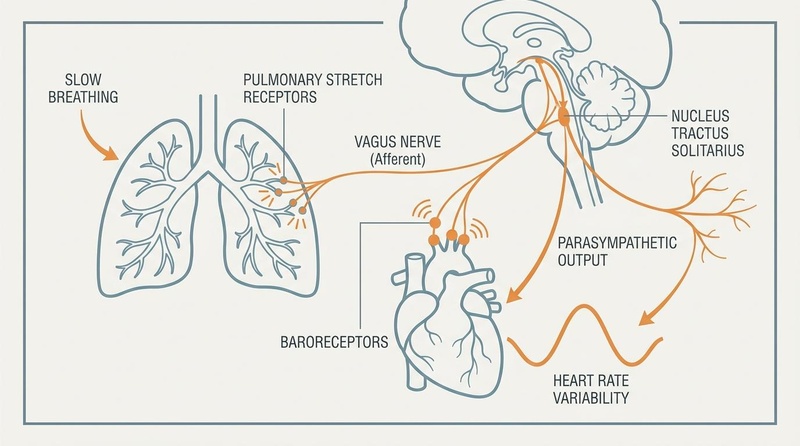
| Indication | Stress, Anxiety, Autonomic Dysregulation, Recovery, Sleep Optimization |
| Access | Behavioral, Self-directed, Guided practice |
| Dosing Sched | Daily (5-20 min sessions), Acute stress response |
| Safety Profile | Generally High (slow-paced); Moderate (hyperventilation protocols) |
| Key Marker | Heart Rate Variability (HRV), Respiratory Rate, Perceived Stress Scale (PSS) |
| Est. Cost | Free (self-guided) to low (apps) |
Breathwork encompasses a diverse set of voluntary breathing techniques designed to modulate physiological and psychological states. By consciously altering breath rate, depth, and rhythm, individuals can directly influence the autonomic nervous system (ANS), shift emotional arousal, enhance stress resilience, and improve overall mental and physical well-being. This deep dive focuses on evidence-based practices for nervous system regulation, mental fitness, and recovery.
¶ TL;DR (5 bullets max)
- Direct ANS Modulation: Breathwork directly influences the balance between sympathetic (fight-or-flight) and parasympathetic (rest-and-digest) nervous systems, primarily through vagal nerve activation [1][2].
- Physiological Benefits: Regular practice enhances heart rate variability (HRV), reduces stress hormones, improves sleep quality, and can mitigate pain [1:1][3][4].
- Key Techniques: Effective protocols include coherent (resonant) breathing, box breathing, the 4-7-8 technique, and cyclic sighing, each with specific applications [2:1][5][6].
- Safety First: While generally safe, hyperventilation-based breathwork (e.g., Wim Hof, Holotropic) carries significant risks, especially for individuals with cardiac conditions, panic disorders, or during pregnancy [7][8].
- Measurable Outcomes: Progress can be tracked through daily HRV, respiratory rate, perceived stress scales, and improvements in sleep and mood [9][10].
¶ Quick Answer (Feature Snippet style)
Breathwork refers to intentional breathing exercises used to regulate the nervous system, reduce stress, and improve physiological and psychological states. Techniques like slow-paced breathing and cyclic sighing enhance vagal tone and heart rate variability, leading to reductions in perceived stress, anxiety, and improved emotional regulation. It's a foundational component of mental fitness and recovery protocols.
¶ What It Is (Plain-English)
Breathwork is the practice of intentionally changing your breathing patterns to influence your body and mind. Think of it as a remote control for your nervous system. By making conscious adjustments to how quickly, deeply, or rhythmically you breathe, you can directly activate your "rest-and-digest" (parasympathetic) system, calm your "fight-or-flight" (sympathetic) response, or even stimulate certain brain regions.
This isn't just about taking a deep breath; it's about structured, repeatable exercises that leverage the powerful connection between your breath and your internal state. Key aspects include:
- Rate: How many breaths you take per minute (slowing down is often key for relaxation).
- Depth: How much air you inhale, typically emphasizing diaphragmatic (belly) breathing.
- Rhythm: Specific patterns like equal inhales and exhales, or prolonged exhales.
Breathwork is a powerful, accessible tool for anyone looking to proactively manage stress, improve emotional regulation, enhance physical recovery, and optimize sleep.
¶ Does It Work? (Evidence Snapshot)
| Outcome | Population | Effect Size | Confidence |
|---|---|---|---|
| Perceived Stress Reduction | Healthy & Clinical | Significant decrease | High [2:2][5:1] |
| HRV Enhancement | Healthy & Clinical | Moderate to High increase | High [6:1][4:1] |
| Anxiety Symptom Reduction | Healthy & Clinical | Moderate decrease | High [5:2][11] |
| Mood Improvement | Healthy & Clinical | Moderate to High improvement | High [4:2][10:1] |
| Sleep Quality Improvement | Healthy & Insomnia | Moderate increase | High [1:2] |
| Pain Reduction | Chronic Spinal Pain, Acute Procedural Pain | Moderate decrease | Moderate [12][13] |
| Physiological Stress Biomarkers | Healthy & Stressed | Moderate decrease | Moderate [2:3][14] |
- Study Count + Best Study Type: Over 20 RCTs and 5 meta-analyses support the efficacy of various breathwork interventions for stress, anxiety, HRV, and sleep outcomes [1:3][2:4][4:3][11:1].
- Certainty Grade: High for improvements in perceived stress, anxiety, HRV, and sleep quality. Moderate for pain reduction and physiological biomarker modulation, often influenced by the specific technique and population [1:4][2:5][11:2][12:1].
¶ Who Benefits Most / Least
¶ Benefits Most:
- Individuals with Chronic Stress or Anxiety: Those experiencing ongoing stress, generalized anxiety, or high-stress occupations show significant improvements in mood, stress, and autonomic balance [2:6][5:3][11:3].
- Athletes & High Performers: Improves heart rate recovery, reduces physiological arousal, and enhances resilience, particularly in tactical athletes [9:1][15].
- Patients with Autonomic Dysregulation: Conditions like POTS (Postural Orthostatic Tachycardia Syndrome) can benefit from slow diaphragmatic breathing combined with vagal stimulation [16].
- Those Seeking Sleep Optimization: Specific slow breathing techniques before bedtime can significantly improve sleep onset, quality, and duration [1:5].
¶ Benefits Least:
- Individuals with Severe Psychiatric Conditions: While adjunctive, breathwork alone is not a primary treatment for severe mental illnesses requiring comprehensive pharmacological and psychotherapeutic care.
- Cardiac Patients with Uncontrolled Arrhythmias: Hyperventilation protocols can induce dangerous physiological changes (e.g., vasospasm, ventricular fibrillation) and should be avoided [8:1].
- Pregnancy: Rapid hyperventilation protocols are contraindicated in pregnancy due to risks of electrolyte imbalance and fetal hypoxia [7:1]. Slow-paced diaphragmatic breathing is generally safe but should be discussed with a healthcare provider.
- Those Unable to Engage in Consistent Practice: Benefits are dose-dependent; inconsistent practice yields limited results [17].
¶ How to Try It (Actionable Protocols)
Breathwork protocols range from simple daily practices to more advanced techniques. Always start with gentle methods and ensure you are in a safe, comfortable environment.
¶ 1. Starter Protocol: Daily Nervous System Tune-Up (10-15 minutes)
- Morning (5 minutes) - 4-7-8 Breathing: Inhale silently through the nose for 4 counts, hold breath for 7 counts, exhale completely through the mouth (making a "whoosh" sound) for 8 counts. Repeat 4 times. This promotes rapid relaxation and can be done upon waking or before stressful events [11:4].
- Mid-day (2-5 minutes) - Physiological Sigh: When feeling overwhelmed or stressed, perform 3-5 cyclic sighs: two short inhales through the nose (filling the lungs completely), followed by a long, slow exhale through the mouth. This is a rapid vagal reset shown to significantly enhance mood and reduce physiological arousal [4:4][5:4].
- Evening (5-10 minutes) - Slow Diaphragmatic Breathing: Lie down or sit comfortably. Place one hand on your chest and one on your belly. Inhale slowly through your nose, allowing your belly to rise, while keeping your chest relatively still. Exhale slowly through your mouth (or nose), feeling your belly fall. Aim for 4-6 breaths per minute. This activates the parasympathetic nervous system and prepares for sleep [1:6].
¶ 2. Standard Protocol: Integrated Resilience Building (15-20 minutes daily)
- Morning (10-15 minutes) - Coherent (Resonant) Breathing: Use a guided audio or app to breathe at your resonance frequency (typically 5-6 breaths per minute, e.g., 5 seconds inhale, 5 seconds exhale). This optimizes heart rate variability and baroreflex sensitivity, enhancing vagal tone and promoting a state of calm alertness [6:2][18].
- Throughout the day (as needed) - Box Breathing: Inhale slowly for a count of 4, hold for a count of 4, exhale slowly for a count of 4, hold for a count of 4. Repeat 3-5 times. This technique is excellent for managing acute stress and improving focus, commonly used in high-pressure environments [2:7].
- Evening (5-10 minutes) - Cyclic Sighing: Practice 5-10 physiological sighs to unwind and prepare for restorative sleep. This technique is superior to other methods for acute mood enhancement and arousal reduction [4:5].
¶ 3. Advanced/Research Protocol: Neuromodulation & Physiological Adaptation (Variable)
- HRV Biofeedback with Resonance Frequency Breathing: Utilize a dedicated HRV biofeedback device (e.g., chest strap, smart ring) to precisely guide your breathing to your individual resonance frequency. This highly personalized approach maximizes autonomic regulation and can be particularly beneficial for dysautonomia or chronic stress [6:3][16:1].
- Controlled Hyperventilation (with caution): For specific goals like increasing CO2 tolerance or psychological resilience, protocols involving periods of controlled hyperventilation (e.g., Wim Hof-style breathing) can be explored only under expert supervision and after medical clearance. CRITICAL CAUTION: These methods carry significant risks, including alkalosis, hypophosphatemia, and cardiac events [7:2][8:2]. They are not recommended for self-guided practice, especially in individuals with pre-existing conditions.
- Breath Holds: Integrate short breath holds (e.g., after exhalation) into slow breathing practices to build CO2 tolerance and enhance vagal tone, but only after mastering basic slow breathing techniques.
¶ Alternatives if this isn’t a fit:
- Mindfulness Meditation: For those seeking a broader approach to mental fitness, mindfulness practices (without specific breath manipulation) can also reduce stress and improve emotional regulation [4:6].
- Nature Exposure: Spending time in natural environments reduces physiological stress markers and improves mood [14:1].
- Physical Activity: Regular exercise, even moderate walking, is a powerful stress reducer and mood enhancer [15:1].
¶ Safety, Interactions, Red Flags
While many breathwork techniques are low-risk, especially slow-paced and diaphragmatic breathing, it is crucial to understand contraindications and potential side effects.
¶ Who Should Avoid:
- Individuals with Severe Cardiac Conditions: Patients with unstable angina, recent myocardial infarction, severe arrhythmias, or uncontrolled hypertension should absolutely avoid rapid or forceful hyperventilation protocols (e.g., Wim Hof Method), as these can induce coronary vasospasm, ventricular fibrillation, and other dangerous cardiac events [8:3].
- Uncontrolled Epilepsy or Seizure Disorders: Rapid breathing techniques can alter brain electrical activity and should be avoided.
- Panic Disorder or History of Panic Attacks: Hyperventilation can trigger or worsen panic attacks, making techniques that intentionally induce hyperventilation highly contraindicated [8:4].
- Pregnancy: Rapid hyperventilation protocols can lead to respiratory alkalosis, electrolyte imbalances (e.g., severe hypophosphatemia), and potentially reduced placental blood flow, posing risks to the fetus [7:3]. Slow, gentle diaphragmatic breathing is generally safe, but always consult a healthcare provider.
- Severe Respiratory Conditions: Individuals with severe asthma, COPD, or other lung diseases should consult a physician before engaging in any new breathwork practice.
- Recent Surgery: Especially thoracic or abdominal surgery, requires medical clearance due to potential strain.
¶ Common Side Effects and How to Mitigate:
- Lightheadedness/Dizziness: Most common with over-breathing or unaccustomed slow breathing. Mitigate by starting with shorter durations, gradually increasing, and ensuring comfortable, non-straining breaths. If it occurs, return to normal breathing and rest.
- Tingling Sensations (Paresthesia): Can occur with hyperventilation due to changes in blood pH. This is a sign to slow down or stop.
- Increased Anxiety (initially): Some individuals, especially those with trauma histories, may experience heightened anxiety when focusing intensely on breath. A trauma-informed approach, starting with very short sessions and grounding techniques, is crucial [4:7].
- Muscle Cramps: May occur with prolonged breath holds or very deep breathing, especially if electrolyte levels are low.
¶ Drug/Supplement Interactions:
- None known for gentle, slow-paced breathwork techniques.
- Diuretics: If practicing hyperventilation protocols, diuretics may exacerbate electrolyte imbalances (e.g., hypophosphatemia) [7:4].
- CNS Depressants (e.g., benzodiazepines, opioids): May alter respiratory drive and make some breathwork techniques feel more challenging or have unpredictable effects.
¶ Stop Criteria and When to Talk to a Clinician:
- Persistent or Worsening Symptoms: If stress, anxiety, or depressive symptoms worsen.
- Physical Discomfort: If you experience persistent chest pain, severe dizziness, prolonged shortness of breath, palpitations, or any concerning physical symptoms.
- Panic or Extreme Distress: If any breathwork technique induces a panic attack or overwhelming distress.
- No Improvement: If after 4-6 weeks of consistent practice, there are no noticeable improvements in well-being or stress resilience.
Always prioritize professional medical advice for any serious or persistent health concerns.
¶ Tracking & What “Good” Looks Like
Monitoring your progress is essential to personalize your breathwork practice and ensure effectiveness.
-
Biomarkers (with units/frequency):
- Heart Rate Variability (HRV): Track daily using a wearable device (e.g., smart ring, chest strap). A gradual increase in daily average HRV (e.g., RMSSD) or improved morning readiness scores indicates enhanced autonomic regulation [9:2][6:4]. Specific software can help identify your resonance frequency, which is crucial for optimal HRV biofeedback [6:5].
- Respiratory Rate (RR): Track resting RR (breaths per minute) daily. A reduction in resting RR (e.g., from 16 to 12 bpm) indicates improved breathing efficiency and parasympathetic tone [4:8][14:2].
- CO2 Tolerance Test (Control Pause): A simple at-home test (inhale, exhale gently, hold breath until first urge to breathe, measure time). An increase over time (e.g., from 20 to 40 seconds) indicates improved CO2 tolerance and respiratory efficiency. Perform weekly.
- Physiological Stress Biomarkers: Salivary cortisol (CAR, diurnal rhythm) can be measured periodically (e.g., quarterly) to assess HPA axis function. Reductions in stress-induced cortisol or improvements in CAR indicate better regulation [2:8].
-
Subjective Metrics (energy, sleep latency, mood, emotional reactivity):
- Daily Mood & Energy: Use a simple 1-10 scale morning and evening. Look for trends of higher energy, more positive mood, and fewer emotional swings [4:9].
- Sleep Quality: Track sleep latency (time to fall asleep) and awakenings via a wearable or sleep diary. Improvements in sleep architecture are indicators of nervous system regulation [1:7].
- Perceived Stress Scale (PSS): Complete weekly (e.g., PSS-10). A reduction in score indicates improved subjective stress levels [2:9][5:5].
- Emotional Reactivity: Note instances of feeling disproportionately reactive to minor stressors. Track reductions in these occurrences.
-
Time-to-Benefit and Time-to-Washout:
- Acute Effects: Immediate mood enhancement, heart rate reduction, and a sense of calm from practices like cyclic sighing or box breathing [5:6][4:10].
- Short-Term (1-4 weeks): Noticeable reductions in perceived stress and anxiety, slight improvements in sleep quality from consistent slow-paced breathing [1:8][11:5].
- Medium-Term (4-12 weeks): Significant improvements in resting HRV, more stable mood, enhanced cognitive function (especially attention), and better stress recovery from regular resonance frequency breathing and integrated protocols [6:6][15:2].
- Long-Term (3+ months): Sustained gains in resilience, reduced physiological stress biomarkers, and improved overall well-being.
- Washout: Benefits may gradually diminish within 2-4 weeks if practices are discontinued, emphasizing the need for consistent engagement [17:1].
-
Simple N-of-1 Template (A/B weeks):
- Week A (Baseline): Continue current routine, tracking all metrics (HRV, PSS, mood).
- Week B (Intervention): Introduce one new breathwork practice (e.g., daily 10-min coherent breathing). Track all metrics.
- Compare: Analyze if there's a significant difference in average scores. Repeat with different interventions to identify what works best for you.
¶ Common Mistakes & Myths
- Myth: More intense breathing is always better.
- Mistake: Not practicing consistently.
- Reality: Like physical exercise, breathwork benefits are cumulative. Short, regular sessions (e.g., 5-10 minutes daily) are more effective than infrequent long sessions [17:2].
- Myth: Breathwork is only for relaxation.
- Mistake: Ignoring safety and contraindications.
- Myth: All breathing techniques work the same way.
¶ Decision Tree (Text-Based)
- If experiencing chronic stress, anxiety, or feeling overwhelmed → Start with daily Slow Diaphragmatic Breathing (4-6 bpm) and integrate Physiological Sighing as needed for acute relief.
- Else if seeking to optimize autonomic regulation and resilience (e.g., improve HRV) → Incorporate 10-15 minutes of daily Coherent (Resonance Frequency) Breathing, ideally with biofeedback.
- Else if struggling with acute emotional overwhelm or needing quick focus → Immediately use Box Breathing or a few rounds of Cyclic Sighing.
- Else if aiming to improve sleep quality → Practice Slow Diaphragmatic Breathing or 4-7-8 breathing for 5-10 minutes before bedtime.
- Else if considering advanced hyperventilation-based protocols (e.g., Wim Hof) → Consult a clinician for medical clearance, especially if you have cardiac issues, panic disorders, or are pregnant. Seek expert, in-person supervision for these techniques due to significant risks [7:7][8:6].
- Else if current strategies are insufficient or symptoms persist → Consult a licensed mental health professional or physician for personalized guidance.
¶ FAQs (People Also Ask targets)
¶ What is breathwork and how does it affect the nervous system?
Breathwork is the practice of conscious breath control to influence physiological states. It affects the nervous system by stimulating the vagus nerve, which shifts the autonomic balance toward parasympathetic dominance, reducing stress and enhancing relaxation [1:9][18:1].