¶ Acarbose: Benefits, Dosage, & Side Effects
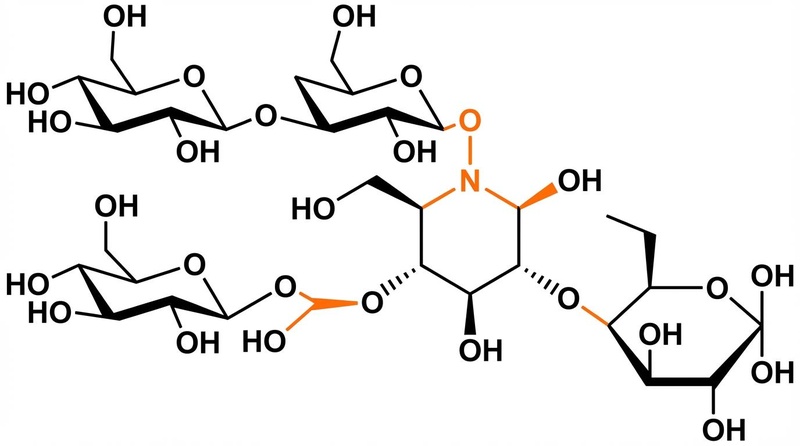
| Type | Drug (Alpha-Glucosidase Inhibitor) |
| Active Cmpd | Acarbose |
| Source | Microbial fermentation (*Actinoplanes utahensis*) |
| Dose Range | 25–100 mg per meal |
| Half-life | ~2 hours (plasma), acts locally in gut |
| Main Benefit | Glucose Control, Longevity (Mice) |
| Absorption | Very Low (<2%) |
⸻
Acarbose is a prescription medication traditionally used to treat Type 2 Diabetes, but it has emerged as one of the most robust "geroprotectors" (anti-aging drugs) in scientific literature. In the prestigious NIA Interventions Testing Program (ITP), Acarbose consistently extends median lifespan in mice, particularly males, by mimicking aspects of caloric restriction and remodeling the gut microbiome.
⸻
¶ At a glance
Aliases
- Brand names: Precose, Glucobay
- Class: Alpha-glucosidase inhibitor, Carbo-blocker
- Category: Prescription drug, Geroprotector
Key points
- Robust Mouse Longevity: Acarbose extends median lifespan by ~22% in male mice and ~5% in female mice in the NIA Interventions Testing Program (ITP).
- Mechanism: It blocks the digestion of carbohydrates in the small intestine, "flattening" glucose spikes and feeding beneficial gut bacteria (increasing SCFA production).
- Synergy: When combined with Rapamycin, it produces the largest median lifespan extension ever seen in the ITP (37% in males).
- Side Effects: High rates of gastrointestinal issues (flatulence, bloating, diarrhea) due to carbohydrate fermentation in the colon; these often subside over time.
What people use it for
- Main goals: Longevity (off-label), postprandial glucose control, weight management.
- Evidence quality: High for mouse longevity and human diabetes control; Low/Indirect for human longevity.
⸻
¶ What is Acarbose?
Acarbose is a complex oligosaccharide originally isolated from the fermentation broth of the bacterium Actinoplanes utahensis. It acts as a competitive inhibitor of alpha-glucosidases, enzymes in the brush border of the small intestine responsible for breaking down complex carbohydrates (starches) into absorbable glucose.
Unlike most drugs that are absorbed into the bloodstream to reach their targets, Acarbose works primarily inside the gut lumen. Less than 2% of the drug is absorbed systemically.
- Regulatory Status: Prescription drug (FDA-approved for Type 2 Diabetes).
- Key Property: "Starch blocker" that converts dietary carbohydrates into a prebiotic fuel source for the microbiome.
⸻
¶ What are Acarbose's main benefits?
¶ 1. Lifespan Extension (Murine Data)
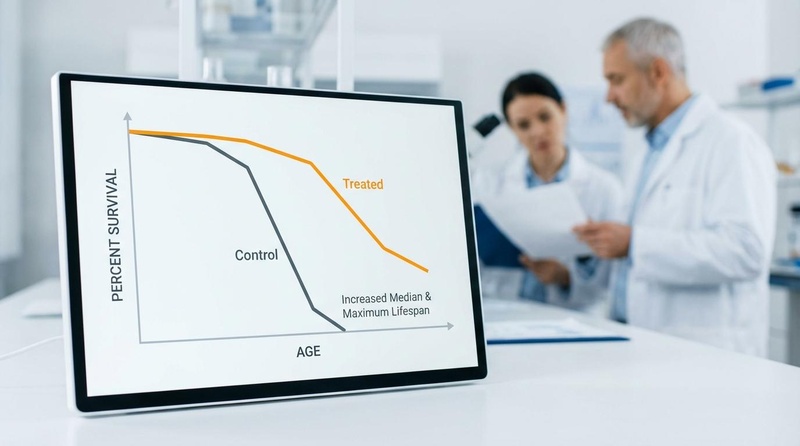
Acarbose is a "star player" in the NIA Interventions Testing Program (ITP), considered the gold standard for longevity research.
- Outcome: Significant extension of median and maximum lifespan.
- Sex Differences: The effect is strongly sexually dimorphic. Male mice see a ~22% increase in median lifespan, while females see a smaller ~5% increase.
- Synergy: The combination of Acarbose + Rapamycin extended male median lifespan by 37%, surpassing either drug alone.
- Evidence Quality: High (Multiple independent replications).
¶ 2. Glucose Control & Metabolic Health
In humans, Acarbose effectively reduces postprandial (after-meal) hyperglycemia.
- Mechanism: By delaying carbohydrate digestion, it prevents sharp spikes in blood glucose and insulin. Lower lifetime insulin exposure is a key theoretical driver of longevity.
- Outcome: Reduction in HbA1c and postprandial glucose excursions.
- Evidence Quality: High (Standard of care for decades).
¶ 3. Cardiovascular Protection
The STOP-NIDDM trial provided compelling human evidence for disease prevention beyond simple glucose control.
- Outcome: Acarbose reduced the risk of cardiovascular events by 49% and myocardial infarction (heart attack) by 91% in pre-diabetic patients.
- Evidence Quality: Moderate (Single large trial, strong effect size).
¶ 4. Cancer Risk Reduction
Observational studies suggest Acarbose users have lower rates of certain cancers.
- Outcome: A nationwide cohort study showed a 27% reduction in colorectal cancer risk among diabetics taking Acarbose.
- Mechanism: Likely due to increased production of butyrate (a short-chain fatty acid) in the colon, which has anti-carcinogenic properties.
- Evidence Quality: Low (Observational data).
⸻
¶ Evidence summary table
| Outcome / Goal | Effect | Consistency | Evidence quality | Trials/Source | Notes |
|---|---|---|---|---|---|
| Lifespan Extension (Male Mice) | ↓↓↓ (p) | High | High | NIA ITP | ~22% median increase; consistent across 3 sites [1][2] |
| Lifespan Extension (Female Mice) | ↓ (p) | High | High | NIA ITP | ~5% median increase; much smaller than males [1:1][2:1] |
| Postprandial Glucose Control | ↓↓ (p) | High | High | Multiple RCTs | Standard clinical use for T2D |
| CV Event Reduction | ↓↓↓ (p) | Moderate | Moderate | STOP-NIDDM | 49% reduction in CV events in pre-diabetics [3] |
| Colorectal Cancer Risk | ↓ (p) | Moderate | Low | Observational | 27% risk reduction in large cohort study [4] |
| Weight Loss | ↓ (p) | High | Moderate | Multiple RCTs | Modest effect (0.5–1.2 kg); "weight negative" [5] |
⸻
¶ How does Acarbose work?
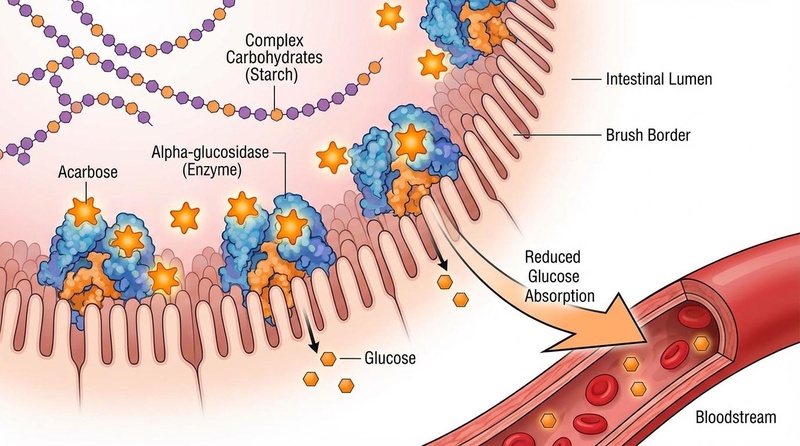
Acarbose operates through two distinct but connected mechanisms that contribute to its geroprotective effects.
¶ 1. Alpha-Glucosidase Inhibition (The "Peak Blunter")
Acarbose blocks enzymes (glucoamylase, sucrase, maltase) lining the small intestine. This delays the digestion of starch and sucrose.
- Result: Instead of a rapid spike in blood glucose (and insulin) after a meal, the glucose enters the bloodstream slowly over hours.
- Longevity Link: Reduced insulin and IGF-1 signaling is a conserved mechanism of aging. By lowering the demand for insulin, Acarbose mimics aspects of a low-glycemic diet or caloric restriction.
¶ 2. Microbiome Remodeling (The "Prebiotic Effect")
Because starch is not digested in the small intestine, it travels to the colon intact. There, it acts as a prebiotic fiber.
- Fermentation: Gut bacteria ferment this starch, leading to a massive bloom in specific bacterial families (e.g., Muribaculaceae).
- SCFA Production: This fermentation generates Short-Chain Fatty Acids (SCFAs) like butyrate, propionate, and acetate.
- Longevity Link: High levels of SCFAs are strongly correlated with longevity in mice. Butyrate, in particular, is an HDAC inhibitor and anti-inflammatory agent that fuels colon cells and improves gut barrier integrity [6][7].
¶ Why the sex difference?
Male mice naturally have poorer glucose tolerance and age-related metabolic decline than females. Acarbose may "rescue" males from this vulnerability. Additionally, male gonadal hormones (testosterone) appear necessary to activate specific downstream pathways (like hepatic mTORC2 signaling) that Acarbose triggers [8].
⸻
¶ Effects on different systems
¶ Metabolic Health
Acarbose is primarily a metabolic drug. It improves insulin sensitivity by preventing the "sugar crashes" that often follow spikes. In the ITP, treated mice maintained lower fasting glucose and insulin levels well into old age.
¶ Gut & Digestion
This is the site of both the drug's efficacy and its side effects. It dramatically alters the gut environment, lowering pH and increasing SCFA concentration. While beneficial for systemic health (via gut-brain and gut-liver axes), this fermentation produces gas, leading to flatulence and distension.
¶ Cardiovascular Health
The STOP-NIDDM trial highlighted Acarbose's potential to stabilize arterial plaque or reduce inflammation, leading to significantly fewer heart attacks. This benefit was observed even in patients who did not have full-blown diabetes, suggesting a mechanism beyond simple glucose lowering (possibly involving GLP-1 secretion or oxidative stress reduction).
⸻
¶ Dosage and how to take it
¶ Standard Clinical Dosing
- Start Low: Typically 25 mg taken with the first bite of a main meal (once daily).
- Titration: Gradual increase to 25 mg three times daily (TID), then 50 mg TID, up to a maximum of 100 mg TID.
- Timing: Crucial. It must be taken with the food to block the enzymes. Taking it before or after the meal significantly reduces efficacy.
¶ Longevity Protocols (Off-Label)
- Dose: Human longevity users often use lower doses (25–50 mg) specifically with carbohydrate-heavy meals ("cheat meals") rather than every meal, to mitigate GI side effects while blunting the worst glucose spikes.
- Mouse Equivalent: The ITP used 1000 ppm in chow. Direct allometric scaling suggests high human doses, but clinical constraints (GI tolerance) usually limit humans to standard diabetic dosing ranges.
¶ Forms
- Available as generic Acarbose tablets (25, 50, 100 mg).
- Must be swallowed whole or chewed with the first mouthful of food.
⸻
¶ Safety and side effects
¶ Common Side Effects (The "Gas" Issue)
The primary barrier to Acarbose use is gastrointestinal intolerance, affecting >50% of users initially.
- Flatulence: Very common. Caused by bacterial fermentation of undigested carbs.
- Diarrhea / Soft Stools: Osmotic effect of carbs in the colon.
- Abdominal Pain / Bloating.
- Management: "Start low, go slow." Symptoms usually subside after 4–8 weeks as the microbiome adapts to the new substrate load [9].
¶ Serious Concerns
- Liver Enzymes: Asymptomatic elevation of liver enzymes (transaminases) can occur, usually at high doses (>300 mg/day). It is reversible upon discontinuation.
- Hypoglycemia: Acarbose alone does not cause low blood sugar (hypoglycemia). However, if taken with sulfonylureas or insulin, it can potentiate hypoglycemia. Note: If hypoglycemia occurs, it must be treated with pure glucose (dextrose), not sucrose (table sugar), because Acarbose blocks the breakdown of sucrose.
¶ Contraindications
- Inflammatory Bowel Disease (IBD), colonic ulceration, or obstruction.
- Conditions that may deteriorate due to increased gas formation.
⸻
¶ Drug and supplement interactions
¶ Pharmacodynamic Interactions
- Digestive Enzymes: Supplements containing amylase or pancreatin may directly reduce the effect of Acarbose by doing the job Acarbose is trying to stop (digesting carbs).
- Charcoal: Intestinal adsorbents (charcoal) may bind to Acarbose and reduce efficacy.
- Insulin / Sulfonylureas: increased risk of hypoglycemia (see Safety above).
¶ Stacks
- Rapamycin + Acarbose:
- Rationale: Highly synergistic in mice (37% lifespan extension). Acarbose may counteract the insulin resistance sometimes induced by chronic Rapamycin use.
- Status: Currently being tested in human clinical trials (e.g., PEARL trial references similar pathways, though specifically Rapamycin).
- Metformin: often combined in diabetes treatment, but they have distinct mechanisms (hepatic glucose output vs. intestinal absorption).
⸻
¶ Practical questions (FAQ)
1. Can I use Acarbose if I am on a Keto/Carnivore diet?
No. Acarbose works by blocking starch digestion. If you are not eating starch, the drug has no substrate to act upon and will provide no benefit (and likely no side effects).
2. Why does it work better in males?
The exact reason is debated, but likely involves male mice having worse baseline glucose tolerance (more room for improvement) and specific hormonal requirements (testosterone) to activate the liver pathways (mTORC2) that Acarbose modulates.
3. Does the gas ever go away?
For most people, yes. The gut microbiome adapts over a period of weeks. Slowly titrating the dose helps significantly.
4. Is it a weight loss drug?
It is "weight negative," meaning people tend to lose a small amount of weight (around 1 kg), but it is not a potent weight loss agent like Ozempic/Wegovy.
⸻
¶ How we evaluated the evidence
- Lifespan: Based on NIA ITP data (Gold Standard). The replication across three sites gives us very high confidence in the mouse data.
- Human Efficacy: Based on the STOP-NIDDM trial (RCT) and decades of pharmacovigilance as a diabetes drug.
- Mechanism: Supported by extensive metagenomic sequencing of the gut microbiome in treated mice.
⸻
¶ References
Harrison DE, et al. (2014). Acarbose, 17-α-estradiol, and nordihydroguaiaretic acid extend mouse lifespan preferentially in males. Aging Cell. https://pubmed.ncbi.nlm.nih.gov/24245565/ ↩︎ ↩︎
Harrison DE, et al. (2014). Acarbose, 17-α-estradiol, and nordihydroguaiaretic acid extend mouse lifespan preferentially in males. Aging Cell. https://pmc.ncbi.nlm.nih.gov/articles/PMC4326908/ ↩︎ ↩︎
Chiasson JL, et al. (2003). Acarbose treatment and the risk of cardiovascular disease and hypertension in patients with impaired glucose tolerance: the STOP-NIDDM trial. JAMA. https://pubmed.ncbi.nlm.nih.gov/12876091/ ↩︎
Tseng YH, et al. (2015). Use of an α-Glucosidase Inhibitor and the Risk of Colorectal Cancer in Patients With Diabetes: A Nationwide Population-Based Cohort Study. Diabetes Care. https://diabetesjournals.org/care/article/38/11/2068/37641/ ↩︎
Schnell O, et al. (2016). Acarbose Reduces Body Weight Irrespective of Glycemic Control. International Journal of Endocrinology. https://pubmed.ncbi.nlm.nih.gov/26935335/ ↩︎
Wu B, et al. (2022). Extension of the Life Span by Acarbose: Is It Mediated by the Gut Microbiota? Aging and Disease. https://www.aginganddisease.org/EN/10.14336/AD.2022.0117 ↩︎
Smith BJ, et al. (2019). Changes in the gut microbiome and fermentation products concurrent with enhanced longevity in acarbose-treated mice. BMC Microbiology. https://pmc.ncbi.nlm.nih.gov/articles/PMC6567620/ ↩︎
Garratt M, et al. (2017). Sex differences in lifespan extension with acarbose and 17-α estradiol: gonadal hormones underlie male-specific improvements in glucose tolerance and mTORC2 signaling. Aging Cell. https://pubmed.ncbi.nlm.nih.gov/28834262/ ↩︎
McIver LA, et al. (2024). Acarbose. StatPearls. https://www.ncbi.nlm.nih.gov/books/NBK493214/ ↩︎