¶ Lactobacillus
| Type | Probiotic Bacteria |
| Active Cmpd | Viable strains (e.g., LGG, L. reuteri, L. plantarum) |
| Source | Fermented dairy, gut/vaginal microbiome |
| Dose Range | 1 billion – 100 billion CFU/day |
| Half-life | Transient colonization (days to weeks) |
| Main Benefit | Gut barrier, metabolic health, vaginal flora |
| Absorption | N/A (Intestinal lumen activity) |
Lactobacillus is a large and diverse genus of Gram-positive, lactic acid-producing bacteria that constitute a cornerstone of the healthy human microbiome. Clinical evidence, including high-quality meta-analyses, supports their use in treating gastrointestinal infections, improving lipid and glucose metabolism, and preventing genitourinary disorders, with emerging research exploring their role in cognitive longevity and muscle health, often complementing other key probiotics like Bifidobacterium and Akkermansia.
¶ At a glance
¶ Aliases
- Also known as: Lactic acid bacteria (LAB), Acidophilus, Probiotic lactobacilli
- Chemical / botanical name: Genus Lactobacillus (now taxonomically reclassified into genera like Lacticaseibacillus, Lactiplantibacillus, Limosilactobacillus, etc.)
- Category: Probiotic bacteria
¶ Key points
- Gastrointestinal Resilience: Strains like L. rhamnosus GG (LGG) are gold-standard interventions for reducing the duration of acute diarrhea in children and preventing antibiotic-associated diarrhea [1].
- Metabolic & Lipid Support: Systematic reviews demonstrate that L. plantarum and other species significantly lower LDL cholesterol and improve glycemic markers in adults with type 2 diabetes and obesity [2][3].
- Vaginal & Urogenital Health: Targeted vaginal tablets and oral protocols effectively prevent bacterial vaginosis (BV) recurrence and mitigate symptoms of genitourinary syndrome of menopause (GSM) [4][5].
- Adjunct to Antibiotics: Lactobacillus supplementation significantly improves H. pylori eradication rates while reducing common treatment side effects like bloating and nausea [6][7].
- Systemic Safety: Generally recognized as safe (GRAS), though caution is required for severely immunocompromised individuals or those with central venous catheters due to rare infection risks [8].
¶ What people use it for
- Main goals: Digestive support, immune modulation, metabolic health (lipids/glucose), vaginal microbiome restoration, and adjunct therapy for H. pylori.
- Evidence quality (overall): High (for acute diarrhea, H. pylori adjunct, and infant colic); Moderate (for metabolic health, BV recurrence, and depression symptoms).
¶ What is Lactobacillus?
Lactobacillus species are rod-shaped, non-spore-forming bacteria that characterize many fermented foods and the human mucosal surfaces. Unlike Bifidobacterium, which dominates the large intestine, Lactobacillus strains are prominent throughout the small intestine and the vaginal tract, playing a major role in preventing intestinal dysbiosis.
- Definition: A genus of Gram-positive, facultatively anaerobic or microaerophilic bacteria that convert simple sugars into lactic acid.
- Natural sources: Fermented foods (yogurt, kefir, sauerkraut, kimchi), raw dairy, and the human gastrointestinal and genitourinary tracts.
- Traditional / historical use: Utilized for millennia in food preservation and traditional medicine as fermented dairy products to support digestion and longevity.
- Current regulatory status: Dietary supplement; specific strains have GRAS (Generally Recognized As Safe) status by the US FDA and QPS (Qualified Presumption of Safety) by the EFSA.
- Key property: Lactic acid fermentation, which lowers local pH to inhibit pathogenic growth and fortifies the mucosal barrier.
¶ What are Lactobacillus’s main benefits?
The clinical benefits of Lactobacillus are highly strain-specific and dependent on the health domain targeted.
- Gastrointestinal Health: Reduces infectious diarrhea duration and prevents antibiotic side effects. L. reuteri is particularly effective for reducing crying time in infantile colic [1:1][9].
- Metabolic & Cardiovascular Health: Improves blood lipid profiles (reducing LDL and total cholesterol) and supports glucose homeostasis in patients with metabolic syndrome or prediabetes [2:1][3:1].
- Vaginal Health: Restores a Lactobacillus-dominant microbiome, preventing recurrence of BV and HPV-related complications, and improving pregnancy outcomes in infertile women undergoing ART [10][5:1][11].
- Mood & Brain Health: Emerging evidence for "psychobiotics" suggests L. reuteri and related strains may modestly reduce depression scores and modulate stress responses [12][13].
- Immune & Preventive Health: Helps prevent atopic dermatitis in infants when used perinatally and may improve tolerance in pediatric food allergies [14][15].
¶ Evidence summary table (human outcomes)
| Outcome / Goal | Effect* | Consistency | Evidence quality | Trials | Notes (population, duration, dose) |
|---|---|---|---|---|---|
| Acute Diarrhea Duration | High | High | >20 RCTs | Significant reduction (~24.5h) in children; primarily LGG [1:2] | |
| H. pylori Eradication | High | Moderate-High | 15+ RCTs | Improved rates and reduced side effects as adjunct [6:1][7:1] | |
| Infantile Colic (Crying) | High | Moderate-High | 7 RCTs | Significant reduction in crying time (L. reuteri) [9:1] | |
| LDL Cholesterol | Moderate | Moderate | 12+ RCTs | Reductions in total and LDL cholesterol (L. plantarum) [2:2][3:2] | |
| BV Recurrence | Moderate | Moderate | 10+ RCTs | Lower recurrence rates with vaginal tablets/supplements [5:2] | |
| Depression Scores | Moderate | Moderate | 5+ RCTs | Modest improvement in mood/depression scores (L. reuteri) [12:1] | |
| HbA1c & Fasting Glucose | Moderate | Moderate | 10 RCTs | Small but significant improvements in T2D/prediabetes [2:3] | |
| Muscle Mass & Strength | Low | Low-Moderate | 6 RCTs | Small gains in muscle strength in older adults/athletes [16] | |
| AD Prevention (Infant) | Moderate | Moderate | 9 RCTs | Reduced incidence when used perinatally (L. rhamnosus) [14:1] | |
| HPV Clearance | Moderate | Moderate | 6 RCTs | Enhanced clearance of cervical HPV infections [11:1] |
*Effect: Number of arrows (1-3) indicates magnitude. Direction: ↑ (increase), ↓ (decrease), = (no effect). Health impact: (p) = positive. Examples: ↓↓↓ (p) = large decrease, positive.
LongeviData outcomes widget (required)
¶ How does Lactobacillus work?
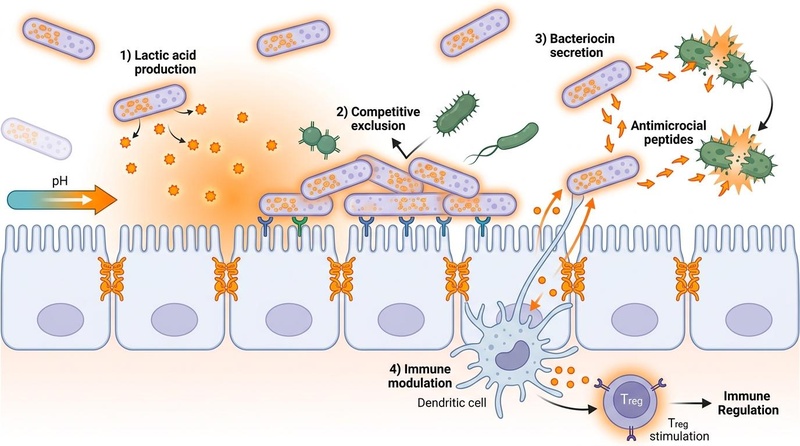
The health benefits of Lactobacillus are mediated by a complex interplay of metabolic, immunological, and ecological mechanisms.
- Lactic Acid Production: Fermentation of carbohydrates (like lactose or glycogen) into lactic acid lowers the local environmental pH (to ~4.0-4.5 in the vagina and small intestine), creating an inhospitable environment for most pathogens.
- Competitive Exclusion: Strains compete with pathogenic bacteria (e.g., E. coli, Salmonella, H. pylori) for physical adhesion sites on the mucosal epithelium and for essential nutrients, effectively "crowding out" harmful microbes.
- Bacteriocin Secretion: Many strains produce small antimicrobial peptides (bacteriocins) that directly target and inhibit the growth of competing bacteria.
- Immune Modulation: Interaction with Dendritic Cells (DCs) and Toll-like receptors (TLRs) in the gut-associated lymphoid tissue (GALT) promotes the differentiation of regulatory T-cells (Tregs) and the production of anti-inflammatory cytokines (e.g., IL-10), balancing the systemic immune response.
- Bile Salt Hydrolase (BSH) Activity: Certain strains (notably L. plantarum) possess BSH activity, which deconjugates bile salts, leading to reduced cholesterol absorption and increased fecal cholesterol excretion.
¶ Effects on different systems
¶ Gastrointestinal Health
Lactobacillus is a standard-of-care probiotic for GI resilience. L. rhamnosus GG is the most robustly studied strain for preventing antibiotic-associated diarrhea and reducing the severity of infectious gastroenteritis in both adults and children [1:3]. In patients with H. pylori, Lactobacillus supplementation acts as a protective shield, buffering the side effects of heavy antibiotic regimens while enhancing the eradication success [6:2][7:2].
¶ Metabolic & Cardiovascular Health
Supplementation with L. plantarum has been shown in 2024–2025 meta-analyses to significantly reduce LDL and total cholesterol by approximately 0.20–0.26 mmol/L [2:4][3:3]. In prediabetic and type 2 diabetic cohorts, it modestly improves HbA1c and fasting blood glucose, likely by enhancing gut barrier integrity, reducing systemic endotoxemia, and mitigating chronic inflammation [2:5].
¶ Genitourinary & Vaginal Health
A Lactobacillus-dominant vaginal microbiome is the primary defense against bacterial vaginosis (BV), yeast infections, and even viral clearance (HPV). Clinical trials show that vaginal tablets containing Lactobacillus species significantly reduce the risk of BV recurrence and improve clinical pregnancy rates in women undergoing ART [10:1][5:3][11:2]. Post-menopausal women may also benefit from improved symptoms of vaginal dryness and irritation (GSM) [4:1].
¶ Brain & Mental Health (Psychobiotics)
The gut-brain axis is a major emerging target for L. reuteri. Meta-analyses indicate that specific strains can modestly reduce depression scores and anxiety in stressed populations, though the effect sizes are generally small and complement rather than replace standard psychiatric care [12:2][13:1].
¶ Muscle & Physical Performance
Early meta-analytic evidence (2025) suggests that Lactobacillus supplementation may improve muscle strength and physical performance markers in athletes and older adults, potentially by improving nutrient absorption and reducing exercise-induced systemic inflammation [16:1].
¶ Dosage and how to take it
¶ Standard dosing in studies
- General Maintenance: 1 billion to 10 billion CFU per day.
- Acute Diarrhea / H. pylori Adjunct: 10 billion to 20 billion CFU of LGG or L. reuteri.
- Metabolic Health: 10 billion to 100 billion CFU (often L. plantarum or multi-strain blends) for at least 8–12 weeks.
- Vaginal Tablets: Specific formulations (e.g., 100 million to 1 billion CFU) inserted vaginally, typically for 6–10 days per cycle.
¶ Forms and bioavailability
- Oral Capsules: Enteric-coated or acid-resistant capsules are preferred to ensure viable bacteria bypass the stomach acid to reach the small intestine.
- Fermented Foods: Yogurt and kefir provide a natural matrix that may enhance bacterial survival, though CFU counts vary widely by brand and storage conditions.
- Storage: Many live probiotics require refrigeration to maintain stated potency (CFU) through the expiration date.
¶ Special populations
- Infants: Safe and effective for preventing AD and treating colic, typically at doses of 100 million to 5 billion CFU [1:4][9:2][14:2].
- Pregnancy: Perinatal use is supported for infant allergy prevention [14:3].
- Immunocompromised: High-risk populations (e.g., active chemotherapy, organ transplant) should avoid live probiotics due to the rare risk of Lactobacillus bacteremia [8:1].
¶ Safety and side effects
Lactobacillus is generally considered extremely safe for the majority of the population.
- Common side effects: Mild, transient gastrointestinal symptoms such as gas, bloating, or mild abdominal cramping during the first 3–7 days of use.
- Rare Serious Risks: Lactobacillus bacteremia, sepsis, or endocarditis have been documented, but almost exclusively in patients with severe underlying risk factors: central venous catheters, severe immunosuppression, or impaired intestinal integrity (e.g., premature infants) [8:2].
- "D-Lactate" Myth: While some Lactobacillus strains produce D-lactate, the risk of "D-lactic acidosis" or "brain fog" in healthy humans with intact intestines is clinically negligible compared to patients with Short Bowel Syndrome.
LongeviData safety widget (required)
¶ Drug and supplement interactions
- Antibiotics: Oral antibiotics can kill probiotic bacteria. It is recommended to space probiotic administration at least 3 hours apart from the antibiotic dose.
- Prebiotics: Fiber supplements (Inulin, GOS, FOS) synergize with Lactobacillus by providing the necessary fuel for their growth and lactic acid production.
- Immunosuppressants: May increase the risk of infection from the live bacteria (see Safety).
¶ Practical questions (FAQ)
How long does it take for Lactobacillus to work?
For acute diarrhea, effects are often seen within 24–48 hours. For metabolic or mood benefits, trials typically report significant results after 8 to 12 weeks of daily use.
Can I take Lactobacillus with antibiotics?
Yes, it is highly recommended to prevent antibiotic-associated diarrhea. Ensure you space the dose at least 3 hours away from the antibiotic to maintain bacterial viability.
Is yogurt as effective as a capsule?
Yogurt is a good source, but capsules typically provide much higher, standardized doses (billions of CFUs) of specific, clinically validated strains that may not be present in commercial yogurt.
Does it help with weight loss?
Can it cause "brain fog"?
For the vast majority of people, no. Concerns about D-lactate and brain fog are primarily relevant for individuals with severe gastrointestinal conditions like Short Bowel Syndrome.
¶ How we evaluated the evidence
Our evidence grading prioritizes:
- High: Consistent results from multiple meta-analyses of high-quality RCTs (e.g., acute diarrhea duration, infant colic).
- Moderate: Findings from systematic reviews and meta-analyses with some heterogeneity or smaller sample sizes (e.g., metabolic health, depression scores, BV recurrence).
- Low: Findings from small RCTs, pilot studies, or inconsistent systematic reviews (e.g., muscle strength, cognitive health in fermented foods).
¶ References
Szajewska H, Hojsak I. (2020). Health benefits of Lactobacillus rhamnosus GG and Bifidobacterium animalis subspecies lactis BB-12 in children. Postgraduate Medicine. https://pubmed.ncbi.nlm.nih.gov/32059116/ ↩︎ ↩︎ ↩︎ ↩︎ ↩︎
Zhong H, Wang L, Jia F, et al. (2024). Effects of Lactobacillus plantarum supplementation on glucose and lipid metabolism in type 2 diabetes mellitus and prediabetes: A systematic review and meta-analysis of randomized controlled trials. Clinical Nutrition ESPEN. https://pubmed.ncbi.nlm.nih.gov/38777458/ ↩︎ ↩︎ ↩︎ ↩︎ ↩︎ ↩︎ ↩︎
Zuo J, Huang D, Liu J, et al. (2025). Effect of Probiotics Containing Lactobacillus plantarum on Blood Lipids: Systematic Review, Meta-Analysis, and Network Pharmacological Analysis. Foods (Basel, Switzerland). https://pubmed.ncbi.nlm.nih.gov/41097469/ ↩︎ ↩︎ ↩︎ ↩︎
Tsuboi I, Inoue S, Maruyama Y. (2026). Effect of Lactobacillus-based probiotics on genitourinary syndrome of menopause in post-menopausal women: A systematic review. Maturitas. https://pubmed.ncbi.nlm.nih.gov/41903368/ ↩︎ ↩︎
Awasthi Y, Bangar S, Boopalan D, et al. (2026). Lactobacillus Vaginal Tablets in Preventing Recurrence of Bacterial Vaginosis: A Systematic Review and Meta-Analysis. Probiotics and Antimicrobial Proteins. https://pubmed.ncbi.nlm.nih.gov/42234392/ ↩︎ ↩︎ ↩︎ ↩︎
Azam A, Qureshi MAM, Zahoor HS, et al. (2025). A Systematic Review and Meta-Analysis of Randomized Controlled Trials on the Benefits of Using Lactobacillus Supplements as an Adjunct Treatment for Helicobacter pylori Eradication. MicrobiologyOpen. https://pubmed.ncbi.nlm.nih.gov/41327607/ ↩︎ ↩︎ ↩︎
Mishra V, Dash D, Panda AK, et al. (2024). Efficacy of Lactobacillus spp. Supplementation in Helicobacter pylori Eradication: A Systematic Meta-Analysis of Randomized Controlled Trials With Trial Sequential Analysis. Helicobacter. https://pubmed.ncbi.nlm.nih.gov/39722187/ ↩︎ ↩︎ ↩︎
Velluto C, Mazzella GG, Inverso M, et al. (2026). Spondylodiscitis Following Oxygen-Ozone Therapy: A Case Report of Lactobacillus iners Infection and a Systematic Literature Review. Diseases (Basel, Switzerland). https://pubmed.ncbi.nlm.nih.gov/41892016/ ↩︎ ↩︎ ↩︎
Xu M, Wang J, Wang N, et al. (2015). The Efficacy and Safety of the Probiotic Bacterium Lactobacillus reuteri DSM 17938 for Infantile Colic: A Meta-Analysis of Randomized Controlled Trials. PLoS ONE. https://pubmed.ncbi.nlm.nih.gov/26509502/ ↩︎ ↩︎ ↩︎
Hiratsuka D, Hirota Y. (2026). Lactobacillus-containing probiotics and clinical pregnancy in infertile women undergoing ART: a systematic review and meta-analysis. European Journal of Obstetrics, Gynecology, and Reproductive Biology. https://pubmed.ncbi.nlm.nih.gov/42251807/ ↩︎ ↩︎
Susetiati DA, Pudjiati SR, Wirohadidjojo YW, et al. (2025). Effectiveness of Lactobacillus therapy in women with cervical human papillomavirus infection: A systematic review and meta-analysis. The Journal of International Medical Research. https://pubmed.ncbi.nlm.nih.gov/40762255/ ↩︎ ↩︎ ↩︎
Cheng Q, Ran Y, Mo X, et al. (2025). The efficacy and acceptability of Lactobacillus reuteri for the treatment of depression: A systematic review and meta-analysis. General Hospital Psychiatry. https://pubmed.ncbi.nlm.nih.gov/40339531/ ↩︎ ↩︎ ↩︎
Fernández-Rodríguez D, Bravo MC, Pizarro M, et al. (2025). Efficacy of Lactobacillus spp. Interventions to Modulate Mood Symptoms: A Scoping Review of Clinical Trials. International Journal of Molecular Sciences. https://pubmed.ncbi.nlm.nih.gov/40869419/ ↩︎ ↩︎
Voigt J, Lele M. (2022). Lactobacillus rhamnosus Used in the Perinatal Period for the Prevention of Atopic Dermatitis in Infants: A Systematic Review and Meta-Analysis of Randomized Trials. American Journal of Clinical Dermatology. https://pubmed.ncbi.nlm.nih.gov/36161401/ ↩︎ ↩︎ ↩︎ ↩︎
Xiaohua L, Yiting D, Qin L, et al. (2025). Lactobacillus GG and other probiotics in pediatric food allergy treatment: a network meta-analysis. Frontiers in Nutrition. https://pubmed.ncbi.nlm.nih.gov/40529417/ ↩︎
Im JY, Jung EJ, Lee JG, et al. (2025). Effect of Lactobacillus spp. Supplementation for Improving Muscle Health: A Systematic Review and Meta-Analysis. Journal of Medicinal Food. https://pubmed.ncbi.nlm.nih.gov/40719617/ ↩︎ ↩︎
Lele JA, Sihaloho KB, Vighneshwara D, et al. (2025). Probiotic Lactobacillus sp. as a strategy for modulation of non-comorbid obesity: A systematic meta-analysis and GRADE assessment of randomized controlled trials. Narra J. https://pubmed.ncbi.nlm.nih.gov/40951500/ ↩︎