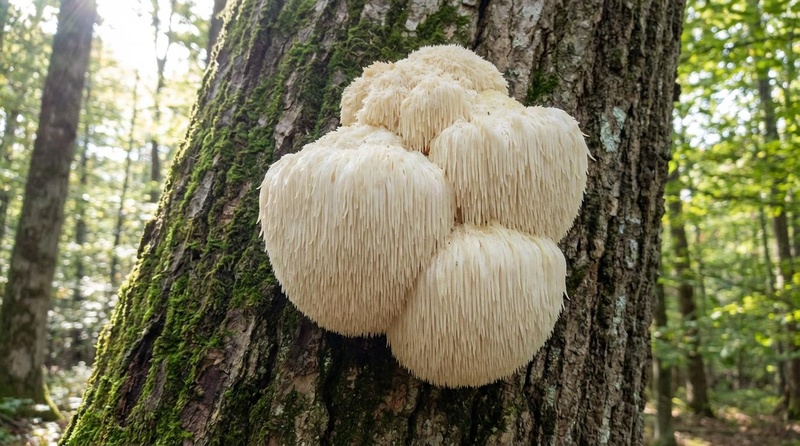
¶ Lion's Mane Mushroom (Hericium erinaceus)
¶ Overview
Lion's Mane (Hericium erinaceus) is a culinary and medicinal mushroom traditionally used in East Asia. Unlike most nootropics that modulate neurotransmitters, Lion's Mane targets neurotrophic factors, specifically stimulating the synthesis of Nerve Growth Factor (NGF). This unique mechanism makes it a popular intervention for long-term brain health, memory preservation, and potentially nerve regeneration.
¶ Mechanism of Action
The cognitive effects of Lion's Mane are attributed to two families of bioactive compounds:
- Hericenones: Found in the fruiting body, these compounds are thought to stimulate NGF synthesis.
- Erinacines: Found in the mycelium, these small molecules can cross the blood-brain barrier and powerfully induce NGF production[1].
By increasing NGF, Lion's Mane supports the maintenance of cholinergic neurons in the basal forebrain and promotes neurite outgrowth (the growth of axons and dendrites).
¶ Clinical Evidence
¶ Cognitive Decline and MCI
The most cited study (Mori et al., 2009) involved 50-80-year-old Japanese men and women with mild cognitive impairment (MCI). The group receiving 3g/day of Lion's Mane showed significantly increased scores on the cognitive function scale compared to placebo. However, scores returned to baseline 4 weeks after stopping supplementation, suggesting continuous use is necessary[2].
¶ Anxiety and Mood
A study in young adults found that 4 weeks of Lion's Mane supplementation reduced scores of depression and anxiety, potentially through anti-inflammatory pathways or increased hippocampal neurogenesis[3].
¶ Dosage and Safety
- Dosage: Clinical trials typically use 1,000–3,000 mg of dried mushroom powder per day. Extracts are often dosed lower (500–1000 mg) depending on concentration.
- Safety: Generally well-tolerated. Some users report mild digestive discomfort. There is a theoretical risk of inhibiting DHT (dihydrotestosterone), though this is not well-established in humans.
¶ References
Ma, B. J., et al. (2010). Hericenones and erinacines: stimulators of nerve growth factor (NGF) biosynthesis in Hericium erinaceus. Mycology. ↩︎
Mori, K., et al. (2009). Improving effects of the mushroom Yamabushitake (Hericium erinaceus) on mild cognitive impairment: a double-blind placebo-controlled clinical trial. Phytotherapy Research. ↩︎
Nagano, M., et al. (2010). Reduction of depression and anxiety by 4 weeks Hericium erinaceus intake. Biomedical Research. ↩︎