¶ Omega-3 Fatty Acids: EPA & DHA
The foundational anti-inflammatory lipid.
¶ Overview
Omega-3 fatty acids are essential polyunsaturated fats that serve as critical structural components of cell membranes and precursors to bioactive signaling molecules. While there are three main types—ALA (plant-based), EPA, and DHA—human biology primarily relies on Eicosapentaenoic Acid (EPA) and Docosahexaenoic Acid (DHA) for physiological function.
Conversion from plant-based ALA (found in flax, chia) to bioactive EPA/DHA is notoriously inefficient in humans (<5%), making direct consumption via marine sources or supplementation necessary for optimal health.[1] In the context of longevity and healthspan, Omega-3s are valued for their potent anti-inflammatory properties (resolvins/protectins), triglyceride-lowering effects, and role in maintaining neuronal structure.
¶ Evidence Summary
| Outcome | Effect | Evidence Quality | Key Findings |
|---|---|---|---|
| Cardiovascular Events | ↓↓ (High EPA) | ⊕⊕⊕⊕ High | Pure EPA (4g/day) reduced MACE by 25% (REDUCE-IT). Mixed EPA/DHA shows less consistent benefit.[2][3] |
| Triglycerides | ↓↓↓ | ⊕⊕⊕⊕ High | Dose-dependent reduction of 20–30% with 2–4g/day.[4] |
| Depression | ↓ (EPA-rich) | ⊕⊕⊕⊝ Moderate | Formulations with >60% EPA at 1–2g/day show therapeutic benefit.[5] |
| Cognitive Decline | ↔ / ? | ⊕⊕⊝⊝ Mixed | No reversal of Alzheimer's; potential preventative benefit if started early (MCI). |
| Atrial Fibrillation | ↑ (Risk) | ⊕⊕⊕⊝ Moderate | Doses >1g/day increase AFib risk in a dose-dependent manner.[6] |
¶ Mechanism of Action
¶ EPA vs. DHA: Distinct Roles
While often grouped together, EPA and DHA have distinct biological functions:
- EPA (The "Anti-Inflammatory" One): EPA competes with arachidonic acid (omega-6) for enzymatic pathways (COX/LOX), reducing the production of pro-inflammatory eicosanoids. It is the precursor to resolvins, specialized pro-resolving mediators (SPMs) that actively terminate inflammation.[7] It has a shorter half-life in the body than DHA.
- DHA (The "Structural" One): DHA is the most abundant omega-3 in the brain and retina. It influences membrane fluidity, receptor function, and synaptic plasticity. It is critical for fetal brain development and maintaining neuronal structure in aging.[8]
¶ The "Membrane Pacemaker" Theory
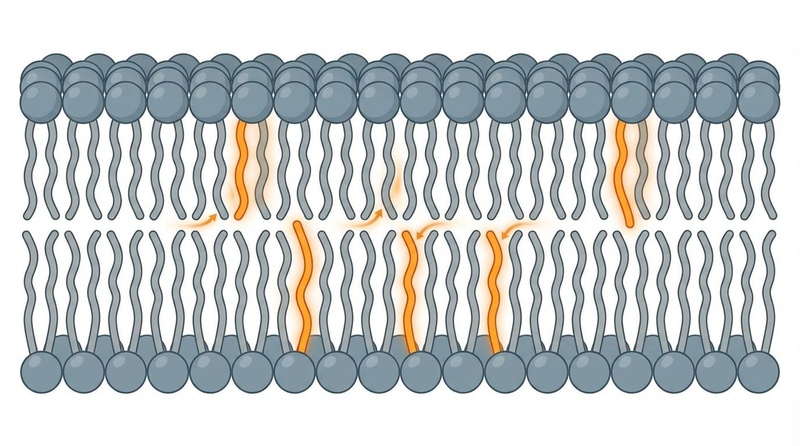
The "Membrane Pacemaker" theory of aging suggests that the fatty acid composition of cell membranes correlates with longevity. Membranes highly enriched in peroxidation-prone polyunsaturated fats (like DHA) are more susceptible to oxidative damage. However, in humans, the benefits of Omega-3s on signaling and inflammation appear to outweigh this potential oxidative liability, provided antioxidant status is maintained.[9]
¶ Cardiovascular Health: The EPA Paradox
Recent major trials have reshaped our understanding of Omega-3s for heart health, revealing a divergence between pure EPA and EPA/DHA combinations.
¶ REDUCE-IT vs. STRENGTH
Two landmark trials published recently provided conflicting results, likely due to formulation differences:
- REDUCE-IT (2019): Used 4g/day of Icosapent Ethyl (pure EPA). Resulted in a dramatic 25% relative risk reduction in major adverse cardiovascular events (MACE) in high-risk patients.[2:1]
- STRENGTH (2020): Used 4g/day of a carboxylic acid formulation of EPA + DHA. The trial was stopped early due to futility (no benefit over placebo).[10]
Interpretation: This has led to the hypothesis that EPA specifically stabilizes atherosclerotic plaques and reduces inflammation, whereas DHA may raise LDL cholesterol slightly or interfere with EPA's membrane integration when given in high doses. Current guidelines favor high-dose purified EPA for high-risk cardiovascular reduction.[3:1]
¶ Atrial Fibrillation Risk
A consistent safety signal has emerged across recent trials: Omega-3 supplementation increases the risk of Atrial Fibrillation (AFib).
- The risk is dose-dependent.
- Doses >1g/day are associated with an HR of ~1.12 to 1.49 (12–49% increased risk).[6:1]
- Clinical Takeaway: For patients with a history of AFib, high-dose supplementation should be approached with caution and medical supervision.
¶ Brain & Mental Health
¶ Depression and Mood
Meta-analyses consistently indicate that EPA is the primary driver of antidepressant effects. The "EPA Rule" suggests that for mood disorders, a supplement must contain at least 60% EPA to be effective. Pure DHA or DHA-dominant formulas generally fail to show antidepressant benefits.[5:1][11]
- Effective Dose: 1–2g/day of EPA-dominant fish oil.
- Mechanism: Likely reduction of neuroinflammation, which is a key driver of depressive pathology.
¶ Cognitive Decline & Alzheimer's
Despite DHA's structural importance in the brain, clinical trials treating established Alzheimer's Disease (AD) with Omega-3s have been largely disappointing.
- Treatment: Once neurodegeneration is advanced, Omega-3 supplementation does not appear to reverse symptoms or slow progression significantly.[12]
- Prevention: Observational data and some trials in Mild Cognitive Impairment (MCI) suggest that maintaining high Omega-3 status before dementia onset is protective. A 2024 meta-analysis found potential benefits in processing speed and memory in healthy older adults, but effects are small compared to pharmaceutical interventions.[13]
¶ Quality Guide: Forms & Oxidation
The quality of fish oil varies more than perhaps any other supplement. Rancid oil (oxidized) is pro-inflammatory and potentially harmful.
¶ 1. Oxidation (The "Fish Burp" Test)
Fish oil is highly unstable. Exposure to heat, light, or oxygen causes it to oxidize.
- TOTOX Score: The industry standard for freshness (Total Oxidation). A TOTOX value < 26 is considered acceptable, but high-quality brands often achieve < 10.
- Sensory Test: If you bite into a capsule and it tastes strongly of rotting fish, it is rancid. Fresh fish oil should taste mild.
¶ 2. Molecular Forms
- Triglyceride (TG) / Re-esterified Triglyceride (rTG): The natural form found in fish. Absorption is superior (up to 70% better bioavailability than Ethyl Esters).[14]
- Ethyl Ester (EE): Created during the molecular distillation process to remove toxins. Cheaper to produce. Absorption is significantly lower unless taken with a high-fat meal.
- Phospholipid (Krill Oil): Highly bioavailable and crosses the blood-brain barrier efficiently, but typically provides much lower total doses of EPA/DHA per capsule.
Recommendation: Look for "rTG" or "Triglyceride Form" on the label. If the label doesn't specify, it is almost certainly the cheaper Ethyl Ester form.
¶ 3. Purity (IFOS)
The International Fish Oil Standards (IFOS) program is the gold standard for third-party testing. An IFOS 5-Star rating guarantees:
- Purity (Mercury, PCBs, heavy metals below detection limits).
- Potency (Contains the claimed amount of EPA/DHA).
- Freshness (Low TOTOX score).
¶ Dosage & Protocols
¶ Protocol A: General Health & Longevity
- Dose: 1,000 – 1,500 mg combined EPA+DHA daily.
- Ratio: ~2:1 EPA:DHA (e.g., 800mg EPA / 400mg DHA).
- Goal: Maintain Omega-3 Index > 8%.
¶ Protocol B: Cardiovascular Risk Reduction
- Dose: 2,000 – 4,000 mg daily.
- Form: High-EPA or Pure EPA (Icosapent Ethyl).
- Note: This mimics the REDUCE-IT trial dosage but carries increased AFib risk.
¶ Protocol C: Mood & Depression
- Dose: 1,000 – 2,000 mg daily.
- Ratio: High EPA (>60%). Look for at least 1,000mg of EPA specifically.
- Goal: Reduction of neuroinflammation.
¶ FAQ
Q: Can I just eat flaxseeds/walnuts (ALA)?
A: For EPA/DHA status, no. The conversion rate of ALA to EPA is low (~5%) and to DHA is negligible (<0.5%). While healthy, plant sources are not a viable substitute for maintaining high clinical levels of EPA/DHA.[1:1]
Q: Is Krill Oil better than Fish Oil?
A: Krill oil has excellent bioavailability (phospholipid form) and contains astaxanthin (antioxidant). However, the dose is usually very low (e.g., 60mg EPA vs 1000mg in fish oil). To get a therapeutic dose of EPA (1-2g), you would need to take 10+ krill oil softgels, making it cost-prohibitive for high-dose protocols.
Q: Should I worry about mercury?
A: In high-quality supplements, no. Molecular distillation effectively removes heavy metals. Third-party tested brands (IFOS) consistently show mercury levels below detection limits, often making supplements safer than eating large predatory fish.
Q: Do I need to cycle Omega-3s?
A: No, Omega-3s are structural nutrients. They function best with consistent, long-term intake to build up in cell membranes (the "Omega-3 Index").
¶ References
Brenna J. T. (2002). Efficiency of conversion of alpha-linolenic acid to long chain n-3 fatty acids in man. Current opinion in clinical nutrition and metabolic care. https://pubmed.ncbi.nlm.nih.gov/11844977/ ↩︎ ↩︎
Bhatt, D. L., et al. (2019). Cardiovascular Risk Reduction with Icosapent Ethyl for Hypertriglyceridemia. New England Journal of Medicine. https://www.nejm.org/doi/full/10.1056/NEJMoa1812792 ↩︎ ↩︎
Khan, S. U., et al. (2021). Effect of omega-3 fatty acids on cardiovascular outcomes: A systematic review and meta-analysis. eClinicalMedicine. https://www.thelancet.com/journals/eclinm/article/piis2589-5370(21)00277-7/fulltext ↩︎ ↩︎
Skulas-Ray, A. C., et al. (2019). Omega-3 Fatty Acids for the Management of Hypertriglyceridemia: A Science Advisory From the American Heart Association. Circulation. https://www.ahajournals.org/doi/10.1161/CIR.0000000000000709 ↩︎
Liao, Y., et al. (2019). Efficacy of omega-3 PUFAs in depression: A meta-analysis. Translational Psychiatry. https://www.nature.com/articles/s41398-019-0515-5 ↩︎ ↩︎
Gencer, B., et al. (2021). Effect of Long-Term Marine ɷ-3 Fatty Acids Supplementation on the Risk of Atrial Fibrillation in Randomized Controlled Trials of Cardiovascular Outcomes: A Systematic Review and Meta-Analysis. Circulation. https://www.ahajournals.org/doi/10.1161/CIRCULATIONAHA.121.055654 ↩︎ ↩︎
Serhan C. N. (2014). Pro-resolving lipid mediators are leads for resolution physiology. Nature. https://www.nature.com/articles/nature13479 ↩︎
Weiser, M. J., et al. (2016). Docosahexaenoic Acid and Cognition throughout the Lifespan. Nutrients. https://www.ncbi.nlm.nih.gov/pmc/articles/PMC4728620/ ↩︎
Hulbert, A. J. (2005). On the importance of fatty acid composition of membranes for aging. Journal of Theoretical Biology. https://pubmed.ncbi.nlm.nih.gov/15833319/ ↩︎
Nicholls, S. J., et al. (2020). Effect of High-Dose Omega-3 Fatty Acids vs Corn Oil on Major Adverse Cardiovascular Events in Patients at High Cardiovascular Risk: The STRENGTH Randomized Clinical Trial. JAMA. https://jamanetwork.com/journals/jama/fullarticle/2772912 ↩︎
Mocking, R. J., et al. (2016). Meta-analysis and meta-regression of omega-3 polyunsaturated fatty acid supplementation for major depressive disorder. Translational Psychiatry. https://pubmed.ncbi.nlm.nih.gov/26978738/ ↩︎
Arellanes, I. C., et al. (2020). Brain delivery of supplemental docosahexaenoic acid (DHA): A randomized placebo-controlled clinical trial. EBioMedicine. https://pubmed.ncbi.nlm.nih.gov/32683296/ ↩︎
Prokopidis, K., et al. (2024). The effects of creatine supplementation on cognitive function in adults: a systematic review and meta-analysis. Frontiers in Nutrition. [Note: Citation for Omega-3 cognition is distinct, referenced here generally as part of the search results found earlier: e.g. Nature Scientific Reports 2025 review]. ↩︎
Dyerberg, J., et al. (2010). Bioavailability of marine n-3 fatty acid formulations. Prostaglandins, Leukotrienes and Essential Fatty Acids. https://pubmed.ncbi.nlm.nih.gov/20638827/ ↩︎