¶ 桑拿与热疗:被动有氧运动的科学
¶ 概览
这是什么?
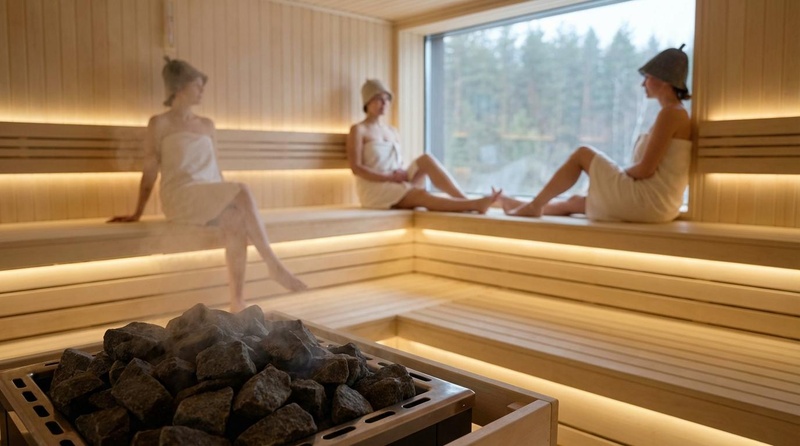
桑拿浴是一种**全身热疗(whole-body thermotherapy)形式,使身体在短时间内暴露于高温(通常为 80°C–100°C)环境中。虽然通常被视为一种放松方式,但它也是一种强效的生物应激源,能引发被称为毒物兴奋效应(hormesis)**的强大适应性反应。
为什么要做?
规律使用桑拿相当于进行“被动心血管锻炼”,可将心脏病、中风和全因死亡的风险降低高达 40% [1][2]。它能激活热休克蛋白(HSPs),修复受损蛋白质,并刺激自噬(autophagy)(细胞清理过程)。
关键方案
为了获得最大的长寿益处:175°F+(80°C+)持续 20 分钟,每周 4–7 次 [1:1]。
¶ “为什么”:益处与健康结果
¶ 1. 心血管死亡率的大幅降低
最强有力的证据来自 Kuopio Ischemic Heart Disease Risk Factor Study (KIHD),该研究对 2,300 多名芬兰男性进行了长达 20 年的随访。结果呈剂量依赖性:
- 心源性猝死:与每周使用 1 次桑拿的人相比,每周使用 4–7 次的人风险降低了 63% [1:2]。
- 全因死亡率:频繁使用者(4–7次/周)的风险降低了 40% [1:3]。
- 高血压:患高血压的风险降低了 46% [3]。
¶ 2. 神经保护与痴呆症预防
热应激可能对大脑具有保护作用。同一项 KIHD 研究发现,与每周使用 1 次桑拿的男性相比,每周使用 4–7 次的男性患痴呆症的风险降低了 66%,患阿尔茨海默病的风险降低了 65% [4]。血管功能的改善和炎症的减少可能是促成这一结果的原因。
¶ 3. 情绪与心理健康
高温会增加强啡肽 (dynorphins)(用于冷却身体,最初可能会产生一种烦躁感)的产生,随后β-内啡肽 (beta-endorphins) 会出现反弹,从而带来“桑拿快感”。它还会增加脑源性神经营养因子 (BDNF),这有助于维持神经元健康,并可能缓解抑郁症状 [5][6]。
¶ 作用机制
¶ 毒物兴奋效应 (Hormesis) 与热休克蛋白 (HSPs)
桑拿是毒物兴奋效应 (hormesis)(有益的压力)的经典例子。细胞对热的主要反应是上调热休克蛋白(特别是 HSP70)。
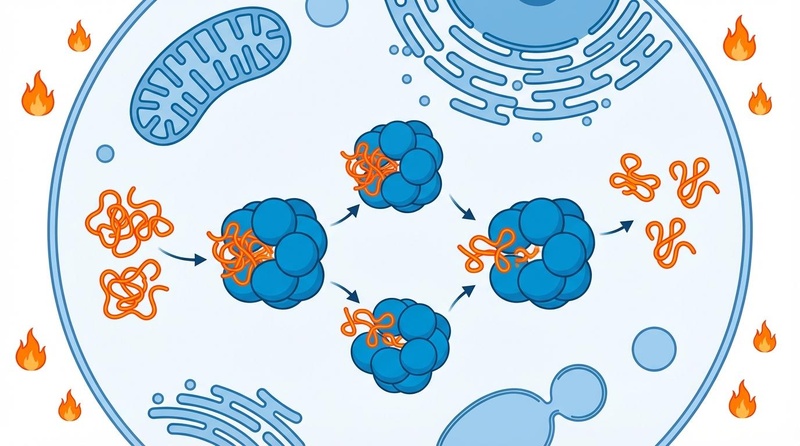
图 1:在热应激下,热休克蛋白 (HSPs) 充当分子伴侣,重新折叠错误折叠的蛋白质,并防止与衰老和神经退行性疾病相关的毒性聚集。
- 伴侣功能:HSPs 确保其他蛋白质正确折叠并修复受损的蛋白质。
- 防止聚集:通过维持蛋白质稳态(proteostasis,即蛋白质平衡),HSPs 有助于防止斑块的积累(如阿尔茨海默病中的 β-淀粉样蛋白)[7]。
- FOXO3 激活:热应激会激活 FOXO3 基因,这是一种与 DNA 修复、干细胞维持和免疫功能相关的长寿主调节因子 [8]。
¶ 自噬与细胞清理
热应激会触发自噬 (autophagy),这是人体的内部回收系统。该过程会分解功能失调的细胞成分,并清除“分子垃圾” [9]。
- 蛋白质聚集体清除:自噬与 HSPs 协同作用,降解无法修复的错误折叠蛋白质。
- 线粒体质量控制:热应激会诱导线粒体毒物兴奋效应 (mitohormesis),在这种效应中,轻度的线粒体应激会向细胞发出信号,从而提高线粒体效率和生物发生 [10]。
¶ 抗氧化防御(Nrf2 通路)
热应激会激活 Nrf2 通路,这是抗氧化防御的“总开关”。Nrf2 易位到细胞核,并上调谷胱甘肽等内源性抗氧化剂的产生,从而保护细胞免受未来的氧化应激损伤 [11]。
¶ 心血管调节
- 内皮功能:热量能改善血管的弹性(顺应性),降低血管阻力。
- 血浆容量扩张:与耐力训练类似,热适应会增加血浆容量,从而改善体温调节和心脏每搏输出量 [12]。
¶ 方案:如何通过桑拿促进长寿
并非所有的桑拿体验都能产生相同的效果。主要研究中引用的临床益处都是基于特定参数的。
¶ “芬兰黄金标准”
该方案与 Laukkanen 研究中显示最大程度降低死亡率的数据相吻合。
| 参数 | 建议 | 备注 |
|---|---|---|
| 类型 | 传统芬兰浴(干/湿) | 辐射热;可以通过向石头上泼水("löyly")来增加湿度。 |
| 温度 | 176°F – 212°F (80°C – 100°C) | 较低的温度可能需要更长的时间才能达到类似的效果。 |
| 时长 | 每次 15 – 20 分钟 | 待在里面,直到你感到有强烈的降温冲动。 |
| 频率 | 每周 4 – 7 次 | “越多越好”,最多可每天使用。每周 2-3 次仍有益处,但效果较弱。 |
| 降温 | 逐渐降温或冷水浴 | 与冷暴露(Nordic Cycle)结合可能会放大代谢效果,但需要谨慎。 |
¶ 红外线桑拿
红外线 (IR) 桑拿利用光线直接加热身体,而不是加热空气。它们通常在较低的温度下运行(110°F – 140°F / 45°C – 60°C)。
- 优点:对于无法忍受高温的人来说更容易接受;具有深层穿透力。
- 缺点:大多数关于长寿的数据都来自高温芬兰桑拿。为了模拟芬兰桑拿的生理压力,您可能需要在红外线桑拿中停留更长时间(30–45 分钟以上),才能达到类似的核心体温升高效果 [13]。
¶ 安全与禁忌症
虽然通常是安全的,但热应激会给心血管系统带来显著的负荷。
¶ 哪些人应避免高温桑拿?
- 不稳定的心脏状况:不稳定型心绞痛、近期心肌梗死(6周内)或严重的主动脉瓣狭窄 [14]。
- 怀孕:请咨询医生;通常建议避免极度的核心体温升高。
- 发烧/感染:桑拿会增加代谢需求,可能会加重急性疾病。
- 直立性低血压:容易晕厥的人应谨慎,并缓慢退出。
¶ 安全提示
- 补充水分:在前后饮用含有电解质的水。一次桑拿可能会流失 0.5–1 升的体液。
- 倾听身体的声音:如果您感到头晕、恶心或不适,请立即退出。毒物兴奋效应(Hormesis)需要的是轻度压力,而不是受罪。
- 逐渐降温:在淋浴或进入冷水浴之前,让您的心率恢复正常。
¶ 比较
¶ 桑拿 vs. 蒸汽房
- 桑拿:低湿度(<20%),高热(80°C+)。允许汗液蒸发,从而使更高的温度变得可以忍受。
- 蒸汽房:高湿度(100%),较低热量(~45°C)。汗液不会蒸发,因此身体的加热方式不同。虽然对呼吸系统健康有益,但较少有数据将蒸汽房与芬兰桑拿研究中观察到的特定长寿结果联系起来。
¶ 桑拿 vs. 热水浴缸
- 热水浸泡也能提供静水压和热应激。它能有效降低血压和改善睡眠,但要达到桑拿的高核心温度(通常是最大程度激活 HSP 所需的)则更加困难,而且长时间浸泡可能会不太舒服 [15]。
¶ 参考文献
Laukkanen, T., Khan, H., Zaccardi, F., & Laukkanen, J. A. (2015). Association between sauna bathing and fatal cardiovascular and all-cause mortality events. JAMA Internal Medicine, 175(4), 542–548. https://jamanetwork.com/journals/jamainternalmedicine/fullarticle/2130724 ↩︎ ↩︎ ↩︎ ↩︎
Laukkanen, J. A., Laukkanen, T., & Kunutsor, S. K. (2018). Cardiovascular and other health benefits of sauna bathing: a review of the evidence. Mayo Clinic Proceedings, 93(8), 1111–1121. https://www.mayoclinicproceedings.org/article/S0025-6196(18)30275-1/fulltext ↩︎
Zaccardi, F., Laukkanen, T., Willeit, P., & Laukkanen, J. A. (2017). Sauna bathing and incident hypertension: a prospective cohort study. American Journal of Hypertension, 30(11), 1120–1125. https://academic.oup.com/ajh/article/30/11/1120/3867393 ↩︎
Laukkanen, T., Kunutsor, S., Kauhanen, J., & Laukkanen, J. A. (2017). Sauna bathing is inversely associated with dementia and Alzheimer's disease in middle-aged Finnish men. Age and Ageing, 46(2), 245–249. https://academic.oup.com/ageing/article/46/2/245/2654230 ↩︎
Janssen, C. W., Lowry, C. A., Mehl, M. R., et al. (2016). Whole-body hyperthermia for the treatment of major depressive disorder: a randomized clinical trial. JAMA Psychiatry, 73(8), 789–795. ↩︎
Kojima, D., Nakamura, T., Banno, M., et al. (2018). Head-out immersion in hot water increases serum BDNF in healthy humans. International Journal of Hyperthermia, 34(6), 834–839. ↩︎
Iguchi, M., Littmann, A. E., Chang, S. H., et al. (2012). Heat stress and cardiovascular, hormonal, and heat shock protein responses in humans. Journal of Athletic Training, 47(2), 184–190. https://pmc.ncbi.nlm.nih.gov/articles/PMC3418130/ ↩︎
Willcox, B. J., Donlon, T. A., He, Q., et al. (2008). FOXO3A genotype is strongly associated with human longevity. Proceedings of the National Academy of Sciences, 105(37), 13987–13992. ↩︎
Moore, M. N. (2020). Autophagy and Hormesis. Cells, 9(5), 1279. https://pmc.ncbi.nlm.nih.gov/articles/PMC7343375/ ↩︎
Ristow, M., & Schmeisser, K. (2014). Mitohormesis: Promoting Health and Lifespan by Increased Levels of Reactive Oxygen Species (ROS). Dose-Response, 12(2), 288-341. https://pmc.ncbi.nlm.nih.gov/articles/PMC4036400/ ↩︎
Zhang, D. D. (2024). Hormesis and polyphenol mediate Nrf2 regulation of disease and health. ResearchGate. https://www.researchgate.net/figure/Hormesis-and-polyphenol-mediate-Nrf2-regulation-of-disease-and-health-Heat-shock_fig3_382240492 ↩︎
Scoon, G. S., Hopkins, W. G., Mayhew, S., & Cotter, J. D. (2007). Effect of post-exercise sauna bathing on the endurance performance of competitive male runners. Journal of Science and Medicine in Sport, 10(4), 259–262. ↩︎
Beever, R. (2009). Far-infrared saunas for treatment of cardiovascular risk factors: summary of published evidence. Canadian Family Physician, 55(7), 691–696. https://www.cfp.ca/content/55/7/691 ↩︎
Kukkonen-Harjula, K., & Kauppinen, K. (2006). Health effects and risks of sauna bathing. International Journal of Circumpolar Health, 65(3), 195–205. https://pubmed.ncbi.nlm.nih.gov/16871826/ ↩︎
Brunt, V. E., Howard, M. J., Francisco, M. A., et al. (2016). Passive heat therapy improves endothelial function, arterial stiffness and blood pressure in sedentary humans. Journal of Physiology, 594(18), 5329–5342. ↩︎