¶ LL-37:益处、剂量与副作用
| 序列 | LLGDFFRKSKEKIGKEFKRIVQRIKDFLRNLVPRTES |
| 化学式 | C205H340N60O53 |
| 摩尔质量 | 4493.3 g/mol |
| 类别 | 抗菌肽 (AMP) |
| 半衰期 | 数分钟(全身);数小时(局部) |
| 给药途径 | 局部外用,SubQ(超适应症) |
| FDA 状态 | 研究阶段 / 未批准 |
| CAS | 154947-66-7 |
LL-37 是已知唯一的人类 cathelicidin,这是一种强效肽,可作为天然的广谱抗生素和免疫系统调节剂。虽然临床试验表明其在难愈合伤口的局部使用方面具有前景,但由于存在自身免疫激活和促进癌症的潜在风险,其全身性使用仍存在争议。
¶ 概览
这是什么?
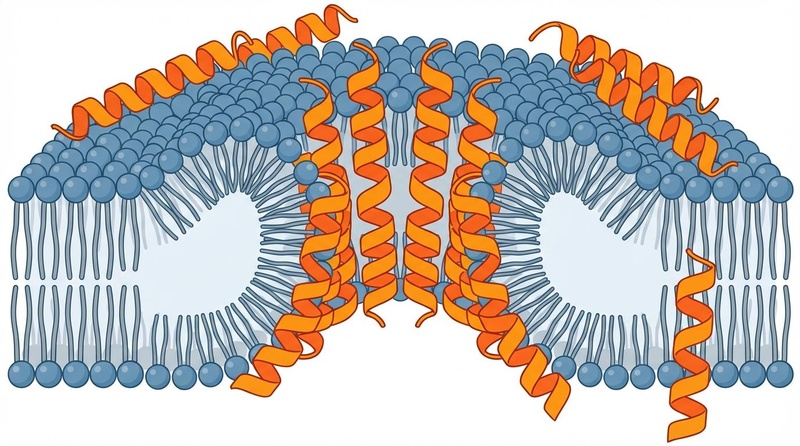
LL-37(Cathelicidin 抗菌肽)是由人类免疫系统产生的一种天然肽。它作为“第一道防线”,通过在细菌细胞膜上物理穿孔,并向免疫系统发出修复组织的信号来发挥作用。
主要益处
- 慢性伤口愈合:在临床试验中显著加速静脉性下肢溃疡和糖尿病足溃疡的闭合。
- 破坏生物膜:强效分解保护慢性感染免受抗生素破坏的细菌生物膜(黏液层)。
安全性概况
🔴 谨慎(全身使用) / 🟡 中等(局部使用)
- 局部使用:在试验中通常耐受性良好,但高剂量可能会引起组织刺激。
- 全身使用:发生严重注射部位反应、肥大细胞激活(潮红/瘙痒)以及潜在自身免疫性疾病发作的风险较高。在某些组织中存在促进癌症的理论风险。
¶ 方案
| 变量 | 建议 |
|---|---|
| 剂量(局部) | 0.5 mg/mL – 1.6 mg/mL(以溶液/乳霜形式涂抹) |
| 剂量(全身) | 100 mcg – 250 mcg(超适应症/经验之谈) |
| 频率 | 局部:每周 2 次 全身:每天 |
| 周期 | 局部:4 周 全身:用药 4–6 周,停药 4 周 |
| 途径 | 局部外用(主要);皮下注射(超适应症) |
临床注意事项:LL-37 遵循“钟形”剂量反应曲线。在临床试验中,较低剂量(0.5 mg/mL)比较高剂量(3.2 mg/mL)更有效。并非越多越好;高浓度具有细胞毒性并会阻碍愈合。
¶ 益处(“为什么使用”)
¶ 慢性伤口愈合
关于 LL-37 最有力的临床证据在于治疗慢性、不愈合的伤口。
- 静脉性腿部溃疡: 一项随机的 II 期临床试验表明,与安慰剂相比,局部应用 LL-37 (0.5 mg/mL) 显著提高了难治性静脉性腿部溃疡的愈合率 [1]。有趣的是,更高剂量 (3.2 mg/mL) 的效果反而较差,这表明剂量存在一个“金发姑娘 (goldilocks)”区间(即恰到好处的剂量范围)。
- 糖尿病足溃疡: 一项 2023 年的随机对照试验发现,LL-37 乳膏提高了糖尿病足溃疡的愈合率和肉芽组织的形成 [2]。
¶ 生物膜破坏
细菌通常会形成“生物膜 (biofilms)”——一种黏液状的堡垒,保护它们免受抗生素和免疫系统的攻击。这在 Lyme disease(莱姆病)、慢性鼻窦炎和植入物感染等慢性感染中很常见。
- LL-37 已被证明具有穿透和破坏这些生物膜的强大能力,其所需浓度远低于杀死游离细菌所需的浓度 [3]。这一特性使其成为治疗标准抗生素无效的持续性感染的关注焦点。
¶ 免疫调节
LL-37 不仅仅是杀死细菌;它还能指导免疫系统。
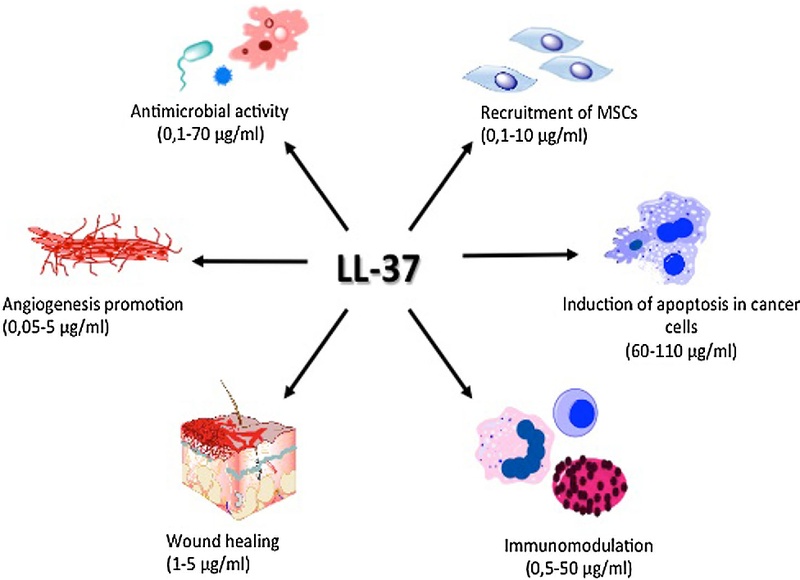
- 它能将免疫细胞(中性粒细胞、单核细胞、T 细胞)招募到感染部位(趋化作用)。
- 它能中和细菌毒素(如 LPS),从而可能降低感染性休克 (septic shock) 的风险 [4]。
¶ 背景与 Biohacking 应用
¶ “Lyme & SIBO” 背景
尽管缺乏 FDA 批准,LL-37 因其破坏生物膜的特性,在 biohacking 和慢性病群体(特别是 Lyme disease 和 SIBO)中被广泛讨论。
- 生物膜理论 (Biofilm Theory):这些群体认为,许多慢性疾病是由隐藏在生物膜中的“持留 (persister)”细菌驱动的。LL-37 在体外 (in vitro) 证明的破坏生物膜的能力是这种超适应症 (off-label) 使用的主要驱动力。
- “Herx”与毒性:使用者经常报告出现类似流感的症状、潮红和疲劳,并将其解释为“Herxheimer”(死亡)反应。然而,这些症状通常是由于 Mast Cell Activation(LL-37 通过 MrgX2 受体触发组胺释放)或全身性炎症(IL-6 释放)引起的,而不是细菌死亡 [5]。
现实检验 (Reality Check):虽然 LL-37 在培养皿中能杀死 Borrelia(莱姆病细菌)[6],但它在血液中的快速降解(半衰期仅为几分钟)使得在没有先进递送系统的情况下,很难实现全身疗效。
¶ 作用机制
LL-37 主要通过以下两种机制发挥作用:
-
细胞膜破坏(“打孔”效应):
LL-37 带正电荷。细菌细胞膜带负电荷。这种静电引力将 LL-37 吸引到细菌表面。一旦聚集了足够多的肽,它们就会插入细胞膜并形成环形孔隙 (toroidal pores) [7]。这会导致细菌细胞内容物泄漏并死亡。由于这种机制是物理性的,与传统抗生素相比,细菌很难对其产生耐药性。 -
免疫信号传导(“警报”效应):
LL-37 结合到人体细胞上的特定受体(如 FPR2 和 P2X7)[8]。这会引发一系列级联反应:- 趋化作用 (Chemotaxis): 将免疫细胞吸引到“战区”。
- 细胞因子释放 (Cytokine Release): 刺激 IL-8 和 IL-6 的产生以增强炎症反应。
- 血管生成 (Angiogenesis): 激活 EGFR(表皮生长因子受体 / Epidermal Growth Factor Receptor)以刺激皮肤细胞生长和新血管形成,从而帮助伤口修复 [9]。
¶ 证据与科学
¶ 人体效应矩阵
| 结果 / 目标 | 效应 | 证据质量 | 一致性 | 备注 |
|---|---|---|---|---|
| 静脉性腿部溃疡愈合 | 积极 | 中等 | 中等 | 2 项 RCT;局部外用 0.5–1.6 mg/mL,每周 2 次,持续 4 周 [1:1][10] |
| 糖尿病足溃疡愈合 | 积极 | 中等 | 高 | 1 项 RCT;局部外用乳膏,肉芽组织显著改善 [2:1] |
| 慢性中耳炎 | 积极 | 中等 | 高 | 1 项 RCT;使用合成衍生物 OP-145;成功率为 47%,安慰剂组为 6% [11] |
| 全身性感染(莱姆病) | 不明确 | 极低 | 低 | 无 RCT;仅有轶事证据;基于体外数据 [6:1] |
¶ 关键研究
- Grönberg et al. (2014):一项针对 34 名静脉性腿部溃疡患者的随机、安慰剂对照 II 期临床试验。研究发现,局部外用 0.5 mg/mL 和 1.6 mg/mL 的 LL-37 分别使愈合率提高了 6 倍和 3 倍,而 3.2 mg/mL 则未显示出益处 [1:2]。
- Kusumawardhani et al. (2023):一项关于糖尿病足溃疡的随机双盲试验,结果显示与标准护理相比,LL-37 乳膏显著促进了肉芽组织的形成并提高了愈合速度 [2:2]。
¶ 安全性与副作用
¶ 常见副作用
- 注射部位反应:皮下注射(SubQ)非常容易引起严重的红斑、灼热、肿胀和疼痛。
- 肥大细胞活化:由于组胺释放导致的潮红、瘙痒、发热感和“假性过敏” [5:1]。
- 流感样症状:不适、疲劳(常被误认为是“赫氏反应”或病原体死亡反应)。
¶ 严重隐患
- 自身免疫性疾病发作:可能在易感人群中引发或加重银屑病、酒渣鼻、系统性红斑狼疮(SLE)或其他自身免疫性疾病。高水平的 LL-37 是这些疾病的已知驱动因素 [12]。参见 慢性炎症。
- 促癌作用:由于其促血管生成特性,理论上存在加速现有肿瘤(乳腺癌、肺癌、卵巢癌)生长的风险 [13][14]。相反,它可能会抑制结肠癌/胃癌。
¶ 禁忌症
- 自身免疫性疾病患者:患有银屑病、SLE 或酒渣鼻的患者可能应避免使用 LL-37。
- 癌症患者:由于其促血管生成特性以及未知的肿瘤相互作用。
- 孕妇/哺乳期妇女:由于对胎儿发育的影响未知,绝对禁忌。
¶ 法律与监管状态
- FDA 状态:未批准。LL-37 未获得 FDA 批准用于任何医疗用途。它被列入 FDA 的 第 2 类原料药(Category 2 Bulk Drug Substances) 名单,这意味着它会引发“重大安全风险”(特别是关于男性生殖和肿瘤促进),不应进行复方配制 [15]。
- WADA 状态:可能被禁。虽然未明确命名,但作为影响血管生成的生长因子调节剂,它属于 S2 类(肽类激素、生长因子)。运动员应避免使用。
¶ 参考文献
Grönberg, A., et al. (2014). Treatment with LL-37 is safe and effective in enhancing healing of hard-to-heal venous leg ulcers: a randomized, placebo-controlled clinical trial. Wound Repair and Regeneration. https://pubmed.ncbi.nlm.nih.gov/25041740/ ↩︎ ↩︎ ↩︎
Kusumawardhani, E., et al. (2023). Efficacy of LL-37 cream in enhancing healing of diabetic foot ulcer: a randomized double-blind controlled trial. Archives of Dermatological Research. https://pubmed.ncbi.nlm.nih.gov/37480520/ ↩︎ ↩︎ ↩︎
Kang, J., et al. (2019). Antimicrobial peptide LL-37 is bactericidal against Staphylococcus aureus biofilms. PLoS ONE. https://journals.plos.org/plosone/article?id=10.1371/journal.pone.0216676 ↩︎
Nagaoka, I., et al. (2001). Cathelicidin family of antibacterial peptides CAP18 and CAP11 inhibit the expression of TNF-alpha by blocking the binding of LPS to CD14+ cells. The Journal of Immunology. https://pubmed.ncbi.nlm.nih.gov/11313405/ ↩︎
Niyonsaba, F., et al. (2001). Evaluation of the effects of peptide antibiotics human beta-defensins-1/-2 and LL-37 on histamine release and prostaglandin D2 production from mast cells. European Journal of Immunology. https://pubmed.ncbi.nlm.nih.gov/11298351/ ↩︎ ↩︎
Sapi, E., et al. (2011). Antimicrobial activity of bee venom and melittin against Borrelia burgdorferi. Antibiotics. https://www.ncbi.nlm.nih.gov/pmc/articles/PMC3223049/ ↩︎ ↩︎
Xhindoli, D., et al. (2016). The human cathelicidin LL-37: A pore-forming hexagonal II protein-lipid channel. Biophysical Journal. https://pubmed.ncbi.nlm.nih.gov/26620092/ ↩︎
Scott, M. G., et al. (2002). The Human Antimicrobial Peptide LL-37 Is a Multifunctional Modulator of Innate Immune Responses. The Journal of Immunology. https://www.jimmunol.org/content/169/7/3883 ↩︎
Tokumaru, S., et al. (2005). Ectodomain shedding of EGFR ligands and TNFR1 dictates antimicrobial peptide LL-37-induced keratinocyte activation. The Journal of Immunology. https://pubmed.ncbi.nlm.nih.gov/16237107/ ↩︎
Grönberg, A., et al. (2011). Pharmacokinetic and pharmacodynamic studies of the human cathelicidin LL-37 in patients with hard-to-heal venous leg ulcers. International Wound Journal. https://onlinelibrary.wiley.com/doi/abs/10.1111/j.1742-481X.2011.00812.x ↩︎
Peek, F. A., et al. (2020). Randomized, Double-Blind, Placebo-Controlled Study of the Safety and Efficacy of the Antimicrobial Peptide OP-145... Otology & Neurotology. https://pubmed.ncbi.nlm.nih.gov/32287316/ ↩︎
Kahlenberg, J. M., & Kaplan, M. J. (2013). Little Peptide, Big Effects: The Role of LL-37 in Inflammation and Autoimmune Disease. The Journal of Immunology. https://pmc.ncbi.nlm.nih.gov/articles/PMC3836506/ ↩︎
Wu, W. K., et al. (2018). Roles and Mechanisms of Human Cathelicidin LL-37 in Cancer. Cellular Physiology and Biochemistry. https://karger.com/cpb/article/47/3/1060/75103/Roles-and-Mechanisms-of-Human-Cathelicidin-LL-37 ↩︎
Coffelt, S. B., et al. (2009). The pro-inflammatory peptide LL-37 promotes ovarian tumor progression through recruitment of multipotent mesenchymal stromal cells. Proceedings of the National Academy of Sciences. https://www.pnas.org/doi/full/10.1073/pnas.0900236106 ↩︎
FDA. (2023). Safety Risks Associated with Certain Bulk Drug Substances for Use in Compounding. https://www.fda.gov/drugs/human-drug-compounding/certain-bulk-drug-substances-use-compounding-may-present-significant-safety-risks ↩︎