¶ 氨基葡萄糖 (Glucosamine)
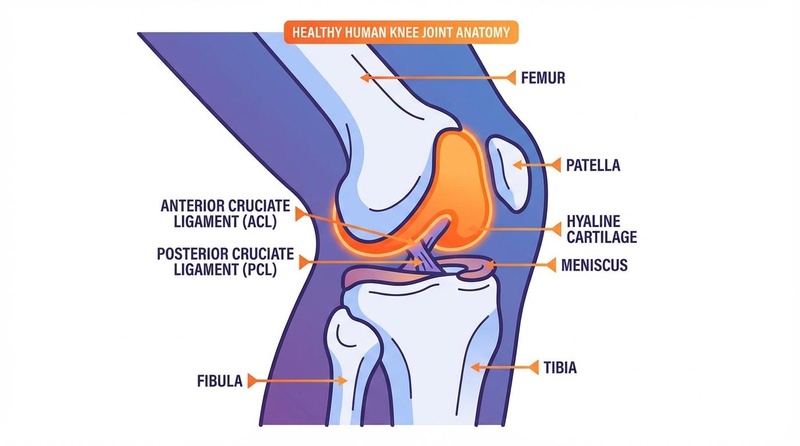
这是什么? 氨基葡萄糖(Glucosamine,简称氨糖)是一种天然存在的氨基糖,也是关节软骨的基本组成部分。它被广泛作为补充剂使用,以减轻关节疼痛、延缓骨关节炎的进展,并且根据近期的大规模研究,它可能有助于支持心血管健康和长寿。
它对我有帮助吗? 如果您患有轻至中度的膝骨关节炎,特定的处方级结晶型硫酸氨基葡萄糖 (prescription crystalline glucosamine sulfate) 配方可能会显著减轻疼痛并改善关节功能。标准的非处方盐酸氨基葡萄糖 (glucosamine hydrochloride) 通常被认为对关节疼痛无效。长期习惯性使用可能还会提供全身性的抗炎益处,尽管还需要更多的临床试验来证实其对长寿的影响。
¶ 安全性与禁忌症 🛑
- 严重的药物相互作用: 氨基葡萄糖与华法林 (Warfarin, Coumadin) 有强烈的相互作用。它会增强抗凝效果,导致 INR 值升高并增加严重出血的风险。服用华法林的患者通常应避免使用氨基葡萄糖,或需要进行严格的 INR 监测。
- 甲壳类过敏: 市面上大多数的氨基葡萄糖提取自甲壳类动物的外骨骼。虽然过敏原通常存在于肉中,但对甲壳类动物严重过敏的人应寻找纯素/真菌来源的氨基葡萄糖替代品。
- 糖尿病监测: 人体试验表明,对大多数人而言,它对空腹血糖没有显著的负面影响,但糖尿病患者在开始补充时应密切监测其血糖水平。
¶ 方案卡 (Protocol Card)
- 标准剂量: 每天 1,500 毫克。
- 首选形式: 结晶型硫酸氨基葡萄糖 (Crystalline Glucosamine Sulfate, pCGS)。盐酸盐 (HCl) 形式缺乏特定软骨益处所需的硫酸基团,在荟萃分析中未能表现出优于安慰剂的效果。
- 服用方法: 通常建议每天一次性服用 1,500 毫克(以达到血浆浓度峰值),或分为三次,每次 500 毫克。
- 周期与持续时间: 对关节疼痛的益处通常需要连续使用 4–12 周才会显现。临床指南建议在 3 个月后评估治疗效果;如果未观察到益处,建议停用。
- 组合搭配: 经常与硫酸软骨素 (Chondroitin Sulfate) 搭配使用,不过近期的网络荟萃分析表明,与 Omega-3 或短期非甾体抗炎药 (NSAIDs) 结合使用可能对急性疼痛管理更有效。
¶ 总结 (Bottom Line)
氨基葡萄糖是一种备受争议的补充剂,其中配方决定了一切。虽然普通的盐酸氨基葡萄糖通常对关节疼痛无效,但高质量的结晶型硫酸氨基葡萄糖被欧洲指南认可为膝骨关节炎的有效一线基础疗法。新兴数据还将习惯性使用氨基葡萄糖与心血管死亡风险降低联系起来,这可能是由于其全身抗炎和诱导自噬的特性。
¶ “为什么”:益处与成效
¶ 1. 骨关节炎与关节疼痛
氨基葡萄糖(Glucosamine)最确切的用途是治疗骨关节炎(OA),尤其是膝关节骨关节炎。氨基葡萄糖作为生物合成糖胺聚糖(GAGs)和蛋白聚糖的底物,这些是关节软骨和滑液的基本结构成分 [1]。当使用正确的配方时,它已被证明可以减轻关节疼痛,改善活动能力,并有可能在数年内延缓关节间隙狭窄的结构性进展 [2][3]。
¶ 2. 心血管健康与长寿
近期的大规模流行病学研究揭示了其意想不到的全身性益处。一项使用英国生物样本库(UK Biobank)数据(超过 466,000 名参与者)的里程碑式前瞻性研究发现,习惯性使用氨基葡萄糖与总心血管疾病(CVD)事件风险降低 15% 以及 CVD 相关死亡风险降低 22% 相关 [4]。来自美国 NHANES 数据的类似发现表明,规律使用(超过一年)与全因死亡率降低 39% 相关 [5]。虽然这些研究是观察性的,但死亡率降低的幅度值得注意,目前正在调查其因果机制。
¶ 现实检验:配方分歧
氨基葡萄糖的临床效用在医学界存在明显的“大西洋分歧”,这几乎完全源于试验中使用的特定化学配方:
- 结晶型硫酸氨基葡萄糖(pCGS): 这种特定配方通常用氯化钠稳定(即“Rotta 制剂”),在欧洲被批准为处方药。它表现出高生物利用度,并在减轻 OA 疼痛方面具有一致的临床疗效 [6][7]。欧洲骨质疏松和骨关节炎临床与经济学会(ESCEO)强烈推荐将 pCGS 作为膝关节 OA 的第一步基础治疗 [8]。
- 盐酸氨基葡萄糖(HCl): 这是美国最常见、较便宜的非处方形式。包括 Cochrane 评价在内的多项荟萃分析证实,盐酸氨基葡萄糖在缓解骨关节炎疼痛方面未能表现出优于安慰剂的益处 [9][10]。因此,美国指南(ACR、OARSI)通常不建议使用氨基葡萄糖,因为它们往往不区分商业 HCl 补充剂和处方硫酸盐形式 [11][12]。
要点: 如果您为了关节健康而服用氨基葡萄糖,请核实标签上是否标明“硫酸氨基葡萄糖”(Glucosamine Sulfate),最好寻找稳定的结晶形式。
¶ 实际应用
- 食物来源: 您无法从食物中获取治疗剂量的氨基葡萄糖。它提取自螃蟹、牡蛎和虾的壳,而这些通常是不食用的。
- 服用时间: 随餐或空腹服用均可。随餐服用可能会降低轻度胃肠道不适的风险。
- 耐心是关键: 氨基葡萄糖不是急性镇痛药(如布洛芬)。它通过调节生物通路发挥作用,需要至少持续每天使用 4 到 8 周,才能评估关节疼痛是否有实质性的减轻 [13]。
素食与纯素选项
由于标准的氨基葡萄糖来源于贝类,因此它本质上不是纯素的。然而,现在已有商业工艺可以通过黑曲霉(*Aspergillus niger*)真菌或玉米发酵来合成氨基葡萄糖。这些植物来源的形式在化学上与贝类来源的氨基葡萄糖完全相同,对于患有严重贝类过敏或遵循严格纯素饮食的人来说,是一种安全的替代品。¶ 作用机制
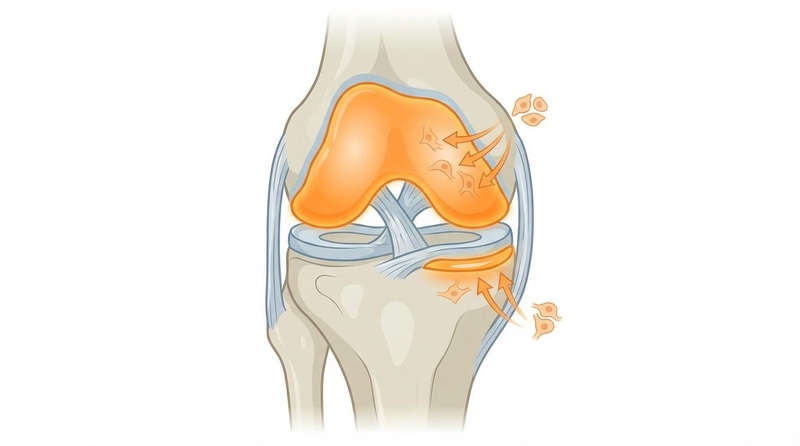
目前的研究提出了几种生物学机制,解释了氨基葡萄糖(glucosamine)的软骨保护作用和全身长寿效应。
¶ 抗炎通路(抑制 NF-κB)
氨基葡萄糖通过抑制核因子-κB(NF-κB)信号通路展现出强大的抗炎特性。它能阻止白细胞介素-1β(IL-1β)的细胞内级联反应,从而减少促炎细胞因子(如 IL-6 和 TNF-α)以及直接负责降解软骨的基质金属蛋白酶(MMPs)的产生 [14][15]。这种全身性慢性炎症的减少(例如,降低 C 反应蛋白水平)是观察到的心血管死亡率下降的主要假设 [16]。
¶ 自噬与长寿(mTOR/SIRT1)
氨基葡萄糖似乎起到了热量限制模拟物的作用,能够激活与延长寿命相关的细胞通路:
- 诱导自噬: 氨基葡萄糖通过抑制 mTOR(哺乳动物雷帕霉素靶蛋白)通路来诱导自噬(细胞的“清理”过程)。这一机制已被证明可以延长秀丽隐杆线虫(C. elegans)和衰老小鼠模型的寿命 [17][18]。
- 激活 SIRT1: 氨基葡萄糖会上调 SIRT1(Sirtuin 1),这是一种关键的长寿基因。SIRT1 通过脱乙酰化使 p53 失活,从而促进细胞存活、线粒体生物合成和代谢灵活性 [19]。
¶ 证据总结表(人体结局)
| 关注结局 | 研究类型 | 主要发现 | 证据确定性 (GRADE) | 参考文献 |
|---|---|---|---|---|
| 膝骨关节炎:减轻疼痛(硫酸盐形式) | 荟萃分析 (RCTs) | 结晶型硫酸氨基葡萄糖在缓解疼痛 (SMD -1.11) 和改善功能方面优于安慰剂。 | 高 | [6:1][2:1] |
| 膝骨关节炎:减轻疼痛(盐酸盐形式) | 荟萃分析 (RCTs) | 盐酸氨基葡萄糖在缓解疼痛方面未显示出优于安慰剂的临床显著益处。 | 中 | [9:1][10:1] |
| 膝骨关节炎:结构改变 | 荟萃分析 (RCTs) | 处方级结晶型硫酸氨基葡萄糖 (CGS) 可延缓 3 年内的关节间隙狭窄;非处方配方的结果不一致。 | 低 | [3:1][6:2] |
| 降低心血管死亡率 | 前瞻性队列研究 | 经常使用与心血管疾病 (CVD) 事件风险降低 15% 和 CVD 死亡率降低 22% 相关(UK Biobank)。 | 低 | [4:1][20] |
| 降低全因死亡率 | 前瞻性队列研究 | 经常使用(1 年以上)与全因死亡率降低约 39% 相关(NHANES 数据)。 | 低 | [5:1][21] |
| 安全性:与华法林的相互作用 | 药物警戒 | 与华法林合用时,与 INR 升高和出血风险显著相关。 | 中 | [22][23] |
| 安全性:不良事件(总体) | 荟萃分析 (RCTs) | 与安慰剂相比,不良事件无显著差异;总体耐受性良好。 | 高 | [6:3][24] |
¶ 综合安全性与毒理学
氨基葡萄糖具有极佳的整体安全性,毒性风险极低,在大多数临床试验中与安慰剂相当 [6:4]。
¶ 不良反应
当出现副作用时,通常较轻微且主要表现为胃肠道症状。可能包括:
- 恶心或消化不良(dyspepsia)
- 胃灼热
- 腹泻或便秘
- 轻度腹痛 [13:1]
¶ 关键药物相互作用
- 华法林(Warfarin,商品名 Coumadin): 这是一种有大量文献记载且具有潜在危险的相互作用。多份药物警戒报告证实,氨基葡萄糖(glucosamine)会显著增强华法林的抗凝作用。病例报告显示,在开始服用氨基葡萄糖 1-4 周后,INR(国际标准化比值)从稳定的 2.5 升至危险的高水平(>4.0 甚至 >10.0)。停药后,INR 通常会恢复到基线水平。确切机制尚不清楚,但服用华法林的患者应严格避免使用氨基葡萄糖,或进行频繁的 INR 监测 [22:1][23:1][25]。
¶ 代谢考量
早期注射大剂量氨基葡萄糖的动物模型显示出胰岛素抵抗的迹象。然而,可靠的人体临床试验一致表明,口服氨基葡萄糖补充剂(1,500 毫克/天)对健康人群或血糖控制良好的 2 型糖尿病患者的空腹血糖、胰岛素敏感性或 HbA1c 水平没有临床显著影响 [26]。糖尿病患者在引入新的补充剂时,仍应进行标准的血糖监测。
¶ 对比
- 硫酸软骨素(Chondroitin Sulfate): 常与氨基葡萄糖搭配使用。软骨素是一种较大的分子,有助于软骨保持水分。虽然这种组合很受欢迎,但网络荟萃分析表明,单独使用氨基葡萄糖(结晶硫酸盐形式)或与 Omega-3 结合使用对缓解疼痛可能更有效,不过软骨素可以提供补充性的结构支持 [27]。
- MSM(二甲基砜,Methylsulfonylmethane): 一种用于缓解关节疼痛的有机硫化合物。MSM 主要发挥抗炎和抗氧化作用。它通常与氨基葡萄糖结合使用,但 MSM 单独用于骨关节炎的临床证据不如硫酸氨基葡萄糖充分。
- Omega-3 脂肪酸(EPA/DHA): Omega-3 纯粹通过系统性减少炎症细胞因子(如 PGE2)来缓解关节疼痛。氨基葡萄糖在提供局部抗炎信号的同时,还提供结构基础物质。近期数据表明,两者的结合对关节健康具有高度的协同作用 [27:1]。
¶ 参考文献
Vangsness, C. T., et al. (2009). Review of Glucosamine and Chondroitin in the Management of Osteoarthritis. https://pmc.ncbi.nlm.nih.gov/articles/PMC5241539/ ↩︎
Towheed, T. E., et al. (2000). Glucosamine therapy for treating osteoarthritis: Cochrane Review. https://www.researchgate.net/publication/12053296_Glucosamine_therapy_for_treating_osteoarthritis_Cochrane_Review ↩︎ ↩︎
Reginster, J. Y., et al. (2001). Meta-analysis of glucosamine sulfate and glucosamine hydrochloride structure-modifying trials. https://www.researchgate.net/figure/Meta-analysis-of-glucosamine-sulfate-and-glucosamine-hydrochloride-structure-modifying_fig3_230592254 ↩︎ ↩︎
Ma, H., et al. (2019). Association of habitual glucosamine use with risk of cardiovascular disease: prospective study in UK Biobank. https://www.bmj.com/content/365/bmj.l1628 ↩︎ ↩︎
King, D. E., & Xiang, J. (2020). Glucosamine/Chondroitin and Mortality in a US NHANES Cohort. https://pmc.ncbi.nlm.nih.gov/articles/PMC8366581/ ↩︎ ↩︎
Towheed, T. E., et al. (2005). Glucosamine therapy for treating osteoarthritis. Cochrane Database of Systematic Reviews. https://www.cochrane.org/evidence/CD002946_glucosamine-osteoarthritis ↩︎ ↩︎ ↩︎ ↩︎ ↩︎
Saengnipanthkul, S., et al. (2019). Differentiation of patented crystalline glucosamine sulfate. International Journal of Rheumatic Diseases. https://www.esceo.org/sites/esceo/files/pdf/Differentiation of patented crystalline glucosamineSaengnipanthkul_et_al-2019-International_Journal_of_Rheumatic_Diseases.pdf ↩︎
Arden, N. K., et al. (2021). Non-surgical management of knee osteoarthritis: comparison of ESCEO and OARSI 2019 guidelines. https://www.esceo.org/sites/esceo/files/pdf/OA ESCEO OARSI GUIDELINES NRR 2021.pdf ↩︎
Eriksen, P., et al. (2014). Structural and symptomatic efficacy of glucosamine and chondroitin in knee osteoarthritis: a comprehensive meta-analysis. https://pmc.ncbi.nlm.nih.gov/articles/PMC3392795/ ↩︎ ↩︎
Cochrane Library. (2013). Glucosamine therapy for treating osteoarthritis. NCBI Bookshelf. https://www.ncbi.nlm.nih.gov/books/NBK73794/ ↩︎ ↩︎
Kolasinski, S. L., et al. (2020). 2019 American College of Rheumatology/Arthritis Foundation Guideline. https://pmc.ncbi.nlm.nih.gov/articles/PMC10518852/ ↩︎
Oulu University. (2020). Non-surgical management of knee osteoarthritis: comparison of ESCEO and OARSI 2019 guidelines. https://oulurepo.oulu.fi/bitstream/10024/30805/1/nbnfi-fe2020102988778.pdf ↩︎
Bolt Pharmacy. (2026). Recommended Glucosamine Dosage Per Day for Adults. https://www.boltpharmacy.co.uk/guide/glucosamine-dosage-per-day ↩︎ ↩︎
Zhu, X., et al. (2019). Mechanisms of Glucosamine in the Management of Osteoarthritis. https://pdfs.semanticscholar.org/84da/0c8f047bd02d2d8998d8fa8362dcaf3f454d.pdf ↩︎
Reginster, J. Y. (2007). Glucosamine sulfate for knee osteoarthritis: Science and evidence-based use. https://www.openaccessjournals.com/articles/glucosamine-sulfate-for-knee-osteoarthritis-science-and-evidencebased-use.pdf ↩︎
Pyhtila, J. (2021). Glucosamine/Chondroitin Linked to Lower All-Cause and Cardiovascular Mortality. https://medium.com/lazarus-ai/glucosamine-chondroitin-linked-to-lower-all-cause-and-cardiovascular-mortality-1533bce5970b ↩︎
Carames, B., et al. (2013). Glucosamine activates autophagy in vitro and in vivo. https://pmc.ncbi.nlm.nih.gov/articles/PMC3772083/ ↩︎
Shintani, T., et al. (2018). Glucosamine Extends Lifespan of C. elegans via Autophagy. https://pmc.ncbi.nlm.nih.gov/articles/PMC8056925/ ↩︎
Shintani, T., et al. (2018). Molecular Mechanism for the Autophagy-Inducing Action of Glucosamine in Chondrocytes. https://pdfs.semanticscholar.org/6ed7/3275f6a92bebdb4e0058ff06e5175e7e9c78.pdf ↩︎
Ma, H., et al. (2019). Association of habitual glucosamine use with risk of cardiovascular disease: prospective study in UK Biobank. https://pubmed.ncbi.nlm.nih.gov/32253185/ ↩︎
King, D. E., & Xiang, J. (2020). Glucosamine/Chondroitin and Mortality in a US NHANES Cohort. https://pubmed.ncbi.nlm.nih.gov/33219063/ ↩︎
Health Sciences Authority. (2009). Reports of Warfarin-Glucosamine Interaction. https://www.hsa.gov.sg/announcements/safety-alert/reports-of-warfarin-glucosamine-interaction ↩︎ ↩︎
GPnotebook. (2019). Glucosamine and Warfarin Interaction. https://gpnotebook.com/en-GB/pages/rheumatology/glucosamine-and-warfarin ↩︎ ↩︎
Al-Hatamleh, M. A. I., et al. (2023). Efficacy and Safety of Glucosamine in Osteoarthritis: A Systematic Review. https://www.preprints.org/manuscript/202306.0475/v1 ↩︎
Drugs.com. (n.d.). Glucosamine with Warfarin Drug Interactions. https://www.drugs.com/drug-interactions/glucosamine-with-warfarin-1182-0-2311-0.html?professional=1 ↩︎
Tannis, A. J., et al. (2004). Effect of glucosamine supplementation on fasting and non-fasting plasma glucose. https://pmc.ncbi.nlm.nih.gov/articles/PMC3456914/ ↩︎
MDPI. (2024). Systematic Review and Network Meta-Analysis of Glucosamine. https://www.mdpi.com/2077-0383/13/23/7444 ↩︎ ↩︎