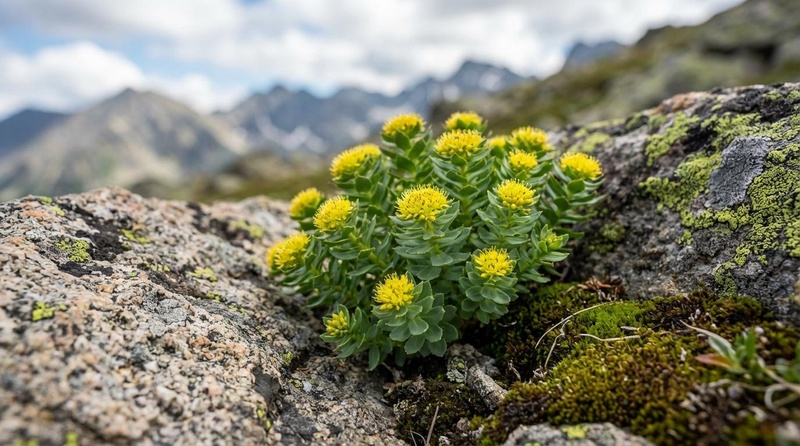
¶ Rhodiola Rosea (红景天 / Golden Root)
¶ 概览
Rhodiola rosea(通常被称为 Golden Root 或 Arctic Root,即红景天)是一种生长在欧洲和亚洲寒冷、高海拔地区的适应原草本植物。与咖啡因等强行刺激神经系统(通常会导致随后的“崩溃”或精力骤降)的经典兴奋剂不同,Rhodiola 通过调节身体的压力反应系统来发挥作用。在对抗身体和精神疲劳方面,尤其是在倦怠(burnout)、轮班工作和慢性压力的背景下,它可以说是研究最充分的适应原。
¶ 安全“红绿灯”
- 红灯(请勿服用): 请勿与 SSRI 抗抑郁药(如帕罗西汀 Paroxetine、艾司西酞普兰 Escitalopram)或 MAOIs 联合使用,因为理论上和文献记录中存在引发 5-羟色胺综合征(serotonin syndrome)的风险 [1]。
- 黄灯(谨慎): 可能会抑制 CYP2C9 代谢酶 [2]。如果正在服用由该途径代谢且治疗指数较窄的药物(如苯妥英 phenytoin 或华法林 warfarin),请谨慎使用。
- 绿灯(安全): 通常认为,健康人群在标准剂量(200-600mg)下连续使用长达 12 周是安全的 [3]。
¶ 方案卡
- 形式: 标准化为 3% rosavins 和 1% salidroside 的根部提取物(例如经过临床研究的 SHR-5 提取物)。
- 剂量: 每天 200–600 mg。
- 时间: 在早晨或午后服用。由于其轻微的刺激作用,较晚服用通常会干扰睡眠。
- 周期: 为了防止产生耐受性,许多方案建议采用服用 3 周、停用 1 周的周期,或者在周末停用。
¶ 核心结论
红景天 (Rhodiola) 在急性压力或长时间劳累期间,对于减少疲劳感和保持认知功能非常有效。对于已经休息充分的人来说,它并不是一种“无限药丸”(limitless pill),而是一种能够提高你疲劳阈值的“缓冲剂”。
¶ 为什么使用(益处)
红景天最受推崇的在于它能够在身心疲惫时挽救表现。
- 对抗倦怠: 在临床环境中,它已被证明可以减少倦怠综合征患者的情感耗竭、压力的躯体症状以及慢性疲劳 [4]。
- 在压力下保护认知: 对夜班工人和医学生的研究表明,红景天可以防止在睡眠剥夺或紧张考试期间通常出现的短期记忆、注意力和联想思维下降 [5]。
- 增强身体耐力: 通过调节主观疲劳感并支持线粒体能量产生,它经常被运动员用来延长有氧运动中的力竭时间 [6]。
¶ 现实检验 / 背景
- 人类现实与炒作: 区分红景天的作用与安非他命或高剂量咖啡因的作用非常重要。如果你已经休息得很好,它不会让你变得极度专注。它的主要效用是在你处于透支状态时恢复基线功能。
- 商业背景: 活性化合物高度依赖于植物的产地和提取方法。SHR-5 提取物是临床试验中研究最多的。未标明“3% rosavins 和 1% salidroside”标准化的补充剂通常是无效的,或者是从不同的红景天(Rhodiola)物种提取的(例如,Rhodiola crenulata 含有 salidroside 但缺乏 rosavins)。
- 生物利用度: 通常能很快感觉到其效果(在 1-2 小时内),但对于倦怠和慢性疲劳的累积益处需要在持续补充 1-4 周后才会显现。
¶ 实际应用
- 适应原组合: 红景天经常与南非醉茄(Ashwagandha)搭配使用。因为红景天通常具有刺激性,而南非醉茄更令人放松,所以使用者通常在早晨服用红景天以减弱皮质醇觉醒反应并提供能量,而在晚上服用南非醉茄以放松身心。
- 与咖啡因搭配: 将红景天与咖啡因结合使用,可以对运动表现和爆发力产生协同效应 [7]。然而,对于容易焦虑的人来说,这种组合可能会导致过度刺激和紧张不安。
¶ 作用机制
红景天(Rhodiola)的确切生理机制复杂且具有多靶点性,主要由其独特的苯丙素类(rosavins)和苯乙醇衍生物(salidroside)驱动。
- 单胺调节: 红景天作为单胺氧化酶 A 和 B(MAO-A 和 MAO-B)的温和、可逆抑制剂。通过抑制这些神经递质的降解,它增加了大脑皮层和脑干中血清素、多巴胺和去甲肾上腺素的可用性 [8]。
- HPA 轴调节: 它调节下丘脑-垂体-肾上腺(HPA)轴。在急性压力下,它能减弱皮质醇的过度释放,并防止应激反应性神经递质的耗竭 [5:1]。
- ATP 合成: 临床前证据表明,它能刺激肌肉和脑细胞线粒体中 ATP 和磷酸肌酸的合成,直接支持细胞的能量储备。
¶ 证据总结表(人体结果)
| 结果 | 疗效 | 等级 | 备注 | 参考文献 |
|---|---|---|---|---|
| 疲劳与倦怠 | 中-高 | 中 | 一致的证据表明,在 4-12 周内,自我报告的疲劳、情绪衰竭和倦怠症状显著减少。 | [5:2], [4:1], [3:1] |
| 认知功能(压力下) | 中 | 中 | 防止夜班和考试期间注意力和记忆力的表现下降。 | [5:3], [3:2] |
| 运动耐力 | 低-中 | 低 | 结果不一;一些试验显示力竭时间延长和主观疲劳感降低,而其他试验则显示无显著差异。 | [6:1] |
| 抑郁症状 | 低 | 低 | 由于 MAO 抑制作用,可能提供温和的情绪支持,但不如标准药物治疗。 | [8:1] |
¶ 综合安全性与毒理学
红景天通常耐受性良好,但其药理活性意味着它并非完全惰性。
- 副作用: 最常报告的副作用较轻微,包括头晕、口干、睡眠障碍(如果当天服用过晚)以及偶尔的神经质/紧张不安 [3:3]。
- 细胞色素 P450 相互作用: 一项人体试验表明,市售红景天提取物会抑制 CYP2C9 的代谢能力。它对 CYP1A2、CYP2C19、CYP2D6 或 CYP3A4 没有显著影响 [2:1]。这种适度的 CYP2C9 抑制作用可能会增加苯妥英(phenytoin)、华法林(warfarin)或氯沙坦(losartan)等药物的血液浓度。
- 血清素综合征: 由于其具有 MAO 抑制特性,与帕罗西汀(paroxetine)等选择性血清素再摄取抑制剂(SSRIs)合用时,已有导致血清素综合征(特征为烦躁不安、心动过速和反射亢进)的病例报告 [1:1]。
¶ 对比与应用
- 与南非醉茄 (Ashwagandha) 对比: 两者都是适应原,但它们的主要功能不同。南非醉茄(尤其是 KSM-66)本质上具有放松和抗焦虑作用,使其更适合治疗压力引起的失眠和焦虑。红景天具有刺激性,使其在应对压力引起的疲劳和嗜睡方面更胜一筹。
- 与咖啡因 (Caffeine) 对比: 咖啡因通过阻断腺苷受体来防止困倦,并强制释放肾上腺素。红景天不阻断腺苷;它优化细胞能量代谢和神经递质平衡,从而产生“更纯净”的能量,而不会出现随后的崩溃或严重的耐受性积累。
¶ 参考文献
Maniscalco, I., et al. (2015). The interaction of Rhodiola rosea and antidepressants. A case report. Pharmacopsychiatry, 48(1), 36-38. https://pubmed.ncbi.nlm.nih.gov/25413939/ ↩︎ ↩︎
Thu, O. K., et al. (2016). Effect of commercial Rhodiola rosea on CYP enzyme activity in humans. European journal of clinical pharmacology, 72(3), 295-300. https://pubmed.ncbi.nlm.nih.gov/26613955/ ↩︎ ↩︎
Ishaque, S., Shamseer, L., Bukutu, C., & Vohra, S. (2012). Rhodiola rosea for physical and mental fatigue: a systematic review. BMC complementary and alternative medicine, 12(1), 70. https://pubmed.ncbi.nlm.nih.gov/22643043/ ↩︎ ↩︎ ↩︎ ↩︎
Kasper, S., & Dienel, A. (2017). Multicenter, open-label, exploratory clinical trial with Rhodiola rosea extract in patients suffering from burnout symptoms. Neuropsychiatric disease and treatment, 13, 889-898. https://pubmed.ncbi.nlm.nih.gov/28367055/ ↩︎ ↩︎
Olsson, E. M., von Schéele, B., & Panossian, A. G. (2009). A randomised, double-blind, placebo-controlled, parallel-group study of the standardised extract shr-5 of the roots of Rhodiola rosea in the treatment of subjects with stress-related fatigue. Planta medica, 75(2), 105-112. https://pubmed.ncbi.nlm.nih.gov/19016404/ ↩︎ ↩︎ ↩︎ ↩︎
Lu, Y., Deng, B., Xu, L., et al. (2022). Effects of Rhodiola Rosea Supplementation on Exercise and Sport: A Systematic Review. Frontiers in nutrition, 9, 856287. https://pubmed.ncbi.nlm.nih.gov/35464040/ ↩︎ ↩︎
Lu, Y., et al. (2024). Combined effects of Rhodiola rosea and caffeine supplementation on aerobic endurance and muscle explosiveness: a synergistic approach. Frontiers in nutrition, 11, 1335950. https://www.frontiersin.org/journals/nutrition/articles/10.3389/fnut.2024.1335950/full ↩︎
Panossian, A., Wikman, G., & Sarris, J. (2010). Rosenroot (Rhodiola rosea): traditional use, chemical composition, pharmacology and clinical efficacy. Phytomedicine : international journal of phytotherapy and phytopharmacology, 17(7), 481-493. https://pubmed.ncbi.nlm.nih.gov/20378318/ ↩︎ ↩︎