¶ What is Aging?
Aging is a degenerative process that occurs in all living organisms. It is characterized by a decrease in the ability of the body to function properly.
But to more properly discuss aging, we need to first define the concepts of life expectancy, lifespan, and healthspan.
¶ Life expectancy
We can reasonably expect a new car to last us 12-15 years with proper maintenance, so that is its life expectancy.
What is the life expectancy of a new human?
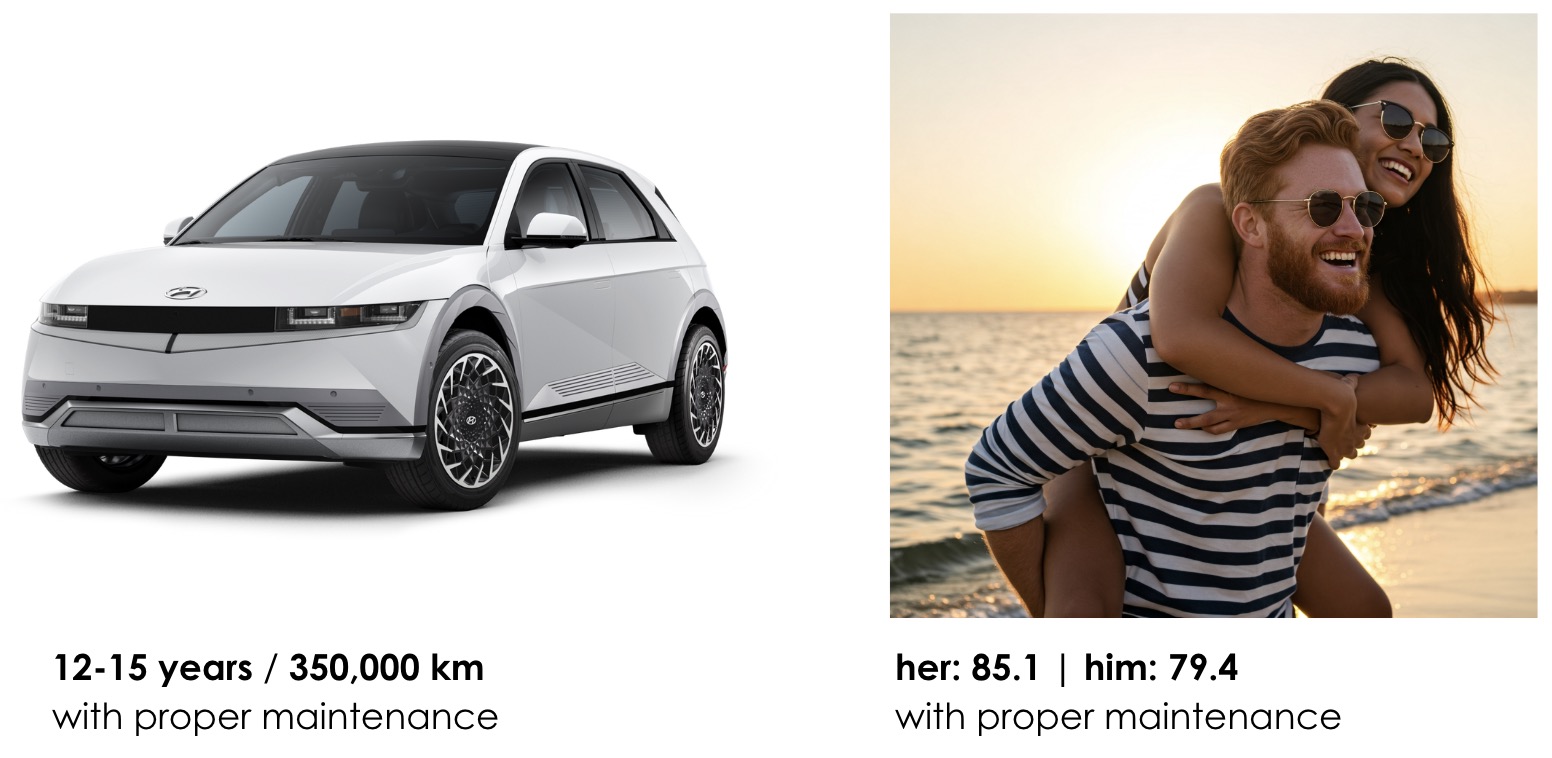
If we take the data from Portugal in 2024, the life expectancy at birth for females was 85.1 years and for males was 79.4 years.[1]
Life expectancy is the average number of years a person is expected to live. This is computed by taking the average of the number of years lived by a population.
We have good news! The life expectancy of a new human has been increasing steadily for the past 100 years. Portugal is a bit of an outlier, but the trend is clear worldwide.[2]
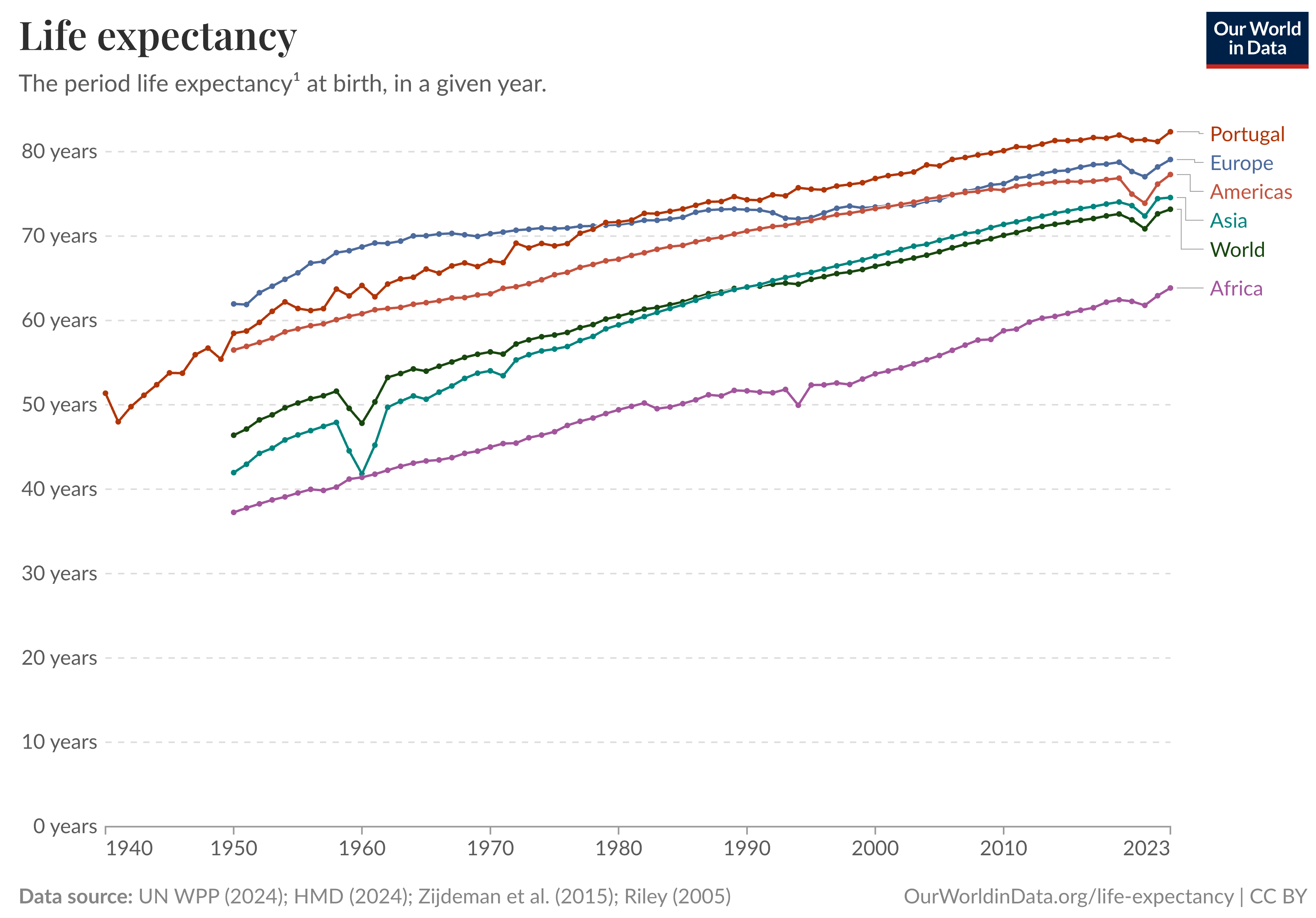
This is due to a combination of factors, including improved healthcare, better nutrition, and increased access to education.[2:1]
But the main reason is simply that we have cured childhood diseases.[3]
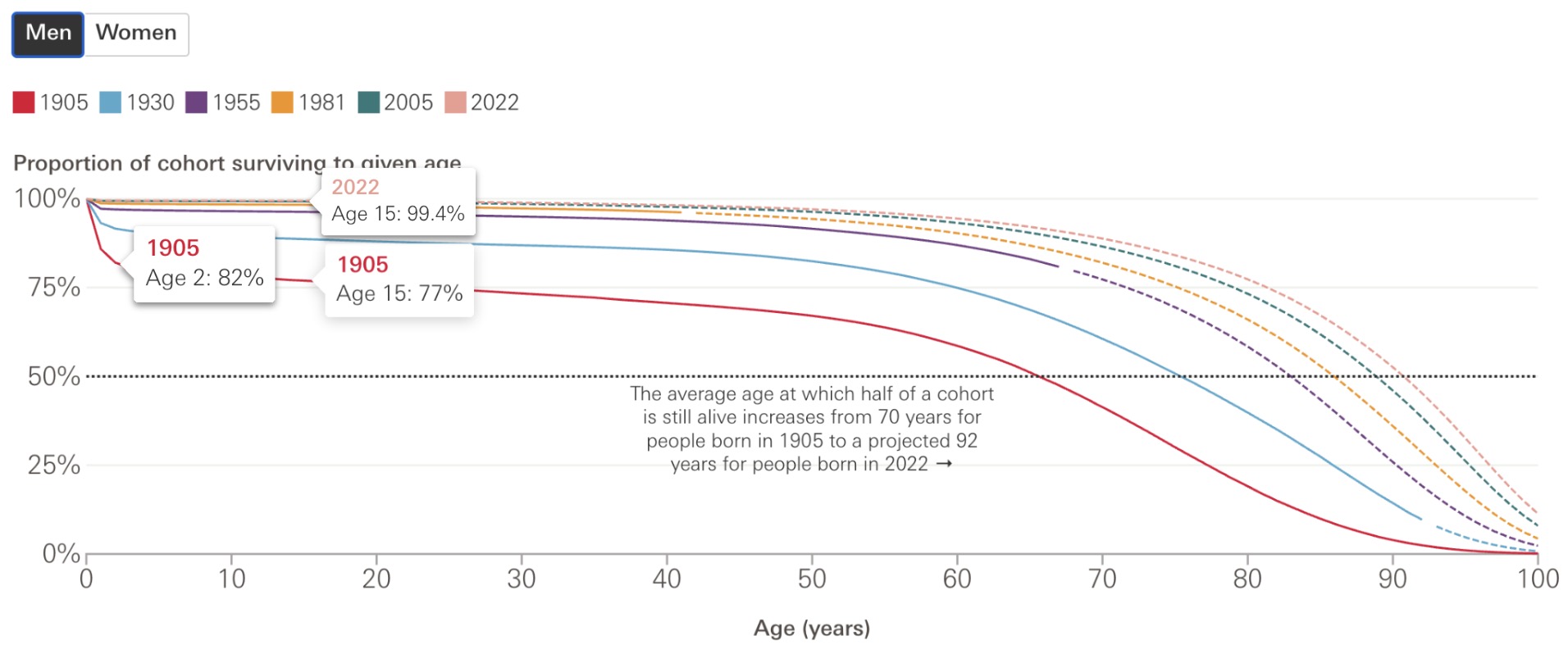
[Proportion of people living to a given age](https://www.health.org.uk/evidence-hub/health-inequalities/life-expectancy-for-successive-generations)
¶ Lifespan vs Healthspan
Lifespan is the total number of years a person is expected to live.
Healthspan is the number of years a person is expected to live in good health (often operationalized as the World Health Organization's health-adjusted life expectancy, HALE).[4]
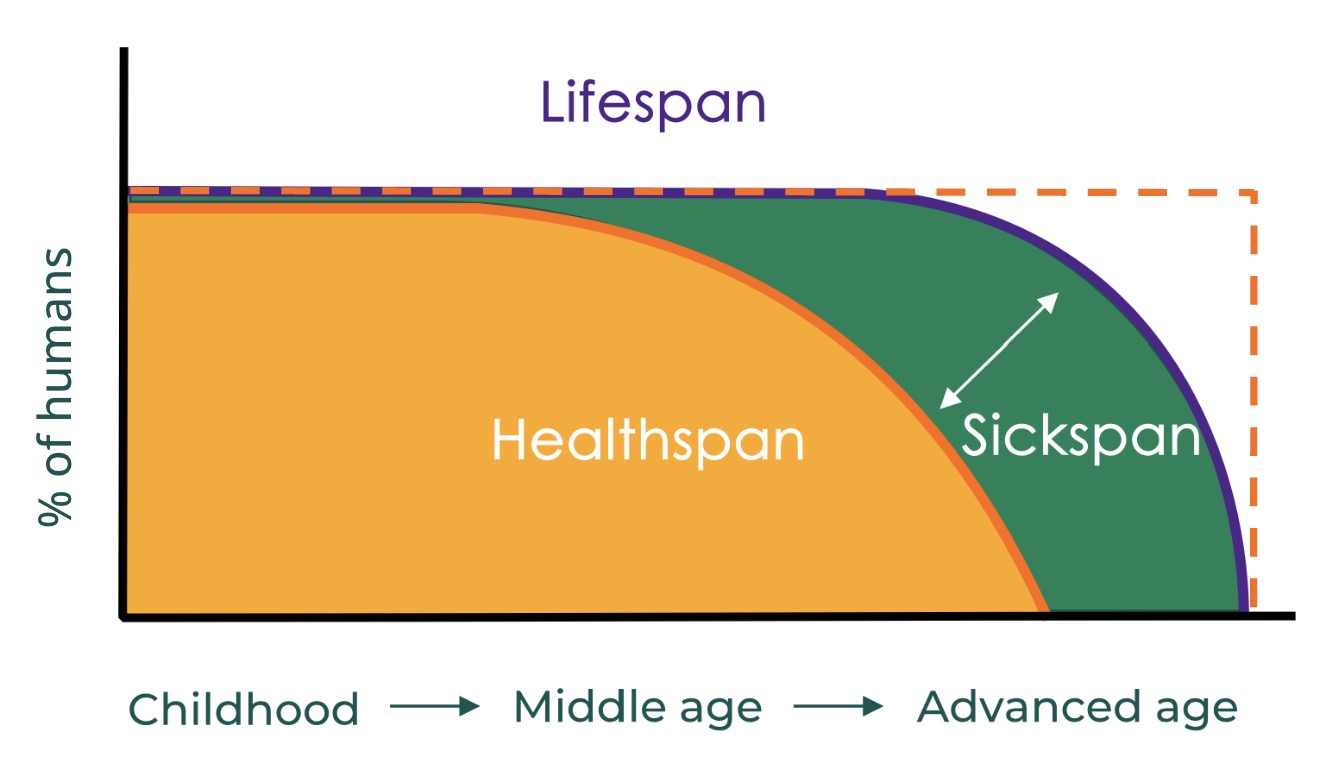
The good news is that "health-adjusted lifespan", i.e. healthspan, has been increasing steadily for the past 100 years.[4:1]
The bad news is that lifespan has not been faster, which means the gap between lifespan and healthspan has been growing.[5]
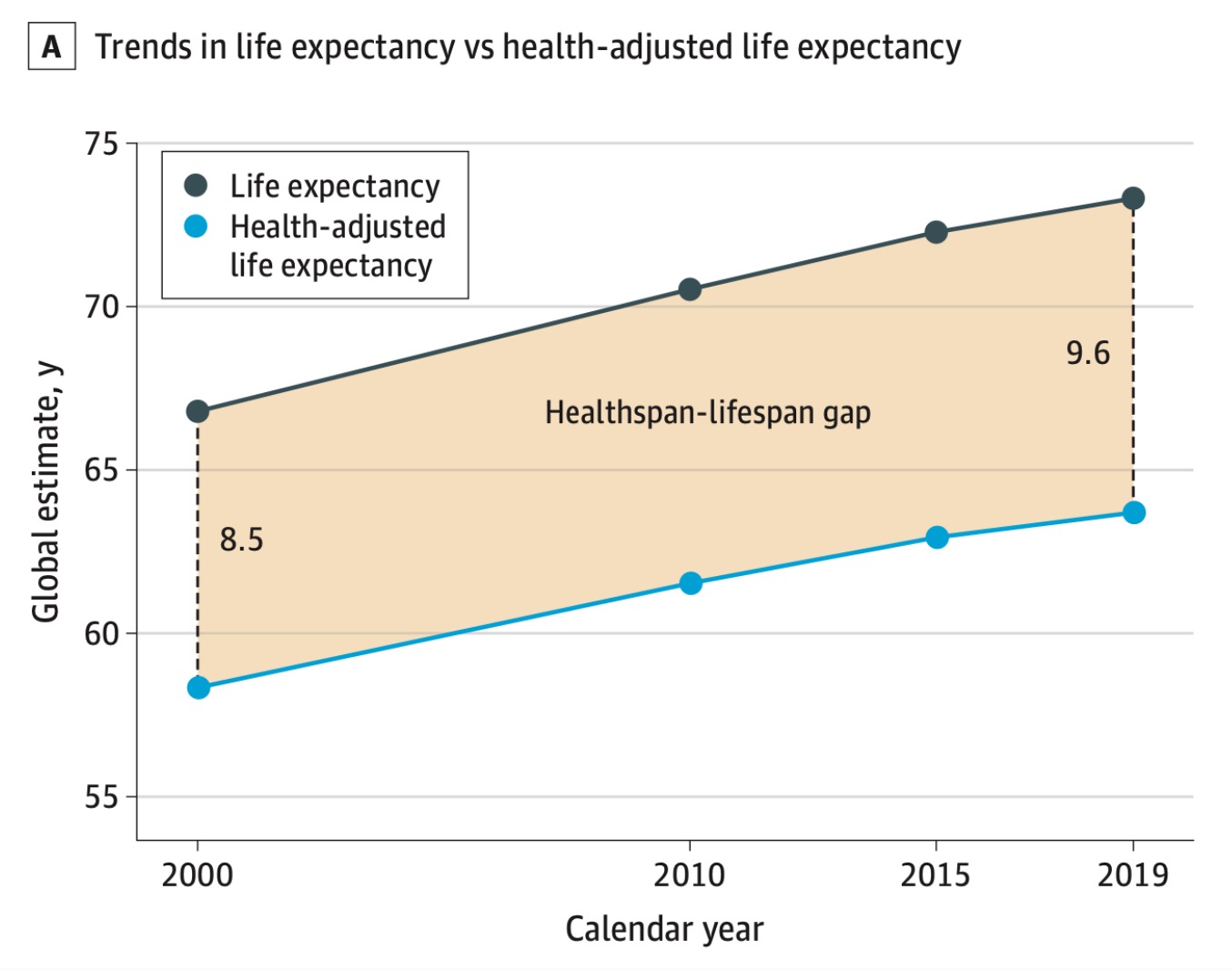
Global Healthspan-Lifespan Gaps Among 183 World Health Organization Member States [(Germany and Terzic, 2024)](https://jamanetwork.com/journals/jamanetworkopen/fullarticle/2827753)
And this is because the diseases caused by aging increase as we age.
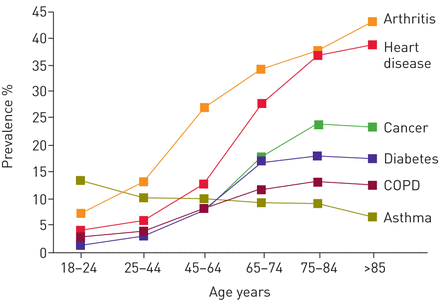
Disease Incidence by Age [(ERS, 2024)](https://publications.ersnet.org/content/erj/44/5/1332)
We can say that for many of the diseases our society most worries about, like cancer, heart disease, and Alzheimer's disease, the main risk factor is age itself.
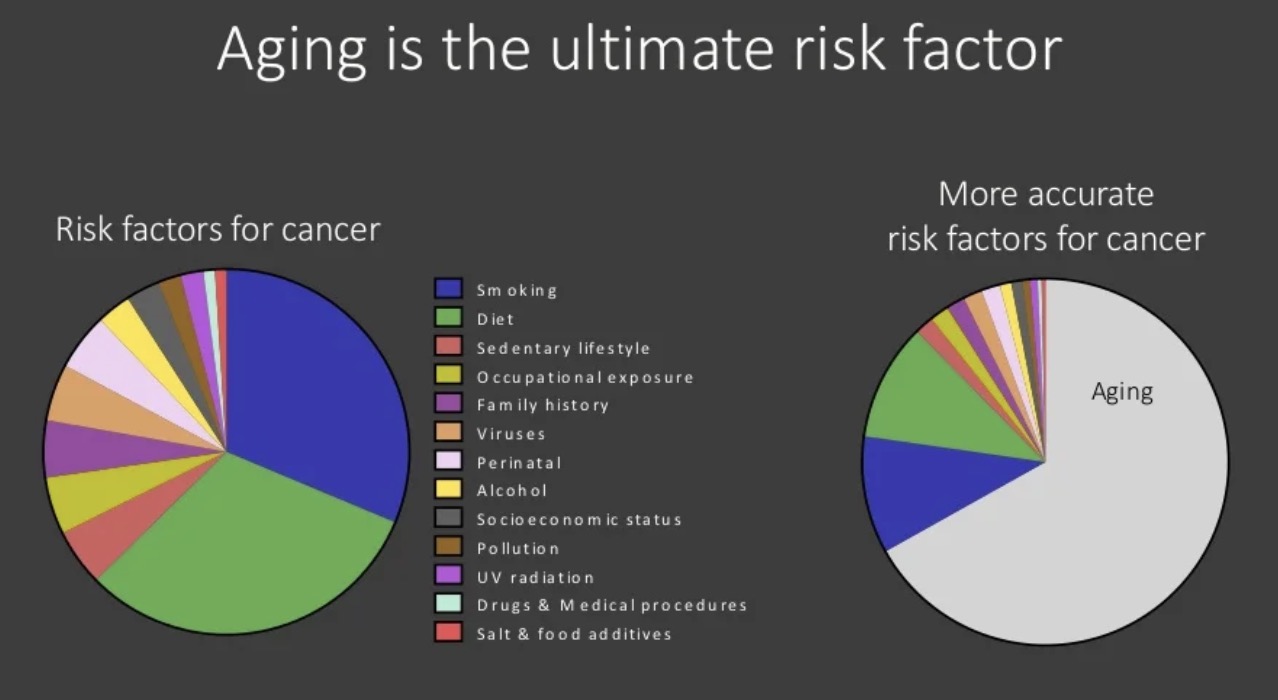 (source)
This is now a global problem, and it is getting worse.
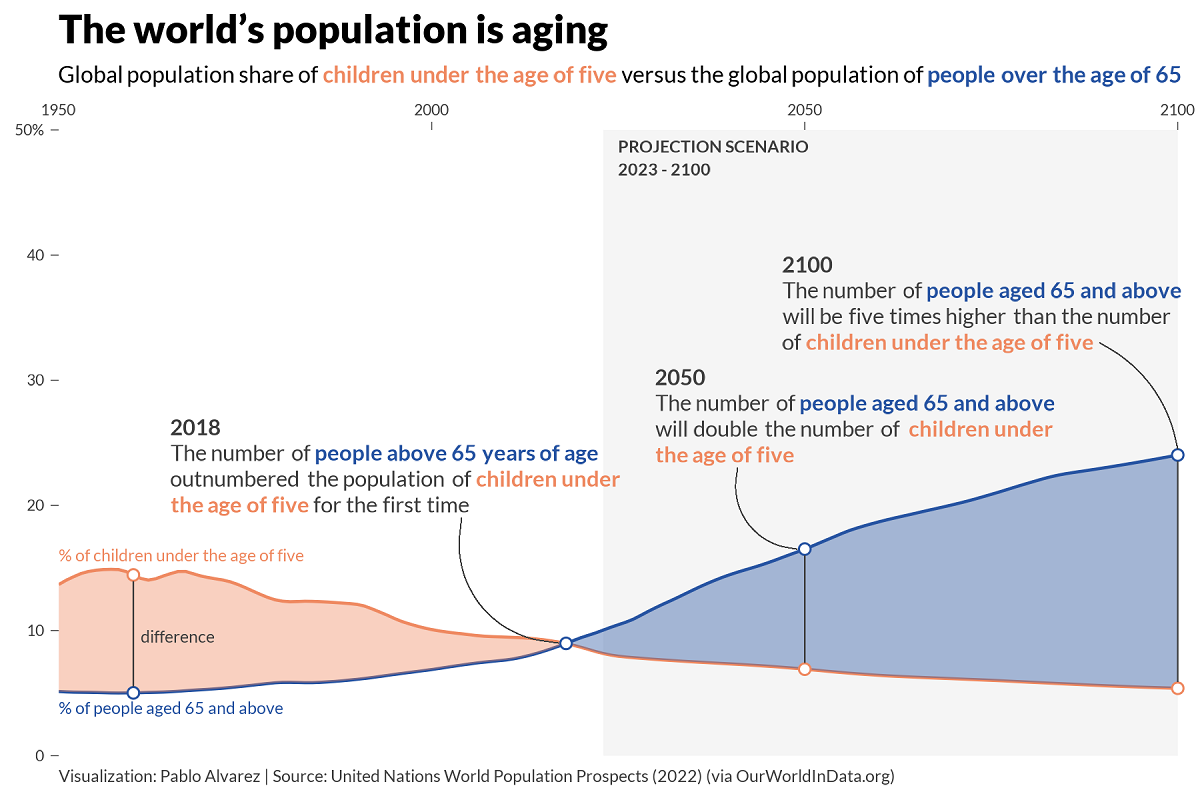
Worlds aging population vs young population (Visual Capitalist)
See also: Biomarkers of Aging and Longevity Interventions
¶ Causes of Aging
Aging is a complex, multifactorial process. A widely used framework is the "hallmarks of aging," originally proposed in 2013 and expanded in 2023.[6][7] Core hallmarks include:
- Genomic instability (DNA damage)
- Telomere attrition
- Epigenetic alterations
- Loss of proteostasis
- Deregulated nutrient sensing
- Mitochondrial dysfunction
- Cellular senescence (interventions)
- Stem cell exhaustion
- Altered intercellular communication (includes chronic inflammation/"inflammaging")
- Disabled macroautophagy (impaired autophagy)
- Dysbiosis (microbiome alterations)
So what can we do about it?
¶ Longevity Interventions
Longevity interventions are interventions that aim to extend lifespan and healthspan. See the overview page: Longevity Interventions.
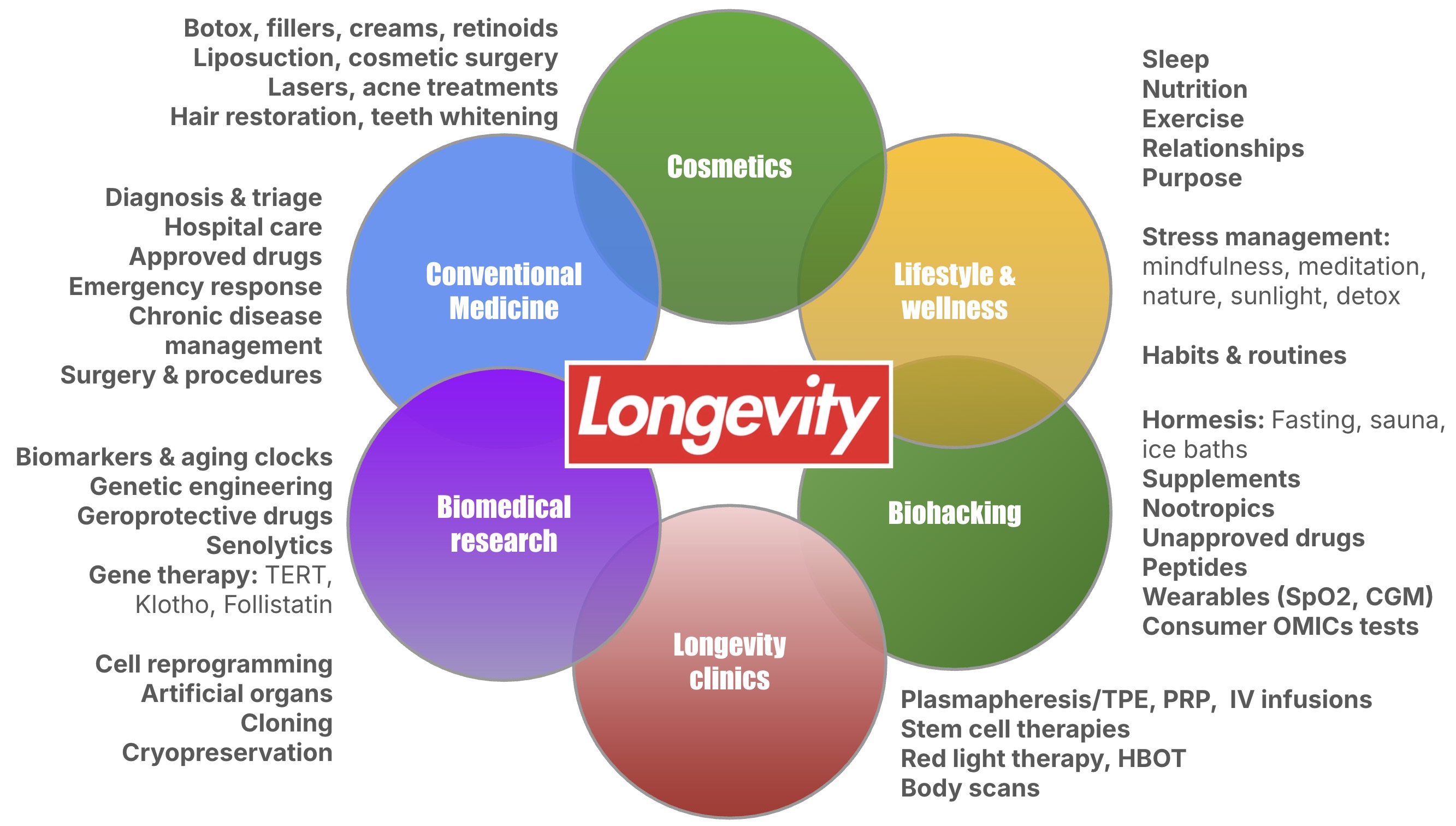
There are many different types of longevity interventions, including:
- Lifestyle interventions like exercise
- Biohacking interventions
- Pharmaceutical interventions like rapamycin, metformin, and quercetin
- Frontier biomedical interventions like cellular reprogramming, blood-based interventions, stem cell therapy, and therapeutic plasma exchange
- Esthetic interventions
¶ See also
- Biomarkers of Aging
- Chronic Inflammation
- Hallmarks of Aging
- Cellular Reprogramming
- Blood-Based Interventions for Longevity
- Therapeutic Plasma Exchange
- Peptide Therapies
- Regulatory Landscape
- Exercise
- Rapamycin
- Evidence-Based Analysis of Frontier Longevity Interventions
¶ References
Statistics Portugal (INE). Life expectancy at birth by sex (latest release). https://www.ine.pt ↩︎
Our World in Data. Life expectancy. https://ourworldindata.org/life-expectancy ↩︎ ↩︎
Our World in Data. Child and infant mortality. https://ourworldindata.org/child-mortality ↩︎
World Health Organization. Healthy life expectancy (HALE) data and definition. https://www.who.int/data/gho/indicator-metadata-registry/imr-details/66 ↩︎ ↩︎
Germany R, Terzic A. Global Healthspan-Lifespan Gaps Among 183 World Health Organization Member States. JAMA Netw Open. 2024;7(4):e249706. https://jamanetwork.com/journals/jamanetworkopen/fullarticle/2827753 ↩︎
López-Otín C, Blasco MA, Partridge L, Serrano M, Kroemer G. The Hallmarks of Aging. Cell. 2013;153(6):1194-1217. https://doi.org/10.1016/j.cell.2013.05.039 ↩︎
López-Otín C, Kroemer G, Partridge L, Serrano M, Weissman IL. Hallmarks of Aging: An Expanding Universe. Cell. 2023;186(12):243-278. https://www.cell.com/cell/fulltext/S0092-8674(23)00678-6 ↩︎