¶ Platelet-Derived Growth Factor Biology
| Type | Biological Signaling Molecules |
| Key Factors | PDGF, TGF-β, VEGF, EGF |
| Source | Activated platelets, various cells |
| Primary Role | Cell proliferation, tissue repair, angiogenesis |
| Applications | Regenerative medicine, wound healing, aesthetics |
| Mechanism | Receptor binding, intracellular signaling |
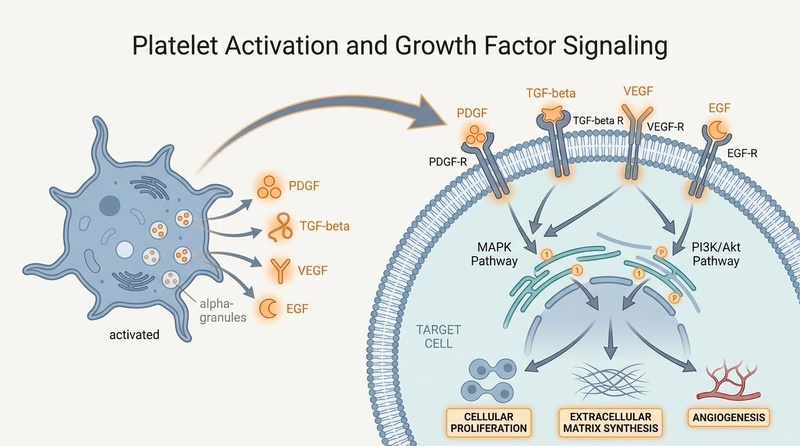
Platelet-derived growth factors (PGFs) are a group of potent signaling proteins released from activated platelets that play a crucial role in regulating cell growth, proliferation, and differentiation. These factors, including Platelet-Derived Growth Factor (PDGF), Transforming Growth Factor-beta (TGF-β), Vascular Endothelial Growth Factor (VEGF), and Epidermal Growth Factor (EGF), are fundamental to tissue repair, angiogenesis, and overall regenerative processes. Their biological significance extends to various clinical applications, particularly in regenerative medicine and anti-aging strategies.
¶ At a glance
Key points (high-level summary)
- Platelet-derived growth factors (PGFs) are critical for initiating and coordinating tissue repair, wound healing, and angiogenesis by stimulating cell proliferation and differentiation [1][2].
- Emerging molecular research demonstrates that platelet microparticles (PMPs) act as vectors to deliver growth factors and upregulate longevity-related genes (such as SIRT1 and TERT) in mesenchymal stem cells, accelerating cellular growth and healthspan pathways [3].
- Therapies utilizing PGFs, such as Platelet-Rich Plasma (PRP) and intra-annular fibrin sealants, are widely used in aesthetic medicine, orthopedics, and spine care to treat chronic conditions like androgenetic alopecia, skin aging, osteoarthritis, and discogenic low back pain [4][5][2:1][6].
- PGFs exert their effects by binding to specific receptors on target cells, activating intracellular signaling pathways that drive processes like collagen synthesis, angiogenesis, and cell survival [1:1][2:2].
- The clinical efficacy of PGF-based therapies can be influenced by the concentration and composition of growth factors, as well as the method of preparation and delivery [2:3][7].
What people use it for
- Main goals: Tissue regeneration, wound healing, skin rejuvenation, hair loss treatment, pain management (e.g., knee osteoarthritis, discogenic low back pain), anti-aging.
- Evidence quality (overall): Moderate (strong mechanistic data and numerous clinical studies, particularly for PRP and fibrin sealants, though optimal protocols and long-term effects still under investigation for some indications).
¶ What are Platelet-Derived Growth Factors?
Platelet-derived growth factors (PGFs) are a family of polypeptides stored in the alpha-granules of platelets and released upon platelet activation during injury or inflammation. These factors act as crucial mediators in the complex process of wound healing and tissue regeneration [1:2]. Beyond simple cytokine release, platelets also bud off nanoscale vectors called platelet microparticles (PMPs) which transport these growth factors directly into target recipient cells, driving biological rejuvenation [3:1].
- Definition: PGFs are a group of proteins, including PDGF, TGF-β, VEGF, and EGF, that regulate cellular processes such as proliferation, migration, and angiogenesis.
- Key Factors:
- Platelet-Derived Growth Factor (PDGF): A potent mitogen for mesenchymal cells (fibroblasts, smooth muscle cells), promoting cell proliferation and extracellular matrix production [1:3].
- Transforming Growth Factor-beta (TGF-β): Involved in cell growth, differentiation, apoptosis, and immune regulation, playing a critical role in fibrosis and tissue remodeling [1:4].
- Vascular Endothelial Growth Factor (VEGF): A primary driver of angiogenesis (new blood vessel formation), essential for supplying nutrients and oxygen to healing tissues [1:5].
- Epidermal Growth Factor (EGF): Stimulates cell growth, proliferation, and differentiation by binding to its receptor, promoting epithelialization and skin repair [1:6].
- Natural sources: Primarily released from activated platelets, PGFs are also produced by various other cell types, including macrophages, endothelial cells, and fibroblasts, contributing to their diverse roles in tissue homeostasis and repair [1:7].
- Current regulatory status: Individual recombinant growth factors are regulated as biologics. Platelet-rich plasma (PRP), which concentrates endogenous PGFs, is generally considered a medical device or regulated under tissue regulations, depending on processing and intended use. The regulatory landscape for unapproved products remains complex [2:4][7:1][8].
- Key pharmacological property in one line: Orchestrates tissue regeneration and cell proliferation via receptor-mediated intracellular signaling and molecular upregulation of cellular longevity programs [1:8][3:2].
¶ What are PGFs’ main benefits?
PGFs contribute to a broad spectrum of regenerative and therapeutic benefits by orchestrating cellular and tissue responses.
-
Outcome: Tissue Repair & Regeneration (General)
-
Direction of effect:
Medium Improvement (Enhanced repair, improved regeneration) -
Magnitude: Moderate to Large (significant acceleration of healing in various contexts)
-
Population studied: Patients with chronic wounds, musculoskeletal injuries, aesthetic concerns.
-
Evidence quality: Moderate (strong preclinical and clinical evidence, particularly for PRP in wound healing and soft tissue repair)
-
Summary sentence: Platelet-derived growth factors, particularly through therapies like PRP and scaffold-based systems, have been shown to accelerate wound healing, improve tissue regeneration, and promote soft tissue repair in various clinical settings [1:9][2:5][9].
-
Outcome: Skin Rejuvenation (Hydration, Elasticity, Wrinkles)
-
Direction of effect:
Medium Improvement (Improvement in skin quality, reduction in wrinkles) -
Magnitude: Moderate to Large (consistent aesthetic improvements)
-
Population studied: Adults seeking aesthetic improvements.
-
Evidence quality: Moderate (multiple meta-analyses and clinical studies on PRP for skin rejuvenation)
-
Summary sentence: PGFs delivered via PRP have demonstrated efficacy in improving skin hydration, elasticity, and reducing wrinkles, with consistent positive outcomes in aesthetic applications [4:1].
-
Outcome: Hair Regeneration (Androgenetic Alopecia)
-
Direction of effect:
Medium Improvement (Increase in hair density and diameter) -
Magnitude: Moderate to Large (significant increases reported)
-
Population studied: Patients with androgenetic alopecia (AGA).
-
Evidence quality: Moderate (systematic reviews and meta-analyses support PRP efficacy for AGA)
-
Summary sentence: Platelet-derived growth factors, concentrated in PRP, have shown significant effectiveness in increasing hair density and thickness in patients with androgenetic alopecia [5:1].
-
Outcome: Musculoskeletal Pain & Function (Osteoarthritis, Tendinopathy)
-
Direction of effect:
Small Improvement (Reduction in pain, improvement in function) -
Magnitude: Moderate (clinically meaningful improvements)
-
Population studied: Patients with knee osteoarthritis, tendinopathies.
-
Evidence quality: Moderate (multiple systematic reviews and RCTs, though some variability in outcomes)
-
Summary sentence: PRP, rich in PGFs, has shown moderate efficacy in reducing pain and improving function in knee osteoarthritis and tendinopathies, offering an alternative to traditional treatments [2:6][7:2].
-
Outcome: Discogenic Low Back Pain & Radiculopathy
-
Direction of effect:
Medium Improvement (Reduction in pain and disability) -
Magnitude: Large (significant long-term clinical improvements up to 3 years)
-
Population studied: Patients with chronic discogenic low back pain failing prior conservative/invasive therapies
-
Evidence quality: Moderate (prospective registry data showing robust 1-, 2-, and 3-year outcomes)
-
Summary sentence: Direct intra-annular delivery of autologous fibrin sealants (which leverage plasma-derived clotting and growth factors to seal annulus fibrosus fissures) provides sustained, significant improvements in pain and disability scores for at least three years, even in patients who failed prior standard PRP or bone marrow concentrate treatments [6:1].
¶ Evidence summary table (human outcomes)
| Outcome / Goal | Effect* | Consistency** | Evidence quality | Trials*** | Notes (population, duration, dose) |
|---|---|---|---|---|---|
| Chronic Wound Healing | High | Moderate | 2+ RCTs, Multiple Reviews | Accelerated wound closure and reduced healing time [1:10] | |
| Skin Hydration & Elasticity | High | Moderate | Multiple Reviews | Improved dermal quality and reduced signs of aging [4:2] | |
| Wrinkle Reduction | High | Moderate | Multiple Reviews | Significant reduction in fine lines and wrinkles in aesthetic applications [4:3] | |
| Hair Density (AGA) | High | Moderate | 2+ Clinical Trials, Multiple Reviews | Increased hair density and diameter in androgenetic alopecia [5:2] | |
| Knee Osteoarthritis Pain | Moderate | Moderate | 2+ RCTs, Meta-analyses | Reduction in pain and improved joint function (e.g., WOMAC scores) [2:7] | |
| Tendinopathy Pain | Moderate | Moderate | 2+ RCTs, Systematic Reviews | Moderate pain reduction and functional improvement in various tendinopathies [7:3] | |
| Discogenic Low Back Pain | High | Moderate | Cohort (Prospective Registry) | Long-term pain/disability relief up to 3 years with intra-annular fibrin [6:2] |
¶ How do Platelet-Derived Growth Factors work?
PGFs exert their biological effects by binding to specific transmembrane receptors on the surface of target cells, initiating a cascade of intracellular signaling events. This leads to changes in gene expression and protein synthesis that drive cellular responses critical for tissue repair and regeneration.
- Primary targets: Mesenchymal stem cells (MSCs), fibroblasts, osteoblasts, chondrocytes, endothelial cells, epithelial cells, and immune cells.
- Core mechanisms:
- Upregulation of Longevity Genes: Platelet microparticles (PMPs) fuse with MSCs and upregulate expression of longevity-related genes, including SIRT1 (Sirtuin 1) and TERT (Telomerase Reverse Transcriptase), driving cellular survival, proliferation, and lifespan extensions [3:3].
- Cell Proliferation: PDGF, EGF, and VEGF are potent mitogens, stimulating target cells to divide and multiply, which is essential for replacing damaged tissue [1:11].
- Cell Migration: PGFs guide cells to the site of injury, facilitating wound closure and tissue remodeling [1:12].
- Extracellular Matrix (ECM) Synthesis & Structural Sealing: TGF-β and PDGF stimulate fibroblasts to produce collagen and other ECM components, providing structural integrity to new tissue. Concentrated plasma fibrin mimics this by physically sealing tears and providing a robust bio-adhesive matrix for cell growth [1:13][6:3].
- Angiogenesis: VEGF is the most well-known angiogenic factor, promoting the formation of new blood vessels from existing ones, ensuring adequate blood supply to healing tissues [1:14][9:1].
- Anti-inflammatory Effects: While some PGFs can be pro-inflammatory in certain contexts, overall, they help modulate the inflammatory response, transitioning from inflammation to proliferation during wound healing [1:15].
- Evidence source: Mechanisms are primarily elucidated through extensive in vitro studies (cell culture), ex vivo tissue models, and in vivo animal studies, with supporting evidence from human clinical trials observing downstream effects and biomarker changes [1:16][3:4].
- Human data: Clinical studies on PRP and fibrin sealants, which leverage PGFs, demonstrate improved collagen production, increased hair follicle activity, accelerated tissue remodeling, and long-term annular sealing in human patients [4:4][5:3][6:4].
- Pharmacokinetics basics: PGFs typically have short half-lives in circulation (minutes to hours). However, their effects are sustained due to continuous release from platelets or fibrin matrices at the site of injury and the subsequent activation of intracellular signaling pathways, leading to prolonged cellular responses. The local delivery of PGFs (e.g., via PRP or intra-annular injection) ensures high concentrations at the target site.
¶ Effects on different systems
Platelet-derived growth factors mediate diverse effects across multiple physiological systems, primarily due to their involvement in wound healing and tissue homeostasis.
Dermatological System (Skin & Hair)
- What has been studied: Numerous clinical trials and systematic reviews have investigated the application of PGFs (especially via PRP) for skin rejuvenation (improving texture, elasticity, reducing wrinkles) and hair regeneration (treating androgenetic alopecia and other forms of hair loss).
- What the trials generally show: Consistent improvements in skin quality, including increased collagen and elastin production, enhanced hydration, and reduced signs of aging. For hair, studies show significant increases in hair density and diameter [4:5][5:4].
- Practical interpretation: PGF-based therapies are a promising option for aesthetic and regenerative concerns of the skin and scalp, promoting a more youthful appearance and stimulating hair growth.
Musculoskeletal System (Joints, Tendons, Spine, Ligaments)
- What has been studied: PGFs, particularly in the form of PRP and intra-annular fibrin sealants, have been extensively studied for the treatment of osteoarthritis, tendinopathies (e.g., Achilles, patellar, rotator cuff), ligament injuries, and chronic discogenic back pain.
- What the trials generally show: Moderate to high efficacy in reducing pain, improving function, and promoting tissue repair. PGFs contribute to cartilage matrix synthesis and anti-inflammatory effects in joints. Intra-annular fibrin structurally seals annulus fibrosus fissures, reducing radiculopathic and mechanical pain [2:8][7:4][6:5].
- Practical interpretation: PGF-based and fibrin-based therapies offer a viable treatment option for certain musculoskeletal and spinal conditions, particularly when conservative treatments and standard injections have failed.
Connective Tissue & Wound Healing
- What has been studied: PGFs are foundational to the biology of wound healing, with research focusing on their role in acute and chronic wound management, including diabetic ulcers and surgical site healing.
- What the trials generally show: Accelerated wound closure, enhanced granulation tissue formation, increased collagen deposition, and improved overall tensile strength of healing tissues [1:17].
- Practical interpretation: Exogenous application of PGFs or endogenous stimulation via PRP can significantly improve outcomes in difficult-to-heal wounds.
¶ Dosage and how to take it
The administration of platelet-derived growth factors typically involves the use of Platelet-Rich Plasma (PRP) or Autologous Fibrin Sealant, as isolating individual PGFs for direct therapeutic application is less common in clinical practice. Dosage and administration protocols are highly variable, depending on the indication, preparation method, and patient-specific factors. There are currently no universal standardized dosing guidelines.
Standard dosing in studies (for PRP & Fibrin)
- Typical concentration range: Therapeutic PRP generally aims for a platelet concentration 3-7 times above baseline. This translates to PGF concentrations significantly higher than baseline levels, though exact PGF quantification is not always reported [2:9].
- Common dosing schedules:
- Aesthetic (Skin/Hair): 1-3 mL of PRP per treatment area, administered via intradermal injections, often in a series of 3-4 sessions spaced 2-4 weeks apart [4:6][5:5].
- Musculoskeletal (Joints/Tendons): 3-6 mL of PRP per joint or affected tendon, typically administered as 1-3 injections spaced 2-4 weeks apart [2:10][7:5].
- Spinal (Intra-annular): Precision fluoroscopically guided delivery of fibrin sealant directly into identified annulus fibrosus tears (fissures) during an diagnostic/therapeutic algorithm [6:6].
- Study durations: Treatments often involve a series of injections over several weeks or months, with follow-up periods ranging from 3 months to 3 years to assess efficacy and long-term joint or spinal recovery [2:11][6:7].
Forms and bioavailability
- Common forms: PRP and fibrin are autologous blood products, meaning they are derived from the patient's own blood. They are processed to concentrate platelets, clotting factors (such as fibrinogen and thrombin), and a portion of the plasma, forming a liquid suspension or a gel-like bio-adhesive matrix for injection [2:12][6:8].
- Routes of administration: The primary route is direct injection into the target tissue (e.g., intradermal for skin/hair, intra-articular for joints, intralesional for tendons/wounds, intra-annular for spinal discs).
- Bioavailability: Local injection ensures high concentrations of PGFs at the site of action, where they can interact directly with target cells. Systemic absorption is minimal.
Special populations
- Dose considerations or lack of data in:
- Kidney or liver impairment: Generally considered safe due to autologous nature, but caution may be warranted in severe cases affecting coagulation or healing.
- Older adults: PRP and fibrin are widely used in older adults (mean age 56 in spinal studies) for musculoskeletal, spinal, and aesthetic indications, often with good results. No specific dose adjustments are typically made based on age alone [6:9].
- Children and adolescents: Use is limited and primarily restricted to specific clinical indications (e.g., certain injuries) under expert supervision due to lack of extensive safety data.
- Pregnancy and breastfeeding: Generally avoided due to lack of safety data and ethical considerations.
¶ Safety and side effects
Platelet-derived growth factor therapies, particularly those using autologous PRP or fibrin sealants, generally have a favorable safety profile due to the use of the patient's own blood, which minimizes risks of allergic reactions or disease transmission. However, as with any invasive procedure, certain side effects and contraindications exist.
Common side effects (for PRP)
- Localized reactions: Mild pain, swelling, bruising, and redness at the injection site are common and typically resolve within a few days [4:7][2:13].
- Infection: As with any injection, there is a small risk of infection, minimized by sterile technique.
- Nerve injury: Rare, but possible with improper injection technique.
- Allergic reactions: Extremely rare with autologous PRP.
Less common / serious concerns
- Lack of efficacy: Some patients may not respond to treatment, or the degree of improvement may be less than desired.
- Exacerbation of inflammation: In some cases, the initial inflammatory response triggered by PRP may be more pronounced.
- Tumor promotion: While PGFs promote cell growth, there is currently no strong evidence that autologous PRP promotes de novo tumor formation in healthy individuals. However, it is generally contraindicated in patients with active malignancy or a history of certain cancers.
Who should be especially cautious or avoid it
- Active infection: Any active infection at or near the treatment site is a contraindication.
- Platelet dysfunction/disorders: Individuals with thrombocytopenia, platelet dysfunction, or other bleeding disorders should avoid PRP.
- Anticoagulant therapy: Patients on anticoagulant medications may have an increased risk of bruising and bleeding.
- Systemic diseases: Certain systemic conditions (e.g., severe anemia, critical thrombocytopenia) may preclude PRP treatment.
- Pregnancy and breastfeeding: Contraindicated due to lack of safety data.
- Active malignancy/history of certain cancers: Generally avoided due to the growth-promoting nature of PGFs.
¶ Drug and supplement interactions
Information on specific drug and supplement interactions with isolated PGFs or PRP is limited. However, interactions can be inferred based on their physiological roles and the context of PRP therapy.
Pharmacokinetic interactions (how drugs are processed)
- There are no known direct pharmacokinetic interactions of PGFs with drugs or supplements. PGFs act locally and are rapidly metabolized, so they do not significantly alter systemic drug metabolism.
Pharmacodynamic interactions (additive / opposing effects)
- Anti-inflammatory medications: Non-steroidal anti-inflammatory drugs (NSAIDs) are often advised to be avoided before and immediately after PRP injections as they can theoretically interfere with the initial inflammatory phase crucial for PRP's action. However, evidence is mixed, and some studies suggest short-term NSAID use may not negate benefits.
- Corticosteroids: Corticosteroid injections should be spaced out from PRP treatments, as corticosteroids can suppress inflammation and cell proliferation, potentially counteracting the regenerative effects of PGFs.
- Blood thinners: Anticoagulants (e.g., warfarin, aspirin, clopidogrel) increase the risk of bleeding and bruising at the injection site and are typically discontinued prior to PRP procedures under medical guidance.
- Supplements: While no specific supplement interactions are well-documented, those affecting platelet function (e.g., high-dose fish oil, certain herbal remedies) might theoretically alter PRP quality or increase bleeding risk. It's prudent to disclose all supplements to a clinician.
¶ Combining PGFs with other therapies (“stacks”)
PGF-based therapies, particularly PRP, are frequently combined with other regenerative or aesthetic interventions to enhance synergistic effects.
- Common combos:
- Microneedling + PRP: A popular combination for skin rejuvenation and hair regeneration. Microneedling creates micro-channels, facilitating deeper penetration of PGFs from topically applied PRP, enhancing collagen induction and hair follicle stimulation [10].
- Hyaluronic Acid (HA) Fillers + PRP: Used in aesthetic medicine to combine the volumizing effects of HA with the regenerative and biostimulatory properties of PGFs. This combination alters dermal filler rheology (viscoelasticity) and increases metabolic bioactivity [11][12].
- Adipose-Derived Stem Cells (ADSCs) + PRP: Combined with ADSCs to improve tissue integration and angiogenesis of biodegradable scaffolds for soft tissue regeneration, ensuring vascular density and matrix survival [9:2].
- Lasers/Energy-Based Devices + PRP: Used to amplify skin rejuvenation, where the laser creates controlled injury and PRP promotes faster healing and enhanced results.
- Rationale: The rationale for combining PGFs with other therapies often stems from mechanistic complementarity. For example, microneedling creates a conducive microenvironment for PGFs to act, while HA fillers provide structural support that PGFs can then integrate into with new tissue.
- Evidence level: Many combination therapies are supported by preclinical data, smaller clinical studies, and extensive clinical experience. Meta-analyses are emerging, particularly for microneedling and PRP combinations, showing superior outcomes compared to monotherapy [10:1].
¶ Practical questions (FAQ)
-
How long does it take to see results from PGF/PRP therapy?
For aesthetic applications like skin rejuvenation and hair regeneration, initial improvements may be noticeable within 2-4 weeks, with more significant results typically emerging after 2-6 months and a series of treatments [4:8][5:6]. Musculoskeletal benefits, such as pain reduction, can also manifest within weeks to months. -
Is PGF/PRP therapy painful?
Discomfort during PRP injections is common but usually mild and temporary. Topical anesthetics, local anesthetics, and various distraction techniques are used to minimize pain during the procedure. Post-procedure soreness is also typical and resolves within a few days. -
Is PRP FDA approved?
The FDA regulates PRP devices (the centrifuges and kits used to prepare PRP) as medical devices. However, the PRP product itself, when used for indications other than those specifically cleared by the FDA (e.g., certain orthopedic uses), is generally considered an unapproved biological product or drug. The FDA has issued warnings about unapproved uses and marketing claims for PRP [8:1]. -
Can PGFs be used for anti-aging?
Yes, PGFs, particularly via PRP, are used in anti-aging applications such as skin rejuvenation to improve texture, reduce wrinkles, and enhance overall skin quality. Their role in systemic longevity is still largely in the research phase, focusing on their capacity to promote cellular health and tissue repair, which indirectly contributes to healthy aging. -
What is the difference between PRP and exosomes?
PRP contains a concentrate of whole platelets, which release a broad spectrum of growth factors, cytokines, and other bioactive molecules upon activation. Exosomes are nanoscale extracellular vesicles secreted by cells, carrying specific cargo (proteins, lipids, miRNAs) to communicate between cells. While both are involved in regenerative processes, exosomes represent a cell-free therapy, whereas PRP contains cellular components (platelets) that release their cargo [13].
¶ How we evaluated the evidence
This article's evaluation of evidence for platelet-derived growth factors and PRP prioritizes human clinical data, systematic reviews, and meta-analyses, adhering to a hierarchical approach. Preclinical studies (animal and in vitro) are included to explain mechanisms but are clearly distinguished from human outcomes.
- Study types prioritized: Randomized controlled trials (RCTs), systematic reviews, and meta-analyses are given the highest weight. Observational studies and case reports provide supportive, but lower-grade, evidence.
- How you graded evidence quality:
- High: Multiple high-quality RCTs or meta-analyses with consistent results, low risk of bias, and adequate sample sizes.
- Moderate: Some RCTs with minor limitations, or consistent results from otherwise high-quality observational studies or systematic reviews of varied quality.
- Low: Few RCTs, significant limitations in study design, small sample sizes, or inconsistent results. Also includes strong preclinical data with emerging human evidence.
- Very low: Primarily observational studies, case reports, or animal/in vitro data; or serious flaws in available trials.
- Sample size, risk of bias, consistency, directness, effect size: These factors were considered when assessing the overall quality and reliability of the evidence for each reported outcome.
- How you decided on "magnitude" and "clinical relevance": Magnitude was assessed based on reported effect sizes in studies (e.g., percentage change, mean difference). Clinical relevance considers whether the observed effects are meaningful for patient health or aesthetic outcomes.
- How frequently you plan to update the page: This page will be updated as new meta-analyses, large-scale human RCTs, or significant advancements in PGF/PRP research emerge.
¶ See also
- PRP (Platelet-Rich Plasma)
- Microneedling
- Regenerative Medicine
- Exosomes
- Cellular Senescence Interventions
¶ References
Sundman EA, Cole BJ, Karas V. The anti-inflammatory and matrix restorative mechanisms of Platelet-Rich Plasma in osteoarthritis. American Journal of Sports Medicine. 2014;42(2):359-369. https://doi.org/10.1177/0363546513507766 ↩︎ ↩︎ ↩︎ ↩︎ ↩︎ ↩︎ ↩︎ ↩︎ ↩︎ ↩︎ ↩︎ ↩︎ ↩︎ ↩︎ ↩︎ ↩︎ ↩︎ ↩︎
Bensa C, et al. Platelet-rich plasma injections for knee osteoarthritis: A network meta-analysis of randomized controlled trials. American Journal of Sports Medicine. 2025;53(2):162-174. https://doi.org/10.1177/03635465241246524 ↩︎ ↩︎ ↩︎ ↩︎ ↩︎ ↩︎ ↩︎ ↩︎ ↩︎ ↩︎ ↩︎ ↩︎ ↩︎ ↩︎
Salavati Pour MS, Hoseinpour Kasgari F, Farsinejad A. Platelet Microparticles Accelerate Proliferation and Growth of Mesenchymal Stem Cells through Longevity-Related Genes. Archives of Iranian Medicine. 2021;24(8):612-620. https://pubmed.ncbi.nlm.nih.gov/34488328/ ↩︎ ↩︎ ↩︎ ↩︎ ↩︎
Curcio F, Vitale P, Curcio G, et al. Efficacy of PRP in treating skin aging: A systematic review and meta-analysis of randomized controlled trials. Aesthetic Surgery Journal Open Forum. 2024;6(2):ojae028. https://pmc.ncbi.nlm.nih.gov/articles/PMC12894766/ ↩︎ ↩︎ ↩︎ ↩︎ ↩︎ ↩︎ ↩︎ ↩︎ ↩︎
Gupta AK, et al. Platelet-Rich Plasma Versus Topical Minoxidil for Androgenetic Alopecia: A Systematic Review and Meta-Analysis. Aesthetic Plastic Surgery. 2025;49(1):97-108. https://pubmed.ncbi.nlm.nih.gov/41219547/ ↩︎ ↩︎ ↩︎ ↩︎ ↩︎ ↩︎ ↩︎
Pauza K, Boachie-Adjei K, Nguyen JT, et al. Long-term Investigation of Annulargrams and Intra-annular Fibrin to Treat Chronic Discogenic Low Back Pain and Radiculopathy: 1-, 2-, and 3-Year Outcome Comparisons of Patients with and without Prior Surgery. Pain Physician. 2024;27(8):537-553. https://pubmed.ncbi.nlm.nih.gov/39621982/ ↩︎ ↩︎ ↩︎ ↩︎ ↩︎ ↩︎ ↩︎ ↩︎ ↩︎ ↩︎
Ye J, et al. Platelet-rich plasma versus corticosteroid injection for tendinopathy: A systematic review and meta-analysis of randomized controlled trials. BMC Musculoskeletal Disorders. 2025;26(1):153. https://doi.org/10.1186/s12891-025-08566-3 ↩︎ ↩︎ ↩︎ ↩︎ ↩︎ ↩︎
Public Safety Alert Due to Marketing of Unapproved Stem Cell and Exosome Products. FDA Safety Alerts. 2020. https://www.fda.gov/safety/medical-product-safety-information/public-safety-alert-due-marketing-unapproved-stem-cell-and-exosome-products ↩︎ ↩︎
Naderi N, Griffin MF, Mosahebi A. Adipose derived stem cells and platelet rich plasma improve the tissue integration and angiogenesis of biodegradable scaffolds for soft tissue regeneration. Molecular Biology Reports. 2020;47(3):2053-2062. https://pubmed.ncbi.nlm.nih.gov/32072400/ ↩︎ ↩︎ ↩︎
Li Y, et al. Comparing the efficacy and safety of microneedling and its combination with other treatments in patients with acne scars: a network meta-analysis of RCTs. Archives of Dermatological Research. 2024;316(8):175. https://pubmed.ncbi.nlm.nih.gov/39110247/ ↩︎ ↩︎
Hong GW, Wan J, Park Y, et al. Rheological Characteristics of Hyaluronic Acid Fillers as Viscoelastic Substances. Polymers. 2024;16(16):2386. https://doi.org/10.3390/polym16162386 ↩︎
Anitua E, Tierno R, Alkhraisat MH. Modulating rheology and bioactivity in dermal fillers: the emerging role of platelet-rich plasma (PRP). Frontiers in Medicine. 2025;12:1728754. https://pubmed.ncbi.nlm.nih.gov/41567667/ ↩︎
Estupinan MR, et al. Adipose Mesenchymal Stem Cell-Derived Exosomes Versus Platelet-Rich Plasma Treatment for Photoaged Facial Skin: A Blinded, Randomized, Split-Face Clinical Trial. Journal of Cosmetic Dermatology. 2025. https://pubmed.ncbi.nlm.nih.gov/40414798/ ↩︎