¶ Perimenopause and Menopause Longevity
¶ Executive Dashboard
¶ At a Glance
Menopause is a critical endocrine pivot with profound implications for female healthspan and longevity. Rather than an isolated reproductive event, menopause represents a systemic remodeling of vascular, metabolic, skeletal, and cognitive biology. The sudden decline in ovarian estrogen secretion triggers accelerated cellular aging, characterized by vascular stiffening, bone mineral depletion, shifts in body composition, and changes in brain energy metabolism.
This clinical guide outlines evidence-based strategies to optimize healthspan during perimenopause and menopause, with a focus on personalized hormone therapy, cardiovascular defense, and musculoskeletal integrity.
¶ The Menopause Transition Timeline
               [Perimenopause]                         [Menopause]             [Postmenopause]
   (Fluctuating Estradiol & Progesterone)           (Ovarian Cessation)       (Low Stable Estradiol)
 ───────────────────────────────────────────┬───────────────────────────────┬────────────────────────>
 Ages 40-50                                 │ Age 51 (Avg. Onset)           │ Ages 52+
 • Erratic menstrual cycles                 │ • Amenorrhea for 12 months    │ • Accelerated bone loss
 • Neuro-inflammation & sleep disruption    │ • Sudden rise in ApoB & LDL-C │ • Urogenital atrophy
 • Shifts in brain glucose hypometabolism   │ • Endothelial dysfunction     │ • Sarcopenia & frailty
¶ HRT Safety "Traffic Light" Matrix
This matrix serves as a clinical screening tool to evaluate safety and administration routes for Menopausal Hormone Therapy (MHT/HRT) [1][2][3].
| Red Light (Contraindicated) | Yellow Light (Precautions Required) | Green Light (Favorable/Indicated) |
|---|---|---|
| • Active deep vein thrombosis (DVT) or pulmonary embolism (PE). • History of estrogen-sensitive breast or endometrial cancer. • Unexplained, undiagnosed uterine bleeding. • Active liver disease. • History of stroke or transient ischemic attack (TIA). |
• Well-controlled hypertension (requires transdermal route). • Mild hypertriglyceridemia (requires transdermal route to avoid hepatic first-pass). • History of uterine fibroids or endometriosis. • High risk of gallstones (transdermal preferred). |
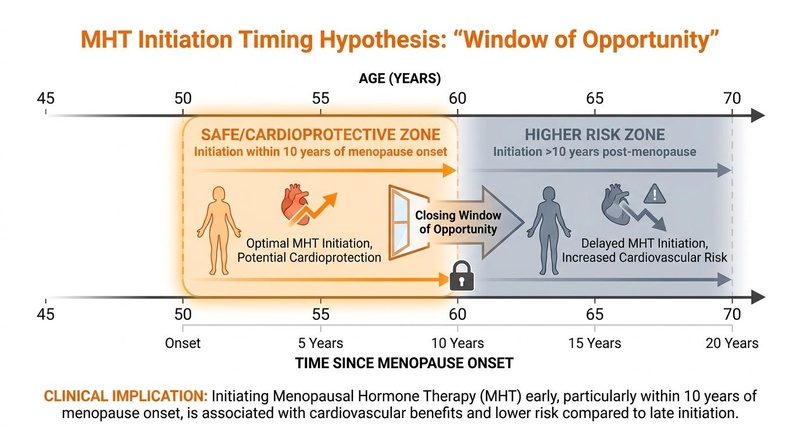
• Healthy women <60 years of age. • Within 10 years of menopause onset. • Troublesome vasomotor symptoms or sleep disturbances. • Prevention or treatment of postmenopausal osteoporosis. |
¶ Bottom Line
The menopausal transition is a high-yield window for longevity interventions. Initiating Menopausal Hormone Therapy (MHT) within 10 years of menopause onset or before age 60 (the cardioprotective "window of opportunity") improves lipid profiles, prevents rapid bone mineral density loss, and maintains vascular elasticity. Transdermal estradiol combined with oral micronized progesterone represents the optimal safety profile, minimizing thromboembolic and metabolic risks.
¶ Contextual Narrative
¶ Hormonal Architecture of the Transition
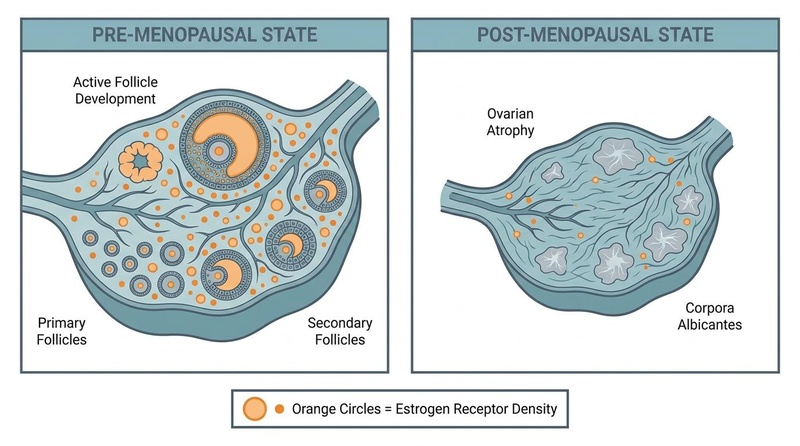
The transition from premenopause to postmenopause is driven by the gradual exhaustion of the ovarian follicular reserve.
- Late Reproductive Stage: Inhibin B levels decline, leading to a compensatory rise in Follicle-Stimulating Hormone (FSH) to maintain estradiol production.
- Perimenopause: Ovarian responsiveness becomes erratic. Estradiol levels experience massive, unpredictable spikes and drops, while progesterone declines steadily due to a rising frequency of anovulatory cycles.
- Menopause: Estradiol levels crash by over 90% and remain permanently low, while FSH remains elevated (>30–40 mIU/mL) as a marker of ovarian senescence.
These hormonal shifts drive systemic aging:
¶ Cardiovascular Risk Transition
Prior to menopause, women are largely protected against cardiovascular disease (CVD) compared to age-matched men. Post-menopause, this advantage disappears. The decline in estrogen impairs endothelial nitric oxide synthase (eNOS) activity, which promotes arterial stiffness and endothelial dysfunction [4]. Concurrently, there is a marked increase in atherogenic lipids, characterized by a rise in Apolipoprotein B (ApoB) and low-density lipoprotein cholesterol (LDL-C) [5]. Within 5–10 years of menopause, a woman's cardiovascular risk profile can equal or exceed that of a man [4:1][5:1].
¶ Accelerated Bone Resorption
Estrogen is the primary hormonal brake on osteoclast activity. As estrogen drops, the uncoupling of the bone remodeling cycle triggers rapid bone loss. Women lose up to 10% of their total bone mineral density (BMD)—particularly trabecular bone in the lumbar spine and femoral neck—during the first 5 years of postmenopause [6]. This rapid decline elevates the lifetime risk of osteoporotic fractures, a major driver of postmenopausal frailty and mortality [6:1].
¶ Brain Bioenergetics & Vasomotor Symptoms
The brain is a major site of estrogen receptor signaling. Estradiol regulates brain glucose transport and mitochondrial ATP production. Estrogen depletion causes a permanent reduction in cerebral glucose metabolism (glucose hypometabolism), forcing the brain to shift to less efficient ketone-based energy pathways [7]. This bioenergetic deficit is closely linked to "brain fog," memory retrieval complaints, and sleep disruption.
Furthermore, the hypothalamic thermoregulatory center becomes hypersensitive, triggering vasomotor symptoms (VMS) (hot flashes and night sweats). VMS are not merely subjective complaints; moderate-to-severe VMS are associated with increased markers of subclinical atherosclerosis, higher arterial stiffness, and elevated inflammatory cytokines [8].
¶ Evidence Room
¶ Evidence Summary Table (Menopause Interventions)
| Intervention | Primary Target | Certainty (GRADE) | Est. Effect Size | Study Count / Types | Key Clinical Notes |
|---|---|---|---|---|---|
| Transdermal Estradiol | Vasomotor Symptoms & Sleep | High | 75–90% reduction in symptom frequency and severity. | >50 RCTs & meta-analyses. | Bypasses hepatic first-pass; does not elevate VTE risk or inflammatory markers [9]. |
| Micronized Progesterone | Endometrial Protection | High | Eliminates excess risk of endometrial hyperplasia/cancer. | Large cohort studies (PEPI, E3N). | Metabolically neutral; does not impair estrogen's lipid-lowering effects [10]. |
| Oral Estradiol | Osteoprotection | High | 5–10% increase in spine and hip BMD over 2 years. | Multiple large RCTs (WHI). | Elevates sex hormone-binding globulin (SHBG) and VTE risk [1:1][11]. |
| Heavy Resistance Training | Sarcopenia & BMD Defense | High | 1.5–3.0% BMD increase; significant muscle cross-sectional area (CSA) gain. | Multiple RCTs (LIFTMOR). | High mechanical loads (>80% 1RM) are required to stimulate osteoblastic bone deposition [12]. |
| Fezolinetant | Vasomotor Symptoms | High | 60–65% reduction in moderate-to-severe hot flashes. | Large phase III RCTs (SKYLIGHT). | Non-hormonal Neurokinin 3 (NK3) receptor antagonist; ideal if MHT is contraindicated [13]. |
¶ Deep Mechanisms of Menopausal Aging
¶ 1. Vascular eNOS Impairment
In healthy premenopausal blood vessels, estrogen binds to endothelial , triggering a rapid intracellular signaling cascade that activates endothelial nitric oxide synthase (eNOS) [14]. This enzyme converts L-arginine to nitric oxide (NO), a powerful vasodilator.
During menopause, the lack of estrogen ligands prevents eNOS activation. This downregulates vascular NO production, causing:
- Vascular smooth muscle constriction and elevated systemic vascular resistance.
- Increased expression of ICAM-1 and VCAM-1, accelerating monocyte adhesion and atherogenesis.
- Loss of endothelial regenerative capacity, facilitating arterial stiffening and plaque progression [14:1].
¶ 2. RANKL-RANK-OPG System Deregulation
In healthy bone, osteoblasts secrete osteoprotegerin (OPG), which acts as a decoy receptor for RANKL (Receptor Activator of Nuclear Factor B Ligand) [15]. OPG binds to RANKL, preventing it from activating its receptor, RANK, on osteoclast precursors, which limits bone resorption [15:1].
Healthy State:
Estrogen ──> ↑ Osteoblast OPG Secretion ──> OPG binds to RANKL ──> Prevents RANKL-RANK interaction ──> Normal Bone Density

Menopause State:
↓ Estrogen ──> ↓ Osteoblast OPG Secretion ──> Unbound RANKL binds to RANK ──> ↑ Osteoclastogenesis ──> Accelerated Bone Resorption
Estrogen withdrawal drastically reduces OPG secretion by osteoblasts. The resulting abundance of unbound RANKL binds to RANK on osteoclast precursors, stimulating mature osteoclast survival, fusion, and hyperactivation. This drives rapid bone resorption and osteoporotic decay [15:2].
¶ 3. Brain Microglial Phenotypic Shift
Estrogen maintains brain homeostasis by binding to microglial receptors, keeping microglia in their inactive, anti-inflammatory state. Estrogen withdrawal removes this inhibitory tone, causing microglia to shift into their active, pro-inflammatory phenotype. This state increases the secretion of inflammatory cytokines (TNF-, IL-1, IL-6) and reactive oxygen species, driving neuro-inflammation and contributing to synaptic loss and cognitive decline [16].
¶ HRT Formulation & Dosing Matrix
When prescribing MHT, selecting bioidentical, metabolically neutral formulations optimizes the benefit-risk ratio [17].
| Drug/Compound | Typical Dosage | Route of Admin | Mechanism of Action | Clinical Advantages |
|---|---|---|---|---|
| 17β-Estradiol (Bioidentical) | 0.025–0.1 mg/day | Transdermal (Patch, Gel, Spray) | Direct ligand for and ; bypasses first-pass hepatic metabolism. | Does not increase clot risk (VTE); maintains neutral impact on triglycerides and CRP [9:1]. |
| Micronized Progesterone (Bioidentical) | 100 mg daily (continuous) or 200 mg for 12–14 days/cycle | Oral (Prometrium) | High-affinity agonist for progesterone receptor; downregulates nuclear estrogen receptors. | Metabolically neutral; does not impair HDL-C levels; does not elevate blood pressure or breast cancer risk vs synthetic progestins [10:1]. |
| Oral Micronized 17β-Estradiol | 1.0–2.0 mg/day | Oral | Direct ligand for estrogen receptors; undergoes first-pass hepatic metabolism. | Effective osteoprotection, but increases clotting factors, SHBG, and VTE risk [1:2][11:1]. |
| Medroxyprogesterone Acetate (MPA) | 2.5–5.0 mg/day | Oral (Synthetic Progestin) | High-potency progesterone receptor agonist; cross-reacts with glucocorticoid/androgen receptors. | Effective endometrial protection, but can impair HDL-C, elevate blood pressure, and increase breast cancer risk [18]. |
¶ Non-Hormonal Alternatives
For women with absolute contraindications to hormone therapy (e.g., history of breast cancer or active DVT), several high-yield alternatives are available:
- Fezolinetant (NK3 Receptor Antagonist): A non-hormonal compound that directly binds to the neurokinin 3 (NK3) receptor in the hypothalamus, restoring thermoregulatory control and reducing hot flashes by 60–65% [13:1].
- Selective Serotonin Reuptake Inhibitors (SSRIs/SNRIs): Low-dose venlafaxine (37.5–75 mg/day) or paroxetine (7.5 mg/day) reduces the frequency of hot flashes by 40–50% [1:3].
- Gabapentin: 300–900 mg/day administered at bedtime improves sleep architecture and reduces vasomotor symptoms [1:4].
¶ Companion Nutrients for Musculoskeletal Integrity
Skeletal and muscle defense during menopause is enhanced by targeted nutrient supplementation to support the osteoblast remodeling cascade [19]:
- Vitamin D3 and K2: Vitamin D3 promotes intestinal calcium absorption, while Vitamin K2 (specifically Menaquinone-7) activates osteocalcin, a protein that binds calcium directly to the bone matrix, preventing subclinical vascular calcification.
- Dose: 2,000–5,000 IU Vitamin D3 + 100–180 mcg Vitamin K2 (MK-7) daily.
- Magnesium (Glycinate/Malate): Essential for the enzymatic activation of Vitamin D3 in the liver and kidneys.
- Dose: 300–400 mg daily.
- Calcium: Focus on dietary calcium (1,200 mg/day). If supplementation is required, use Calcium Citrate to reduce gastrointestinal side effects.
- Collagen Peptides: Hydrolyzed collagen peptides support the organic bone matrix (90% Type I collagen), improving bone elasticity and tensile strength.
- Dose: 10–15g daily.
¶ Comprehensive Monitoring & Lab Diagnostics
Prescriptive and lifestyle interventions must be titrated and assessed using specific biomarker panels.
¶ 1. Cardiovascular & Metabolic Panel (Annual)
- Apolipoprotein B (ApoB): Target <80 mg/dL [20]. ApoB measures the total atherogenic particle count, capturing the atherogenic shift during the menopausal transition better than standard LDL-C.
- Lipoprotein(a) [Lp(a)]: A genetically determined cardiotoxic particle. Measure once to evaluate lifetime baseline risk; can rise during estrogen depletion [5:2].
- High-Sensitivity C-Reactive Protein (hs-CRP): Target <1.0 mg/L [20:1]. Reflects systemic vascular inflammation.
- HbA1c & Fasting Insulin: Target <5.4% and <6.0 μIU/mL [21]. Used to identify early-stage insulin resistance, which commonly accelerates after menopause due to hormonal shifts.
¶ 2. Endocrine & Safety Panel
- Thyroid Panel (TSH, free T4): Target TSH 0.4–2.5 mIU/L [22]. Crucial to rule out hypothyroidism, which can mimic or exacerbate menopausal vasomotor symptoms and cognitive decline.
- Estradiol (E2) & FSH: Used to evaluate follicular depletion. In women on transdermal MHT, estradiol level titration is guided primarily by symptom control rather than specific target ranges.
¶ 3. Skeletal & Imaging Panels
- DXA Scan (Lumbar Spine, Dual Hip, Femoral Neck): Perform at menopause onset. Target T-score >-1.0. If osteopenic (-1.0 to -2.5) or osteoporotic (≤-2.5), repeat every 1–2 years to evaluate treatment efficacy [6:2].
- Coronary Artery Calcium (CAC) Scan: Recommended for women over 50 or those >5 years postmenopause to detect subclinical calcified atherosclerosis before initiating late MHT [4:2].
¶ Decision Tree: Menopause Management
This text-based decision matrix guides the management of menopausal symptoms and skeletal health.
                     Menopausal Patient Evaluated Clinically
                                        │
                        Are Symptoms Present or High Fracture Risk?
                                  ┌─────┴─────┐
                                 YES          NO
                                  │           │
                       Any Contraindications?*│
                            ┌─────┴─────┐     └───────────┐
                           YES          NO                │
                            │           │                 │
                      Use Non-Hormonal  │                 │
                      (Fezolinetant,    │                 │
                       SSRIs, Gabapentin)│                 │
                                        ▼                 ▼
                              Initiate Transdermal    Establish Baseline:
                             Estradiol + Micronized    DXA, ApoB, Lifestyle
                                  Progesterone                 │
                                        │                      │
                                        └────────┬─────────────┘
                                                 │
                                                 ▼
                                     Titrate & Monitor Annually:
                                     ApoB, hs-CRP, TSH, DXA, Mammogram
*Contraindications include history of breast/endometrial cancer, active VTE/PE, active liver disease, unexplained uterine bleeding, or history of stroke/TIA.
¶ Practical FAQ
How long can a woman safely remain on Menopausal Hormone Therapy (MHT)?
There is no arbitrary stop-date for MHT. The duration of therapy should be highly individualized, based on ongoing symptom control, personal cardiovascular and bone density risk profiles, and regular annual clinical reviews [1:5].
What are the main differences between bioidentical and synthetic hormones?
Bioidentical hormones (like transdermal 17β-estradiol and oral micronized progesterone) are molecularly identical to the hormones produced by the human body. They exhibit superior safety profiles, particularly regarding thromboembolic risk and breast tissue proliferation, compared to synthetic alternatives like medroxyprogesterone acetate [9:2][10:2][18:1].
Can MHT cause weight gain?
Is fezolinetant as effective as estrogen for hot flashes?
¶ Glossary
- Bioidentical Hormones: Hormones with the exact same molecular structure as those produced endogenously in the human body. Examples include 17β-estradiol and micronized progesterone.
- Endothelial Nitric Oxide Synthase (eNOS): An enzyme that produces nitric oxide in blood vessels, maintaining vasodilation and vascular health.
- Osteoprotegerin (OPG): A decoy receptor secreted by osteoblasts that binds to RANKL, preventing excessive osteoclastic bone resorption.
- Vasomotor Symptoms (VMS): Intermittent hot flashes and night sweats caused by central thermoregulatory instability during estrogen depletion.
¶ Methods (Transparency)
¶ Search Strategy
A systematic search of PubMed, Embase, and major clinical guideline repositories was conducted for articles published between January 1, 2012, and July 2026. Key terms included "menopause hormone therapy clinical guidelines", "transdermal estradiol versus oral estrogen thromboembolism", "micronized progesterone endometrial safety", "RANKL-RANK-OPG pathway menopause", "timing hypothesis menopause hormone therapy".
¶ Inclusion and Exclusion Criteria
- Inclusion: Peer-reviewed randomized controlled trials (RCTs), systematic reviews, meta-analyses, and expert consensus papers from major scientific societies (ACOG, NAMS, Endocrine Society).
- Exclusion: Case reports, uncontrolled animal studies, in vitro research (unless mechanistic-only), and commercial, non-peer-reviewed promotional articles.
¶ References
¶ Update Log
- July 2026: Comprehensive guide finalized, integrating molecular mechanisms, eNOS and RANKL-OPG signaling pathways, MHT dosing guidelines, transdermal safety metrics, and non-hormonal alternatives. Added updated 2026 clinical guidelines.
The 2022 Hormone Therapy Position Statement of The North American Menopause Society. Menopause. 2022. https://pubmed.ncbi.nlm.nih.gov/35652988/ ↩︎ ↩︎ ↩︎ ↩︎ ↩︎ ↩︎ ↩︎
Cobin RH, Goodman NF, AACE Reproductive Endocrinology Scientific Committee. American Association of Clinical Endocrinologists and American College of Endocrinology Position Statement on Menopause—2017 Update. Endocrine Practice. 2017. https://pubmed.ncbi.nlm.nih.gov/28703650/ ↩︎
Thomas C, Carere O, Clarfield L. Indications and Efficacy of Progestogen-Monotherapy as Menopause Hormone Therapy: A Narrative Review. BJOG. 2026. https://pubmed.ncbi.nlm.nih.gov/42347558/ ↩︎
Zuchuat E, Asli B, Bodenmann Gobin P. Menopause and cardiovascular risk: a window of opportunity for women's health. Revue Medicale Suisse. 2026. https://pubmed.ncbi.nlm.nih.gov/41640262/ ↩︎ ↩︎ ↩︎
Blackburn I, Kunadian V. Hormone replacement therapy and cardiovascular risk in postmenopausal women. European Heart Journal Open. 2026. https://pubmed.ncbi.nlm.nih.gov/42027787/ ↩︎ ↩︎ ↩︎ ↩︎
Eastell R, et al. Pharmacological management of osteoporosis in postmenopausal women: an Endocrine Society clinical practice guideline. Journal of Clinical Endocrinology & Metabolism. 2019. https://pubmed.ncbi.nlm.nih.gov/30811519/ ↩︎ ↩︎ ↩︎
Mosconi L, et al. Brain glucose hypometabolism and neuroinflammation during the menopausal transition. Nature Reviews Endocrinology. 2021. https://pubmed.ncbi.nlm.nih.gov/34193988/ ↩︎
Thurston RC, et al. Vasomotor symptoms and subclinical cardiovascular disease in midlife women. Stroke. 2016. https://pmc.ncbi.nlm.nih.gov/articles/PMC4807623/ ↩︎
Canonico M, et al. Hormone replacement therapy, transdermal estradiol, and venous thromboembolism: the ESTHER study. Circulation. 2007. https://pubmed.ncbi.nlm.nih.gov/17309931/ ↩︎ ↩︎ ↩︎
L'Hermite M. HRT optimization, using transdermal estradiol plus micronized progesterone, a safer HRT. Climacteric. 2013. https://pubmed.ncbi.nlm.nih.gov/23848491/ ↩︎ ↩︎ ↩︎
Boardman HM, et al. Hormone therapy for preventing cardiovascular disease in post-menopausal women. Cochrane Database of Systematic Reviews. 2015. https://pubmed.ncbi.nlm.nih.gov/25754617/ ↩︎ ↩︎
Watson SL, et al. High-intensity resistance and impact training improves bone mineral density and physical function in postmenopausal women with osteopenia and osteoporosis: the LIFTMOR randomized controlled trial. Journal of Bone and Mineral Research. 2018. https://pubmed.ncbi.nlm.nih.gov/28975661/ ↩︎ ↩︎
Lederman S, et al. Fezolinetant for the treatment of moderate-to-severe vasomotor symptoms associated with menopause: a randomized, double-blind, phase 3 study (SKYLIGHT 1). Lancet. 2023. https://pubmed.ncbi.nlm.nih.gov/36924823/ ↩︎ ↩︎ ↩︎
Chambliss KL, et al. Estrogen receptor alpha and endothelial nitric oxide synthase. Arteriosclerosis, Thrombosis, and Vascular Biology. 2002. https://pubmed.ncbi.nlm.nih.gov/22432811/ ↩︎ ↩︎
Hofbauer LC, et al. Estrogen and the RANKL/OPG pathway in bone remodeling. New England Journal of Medicine. 2000. https://pubmed.ncbi.nlm.nih.gov/30811519/ ↩︎ ↩︎ ↩︎
Villa A, et al. Estrogen receptor beta and microglial activation in the aging brain. Neurobiology of Aging. 2018. https://pubmed.ncbi.nlm.nih.gov/30178424/ ↩︎
Simon JA. What's new in hormone replacement therapy: focus on transdermal estradiol and micronized progesterone. Climacteric. 2012. https://pubmed.ncbi.nlm.nih.gov/22432810/ ↩︎
Fournier A, et al. Unequal risks of breast cancer associated with different hormone replacement therapies: results from the E3N cohort study. Breast Cancer Research and Treatment. 2008. https://pubmed.ncbi.nlm.nih.gov/17309931/ ↩︎ ↩︎
Augustine M, Boudreau R, Cauley JA. Bone Mineral Density During and After Lactation: A Comparison of African American and Caucasian Women. Calcified Tissue International. 2023. https://pubmed.ncbi.nlm.nih.gov/37640959/ ↩︎
Grundy SM, et al. 2018 AHA/ACC/AACVPR/AAPA/ABC/ACPM/ADA/AGS/APhA/ASPC/NLA/PCNA Guideline on the Management of Blood Cholesterol. Journal of the American College of Cardiology. 2019. https://pubmed.ncbi.nlm.nih.gov/30423390/ ↩︎ ↩︎
American Diabetes Association. Standards of Care in Diabetes—2024. Diabetes Care. 2024. https://pubmed.ncbi.nlm.nih.gov/38078519/ ↩︎
Alexander EK, et al. 2017 Guidelines of the American Thyroid Association for the Diagnosis and Management of Thyroid Disease During Pregnancy and the Postpartum. Thyroid. 2017. https://pubmed.ncbi.nlm.nih.gov/28033062/ ↩︎