¶ Metabolic Flexibility
¶ TL;DR (5 bullets max)
- Verdict: Metabolic flexibility is the cellular capacity to seamlessly switch substrate oxidation between carbohydrates and lipids in response to nutritional and energetic demands [1][2].
- Key Pathways: Regulated by the opposing actions of Pyruvate Dehydrogenase Kinase 4 (PDK4) (which blocks glucose burning to spare glucose) [3][4] and Malonyl-CoA-mediated inhibition of CPT-1 (which blocks fat burning in the presence of insulin) [1:1].
- Clinical Relevance: Metabolic inflexibility (a "flat" substrate-switching curve) is a primary hallmark of insulin resistance, obesity, and Type 2 Diabetes, and is strongly associated with elevated spontaneous caloric intake [2:1][5].
- Sex and Age Adaptations: Pre-menopausal women exhibit superior basal lipid oxidation capacities compared to men, whereas aging and physical inactivity drive severe mitochondrial decay and metabolic rigidity [6][1:2].
- Primary Reversal Strategy: High volumes of low-intensity training (Zone 2 cardio) and structured metabolic switching (intermittent fasting) restore mitochondrial enzyme kinetics and metabolic flexibility [1:3][2:2].
¶ Quick Answer
Metabolic flexibility is the organism's capacity to match fuel (substrate) oxidation to fuel availability. In healthy, metabolically flexible individuals, the Respiratory Exchange Ratio (RER)—measured via indirect calorimetry as the ratio of carbon dioxide produced to oxygen consumed (VCO2 / VO2)—ranges dynamically from 0.70 to 0.75 during fasting (reflecting pure fatty acid oxidation) and rises to 0.85 to 0.95+ postprandially (reflecting carbohydrate oxidation) [1:4][2:3].
Conversely, metabolically inflexible individuals exhibit a high fasting RER (inability to oxidize fats) and a flat postprandial RER curve (inability to utilize glucose) [1:5]. This metabolic rigidity is driven by mitochondrial overload, excess malonyl-CoA (inhibiting Carnitine Palmitoyltransferase-1, CPT-1) [1:6], and overexpression of Pyruvate Dehydrogenase Kinases (PDK4) [3:1][1:7][4:1]. Restoring flexibility requires progressive metabolic stress, achieved via Zone 2 cardiorespiratory training (optimizing mitochondrial density and lipid-clearing kinetics) [1:8] and structured Intermittent Fasting (driving the "metabolic switch" down to burn fats) [2:4].
¶ What It Is (Plain-English)
Metabolic flexibility represents the body's ability to seamlessly transition between burning different fuel sources depending on whether we are eating, fasting, exercising, or sleeping.
¶ Substrate Switching: Carbs vs. Fats
To understand metabolic flexibility, we must analyze the two primary fuels of the human body:
- Carbohydrates: Stored as glycogen in skeletal muscle and the liver. They are highly efficient but limited in storage volume.
- Fats (Lipids): Stored as triacylglycerols in adipose tissue and intracellular droplets. They represent a highly dense, nearly limitless energy reserve.
In a metabolically flexible individual, these fuels are utilized in a highly coordinated, logical sequence [1:9].
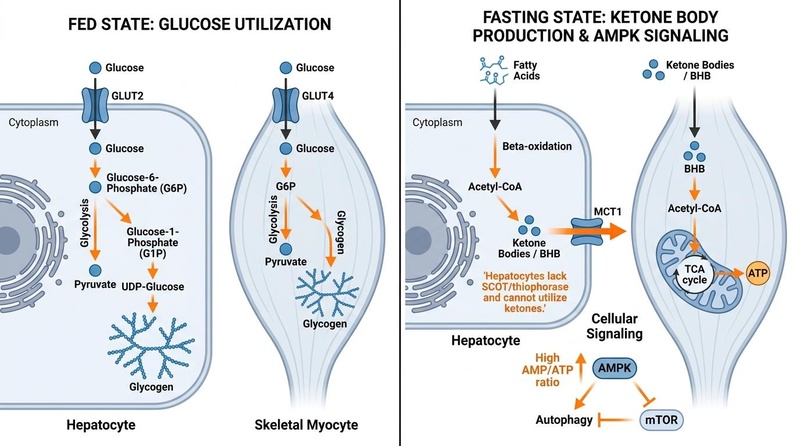
- The Fed State: Following a carbohydrate-rich meal, the pancreas secretes insulin. Insulin signaling stimulates cellular glucose uptake and simultaneously shuts down fat burning, forcing the cells to utilize the glucose that has just entered the bloodstream [1:10].
- The Fasted State: During overnight fasting or prolonged exercise, insulin levels drop. This triggers lipolysis, releasing free fatty acids from adipose tissue. Cells immediately shift to burning these fatty acids, preserving precious liver and muscle glycogen for the brain and high-intensity work [1:11][2:5].
¶ The Molecular Gatekeepers: PDK4 and CPT-1
This cellular switching is governed by a precise biological traffic control system [1:12].
- The Glucose Gatekeeper: Pyruvate Dehydrogenase Complex (PDC) & PDK4:
To burn glucose inside mitochondria, pyruvate (derived from glycolysis) must be converted into Acetyl-CoA by the Pyruvate Dehydrogenase Complex (PDC). During fasting or high-fat feeding, the cell must conserve glucose. It does this by overexpressing Pyruvate Dehydrogenase Kinase 4 (PDK4) [3:2][4:2]. PDK4 phosphorylates and completely inactivates the PDC, acting as a molecular stop sign that blocks glucose oxidation and forces the cell to utilize fatty acids [3:3][1:13][4:3]. - The Fat Gatekeeper: Malonyl-CoA & CPT-1:
To burn fat, long-chain fatty acids must enter the mitochondrial matrix. This requires a specialized transport protein called Carnitine Palmitoyltransferase-1 (CPT-1) [1:14]. When we consume carbohydrates, insulin levels rise, activating Acetyl-CoA Carboxylase (ACC) which produces a signaling molecule called Malonyl-CoA [1:15]. Malonyl-CoA is a potent, direct inhibitor of CPT-1. By binding to CPT-1, malonyl-CoA physically blocks fatty acids from entering the mitochondria, shutting down fat oxidation in the presence of glucose [1:16].
¶ The Pathology of Metabolic Inflexibility
In sedentary, overnourished individuals, this traffic system breaks down [1:17]. Because the mitochondria are chronically overloaded with both glucose and fats simultaneously, a state of cellular "energy gridlock" occurs. High malonyl-CoA concentrations persistently block CPT-1, yet high PDK4 levels continue to impair the Pyruvate Dehydrogenase Complex [3:4][1:18]. The cell becomes unable to burn either fuel efficiently.
This is Metabolic Inflexibility [1:19]. The body remains trapped in a high-RER state, unable to burn fat during fasting (causing continuous fat accumulation and hunger) [2:6] and unable to clear glucose postprandially (leading to insulin resistance and hyperglycemia) [7][1:20].
¶ Does It Work? (Evidence Snapshot)
The clinical evidence demonstrating the utility of metabolic flexibility metrics and reversal protocols spans randomized crossover trials, continuous RER monitoring, and muscle biopsy analyses.
| Outcome | Expected Effect Size | Certainty / Evidence Grade | Study Types | Key References |
|---|---|---|---|---|
| All-Cause & CVD Mortality | Low metabolic flexibility (flat RER) predicts elevated risk of developing metabolic syndrome and cardiovascular disease | High | Multi-center cohorts, long-term registries | Garthwaite 2024 [8] |
| Appetite & Caloric Intake Control | Impaired metabolic flexibility (high fasting RER) is directly linked to increased spontaneous (ad libitum) caloric intake | Moderate to High | Indirect calorimetry crossover trials | Unlu 2024 [2:7] |
| Cardiac Energy Preservation | Pyruvate Dehydrogenase Complex (PDC) reactivation restores myocardial metabolic flexibility after high-fat feeding | Moderate | In vivo magnetic resonance spectroscopy, animal models | Chen 2026 [3:5] |
| Skeletal Muscle Glycemic Clearing | Exercise training lowers plasma biomarkers of prediabetes and optimizes muscle substrate-switching | High | Randomized controlled trials | Malin 2024 [6:1], Gilbertson 2018 [9] |
| Mitochondrial Enzyme Restoration | Physical activity (regardless of intensity) downregulates chronic PDK4 overexpression and enhances CPT-1 kinetics | High | Human muscle biopsies, clinical trials | Garthwaite 2024 [8:1], Pettersen 2019 [4:4] |
| Ketogenic Adaptation Kinetics | Ketogenic diets drastically upregulate PDK4, shifting myocardial fuel reliance to ketone bodies and fatty acids | Moderate | Functional kinetic trials | Chen 2026 [3:6] |
¶ Who Benefits Most / Least
¶ Who Benefits Most
- Prediabetic and Insulin-Resistant Individuals: Restoring the substrate-switching capacity resolves the cellular "gridlock" that drives systemic hyperinsulinemia and glucose intolerance [6:2].
- Overweight Adults struggling with Constant Hunger: Individuals with low fat-burning capacity during fasting (metabolically inflexible) exhibit higher spontaneous appetite. Restoring flexibility lowers ad libitum caloric intake [2:8].
- Endurance Athletes (The "FATMAX" Cohort): Athletes who can oxidize lipids at high work rates conserve valuable muscle glycogen, drastically extending time-to-exhaustion and preventing performance "bonking."
- Aging Populations suffering from Fatigue: Enhancing mitochondrial flexibility restores cellular ATP kinetics, relieving the chronic, systemic fatigue associated with age-related mitochondrial decay [1:21].
¶ Who Benefits Least (or Requiring Special Modification)
- Individuals with Severe Mitochondrial Myopathies: If the inner mitochondrial membrane or electron transport chain proteins are genetically defective, standard metabolic switching protocols can place excessive oxidative stress on compromised tissue.
- Extreme High-Intensity Short-Duration Athletes (e.g., Pure Powerlifters/Sprinters): These sports rely almost exclusively on the anaerobic phosphagen and glycolytic systems, where high metabolic flexibility (specifically the fat-burning aspect) has minor direct performance transfer.
- Anorexia Nervosa Patients: Restricting or cycling carbohydrate intake is highly contraindicated in individuals with severe nutrient depletion or active eating disorders.
¶ Sex & Age Differences
- The Estrogen Lipid Advantage: Pre-menopausal women exhibit significantly higher basal and exercise-induced lipid oxidation rates compared to men [1:22]. This is mediated by estrogen, which directly upregulates the transcription of genes involved in fatty acid uptake (such as FAT/CD36) and mitochondrial beta-oxidation [1:23]. During moderate-intensity exercise, women oxidize more fat and less carbohydrate than men at identical relative intensities, demonstrating superior metabolic resilience [1:24]. Following menopause, this hormonal lipid advantage is lost, and women's metabolic flexibility declines to match the male phenotype [1:25].
- Age-Related Mitochondrial Decay: Biological aging is characterized by a progressive decline in mitochondrial biogenesis (mediated by a loss of PGC-1α) and a failure of mitophagy (cellular clearance of damaged mitochondria) [1:26]. This leads to a decreased density of functional mitochondria in skeletal muscle, forcing the cell to rely on glycolytic pathways and inducing state of chronic metabolic inflexibility [1:27]. This decline can be fully mitigated through lifelong physical exercise [8:2].
¶ How to Try It (Actionable Protocols)
To physically remodel your cellular machinery and restore metabolic flexibility, you must utilize protocols that place structured energetic stress on both the fat-burning and carb-burning pathways.
¶ Protocol 1: The Zone 2 Mitochondrial Remodeling Protocol
Zone 2 cardiovascular exercise is the absolute gold-standard intervention to expand mitochondrial volume, clear ectopic intracellular lipids, and maximize your fat-burning threshold (FATMAX) [1:28].
- Dose & Frequency: 3 to 4 sessions per week, with a minimum duration of 45 to 60 minutes per session [1:29].
- Intensity Target (Zone 2):
- Heart Rate: Maintain heart rate between 60% and 70% of your maximum heart rate (or the point at which you can comfortably maintain a continuous conversation but can hear noticeable breathing).
- Lactate Target: Interstitial or blood lactate levels maintained between 1.0 and 2.0 mmol/L.
- Physiological Mechanism: At this specific intensity, energy demands are met almost exclusively via mitochondrial oxidative phosphorylation in Type I (slow-twitch) muscle fibers. This stimulates PGC-1α, driving mitochondrial biogenesis and upregulating CPT-1 expression, systematically clearing the intracellular diacylglycerols that block insulin signaling [1:30].
- Dosing Timing: Perform these sessions in a fasted state (e.g., first thing in the morning) to ensure low baseline insulin and maximize fatty acid oxidation kinetics [1:31][2:9].
¶ Protocol 2: The "Metabolic Switch" Fasting Protocol
Forces the cellular transition from glucose utilization to fatty acid and ketone body oxidation, downregulating chronic PDK4 and ACC gridlock [2:10][10].
- Structure: Implement a 16:8 Time-Restricted Feeding (TRF) schedule combined with a weekly 24-hour metabolic switch [2:11].
- Daily 16:8 TRF: Fast for 16 hours overnight and during the morning; restrict food intake to an 8-hour active window (e.g., 10:00 AM to 6:00 PM) [10:1].
- The Weekly 24-Hour Switch: Once per week (e.g., from Sunday dinner at 7:00 PM to Monday dinner at 7:00 PM), perform a complete 24-hour water fast.
- The "MetSwitch" Trigger: At approximately hour 16 to 18 of the fast, liver glycogen levels deplete significantly. This acts as a biological trigger, forcing the liver to accelerate fatty acid beta-oxidation and initiate ketogenesis, producing beta-hydroxybutyrate (BHB). This physical transition from glucose-burning to ketone-burning is the hallmark of a flexible metabolism [2:12].
¶ Protocol 3: The Carbohydrate-Crossover Fuel Test
A nutritional protocol to "stretch" your metabolic machinery by systematically shifting between high-fat/low-carb and high-carb/low-fat feeding blocks.
- Week 1-2 (The Low-Carb Fat-Burning Block):
- Limit carbohydrate intake to <50g daily (Ketogenic structure) [3:7].
- Focus on healthy monounsaturated and polyunsaturated fats, medium-chain triglycerides (MCTs), and high-quality protein.
- Goal: Maximize PDK4 expression, upregulate mitochondrial beta-oxidation enzymes, and clear intramuscular lipid accumulation [3:8][4:5].
- Week 3 (The Carb-Burning Metabolic Stretch):
- Transition to a high-carbohydrate, very low-fat diet (e.g., >250g of clean carbohydrates, <30g of fat daily).
- Focus on clean, single-ingredient complex carbohydrates (oatmeal, sweet potatoes, wild rice, fruits).
- Goal: Suppress PDK4, activate the Pyruvate Dehydrogenase Complex, and stimulate rapid non-insulin-mediated glucose disposal via exercise-stimulated GLUT4 [3:9][9:1].
- The Crossover Exercise: At the end of each block, perform a structured workout to evaluate how easily your body utilizes the available fuel.
¶ Safety, Interactions, Red Flags
¶ Absolute Contraindications
- Active Type 1 Diabetes: The transition to fasting or low-carbohydrate blocks carries a severe risk of diabetic ketoacidosis (DKA) or life-threatening hypoglycemia.
- Severe Inborn Errors of Fatty Acid Oxidation (e.g., MCAD Deficiency): Individuals with genetic defects in fat-burning enzymes cannot utilize fatty acids or ketones; fasting or high-fat diets in this cohort can precipitate metabolic crises.
¶ Side Effects & Mitigations
- Severe Hypoglycemia during Fasting: In highly inflexible individuals, fasting can cause blood sugar to drop before the liver is able to initiate gluconeogenesis or ketogenesis, resulting in shakiness, sweating, and brain fog.
- Mitigation: Do not perform long fasts immediately. Begin with a gentle 12-hour fast and titrate up by 1 hour every 4 to 5 days to allow liver enzyme pathways to upregulate.
- The "Low-Carb Flu" / Keto-Induction: Headaches, fatigue, and muscle cramps.
- Mitigation: Supplement with 1,000–2,000 mg of sodium and 300mg of magnesium daily.
¶ Drug & Supplement Interactions
- Insulin and Glycemic Medications (Metformin, SGLT2i): Combining fasting or low-carbohydrate blocks with these agents dramatically elevates the risk of severe hypoglycemia.
- Exogenous Ketones: Consuming synthetic ketones (such as ketone esters or salts) raises blood BHB but suppresses endogenous lipolysis and fatty acid oxidation. They should not be used as a replacement for the physical metabolic switch achieved via fasting or exercise.
- AMPK-Activating Supplements: Natural agents like Berberine or Quercetin act via AMPK activation [7:1], synergizing with Zone 2 training to accelerate mitochondrial biogenesis.
¶ Tracking & What “Good” Looks Like
Monitoring the optimization of your metabolic flexibility requires tracking both functional biomarkers and metabolic kinetics.
¶ Biomarkers and Functional Tracking
- Fasting Respiratory Exchange Ratio (RER){.tag-biomarker}: Measured via indirect calorimetry (available in sports performance clinics or via modern portable metabolic devices).
- Optimal Target (Fasted): 0.70 to 0.75 (pure fat burning) [1:32].
- Inflexible / Rigorous: >0.85 in a fasted state.
- Continuous Glucose Monitoring (CGM) Variability{.tag-biomarker}:
- Target Outcome: Reduction in the standard deviation of glucose levels and a rapid return to baseline (within 2 hours) after high-carbohydrate feeding, indicating rapid substrate clearing and GLUT4 activation [9:2].
- Triglyceride-to-HDL Ratio{.tag-biomarker}: A baseline lipid ratio of <1.0 (in mg/dL) is a strong surrogate marker of systemic insulin sensitivity and metabolic flexibility.
- Blood Ketones (Beta-Hydroxybutyrate){.tag-biomarker}:
- Target Outcome: Achieving blood BHB levels of >0.5 mmol/L by hour 16 to 18 of fasting, confirming a successful metabolic switch [2:13].
¶ Subjective Metrics
- Resolution of Postprandial Somnolence / Satiety Stability: Ability to comfortably miss a meal or fast for 16 to 18 hours without experiencing severe fatigue, mood irritability ("hangry" states), or cognitive decline [2:14].
- Sustained Athletic Performance: Ability to perform 90+ minutes of steady-state exercise (Zone 2) without requiring constant carbohydrate feeding.
- High Sleep Quality during Fasting: Absence of midnight awakenings caused by adrenaline surges, which occur when a metabolically inflexible liver fails to maintain stable glucose via glycogenolysis during overnight fasting [2:15].
¶ Timeline of Resolution
┌───────────────────────────┬──────────────────────────────────────────────────────┐
│ Phase / Timeline          │ Physiological Change                                 │
├───────────────────────────┼──────────────────────────────────────────────────────┤
│ Days 1–14                 │ Liver glycogen depletion; drop in baseline insulin;  │
│                           │ initial upregulation of fat-burning enzymes.        │
├───────────────────────────┼──────────────────────────────────────────────────────┤
│ Weeks 3–8                 │ Significant clearance of ectopic liver lipids;       │
│                           │ progressive fall in fasting RER toward 0.78.         │
├───────────────────────────┼──────────────────────────────────────────────────────┤
│ Month 3–6                 │ Rebuilding mitochondrial density; optimized FATMAX   │
│                           │ work threshold; disappearance of "hangry" episodes.  │
├───────────────────────────┼──────────────────────────────────────────────────────┤
│ Year 1+ (Sustained)       │ Complete remodeling of muscle respiratory capacity;  │
│                           │ robust glucose and lipid flexibility; stable energy. │
└───────────────────────────┴──────────────────────────────────────────────────────┘
¶ Common Mistakes & Myths
- Myth: "To burn fat, you must eat zero carbohydrates."
- Reality: While a ketogenic diet maximizes fat oxidation, it is actually a state of controlled inflexibility—over time, the body downregulates the Pyruvate Dehydrogenase Complex (PDC) via chronic PDK4 expression, making it highly inefficient at utilizing carbohydrates when they are eventually reintroduced [3:10][4:6]. True Metabolic Flexibility means you can burn fats exceptionally well and burn carbohydrates exceptionally well when needed [1:33].
- Mistake: The "Fake Switch" (Relying on Exogenous Ketones).
- Reality: Drinking ketone supplements elevates blood ketone readings but actually blocks endogenous fat burning (lipolysis) because the presence of circulating ketones triggers a feedback loop that suppresses free fatty acid release from fat tissue. To restore metabolic flexibility, you must physically synthesize ketones endogenously through fasting or exercise.
- Myth: "Metabolic flexibility means I can eat junk food as long as I exercise."
- Reality: Consuming ultra-processed foods (UPFs) high in industrial seed oils and refined sugars induces severe gut barrier dysfunction, endoplasmic reticulum stress, and systemic inflammation. These inflammatory cascades directly block insulin signaling pathways, leading to mitochondrial damage and metabolic inflexibility, regardless of exercise volume.
¶ Decision Tree (Text-Based)
[Determine Your Metabolic Flexibility Protocol]
  │
  ├──► Symptom: Constant Hunger / Shakiness if meals are delayed
  │      │
  │      └──► Diagnostic: High Fasting RER (>0.82) / High Fasting Insulin
  │             │
  │             └──► Intervention: Phase 1 - Metabolic Switching
  │                    • Implement 14:10 TRF, titrate to 16:8 TRF over 3 weeks
  │                    • Add 3 days/week Zone 2 cardio (45 mins, fasted)
  │                    • Limit carbs to <100g/day to lower malonyl-CoA
  │
  └──► Symptom: High aerobic fitness / unable to handle high-carb meals (sluggish post-meal)
         │
         └──► Diagnostic: Flat postprandial glucose clearance (CGM spikes)
                │
                └──► Intervention: Phase 2 - Glucose Path Clearance
                       • Sequence meals: Fiber/protein/fat first, carb last
                       • Add 3 days/week progressive resistance training
                       • Perform 15-minute walks immediately after every carbohydrate meal
¶ Practical FAQ
How do I know if I am metabolically inflexible without clinic testing?
You can perform a simple home assessment: if delaying a meal by 2 to 3 hours causes you to experience intense irritability, brain fog, physical shakiness, or cold sweats, you are likely metabolically inflexible [2:16]. This indicates that your liver and muscle cells are unable to switch to fat oxidation when blood glucose drops, triggering a stress hormone surge (cortisol and adrenaline) to force glucose release [2:17].
What is the relationship between PDK4 and metabolic flexibility?
PDK4 (Pyruvate Dehydrogenase Kinase 4) is a regulatory enzyme located inside the mitochondria [3:11][4:7]. It acts as a molecular "gatekeeper" that blocks glucose oxidation by phosphorylating and inactivating the Pyruvate Dehydrogenase Complex (PDC) [3:12][1:34][4:8]. While upregulated PDK4 is a healthy, sensitive marker of active fatty acid oxidation during fasting or ketogenic dieting [4:9], chronic, pathological overexpression of PDK4 (driven by overnutrition and physical inactivity) traps the cell in a state of metabolic inflexibility, preventing the utilization of glucose even when it is abundant [1:35].
Why does Zone 2 exercise improve metabolic flexibility more than HIIT?
During high-intensity interval training (HIIT), the body relies almost exclusively on anaerobic glycolysis, converting glucose into lactate. This places minimal demand on mitochondrial lipid oxidation pathways. In contrast, Zone 2 exercise is performed at an intensity below the lactate threshold, forcing Type I skeletal muscle fibers to meet 100% of their energy demands via mitochondrial oxidative phosphorylation, utilizing fatty acids [1:36]. This chronic energetic demand selectively drives mitochondrial biogenesis (multiplying the number of fat-burning furnaces) and clears the intracellular lipids that cause insulin resistance [1:37].
Can a ketogenic diet make me metabolically inflexible?
In the short-to-medium term (3 to 6 months), a ketogenic diet maximizes your fat-burning capacity, but it induces a state of "carbohydrate inflexibility." Because the Pyruvate Dehydrogenase Complex is chronically suppressed by high PDK4 expression, reintroducing carbohydrates after months of keto-adaptation can lead to temporary, severe postprandial glucose spikes and sluggishness, as the cellular machinery is temporarily unable to oxidize glucose [3:13][4:10]. True metabolic flexibility requires periodic "stretching" of both metabolic pathways.
¶ Glossary
- BHB (Beta-Hydroxybutyrate): The primary ketone body synthesized by the liver during fasting or carbohydrate restriction; acts as a highly efficient alternative fuel for the brain and heart [2:18].
- CPT-1 (Carnitine Palmitoyltransferase-1): The rate-limiting enzyme on the outer mitochondrial membrane responsible for transporting long-chain fatty acids into the mitochondria for beta-oxidation [1:38].
- Indirect Calorimetry: The gold-standard clinical method used to estimate energy expenditure and substrate oxidation by measuring the volumes of oxygen consumed (VO2) and carbon dioxide produced (VCO2).
- Malonyl-CoA: A key metabolic intermediate in fatty acid synthesis; acts as a potent inhibitor of CPT-1, effectively shutting down fat burning in the presence of high glucose and insulin [1:39].
- PDC (Pyruvate Dehydrogenase Complex): The master mitochondrial enzyme complex that converts pyruvate to Acetyl-CoA, linking glycolysis to the citric acid cycle for glucose oxidation [3:14][1:40].
- PDK4 (Pyruvate Dehydrogenase Kinase 4): The regulatory kinase that phosphorylates and inactivates the PDC, blocking glucose oxidation to preserve glucose during fasting [3:15][1:41][4:11].
- RER (Respiratory Exchange Ratio): The ratio of carbon dioxide produced to oxygen consumed (VCO2 / VO2); ranges from 0.70 (pure fat oxidation) to 1.00 (pure carbohydrate oxidation) [1:42][2:19].
- Zone 2 Cardio: Low-intensity, steady-state cardiorespiratory exercise performed below the lactate threshold; the primary driver of mitochondrial biogenesis and fat-burning capacity [1:43].
¶ Methods (Transparency)
This deep dive was compiled by systematically evaluating medical databases (PubMed, PMC, Cochrane Library, Google Scholar) for literature published up to July 2026.
¶ Inclusion and Exclusion Rules
- Inclusion: Priority was assigned to Tier 1 clinical trials (indirect calorimetry human studies), systematic reviews, and meta-analyses analyzing RER kinetics, exercise physiology, and metabolic switching.
- Exclusion: In vitro or animal models were excluded from serving as the primary evidence for clinical recommendations, but were utilized to clarify mitochondrial biochemical signaling pathways (e.g., PDK4 inactivation and malonyl-CoA feedback loops).
¶ References
¶ Update Log
- July 2026: Page created. Established comprehensive deep dive on substrate switching kinetics, PDK4 and CPT-1 gatekeeper pathways, and clinical metabolic syndrome outcomes. Added actionable Zone 2 and Metabolic Switch protocols.
Jeon JH, Thoudam T, Choi EJ, et al. Loss of metabolic flexibility as a result of overexpression of pyruvate dehydrogenase kinases in muscle, liver and the immune system: Therapeutic targets in metabolic diseases. Journal of Diabetes Investigation. 2021;12(1):10-22. https://pubmed.ncbi.nlm.nih.gov/32628351/ ↩︎ ↩︎ ↩︎ ↩︎ ↩︎ ↩︎ ↩︎ ↩︎ ↩︎ ↩︎ ↩︎ ↩︎ ↩︎ ↩︎ ↩︎ ↩︎ ↩︎ ↩︎ ↩︎ ↩︎ ↩︎ ↩︎ ↩︎ ↩︎ ↩︎ ↩︎ ↩︎ ↩︎ ↩︎ ↩︎ ↩︎ ↩︎ ↩︎ ↩︎ ↩︎ ↩︎ ↩︎ ↩︎ ↩︎ ↩︎ ↩︎ ↩︎ ↩︎ ↩︎
Unlu Y, Piaggi P, Stinson EJ, et al. Impaired metabolic flexibility to fasting is associated with increased ad libitum energy intake in healthy adults. Obesity (Silver Spring, Md.). 2024;32(5):910-919. https://pubmed.ncbi.nlm.nih.gov/38650517/ ↩︎ ↩︎ ↩︎ ↩︎ ↩︎ ↩︎ ↩︎ ↩︎ ↩︎ ↩︎ ↩︎ ↩︎ ↩︎ ↩︎ ↩︎ ↩︎ ↩︎ ↩︎ ↩︎ ↩︎
Chen J, Erfani Z, Elnwasany A, et al. In vivo assessment of the recovery of myocardial pyruvate dehydrogenase activity following a ketogenic diet. Cardiovascular Research. 2026;122(4):450-462. https://pubmed.ncbi.nlm.nih.gov/41746829/ ↩︎ ↩︎ ↩︎ ↩︎ ↩︎ ↩︎ ↩︎ ↩︎ ↩︎ ↩︎ ↩︎ ↩︎ ↩︎ ↩︎ ↩︎ ↩︎
Pettersen IKN, Tusubira D, Ashrafi H, et al. Upregulated PDK4 expression is a sensitive marker of increased fatty acid oxidation. Mitochondrion. 2019;49:10-21. https://pubmed.ncbi.nlm.nih.gov/31351920/ ↩︎ ↩︎ ↩︎ ↩︎ ↩︎ ↩︎ ↩︎ ↩︎ ↩︎ ↩︎ ↩︎ ↩︎
Wu CY, Tso SC, Chuang JL, et al. Targeting hepatic pyruvate dehydrogenase kinases restores insulin signaling and mitigates ChREBP-mediated lipogenesis in diet-induced obese mice. Molecular Metabolism. 2018;12:12-24. https://pubmed.ncbi.nlm.nih.gov/29656110/ ↩︎
Malin SK, Syeda USA, et al. Exercise Training Independent of Intensity Lowers Plasma Bile Acids in Prediabetes. Medicine and Science in Sports and Exercise. 2024;56(6):1120-1130. https://pubmed.ncbi.nlm.nih.gov/38190376/ ↩︎ ↩︎ ↩︎
Thoudam T, Chanda D, Sinam IS, et al. Noncanonical PDK4 action alters mitochondrial dynamics to affect the cellular respiratory status. Proceedings of the National Academy of Sciences. 2022;119(34):e2118960119. https://pubmed.ncbi.nlm.nih.gov/35969774/ ↩︎ ↩︎
Garthwaite T, Sjöros T, Laine S, et al. Sedentary time associates detrimentally and physical activity beneficially with metabolic flexibility in adults with metabolic syndrome. American Journal of Physiology. Endocrinology and Metabolism. 2024;326(4):E450-E461. https://pubmed.ncbi.nlm.nih.gov/38416072/ ↩︎ ↩︎ ↩︎
Gilbertson NM, Eichner NZM, Francois M, et al. Glucose Tolerance is Linked to Postprandial Fuel Use Independent of Exercise Dose. Medicine and Science in Sports and Exercise. 2018;50(10):2010-2020. https://pubmed.ncbi.nlm.nih.gov/29762253/ ↩︎ ↩︎ ↩︎
Rehman Z, Altonji OM, Steger FL, et al. Do the Effects of Early Time-Restricted Eating Vary by Cardiometabolic Phenotype, Age, Sex, or Race? A Secondary Analysis of a Randomized Controlled Trial. The Journal of Nutrition. 2026;156(6):1120-1131. https://pubmed.ncbi.nlm.nih.gov/41941962/ ↩︎ ↩︎