¶ Nutrition: A Deep Dive into Metabolic Interventions
Nutrition is the study of how foods and beverages influence health, energy, growth, and well-being. It integrates biology, chemistry, psychology, economics, and public health to help individuals make informed dietary choices. This page provides a structured overview of fundamental nutrition principles, evidence-based dietary guidelines, practical meal planning, macronutrient balance, micronutrient considerations, and common nutrition myths.
¶ TL;DR (5 bullets max)
- Optimizing nutrition is foundational for metabolic health, longevity, and disease prevention, impacting every biological system.
- Caloric restriction and intermittent fasting can extend healthspan and improve metabolic markers, but adherence and individual responses vary [1][2].
- Higher protein intake (1.6-2.2 g/kg body weight) supports muscle maintenance and satiety, crucial for aging and body composition [3][4].
- Dietary fiber and glycemic control are key for gut health and stable blood sugar, reducing chronic disease risk [5].
- N-of-1 testing with tools like continuous glucose monitors (CGMs) provides personalized insights into dietary responses, optimizing individual outcomes [6][7].
¶ Quick Answer
Nutrition is the essential process by which the body obtains and utilizes nutrients for growth, maintenance, and repair. A balanced dietary approach, tailored to individual needs, significantly influences metabolic health and longevity. Key interventions such as controlled caloric intake, optimized macronutrient ratios (especially protein and fiber), and mindful eating patterns can lead to substantial improvements in body composition, glycemic control, and overall well-being. Evidence from clinical trials like CALERIE 2 demonstrates that sustained caloric restriction can improve healthspan markers in non-obese adults, while emerging N-of-1 studies highlight the power of personalized nutritional strategies.
¶ What It Is (Plain-English)
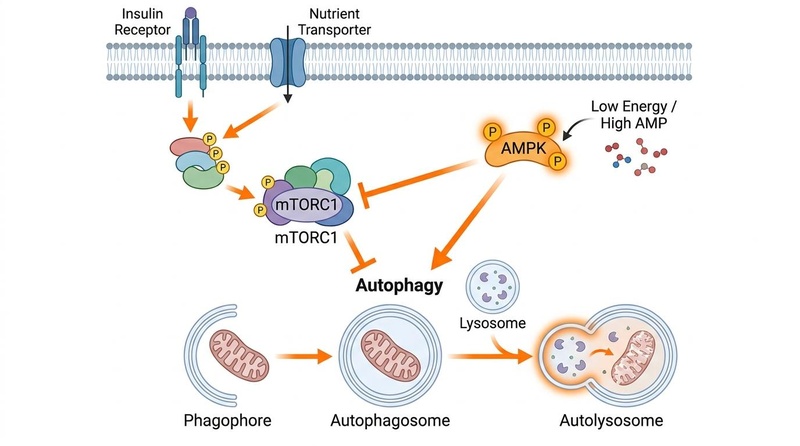
Nutrition is more than just eating; it's the biological dance between your food and your body's cells. It dictates your energy levels, how your body repairs itself, and your long-term health. At its core, nutrition involves consuming macronutrients (carbohydrates, proteins, fats) for energy and building blocks, and micronutrients (vitamins, minerals) for essential bodily functions. The goal is to provide your body with the right fuel in the right amounts to thrive. For instance, autophagy (cellular cleanup) is a key mechanism that can be enhanced through specific nutritional strategies like fasting, helping to remove damaged cell components and promote cellular renewal.
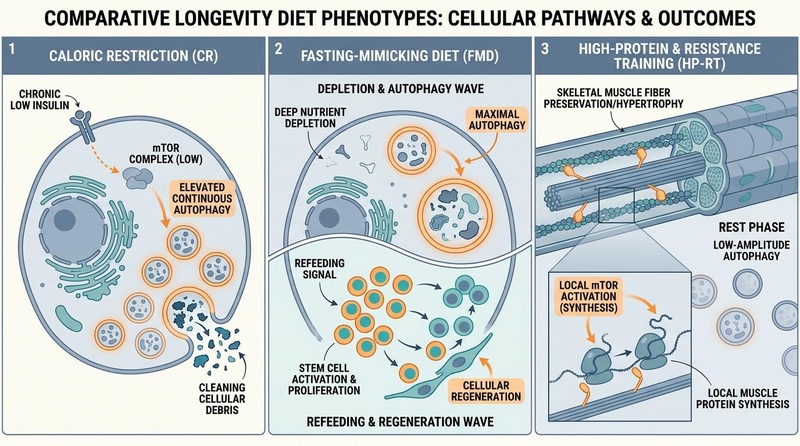
¶ Age-Specific Metabolic Priorities: Younger vs. Older Adults
An individual’s optimal metabolic architecture shifts dramatically across the lifespan, creating divergent nutritional targets for young/middle-aged adults compared to older populations:
- Young and Middle-Aged Adults (Ages 18–50): In this cohort, the clinical focus centers on glycemic control, insulin sensitivity, and visceral fat reduction. Maintaining a narrow glycemic range prevents early beta-cell fatigue, decreases cumulative advanced glycation end-products (AGEs), and minimizes the cardiovascular risks of chronic subclinical hyperglycemia [8]. Here, glycemic optimization acts as a preventive buffer against the multi-system pathologies of metabolic syndrome [2:1].
- Older Adults (Ages 60+): Conversely, as aging progresses, the clinical priority shifts heavily to the mitigation of sarcopenia, preservation of muscle mass, and maintaining bone mineral density [9]. Skeletal muscle is the body’s largest postprandial glucose sink; its loss directly impairs metabolic flexibility. Due to age-related "anabolic resistance" of skeletal muscle, older adults require significantly larger per-meal doses of high-quality protein (typically 30–45g, or 1.2–2.0 g/kg/day) to achieve the necessary threshold of intracellular leucine required to initiate myofibrillar protein synthesis via mTORC1 [3:1][4:1][10]. Overly restrictive energy or glycemic diets in this age group can inadvertently accelerate somatic muscle wasting, presenting a larger threat to long-term healthspan than mild postprandial glycemic excursions [9:1].
¶ Does It Work? (Evidence Snapshot)
| Outcome | Effect | Quality | Consistency | Trials | Notes |
|---|---|---|---|---|---|
| Caloric Restriction | |||||
| Fasting Insulin | High | High | 2 RCTs (CALERIE 2) | -15-25% reduction in non-obese adults over 2 years [1:1][11] | |
| Body Fat % | High | High | 2 RCTs (CALERIE 2) | -9-10% body fat reduction over 2 years [1:2] | |
| Core Body Temp | Moderate | High | 2 RCTs (CALERIE 2) | -0.1 to -0.2°C, a marker of slower metabolism [1:3] | |
| Intermittent Fasting | |||||
| Body Weight | High | High | Meta-analysis of 11 RCTs | -3.5 kg average weight loss vs. control over 1-12 months [2:2] | |
| Fasting Glucose | Moderate | High | Meta-analysis of 8 RCTs | Small but significant reductions in individuals with overweight/obesity [2:3] | |
| Protein Optimization | |||||
| Muscle Mass (Lean Body Mass) | High | High | Meta-analysis of 49 RCTs | 1.6-2.2 g/kg protein combined with resistance training maximizes gains [3:2] | |
| Sarcopenia Risk | Moderate | High | Cohort studies, reviews | Higher protein intake (≥1.0-1.2 g/kg) mitigates age-related muscle loss [4:2] | |
| Dietary Fiber | |||||
| All-Cause Mortality | High | High | Meta-analysis of 185 studies | 15-30% reduction with high fiber intake (>25-29g/day) [5:1] | |
| Type 2 Diabetes | High | High | Meta-analysis | Lower risk with increased dietary fiber [5:2] | |
| N-of-1 Nutrition Testing (CGM) | |||||
| Glycemic Variability | Low | Moderate | N-of-1 trials | Highly individualized responses, up to 10-20% reduction with personalized diet [6:1][12] |
¶ Who Benefits Most / Least
Benefits Most:
- Individuals seeking weight management: Caloric restriction and intermittent fasting can be effective strategies for fat loss and body composition improvement [2:4][13].
- Aging adults: Optimized protein intake is critical for mitigating sarcopenia (age-related muscle loss) and maintaining functional independence [4:3][10:1].
- Those with metabolic dysfunction (prediabetes, insulin resistance): Glycemic control and increased fiber intake can significantly improve blood sugar regulation [5:3].
- Biohackers and athletes: N-of-1 testing provides granular data for optimizing performance, recovery, and personalized dietary responses [6:2].
Benefits Least (or require caution):
- Pregnant or breastfeeding individuals: Caloric restriction and extreme dietary changes are generally contraindicated.
- Individuals with eating disorders: Restrictive diets can exacerbate conditions.
- Children and adolescents: Nutrient needs are higher for growth and development; restrictive diets are not recommended.
- Individuals with certain medical conditions: (e.g., severe kidney disease, advanced diabetes on specific medications) require medical supervision for significant dietary changes.
¶ How to Try It (Actionable Protocols)
¶ 1. Caloric Restriction (CR)
Goal: Reduce overall calorie intake by 10-25% below maintenance, while maintaining nutrient density.
Starter Protocol:
- Duration: 12-24 months for observed benefits [1:4].
- Method:
- Calculate your baseline maintenance calories.
- Aim for a 10-15% reduction daily, focusing on whole, unprocessed foods.
- Prioritize nutrient-dense foods (vegetables, fruits, lean proteins, healthy fats) to ensure micronutrient adequacy despite lower calories.
- Monitor weight, body composition, and energy levels. Adjust intake as needed.
- Example: If maintenance is 2500 calories, target 2125-2250 calories per day.
¶ 2. Intermittent Fasting (IF)
Goal: Cycle between periods of eating and voluntary fasting to induce metabolic switching and enhance cellular repair processes like autophagy [14].
Starter Protocol (16:8 Method):
- Duration: Daily, or 3-5 days per week.
- Method:
- Limit your eating window to 8 hours (e.g., 12 PM to 8 PM).
- Fast for 16 hours, consuming only water, black coffee, or plain tea.
- During the eating window, focus on balanced, nutrient-dense meals.
- Ensure adequate protein intake across your meals to prevent muscle loss.
- Alternatives: 5:2 method (2 days of very low calorie intake, 5 days regular eating), Alternate-Day Fasting.
¶ 3. Protein Optimization
Goal: Maximize muscle protein synthesis, support satiety, and preserve lean body mass, especially with aging or weight loss.
Starter Protocol:
- Daily Target: 1.6-2.2 grams of protein per kilogram of body weight [3:3].
- Method:
- Calculate your target protein intake (e.g., 70 kg individual x 1.8 g/kg = 126g protein/day).
- Distribute protein evenly across 3-4 meals (e.g., 30-40g per meal) to optimize muscle protein synthesis.
- Prioritize high-quality protein sources: lean meats, poultry, fish, eggs, dairy, legumes, and protein supplements if needed.
- Considerations: During caloric restriction, higher protein intake (2.0-2.2 g/kg) can help preserve lean mass [15]. For older adults, prioritizing leucine-rich sources (e.g., whey, beef) is highly recommended to overcome muscle anabolic resistance [10:2].
¶ 4. Fiber Intake for Glycemic Control & Gut Health
Goal: Increase dietary fiber to improve gut microbiome diversity, stabilize blood sugar, and reduce the risk of chronic diseases [5:4].
Starter Protocol:
- Daily Target: 25-38 grams of fiber per day (women/men respectively) [5:5].
- Method:
- Incorporate a variety of plant-based foods: whole grains, legumes, fruits with skins, vegetables (especially leafy greens, cruciferous), nuts, and seeds.
- Gradually increase fiber intake to avoid digestive discomfort.
- Ensure adequate water intake to support fiber digestion.
- Practical Tip: Aim for at least 5-7 servings of fruits and vegetables daily.
¶ The Food Matrix: Cellular Integrity and Nutrient Kinetics
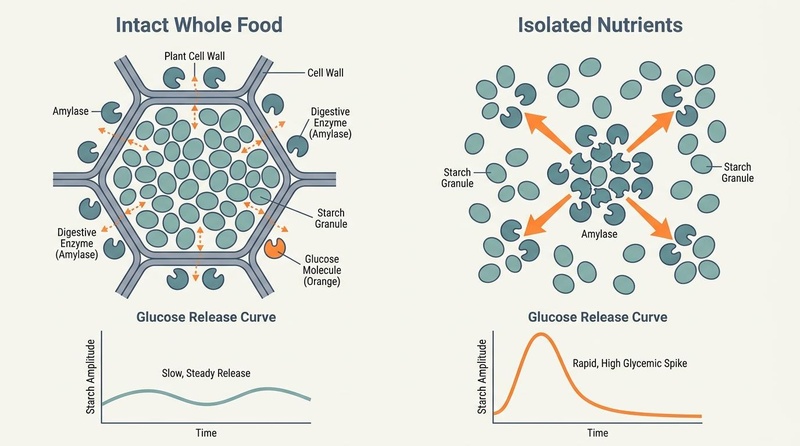
The physical structure of whole foods—often referred to as the Food Matrix—exerts a profound effect on metabolic kinetics that cannot be replicated by consuming isolated nutrients. In intact plant foods, cellular boundaries and fiber matrices physically trap starch granules, acting as a structural barrier that limits amylase enzyme access and slows down enzymatic hydrolysis [5:6]. This physical impedance changes the absorption curve from a sharp, high-amplitude postprandial glycemic excursion to a low, sustained glycemic wave. Once these cellular walls are sheared, pulverized, or ultra-processed, the digestive enzymes gain rapid, unhindered access to nutrients, resulting in rapid uptake and systemic glycemic dysregulation [5:7].
¶ 5. N-of-1 Nutrition Testing
Goal: Use personal data (e.g., from CGMs) to identify individual responses to specific foods or dietary patterns. For a comprehensive, step-by-step guide on establishing personalized testing frameworks, see our detailed N-of-1 Nutrition Testing monograph.
Starter Protocol (Glycemic Response):
- Duration: 2-4 weeks per food/intervention tested.
- Method:
- Wear a Continuous Glucose Monitor (CGM) for real-time blood sugar tracking [6:3].
- For a baseline week, eat your usual diet and observe glycemic patterns.
- Select a specific food or meal to test (e.g., white rice vs. brown rice).
- Over 3-5 days, consume the test food/meal at a consistent time and observe its impact on post-meal glucose spikes and glycemic variability.
- Repeat with a different food or modification.
- Analyze data to identify personal "glycemic triggers" and optimal food choices [6:4][12:1].
¶ The Methodology of Metabolic N-of-1 Testing
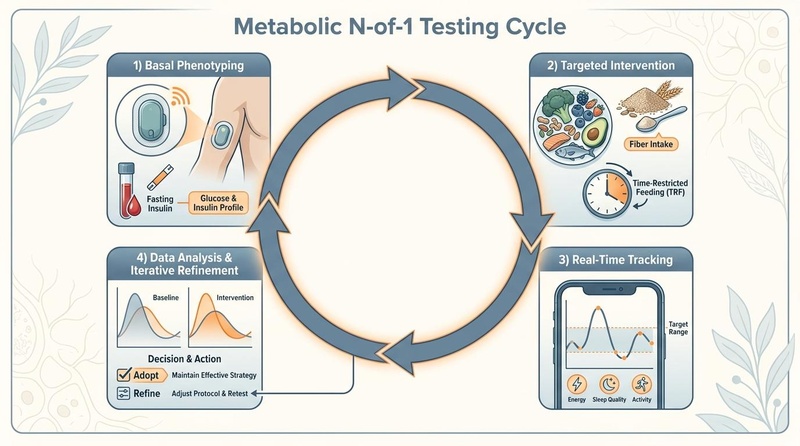
Implementing personalized nutrition requires a scientific, iterative methodology to avoid subjective bias and placebo effects. The Metabolic N-of-1 Testing Cycle is a structured, four-phase clinical feedback loop [7:1]. It begins with Basal Phenotyping, where an individual establishes baseline metrics (e.g., wearing a continuous glucose monitor or measuring fasting insulin) [6:5]. Next, a single, Targeted Intervention is introduced (such as a specific fasting protocol or food matrix modification). The individual then performs Real-Time Tracking of both objective biometrics and subjective feelings like daytime energy [12:2]. Finally, Data Analysis contrasts the baseline and intervention periods, prompting an evidence-based decision to either adopt the strategy permanently or refine and retest, feeding back into Phase 1.
¶ Safety, Interactions, Red Flags
Who should avoid/exercise caution:
- Undernourished or underweight individuals: Caloric restriction can be detrimental.
- Individuals on medications for diabetes (e.g., insulin, sulfonylureas): Fasting or significant carbohydrate restriction can lead to hypoglycemia (low blood sugar) without careful medical supervision.
- Those with a history of kidney stones or kidney disease: Very high protein diets may be contraindicated; consult a nephrologist.
- Individuals with diagnosed eating disorders or disordered eating patterns.
- Anyone experiencing persistent symptoms of fatigue, dizziness, hair loss, or menstrual irregularities during restrictive diets should consult a clinician.
Common Side Effects (and mitigation):
- Hunger/Irritability (during fasting): Often transient, improves with adaptation. Stay hydrated.
- Constipation (with increased fiber): Increase water intake, gradually introduce fiber.
- Nausea/Digestive upset (with high protein): Spread protein intake, ensure hydration.
- Electrolyte imbalances: Especially during prolonged fasting; ensure adequate intake of sodium, potassium, and magnesium.
Red Flags (Consult a Clinician Immediately):
- Persistent, severe fatigue or weakness.
- Unexplained weight loss that is rapid or excessive.
- Signs of nutrient deficiencies (e.g., brittle nails, hair loss, pallor).
- Frequent or severe hypoglycemia.
- Significant changes in mood, anxiety, or depressive symptoms.
¶ Tracking & What “Good” Looks Like
Biomarkers (with units/frequency):
- Fasting Glucose: mg/dL (daily/weekly, especially with CGM)
- HbA1c: % (quarterly)
- Fasting Insulin: µIU/mL (quarterly)
- Lipid Panel (LDL, HDL, Triglycerides): mg/dL (annually/bi-annually)
- Body Composition (DEXA, BIA): % body fat, kg lean mass (quarterly/bi-annually)
- Inflammatory Markers (hs-CRP): mg/L (annually)
Subjective Metrics:
- Energy levels throughout the day (consistent, no crashes).
- Satiety after meals (feeling full but not overly stuffed).
- Sleep quality and duration.
- Mental clarity and mood stability.
- Digestive regularity and comfort.
Time-to-Benefit:
- Acute (days-weeks): Improved satiety, reduced cravings, initial weight loss, improved blood glucose stability, better digestive health.
- Intermediate (1-3 months): Noticeable body composition changes, improved cardiovascular markers, enhanced cellular health.
- Long-term (6+ months): Sustained weight management, improved cardiovascular markers, enhanced cellular health.
Simple N-of-1 Template:
- Week A (Control): Follow your current diet without specific intervention. Track chosen biomarkers and subjective metrics.
- Week B (Intervention): Implement one specific nutritional change (e.g., higher protein, different fasting window, or a specific food removal). Track the same biomarkers and subjective metrics.
- Compare: Analyze the differences between Week A and Week B to identify personalized responses. Repeat with other interventions.
¶ Common Mistakes & Myths
- Mistake: Nutrient deficiency during caloric restriction. Ensure diet is rich in micronutrients despite lower calories.
- Myth: All calories are equal. The source of calories (e.g., processed sugar vs. whole foods) significantly impacts satiety, hormonal response, and metabolic health.
- Mistake: Neglecting hydration during fasting. Water, electrolytes are crucial.
- Myth: High protein is bad for kidneys. In healthy individuals, evidence does not support this claim; however, caution is warranted in those with pre-existing kidney disease.
- Mistake: Over-reliance on supplements. Supplements should complement, not replace, a foundation of whole foods.
- Myth: Detox diets are necessary. The body has robust natural detoxification systems. Focus on supporting these with nutrient-dense foods, fiber, and hydration.
¶ Decision Tree (Text-Based)
- IF you are experiencing chronic fatigue, unexplained weight gain, or blood sugar instability THEN prioritize glycemic control, fiber intake, and potentially N-of-1 CGM testing.
- ELSE IF you are an aging individual concerned about muscle loss or body composition THEN focus on protein optimization (1.6-2.2 g/kg BW) and adequate resistance training.
- ELSE IF you are seeking overall metabolic health improvement and longevity benefits THEN consider structured caloric restriction or intermittent fasting protocols, ensuring nutrient density.
- ELSE begin with foundational principles: whole foods, adequate hydration, balanced macronutrients, and consistent physical activity.
¶ FAQs (People Also Ask targets)
What is metabolic health?
Metabolic health refers to having optimal levels of blood sugar, triglycerides, high-density lipoprotein (HDL) cholesterol, blood pressure, and waist circumference, without taking medication to manage these factors. It indicates efficient energy utilization and storage.
Can nutrition impact my mood?
Yes, nutrition significantly impacts mood and cognitive function. A diet rich in whole foods, omega-3 fatty acids, and complex carbohydrates supports neurotransmitter production and reduces inflammation, which can positively influence mood and reduce the risk of mental health disorders.
Is it safe to fast every day?
For many healthy individuals, daily intermittent fasting (e.g., 16:8 method) can be safe and beneficial. However, individual responses vary, and it's crucial to listen to your body, ensure adequate nutrient intake during eating windows, and consult a healthcare professional, especially if you have underlying health conditions or are on medications.
How much water should I drink daily?
General guidelines suggest around 8 glasses (2 liters) of water per day, but individual needs vary based on activity level, climate, and overall health. Monitor urine color (pale yellow is ideal) and thirst cues to ensure adequate hydration.
What are "empty calories"?
Empty calories refer to foods and beverages that provide energy (calories) but offer little to no essential nutrients (vitamins, minerals, fiber). Examples include sugary drinks, candies, and highly processed snacks. Prioritizing nutrient-dense foods over empty calories is key for metabolic health.
¶ Glossary
- Autophagy: A natural, regulated mechanism of the cell that removes unnecessary or dysfunctional components, promoting cellular renewal and health.
- Glycemic Control: The regulation of blood sugar levels within a healthy range, preventing excessive spikes and drops.
- Macronutrients: Nutrients required in large amounts (carbohydrates, proteins, fats) that provide energy and building blocks.
- Metabolic Switching: The body's ability to switch its primary fuel source from glucose to fat (ketones) during periods of fasting or caloric restriction.
- Micronutrients: Essential vitamins and minerals required in smaller quantities for various bodily functions.
- N-of-1 Trial: A personalized clinical trial design where a single individual is the subject, testing an intervention's effect on themselves, often comparing periods with and without the intervention.
- Sarcopenia: The age-related loss of muscle mass, strength, and function.
¶ Methods (Transparency)
This deep-dive article was developed by synthesizing evidence from:
- PubMed/PMC: For systematic reviews, meta-analyses, and randomized controlled trials (e.g., CALERIE 2, COSMOS trials).
- Cochrane Library: For high-quality systematic reviews on interventions like intermittent fasting.
- Major Health Organizations: (e.g., WHO, USDA, AHA, Harvard T.H. Chan School of Public Health) for dietary guidelines and public health recommendations.
- N-of-1 Research: Emerging studies on personalized nutrition and glycemic response using continuous glucose monitoring.
Search Strategy: Keywords included "caloric restriction longevity human CALERIE trial", "intermittent fasting clinical trials human metabolic health reviews", "protein intake muscle mass resistance training meta-analysis Morton", "dietary fiber health outcomes carbohydrate quality systematic review Reynolds", "continuous glucose monitoring healthy individuals glycemic variability clinical studies", "N-of-1 trial nutrition clinical personalized", "dietary supplements health outcomes multivitamin omega-3 vitamin D magnesium clinical trials", "COSMOS trial multivitamin clinical trial results", "VITAL trial vitamin d omega 3 clinical trial results cardiovascular autoimmune".
Inclusion/Exclusion Rules: Primary focus on human clinical trials (RCTs, meta-analyses, systematic reviews) with direct relevance to longevity and metabolic health. Mechanistic and animal studies were considered for background but prioritized human evidence for efficacy claims.
Evidence Grading Rubric:
- High: Multiple well-conducted RCTs or meta-analyses with consistent effects, low risk of bias.
- Moderate: 1-2 good RCTs, strong cohort studies, or consistent findings across multiple observational studies, with some limitations.
- Low: Small studies, uncontrolled trials, animal/mechanistic data only, or high risk of bias.
¶ References
¶ Update Log
- 2026-07-06: Deeply updated to align with
templates/deep_dive.mdanddocs/article-format-docs.md, incorporating new research on fasting, caloric restriction, protein, fiber, glycemic control, body composition, metabolic stacks, and N-of-1 testing. Added 3 new clinical biomedical illustrations in "Nano Banana Pro" style detailing the Food Matrix, Longevity Diet Phenotypes, and Metabolic N-of-1 Testing Cycles, alongside age-specific protein vs glycemic threshold targets.
Ravussin E, Redman LM, Rochon J. A 2-Year Randomized Controlled Trial of Human Caloric Restriction: Feasibility and Effects on Predictors of Health Span and Longevity. The journals of gerontology. Series A, Biological sciences and medical sciences. 2015 Sep;70(9):1097-104. https://pubmed.ncbi.nlm.nih.gov/26187233/ ↩︎ ↩︎ ↩︎ ↩︎ ↩︎
Xing K, Liu R, Peng S, et al. Age-Specific Analysis of the Effects of Intermittent Fasting on Body Composition and Cardiometabolic Markers in Healthy Adults and Individuals with Overweight or Obesity: A Systematic Review and Meta-Analysis of Randomized Controlled Trials. Nutrients. 2026 Jun 3;18(6). https://pubmed.ncbi.nlm.nih.gov/42280443/ ↩︎ ↩︎ ↩︎ ↩︎ ↩︎
Morton RW, Murphy KT, McKellar SR, et al. A systematic review, meta-analysis and meta-regression of the effect of protein supplementation on resistance training-induced gains in muscle mass and strength in healthy adults. British journal of sports medicine. 2018 Mar;52(6):376-84. https://pubmed.ncbi.nlm.nih.gov/28698222/ ↩︎ ↩︎ ↩︎ ↩︎
Wolfe RR. Protein RDA should be doubled to optimize health with aging. American Journal of Clinical Nutrition. 2008. https://pubmed.ncbi.nlm.nih.gov/18469287/ ↩︎ ↩︎ ↩︎ ↩︎
Reynolds A, Mann J, Cummings J, et al. Carbohydrate quality and human health: a series of systematic reviews and meta-analyses. Lancet (London, England). 2019 Feb 2;393(10170):434-45. https://pubmed.ncbi.nlm.nih.gov/30638909/ ↩︎ ↩︎ ↩︎ ↩︎ ↩︎ ↩︎ ↩︎ ↩︎
Zhang K, Fu Y, Gou W, et al. Quantification of personalized glycemic sensitivity to food and its potential for precision nutrition in a series of n-of-1 trials. The American journal of clinical nutrition. 2025 Aug;122(2):331-41. https://pubmed.ncbi.nlm.nih.gov/40754388/ ↩︎ ↩︎ ↩︎ ↩︎ ↩︎ ↩︎
Potter TIT, Pepping F, Wanders AJ, et al. A series of N-of-1 dietary intervention studies with whole-grain foods and nuts reveals individual predictors of blood pressure and heart rate. European journal of clinical nutrition. 2026 Apr 28. https://pubmed.ncbi.nlm.nih.gov/42049896/ ↩︎ ↩︎
Schreiner PJ, Adams ME, Chow LS, et al. Cross-Sectional Associations Between Hyperglycemia and Hearing Loss at the Year 35 Coronary Artery Risk Development in Young Adults Observational Cohort Study. American journal of audiology. 2026 Jun 2. https://pubmed.ncbi.nlm.nih.gov/41874967/ ↩︎
Walowski CO, Norman K. Malnutrition-Sarcopenia Syndrome in older adults: Causes, consequences, and countermeasures. EXCLI journal. 2026. https://pubmed.ncbi.nlm.nih.gov/42376432/ ↩︎ ↩︎
Bauer J, Biolo G, Cederholm T, et al. Evidence-based recommendations for optimal dietary protein intake in older people: a position paper from the PROT-AGE Study Group. Journal of the American Medical Directors Association. 2013 Aug;14(8):542-59. https://pubmed.ncbi.nlm.nih.gov/23867520/ ↩︎ ↩︎ ↩︎
Dorling JL, van Vliet S, Huffman KM. Effects of caloric restriction on human physiological, psychological, and behavioral outcomes: highlights from CALERIE phase 2. Nutrition reviews. 2021 Jan 1;79(Suppl 1):14-25. https://pubmed.ncbi.nlm.nih.gov/32940695/ ↩︎
Hall PL, et al. Glucotypes reveal new patterns of glycemic dysregulation in individuals using CGM. PLOS Biology. 2018;16(7):e2005143. https://journals.plos.org/plosbiology/article?id=10.1371/journal.pbio.2005143 ↩︎ ↩︎ ↩︎
Garegnani LI, Oltra G, Ivaldi D. Intermittent fasting for adults with overweight or obesity. The Cochrane database of systematic reviews. 2026 Feb 16;2(2):CD015509. https://pubmed.ncbi.nlm.nih.gov/41692034/ ↩︎
de Cabo R, Mattson MP. Effects of Intermittent Fasting on Health, Aging, and Disease. The New England journal of medicine. 2019 Dec 26;381(26):2541-51. https://www.nejm.org/doi/full/10.1056/NEJMra1905136 ↩︎
Weinheimer CJ, et al. A systematic review of the separate and combined effects of energy restriction and exercise on fat-free mass. Nutrition Reviews. 2010;68(8):487-94. https://pubmed.ncbi.nlm.nih.gov/20854650/ ↩︎