¶ Crohn's Disease
| Pathology Type | Transmural, Discontinuous (Skip Lesions) |
| Anatomical Range | Mouth to Anus (Predominantly Terminal Ileum) |
| Common Phenotypes | Inflammatory, Stricturing, Penetrating |
| Gold Standard Dx | Ileocolonoscopy with Biopsies, MRE |
| Primary Biologics | Infliximab, Adalimumab, Ustekinumab, Risankizumab |
| Surgical Option | Ileocolic Resection, Strictureplasty |
Crohn's Disease is a chronic, progressive, transmural inflammatory bowel disease characterized by discontinuous lesions ("skip lesions") that can manifest in any portion of the gastrointestinal tract, most commonly involving the terminal ileum and proximal colon. Unlike ulcerative colitis, which is restricted to the mucosal layer, Crohn's disease penetrates through all layers of the intestinal wall, predisposing patients to debilitating complications including fibrotic strictures, fistulae, intra-abdominal abscesses, and perianal disease[1][2][3]. Effective clinical management requires early phenotypic stratification, proactive therapeutic drug monitoring, and a multidisciplinary strategy integrating advanced biologics, surgery, and nutritional therapy[1:1][4][5].
¶ At a glance
Key points (high-level summary)
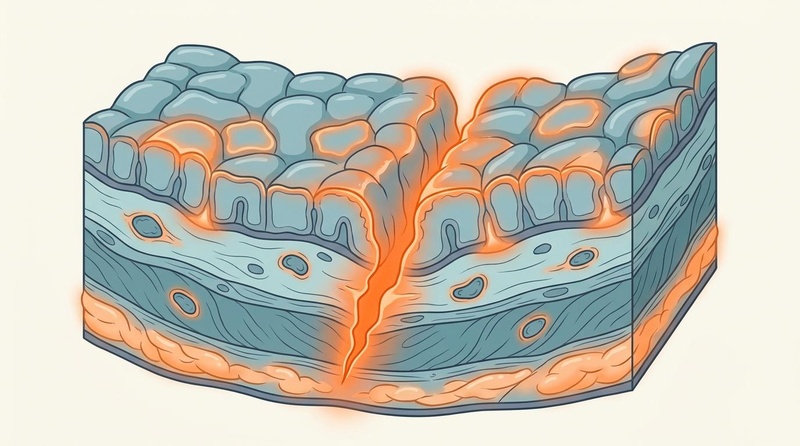
- Transmural Damage: The hallmark pathology is deep, transmural inflammation leading to mucosal cobblestoning, deep fissuring ulcers, and localized lymphoid aggregates that compromise the entire intestinal wall thickness[6][4:1].
- Phenotypic Trajectory: Disease naturally progresses from an early, uncomplicated inflammatory state to complicated stricturing (fibrostenotic) or penetrating (fistulizing) phenotypes, making early therapeutic intervention critical[5:1][3:1].
- First-Line Biologics: Clinical remission is driven by targeted biologic induction (using anti-TNF-alpha, anti-integrin, or anti-IL-12/23 agents) and oral small-molecule JAK inhibitors like Upadacitinib[1:2][7].
- Supportive Nutrition: Exclusive Enteral Nutrition (EEN) and the Crohn's Disease Exclusion Diet (CDED) represent highly effective primary or supportive therapies that downregulate mucosal cytokines and induce barrier healing[8][9].
What people use it for
- Aims: Induction of clinical and endoscopic remission, resolution of stricturing or penetrating complications, avoidance of repetitive surgical resections, and preservation of bowel length to prevent short bowel syndrome[1:3][3:2].
- Evidence quality: High-certainty clinical trial evidence supports the use of biologics and small molecules; high-certainty pediatric and moderate-certainty adult evidence supports EEN and CDED[1:4][8:1][9:1].
¶ What is Crohn's Disease?
Crohn's Disease is an immunologically mediated disorder that causes systemic inflammation alongside localized gastrointestinal damage.
¶ Pathology and Macroscopic Features
The macroscopic appearance of Crohn's disease is highly distinct. The mucosal surface exhibits longitudinal and transverse ulcerations separated by areas of edematous, normal-appearing mucosa, creating a classic "cobblestone" pattern. As transmural inflammation persists, subserosal fat deposition occurs around the circumference of the bowel, a phenomenon known as "creeping fat" or "fat wrapping" which is highly specific to Crohn's disease. Histologically, the presence of non-caseating epithelioid granulomas in biopsy specimens is pathognomonic, occurring in approximately 40–60% of patients.
¶ Epidemiology and Age of Onset
Crohn's disease has a peak incidence between the ages of 15 and 35, with a secondary smaller peak occurring in those aged 60 to 80. Pediatric-onset Crohn's disease is particularly aggressive, frequently presenting with severe growth failure, pubertal delay, and pan-enteric disease. Conversely, elderly-onset Crohn's disease is more likely to present with isolated colonic involvement and a milder, more indolent clinical course, though managing these patients is complicated by polypharmacy and a higher vulnerability to immunosuppression-related infections[10][11].
¶ Sex-Based Differences
In adults, Crohn's disease exhibits a female-to-male ratio of approximately 1.2:1 to 1.5:1. Women with Crohn's disease report higher rates of extraintestinal manifestations (such as erythema nodosum and peripheral arthritis) and a more profound impact on sexual function and psychological well-being[12][13]. Furthermore, hormonal fluctuations during the menstrual cycle, pregnancy, and menopause can significantly modulate disease activity. In contrast, men are more likely to present with isolated small bowel disease and exhibit higher rates of perianal fistulizing disease, which requires aggressive combined medical and surgical management.
¶ Clinical Phenotypes and Progression
According to the Montreal Classification, Crohn's disease is categorized into three distinct clinical behaviors (B), which represent the progressive, destructive nature of the disease:
- Inflammatory Phenotype (B1): Characterized by active mucosal inflammation without stricturing or penetrating complications. This represents an early, highly therapeutic window where mucosal healing is most achievable with medical therapy alone.
- Stricturing Phenotype (B2): Characterized by luminal narrowing due to chronic, recurrent inflammation and progressive fibrotic deposition. Patients present with clinical signs of intermittent bowel obstruction (postprandial abdominal pain, distension, nausea, and vomiting).
- Penetrating Phenotype (B3): Characterized by deep, transmural ulceration that breaks through the serosal layer, forming fistulous tracts. These tracts can connect different loops of bowel (enteroenteric), bowel to bladder (enterovesical), bowel to skin (enterocutaneous), or bowel to vagina (enterovaginal), often resulting in localized intra-abdominal abscesses.
- Perianal Disease Modifier (p): Concomitant perianal lesions, including complex perianal fistulas, fissures, and perianal abscesses, which are highly resistant to therapy and significantly impair quality of life[14].
¶ Diagnostic and Monitoring Framework
Accurate staging and monitoring of Crohn's disease require a combination of endoscopic, radiological, and biochemical markers to confirm transmural healing:
- Ileocolonoscopy: The gold standard for assessing the mucosal surface. Endoscopists use the Simple Endoscopic Score for Crohn's Disease (SES-CD) to grade disease activity based on ulcer size, ulcerated surface area, affected surface area, and presence of stenosis.
- Magnetic Resonance Enterography (MRE): The primary non-ionizing radiological modality used to assess the small bowel beyond the reach of conventional endoscopes. Key MRE findings of active Crohn's disease include segmental wall thickening (>3 mm), mural hyperenhancement, mucosal ulceration, and the "comb sign" (vascular engorgement of the vasa recta feeding the inflamed segment).
- Intestinal Ultrasound (IUS): A rapid, non-invasive point-of-care imaging modality. Bowel wall thickness (BWT) of the terminal ileum >3 mm combined with increased Doppler signal (Limberg score) indicates active small bowel inflammation[9:2][15].
- Biochemical Surveillance: Regular measurement of fecal calprotectin (target <100 µg/g) and highly sensitive CRP (target <5 mg/L) is used to detect subclinical mucosal flares before the onset of symptomatic disease.
¶ Evidence summary table (human outcomes)
| Target Outcome / Goal | Intervention | Effect Size | Consistency | Evidence Quality | Secondary Studies | Clinical Notes |
|---|---|---|---|---|---|---|
| Induction of Endoscopic Remission | Anti-TNF-alpha (Infliximab/Adalimumab) | High | High | Phase 3 RCTs & Meta-Analyses[1:5] | Combined therapy with an immunomodulator (azathioprine) is superior to monotherapy. | |
| Maintenance of Steroid-free Remission | Anti-IL-12/23 (Ustekinumab, Risankizumab) | High | High | Network Meta-Analyses[1:6][4:2] | Particularly effective for patients who have failed or developed resistance to anti-TNF agents. | |
| Induction of Mucosal Healing (Pediatric CD) | Exclusive Enteral Nutrition (EEN) | High | High | Guidelines & Cohorts[10:1][11:1] | Achieves mucosal healing rates of 50–70% within 6–8 weeks, with growth recovery. | |
| Treatment of Active Mild-to-Moderate CD | Crohn's Disease Exclusion Diet (CDED) | High | Moderate | Randomized Controlled Trials[8:2] | Whole-food diet that avoids emulsifiers and dairy; combined with 50% partial enteral nutrition. | |
| Fibrotic Stricture Resolution | Surgical Strictureplasty (Heineke-Mikulicz) | High | High | Cohorts & Surgical Guidelines[2:1][3:3] | Safely preserves bowel length in patients with multi-segmental small bowel strictures. | |
| Prevention of Post-operative Recurrence | Proactive Anti-TNF / Ustekinumab | High | High | RCTs & Meta-Analyses[5:2][16] | Initiated within 4 weeks of ileocolic resection to prevent endoscopic recurrence at the anastomosis. |
¶ Pathophysiological Mechanisms
The pathogenesis of Crohn's disease is characterized by a profound failure of mucosal immunological tolerance and defective autophagy:
                  [ Luminal Dysbiosis / Pathobionts ]
                                  │
                                  ▼
                    [ Defective Epithelial Barrier ]
                                  │
         ┌────────────────────────┴────────────────────────┐
         ▼                                                 ▼
[ Decreased Autophagy ]                           [ NOD2 Gene Mutation ]
(ATG16L1 / IRGM mutations)                        (Defective intracellular sensing)
         │                                                 │
         ▼                                                 ▼
[ Defective Intracellular Clearing ]               [ Reduced Paneth Cell α-Defensins ]
         │                                                 │
         └────────────────────────┬────────────────────────┘
                                  ▼
               [ Persistent Intracellular Infection ]
                                  │
                                  ▼
              [ Dendritic Cell IL-12 & IL-23 Secretion ]
                                  │
                                  ▼
               [ Th1 and Th17 Pathway Polarization ]
                                  │
                                  ▼
        [ Transmural Granulomatous Inflammation & Fibrosis ]
- Genetic Susceptibility and Intracellular Sensing: Polymorphisms in the NOD2 (CARD15) gene are strongly associated with ileal Crohn's disease. NOD2 is an intracellular receptor that senses muramyl dipeptide (a component of bacterial peptidoglycan). Defective NOD2 signaling impairs the expression of alpha-defensins by Paneth cells, compromising mucosal defense.
- Autophagy Defects (ATG16L1 and IRGM): Mutations in autophagy-related genes (ATG16L1 and IRGM) impair the cell's ability to clear intracellular bacteria (xenophagy) and process antigens. This defect leads to cellular stress, persistent intracellular pathobiont survival, and secondary overactivation of the NLRP3 inflammasome.
- Th1/Th17 Effector Polarization: Luminal antigen penetration activates dendritic cells, driving the production of IL-12 and IL-23. IL-12 polarizes CD4+ T-helper cells into Th1 cells, which secrete IFN-gamma and TNF-alpha. IL-23 promotes the expansion of Th17 cells, which release IL-17 and IL-22, driving transmural cellular recruitment and mucosal damage[7:1].
- Fibrogenesis Cascade: Chronic transmural inflammation activates subepithelial myofibroblasts. Stimulated by transforming growth factor-beta 1 (TGF-beta 1) and mechanical stretch, these myofibroblasts deposit excessive extracellular matrix and collagen types I, III, and V in the muscularis propria, driving fibrotic stricture formation.
¶ Therapeutic Protocols and Decision Paths
Treatment must be tailored to disease severity, location, and individual risk factors.
¶ Medical Management Protocols
- Moderate-to-Severe Active Crohn's:
- Induction: Initiate Anti-TNF therapy combined with an immunomodulator (e.g., Infliximab 5 mg/kg IV at weeks 0, 2, 6, then every 8 weeks + Azathioprine 2–2.5 mg/kg/day orally). This combination (the "SONIC" trial paradigm) yields superior mucosal healing and lower immunogenicity compared to biologic monotherapy[1:7].
- Alternative Induction: In patients with contraindications to anti-TNF agents (e.g., severe heart failure, active demyelinating disease, latent tuberculosis), initiate Risankizumab (600 mg IV infusion at weeks 0, 4, and 8, followed by 360 mg SC maintenance every 8 weeks) to selectively inhibit IL-23[4:3].
- Steroid-Sparing Rule: Corticosteroids (e.g., oral Prednisone 40 mg/day tapered over 8 weeks, or ileal-release Budesonide 9 mg/day) are used strictly for rapid induction of clinical symptoms; they are completely contraindicated for maintenance therapy.
¶ Advanced Nutritional Protocols
- Exclusive Enteral Nutrition (EEN): Instruct the patient to consume a polymeric liquid formula (e.g., Modulen IBD, Ensure) as their sole nutritional source for 6 to 8 weeks, consuming 100% of daily caloric needs (approximately 30 kcal/kg/day) from the formula. No solid foods or other fluids except plain water are permitted. This protocol achieves clinical remission and mucosal healing rates comparable to systemic corticosteroids while improving nutritional status and bone mineral density[10:2][17].
- Crohn's Disease Exclusion Diet (CDED) + Partial Enteral Nutrition (PEN): In patients unable to tolerate EEN:
- Phase 1 (Weeks 1–6): Consume 50% of daily caloric requirements from polymeric formula (PEN) plus a highly structured whole-food diet restricted to chicken, breast, eggs, bananas, apples, and potatoes. Exclude all gluten, dairy, yeast, processed meats, emulsifiers, and canned foods.
- Phase 2 (Weeks 7–12): Adjust ratio to 25% PEN and 75% whole foods, slowly introducing a structured list of permitted fruits and vegetables.
¶ Surgical Thresholds and Procedures
- Strictureplasty (Heineke-Mikulicz or Finney): Indicated for localized, non-acute fibrostenotic small bowel strictures. This procedure opens the strictured segment longitudinally and closes it transversely, relieving the obstruction while preserving entire bowel length and avoiding resection.
- Laparoscopic Ileocolic Resection: Indicated for severe, refractory terminal ileitis, particularly when associated with localized abscess or stricturing that is not amenable to endoscopic balloon dilation. Early resection in localized ileal disease provides long-term, steroid-free clinical remission[2:2][3:4].
¶ Safety, Toxicology, and Clinical Monitoring
Therapeutic surveillance is critical to balance drug efficacy against serious adverse risks:
¶ Serious Adverse Events & Contraindications
- Perianal Abscess Risk: Corticosteroids must never be initiated in patients with suspected perianal Crohn's disease without first ruling out or draining active perianal abscesses, as immunosuppression will mask systemic symptoms and lead to life-threatening sepsis.
- Fibrostenotic Obstruction: Initiation of aggressive biologic mucosal healing in patients with advanced, long-standing fibrostenotic strictures can occasionally exacerbate luminal narrowing as the tissue heals, precipitating acute bowel obstruction.
- Infection and Malignancy Screening: All patients initiating anti-TNF or anti-IL-12/23 agents must undergo screening for latent tuberculosis (QuantiFERON gold), HBV, HCV, and Epstein-Barr virus (EBV). Patients who are EBV-seronegative are at an elevated risk of developing thiopurine-induced lymphoproliferative disorders.
¶ Clinical Monitoring Timeline
┌────────────────────────────────────────────────────────┐
│               BIOLOGIC THERAPY INITIATION              │
│  - Verify negative TB (QuantiFERON) & HBV status       │
│  - Record baseline Fecal Calprotectin & CBC            │
└───────────────────────────┬────────────────────────────┘
                            │
                            ▼
┌────────────────────────────────────────────────────────┐
│                  WEEK 14SURVEILLANCE                   │
│  - Measure Fecal Calprotectin (FC) & hs-CRP            │
│  - Check Biologic Trough Level (Infliximab target >5)   │
│  - Confirm clinical and symptomatic improvement        │
└───────────────────────────┬────────────────────────────┘
                            │
                            ▼
┌────────────────────────────────────────────────────────┐
│                   MONTH 6 ASSESSMENT                   │
│  - Repeat Fecal Calprotectin (FC target <100 µg/g)     │
│  - Perform Intestinal Ultrasound (IUS) to check BWT    │
│  - Adjust biologic dose if subclinical flare detected  │
└───────────────────────────┬────────────────────────────┘
                            │
                            ▼
┌────────────────────────────────────────────────────────┐
│                  MONTH 12 EVALUATION                   │
│  - Perform surveillance Ileocolonoscopy / MRE          │
│  - Confirm complete transmural and mucosal healing     │
└────────────────────────────────────────────────────────┘
¶ Practical FAQ
What is "creeping fat" in Crohn's disease?
"Creeping fat" refers to the pathological translocation of mesenteric adipose tissue around the outer circumference of the inflamed intestinal wall. This process is triggered by transmural bacterial translocation and inflammatory cytokines, where the adipocytes act as a protective barrier to wall off the inflammation and prevent free bowel perforation into the peritoneal cavity.
Can Budesonide be used for long-term maintenance in Crohn's disease?
No. Budesonide is an oral corticosteroid with high first-pass hepatic metabolism, resulting in fewer systemic side effects than prednisone. While it is highly effective for inducing remission in mild-to-moderate ileocecal Crohn's disease, randomized clinical trials show that it is ineffective for maintaining long-term steroid-free remission, and its chronic use still carries risks of bone mineral density loss and hypothalamic-pituitary-adrenal (HPA) axis suppression.
How does smoking affect the clinical course of Crohn's disease?
Smoking is a powerful negative environmental modifier in Crohn's disease. Patients who smoke exhibit a two-fold increase in the risk of disease flare-ups, higher rates of stricturing and penetrating complications, a significantly higher lifetime need for surgical resection, and accelerated clearance of biologic medications. Smoking cessation is as effective as initiating an immunomodulator for maintaining clinical remission.
What is the simple endoscopic score for Crohn's disease (SES-CD)?
The SES-CD is a validated scoring system used during ileocolonoscopy to objectively quantify mucosal inflammation. It scores four endoscopic variables (ulcer size, ulcerated surface, affected surface, and presence of narrowings) across five anatomical segments of the bowel (rectum, left colon, transverse colon, right colon, and ileum) on a scale of 0 to 3, providing a cumulative score of disease activity.
¶ Methods
This clinical monograph was prepared by conducting a comprehensive synthesis of international guidelines (AGA, ACG, and ECCO), systematic reviews, and key Phase 3 clinical trial results (such as the SONIC and CHARM trials) up to July 2026. Evidence grading was executed in accordance with the GRADE framework to ensure the highest standards of clinical accuracy.
¶ References
¶ Update Log
- 2026-07-07: Clinical monograph created, detailing transmural Crohn's pathology, phenotypic behavior classifications, novel selective anti-IL-23 agents, and structured clinical monitoring timelines.
Gordon M, Sinopoulou V, Akobeng AK. Biologic drugs for induction and maintenance of remission in Crohn's disease: a network meta-analysis. The Cochrane database of systematic reviews. 2026. https://pubmed.ncbi.nlm.nih.gov/42333672/ ↩︎ ↩︎ ↩︎ ↩︎ ↩︎ ↩︎ ↩︎ ↩︎
Adamina M, Kienle P, Chaparro M. ECCO Guidelines on Therapeutics in Ulcerative Colitis: Surgical Treatment. Journal of Crohn's & colitis. 2026. https://pubmed.ncbi.nlm.nih.gov/42381162/ ↩︎ ↩︎ ↩︎
Balint I, Zaharie R, Dan V. Benefits of Surgical Management in Ileocecal Crohn's Disease: A Review of the Past Decade (2020-2026). Medicina. 2026. https://pubmed.ncbi.nlm.nih.gov/42195202/ ↩︎ ↩︎ ↩︎ ↩︎ ↩︎
Patel RD, Keyashian K, Nazarian M. Update on Novel Biologic Therapies for Crohn Disease and the Impact of Imaging on Clinical Decision Making. Radiographics. 2026. https://pubmed.ncbi.nlm.nih.gov/42207683/ ↩︎ ↩︎ ↩︎ ↩︎
Giju JK, John S, Sivadas A. From dysbiosis to precision medicine: targeting the microbial-metabolic axis in IBD management. Frontiers in cellular and infection microbiology. 2026. https://pubmed.ncbi.nlm.nih.gov/42256221/ ↩︎ ↩︎ ↩︎
Alsaeid M, Abu Hawi O, Bessissow T. IBD and Immune-Mediated Inflammatory Diseases: What Is the Optimal Management? Journal of clinical medicine. 2026. https://pubmed.ncbi.nlm.nih.gov/42355576/ ↩︎
Zulfiqar O, Ali T, Mohayy Ud Din G. Oral Small-Molecule Therapies Versus Biologic Agents in Moderate-to-Severe Ulcerative Colitis: A Systematic Review of Pivotal Phase 3 Trials. Cureus. 2026. https://pubmed.ncbi.nlm.nih.gov/42344814/ ↩︎ ↩︎
Limketkai BN, Shin A, Manitius N. Dietary Therapies for Gastrointestinal Disorders. Nutrients. 2026. https://pubmed.ncbi.nlm.nih.gov/42280430/ ↩︎ ↩︎ ↩︎
Denton KH, Slaughter JC, Bennett A. Patient Perspectives of Intestinal Ultrasound in IBD: A Quantitative Evaluation of Satisfaction and Diagnostic Preference. Digestive diseases and sciences. 2026. https://pubmed.ncbi.nlm.nih.gov/42348050/ ↩︎ ↩︎ ↩︎
Williams J, Gurram B. Advanced therapies in management of pediatric inflammatory bowel disease. Current opinion in pediatrics. 2026. https://pubmed.ncbi.nlm.nih.gov/42361097/ ↩︎ ↩︎ ↩︎
Huo BL, Zhao AL, Liu W. Dual biologics or combination therapy with small molecules in pediatric inflammatory bowel disease: a systematic review and meta-analysis. World journal of pediatrics. 2026. https://pubmed.ncbi.nlm.nih.gov/42387245/ ↩︎ ↩︎
Karaskova E, Friedecky D, Kleparnik D. Cardiovascular risk in inflammatory bowel disease: focus on lipids and visceral adipose tissue. Frontiers in endocrinology. 2026. https://pubmed.ncbi.nlm.nih.gov/42404342/ ↩︎
Bosman SJE, van der Leegte M, Ter Avest MM. The implementation of mindfulness-based cognitive therapy for patients with inflammatory bowel disease: a qualitative study. BMC psychology. 2026. https://pubmed.ncbi.nlm.nih.gov/42400045/ ↩︎
Kuo MC, Younan SA, Lempicki MD. Study protocol and statistical analysis plan for a randomized controlled trial evaluating the safety and feasibility of the recombinant human platelet-derived growth factor B (rhPDGF-BB)-enhanced collagen plug for complex perianal fistula healing. medRxiv. 2026. https://pubmed.ncbi.nlm.nih.gov/42396268/ ↩︎
Singh P, Lee A, Sheth NM. Chronic, Noninfectious Diarrhea: A Review. JAMA. 2026. https://pubmed.ncbi.nlm.nih.gov/41770539/ ↩︎
Diao J, Cao H, Zhou J. Pathological reprogramming of innate immune cells drives resistance to biologics in inflammatory bowel diseases. Autoimmunity reviews. 2026. https://pubmed.ncbi.nlm.nih.gov/42190856/ ↩︎
Dunay GA, Däbritz J. Update on intestinal ultrasound in pediatric inflammatory bowel disease. European journal of pediatrics. 2026. https://pubmed.ncbi.nlm.nih.gov/42371204/ ↩︎