¶ Immunoglobulin Therapy
| Type | Pooled Human IgG Antibodies |
| Indication | Immunodeficiency, Autoimmune & Neurological Disorders |
| Access | Rx Only (Clinical infusion / home injection) |
| Dosing Sched | Every 1 to 4 weeks (highly variable) |
| Safety Profile | Moderate (infusion reactions, rare thrombosis/renal risks) |
| Key Marker | Serum IgG troughs, renal function, hematocrit |
Immunoglobulin therapy involves the administration of pooled human immunoglobulins, primarily immunoglobulin G (IgG), either intravenously (IVIG) or subcutaneously (SCIG). This therapy is approved for a range of primary and secondary immunodeficiency states, as well as various autoimmune and inflammatory disorders, by modulating humoral immunity. While its role in established clinical conditions is well-defined, robust evidence to support routine use for extending healthspan or lifespan in healthy individuals is currently lacking. Ongoing research, particularly in areas like Alzheimer's disease with specific regimens involving plasma exchange, continues to explore potential novel applications.
¶ At a glance
Key points
- IVIG and SCIG are derived from pooled human plasma, primarily IgG, used to treat immunodeficiencies and autoimmune conditions [1].
- Immunomodulatory effects are diverse, including Fc receptor blockade, neutralization of autoantibodies, and modulation of cytokine networks [1:1].
- Efficacy for longevity or healthy aging in the general population is not established; current applications are primarily disease-specific [2][3].
- Serious adverse events like thrombosis and acute kidney injury are rare but can occur, necessitating careful patient selection and monitoring [4].
What people use it for
- Main goals: Immune replacement in primary/secondary immunodeficiencies, immunomodulation in autoimmune/inflammatory diseases [1:2].
- Evidence quality: High for approved indications; very low for healthy aging/longevity [1:3][2:1].
¶ What is Immunoglobulin Therapy?
Immunoglobulin (Ig) therapy provides exogenous polyclonal IgG antibodies obtained from the plasma of thousands of healthy donors. These antibodies are crucial for immune defense and modulation. The two main routes of administration are intravenous (IVIG) and subcutaneous (SCIG). IVIG typically involves infusions in a clinical setting, while SCIG allows for more frequent, lower-volume self-administration at home, offering greater patient convenience and flexibility [5][6]. This therapy replaces deficient antibodies in primary immunodeficiencies or acts as an immunomodulator in autoimmune diseases, but is not considered an anti-aging treatment [3:1].
¶ What are Immunoglobulin Therapy’s main benefits?
Immunoglobulin therapy provides several critical benefits across its approved indications:
- Infection prevention: For individuals with primary or secondary immunodeficiencies, Ig therapy significantly reduces the frequency and severity of bacterial and viral infections by providing a broad spectrum of protective antibodies [1:4][7].
- Autoimmune disease management: In various autoimmune and inflammatory disorders (e.g., chronic inflammatory demyelinating polyneuropathy (CIDP), immune thrombocytopenia (ITP), myasthenia gravis, Kawasaki disease), IVIG acts as an immunomodulator to suppress pathogenic immune responses, leading to clinical improvement [8][9][10][11].
- Neuroprotection/Neuromodulation: In some neurological conditions, particularly autoimmune neuropathies, IVIG can stabilize disease progression and improve functional outcomes [12][13]. Additionally, IVIG has been investigated in experimental or off-label contexts, such as post-acute sequelae of COVID-19 (Long COVID) to address persistent immune dysregulation [14].
¶ Evidence summary table (human outcomes)
| Outcome / Goal | Effect* | Consistency** | Evidence quality | Trials*** | Notes (population, duration, dose) |
|---|---|---|---|---|---|
| Prevention of severe infection (Primary Immunodeficiency) | High | High | Many RCTs & systematic reviews | Standard replacement dosing (400–600 mg/kg IVIG every 3–4 weeks or equivalent weekly SCIG) significantly reduces severe bacterial infections [1:5][7:1]. | |
| Functional improvement (CIDP) | High | High | Multiple RCTs & meta-analyses | IVIG/SCIG maintenance therapy improves motor function, stabilizes neurological status, and prevents relapses [8:1][15][16][9:1][17]. | |
| Platelet count increase (ITP) | High | High | Multiple RCTs & systematic reviews | High-dose IVIG (1-2 g/kg over 2-5 days) rapidly increases platelet count in acute or refractory ITP [10:1][18]. | |
| Coronary artery aneurysm prevention (Kawasaki Disease) | High | High | Multiple RCTs & meta-analyses | Early administration of high-dose IVIG (2 g/kg single infusion) within 10 days of onset reduces the risk of coronary artery lesions [11:1]. | |
| Cognitive decline (Alzheimer's Disease) | Low | Low | Multiple RCTs (standalone IVIG) | Standalone IVIG has failed to meet primary cognitive endpoints in mild-to-moderate Alzheimer's disease [19]. Plasma exchange combined with albumin and low-dose IVIG (AMBAR regimen) showed slower clinical decline in mild-to-moderate subgroups [20]. | |
| Immunosenescence reversal (Healthy Aging) | Not applicable | Very low | No RCTs in healthy adults | No established clinical evidence supports the routine use of IVIG to reverse immunosenescence or slow aging processes in healthy individuals [2:2]. |
- *Effect: Number of arrows (1-3) indicates magnitude. Direction: ↑ (increase), ↓ (decrease), = (no effect), ? (unclear). Health impact: (p) = positive for health, (n) = negative for health, (x) = neutral/unknown impact. Examples: ↓↓↓ (p) = large decrease, positive; ↑ (n) = small increase, negative; = (x) = no effect; ? = unclear.
- *Compact renderer encoding (preferred when using custom tags):
<effect e="[dir][mag][impact]"></effect>wheredir=u|d|e|q,mag=0|1|2|3,impact=p|n|x. Examples:↓↓ (p)-><effect e="d2p"></effect>,= (x)-><effect e="e0x"></effect>,?-><effect e="q0x"></effect>. - IMPORTANT: If using the compact renderer encoding (<effect ...>), do NOT include the text arrows or parentheses next to it. Just use the tag.
- **Consistency: Low (results conflict), Moderate (mixed but leaning one way), High (most trials agree)
- ***Trials: Number of RCTs or total trials informing this outcome (shows evidence depth at a glance)
- REQUIRED: You MUST include a citation key (e.g.
[^1]) in the "Notes" column for every single row. If you claim a result, you must link the specific Meta-Analysis or Key RCT that proves it.
¶ How does Immunoglobulin Therapy work?
The precise mechanisms of action for immunoglobulin therapy are complex and multifaceted, involving both direct antibody-mediated effects and broader immunomodulation.
Primary targets & core mechanisms:
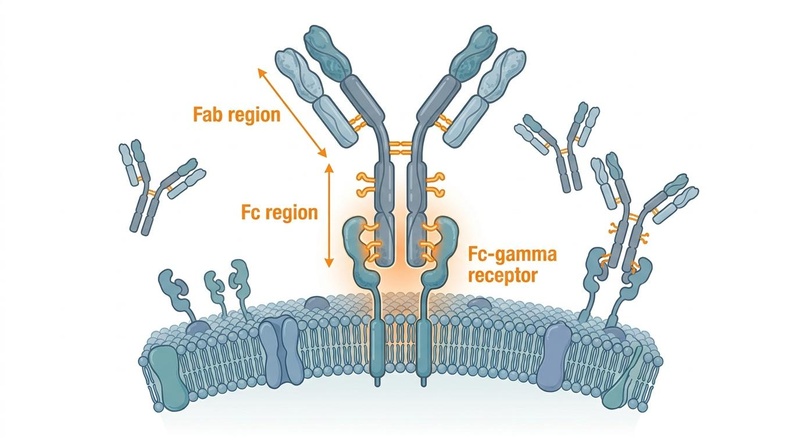
- Fc receptor blockade: A primary mechanism involves saturating or blocking Fcγ receptors on various immune cells (e.g., macrophages, dendritic cells). This prevents the binding of pathogenic autoantibodies and immune complexes, thereby inhibiting downstream inflammatory and cytotoxic pathways [1:6].
- Anti-idiotypic antibodies: IVIG contains a diverse repertoire of natural autoantibodies, including anti-idiotypic antibodies, which can neutralize pathogenic autoantibodies by binding to their variable regions, effectively dampening autoimmune responses [1:7][2:3].
- Complement system modulation: Immunoglobulins can interfere with the activation of the complement cascade, a critical component of innate immunity, preventing complement-mediated tissue damage [1:8].
- Cytokine network modulation: IVIG can influence the production and activity of various cytokines and chemokines, shifting the immune response towards an anti-inflammatory profile. This includes promoting the expansion and function of regulatory T cells (Tregs) in some contexts, which are crucial for maintaining immune tolerance [1:9].
- Clearance of immune complexes: IVIG can facilitate the clearance of circulating immune complexes, reducing their deposition in tissues and subsequent inflammatory responses [1:10].
- Genetic regulation: Emerging evidence suggests IVIG may influence gene expression in immune cells, leading to altered inflammatory and adaptive immune responses [21].
Pharmacokinetics basics:
- IVIG products generally have a half-life of 3-4 weeks, though this can vary depending on the patient's underlying condition and individual metabolism. SCIG, with more frequent administration, maintains more stable IgG levels [1:11][7:2].
- The biodistribution and elimination of Ig products are influenced by factors such as IgG concentration, presence of anti-IgG antibodies, and individual Fcγ receptor expression [1:12].
¶ Dosage and how to take it
Dosage and administration protocols for immunoglobulin therapy are highly individualized, depending on the specific indication, patient weight, clinical response, and route of administration (IVIG vs. SCIG).
Standard dosing in studies
- Primary Immunodeficiency (PID) replacement: Typical IVIG dosing ranges from 400–600 mg/kg every 3–4 weeks. Equivalent SCIG dosing can be administered weekly or bi-weekly at lower volumes to achieve similar trough IgG levels [1:13].
- Autoimmune/Inflammatory disorders (immunomodulation): Higher IVIG doses are often used, typically 2 g/kg per cycle, divided over 2–5 days. Dosing frequency varies from monthly to as-needed based on disease activity and clinical response [1:14][8:2][13:1].
- Study durations: Treatment durations vary from acute, short-term courses (e.g., in ITP or Kawasaki disease) to long-term maintenance therapy (e.g., in PID or CIDP) [10:2][11:2][15:1].
Forms and bioavailability
- IVIG: Administered directly into the bloodstream, achieving rapid systemic distribution and peak IgG levels [1:15].
- SCIG: Administered subcutaneously, leading to slower absorption and more sustained, stable IgG levels, which may reduce systemic side effects [5:1][6:1]. Hyaluronidase-facilitated SCIG formulations can allow for larger volumes per site [15:2].
- With or without food: Not applicable, as administration is parenteral.
Special populations
- Kidney or liver impairment: Caution is advised, particularly with sucrose-stabilized IVIG products, due to the risk of acute kidney injury. Renal function monitoring is crucial [4:1].
- Older adults: Increased thrombotic risk should be considered in older patients, especially those with pre-existing cardiovascular risk factors [4:2][22].
- Pregnancy and breastfeeding: IVIG is generally considered safe during pregnancy for approved indications, as IgG can cross the placenta and provide passive immunity to the fetus [1:16].
¶ Safety and side effects
Immunoglobulin therapy is generally well-tolerated, but a range of adverse effects can occur, varying in severity. Close monitoring during and after infusions is essential.
Common side effects [4:3]
- Infusion-related reactions: Headache, fever, chills, myalgia, fatigue, nausea, and flushing are common, especially with IVIG. These are often mild and can be managed by slowing the infusion rate or with premedication.
- Local reactions (SCIG): Pain, swelling, redness, and itching at the injection site are common with SCIG, typically mild and transient.
Less common / serious concerns [4:4][22:1]
- Thromboembolic events (TEE): Rare but serious, including stroke, myocardial infarction, deep vein thrombosis, and pulmonary embolism. Risk factors include high-dose IVIG, rapid infusion, advanced age, pre-existing cardiovascular disease, and hyperviscosity. SCIG may have a lower thromboembolic risk than IVIG [22:2].
- Acute kidney injury (AKI): Primarily associated with IVIG products containing sucrose as a stabilizer. Patients with pre-existing renal impairment, diabetes, or dehydration are at higher risk.
- Aseptic meningitis: Characterized by severe headache, nausea, vomiting, and nuchal rigidity, typically resolving spontaneously within days.
- Hemolysis: Rare, particularly with high doses, due to anti-A or anti-B antibodies in the IVIG product reacting with recipient red blood cells.
- Anaphylaxis: Extremely rare, primarily in patients with severe IgA deficiency who develop antibodies against IgA.
Who should be especially cautious or avoid it
- Patients with severe IgA deficiency: At increased risk of anaphylactic reactions.
- Patients with pre-existing renal impairment or risk factors for AKI: Require careful selection of IVIG products and renal function monitoring.
- Individuals with hypercoagulable states or cardiovascular risk factors: Require vigilant monitoring for thromboembolic events.
¶ Drug and supplement interactions
Immunoglobulin therapy has several potential interactions with other medications, primarily due to its immunomodulatory effects or impact on laboratory tests.
Pharmacokinetic interactions (how drugs are processed)
- Live attenuated vaccines: Immunoglobulin therapy can interfere with the immune response to live attenuated vaccines (e.g., measles, mumps, rubella, varicella), requiring a delay in vaccination for several months after Ig administration [1:17].
Pharmacodynamic interactions (additive / opposing effects)
- Immunosuppressants: When used concurrently with other immunosuppressive agents, there may be additive effects, potentially increasing the risk of infection or other side effects. However, in some autoimmune conditions, IVIG may be used in combination with immunosuppressants [1:18].
- Diuretics: The osmotic load of some IVIG preparations can exacerbate fluid overload, particularly in patients with cardiac or renal compromise, potentially interacting with diuretics [4:5].
- Warfarin: Although rare, some reports suggest a potential interaction with warfarin, requiring careful monitoring of INR [4:6].
¶ Practical questions (FAQ)
-
How long does it take for immunoglobulin therapy to work?
The onset of action varies by indication. In acute conditions like ITP, platelet counts can rise within days. For chronic conditions like PID, infection prevention benefits are sustained with regular dosing. In autoimmune diseases, clinical improvement may be seen within days to weeks of an infusion cycle [1:19]. -
Can I take immunoglobulin therapy long term?
Yes, for many chronic conditions like primary immunodeficiencies or chronic autoimmune neuropathies, immunoglobulin therapy is a long-term maintenance treatment, often administered for years [1:20][15:3]. -
Is immunoglobulin therapy helpful in Alzheimer’s disease or for anti-aging?
Standalone IVIG trials for Alzheimer's disease have been negative [19:1]. While the AMBAR study explored a regimen involving plasma exchange with albumin ± IVIG and showed some signals in subgroups, these findings require replication and are not equivalent to standalone IVIG for anti-aging [20:1]. The FDA has explicitly warned against unproven young donor plasma infusions promoted for anti-aging [3:2]. Current evidence does not support routine IVIG for healthy aging or immunosenescence reversal in healthy older adults [2:4]. -
What is the difference between IVIG and SCIG?
IVIG is administered intravenously, typically in a clinic, allowing for rapid delivery of large doses. SCIG is administered subcutaneously, often at home, in smaller, more frequent doses, resulting in more stable IgG levels and fewer systemic side effects, but potentially more local reactions [5:2][6:2][23]. -
What monitoring is required during immunoglobulin therapy?
Patients receiving IVIG require monitoring of vital signs during infusion. For both IVIG and SCIG, renal function, liver enzymes, and complete blood counts may be monitored, especially in high-risk patients or those with pre-existing conditions. Screening for IgA deficiency is also recommended before initiating therapy [1:21][4:7].
¶ How we evaluated the evidence
Our evaluation of evidence for immunoglobulin therapy prioritizes high-quality clinical trials, systematic reviews, and meta-analyses.
- High evidence quality: Based on multiple large, well-designed randomized controlled trials (RCTs) or comprehensive meta-analyses with consistent results, low risk of bias, and clinically meaningful outcomes. This category applies to the approved indications for immunodeficiencies and many autoimmune conditions [1:22][8:3].
- Moderate evidence quality: Supported by a limited number of RCTs, studies with some methodological limitations, or inconsistent results across otherwise high-quality studies.
- Low evidence quality: Derived from observational studies, case series, or preclinical (animal/in vitro) data without robust human clinical trial validation.
- Very low evidence quality: Primarily theoretical, anecdotal, or based on severely flawed studies, or no human data exists. This applies to claims regarding healthy aging or longevity for immunoglobulin therapy [2:5].
We critically assessed study designs, participant populations, intervention protocols (dosing, duration), and reported outcomes. Clinical relevance and effect sizes were considered in addition to statistical significance. This page will be updated regularly as new high-impact clinical research, systematic reviews, or consensus guidelines emerge.
¶ References
¶ See also
Orange JS, Hossny EM, Weiler CR, et al. Use of intravenous immunoglobulin in human disease: review and update. J Allergy Clin Immunol. 2006;117(4):S525–S553. https://doi.org/10.1016/j.jaci.2006.01.019 ↩︎ ↩︎ ↩︎ ↩︎ ↩︎ ↩︎ ↩︎ ↩︎ ↩︎ ↩︎ ↩︎ ↩︎ ↩︎ ↩︎ ↩︎ ↩︎ ↩︎ ↩︎ ↩︎ ↩︎ ↩︎ ↩︎ ↩︎
Danieli MG, Claudi I, Buti E, et al. Natural autoantibodies and their functional therapeutic roles in intravenous immunoglobulin. Front Aging. 2025;6:1682457. https://pubmed.ncbi.nlm.nih.gov/41103507/ ↩︎ ↩︎ ↩︎ ↩︎ ↩︎ ↩︎
U.S. Food and Drug Administration. FDA warns against receiving young donor plasma infusions for anti-aging (2019). https://www.fda.gov/news-events/press-announcements/fda-warns-against-receiving-young-donor-plasma-infusions ↩︎ ↩︎ ↩︎
Guo Y, Tian X, Wang X, Xiao Z. Adverse Effects of Immunoglobulin Therapy. Front Immunol. 2018;9:1299. https://pubmed.ncbi.nlm.nih.gov/29951056/ ↩︎ ↩︎ ↩︎ ↩︎ ↩︎ ↩︎ ↩︎ ↩︎
Abolhassani H, Sadaghiani MS, Aghamohammadi A, et al. Home-based subcutaneous immunoglobulin versus hospital-based intravenous immunoglobulin in treatment of primary antibody deficiencies: systematic review and meta analysis. J Clin Immunol. 2012;32(6):1180-1192. https://pubmed.ncbi.nlm.nih.gov/22730009/ ↩︎ ↩︎ ↩︎
Dönmez H, Köse S, Geçkil E. Quality of life and care burden in mothers of primary immunodeficient children receiving SCIG and IVIG: A descriptive correlational study. J Pediatr Nurs. 2026;Published online May 12, 2026. https://pubmed.ncbi.nlm.nih.gov/42119234/ ↩︎ ↩︎ ↩︎
Roifman CM, McNeil D, Lumry W, et al. Clinical Evaluation of Pharmacokinetics, Efficacy, and Safety of a 10% Immunoglobulin in Primary Immunodeficiency Disease (CARES10 Study). Adv Ther. 2026;Published online July 2026. https://pubmed.ncbi.nlm.nih.gov/42105146/ ↩︎ ↩︎ ↩︎
Manolopoulos A, Alzuabi M, Elmashala A, et al. Immunoglobulin for myasthenia gravis. Cochrane Database Syst Rev. 2025;10(10):CD013801. https://pubmed.ncbi.nlm.nih.gov/41090479/ ↩︎ ↩︎ ↩︎ ↩︎
Bus SR, de Haan RJ, Vermeulen M. Intravenous immunoglobulin for chronic inflammatory demyelinating polyradiculoneuropathy. Cochrane Database Syst Rev. 2024;2(2):CD003740. https://pubmed.ncbi.nlm.nih.gov/38353301/ ↩︎ ↩︎
Cai H, Wang J, Yan Z, et al. Efficacy and safety of a new 10% intravenous immunoglobulin (IVIG) in Chinese patients with primary immune thrombocytopenia (ITP): a multicenter, single-arm, phase III trial. Clin Exp Med. 2025;Published online May 12, 2025. https://pubmed.ncbi.nlm.nih.gov/40353902/ ↩︎ ↩︎ ↩︎
Yan F, Zhang H, Xiong R, et al. Effect of Early Intravenous Immunoglobulin Therapy in Kawasaki Disease: A Systematic Review and Meta-Analysis. Front Pediatr. 2020;8:563636. https://pubmed.ncbi.nlm.nih.gov/33330287/ ↩︎ ↩︎ ↩︎
Lasek-Bal A, Wagner-Kusz A, Rogoż B, et al. Efficacy and Safety of Intravenous Immunoglobulin Treatment in Selected Neurological Diseases-One Centre's Experience Based on the Therapy of 141 Patients. J Clin Med. 2023;12(18):5999. https://pubmed.ncbi.nlm.nih.gov/37762922/ ↩︎
Kuwabara S. Cutting edge of diagnosis and treatment for chronic inflammatory demyelinating polyradiculoneuropathy (CIDP) based on the EAN/PNS guideline 2021. Rinsho Shinkeigaku. 2024;64(5):317-324. https://pubmed.ncbi.nlm.nih.gov/38644208/ ↩︎ ↩︎
McCarthy MW. Intravenous immunoglobulin as a potential treatment for long COVID. Expert Opin Biol Ther. 2023;23(7-12):687-690. https://pubmed.ncbi.nlm.nih.gov/38100573/ ↩︎
Hadden RDM, Andersen H, Bril V, et al. Long-term safety and tolerability of hyaluronidase-facilitated subcutaneous immunoglobulin 10% as maintenance therapy for chronic inflammatory demyelinating polyradiculoneuropathy: Results from the ADVANCE-CIDP 3 trial. J Peripher Nerv Syst. 2024;29(4):469-480. https://pubmed.ncbi.nlm.nih.gov/39523874/ ↩︎ ↩︎ ↩︎ ↩︎
Ramzi A, Maya S, Balousha N, et al. Subcutaneous immunoglobulins (SCIG) for chronic inflammatory demyelinating polyneuropathy (CIDP): A comprehensive systematic review of clinical studies and meta-analysis. Neurol Sci. 2024;Published online November 2024. https://pubmed.ncbi.nlm.nih.gov/38937399/ ↩︎
Pasnoor M, Anderson-Smits C, Levine T, et al. The Results of ADVANCE-CIDP IVIG Trial: Intravenous Immunoglobulin 10% Therapy With GAMMAGARD LIQUID/Kiovig for Treatment of Relapse in Chronic Inflammatory Demyelinating Polyradiculoneuropathy. Eur J Neurol. 2025;Published online April 2025. https://pubmed.ncbi.nlm.nih.gov/40247653/ ↩︎
Demeter J, Hamed A, László S, et al. Efficacy and safety of BT595 (10% human intravenous immunoglobulin) in adult patients with chronic immune thrombocytopenia. Transfus Med. 2023;33(2):100-108. https://pubmed.ncbi.nlm.nih.gov/36448274/ ↩︎
Zhao H, Zhang Z, Wang C, Lin F, Cao H. Can IVIG Intervene in AD? Insights from Animal Experiments and Clinical Trials-A Systematic Review and Synthesis Without Meta-Analysis. Int J Mol Sci. 2026;27(5):2275. https://pubmed.ncbi.nlm.nih.gov/41828511/ ↩︎ ↩︎
Boada M, López OL, Olazarán J, et al. A randomized, controlled clinical trial of plasma exchange with albumin replacement for Alzheimer’s disease: Primary results of the AMBAR Study. Alzheimer's & Dementia. 2020;16(10):1412–1425. https://pubmed.ncbi.nlm.nih.gov/32715623/ ↩︎ ↩︎
Dubey S, Heinen S, Krantic S, et al. Clinically approved IVIg delivered to the hippocampus with focused ultrasound promotes neurogenesis in a model of Alzheimer's disease. Proc Natl Acad Sci U S A. 2020;117(51):32691-32700. https://doi.org/10.1073/pnas.1908658117 ↩︎
Fang S, Chen YC, Chen S. Thromboembolic risk in subcutaneous versus intravenous immunoglobulin therapy: a systematic review and narrative meta-synthesis. Clin Exp Med. 2026;Published online June 10, 2026. https://pubmed.ncbi.nlm.nih.gov/42268448/ ↩︎ ↩︎ ↩︎
Bini C, Scortichini M, Ripoli S. Cost minimization analysis of subcutaneous and intravenous immunoglobulin treatment in Italy. Global & Regional Health Technology Assessment. 2026;Published online January-December 2026. https://pubmed.ncbi.nlm.nih.gov/42088483/ ↩︎