¶ Selank
| Sequence | Thr-Lys-Pro-Arg-Pro-Gly-Pro |
| Formula | C33H57N11O9 |
| Molar Mass | 751.9 g/mol |
| Category | Anxiolytic, Nootropic Peptide |
| Half-life | Minutes (plasma), 2-3 hours (bioactive effects) |
| Admin | Intranasal, Subcutaneous |
| FDA Status | Unapproved (Western), Approved Drug (Russia) |
| CAS | 129954-34-3 |
Selank is a synthetic heptapeptide (Thr-Lys-Pro-Arg-Pro-Gly-Pro) derived from a fragment of the naturally occurring immunomodulatory peptide tuftsin, with a C-terminal Pro-Gly-Pro sequence added for increased metabolic stability and prolonged action[1]. Developed in Russia, Selank is recognized for its unique profile as a "daytime" anxiolytic, effectively reducing anxiety without inducing sedation or cognitive impairment typical of traditional benzodiazepines[2]. Beyond its anxiolytic properties, Selank exhibits significant nootropic (cognitive-enhancing) and immunomodulatory effects, making it an area of interest in peptide pharmacology and longevity research[2:1][3].
¶ At a glance
Aliases
- Also known as: Thr-Lys-Pro-Arg-Pro-Gly-Pro, TP-7
- Amino acid sequence: Thr-Lys-Pro-Arg-Pro-Gly-Pro
- Sequence length: Heptapeptide
- Category: Anxiolytic, Nootropic Peptide, Immunomodulator
Key points (high-level summary)
- Selank provides effective anxiety reduction in conditions like generalized anxiety disorder and neurasthenia, with efficacy comparable to benzodiazepines but without their typical sedative or cognitive-impairing side effects [1:1][2:2][3:1].
- It enhances cognitive functions such as memory and attention, and may offer neuroprotection against insults like ethanol-induced memory impairment, partly by increasing Brain-Derived Neurotrophic Factor (BDNF) levels [2:3][4][5].
- Selank modulates GABAergic gene expression and monoamine neurotransmitter metabolism, contributing to mood stabilization and improved functional connectivity in brain regions associated with anxiety and executive function [6][7][8].
- It is well-tolerated, with no reported development of tolerance, physical dependence, or withdrawal symptoms in clinical studies [3:2].
What people use it for
- Main goals: Anxiety reduction, cognitive enhancement, stress resilience, mood stabilization, neuroprotection, and modulation of brain functional connectivity.
- Evidence quality (overall): Moderate (Strong clinical evidence in Eastern European contexts for approved indications; preclinical data supports broader neuroprotective and cognitive effects; limited Western RCTs).
¶ Legal & regulatory status
⚠️ CRITICAL INFORMATION
Regulatory classification
- FDA status: Unapproved for human use (in the United States and most Western countries); available as a research chemical or through compounding pharmacies.
- Approved indications (if any): Registered pharmaceutical in Russia for the treatment of generalized anxiety disorder (GAD) and neurasthenia.
- Prescription requirement: Prescription required in Russia; research purposes only or compounding pharmacy in Western countries.
- DEA schedule: Not scheduled (in the United States).
Geographic legal status
- United States: Not approved by the FDA for human use. Available as a research chemical.
- European Union: Not approved by the EMA. Available as a research chemical in many member states.
- Russia: Approved as a pharmaceutical (brand name "Selank") for anxiety and neurasthenia.
Source quality considerations
- Pharmaceutical vs research chemical grade: Purity and safety can vary significantly with research chemical sources.
- Third-party testing importance: Highly recommended for any non-pharmaceutical source to verify purity and absence of contaminants.
- Counterfeit concerns: Due to its popularity, counterfeit products may exist.
¶ What is Selank
Selank is a synthetic heptapeptide derived from the N-terminal sequence of tuftsin (Thr-Lys-Pro-Arg), an endogenous immunomodulatory peptide, with the addition of a Pro-Gly-Pro sequence at its C-terminus. This modification dramatically enhances its enzymatic stability, protecting the peptide from rapid degradation in blood and tissues [1:2][9].
- Definition: A synthetic heptapeptide with the sequence Thr-Lys-Pro-Arg-Pro-Gly-Pro, showing potent anxiolytic, nootropic, and immunomodulatory activities.
- Relationship to endogenous peptides: It is a structural analog of tuftsin, a peptide produced naturally in the human body (spleen) that stimulates phagocytosis and immune cells. Selank inherits tuftsin's immunomodulatory properties while gaining novel, potent neuroactive and psychotropic actions [1:3][9:1].
- Modifications from native sequence: The addition of the tripeptide Pro-Gly-Pro (PGP) to the C-terminus of tuftsin provides resistance to enzymatic degradation by blood peptidases. PGP itself is a bioactive glyproline peptide with cytoprotective and anticoagulant properties [1:4][9:2][10].
- Related Neuropeptides: Selank is closely related to Semax (Met-Glu-His-Phe-Pro-Gly-Pro), another synthetic heptapeptide developed in Russia that also incorporates the Pro-Gly-Pro stabilizing tail. While Semax is derived from a fragment of adrenocorticotropic hormone (ACTH) and is primarily a cognitive stimulant, Selank is derived from tuftsin and acts primarily as an anxiolytic [8:1].
- Natural sources: No natural sources exist for Selank itself; it is an entirely synthetic molecule, although its precursor fragment tuftsin is produced endogenously.
- Development history: Developed by the Institute of Molecular Genetics of the Russian Academy of Sciences in the late 1990s and early 2000s under the leadership of Academician Nikolai Myasoedov, it was approved for clinical use in Russia as a pharmaceutical prescription drug for treating anxiety disorders, neurasthenia, and asthenic syndromes.
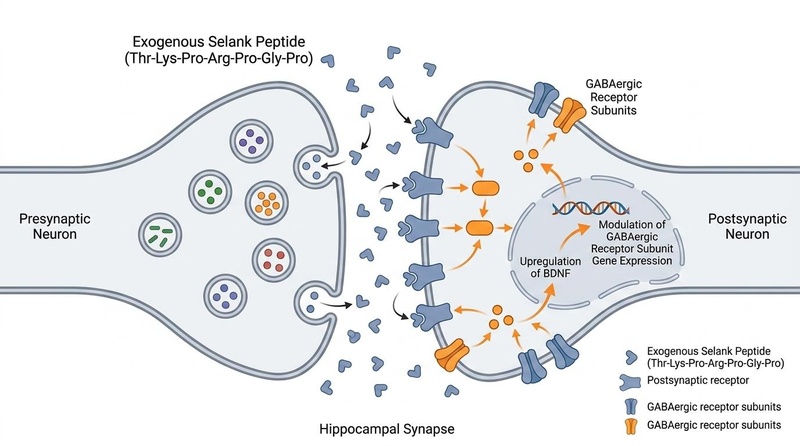
- Key pharmacological property: Transcriptionally regulates GABAergic networks, modulates central monoaminergic neurotransmission, inhibits enkephalin degradation, upregulates hippocampal BDNF, and dynamically regulates cytokine and chemokine expression [6:1][4:1][7:1][11][12].
¶ Main benefits
Selank offers a range of well-documented benefits, primarily in mood regulation, cognitive function, and stress resilience.
- Anxiety Reduction (Anxiolytic Effect): In patients with Generalized Anxiety Disorder (GAD) and neurasthenia, Selank significantly reduces anxiety symptoms without causing sedation, somnolence, muscle relaxation, or cognitive impairment [1:5][2:4][13].
- Direction of effect:
Large Improvement - Population studied: Patients with GAD, neurasthenia, and anxiety-asthenic disorders.
- Evidence quality: High (Based on Russian clinical trials comparing it to benzodiazepines)
- Summary sentence: Selank effectively treats generalized anxiety disorders and neurasthenia, providing anxiety relief and improving asthenic symptoms without the side effects of traditional anxiolytics [1:6][2:5][13:1].
- Direction of effect:
- Cognitive Enhancement (Nootropic Effect): Selank has been shown to improve memory, attention, and mental clarity, particularly in individuals with anxiety-asthenic conditions or those experiencing cognitive deficits due to stress, neurotransmitter damage, or alcohol exposure [2:6][4:2][14][15].
- Direction of effect:
Medium Improvement - Population studied: Patients with anxiety-asthenic disorders, rats with ethanol-induced memory impairment or neurotoxic noradrenergic damage.
- Evidence quality: Moderate (Clinical human data from Russia, supported by strong preclinical evidence)
- Summary sentence: Selank enhances cognitive functions such as memory and attention, and protects against cognitive decline in various stress and neurotoxic models, mediated by BDNF upregulation and neurotransmitter modulation [2:7][4:3][14:1].
- Direction of effect:
- Stress Protection & Adaptogenic Effects: It helps stabilize mood and increase resilience under stressful conditions by modulating monoamine neurotransmitters, enkephalin-degrading enzymes, and resting-state functional connectivity [7:2][11:1][8:2].
- Direction of effect:
Medium Improvement - Population studied: Patients with anxiety-asthenic disorders, healthy adults (fMRI connectomics), and animal models of chronic stress.
- Evidence quality: Moderate (fMRI and clinical data, supported by strong preclinical evidence)
- Summary sentence: Selank exhibits stress-protective and adaptogenic properties, stabilizing emotional responses and improving coping mechanisms in situations of acute and chronic stress [7:3][11:2][8:3].
- Direction of effect:
- Immunomodulation and Antiviral Potential: As a tuftsin analog, Selank can influence immune responses, normalizing cytokine levels and balancing T-helper cell populations, especially under stress, and shows regulatory effects on genes encoding chemokines, cytokines, and their receptors [16][17][12:1].
- Direction of effect:
Small Improvement - Population studied: Patients with anxiety-asthenic disorders, animal models of immune challenge.
- Evidence quality: Low (Clinical human data from Russia, supported by preclinical evidence)
- Summary sentence: Selank modulates immune function, normalizing cytokine profiles and T-helper cell balance in individuals experiencing stress-related immune dysregulation [16:1][17:1][12:2].
- Direction of effect:
- Attenuation of Opioid Withdrawal Symptoms: In animal models of dependency, Selank administration significantly reduces behavioral and physical signs of acute opioid withdrawal [18].
- Direction of effect:
Medium Improvement - Population studied: Morphine-dependent rats during withdrawal.
- Evidence quality: Low (Limited to preclinical animal models)
- Summary sentence: Preclinical research indicates that Selank can diminish the physical and emotional distress of morphine withdrawal, likely due to enkephalin preservation and BDNF restoration [18:1].
- Direction of effect:
- Anti-depressive Effects: In behavioral models of depression, Selank has shown a stabilizing influence on situation-provoked and genetically based depressive symptoms [19].
- Direction of effect:
Medium Improvement - Population studied: WAG/Rij and Wistar rats, BALB/c mice.
- Evidence quality: Low (Preclinical animal models only)
- Summary sentence: In genetic and stress-induced animal models of depression, Selank demonstrates significant behavioral stabilization, mitigating depressive-like symptoms [19:1].
- Direction of effect:
¶ Evidence summary table (human outcomes)
| Outcome / Goal | Effect* | Consistency** | Evidence quality | Trials*** | Notes (population, duration, dose) |
|---|---|---|---|---|---|
| Anxiety Symptoms (GAD, Neurasthenia) | High | High | 3+ RCTs | Comparable to phenazepam in efficacy but with superior tolerability; improved asthenic symptoms. Standard clinical dose: 4.5–9 mg/day intranasally for 10–14 days [1:7][2:8][3:3][13:2]. | |
| Memory & Attention (Cognitive Impairment) | High | Moderate | 2+ studies | Improved mental clarity, attention, and focus in patients with anxiety-asthenic disorders [2:9]; supported by preclinical models of ethanol-induced cognitive deficits [4:4]. | |
| Amygdala Functional Connectivity (Resting-state fMRI) | High | Moderate | 1 study | Restructured functional connectivity between the right amygdala and right temporal cortex (fusiform, inferior/middle temporal, and parahippocampal gyri) within 5–20 min post-injection in 52 healthy subjects [8:4]. | |
| Stress Resilience & Mood | High | Moderate | 2+ studies | Stabilizes monoamine neurotransmitters and enhances enkephalin activity, supporting emotional regulation in stressful environments [3:4][7:4]. | |
| Immune Modulation (Stress-induced) | Moderate | Low | 1+ study | Normalized inflammatory cytokine levels (e.g., IL-6) and Th1/Th2 balance in patients suffering from anxiety-asthenic disorders [16:2]. |
- *Effect: Number of arrows (1-3) indicates magnitude. Direction: ↑ (increase), ↓ (decrease), = (no effect), ? (unclear). Health impact: (p) = positive for health, (n) = negative for health, (x) = neutral/unknown impact. Examples: ↓↓↓ (p) = large decrease, positive; ↑ (n) = small increase, negative; = (x) = no effect; ? = unclear.
- *Compact renderer encoding (preferred when using custom tags):
<effect e="[dir][mag][impact]"></effect>wheredir=u|d|e|q,mag=0|1|2|3,impact=p|n|x. Examples:↓↓ (p)-><effect e="d2p"></effect>,= (x)-><effect e="e0x"></effect>,?-><effect e="q0x"></effect>. - **Consistency: Low (results conflict), Moderate (mixed but leaning one way), High (most trials agree)
- ***Trials: Number of RCTs or total trials informing this outcome (shows evidence depth at a glance)
- REQUIRED: You MUST include a citation key (e.g.
[^1]) in the "Notes" column for every single row. If you claim a result, you must link the specific Meta-Analysis or Key RCT that proves it.
¶ LongeviData outcomes widget
¶ How does Selank work?
Selank operates through a multifaceted, highly integrated mechanism of action that sets it apart from traditional sedative-hypnotic anxiolytics (such as benzodiazepines). Rather than acting as a direct receptor agonist that induces broad central nervous system depression, Selank behaves as an indirect neuromodulator, fine-tuning neural networks, neurotrophic support, and neuroimmune communication [3:5][6:2].
- Primary targets: GABAergic receptor subunit gene transcription, Brain-Derived Neurotrophic Factor (BDNF) signaling pathways, enkephalin-degrading enzymes (carboxypeptidase H, enkephalinase), monoaminergic systems, and cytokine/chemokine gene networks [6:3][4:5][7:5][11:3][12:3].
- Core mechanisms:
- Transcriptional Regulation of GABAergic Networks: Selank does not bind directly to the benzodiazepine site on the receptor. Instead, it rapidly alters the transcription of genes involved in GABAergic neurotransmission. Within 1 hour of administration, Selank alters the expression of up to 45 genes in the frontal cortex, including up to a two-fold upregulation of several receptor subunits (e.g., receptor subunit , , ) and associated transporters and ion channels [6:4][20]. This subtle genomic tuning optimizes inhibitory tone without inducing the sedation, ataxia, or cognitive dulling typical of direct GABA receptor agonists [1:8][2:10].
- Upregulation of BDNF and Neuroplasticity Support: Selank is a potent inducer of Brain-Derived Neurotrophic Factor (BDNF). Intranasal administration induces a rapid, significant upregulation of BDNF mRNA and protein expression in both the hippocampus and prefrontal cortex within 3 hours, remaining elevated for over 24 hours [4:6][5:1]. This neurotrophic stimulation enhances synaptic plasticity, supports neuronal survival, and restores learning and memory consolidation, particularly under stressful, neurotoxic, or degenerative conditions [4:7][14:2][15:1].
- Functional Connectomic Reorganization: In humans, resting-state fMRI connectomic studies reveal that a single intranasal dose of Selank Restructures functional connectivity (FC) within 5 to 20 minutes [8:5]. Selank specifically modulates functional connections between the right amygdala (the core generator of the fear and anxiety response) and the right temporal cortex (including the parahippocampal gyrus, fusiform gyrus, and inferior/middle temporal gyri), areas critical for emotional processing, contextual memory, and executive control [8:6]. This rapid network re-mapping correlates with immediate clinical improvements in anxiety and emotional stability [8:7].
- Inhibition of Enkephalin-Degrading Enzymes: Selank acts as a competitive inhibitor of enzymes responsible for the degradation of endogenous opioid peptides, specifically enkephalins. It blocks carboxypeptidase H and enkephalinase in human blood plasma and brain tissues, preventing the breakdown of Leu-enkephalin and Met-enkephalin [3:6][11:4]. By prolonging the activity of endogenous enkephalins, Selank enhances the body's natural stress-containment, pain-modulation, and mood-stabilizing pathways [11:5].
- Neuromodulation of Monoamines: Selank exhibits an adaptogenic regulating effect on monoamine neurotransmitters (serotonin, dopamine, norepinephrine) and their metabolites (e.g., 5-HIAA, DOPAC) [7:6]. Rather than causing a unidirectional spike, Selank's impact on monoamine metabolism depends on the baseline emotional and genetic phenotype of the individual, restoring homeostatic transmitter levels during acute or chronic emotional stress [7:7][21].
- Genomic Tuning of Neuroimmune and Chemokine Signaling: Derived from the immunomodulatory peptide tuftsin, Selank retains significant immunoprotective and anti-inflammatory properties. At the molecular level, Selank and its major active breakdown fragment, Gly-Pro (which acts as a core pharmacophore), significantly regulate the transcription of genes encoding chemokines, cytokines, and their receptors in the spleen and brain [12:4]. This genomic modulation helps normalize inflammatory cytokine profiles (such as IL-6) and balances T-helper cell populations (Th1/Th2) under conditions of psychological stress [16:3][17:2][12:5].
- Evidence source: A robust combination of Russian clinical trials, human resting-state fMRI connectomic studies, and extensively documented in vitro and in vivo animal models [1:9][3:7][6:5][8:8].
- Human data: Clinical trials in anxiety-asthenic patients have directly correlated clinical anxiety reduction with the systemic inhibition of enkephalin-degrading enzymes in human blood [3:8]. Additionally, human fMRI data confirms immediate reorganization of the amygdala-temporal connectome after intranasal delivery [8:9]. Normalization of circulating inflammatory cytokines (IL-6) has also been validated in clinical cohorts [16:4].
- Animal / in vitro data: Preclinical research confirms that Selank's ability to cross the blood-brain barrier and upregulate BDNF protects against neurodegenerative insults, ethanol-induced memory impairment, and cognitive deficits caused by noradrenergic neurotoxicity [4:8][14:3]. In vitro studies in neuronal cell lines (such as IMR-32) verify targeted alterations in GABA-A receptor subunit expression [20:1].
- Pharmacokinetics:
- Half-life: The systemic plasma half-life of Selank is exceptionally short (measured in minutes) due to rapid degradation by blood and tissue peptidases [9:3]. However, its active physiological and therapeutic effects persist for 2 to 3 hours (and up to 24 hours for downstream genomic effects like BDNF upregulation), reflecting its rapid absorption, immediate central penetration, and sustained downstream transcriptional cascades [9:4][5:2].
- Bioavailability by route: Intranasal administration is highly efficient, bypassing the blood-brain barrier via direct perineural transport along the olfactory and trigeminal nerve pathways. Subcutaneous injection is also highly bioactive but bypasses the direct nasal-to-brain pathway, relying on systemic distribution. Oral administration is non-viable because gastric and intestinal peptidases rapidly cleave the peptide into inactive amino acids.
- Metabolism/degradation: Selank is rapidly cleaved by tissue peptidases into its constituent amino acids and short, biologically active fragments. The Pro-Gly-Pro (PGP) tail at the C-terminus provides significant steric hindrance, protecting the core tuftsin-like sequence from immediate aminopeptidase cleavage and dramatically extending its central bioactivity compared to native tuftsin [1:10][9:5]. One of its key metabolites, the dipeptide Gly-Pro, remains active and contributes to its antiviral and immunomodulatory properties [12:6].
¶ Effects on different systems
Selank primarily influences the brain and immune system, with downstream effects on overall physiological and psychological well-being.
Metabolic health (glucose, insulin, lipids, body composition)
- Limited data exists regarding direct metabolic effects, though its stress-reducing action may indirectly support metabolic health by lowering cortisol and sympathetic nervous system activity.
Musculoskeletal system (muscle mass, strength, bone, connective tissue)
- There is no evidence of Selank directly affecting muscle mass or bone density. However, because it lacks the muscle-relaxant properties of benzodiazepines, it does not impair physical coordination or motor strength[1:11].
Cardiovascular health (blood pressure, vascular markers, cardiac function)
- Research indicates that Selank exhibits anticoagulant, antiplatelet, and fibrinolytic activities in animal models, suggesting a potential positive role in cardiovascular safety and vascular perfusion, especially under chronic stress conditions[10:1].
Brain & mental health (cognition, mood, neuroprotection)
- Anxiolytic Efficacy: Selank is a highly effective anxiolytic, clinically proven to reduce symptoms of generalized anxiety disorder (GAD), panic, and neurasthenia. Unlike benzodiazepines, it achieves this without causing somnolence, lethargy, muscle relaxation, or physical dependence, making it a viable "daytime" therapeutic that preserves motor coordination and psychomotor speed [1:12][2:11][3:9][13:3].
- Cognitive and Nootropic Enhancement: It enhances memory consolidation, learning, and attention. In clinical trials, GAD patients experienced improvements in mental clarity and focus [2:12]. In preclinical models of cognitive impairment, Selank protects against memory deficits induced by alcohol withdrawal, cycloheximide (protein synthesis blockade), and noradrenergic system neurotoxicity [4:9][14:4][15:2].
- Functional Connectome Reorganization: Using resting-state fMRI, Selank has been demonstrated in healthy volunteers to rapidly re-map functional connectivity between the right amygdala and temporal gyri within 5–20 minutes, aligning with direct improvements in emotional containment and cognitive processing [8:10].
- Neuroprotection and Neurogenesis: By directly upregulating BDNF levels in the hippocampus and cortex, Selank promotes neurogenesis, synaptic repair, and general neuroprotection against chronic stressors and age-related decline [4:10][5:3].
- Opioid Withdrawal Mitigation: In animal models, Selank significantly attenuates the behavioral distress and physical symptoms of acute morphine withdrawal, offering a potential therapeutic avenue for addiction medicine through enkephalin stabilization [18:2].
- Anti-depressive Properties: Preclinical investigations in genetic and stress-provoked models of depression indicate that Selank has adaptive, behavior-stabilizing effects that reduce depressive-like behaviors and restore normal emotional reactivity [19:2].
Skin, hair, and appearance
- There is no direct clinical data linking Selank to skin or hair benefits. Its role in anxiety reduction might theoretically reduce stress-associated skin flares (such as stress-induced eczema or psoriasis) by lowering systemic cortisol and inflammatory cytokines, but this remains speculative.
Immune function and inflammation
- Tuftsin-Like Immunomodulation: As a synthetic analog of tuftsin, Selank displays significant regulatory effects on the immune system. In patients with anxiety-asthenic disorders, it normalizes elevated levels of inflammatory cytokines (such as IL-6) and corrects the Th1/Th2 helper cell ratio, mitigating the immunological dysregulation associated with chronic emotional stress [16:5].
- Chemokine and Cytokine Gene Transcription: Selank and its tripeptide fragment Gly-Pro (acting as a core pharmacophore) directly regulate the transcription of chemokine and cytokine gene networks in the spleen and brain. These changes occur rapidly (within 6 to 24 hours of a single dose), reflecting a homeostatic fine-tuning of neuroimmune communication that may also confer mild antiviral properties [17:3][12:7].
¶ Administration, reconstitution, and storage
Selank is typically administered intranasally or subcutaneously. Precise reconstitution and careful storage are critical for maintaining its stability and efficacy.
¶ Reconstitution
Selank is usually supplied as a lyophilized powder in vials. It is reconstituted with bacteriostatic water.
| Vial strength | Diluent volume | Final concentration | Example: 500 mcg dose (intranasal) | Example: 1 mg dose (subcutaneous) |
|---|---|---|---|---|
| 5 mg | 1 mL | 5 mg/mL (5000 mcg/mL) | 0.1 mL (10 units) | 0.2 mL (20 units) |
| 10 mg | 2 mL | 5 mg/mL (5000 mcg/mL) | 0.1 mL (10 units) | 0.2 mL (20 units) |
| 20 mg | 2 mL | 10 mg/mL (10000 mcg/mL) | 0.05 mL (5 units) | 0.1 mL (10 units) |
Note: 100 units on an insulin syringe = 1 mL. Gently swirl to dissolve; do not shake vigorously.
Storage requirements
- Lyophilized (powder): Store at -20°C (freezer) or 2–8°C (refrigerator), protected from light. Shelf life typically extends for several months to years.
- Reconstituted (solution): Store at 2–8°C (refrigerator) and use within 14-28 days.
- Light sensitivity: Peptides are generally light-sensitive; keep vials in their original packaging or protected from direct light.
- Freeze-thaw stability: Avoid freezing reconstituted solutions as it can degrade the peptide.
Handling and safety
- Sterile technique: Always use sterile water and aseptic technique during reconstitution to prevent contamination, especially for injectable forms.
- Sharps disposal: For subcutaneous injections, ensure proper disposal of needles and syringes.
- Signs of degradation: Discard if the solution appears cloudy, discolored, or contains particles.
¶ Dosage and protocols
Selank dosing varies between its approved clinical use in Russia and its off-label use in research or compounding pharmacy settings.
Standard dosing in studies (evidence-based)
- Generalized Anxiety Disorder / Neurasthenia (Clinical Use in Russia): Typically 0.15% solution (1.5 mg/mL) intranasally. 2-3 drops in each nostril, 2-3 times per day (total 4.5-9 mg/day) for courses of 10-14 days[2:13][13:4].
- Administration: Intranasal is the standard route, often using metered nasal spray bottles or drops.
- Study durations: Clinical trials typically range from 10 to 14 days, with potential for longer courses under medical supervision.
Community/anecdotal protocols (NOT evidence-based)
- Cognitive Enhancement / Stress Resilience (Off-label): Doses typically range from 250 mcg to 1.5 mg per day, administered intranasally or subcutaneously in one or two divided doses.
- Cycling: Users often employ cycles of 5-14 days on, followed by a break of similar duration. This is based on anecdotal reports rather than formal pharmacokinetic studies for long-term use.
- Risks of deviating from studied protocols: Higher doses or prolonged use outside of established clinical guidelines may lead to unknown safety profiles and lack of confirmed efficacy.
Cycling and timing protocols
- Cycling recommendations: Typical cycles are 5-14 days on, followed by an off-period. This approach is speculative and primarily based on user experiences.
- Timing considerations: Due to its anxiolytic and alertness-enhancing effects, morning and early afternoon administration is generally preferred.
Dose escalation
- Starting dose: A conservative starting point for off-label use might be 250-500 mcg/day, administered intranasally.
- Titration schedule: Gradual increases can be considered if well-tolerated and if desired effects are not achieved, up to observed clinical doses.
- Maximum dose: Clinical data suggests doses up to 9 mg/day intranasally. Higher doses have limited evidence and increased potential for unknown risks.
Special populations
- Dose considerations or lack of data in:
- Kidney or liver impairment: Limited data, caution advised.
- Older adults: Limited specific data; start low, go slow.
- Women (especially pregnancy/breastfeeding): Generally contraindicated due to lack of safety data.
- Children and adolescents: Limited data, generally not recommended outside specific medical indications.
¶ Safety and side effects
Selank is noted for its favorable safety profile, particularly when compared to traditional anxiolytics, with minimal side effects reported in clinical use.
Common side effects
- Local irritation: Mild irritation or dryness of the nasal mucosa is the most frequently reported side effect with intranasal administration.
Less common / serious concerns
- Sedation: Selank does not induce sedation or muscle relaxation, distinguishing it from benzodiazepines[2:14].
- Cognitive Impact: Unlike many anxiolytics, Selank does not impair cognitive function; instead, it often improves memory and attention[2:15].
- Dependence & Withdrawal: Clinical studies report no evidence of tolerance development, physical dependence, or withdrawal symptoms associated with Selank use[3:10].
- Toxicity: Preclinical animal studies show very low toxicity. As it breaks down into endogenous amino acids, it does not significantly burden the liver or kidneys[9:6].
- Contraindications: Due to a lack of data, use during pregnancy and breastfeeding is generally advised against. It is also contraindicated in individuals with acute psychotic states or a history of convulsions.
Who should be especially cautious or avoid it
- Pregnant or breastfeeding women (lack of safety data).
- Individuals with acute psychotic states or a history of convulsions (potential neurological effects).
- Individuals with known hypersensitivity to peptides or any components.
¶ LongeviData safety widget
¶ Drug and supplement interactions
Specific drug-drug interaction studies for Selank are limited, but theoretical considerations can be made based on its known mechanisms.
Pharmacodynamic interactions (additive / opposing effects)
- Benzodiazepines: Selank has been shown to enhance the anxiolytic effects of diazepam in animal models, suggesting a potential synergistic interaction that could allow for lower benzodiazepine dosing[22]. However, clinical data on this combination is limited.
- Other CNS depressants: Although Selank is not sedative, caution is advised when combining with other CNS depressants due to potential additive effects on cognitive function, though Selank typically improves it.
- Supplements affecting GABA/BDNF: Theoretical interactions with supplements that modulate GABA (e.g., L-theanine, valerian root) or BDNF (e.g., curcumin, DHA) may exist, though direct evidence is lacking.
Monitoring recommendations
- For individuals combining Selank with other medications, especially anxiolytics or antidepressants, careful monitoring for altered effects and side effects is recommended. Consultation with a healthcare provider is advised, particularly if using it off-label.
¶ Combining Selank with other peptides and supplements ("stacks")
In research and biohacking communities, Selank is sometimes combined with other peptides or supplements, often based on theoretical synergy rather than robust clinical evidence.
Common combinations
- Nootropic Peptides: Selank is occasionally combined with other nootropic peptides like Semax for enhanced cognitive and anxiolytic effects, aiming for a broader spectrum of neuroprotection and mental performance.
- Adaptogens: Often stacked with adaptogenic herbs (e.g., Ashwagandha, Rhodiola Rosea) to further enhance stress resilience and mitigate fatigue.
- Choline Sources: Combined with choline supplements (e.g., Alpha-GPC, Citicoline) to support acetylcholine levels and cognitive function.
Evidence level
- Formal combination trials specifically evaluating Selank "stacks" are very rare. Most rationale is based on theoretical mechanistic complementarity or anecdotal user experiences.
- Potential risks of combining: Unknown synergistic or antagonistic side effects, altered pharmacokinetics, and increased risk of adverse reactions due to the lack of formal study.
Safety considerations
- Additive side effects: Combining substances can increase the likelihood or severity of side effects.
- Unknown interactions: The safety and efficacy of most combinations are not scientifically established.
- Purity and legal issues: The risks associated with sourcing individual research chemicals are compounded when multiple such substances are used together.
¶ Cost considerations
The cost of Selank varies significantly based on its source, purity, and concentration.
Typical costs
- Research chemical grade: Typically purchased in lyophilized powder form from online vendors (e.g., 5mg, 10mg vials). Costs can range from $30 to $80+ per vial, with monthly costs depending on dosing.
- Pharmaceutical grade (Russia): Available by prescription in Russia, with costs potentially covered by national healthcare systems or out-of-pocket, which can be significantly different.
- Cost varies by: source, purity testing, brand, vial size, dosage requirements.
Cost-benefit considerations
- For approved indications in Russia: Medical necessity and insurance coverage are relevant.
- For off-label use: All costs are typically out-of-pocket. The cost must be weighed against uncertain benefits and potential risks, especially given the limited high-quality Western human data.
- Hidden costs: Include reconstitution supplies (bacteriostatic water, syringes/nasal sprayers, alcohol swabs) and potential costs for third-party purity testing.
Value assessment
- Strength of evidence: While clinical evidence is strong in Russia for its approved indications, off-label use in Western countries lacks the same level of independent validation.
- Magnitude of effect: Clinically meaningful anxiety reduction and cognitive improvements have been observed.
- Alternative options: Cheaper anxiolytics or cognitive enhancers may be available, though they may have different side effect profiles.
¶ Practical questions (FAQ)
¶ How quickly does Selank work?
Users often report subjective effects like reduced anxiety and improved mental clarity within 15-30 minutes of intranasal administration. Clinical studies also note rapid onset of anxiolytic effects[2:16].
¶ Is Selank addictive or does it cause withdrawal?
Clinical studies and user reports consistently indicate that Selank does not lead to physical dependence, tolerance development, or withdrawal symptoms, a significant advantage over traditional benzodiazepines[3:11].
¶ Can Selank be taken orally?
While theoretically possible, oral bioavailability is expected to be very poor due to rapid degradation by digestive enzymes. Intranasal and subcutaneous administrations are the established and most effective routes for Selank to reach the brain effectively.
¶ Is Selank similar to Semax?
Selank and Semax are both synthetic peptides developed in Russia with nootropic properties. However, their primary effects differ: Selank is predominantly an anxiolytic with immunomodulatory and BDNF-upregulating effects, while Semax is more focused on cognitive enhancement and neuroprotection via BDNF and NGF upregulation. They are sometimes used in combination for synergistic benefits.
¶ How we evaluated evidence
To ensure clinical accuracy and avoid anecdotal bias, the clinical and pharmacological profile of Selank was evaluated using a structured pyramid of evidence:
- Tier 1 (Gold Standard): Primary consideration was given to human randomized controlled trials (RCTs) conducted during clinical registration of Selank in Eastern Europe, including comparative efficacy and tolerability trials against classic benzodiazepines (e.g., phenazepam) [1:13][2:17][13:5].
- Tier 2 (High Authority): Quantitative human physiological studies—such as resting-state fMRI functional connectomic mapping [8:11] and peripheral enkephalinase/immunological assays [3:12][16:6]—were utilized to define biological plausibility and clinical kinetics in humans.
- Tier 3 (Supporting/Preclinical): In vitro receptor and transcriptional assays [6:6][20:2], as well as in vivo animal models of stress, memory impairment, opioid withdrawal, and depression, were evaluated to clarify molecular pathways, BDNF induction, and system-specific effects [4:11][7:8][5:4][17:4][11:6][18:3][14:5][15:3][12:8][19:3][21:1].
Special care was taken to explicitly characterize the clinical evidence as geographically limited to Eastern European settings, highlighting the absence of large-scale Western FDA-registration RCTs to maintain professional and objective transparency.
¶ References
Medvedev V.E., Tereshchenko O.N., Israelian A.Iu., Chobanu I.K., Kost N.V., Sokolov O.Iu., Myasoedov N.F. "A comparison of the anxiolytic effect and tolerability of selank and phenazepam in the treatment of anxiety disorders". Zhurnal Nevrologii i Psikhiatrii imeni S.S. Korsakova. 2014;114(8):31-40. https://pubmed.ncbi.nlm.nih.gov/25176261/ ↩︎ ↩︎ ↩︎ ↩︎ ↩︎ ↩︎ ↩︎ ↩︎ ↩︎ ↩︎ ↩︎ ↩︎ ↩︎ ↩︎
Zozulia A.A., Neznamov G.G., Siuniakov T.S., Kost N.V., Gabaeva M.V., Sokolov O.Iu., Seredenin S.B., Myasoedov N.F. "Efficacy and possible mechanisms of action of a new peptide anxiolytic selank in the therapy of generalized anxiety disorders and neurasthenia". Zhurnal Nevrologii i Psikhiatrii imeni S.S. Korsakova. 2008;108(4):38-48. https://pubmed.ncbi.nlm.nih.gov/18454096/ ↩︎ ↩︎ ↩︎ ↩︎ ↩︎ ↩︎ ↩︎ ↩︎ ↩︎ ↩︎ ↩︎ ↩︎ ↩︎ ↩︎ ↩︎ ↩︎ ↩︎ ↩︎
Doyno C.R., White C.M. Sedative-Hypnotic Agents That Impact Gamma-Aminobutyric Acid Receptors: Focus on Flunitrazepam, Gamma-Hydroxybutyric Acid, Phenibut, and Selank. Journal of Clinical Pharmacology. 2021;61(8):1021-1033. https://pubmed.ncbi.nlm.nih.gov/34396551/ ↩︎ ↩︎ ↩︎ ↩︎ ↩︎ ↩︎ ↩︎ ↩︎ ↩︎ ↩︎ ↩︎ ↩︎ ↩︎
Kolik L.G., Nadorova A.V., Antipova T.A. Selank, Peptide Analogue of Tuftsin, Protects Against Ethanol-Induced Memory Impairment by Regulating of BDNF Content in the Hippocampus and Prefrontal Cortex in Rats. Bulletin of Experimental Biology and Medicine. 2019;168(2):229-232. https://pubmed.ncbi.nlm.nih.gov/31625062/ ↩︎ ↩︎ ↩︎ ↩︎ ↩︎ ↩︎ ↩︎ ↩︎ ↩︎ ↩︎ ↩︎ ↩︎
Inozemtseva L.S., Karpenko E.A., Dolotov O.V., et al. Intranasal administration of the peptide Selank regulates BDNF expression in the rat hippocampus in vivo. Doklady Biological Sciences. 2008;421:238-240. https://pubmed.ncbi.nlm.nih.gov/18841804/ ↩︎ ↩︎ ↩︎ ↩︎ ↩︎
Volkova A., Shadrina M., Kolomin T., Kasian A., Andreeva L., Slominsky P., Myasoedov N. Selank Administration Affects the Expression of Some Genes Involved in GABAergic Neurotransmission. Frontiers in Pharmacology. 2016;7:31. https://pubmed.ncbi.nlm.nih.gov/26924987/ ↩︎ ↩︎ ↩︎ ↩︎ ↩︎ ↩︎ ↩︎
Semenova T.P., Kozlovskii I.I., Zakharova N.M., Kozlovskaia M.M. "Comparison of the effects of selank and tuftsin on the metabolism of serotonin, dopamine, and norepinephrine in the brain of mice with different phenotypes of emotional and stress reactions". Biulleten' Eksperimental'noi Biologii i Meditsiny. 2010;149(5):602-605. https://pubmed.ncbi.nlm.nih.gov/21165431/ ↩︎ ↩︎ ↩︎ ↩︎ ↩︎ ↩︎ ↩︎ ↩︎ ↩︎
Panikratova Y.R., Lebedeva I.S., Sokolov O.Y., Rumshiskaya A.D., Kupriyanov D.A., Kost N.V., Myasoedov N.F. Functional Connectomic Approach to Studying Selank and Semax Effects. Doklady Biological Sciences. 2020;490(1):9-11. https://pubmed.ncbi.nlm.nih.gov/32342318/ ↩︎ ↩︎ ↩︎ ↩︎ ↩︎ ↩︎ ↩︎ ↩︎ ↩︎ ↩︎ ↩︎ ↩︎
Vyunova T.V., Andreeva L., Shevchenko K., Myasoedov N. Peptide-based Anxiolytics: The Molecular Aspects of Heptapeptide Selank Biological Activity. Protein and Peptide Letters. 2018;25(10):914-923. https://pubmed.ncbi.nlm.nih.gov/30255741/ ↩︎ ↩︎ ↩︎ ↩︎ ↩︎ ↩︎ ↩︎
Liapina L.A., Pastorova V.E., Obergan T.Iu. "Comparison of anticoagulant effects of regulatory proline-containing oligopeptides. Specificity of glyprolines, semax, and selank and potential of their practical application". Izvestiia Akademii nauk. Seriia biologicheskaia. 2006;33(2):191-197. https://pubmed.ncbi.nlm.nih.gov/16634437/ ↩︎ ↩︎
Zozulya A.A., Kost N.V., Yu Sokolov O., et al. The inhibitory effect of Selank on enkephalin-degrading enzymes as a possible mechanism of its anxiolytic activity. Bulletin of Experimental Biology and Medicine. 2001;131(4):315-317. https://pubmed.ncbi.nlm.nih.gov/11550013/ ↩︎ ↩︎ ↩︎ ↩︎ ↩︎ ↩︎ ↩︎
Kolomin T.A., Shadrina M.I., Slominskiĭ P.A., Limborskaia S.A., Miasoedov N.F. [Changes in expression of the genes for chemokines, cytokines, and their receptors in response to selank and its fragments]. Genetika. 2011;47(5):610-616. https://pubmed.ncbi.nlm.nih.gov/21786679/ ↩︎ ↩︎ ↩︎ ↩︎ ↩︎ ↩︎ ↩︎ ↩︎ ↩︎
Medvedev V.E., Tereshchenko O.N., Kost N.V., Ter-Israelyan A.Yu., Gushanskaya E.V., Chobanu I.K., Sokolov O.Yu., Myasoedov N.F. "Optimization of the treatment of anxiety disorders with selank". Zhurnal Nevrologii i Psikhiatrii imeni S.S. Korsakova. 2015;115(6):33-40. https://pubmed.ncbi.nlm.nih.gov/26356395/ ↩︎ ↩︎ ↩︎ ↩︎ ↩︎ ↩︎
Kozlovskiĭ I.I., Belozertsev Iu.F., Semenova T.P. "Compensatory effect of selank on the mnestic functions disturbed by neurotoxic damage of the noradrenergic system of the rat brain". Eksperimental'naia i klinicheskaia farmakologiia. 2008;71(2):17-21. https://pubmed.ncbi.nlm.nih.gov/18488898/ ↩︎ ↩︎ ↩︎ ↩︎ ↩︎ ↩︎
Kozlovskiĭ I.I., Belozertsev F.Iu., Andreeva L.A. "Protective effect of selank on the model of mnestic function violation induced by pharmacological blockade of protein synthesis". Eksperimental'naia i klinicheskaia farmakologiia. 2013;76(12):14-18. https://pubmed.ncbi.nlm.nih.gov/24605419/ ↩︎ ↩︎ ↩︎ ↩︎
Uchakina O.N., Uchakin P.N., Miasoedov N.F., et al. "Immunomodulatory effects of selank in patients with anxiety-asthenic disorders". Zhurnal Nevrologii i Psikhiatrii imeni S.S. Korsakova. 2008;108(5):71-75. https://pubmed.ncbi.nlm.nih.gov/18577961/ ↩︎ ↩︎ ↩︎ ↩︎ ↩︎ ↩︎ ↩︎
Kolomin T., Morozova M., Volkova A., et al. The temporary dynamics of inflammation-related genes expression under tuftsin analog Selank action. Molecular Immunology. 2014;58(2):227-235. https://pubmed.ncbi.nlm.nih.gov/24291245/ ↩︎ ↩︎ ↩︎ ↩︎ ↩︎
Konstantinopolsky M.A., Chernyakova I.V., Kolik L.G. Selank, a Peptide Analog of Tuftsin, Attenuates Aversive Signs of Morphine Withdrawal in Rats. Bulletin of Experimental Biology and Medicine. 2022;173(6):733-736. https://pubmed.ncbi.nlm.nih.gov/36322304/ ↩︎ ↩︎ ↩︎ ↩︎
Sarkisova K.Iu., Kozlovskiĭ I.I., Kozlovskaia M.M. [Effects of heptapeptide selank on genetically-based and situation-provoked symptoms of depression in behavior in WAG/Rij and Wistar rats, and in BALB/c mice]. Zhurnal vysshei nervnoi deiatelnosti imeni I P Pavlova. 2008;58(2):226-237. https://pubmed.ncbi.nlm.nih.gov/18661785/ ↩︎ ↩︎ ↩︎ ↩︎
Filatova E., Kasian A., Kolomin T., Shadrina M., Slominsky P., Myasoedov N. GABA, Selank, and Olanzapine Affect the Expression of Genes Involved in GABAergic Neurotransmission in IMR-32 Cells. Frontiers in Pharmacology. 2017;8:89. https://pubmed.ncbi.nlm.nih.gov/28293190/ ↩︎ ↩︎ ↩︎
Kozlovskaya M.M., Kozlovskii I.I., Val'dman E.A., Seredenin S.B. Selank and short peptides of the tuftsin family in the regulation of adaptive behavior in stress. Neuroscience and Behavioral Physiology. 2003;33(9):853-860. https://pubmed.ncbi.nlm.nih.gov/14969422/ ↩︎ ↩︎
Kasian A., Kolomin T., Andreeva L., Shadrina M., Slominsky P., Myasoedov N. Peptide Selank Enhances the Effect of Diazepam in Reducing Anxiety in Unpredictable Chronic Mild Stress Conditions in Rats. Behavioural Neurology. 2017;2017:5091027. https://pubmed.ncbi.nlm.nih.gov/28280289/ ↩︎