¶ Svetinorm & Ovagen
| Svetinorm Sequence | Complex polypeptide mix (A-7) |
| Ovagen Sequence | Glu-Asp-Leu (EDL) |
| Ovagen Formula | C15H25N3O8 |
| Ovagen Molar Mass | 375.37 g/mol |
| Category | Liver Bioregulators, Cytomax (Svetinorm), Cytogen (Ovagen) |
| Half-life | Long (Svetinorm), Shorter (Ovagen) |
| Admin | Oral, Sublingual, (Injection for research) |
| FDA Status | Dietary Supplement (Unapproved Drug) |
| Ovagen CAS | Not readily available (peptide) |
Svetinorm and Ovagen are tissue-specific peptide bioregulators developed by Professor Vladimir Khavinson and his team at the St. Petersburg Institute of Bioregulation and Gerontology. These compounds are designed to restore and maintain the function of the liver and gastrointestinal tract by epigenetically modulating gene expression. They represent two distinct generations of hepatic peptide therapy: Svetinorm, a natural, complex polypeptide extract from young animal livers, and Ovagen, a synthetic, ultra-short tripeptide (Glu-Asp-Leu) [1][2].
¶ At a glance
Aliases
- Also known as: Svetinorm (Peptide Complex A-7, Liver Bioregulator), Ovagen (Peptide Complex AC-3, Glu-Asp-Leu, EDL)
- Amino acid sequence: Svetinorm (complex mix), Ovagen (Glu-Asp-Leu)
- Sequence length: Svetinorm (polypeptide complex), Ovagen (tripeptide)
- Category: Liver Bioregulator, Geroprotector
Key points (high-level summary)
- In patients with chronic hepatitis, Svetinorm significantly reduces pain and normalizes liver enzymes like ALT and AST, improving functional status [3].
- Ovagen (Glu-Asp-Leu) specifically binds to DNA, promoting hepatocyte proliferation (increasing Ki-67) and reducing cell death (decreasing p53) in aged liver tissue [4].
- Both peptides operate via epigenetic regulation, restoring the liver's ability to repair itself by normalizing gene expression rather than directly stimulating or blocking enzymes [2:1][5].
- They are generally considered safe with no reported toxic side effects in decades of clinical use, though trials are predominantly Russian [6].
What people use it for
- Main goals: Liver regeneration, hepatoprotection (especially during chemotherapy), metabolic normalization (lipid profiles), anti-fibrotic effects, and general liver health maintenance.
- Evidence quality (overall): Moderate (primarily from Russian clinical studies, mechanistic evidence strong).
¶ Legal & regulatory status
⚠️ CRITICAL INFORMATION
Regulatory classification
- FDA status: Unapproved (sold as dietary supplements/bioregulators in Russia, Europe, and the US).
- Approved indications (if any): Not FDA-approved as drugs; used off-label based on clinical research from the Khavinson Institute.
- Prescription requirement: Generally available without prescription as a supplement.
- DEA schedule: Not scheduled.
Geographic legal status
- United States: Available as a dietary supplement.
- European Union: Available as a dietary supplement.
- Other regions: Widely available as a bioregulator in Russia and CIS countries.
Sports and competition
- WADA status: Not specifically listed, but peptides are generally prohibited in competitive sports if they affect performance or recovery.
- Athletic organization bans: No specific bans known, but discretion is advised.
Source quality considerations
- Pharmaceutical vs research chemical grade: Primarily sold as high-grade dietary supplements.
- Third-party testing importance: Highly recommended to verify purity and absence of contaminants, given the nature of peptide products.
- Common purity/contamination issues: Less common with Khavinson peptides due to their specific synthesis/extraction, but general supplement quality control applies.
- Counterfeit concerns: Be vigilant for unverified sources.
Note: Ovagen the bioregulator (Glu-Asp-Leu) is distinct from the fertility drug clomiphene citrate, which is sometimes marketed under the brand name "Ovagen" in certain countries. This article refers exclusively to the peptide bioregulator.
¶ What are Svetinorm and Ovagen?
Svetinorm and Ovagen are specialized peptides targeting liver health. They are part of the broader family of Khavinson bioregulators, which focus on tissue-specific repair and regeneration through epigenetic mechanisms.
- Svetinorm: A natural polypeptide complex (Peptide Complex A-7) extracted from the liver tissue of young calves. It contains a heterogeneous mixture of low-molecular-weight peptides designed to provide broad trophic support and sustained regenerative signals to the liver [7].
- Ovagen: A synthetic tripeptide with the amino acid sequence Glu-Asp-Leu (EDL). It is a highly purified, single molecule designed to precisely mimic the most active signaling component of the natural liver extract, offering rapid and targeted genetic regulation [8].
- Relationship to endogenous peptides: These peptides are thought to replace or enhance the action of naturally occurring regulatory peptides whose levels may decline with age or disease, thereby restoring cellular function.
- Development history: Developed by Professor Vladimir Khavinson, these peptides emerged from extensive research in gerontology and bioregulation, aiming to address age-related decline at a cellular level by normalizing gene expression.
- Key pharmacological property: Both are epigenetic modulators that influence gene transcription to promote hepatocyte regeneration, detoxification, and metabolic balance.
¶ Main benefits
Svetinorm and Ovagen offer several benefits primarily centered around liver health and metabolic function, supported by clinical observations and mechanistic studies from the Khavinson Institute.
- Liver Regeneration & Repair: Both peptides stimulate hepatocyte proliferation and reduce apoptosis, leading to the repair of damaged liver tissue. In aged liver models, Ovagen has been shown to increase Ki-67 expression (a marker of cell division) by 18-fold while decreasing p53 (a cell death marker) by 6-fold [4:1].
- Hepatoprotection: They protect the liver from various forms of toxicity, including those induced by chemotherapy, drugs, and environmental factors. Svetinorm, in particular, has been used in Russian oncology protocols to maintain liver function during aggressive treatments [3:1].
- Metabolic Normalization: By restoring optimal hepatocyte function, these peptides help improve the liver's metabolic capacity. Clinical studies indicate normalization of lipid profiles, including reductions in LDL cholesterol and triglycerides, addressing dyslipidemia [6:1].
- Anti-inflammatory Effects: Svetinorm has been shown to reduce inflammatory markers such as IgM levels in patients with chronic hepatitis, indicating a reduction in active inflammation within the liver [3:2].
- Improved Detoxification: The Glu-Asp-Leu sequence in Ovagen contributes to ammonia neutralization pathways, enhancing the liver's ability to process and eliminate toxins [6:2].
- Anti-fibrotic Potential: Ovagen modulates hepatic stellate cells and collagen deposition, potentially inhibiting the progression of liver fibrosis to cirrhosis [6:3].
¶ Evidence summary table (human outcomes)
| Outcome / Goal | Effect* | Consistency** | Evidence quality | Trials*** | Notes (population, duration, dose) |
|---|---|---|---|---|---|
| Chronic Hepatitis Symptom Reduction | High | Moderate | 1 CT | 53% decrease in pain, improved appetite in chronic hepatitis patients on Svetinorm (20mg/day for 15-20 days) [3:3] | |
| Liver Enzyme Normalization (ALT, AST) | High | Moderate | 1 CT | Significant reduction in ALT and AST levels in chronic hepatitis patients on Svetinorm (20mg/day for 15-20 days) [3:4] | |
| Lipid Profile Improvement (LDL, Triglycerides) | Moderate | Low | Observational | Normalization of atherogenic index and lipid levels in patients with atherosclerosis and obesity using liver bioregulators [6:4] | |
| Reduced Liver Inflammation (IgM) | High | Moderate | 1 CT | Significant decrease in IgM levels in patients with chronic hepatitis treated with Svetinorm [3:5] | |
| Hepatocyte Proliferation in Aged Liver | High | Mechanistic (preclinical) | In vitro/In vivo | 18-fold increase in Ki-67 expression (cell proliferation marker) in aged liver models with Ovagen [4:2] | |
| Decreased Hepatocyte Apoptosis in Aged Liver | High | Mechanistic (preclinical) | In vitro/In vivo | 6-fold decrease in p53 expression (cell death marker) in aged liver models with Ovagen [4:3] | |
| Improved Tolerability of Chemoradiotherapy | Moderate | Observational | Clinical observation | Reduced dyspeptic disorders and fatigue in oncological patients receiving Svetinorm during aggressive therapies [6:5] | |
| Anti-fibrotic Effect | Low | Mechanistic (preclinical) | In vitro | Modulation of hepatic stellate cells and collagen deposition by Ovagen, potentially preventing fibrosis [6:6] |
LongeviData outcomes widget (required)
¶ How do they work? (Mechanisms)
Svetinorm and Ovagen exert their effects through the principle of epigenetic regulation, a hallmark of Khavinson peptide bioregulators. Rather than directly acting as hormones or enzymes, they function as signaling molecules that normalize gene expression within liver cells.
¶ 1. Epigenetic Activation
- Nuclear Penetration: Due to their small size and specific amino acid sequences, these peptides are capable of penetrating the cell membrane and entering the nucleus of hepatocytes (liver cells) [5:1].
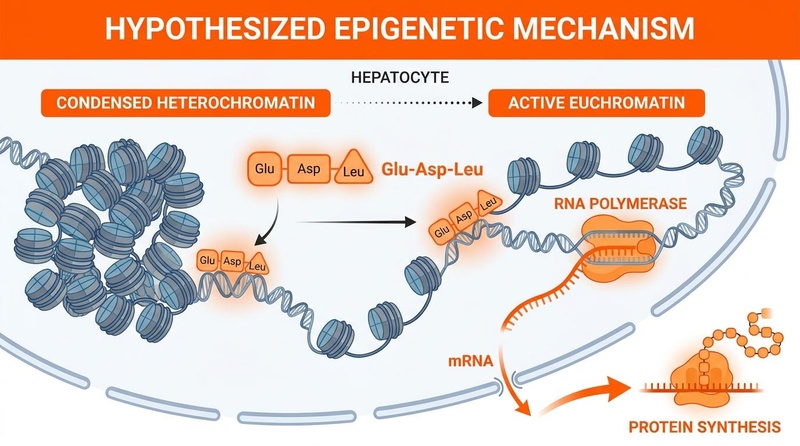
- Chromatin Unfolding: Ovagen (Glu-Asp-Leu) is proposed to bind specifically to AT-rich sequences in the DNA minor groove. This binding induces the "unfolding" of condensed chromatin (heterochromatin), making previously inaccessible genes available for transcription [4:4][9]. This process effectively "resets" the genetic expression of the liver cells to a more youthful, functional state.
- Protein Synthesis: This epigenetic reactivation leads to the synthesis of tissue-specific proteins essential for liver regeneration, detoxification, and maintaining metabolic homeostasis, which typically declines with age or disease [2:2].
¶ 2. Hepatocyte Regeneration
- Cell Cycle Modulation: Research demonstrates that these peptides directly stimulate the proliferation of liver cells. Studies have shown that Ovagen administration can lead to an 18-fold increase in Ki-67 expression (a marker of active cell division) and a 6-fold decrease in p53 (a marker of cell death) in aged liver models, shifting the tissue towards regeneration [4:5].
- Anti-apoptotic Effects: By reducing p53 expression, the peptides help prevent programmed cell death in hepatocytes, preserving liver tissue integrity.
¶ 3. Metabolic Normalization
- Enhanced Detoxification: The presence of glutamic acid in the Ovagen sequence supports the urea cycle and ammonia neutralization, crucial pathways for the liver's detoxification functions [6:7].
- Lipid Metabolism: By restoring hepatocyte function, these peptides improve the liver's capacity to metabolize lipids, contributing to the normalization of cholesterol and triglyceride levels.
¶ Pharmacokinetics
- Half-life: The exact half-life of the complex Svetinorm peptides is not precisely defined but their "after-effect" can last for months. Ovagen, as a synthetic tripeptide, is expected to have a relatively short biological half-life, but its epigenetic effects are long-lasting [10].
- Bioavailability by route: Both are primarily administered orally in capsule form, indicating sufficient stability against digestive enzymes and absorption in the gut. Sublingual administration is also used for faster systemic delivery. Injectable forms have been used in research but are less common commercially.
- Metabolism/degradation: As peptides, they are ultimately metabolized into their constituent amino acids, which are then used by the body.
- Major PK issues: The Khavinson peptides are noted for their stability and bioavailability in oral forms, distinguishing them from many other peptides that require injection.
¶ Effects on different systems
¶ Metabolic health (glucose, insulin, lipids, body composition)
- Lipid Metabolism: Svetinorm and Ovagen contribute to the normalization of lipid metabolism. Clinical observations have shown improvements in triglyceride and cholesterol levels, particularly in patients with atherosclerosis and obesity [6:8]. This is attributed to enhanced hepatocyte function, which plays a central role in lipid processing.
- Glucose Homeostasis: While not direct glucose regulators like insulin, by improving overall liver function, these peptides can indirectly support better glucose homeostasis. The liver is crucial for glucose storage (glycogen) and release, and optimized function aids in metabolic balance.
- Fatty Liver (NAFLD): The regenerative and metabolic normalizing effects make these peptides relevant for managing Non-Alcoholic Fatty Liver Disease (NAFLD) by improving lipid processing and reducing fat accumulation in the liver.
¶ Detoxification & Immune Function
- Detoxification Capacity: The peptides enhance the liver's ability to detoxify harmful substances, including xenobiotics and metabolic waste products. The glutamic acid in Ovagen specifically supports ammonia neutralization [6:9].
- Immune Modulation: Svetinorm has been observed to decrease IgM levels in patients with chronic hepatitis, suggesting a role in reducing inflammation and modulating the immune response within the liver [3:6]. This contributes to a healthier hepatic immune environment.
¶ Skin, hair, and appearance
- Dermatological Link: Given the liver's role in detoxification and overall systemic health, liver dysfunction can often manifest as various skin conditions. Svetinorm and Ovagen are sometimes indicated for dermatological issues like acne, eczema, psoriasis, and hyperpigmentation (e.g., "liver spots") when these are linked to hepatic overload or insufficiency [6:10]. By improving liver function, these peptides can indirectly contribute to healthier skin.
¶ Other domains (geroprotection)
- Anti-Aging: As Khavinson bioregulators, Svetinorm and Ovagen are considered geroprotectors. They aim to "reset" the biological age of liver tissue by reactivating silenced genes that naturally decline in expression with age, helping to maintain youthful organ function into older age [1:1].
¶ Administration, reconstitution, and storage
¶ Administration Routes
- Capsules: The most common and convenient oral form. Peptides are designed to be stable against digestive enzymes and are absorbed in the gastrointestinal tract.
- Lingual (Sublingual) Drops: Liquid drops administered under the tongue. This method allows for faster absorption by bypassing the digestive system and first-pass liver metabolism, offering a quicker onset of action.
- (Injection): While less common for Svetinorm and Ovagen in commercial use, subcutaneous injection protocols have been described in research settings for some Khavinson peptides.
¶ Storage requirements
- Capsules: Typically stored in a cool, dry place away from direct sunlight. Refer to specific product labeling for precise temperature recommendations (e.g., room temperature or refrigeration).
- Lingual Solutions: Often require refrigeration after opening to maintain stability and potency.
- General: Protect from light and extreme temperatures. Always keep in original packaging until use.
¶ Handling and safety
- Purity: Ensure sources are reputable and provide third-party testing to confirm peptide purity and absence of contaminants.
- Contamination: For lingual solutions, maintain hygienic practices to avoid contamination of the dropper.
- Signs of degradation: Discard if there are visible changes in color, clarity, or presence of particles.
¶ Dosage and protocols
Protocols for Svetinorm and Ovagen are typically based on the Khavinson Institute's recommendations, often involving cyclical administration to leverage their long-lasting epigenetic effects.
¶ Standard dosing in studies (evidence-based)
- Svetinorm (Oral Capsules):
- Typical dose: 2 capsules (20mg total active peptide complex) daily.
- Duration: 1–3 months, often following an Ovagen course.
- Frequency: Usually taken once daily in the morning, 15-20 minutes before food [3:7].
- Ovagen (Oral Capsules):
- Typical dose: 1–2 capsules (0.2g total weight, active peptide content lower) daily.
- Duration: 10–30 days, often as an initial "kick-start" phase.
- Frequency: Once or twice daily, 15-20 minutes before food [6:11].
- Ovagen (Sublingual Drops):
- Typical dose: 1 mL (approx. 5-6 drops).
- Frequency: 3–4 times daily, 10–15 minutes before meals.
¶ The "Step-Down" Protocol (Recommended by Khavinson Institute)
For maximum efficacy, a sequential approach combining the synthetic (fast-acting) Ovagen with the natural (long-acting) Svetinorm is often recommended:
- Phase 1: Induction (Ovagen): 1-2 capsules daily for 10-20 days. Goal is rapid initiation of cellular repair and gene activation [6:12].
- Phase 2: Restoration & Maintenance (Svetinorm): 2 capsules daily for 1-3 months immediately following the Ovagen course. Goal is sustained regeneration and broad trophic support [3:8].
¶ Standalone Protocols
- Preventative/Maintenance: Svetinorm only, 2 capsules daily for 30 days, repeated twice a year [6:13].
- Acute Support (e.g., during antibiotic course): Ovagen only, 1 capsule twice daily for the duration of the acute phase + 1 week after [6:14].
¶ Cycling and timing protocols
- Cycling: Khavinson bioregulators are generally taken in cycles (e.g., 10-30 days on) rather than continuously. Their epigenetic effects are long-lasting, often extending for 3-6 months after a course is completed, hence continuous use is not necessary and may reduce sensitivity.
- Timing: Best taken in the morning or before meals to maximize absorption and integration with natural physiological rhythms.
¶ Special populations
- Pregnancy and Lactation: Standard precaution recommends avoiding use due to a lack of specific clinical trials in these groups, though theoretical safety is high.
- Children and Adolescents: Not typically recommended unless under strict medical supervision for specific conditions.
- Kidney or Liver Impairment: Given their role in liver health, these peptides are often indicated for liver impairment, but consultation with a healthcare provider is essential for appropriate dosing and monitoring.
¶ Safety and side effects
Khavinson bioregulators, including Svetinorm and Ovagen, are notable for their exceptional safety profile, primarily due to their natural origin (Svetinorm) or synthetic replication of endogenous sequences (Ovagen) [1:2].
¶ Common side effects
- No reported adverse effects: Decades of clinical use and research in Russia have reported no acute or chronic toxic side effects. These peptides are hydrolyzed into natural amino acids within the body, minimizing the risk of adverse reactions [6:15].
- Injection site reactions: Not typically relevant for oral or sublingual forms.
¶ Less common / serious concerns
- Toxicity: As endogenous-like substances, they do not exhibit immunogenicity, mutagenicity, or carcinogenicity at therapeutic doses.
- Endocrine effects: No reported significant endocrine disruptions, as they act via epigenetic regulation rather than direct hormonal action.
- Organ toxicity: No evidence of liver, kidney, or other organ toxicity. In fact, they are used to protect these organs.
¶ Who should be especially cautious or avoid it
- Individual hypersensitivity: Extremely rare, but individuals with known allergies to any component should avoid use.
- Pregnancy and breastfeeding: Avoidance is recommended due to the absence of specific large-scale clinical trials in these populations, as a precautionary measure.
LongeviData safety widget (required)
¶ Drug and supplement interactions
Svetinorm and Ovagen are generally considered compatible with other medications and supplements, primarily because their mechanism involves normalizing endogenous physiological processes rather than direct pharmacological antagonism or agonism.
¶ Pharmacokinetic interactions
- Enzyme systems: No known interactions with major cytochrome P450 enzymes or drug transporters have been reported, which are common sources of drug-drug interactions for many pharmaceuticals.
- Absorption: Oral administration is generally compatible with other supplements, though spacing by 15-30 minutes from other medications or food may be advisable to optimize absorption.
¶ Pharmacodynamic interactions
- Additive/Complementary Effects: These peptides can be used adjunctively with standard therapies for liver conditions (e.g., hepatoprotectors, antioxidants) without adverse interactions. Their role is to support and restore the liver's natural functions.
- Other Hormones or Peptides: No known negative interactions. They are often combined with other Khavinson bioregulators (e.g., for pancreas, immune system) to create comprehensive, systemic bioregulation protocols.
¶ Monitoring recommendations
- Liver Enzymes: Regular monitoring of ALT, AST, bilirubin, and GGT is advisable for individuals with existing liver conditions to track the efficacy of treatment, including peptide therapy.
- Lipid Panel: For those using these peptides to address metabolic syndrome or dyslipidemia, monitoring cholesterol and triglyceride levels is recommended.
- General Health Markers: Standard blood work to assess overall health and ensure no unexpected changes occur.
¶ Combining Svetinorm & Ovagen with other peptides and supplements ("stacks")
In the Khavinson bioregulator system, combining tissue-specific peptides is a common practice to achieve broader systemic benefits or address co-existing conditions. These combinations are often referred to as "stacks."
¶ Common combinations
- Sequential Use: The most fundamental "stack" is the sequential use of Ovagen followed by Svetinorm, as described in the dosage section, to first initiate rapid repair and then provide sustained regeneration.
- Liver + Pancreas: For metabolic syndrome, fatty liver, or diabetes, Svetinorm/Ovagen may be combined with Suprefort (pancreatic peptide) to support both liver and pancreatic function, enhancing glucose and lipid metabolism.
- Liver + Immune System: In cases of chronic hepatitis with immune dysfunction, combination with Vladonix (thymus peptide) may be used to enhance immune regulation alongside liver support.
- Liver + Vascular System: For conditions involving both liver and cardiovascular health, Ventfort (vascular peptide) might be combined to improve blood vessel integrity and flow, supporting hepatic perfusion.
- Antioxidant Support: Often combined with general antioxidants (e.g., N-acetylcysteine, alpha-lipoic acid) to provide synergistic protection against oxidative stress in the liver.
¶ Evidence level
- Formal combination trials: Formal randomized controlled trials evaluating specific Khavinson peptide "stacks" are rare in Western literature. Most evidence for combinations comes from clinical observations, theoretical mechanistic complementarity, and empirical protocols developed within the Khavinson Institute.
- Mechanistic reasoning: The rationale for stacking is based on the tissue-specific nature of each peptide and the understanding that many age-related conditions involve multiple organ systems.
¶ Safety considerations
- Additive side effects: No additive adverse effects are typically expected given the benign safety profile of individual Khavinson peptides.
- Monitoring complexity: Combining multiple interventions can increase the complexity of monitoring.
- Unknown interactions: While individual peptides have good safety data, specific interactions in complex stacks are not always formally studied, requiring careful observation.
¶ Cost considerations
The cost of Svetinorm and Ovagen can vary significantly depending on the source, dosage, and whether one opts for a short-term acute protocol or long-term maintenance.
¶ Typical costs
- Oral Capsules: Generally sold in packs of 20 or 60 capsules. A 10-day course of Ovagen might range from $40-$80, while a 30-day course of Svetinorm could range from $80-$150, depending on the supplier and discounts.
- Lingual Solutions: Often priced similarly to capsule forms, with variations based on concentration and volume.
- Cost varies by:
- Source: Authorized distributors of genuine Khavinson peptides often have consistent pricing. Gray market or unverified sources may offer lower prices but carry higher risks of impurity or counterfeiting.
- Purity Testing: Products with verifiable third-party testing may be more expensive but offer greater assurance of quality.
- Bulk vs. Single: Purchasing larger quantities or bundles can reduce the per-unit cost.
¶ Cost-benefit considerations
- For liver health: For individuals with chronic liver conditions or those seeking hepatoprotection, the potential benefits of improved liver function and reduced symptoms may justify the cost, especially given the lack of severe side effects.
- Longevity investment: As geroprotectors, these peptides are an investment in long-term organ health. The value proposition depends on individual health goals and risk tolerance.
- Alternative options: Compare costs with other liver support supplements or interventions. These peptides offer a unique epigenetic mechanism not replicated by most standard supplements.
- Long-term financial commitment: Consider the cost of cyclical use over several years if planning for long-term health maintenance.
¶ Practical questions (FAQ)
Q: Can Svetinorm and Ovagen reverse liver cirrhosis?
A: While they can promote regeneration and inhibit fibrosis progression, reversing established, advanced cirrhosis (where extensive scar tissue has replaced functional liver tissue) is challenging. They are best used in earlier stages of fibrosis or as adjuncts to manage cirrhosis.
Q: Are these peptides safe to use with prescription liver medications?
A: Yes, generally. Clinical studies from Russia indicate compatibility with standard medical treatments. However, always consult your healthcare provider before combining them with prescription medications, especially if you have a serious medical condition.
Q: How quickly can one expect to see results?
A: Ovagen, being synthetic, can initiate rapid cellular signaling, with some subjective improvements (e.g., reduced fatigue, improved appetite) reported within days to a few weeks. Svetinorm, being a natural extract, has a slower, more cumulative effect, with benefits becoming more apparent over weeks to months. The epigenetic "after-effect" can last for several months after a course.
Q: Are there any dietary restrictions when taking these peptides?
A: No specific dietary restrictions are mandated. However, maintaining a liver-healthy diet (e.g., low in processed foods, sugar, and unhealthy fats) will naturally support the peptides' actions and overall liver health.
Q: Can I take Svetinorm and Ovagen if I am healthy and want to prevent liver aging?
A: Yes, they are used as geroprotectors for preventative purposes. The concept is to maintain optimal liver function and counteract age-related decline in gene expression before significant pathology develops.
Q: Is "Ovagen" the fertility drug the same as this peptide?
A: No. It is critical to distinguish between the peptide bioregulator Ovagen (Glu-Asp-Leu) and the fertility drug clomiphene citrate, which is sometimes marketed under the brand name "Ovagen" in certain countries. This article refers exclusively to the peptide bioregulator. Always check the active ingredient.
¶ References
Khavinson, V. K. (2002). Peptides and Ageing. Neuro Endocrinology Letters, 23(Suppl 3), 11-144. https://pubmed.ncbi.nlm.nih.gov/12374906/ ↩︎ ↩︎ ↩︎
Khavinson, V. K., Popovich, I. G., & Linkova, N. S. (2021). Peptide Regulation of Gene Expression: A Systematic Review. Molecules, 26(22), 6995. https://pmc.ncbi.nlm.nih.gov/articles/PMC8004547/ ↩︎ ↩︎ ↩︎
Peptidi-Slo. (2023). Clinical Studies Cytomaxes Cytogens. St. Petersburg Institute brochure. https://peptidi-slo.si/wp-content/uploads/2023/12/brosura-3.pdf ↩︎ ↩︎ ↩︎ ↩︎ ↩︎ ↩︎ ↩︎ ↩︎ ↩︎
Khavinson, V. K., Linkova, N. S., & Polyakova, V. O. (2012). Peptides tissue-specifically stimulate cell differentiation during their aging. Bulletin of Experimental Biology and Medicine, 153(5), 652-655. https://pubmed.ncbi.nlm.nih.gov/22808515/ ↩︎ ↩︎ ↩︎ ↩︎ ↩︎ ↩︎
Fedoreyeva, L. I., Kireev, I. I., & Khavinson, V. K. (2011). Penetration of short fluorescence-labeled peptides into the nucleus in HeLa cells and in vitro specific interaction of the peptides with deoxyribooligonucleotides and DNA. Biochemistry (Moscow), 76(11), 1251-1258. https://pubmed.ncbi.nlm.nih.gov/22117547/ ↩︎ ↩︎
Trofimova, S. V., & Khavinson, V. K. (2021). Role of Short Peptides in Maintaining Liver Functional Activity. EC Gastroenterology and Digestive System, 8(6), 1-8. https://www.researchgate.net/publication/356501168_Role_of_Short_Peptides_in_Maintaining_Liver_Functional_Activity ↩︎ ↩︎ ↩︎ ↩︎ ↩︎ ↩︎ ↩︎ ↩︎ ↩︎ ↩︎ ↩︎ ↩︎ ↩︎ ↩︎ ↩︎ ↩︎
Chalisova, N. I., Khavinson, V. K., & Davydenko, V. V. (2000). Effect of cytomedins on development of organotypic culture of various tissues from the internal organs of rats. Tsitologiia, 42(1), 84-89. https://pubmed.ncbi.nlm.nih.gov/11213728/ ↩︎
Core Peptides. (2024). Ovagen Peptide Research. https://www.corepeptides.com/ ↩︎
Fedoreyeva, L. I., Smirnova, T. A., & Kolomijtseva, G. Y. (2013). Interaction of short peptides with FITC-labeled wheat histones and their complexes with deoxyribooligonucleotides. Biochemistry (Moscow), 78(2), 177-183. https://pubmed.ncbi.nlm.nih.gov/23581987/ ↩︎
Kuznik, B. I., Khasanova, N. B., & Ryzhak, G. A. (2020). The influence of polypeptide liver complex and tetrapeptide KEDA on organism physiological function in norm and age-related pathology. Advances in Gerontology, 33(2), 226-231. https://pubmed.ncbi.nlm.nih.gov/32362099/ ↩︎