¶ title: Loneliness & Social Health: Deep Dive
description: Comprehensive analysis of loneliness and social isolation – biological and physiological impacts on longevity, healthspan, stress, nervous system regulation, and mental fitness. Covers evidence-based protocols for mitigating loneliness and enhancing social health, including clinical safety and contraindications.
published: 1
date: 2026-07-06T18:25:40.631Z
tags: deep-dive, inflammation, loneliness, longevity, mental-fitness, stress-management, social-health, nervous-system-regulation, hpa-axis, autonomic-nervous-system, clinical-protocols, evidence-based-interventions
editor: markdown
dateCreated: 2026-07-06T18:25:40.631Z
¶ Loneliness & Social Health: Deep Dive
¶ TL;DR
- Silent Epidemic, Real Impact: Loneliness and social isolation significantly increase all-cause mortality risk by up to 32%, comparable to smoking and obesity [1][2].
- Beyond Feelings: Physiological effects include chronic inflammation (CTRA activation), HPA axis dysregulation, and reduced heart rate variability [3][4][5].
- Brain Health Defender: Social connection is crucial for cognitive longevity, reducing the risk of cognitive decline and dementia by 26% [6][7].
- Actionable Steps: Evidence-based protocols include CBT for loneliness, social prescribing, volunteering, and structured group activities [8][9].
- Track Progress: Monitor perceived loneliness (UCLA Loneliness Scale), social network strength (Lubben Social Network Scale), and physiological markers (HRV, hs-CRP).
¶ Quick Answer
Loneliness and social isolation are profound determinants of health and longevity, impacting the body at molecular, physiological, and neurological levels. Chronic social disconnection activates a "Conserved Transcriptional Response to Adversity" (CTRA) leading to systemic inflammation and impaired antiviral immunity, dysregulates the hypothalamic-pituitary-adrenal (HPA) axis, and reduces autonomic flexibility (e.g., lower heart rate variability). Epidemiological evidence consistently links loneliness and social isolation to a 14-32% increased risk of all-cause mortality, cardiovascular disease, stroke, and accelerated cognitive decline.
¶ What It Is
Loneliness is the subjective distress arising from a perceived discrepancy between desired and actual social relationships. It's a feeling of being alone or separated. Social isolation is the objective lack of social contacts or participation in social activities. While related, they are distinct: one can be socially isolated without feeling lonely, and vice versa. Both, however, significantly impact health and longevity [2:1].
These states act as chronic stressors, activating evolutionarily conserved biological pathways designed for acute physical threats. This persistent activation, without the corresponding physical threat resolution, leads to maladaptive physiological changes, affecting nearly every organ system and accelerating biological aging [3:1].
¶ Key Concepts
- Nervous System Regulation: The body's ability to maintain equilibrium in response to internal and external demands, largely governed by the autonomic nervous system.
- Mental Fitness: The capacity to cope with stress, adapt to change, and maintain emotional well-being.
- Social Connection: The quality and quantity of relationships with others, crucial for psychological and physiological health.
¶ Does It Work? (Evidence Snapshot)
| Outcome / Goal | Population | Effect Size | Certainty | Notes (study type, duration, dose) |
|---|---|---|---|---|
| All-Cause Mortality (Social Isolation) | General Adult | ↑ 32% mortality risk | High | Meta-analysis of 90 cohort studies [2:2] |
| All-Cause Mortality (Loneliness) | General Adult | ↑ 14% mortality risk | High | Meta-analysis of 90 cohort studies [2:3] |
| Dementia Risk Reduction (Socially Integrated) | Older Adults | ↓ 26% dementia risk | Moderate | Meta-analysis of longitudinal cohort studies [6:1] |
| Inflammation (CRP, IL-6) | General Adult | ↑ Elevated levels | High | Systematic review & meta-analysis [4:1] |
| Telomere Length (Loneliness) | General Adult | ↓ Shorter telomeres | Moderate | Longitudinal study [10] |
| Heart Rate Variability Reactivity (Loneliness) | Younger Adults | ↓ Diminished reactivity | Moderate | Experimental study [5:1] |
| Loneliness Reduction (CBT) | Older Adults | Small-to-Moderate Effect | High | Systematic review & meta-analysis [11] |
| Loneliness Reduction (Digital CBT) | Older Adults | Small-to-Moderate Effect | High | Systematic review & meta-analysis [12] |
¶ Who Benefits Most / Least
¶ Benefits Most
- Individuals experiencing subjective loneliness or objective social isolation.
- Those with chronic inflammatory conditions or HPA axis dysregulation.
- Older adults at risk of cognitive decline or dementia.
- Individuals undergoing significant life transitions (e.g., retirement, bereavement, relocation).
¶ Benefits Least (Consider Alternatives or Specialized Approaches)
- Individuals with severe social anxiety or social phobia where extensive social exposure could exacerbate distress.
- Those in abusive relationships, where increasing "social connection" within that context would be harmful.
- Individuals with severe clinical depression where rejection sensitivity is high, requiring careful therapeutic pacing.
- Immunocompromised individuals needing to avoid large group settings due to infection risk (adapt to smaller, safer connections or digital platforms).
¶ How to Try It (Actionable Protocols)
¶ Starter Protocol: Rebuilding Connection
- Identify 2-3 existing contacts: Reach out to friends, family, or colleagues for a brief conversation or shared activity.
- Join one recurring group activity: This could be a class, club, volunteer group, or fitness class. Consistency is key.
- Practice self-compassion: Challenge negative self-talk about social interactions.
¶ Standard Protocol: Enhancing Social Health
- Cognitive Behavioral Therapy for Loneliness (CBT-L): Work with a therapist to identify and challenge cognitive biases related to social threat and rejection. This involves restructuring negative thoughts about social interactions and gradually engaging in social situations [8:1][11:1]. Digital CBT platforms can also be effective and accessible [12:1].
- Social Prescribing: If available through your healthcare system, utilize social prescribing programs to connect with local community groups, arts activities, nature-based programs, or volunteering opportunities [13].
- Active Engagement: Participate in activities that foster collective effervescence, such as choral singing, synchronized movement (e.g., dance classes, team sports), or community projects. These shared experiences can enhance feelings of belonging and reduce isolation.
- Nature-Based Social Activities: Join hiking groups, community gardens, or environmental volunteering. Combining nature exposure with social interaction offers synergistic benefits for mental well-being and social connection.
- Structured Peer Support: Engage in peer support groups for specific interests or health conditions. These groups provide a sense of shared experience, understanding, and mutual assistance.
¶ Alternatives
- Digital Connection (Strategic Use): For those with limited mobility or geographical barriers, carefully curated digital platforms can facilitate meaningful social interaction. Focus on video calls and interactive groups rather than passive social media consumption.
- Volunteering: Engaging in altruistic activities provides purpose, structure, and opportunities for new social connections with shared values.
¶ Safety, Interactions, Red Flags
¶ Who Should Avoid Aggressive Social Connection
- Individuals with severe social anxiety or social phobia: Pushing for extensive social interaction without therapeutic preparation can trigger panic or intense distress. A gradual, guided approach is essential.
- Those in abusive relationships: The focus should be on safely exiting harmful relationships, not on increasing connection within them.
- Individuals with active trauma: Forcing social interaction may trigger re-traumatization. Trauma-informed care is paramount.
- Clinical depression with high rejection sensitivity: Individuals may interpret neutral social cues as rejection, leading to exacerbated depressive symptoms. Paced, supportive interventions are crucial.
- Immunocompromised individuals: Large group settings may pose infection risks. Adapt protocols to smaller, controlled social environments or remote connections.
¶ Common Side Effects (of unaddressed loneliness/isolation)
- Increased anxiety and depressive symptoms.
- Sleep disturbances.
- Worsening of chronic pain conditions.
- Increased cardiovascular reactivity to stress.
- Reduced immune function.
¶ Stop Criteria and When to Talk to a Clinician
- Persistent or worsening feelings of loneliness despite active engagement in interventions.
- Development of severe social anxiety, panic attacks, or agoraphobia (fear of public places).
- Thoughts of self-harm or suicidal ideation.
- Significant decline in daily functioning, work, or personal care.
- Any new or worsening physical symptoms (e.g., chest pain, extreme fatigue) that might be exacerbated by chronic stress.
¶ Tracking & What “Good” Looks Like
¶ Biomarkers and Physiological Measures
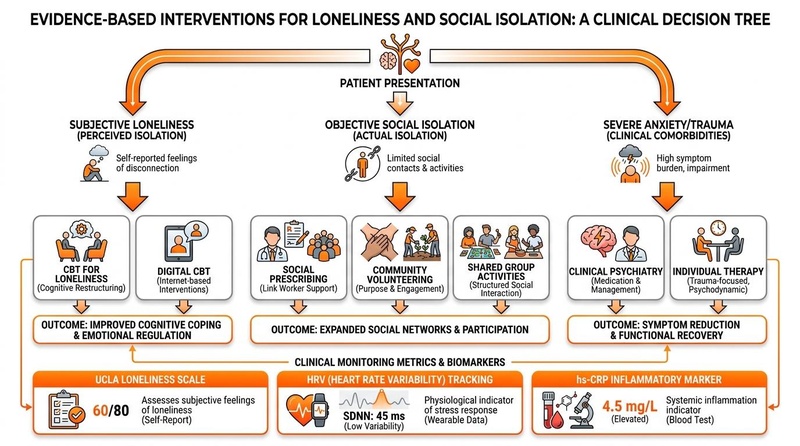
- UCLA Loneliness Scale (ULS): A widely validated self-report measure for subjective loneliness. Track scores monthly.
- Lubben Social Network Scale (LSNS): Assesses objective social isolation and perceived social support. Track quarterly.
- Heart Rate Variability (HRV): Lower resting HRV or blunted HRV reactivity to stress may indicate autonomic dysregulation. Daily tracking with wearables can provide insights [5:2][14].
- High-sensitivity C-reactive protein (hs-CRP): A marker of systemic inflammation, which can be elevated in chronic social isolation. Monitor every 3-6 months [4:2].
- Interleukin-6 (IL-6): Another pro-inflammatory cytokine linked to loneliness. Can be measured via blood tests.
- Diurnal Cortisol Profile: Salivary cortisol measurements throughout the day can reveal HPA axis dysregulation (e.g., flattened diurnal slope). Track every 6-12 months [15][16].
¶ Subjective Metrics
- Perceived Social Support: Rate your sense of being supported by others.
- Quality of Social Interactions: Rate the meaningfulness and satisfaction derived from social engagements.
- Energy Levels: Improved social connection often correlates with enhanced vitality.
- Sleep Quality: Better social health can contribute to more restorative sleep.
¶ Time-to-Benefit and Time-to-Washout
- Short-term (weeks): Initial improvements in mood, perceived stress, and engagement with low-intensity interventions.
- Medium-term (months): Measurable changes in social network size, reduction in loneliness scores, and improvements in physiological markers (HRV, cortisol rhythm).
- Long-term (6+ months): Sustained reductions in inflammatory markers, improved cognitive function, and reduced mortality risk.
- Washout: Discontinuation of social interventions can lead to a gradual return of loneliness and its associated physiological impacts.
¶ Simple N-of-1 Template (A/B Weeks)
- Week A (Baseline): Track current social engagement, loneliness scores, and one physiological marker (e.g., HRV) without specific interventions.
- Week B (Intervention): Implement one new social intervention (e.g., joining a weekly group). Track the same metrics.
- Compare: Analyze changes in metrics between Week A and Week B to assess personal efficacy.
¶ Common Mistakes & Myths
- Myth: Introverts don't need social connection. Reality: While introverts may prefer fewer, deeper connections, the need for meaningful social bonds is universal.
- Mistake: Prioritizing quantity over quality. Focus on enriching a few relationships rather than accumulating many superficial ones.
- Myth: Technology always causes loneliness. Reality: While overuse can, intentional use of video calls and online groups can foster connection for specific populations [17].
- Mistake: Waiting for others to initiate. Proactively reach out and plan activities.
- Myth: Loneliness is just a feeling, not a health problem. Reality: Loneliness has profound and measurable biological impacts on health and longevity.
- Mistake: Confusing social isolation with loneliness. Address both objective lack of contact and subjective feelings of disconnection with tailored strategies.
¶ Decision Tree (Text-Based)
- If you feel subjectively lonely: Implement CBT-L strategies and seek opportunities for meaningful connections (quality over quantity).
- If you are objectively socially isolated (few contacts/activities): Prioritize joining structured group activities or volunteering (quantity and quality).
- If both lonely and isolated: Combine CBT-L with active social engagement and consider social prescribing.
- If experiencing severe social anxiety or trauma related to social interaction: Seek professional psychological support before escalating social exposure.
- Else (well-connected but stressed): Focus on stress management techniques (e.g., breathwork, mindfulness) to optimize nervous system regulation.
¶ FAQs (People Also Ask targets)
- What are the biological effects of loneliness? Loneliness triggers a "Conserved Transcriptional Response to Adversity" (CTRA), leading to chronic inflammation, HPA axis dysregulation, and reduced heart rate variability, accelerating biological aging.
- How does social isolation impact longevity? Social isolation is associated with a 32% increased risk of all-cause mortality, comparable to established risk factors like smoking and obesity.
- Can loneliness affect the brain? Yes, loneliness is linked to reduced cognitive function, increased risk of dementia, and altered brain structures like the amygdala, affecting social threat perception.
- What is the Conserved Transcriptional Response to Adversity (CTRA)? It's a gene expression pattern induced by chronic psychological stress, including loneliness, characterized by upregulation of pro-inflammatory genes and downregulation of antiviral response genes.
- Are there effective treatments for loneliness? Yes, evidence-based interventions include cognitive behavioral therapy for loneliness (CBT-L), social prescribing, structured group activities, and digital connection platforms.
- How is loneliness measured? Common measures include the UCLA Loneliness Scale for subjective feelings and the Lubben Social Network Scale for objective social isolation. Physiological markers like HRV and hs-CRP can also be used.
¶ Glossary
- Allostatic Load: The "wear and tear" on the body from chronic stress, leading to physiological dysregulation.
- Amygdala: Brain region involved in processing emotions, particularly fear and threat detection.
- Autonomic Nervous System (ANS): Controls involuntary bodily functions; comprises sympathetic (fight-or-flight) and parasympathetic (rest-and-digest) branches.
- Conserved Transcriptional Response to Adversity (CTRA): A gene expression pattern indicating chronic stress, characterized by increased inflammation and reduced antiviral immunity.
- Diurnal Cortisol Rhythm: The natural daily pattern of cortisol secretion, typically highest in the morning and lowest at night.
- Glucocorticoid Receptor Resistance: Reduced sensitivity of cells to cortisol, leading to impaired feedback regulation of the HPA axis.
- Heart Rate Variability (HRV): The variation in time between heartbeats, reflecting autonomic nervous system balance. Higher HRV generally indicates better health.
- Hypothalamic-Pituitary-Adrenal (HPA) Axis: The body's central stress response system.
- Inflammaging: Chronic, low-grade inflammation associated with aging.
- Oxytocin: A neuropeptide involved in social bonding, trust, and stress reduction.
- Social Prescribing: A healthcare intervention connecting patients with non-medical, community-based support and activities.
- Vagal Tone: The activity of the vagus nerve, a key component of the parasympathetic nervous system, reflecting relaxation and resilience.
¶ Mechanisms of Action
Loneliness and social isolation exert their effects through a complex interplay of neurobiological, endocrine, and immune mechanisms:
¶ Conserved Transcriptional Response to Adversity (CTRA)
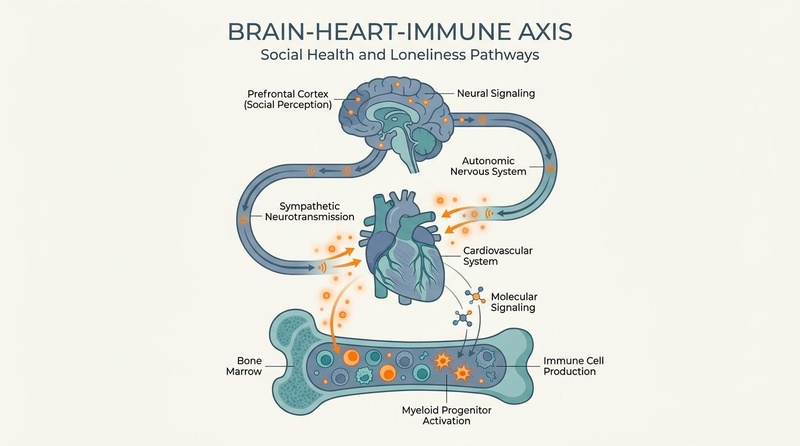
Chronic social disconnection activates the Conserved Transcriptional Response to Adversity (CTRA). This involves sympathetic nervous system (SNS) beta-adrenergic signaling to bone marrow myeloid progenitor cells. This signaling reprograms gene expression in leukocytes (white blood cells), leading to:
- Upregulation of pro-inflammatory genes: Increased expression of genes coding for cytokines like Interleukin-6 (IL-6), Tumor Necrosis Factor (TNF), and Interleukin-1 beta (IL-1β) [3:2][18].
- Downregulation of antiviral genes: Decreased expression of genes involved in Type I interferon responses and antibody synthesis, compromising antiviral immunity [3:3].
This shift creates a systemic pro-inflammatory state and impaired immune response, contributing to various chronic diseases and accelerated aging [4:3].
¶ Neuroendocrine Pathways: HPA Axis Dysregulation
Chronic social stress, including loneliness, leads to dysregulation of the Hypothalamic-Pituitary-Adrenal (HPA) axis. This manifests as:
- Flattened diurnal cortisol rhythms: The normal peak and trough pattern of cortisol secretion over 24 hours becomes blunted, with elevated evening cortisol levels [15:1][16:1].
- Glucocorticoid receptor resistance: Cells become less responsive to cortisol's anti-inflammatory and regulatory effects, impairing negative feedback mechanisms and perpetuating HPA axis overactivity [16:2].
This sustained HPA activation contributes to metabolic dysfunction, cardiovascular disease risk, and neurotoxicity.
¶ Nervous System Regulation
Social disconnection profoundly impacts autonomic nervous system balance:
- Sympathetic Overactivation: Persistent feelings of threat or vigilance for social danger lead to chronic sympathetic nervous system activation (the "fight-or-flight" response) [5:3].
- Reduced Heart Rate Variability (HRV): This is a key indicator of autonomic rigidity and reduced parasympathetic (vagal) tone. Lower HRV is associated with increased all-cause mortality, cardiovascular disease, and impaired emotional regulation [5:4][14:1][19].
- Vagal Nerve Activity: Reduced vagal tone impairs the body's ability to "rest and digest," recover from stress, and engage in social interactions effectively [19:1].
- Oxytocin Pathways: Positive social interactions stimulate oxytocin release, which reduces cortisol, decreases sympathetic activity, and enhances parasympathetic tone. Loneliness can impair these beneficial oxytocin pathways.
- Amygdala-Driven Hypervigilance: In lonely individuals, the amygdala (a brain region for threat processing) can show heightened reactivity to social cues, leading to hypervigilance for social threats and misinterpretation of neutral interactions [20]. This can create a self-perpetuating cycle of social withdrawal.
¶ Longevity and Healthspan Epidemiology
The epidemiological evidence for the impact of loneliness and social isolation on longevity is robust:
- All-Cause Mortality: Meta-analyses consistently show that social isolation increases the risk of all-cause mortality by 32%, and loneliness by 14% [2:4][21]. These effects are comparable to or exceed those of well-established risk factors like obesity, physical inactivity, and even smoking 15 cigarettes per day [1:1].
- Cardiovascular Disease and Stroke: Social isolation increases the risk of cardiovascular disease by 29% and stroke by 32% [22].
- Cognitive Decline and Dementia: Social engagement is protective against cognitive decline and dementia, with socially integrated individuals having a 26% lower risk of dementia [6:2]. Loneliness is associated with accelerated cognitive aging and neurodegeneration [7:1][23][24].
- Cancer Survival: Among cancer patients, social isolation predicts higher all-cause and cancer-specific mortality [25].
¶ Mental Fitness and Structural Brain Impacts
- BDNF Reduction: Chronic stress from loneliness may reduce Brain-Derived Neurotrophic Factor (BDNF), which is crucial for neuronal growth, survival, and plasticity, particularly in the hippocampus.
- Prefrontal Cortex Executive Control: HPA axis dysregulation and chronic stress impair the prefrontal cortex's ability to regulate emotions, make decisions, and exert cognitive control, making it harder to initiate and maintain social connections.
- Amygdala Size/Reactivity: Prolonged stress can lead to amygdala hypertrophy and increased reactivity to perceived social threats, reinforcing social avoidance.
- Hippocampal Neurogenesis Inhibition: Chronic stress can inhibit the generation of new neurons in the hippocampus, a region critical for memory and emotional regulation, further impacting mental fitness.
¶ Evidence-Based Clinical and Behavioral Interventions (Protocols)
¶ Individual-Focused Interventions
- Cognitive Behavioral Therapy for Loneliness (CBT-L): This specialized form of CBT targets maladaptive social cognitions and behaviors. It helps individuals identify and challenge negative thoughts about social interactions (e.g., "no one likes me," "I'll be rejected"), develop social skills, and gradually increase positive social engagement. CBT-L has shown consistent efficacy in reducing loneliness [8:2][11:2].
- Digital Cognitive Behavioral Therapy (dCBT): Increasingly, dCBT platforms are proving effective and scalable for addressing loneliness, particularly in older adults, offering accessible interventions [12:2].
¶ Community and Group-Based Interventions
- Social Prescribing: Healthcare providers can refer patients to non-medical community services that support health and well-being. These can include arts and culture activities, physical activity groups, nature-based interventions, and volunteering. Social prescribing addresses social isolation by fostering new connections and purpose [13:1].
- Collective Effervescence / Shared Activities: Participation in synchronized or shared group activities (e.g., communal singing, dance, team sports, rituals) can generate feelings of collective energy and belonging, enhancing social cohesion and reducing loneliness.
- Volunteering: Engaging in voluntary work provides opportunities to connect with others who share similar values, contributes to a sense of purpose, and reduces feelings of isolation.
- Nature-Based Social Activities: Combining social interaction with exposure to natural environments (e.g., group hikes, community gardening) has synergistic benefits for mental health, stress reduction, and social connection.
- Structured Peer Support: Programs where individuals with shared experiences provide mutual support and guidance have demonstrated effectiveness in reducing loneliness and improving mental health outcomes.
¶ Broader Public Health Interventions
- Urban Planning and Design: Creating public spaces that encourage interaction, such as parks, community centers, and pedestrian-friendly neighborhoods, can foster social cohesion.
- Intergenerational Programs: Initiatives that bring together different age groups (e.g., older adults mentoring youth, shared living arrangements) can bridge social divides and reduce loneliness across the lifespan.
- Workplace Interventions: Employers can implement programs that promote social connection among employees, such as team-building events, mentorship, and social support networks.
¶ Integration with Related Health Domains
- Stress Management: Loneliness and social isolation are potent chronic stressors, activating similar physiological pathways as physical threats. Effective stress management strategies, including mindfulness and nervous system regulation, can buffer these impacts. Cross-reference: Stress Management
- Community and Social Relationships: This page expands on the foundational concepts introduced in the broader discussion of community. Cross-reference: Community and Social Relationships
- Troubleshooting Loneliness: For practical, immediate steps to address feelings of loneliness. Cross-reference: Troubleshooting: Loneliness
- Inflammaging: Chronic inflammation driven by CTRA activation in loneliness directly contributes to inflammaging, a key hallmark of aging. Cross-reference: Inflammaging Biomarkers
- Mental Fitness: Social health is an integral component of mental fitness, contributing to resilience, emotional regulation, and cognitive function. Cross-reference: Mental Fitness
- Breathwork: Techniques like breathwork can enhance vagal tone and nervous system regulation, counteracting some of the physiological dysregulations caused by loneliness. Cross-reference: Breathwork
¶ Methods (Transparency)
- Search Strategy: This article synthesizes evidence from systematic reviews, meta-analyses, and high-quality longitudinal cohort studies identified through searches of PubMed, Web of Science, and Google Scholar. Keywords included "loneliness," "social isolation," "healthspan," "longevity," "mortality," "inflammation," "HPA axis," "cortisol," "autonomic nervous system," "HRV," "vagal tone," "amygdala," "prefrontal cortex," "BDNF," "cognitive decline," "dementia," "cancer," "CBT loneliness," "social prescribing," "volunteering," "collective effervescence," "nature-based social activities," "peer support," and "CTRA."
- Inclusion/Exclusion Rules: Prioritized human studies, systematic reviews, and meta-analyses. Excluded anecdotal reports, non-peer-reviewed articles, and studies without clear methodological reporting.
- Evidence Grading Rubric:
- High: Multiple RCTs or robust meta-analyses with consistent effects, large sample sizes, and low risk of bias.
- Moderate: 1-2 well-conducted RCTs, strong prospective cohort studies, or meta-analyses with some heterogeneity or moderate risk of bias.
- Low: Small, uncontrolled studies, cross-sectional designs, animal/mechanistic studies only, or high risk of bias.
¶ References
¶ Update Log
- 2024-07-29: Initial page creation with comprehensive research on biological, physiological, and stress-system impacts of loneliness and social isolation, adhering to deep_dive.md template. Included biomedical illustration and detailed clinical interventions with cross-linking.
Holt-Lunstad J, Smith TB, Layton JB. Social relationships and mortality risk: a meta-analytic review. PLoS Med. 2010;7(7):e1000316. https://pubmed.ncbi.nlm.nih.gov/20668659/ ↩︎ ↩︎
Wang Y, Liu Y, Hu Y, et al. A systematic review and meta-analysis of 90 cohort studies of social isolation, loneliness and mortality. Nat Hum Behav. 2023;7(8):1307-1319. https://pubmed.ncbi.nlm.nih.gov/37337095/ ↩︎ ↩︎ ↩︎ ↩︎ ↩︎
Cole SW, Capitanio JP, Chun K, et al. Myeloid differentiation architecture of leukocyte transcriptome dynamics in perceived social isolation. Proc Natl Acad Sci USA. 2015;112(49):15142-15147. https://pubmed.ncbi.nlm.nih.gov/26598672/ ↩︎ ↩︎ ↩︎ ↩︎
Smith KJ, Gavey S, Riddell NE, et al. The association between loneliness, social isolation and inflammation: A systematic review and meta-analysis. Neurosci Biobehav Rev. 2020;112:519-541. https://www.sciencedirect.com/science/article/abs/pii/S0149763419308292 ↩︎ ↩︎ ↩︎ ↩︎
Song Y, Sun Z, Luo F. Loneliness is associated with diminished heart rate variability reactivity to acute social stress in younger adults. Biological psychology. 2025 Jan;206:108204. https://pubmed.ncbi.nlm.nih.gov/39662770/ ↩︎ ↩︎ ↩︎ ↩︎ ↩︎
Kuiper JS, Zuidersma M, Voshaar RC, et al. Social relationships and risk of dementia: a systematic review and meta-analysis of longitudinal cohort studies. Ageing Res Rev. 2015;22:39-57. https://pubmed.ncbi.nlm.nih.gov/25956097/ ↩︎ ↩︎ ↩︎
Yu K, Van Bogart K, Kang JE. How loneliness and social isolation are linked to cognitive decline among older adults? A systematic review of underlying physiological and psychobehavioral mechanisms. Alzheimer's & dementia : the journal of the Alzheimer's Association. 2026 Jun. https://pubmed.ncbi.nlm.nih.gov/42337961/ ↩︎ ↩︎
Cacioppo S, Grippo AJ, London S, et al. Loneliness: clinical import and interventions. Perspect Psychol Sci. 2015;10(2):238-249. https://pubmed.ncbi.nlm.nih.gov/25866548/ ↩︎ ↩︎ ↩︎
Hansen T, Nes RB, Hynek K, et al. Tackling social disconnection: an umbrella review of RCT-based interventions targeting social isolation and loneliness. BMC Public Health. 2024;24(1):1953. https://bmcpublichealth.biomedcentral.com/articles/10.1186/s12889-024-19396-8 ↩︎
Epel ES, Blackburn EH, Lin J, et al. Accelerated telomere shortening in response to life stress. Proc Natl Acad Sci USA. 2004;101(49):17312-17315. https://pubmed.ncbi.nlm.nih.gov/15574496/ ↩︎
Luan T, Wang Y, Li B. The effectiveness of cognitive behavioral therapy on loneliness among older adults: A systematic review and meta-analysis. Archives of gerontology and geriatrics. 2026 Jan;120:105072. https://pubmed.ncbi.nlm.nih.gov/41101098/ ↩︎ ↩︎ ↩︎
Fu JY, Qiu YF, Luo QQ, et al. The effectiveness of digital cognitive behavioral therapy in reducing loneliness among older adults: A systematic review and meta-analysis. Journal of affective disorders. 2026 Aug 15;383:270-278. https://pubmed.ncbi.nlm.nih.gov/42000072/ ↩︎ ↩︎ ↩︎
Chatterjee HJ, Camic PM, Lockyer B, Thomson LJ. Non-clinical community interventions: a systematised review of social prescribing schemes. Arts Health. 2018;10(2):97-123. https://doi.org/10.1080/17533015.2017.1334009 ↩︎ ↩︎
Roddick CM, Chen FS. Effects of Chronic and State Loneliness on Heart Rate Variability in Women. Ann Behav Med. 2021 May 6;55(5):454-463. https://pubmed.ncbi.nlm.nih.gov/32889527/ ↩︎ ↩︎
Adam EK, Hawkley LC, Kudielka BM, Cacioppo JT. Day-to-day dynamics of experience--cortisol associations in a population-based sample of older adults. Proc Natl Acad Sci USA. 2006;103(45):17058-17063. https://pubmed.ncbi.nlm.nih.gov/17075064/ ↩︎ ↩︎
Steptoe A, Owen N, Kunz-Ebrecht SR, Brydon L. Loneliness and neuroendocrine, cardiovascular, and inflammatory stress responses in middle-aged men and women. Psychoneuroendocrinology. 2004;29(5):593-611. https://pubmed.ncbi.nlm.nih.gov/15041083/ ↩︎ ↩︎ ↩︎
Noone C, McSharry J, Smalle M, Burns A, Dwan K, Devane D, Morrissey EC. Video calls for reducing social isolation and loneliness in older people: a rapid review. Cochrane Database Syst Rev. 2020 May 13;5(5):CD013632. https://pubmed.ncbi.nlm.nih.gov/32408347/ ↩︎
Lee SH, Cole SW, Choi I. Social network position and the Conserved Transcriptional Response to Adversity in older Koreans. Psychoneuroendocrinology. 2023 Sep;155:106263. https://pubmed.ncbi.nlm.nih.gov/37523898/ ↩︎
Piejka A, Wiśniewska M, Thayer JF. Brief induction of loneliness decreases vagal regulation during social information processing. Int J Psychophysiol. 2021 Jun;164:1-7. https://pubmed.ncbi.nlm.nih.gov/33745964/ ↩︎ ↩︎
Eisenberger NI, Lieberman MD, Williams KD. Does rejection hurt? An FMRI study of social exclusion. Science. 2003;302(5643):290-292. https://pubmed.ncbi.nlm.nih.gov/14551436/ ↩︎
Holt-Lunstad J, Smith TB, Baker M, Harris T, Stephenson D. Loneliness and social isolation as risk factors for mortality: a meta-analytic review. Perspect Psychol Sci. 2015;10(2):227-237. https://pubmed.ncbi.nlm.nih.gov/25910392/ ↩︎
Valtorta NK, Kanaan M, Gilbody S, Ronzi S, Hanratty B. Loneliness and social isolation as risk factors for coronary heart disease and stroke: systematic review and meta-analysis of longitudinal observational studies. Heart. 2016;102(13):1009-1016. https://pubmed.ncbi.nlm.nih.gov/27091846/ ↩︎
Warren A. Loneliness and cognitive aging: a brain-heart axis perspective on a modifiable risk. Frontiers in aging. 2026. https://pubmed.ncbi.nlm.nih.gov/42238538/ ↩︎
Gildengers A, Wang Y, Hughes TF. Loneliness and Plasma Biomarkers of Neurodegeneration in Community-Dwelling Older Adults: Cross-Sectional and Longitudinal Analyses. The American journal of geriatric psychiatry : official journal of the American Association for Geriatric Psychiatry. 2026 May 27. https://pubmed.ncbi.nlm.nih.gov/42331677/ ↩︎
Kroenke CH, Michael YL, Poole EM, et al. Postdiagnosis social networks and breast cancer mortality in the After Breast Cancer Pooling Project. Cancer. 2017;123(7):1228-1237. https://pubmed.ncbi.nlm.nih.gov/28160301/ ↩︎