¶ Nicotinamide Mononucleotide (NMN)
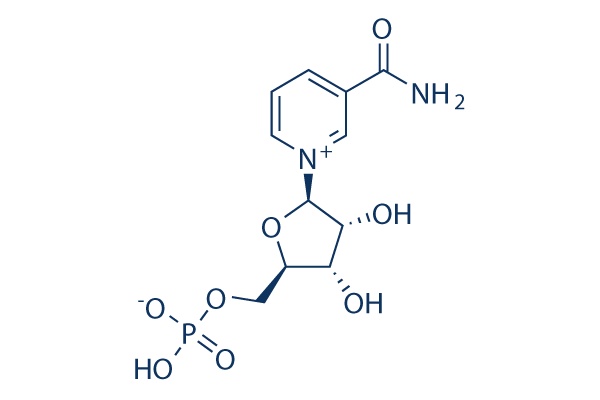
| Type | Nucleotide / NAD+ Precursor |
| Active Cmpd | β-Nicotinamide Mononucleotide |
| Source | Endogenous, synthesized from Nicotinamide |
| Dose Range | 250–1000 mg/day |
| Half-life | ~1 hour in plasma (rapid clearance) |
| Main Benefit | Muscle insulin sensitivity, aerobic capacity |
| Absorption | Moderate via Slc12a8 / CD73; High via Liposomal |
Nicotinamide Mononucleotide (NMN) is an endogenous nucleotide and a direct precursor to Nicotinamide Adenine Dinucleotide (NAD+), a vital coenzyme that declines with age and governs cellular metabolism, DNA repair, and sirtuin-mediated longevity pathways. Human clinical evidence demonstrates that oral NMN supplementation safely elevates blood NAD+ levels, enhances skeletal muscle insulin sensitivity, and improves functional aerobic capacity and physical mobility.
¶ At a glance
¶ Aliases
- Also known as: β-NMN, beta-NMN, Nicotinamide-1-ium-1-β-D-ribofuranoside 5'-phosphate
- Chemical name: β-Nicotinamide Mononucleotide
- Category: Nucleotide derivative, Vitamin B3 derivative, NAD+ precursor
¶ Key points
- Skeletal Muscle Insulin Sensitivity: In postmenopausal, prediabetic women, oral supplementation with 250 mg/day of NMN for 10 weeks significantly increased skeletal muscle glucose disposal and insulin sensitivity by 25% (p < 0.01)[1].
- Aerobic Efficiency: Dose-dependent trials in amateur runners indicate that 600–1200 mg/day of NMN improves oxygen utilization (VO2) and aerobic power at ventilatory thresholds by enhancing skeletal muscle remodeling[2][3].
- Physical Function and Mobility: Randomized controlled trials (RCTs) in middle-aged and older adults demonstrate that 300–900 mg/day of NMN significantly increases walking speed and functional six-minute walk distance (p < 0.01)[4][5][6].
- Dose-Dependent NAD+ Elevation: Systematic reviews of human clinical trials confirm that NMN raises circulating NAD+ levels in a safe, dose-dependent manner across diverse cohorts[7][8].
- Lawful Regulatory Status: As of September 29, 2025, the U.S. FDA officially confirmed NMN as a lawful dietary supplement ingredient, reversing previous pharmaceutical exclusions based on the drug exclusion clause[9][10].
¶ What people use it for
- Main goals: Improving metabolic health, enhancing physical endurance and aerobic capacity, supporting cellular repair through NAD+ restoration, and potentially extending healthspan.
- Evidence quality (overall): Moderate to High (supported by multiple human RCTs and meta-analyses).
¶ What is Nicotinamide Mononucleotide (NMN)?
Nicotinamide Mononucleotide (NMN) is a bioavailable nucleotide and a critical intermediate in the biosynthesis of Nicotinamide Adenine Dinucleotide (NAD+), a coenzyme essential for all living cells. NMN is composed of a nicotinamide group, a ribose sugar, and a phosphate group.
- Definition: NMN is an orally bioavailable precursor that bypasses the rate-limiting step of NAD+ synthesis (NAMPT) in the salvage pathway, allowing for direct replenishment of the intracellular NAD+ pool.
- Natural sources: Found in trace concentrations in dietary sources like edamame (0.37–1.68 mg/100g), broccoli (0.25–1.12 mg/100g), cucumber (0.56–1.21 mg/100g), and avocado (0.36–1.60 mg/100g)[11]. These amounts are several orders of magnitude below the typical clinical therapeutic dose of 250–1000 mg/day.
- Current regulatory status: Confirmed as a lawful dietary supplement in the U.S. as of late 2025, ending a multi-year period of regulatory uncertainty following the FDA's initial 2022 pharmaceutical exclusion clause invocation[9:1][12].
- Key pharmacological property: Direct, sodium-dependent metabolic precursor for mammalian NAD+ salvage biosynthesis.
¶ What are Nicotinamide Mononucleotide (NMN)’s main benefits?
NMN is primarily utilized to counteract the age-related decline in NAD+ levels, which drop by approximately 50% between age 20 and 60.
- Restoration of NAD+ Pools: Human trials consistently show that NMN reliably and safely increases blood NAD+ concentrations by approximately 2-fold across diverse healthy and clinical populations[4:1][7:1][11:1].
- Skeletal Muscle Insulin Sensitivity: NMN demonstrates robust metabolic benefits in individuals with impaired glucose tolerance. A landmark 10-week Science trial involving prediabetic women showed a 25% increase in insulin-stimulated glucose disposal, comparable to effects seen with weight loss or prescription drugs[1:1].
- Aerobic Capacity and Muscular Efficiency: In amateur runners and athletes, NMN improves oxygen utilization (VO2) and power output at ventilatory thresholds, suggesting it facilitates muscular remodeling and improves training efficiency[2:1][3:1].
- Functional Physical Performance: Older adults taking NMN show statistically significant improvements in functional mobility, including increased six-minute walk distance and maintenance of walking speed compared to placebo[4:2][5:1][6:1].
- Liver Health and Metabolism: Systematic reviews of human data indicate that NMN can lower liver transaminase levels (ALT/AST) and modestly improve lipid profiles in overweight individuals[7:2][13].
- Sleep Quality: Recent clinical trials in older adults have associated 12 weeks of NMN supplementation with significant improvements in self-reported sleep quality and overall vitality[6:2][14].
¶ Evidence summary table (human outcomes)
| Outcome / Goal | Effect* | Consistency** | Evidence quality | Trials*** | Notes (population, duration, dose) |
|---|---|---|---|---|---|
| Blood NAD+ Levels | High | High | 12+ RCTs | Significant dose-dependent elevation at 250–900 mg/day[4:3][3:2][6:3] | |
| Muscle Insulin Sensitivity | Moderate | High | 1 RCT | 25% increase in prediabetic women; tissue-specific effect[1:2] | |
| Aerobic Capacity (VO2) | Moderate | Moderate | 2 RCTs | Improved oxygen utilization and power output in runners[2:2][3:3] | |
| Walking Distance (6-min) | Moderate | Moderate | 3 RCTs | Improved functional mobility in middle-aged and older adults[4:4][5:2][6:4] | |
| Sleep Quality | Moderate | Low | 2 RCTs | Significantly improved subjective sleep quality in older cohorts[6:5][14:1] | |
| Arterial Stiffness | Low | Moderate | 1 RCT | Tended to reduce pulse wave velocity in subjects with high BMI/glucose[15] | |
| Liver Enzymes (ALT/AST) | Moderate | Moderate | Meta-analysis | Significant reduction in transaminases in elderly cohorts[13:1][11:2] | |
| Glycemic Control | High | High | Meta-analysis | No overall significant change in fasting glucose in healthy cohorts[7:3][16] | |
| Blood Pressure | High | High | Meta-analysis | No overall significant change in BP across human cohorts[17][8:1] | |
| Muscle Strength | Moderate | Moderate | 2 RCTs | No significant change in grip strength in healthy older males[18][11:3] |
¶ How does Nicotinamide Mononucleotide (NMN) work?
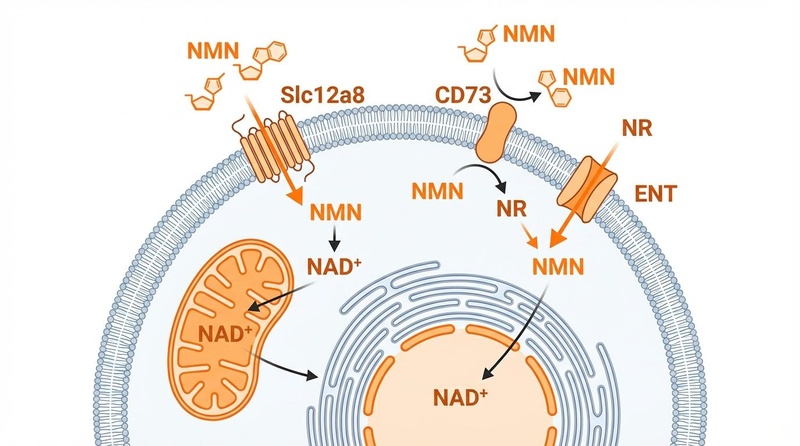
NMN replenishes the intracellular NAD+ pool, which serves as an obligate co-substrate for enzymes that govern energy metabolism and cellular maintenance.
- Primary targets:
- NMNAT1–3 (Nicotinamide Mononucleotide Adenylyltransferase): Enzymes that catalyze the direct conversion of NMN and ATP into NAD+[19].
- Sirtuins (SIRT1–7): "Longevity genes" that require NAD+ to regulate mitochondrial health, DNA transcription, and cellular stress response.
- PARP1–3: DNA repair enzymes fueled by NAD+ that identify and repair genomic damage.
- CD38: A membrane-bound NADase that consumes NAD+; its upregulation during "inflammaging" is a primary driver of age-related NAD+ decline.
- Core mechanisms:
- NAD+ Salvage Pathway: NMN is the direct metabolic precursor that bypasses the rate-limiting enzyme NAMPT (Nicotinamide Phosphoribosyltransferase), allowing for efficient NAD+ replenishment.
- Mitochondrial Biogenesis: By activating SIRT1 and PGC-1α, NMN supports the creation and maintenance of functional mitochondria and improves oxygen utilization efficiency[2:3].
- DNA Repair Activation: NMN provides the NAD+ necessary for PARP enzymes to fix genomic instability[20].
- Gut-Mediated Deamidation: Emerging research suggests a significant portion of orally ingested NMN is deamidated by gut bacteria into Nicotinic Acid (NA), which then synthesizes NAD+ via the Preiss-Handler pathway in the liver[16:1].
- Pharmacokinetics:
- Cellular Entry: NMN enters cells through two primary routes: directly via the Slc12a8 transporter (sodium-dependent) or by extracellular conversion to Nicotinamide Riboside (NR) by CD73, entry via ENT transporters, and subsequent re-phosphorylation by NRKs[19:1].
- Bioavailability: Standard oral NMN is partly metabolized into nicotinamide (NAM) and NA in the gut. Liposomal formulations bypass gastric degradation, increasing blood NAD+ by 84% and maintaining elevated tissue levels for weeks after cessation of use[21].
- Half-life: Plasma levels peak within 30–60 minutes but are cleared rapidly as NMN is taken up and converted to NAD+ in tissues.
¶ Effects on different systems
¶ Metabolic health (glucose, insulin, lipids)
NMN has shown significant benefits for skeletal muscle insulin sensitivity specifically in prediabetic individuals and postmenopausal women[1:3]. Systematic reviews indicate that while NMN consistently raises NAD+ levels, its effects on fasting glucose and systemic lipid profiles are not significant in the general healthy population, suggesting its metabolic utility is highest in impaired/insulin-resistant cohorts[7:4][16:2]. However, it may attenuate postprandial hyperinsulinemia, a risk factor for cardiovascular disease, in healthy middle-aged men[14:2].
¶ Cardiovascular health (blood pressure, vascular markers)
While NMN does not consistently lower blood pressure in systematic meta-analyses[17:1][8:2], it has been studied for its potential to improve vascular endothelial function. One 12-week RCT demonstrated a trend toward reduced arterial stiffness (pulse wave velocity) in subjects with above-average BMI or blood glucose levels[15:1]. Preclinical data suggests NMN protects against diet-induced hypertrophic cardiomyopathy by modulating PI3K-Akt signaling and reducing oxidative stress[12:1].
¶ Body weight and composition
Human clinical trials, including long-term (12-week) studies in older men, have not shown significant reductions in body weight, body fat percentage, or visceral fat with NMN supplementation[18:1][11:4]. Its primary physical benefits appear focused on metabolic efficiency and functional motility rather than structural weight loss.
¶ Brain & mental health (cognition, mood, sleep)
Preclinical rodent models suggest substantial therapeutic potential for NMN in Alzheimer’s disease and cognitive diseases by improving synaptic plasticity and reducing neuroinflammation[8:3]. In humans, 12 weeks of NMN supplementation has been clinically shown to maintain walking speed and significantly improve sleep quality and overall vitality scores in older adults[6:6][14:3]. Furthermore, related NAD+ precursors combined with pyruvate have shown neuroprotective potential in glaucoma Phase 2 trials, improving visual function over 2.2 months[22].
¶ Muscle & Liver Function
NMN improves liver health by significantly lowering transaminase levels (ALT/AST) in middle-aged and elderly individuals[13:2][11:5]. In muscle, it enhances oxygen uptake (aerobic efficiency) and functional mobility markers[4:5][5:3]. Notably, NMN may inhibit skeletal muscle inflammatory signaling post-exercise, although it might also potentially interfere with phagocyte-mediated mitochondrial replenishment during intensive myofiber repair[23].
¶ Dosage and how to take it
¶ Standard dosing in studies
- Typical daily dose range: 250–1000 mg/day.
- Clinical Efficacy Peak: Multi-dose trials suggest that 600 mg/day may be the optimal balance between cost and efficacy for raising NAD+ and improving functional physical performance[4:6][3:4].
- Study durations: Human trials typically range from 6 to 12 weeks, with safety confirmed for continuous daily use up to 12 weeks.
¶ Forms and bioavailability
- Standard Powder/Capsules: Stable at room temperature but heavily metabolized by the gut microbiome into NAM and NA.
- Liposomal NMN: The most bioavailable form; encapsulated in lipid bilayers to protect the molecule from gastric acid. It provides an 84% increase in blood NAD+ and exhibits superior tissue retention compared to standard formulations[21:1][24].
- Sublingual: Intended to bypass first-pass metabolism, though gut deamidation remains a major metabolic pathway for oral NMN regardless of delivery.
¶ Storage requirements
Standard NMN is chemically unstable and sensitive to heat and humidity, degrading into Nicotinamide (NAM). High concentrations of NAM are undesirable as it can feedback-inhibit Sirtuins and PARPs.
- Cold Storage: To maintain maximum potency and prevent degradation, NMN should be refrigerated at 4°C. Crystalline stabilized or liposomal forms are more resilient at room temperature for short durations (3–6 months).
¶ Special populations
- Metabolically Impaired: Greater magnitude of benefits seen in prediabetic and insulin-resistant populations[1:4][15:2].
- Elderly: Strong evidence for improvements in functional mobility and sleep quality[18:2][6:7].
- Pregnancy & Children: No safety data available; supplementation is not recommended for these groups.
¶ Safety and side effects
¶ Common side effects
NMN is generally well-tolerated. Human clinical trials utilizing doses up to 1250 mg/day have reported no serious adverse events. Mild gastrointestinal discomfort (bloating, nausea) occurs in rare instances and is typically transient.
¶ Less common / serious concerns
- Methylation Pool Depletion: Chronic high-dose NMN metabolism consumes methyl groups (SAMe) during the excretion of NAM as N-methylnicotinamide. While trials haven't shown dangerous homocysteine spikes, many researchers and practitioners suggest co-supplementing with Trimethylglycine (TMG / Betaine) (500–1000 mg) as a clinical precaution to preserve the methyl pool[4:7][7:5][6:8].
- Theoretical Tumor Promotion: While cancer cells require NAD+ for metabolism, recent in vivo lung cancer models demonstrated that NMN administration did not promote tumor growth, volume, or mitotic index[20:1][25]. However, caution is advised for individuals with active, untreated malignancies.
¶ Drug and supplement interactions
¶ Pharmacokinetic interactions
- CD38 Inhibitors: Combining NMN with Quercetin, Apigenin, or Luteolin is common. Inhibiting the CD38 "NADase" prevents the extracellular breakdown of NAD+, theoretically enhancing NMN's efficacy in raising intracellular pools.
- Methylation Drain: NMN may interaction with the body's methyl donors; potential additive drain on SAMe levels.
¶ Pharmacodynamic interactions
- Hypoglycemic Medications: NMN has additive effects on muscle insulin sensitivity. It may theoretically enhance the effects of Metformin, Acarbose, or insulin therapy, though clinical data on specific combinations is currently limited[1:5][14:4].
¶ Combining Nicotinamide Mononucleotide (NMN) with other supplements (“stacks”)
- The "Longevity Stack": NMN + Resveratrol or Pterostilbene. Rationale: NMN provides the co-substrate fuel (NAD+), while Resveratrol acts as an allosteric activator of the SIRT1 enzyme.
- Methylation Support: NMN + Trimethylglycine (TMG). Rationale: TMG acts as a methyl donor to replenish the SAMe pool consumed during the excretion of NAD+ metabolites.
- Inflammaging Stack: NMN + Fisetin or Quercetin. Rationale: Clearing senescent cells (SASP) reduces the systemic CD38 load that chronically drains the cellular NAD+ pool.
¶ Practical FAQ
How long does it take for NMN to work?
Blood NAD+ levels rise within 30–60 minutes of oral ingestion. However, metabolic and functional benefits such as improved aerobic capacity or insulin sensitivity typically take 6–12 weeks of continuous daily use to manifest clinically.
Do I need to take TMG with NMN?
While most 250–1000 mg human trials do not show acute methyl depletion or dangerous homocysteine elevation, taking 500 mg of TMG is considered a standard clinical precaution to protect the body's methyl pool during chronic high-dose NAD+ precursor use.
Is NMN better than NR?
Both effectively raise NAD+. Nicotinamide Riboside (NR) has shown a higher peak blood NAD+ elevation in some head-to-head comparisons (up to 2.3-fold higher)[26]. However, NMN currently has stronger human evidence for specifically improving muscle insulin sensitivity and aerobic capacity, which several NR trials have failed to replicate[1:6][27][28].
Should I take NMN in the morning or night?
Morning is generally preferred. NAD+ levels follow a natural circadian rhythm and peak early in the day; taking NMN in the morning aligns with biological cycles and may help avoid sleep disruption reported by some sensitive users.
Is NMN safe for long-term use?
Human trials have confirmed safety and tolerability for continuous use up to 12 weeks. Multi-year safety data is still being collected, though NMN is a naturally occurring metabolite and human physiology is well-adapted to processing its metabolic byproducts.
¶ How we evaluated the evidence
Evidence quality was graded using the Longevipedia Evidence Grading Editorial Policy.
- High: Supported by multiple systematic reviews and large-scale meta-analyses of human RCTs (e.g., NAD+ elevation, lack of BP effect).
- Moderate: Supported by well-designed randomized controlled trials with clear outcomes but smaller sample sizes or specific demographics (e.g., muscle insulin sensitivity, aerobic capacity).
- Low: Based on preclinical animal data, pilot studies, or inconsistent human results (e.g., cognitive benefits, sleep quality).
¶ References
Yoshino, M., et al. (2021). Nicotinamide mononucleotide increases muscle insulin sensitivity in prediabetic women. Science, 372(6547), 1224–1229. https://pmc.ncbi.nlm.nih.gov/articles/PMC8550608/ ↩︎ ↩︎ ↩︎ ↩︎ ↩︎ ↩︎ ↩︎
Liao, B., et al. (2021). Nicotinamide mononucleotide supplementation enhances aerobic capacity in amateur runners: a randomized, double-blind study. Journal of the International Society of Sports Nutrition, 18(1), 54. https://pubmed.ncbi.nlm.nih.gov/34238308/ ↩︎ ↩︎ ↩︎ ↩︎
Liao, B., et al. (2021). Nicotinamide mononucleotide supplementation enhances aerobic capacity in amateur runners: a randomized, double-blind study. Journal of the International Society of Sports Nutrition. https://pubmed.ncbi.nlm.nih.gov/34238308/ ↩︎ ↩︎ ↩︎ ↩︎ ↩︎
Yi, L., et al. (2023). The efficacy and safety of β-nicotinamide mononucleotide (NMN) supplementation in healthy middle-aged adults: a randomized, multicenter, double-blind, parallel-group, dose-dependent clinical trial. GeroScience, 45(1), 29–43. https://pmc.ncbi.nlm.nih.gov/articles/PMC11365583/ ↩︎ ↩︎ ↩︎ ↩︎ ↩︎ ↩︎ ↩︎ ↩︎
Prokopidis, K., et al. (2025). The Effect of Nicotinamide Mononucleotide and Riboside on Skeletal Muscle Mass and Function: A Systematic Review and Meta-Analysis. Journal of Cachexia, Sarcopenia and Muscle, 16(3). https://pubmed.ncbi.nlm.nih.gov/40275690/ ↩︎ ↩︎ ↩︎ ↩︎
Irie, J., et al. (2024). Ingestion of β-nicotinamide mononucleotide increased blood NAD levels, maintained walking speed, and improved sleep quality in older adults. npj Aging, 9, 5. https://pubmed.ncbi.nlm.nih.gov/38789831/ ↩︎ ↩︎ ↩︎ ↩︎ ↩︎ ↩︎ ↩︎ ↩︎ ↩︎
Zhang, J., et al. (2025). Efficacy of oral nicotinamide mononucleotide supplementation on glucose and lipid metabolism for adults: a systematic review with meta-analysis on randomized controlled trials. Critical Reviews in Food Science and Nutrition, 65(22), 4382-4400. https://pubmed.ncbi.nlm.nih.gov/39116016/ ↩︎ ↩︎ ↩︎ ↩︎ ↩︎ ↩︎
Qader, M. A., et al. (2025). A systematic review of the therapeutic potential of nicotinamide adenine dinucleotide precursors for cognitive diseases in preclinical rodent models. BMC Neuroscience, 26(1), 12. https://pubmed.ncbi.nlm.nih.gov/40033213/ ↩︎ ↩︎ ↩︎ ↩︎
U.S. Food and Drug Administration. (2025, September 29). Response to Citizen Petition from Natural Products Association regarding NMN. https://www.npanational.org/news/fda-reinstates-nmn-as-dietary-supplement-after-npa-lawsuit/ ↩︎ ↩︎
CIRS Group. (2025). US FDA Confirms NMN Lawful in Dietary Supplements. Industry Regulatory Report. https://www.cirs-group.com/en/food/us-fda-confirms-nmn-lawful-in-dietary-supplements ↩︎
Soma, M., & Lalam, S. K. (2022). The role of nicotinamide mononucleotide (NMN) in anti-aging, longevity, and its potential for treating chronic conditions. Molecular Biology Reports, 49, 9737–9748. https://link.springer.com/article/10.1007/s11033-022-07459-1 ↩︎ ↩︎ ↩︎ ↩︎ ↩︎ ↩︎
Han, Y. C., et al. (2024). Mechanisms Underlying the Therapeutic Effects of Nicotinamide Mononucleotide in Treating High-fat Diet-induced Hypertrophic Cardiomyopathy. Current Pharmaceutical Design, 30(24). https://pubmed.ncbi.nlm.nih.gov/39171590/ ↩︎ ↩︎
Wang, J. P., et al. (2025). Effects of Nicotinamide Mononucleotide Supplementation on Muscle and Liver Functions Among the Middle-aged and Elderly: A Systematic Review and Meta-analysis of Randomized Controlled Trials. Current Pharmaceutical Biotechnology, 26(1). https://pubmed.ncbi.nlm.nih.gov/39185644/ ↩︎ ↩︎ ↩︎
Yamaguchi, S., et al. (2024). Safety and efficacy of long-term nicotinamide mononucleotide supplementation on metabolism, sleep, and nicotinamide adenine dinucleotide biosynthesis in healthy, middle-aged Japanese men. Endocrine Journal, 71(2), 153–169. https://pubmed.ncbi.nlm.nih.gov/38191197/ ↩︎ ↩︎ ↩︎ ↩︎ ↩︎
Katayoshi, T., et al. (2023). Nicotinamide adenine dinucleotide metabolism and arterial stiffness after long-term nicotinamide mononucleotide supplementation: a randomized, double-blind, placebo-controlled trial. Scientific Reports, 13, 2786. https://www.nature.com/articles/s41598-023-29787-3 ↩︎ ↩︎ ↩︎
Cuenoud, B., et al. (2025). A randomized, open-label, placebo-controlled study to evaluate the effects of three NAD+ precursors on NAD+ levels and gut health in healthy adults. Nature Metabolism. https://www.nature.com/natmetab/ ↩︎ ↩︎ ↩︎
Lei, L., et al. (2023). Effects of NAD+ precursors on blood pressure, C-reactive protein concentration and carotid intima-media thickness: A meta-analysis of randomized controlled trials. European Journal of Clinical Investigation, 53(12), e14019. https://pubmed.ncbi.nlm.nih.gov/37593976/ ↩︎ ↩︎
Igarashi, M., et al. (2022). Chronic nicotinamide mononucleotide supplementation elevates blood nicotinamide adenine dinucleotide levels and alters muscle motility in healthy old men. NPJ Aging, 8, 5. https://www.ncbi.nlm.nih.gov/pmc/articles/PMC9158788/ ↩︎ ↩︎ ↩︎
Grozio, A., et al. (2019). Slc12a8 is a nicotinamide mononucleotide transporter. Nature Metabolism, 1(1), 47–57. https://doi.org/10.1038/s42255-018-0009-4 ↩︎ ↩︎
Pan, F., et al. (2021). Effect of β-nicotinamide mononucleotide on tumor formation and growth in a lung cancer mouse model. Materials Chemistry Frontiers, 5(2), 995-1002. https://pubs.rsc.org/en/content/articlelanding/2021/qm/d0qm00897D ↩︎ ↩︎
Kawakami, S., et al. (2025). Intervention Study Comparing Blood NAD+ Concentrations with Liposomal and Non-Liposomal Nicotinamide Mononucleotide. Annals of Clinical and Medical Case Reports, 14(11). https://www.aichi-med-u.ac.jp/files/soumu/Liposomal_NMN.pdf ↩︎ ↩︎
Martucci, A., et al. (2025). Next-Gen Neuroprotection in Glaucoma: Synergistic Molecules for Targeted Therapy. Journal of Clinical Medicine, 14(17). https://pubmed.ncbi.nlm.nih.gov/40943905/ ↩︎
Nakano, H., et al. (2024). Anti-inflammatory effects of nicotinamide mononucleotide (NMN) in human skeletal muscle after BFR-exercise. Journal of Physiology and Biochemistry. https://pubmed.ncbi.nlm.nih.gov/41705654/ ↩︎
Fukamizu, Y., et al. (2022). Oral Administration of Nicotinamide Mononucleotide Is Safe and Efficiently Increases Blood Nicotinamide Adenine Dinucleotide Levels in Healthy Subjects. Frontiers in Nutrition, 9, 868640. https://pubmed.ncbi.nlm.nih.gov/35479740/ ↩︎
Pan, F., et al. (2021). Effect of β-nicotinamide mononucleotide on tumor formation and growth in a lung cancer mouse model. Materials Chemistry Frontiers. https://doi.org/10.1039/D0QM00897D ↩︎
Berven, H., et al. (2025). NR-SAFE: a randomized, double-blind safety trial of high dose nicotinamide riboside in Parkinson's disease. Nature Communications, 14, 7793. https://doi.org/10.1038/s41467-023-43514-6 ↩︎
Elhassan, Y. S., et al. (2019). Nicotinamide Riboside Augments the Aged Human Skeletal Muscle NAD+ Metabolome and Induces Transcriptomic and Anti-inflammatory Signatures. Cell Reports, 28(7), 1717-1728. https://doi.org/10.1016/j.celrep.2019.07.043 ↩︎
Dollerup, O. L., et al. (2018). A randomized placebo-controlled clinical trial of nicotinamide riboside in obese men. The American Journal of Clinical Nutrition, 108(2), 343-353. https://doi.org/10.1093/ajcn/nqy132 ↩︎