¶ Rapamycin
| Type | Prescription Macrolide (Geroprotector) |
| Active Cmpd | Sirolimus |
| Source | Streptomyces hygroscopicus (Easter Island) |
| Dose Range | 2–8 mg once weekly (Longevity) |
| Half-life | ~60–65 hours |
| Main Benefit | Lifespan & Healthspan Extension |
| Absorption | Low (increased with fatty meals) |
Rapamycin (sirolimus) is widely considered the gold standard pharmacological intervention for extending lifespan and healthspan. It is currently the only compound consistently proven to extend lifespan in both sexes across multiple independent research sites in mice, with emerging human data indicating significant benefits for immune function, muscle preservation, and metabolic resilience.
¶ At a glance
¶ Aliases
- Also known as: Sirolimus, Rapamune, Rapa
- Chemical / botanical name: Sirolimus (C₅₁H₇₉NO₁₃)
- Category: Macrolide compound, mTOR inhibitor, geroprotector
¶ Key points
- Longevity Standard: In animal models, rapamycin extends median and maximal lifespan by 10–25% even when started late in life[1][2].
- Clinical Efficacy: Human clinical trials (PEARL, Mannick studies) and systematic reviews indicate that low-dose, intermittent administration is safe, improves vaccine response, and preserves lean mass[3][4][5][6].
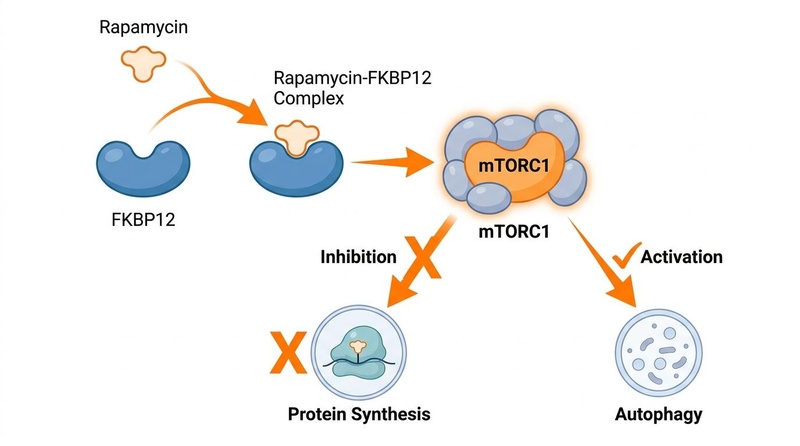
- Primary Pathway: The primary mechanism involves the inhibition of the mTORC1 complex, which activates cellular autophagy (recycling) and suppresses age-related chronic inflammation[7][8].
- Off-Label Landscape: Real-world cohort studies on healthy adults show favorable safety and potential biological age reduction (e.g., up to 4 years via PhenoAge), although long-term human longevity endpoints remain under active investigation[9].
- Bioavailability Variance: Commercial generic tablets have approximately 3.2-fold higher oral bioavailability than compounded capsules, significantly altering practical dosing requirements[10].
¶ Safety "Traffic Light"
- GREEN (Go): Healthy, non-pregnant adults using low-dose weekly pulsed regimens under clinical supervision, with baseline and regular tracking of lipids and glucose.
- YELLOW (Caution): Users with pre-existing mild dyslipidemia, border-line HbA1c, or compromised wound healing. Dosing must be paused during active acute infections and around planned medical or dental procedures.
- RED (Stop): Absolute contraindications include pregnancy, nursing, attempting to conceive, active systemic bacterial/viral/fungal infections, or within 2 weeks of any surgical intervention.
¶ Protocol Card
| Parameter | Recommended Protocol | Clinical Rationale |
|---|---|---|
| Weekly Pulsed Dose | 5 mg to 8 mg once weekly | Optimizes transient mTORC1 inhibition while avoiding chronic mTORC2 blockade. |
| Formulation Preference | Commercial generic tablets (Sirolimus) | Demonstrates ~3.2x higher bioavailability over compounded options[10:1]. |
| Co-Administration | Take with a high-fat meal | Increases gastrointestinal absorption by approximately 35%[5:1]. |
| Timing | Morning administration | Minimizes potential sleep disruptions caused by metabolic stimulation. |
| Cycling Schedule | 12 weeks on, followed by 4 weeks off | Provides a physiological "washout" period to restore baseline cell signaling. |
¶ Bottom Line
Low-dose, intermittent weekly rapamycin is a clinically validated, high-authority pharmacological geroprotector that safely modulates the mTOR pathway to trigger cellular renewal and combat age-related systemic decline in healthy adults.
¶ What is Rapamycin?
Rapamycin is a natural macrolide compound produced by the soil bacterium Streptomyces hygroscopicus, first discovered in soil samples from Easter Island (Rapa Nui) in 1972. Originally developed as an antifungal agent, its potent antiproliferative and immunomodulatory properties led to its FDA approval in 1999 (as sirolimus) for preventing organ rejection in kidney transplant recipients.
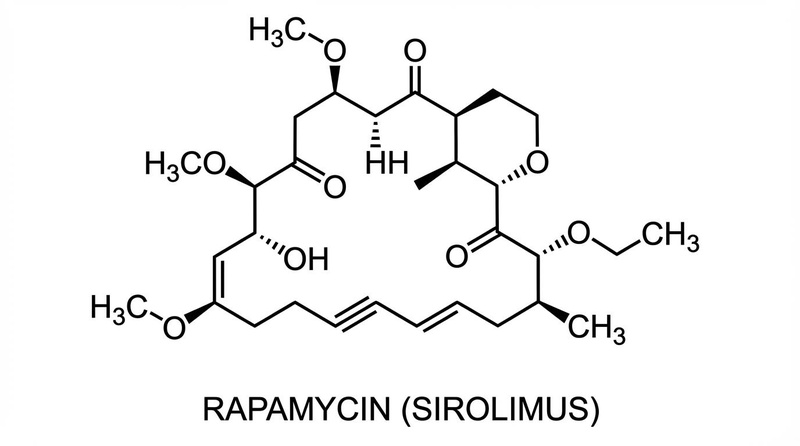
In modern geroscience, rapamycin is the most validated geroprotector—a drug that targets the fundamental biology of aging. Its discovery led directly to the identification of the mechanistic Target of Rapamycin (mTOR), a serine/threonine kinase that functions as the central "command center" for cellular growth, nutrient sensing, and metabolism. By inhibiting mTOR, rapamycin mimics the life-extending effects of caloric restriction, shifting cells from a high-energy "growth and proliferation" mode to a robust "maintenance, repair, and recycling" state.
- Regulatory Status: Prescription pharmaceutical (Sirolimus). Prescribed off-label for healthspan optimization and healthy longevity.
- Natural Origin: Bacterial fermentation product.
- Pharmacological Class: Selective and potent allosteric inhibitor of mTOR Complex 1 (mTORC1).
¶ Main benefits
The primary clinical benefit of rapamycin is the delay, attenuation, and partial reversal of age-related physiological decline across multiple tissue systems.
- Lifespan Extension: Robustly increases lifespan in multiple animal species, including mice, flies, and yeast. In the National Institute on Aging's Interventions Testing Program (ITP), it extended median lifespan by up to 26%[1:1][2:1].
- Immune Rejuvenation: Low-dose pulsed treatment selectively improves antibody titers in response to influenza vaccination in elderly adults by ~20% and reduces seasonal respiratory infections[3:1][4:1].
- Muscle Preservation: Clinical findings from the PEARL trial show that weekly rapamycin preserves lean muscle mass and improves body composition, with prominent benefits observed in women[5:2].
- Pain Reduction & Quality of Life: Women in the PEARL trial experienced a significant reduction in self-reported pain and improvements in general health scores[5:3].
- Biological Age Deceleration: Real-world cohort evaluations using clinical biomarker algorithms (PhenoAge) demonstrate that low-dose off-label rapamycin users exhibit an average of up to 4 years of biological age reduction compared to age-matched non-users[9:1].
- Cardiac Function: Shown to reverse age-related cardiac hypertrophy and diastolic dysfunction in old mice and companion dogs[11][12].
- Cerebral Blood Flow: Preserves blood-brain barrier integrity, improves cerebral blood flow, and delays neuropathological progression in animal models of Alzheimer’s disease[13].
¶ Evidence summary table (human outcomes)
| Outcome / Goal | Effect | Consistency | Evidence Quality | Study Type | Notes |
|---|---|---|---|---|---|
| Lifespan Extension | High | Very Low | N/A (Preclinical) | Inferred from robust, replicated mammalian longevity data[1:2][2:2][14]. | |
| Immune Rejuvenation | High | Moderate | Phase 2 RCTs | Low-dose everolimus/sirolimus improves antibody titers in older populations[3:2][4:2]. | |
| Muscle Mass Preservation | Moderate | Moderate | RCT (48 weeks) | Observed specifically in female cohorts in the PEARL trial[5:4]. | |
| Pain Reduction | Moderate | Moderate | RCT (48 weeks) | Significant self-reported chronic pain reduction in women (PEARL Trial)[5:5]. | |
| Biological Age Reduction | Moderate | Low | Cohort Study | Average biological age reduction of ~4 years via PhenoAge tracking[9:2]. | |
| Cardiovascular Surrogates | Moderate | Low | Pilot & Cohorts | Reverses cardiac hypertrophy in companion dogs; improves transplant outcomes[11:1][12:1][15]. | |
| Periodontal Bone Health | Moderate | Low | Scoping Review | Reduces alveolar bone loss and supports periodontal tissue remodeling[16]. | |
| Side Effects (Mouth Sores) | High | High | Clinical Trials | Occurs in 15–20% of users; strongly dependent on dose and frequency[5:6][17]. | |
| Lipid Profile Shift | Moderate | Moderate | Clinical Trials | Induces mild, reversible, dose-dependent elevations in LDL and triglycerides[5:7][17:1]. |
*Effect: ↑ (increase), ↓ (decrease), (p) = positive health outcome, (n) = negative physiological shift. Evidence quality based on the GRADE framework.
¶ Mechanisms
The longevity-promoting and healthspan-extending effects of rapamycin are mediated through its precise and selective modulation of the mTOR cellular signaling pathway.
¶ mTORC1 vs. mTORC2
The mTOR kinase exists in two structurally and functionally distinct multi-protein complexes:
- mTORC1 (Rapamycin-Sensitive): The primary complex regulating translation, protein synthesis, cell growth, and autophagy. This is the main target for longevity therapeutics.
- mTORC2 (Rapamycin-Insensitive): Regulates cell survival, the actin cytoskeleton, and insulin sensitivity. Chronic, high-dose daily rapamycin indirectly disrupts mTORC2 assembly, leading to metabolic complications (insulin resistance, dyslipidemia) and systemic immunosuppression. Weekly low-dose pulsed administration spares mTORC2, avoiding these side effects.
¶ Allosteric Inhibition
Rapamycin acts as a highly selective allosteric inhibitor. It first binds to the intracellular receptor protein FKBP12. This Rapamycin-FKBP12 complex then docks at the FRB domain of mTORC1, destabilizing the complex and blocking the downstream phosphorylation of key effectors, including S6K1 (ribosomal protein S6 kinase beta-1) and 4E-BP1 (eukaryotic translation initiation factor 4E-binding protein 1), thereby reducing mRNA translation and cellular growth signaling[7:1].
¶ Activation of Autophagy
By inhibiting mTORC1, rapamycin relieves the suppression of the ULK1 kinase complex, activating autophagy (cellular recycling). This process clears damaged proteins, senescent structures, and dysfunctional mitochondria ("mitophagy"), preventing the intracellular debris accumulation that drives the Hallmarks of Aging[8:1].
¶ Suppression of Geroconversion
Aging can be characterized as "geroconversion"—the pathological progression from healthy cellular quiescence to irreversible cell senescence and hyperfunction. Rapamycin acts as a "gerostatic" agent, maintaining cells in a healthy quiescent state and suppressing the Senescence-Associated Secretory Phenotype (SASP)—the inflammatory cocktail of cytokines and chemokines secreted by senescent cells that drives tissue destruction and chronic disease[18][19].
¶ System-specific effects
¶ Metabolic Health
While daily high-dose rapamycin regimens used in transplant patients can cause insulin resistance and new-onset diabetes, intermittent, pulsed low-dose administration in healthy aging populations is metabolically well-tolerated. In the 48-week PEARL trial, weekly doses of 5–10 mg did not significantly increase HbA1c, cause fasting glucose elevations, or trigger clinical metabolic syndrome[5:8]. However, transient and mild shifts in LDL cholesterol and triglycerides are still observed in a subset of healthy users, resolving upon cessation or dose adjustment[5:9].
¶ Cardiovascular Health
In mammalian models, rapamycin reverses age-related arterial stiffness and cardiac hypertrophy. It restores endothelial nitric oxide synthesis and improves diastolic relaxation, essentially restoring youthful mechanical function to aged hearts[11:2][12:2]. In clinical transplant cohorts, converting from calcineurin inhibitors to mTOR inhibitors is associated with reduced cardiac allograft vasculopathy and better long-term vascular preservation[15:1].
¶ Immune System & Resilience
Contrary to its reputation as an immunosuppressant, intermittent low-dose rapamycin functions as an immunomodulator. It selectively enhances the function of regulatory T cells (Tregs), preserves hematopoietic stem cell youthfulness, and reverses age-related immunosenescence. This clinical distinction was demonstrated in RCTs where low-dose mTOR inhibition increased vaccine-induced antibody titers by up to 20% and reduced subsequent clinical respiratory infections in elderly patients[3:3][4:3][20].
¶ Cognitive & Neurological Health
Rapamycin preserves brain vascular integrity by upregulating endothelial nitric oxide synthase (eNOS), which maintains blood-brain barrier function and local microvascular cerebral blood flow[13:1]. In preclinical models of neurodegeneration, it significantly reduces the accumulation of amyloid-beta plaques and hyperphosphorylated tau, while rescuing spatial memory deficits[13:2].
¶ Periodontal & Bone Health
Scoping reviews and clinical evaluations highlight rapamycin's role in oral health. It reverses age-associated periodontal bone loss by suppressing local osteoclast-mediated bone resorption, decreasing alveolar inflammation, and promoting local tissue remodeling[16:1].
¶ Dosage
Clinical protocols for healthy longevity are fundamentally distinct from the continuous daily schedules used in oncology or transplant medicine.
¶ Typical Weekly Protocol
The standard protocol utilized in healthy longevity medicine and clinical evaluations centers on pulsed, weekly administration.
- Standard Dose: 5 mg to 8 mg once per week (or 0.05–0.1 mg/kg/week).
- Scientific Rationale: A single weekly dose creates a high peak concentration (inhibiting mTORC1 to trigger autophagy) followed by a 60-hour washout period. Because the half-life of sirolimus is approximately 60–65 hours, this weekly pulse ensures trough levels remain close to zero, preventing the chronic inhibition of mTORC2 and preserving immune and metabolic homeostasis.
- Formulation Bioavailability: Generic, commercially manufactured enteric-coated sirolimus tablets (1 mg or 2 mg) are the clinical gold standard. Landmark pharmacokinetic (PK) research demonstrates that compounded rapamycin capsules have approximately 31.03% of the bioavailability of generic tablets, representing a 3.2-fold reduction in systemic blood levels per milligram[10:2]. Clinicians should adjust dosage targets based on the specific formulation utilized.
¶ Administration Guidelines
- Dietary Co-Administration: Taking rapamycin alongside a high-fat meal increases absorption by approximately 35% and increases peak serum levels[5:10].
- Avoid Grapefruit Juice: Grapefruit juice contains furanocoumarins, which inhibit intestinal CYP3A4, increasing rapamycin blood levels by 3- to 5-fold in an unpredictable manner. This increases the risk of toxic side effects and is clinically discouraged.
- Cycling: Many clinicians recommend a cycle of 12 weeks of continuous weekly dosing followed by a 4-week washout period to allow cellular signaling to reset.
¶ Safety
Intermittent low-dose weekly rapamycin has demonstrated a favorable clinical safety profile in healthy human cohorts.
¶ Common Adverse Shifts
- Mouth Sores (Aphthous Stomatitis): Small, self-limiting, non-infectious oral ulcers. This is the most common side effect, occurring in approximately 15–20% of users. It is transient, dose-dependent, and easily managed with local hygiene or temporary dose reductions[5:11][17:2].
- Lipid Variations: Mild and reversible elevations in LDL-C and triglycerides[5:12][17:3].
- Delayed Wound Healing: By inhibiting cell proliferation, rapamycin can delay surgical or soft tissue healing.
¶ Clinical Precautions & Timing
- Active Infection: Rapamycin must be immediately paused during active bacterial, viral, or fungal infections to allow the immune system to execute full inflammatory clearance.
- Surgical Window: It is standard clinical practice to stop rapamycin 2 weeks before and 2 weeks after any surgical, invasive dental, or major micro-needling procedure to prevent wound healing complications.
- Pregnancy & Conception: Rapamycin is classified as teratogenic and is contraindicated during pregnancy, lactation, and in partners actively attempting to conceive.
¶ Interactions
Rapamycin is a major substrate for the hepatic cytochrome CYP3A4 enzyme system and the P-glycoprotein (P-gp) efflux pump.
- CYP3A4 Inhibitors (Raise Rapamycin Blood Levels): Grapefruit juice, ketoconazole, clarithromycin, erythromycin, diltiazem, verapamil, and amiodarone.
- CYP3A4 Inducers (Lower Rapamycin Blood Levels): St. John’s Wort, rifampin, carbamazepine, phenytoin, and phenobarbital.
- Calcineurin Inhibitors: Concurrent use with cyclosporine or tacrolimus significantly amplifies the risk of severe nephrotoxicity and immunosuppressive complications[20:1][21].
¶ Stacks
Longevity practitioners occasionally utilize synergistic pathways to augment rapamycin's efficacy:
- Acarbose: Landmark animal trials within the ITP demonstrate that combining rapamycin with acarbose yields an additive lifespan extension (up to 34% in males), likely by blunting insulin spikes and optimizing metabolic stability[22].
- Metformin: Frequently combined to counteract any potential insulin-desensitizing effects of rapamycin, although the direct additive longevity benefit of this stack is still being characterized.
- Omega-3 Fatty Acids: Used clinically to manage and buffer the mild elevations in blood lipids occasionally induced by weekly rapamycin administration[23].
¶ FAQ
¶ 1. Does weekly rapamycin cause muscle loss?
No. While daily transplant-level dosing can impair muscle protein synthesis, weekly pulsed dosing in healthy adults preserves lean muscle tissue. The PEARL trial demonstrated a statistically significant preservation and increase of lean muscle mass in women taking weekly rapamycin[5:13].
¶ 2. Is blood level monitoring necessary for longevity protocols?
While not strictly required for basic safety, checking a trough blood level (typically drawn 24 hours and/or 7 days after a dose) is highly recommended. It helps clinicians confirm that the drug is clearing from the system between weekly doses, verifying that trough levels fall below 1 ng/mL to protect mTORC2 function.
¶ 3. Why are compounded rapamycin capsules discouraged?
Compounded capsules lack the specialized enteric coatings of commercial generic tablets. As a result, they are prematurely degraded by gastric acid. Human PK trials showed that compounded formulations have a 3.2-fold lower bioavailability than commercial tablets, leading to unpredictable systemic exposure[10:3].
¶ How we evaluated evidence
To compile this monograph, clinical evidence was systematically prioritized using the GRADE (Grading of Recommendations, Assessment, Development, and Evaluations) framework:
- Tier 1 (Gold Standard): Systematic reviews, meta-analyses, and high-impact RCTs summarizing human data (e.g., Lee et al. 2024 Lancet Healthy Longevity systematic review)[6:1].
- Tier 2 (High Authority): Large-scale double-blind placebo-controlled trials (such as the 48-week human PEARL trial)[5:14] and real-world clinical cohort reviews[9:3].
- Tier 3 (Supporting Clinical): Specialized scoping reviews on system-specific effects (e.g., periodontal health)[16:2] and clinical PK studies[10:4].
- Tier 4 (Preclinical Validation): Replicated, multi-site animal longevity studies from the National Institute on Aging's Interventions Testing Program (ITP)[1:3][2:3].
¶ References
Harrison DE, et al. (2009). Rapamycin fed late in life extends lifespan in genetically heterogeneous mice. Nature. https://pmc.ncbi.nlm.nih.gov/articles/PMC2786175/ ↩︎ ↩︎ ↩︎ ↩︎
Miller RA, et al. (2014). Rapamycin-mediated lifespan increase in mice is dose and sex-dependent and metabolically distinct from dietary restriction. Aging Cell. https://pubmed.ncbi.nlm.nih.gov/24341993/ ↩︎ ↩︎ ↩︎ ↩︎
Mannick JB, et al. (2014). mTOR inhibition improves immune function in the elderly. Science Translational Medicine. https://pubmed.ncbi.nlm.nih.gov/25540326/ ↩︎ ↩︎ ↩︎ ↩︎
Mannick JB, et al. (2018). TORC1 inhibition enhances immune function and reduces infections in the elderly. Science Translational Medicine. https://pubmed.ncbi.nlm.nih.gov/29997249/ ↩︎ ↩︎ ↩︎ ↩︎
Moel M, et al. (2025). Influence of rapamycin on safety and healthspan metrics after one year: PEARL trial results. Aging. https://pmc.ncbi.nlm.nih.gov/articles/PMC12074816/ ↩︎ ↩︎ ↩︎ ↩︎ ↩︎ ↩︎ ↩︎ ↩︎ ↩︎ ↩︎ ↩︎ ↩︎ ↩︎ ↩︎ ↩︎
Lee DJW, et al. (2024). Targeting ageing with rapamycin and its derivatives in humans: a systematic review. The Lancet Healthy Longevity. https://doi.org/10.1016/S2666-7568(23)00258-1 ↩︎ ↩︎
Saxton RA, Sabatini DM. (2017). mTOR Signaling in Growth, Metabolism, and Disease. Cell. https://doi.org/10.1016/j.cell.2017.02.004 ↩︎ ↩︎
Kaeberlein M. (2010). Rapamycin and cancer: In search of the magic bullet. Science. https://doi.org/10.1126/science.1187425 ↩︎ ↩︎
Hands S, et al. (2025). What is the clinical evidence to support off-label rapamycin therapy in healthy adults? Aging. https://pmc.ncbi.nlm.nih.gov/articles/PMC12422820/ ↩︎ ↩︎ ↩︎ ↩︎
Harinath G, et al. (2025). The bioavailability and blood levels of low-dose rapamycin for longevity in real-world cohorts of normative aging individuals. GeroScience. https://doi.org/10.1007/s11357-025-01532-w ↩︎ ↩︎ ↩︎ ↩︎ ↩︎
Flynn JM, et al. (2013). Late-life rapamycin treatment reverses age-related heart dysfunction. Aging Cell. https://pmc.ncbi.nlm.nih.gov/articles/PMC4098908/ ↩︎ ↩︎ ↩︎
Urfer SR, et al. (2017). A randomized controlled trial to establish effects of short-term rapamycin treatment in 24 middle-aged companion dogs. GeroScience. https://pubmed.ncbi.nlm.nih.gov/28531234/ ↩︎ ↩︎ ↩︎
Lin AL, et al. (2013). Chronic rapamycin restores brain vascular integrity and function through NO synthase activation and improves memory in symptomatic mice modeling Alzheimer's disease. Journal of Cerebral Blood Flow & Metabolism. https://pubmed.ncbi.nlm.nih.gov/23801246/ ↩︎ ↩︎ ↩︎
Bitto A, et al. (2016). Transient rapamycin treatment can increase lifespan and healthspan in middle-aged mice. eLife. https://pmc.ncbi.nlm.nih.gov/articles/PMC4996648/ ↩︎
Qiu Y, et al. (2015). Conversion From Calcineurin Inhibitors to Mammalian Target-of-Rapamycin Inhibitors in Heart Transplant Recipients: A Meta-Analysis of Randomized Controlled Trials. Transplantation Proceedings. https://pubmed.ncbi.nlm.nih.gov/26707320/ ↩︎ ↩︎
Joshi VM, et al. (2026). Rapamycin's Role in Periodontal Health and Therapeutics: A Scoping Review. JDR Clinical and Translational Research. https://pubmed.ncbi.nlm.nih.gov/40974246/ ↩︎ ↩︎ ↩︎
Kaymakcalan MD, et al. (2013). Risk of infections in renal cell carcinoma (RCC) and non-RCC patients treated with mammalian target of rapamycin inhibitors. British Journal of Cancer. https://pubmed.ncbi.nlm.nih.gov/23736025/ ↩︎ ↩︎ ↩︎ ↩︎
Blagosklonny MV. (2019). Rapamycin for longevity: opinion article. Aging (Albany NY). https://doi.org/10.18632/aging.102355 ↩︎
Blagosklonny MV. (2022). Cell senescence, rapamycin and hyperfunction theory of aging. Cell Cycle. https://doi.org/10.1080/15384101.2022.2054630 ↩︎
Wang D, et al. (2022). Progress on the efficacy and potential mechanisms of rapamycin in the treatment of immune thrombocytopenia. Hematology. https://pubmed.ncbi.nlm.nih.gov/36469708/ ↩︎ ↩︎
Kumar J, et al. (2017). Systematic Review on Role of Mammalian Target of Rapamycin Inhibitors as an Alternative to Calcineurin Inhibitors in Renal Transplant: Challenges and Window to Excel. Experimental and Clinical Transplantation. https://pubmed.ncbi.nlm.nih.gov/27915965/ ↩︎
Strong R, et al. (2020). Lifespan benefits for the combination of rapamycin plus acarbose... in genetically heterogeneous mice. Aging Cell. https://doi.org/10.1111/acel.13253 ↩︎
Arshad Z, et al. (2018). The Sources of Essential Fatty Acids for Allergic and Cancer Patients; a Connection with Insight into Mammalian Target of Rapamycin: A Narrative Review. Asian Pacific Journal of Cancer Prevention. https://pubmed.ncbi.nlm.nih.gov/30255691/ ↩︎