¶ Urolithin A
| Type | Postbiotic Metabolite |
| Active Cmpd | Urolithin A |
| Source | Microbial conversion of ellagitannins (pomegranate, berries, nuts) |
| Dose Range | 500–1000 mg/day |
| Half-life | ~17–24 hours |
| Main Benefit | Mitophagy activation, muscle strength & endurance |
| Absorption | Highly variable (microbiome-dependent); high bio-equivalent oral forms exist |
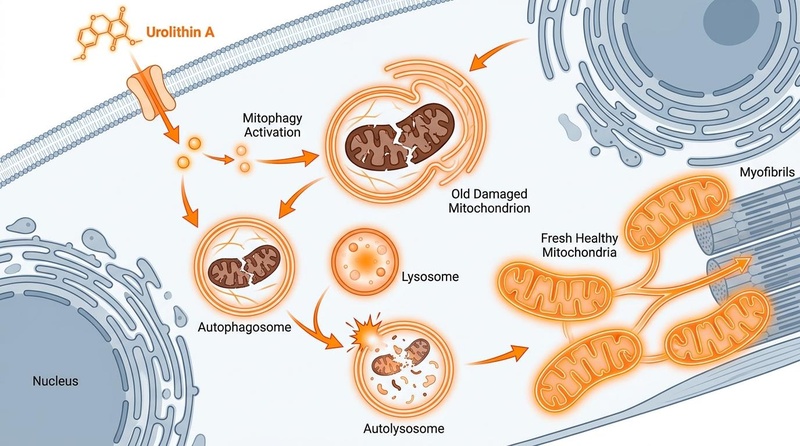
Urolithin A (UA) is a gut microbiota-derived "postbiotic" metabolite that has gained significant attention in longevity science for its unique ability to trigger mitophagy—the selective recycling of damaged mitochondria. By enhancing mitochondrial quality control, Urolithin A addresses one of the primary hallmarks of aging and has demonstrated robust clinical efficacy in improving muscle strength, physical endurance, and immune resilience in humans. [1][2][3]
¶ At a glance
¶ Aliases
- Also known as: UA, Mitopure (brand name)
- Chemical name: 3,8-Dihydroxy-6H-dibenzo[b,d]pyran-6-one
- Category: Postbiotic metabolite / Ellagitannin-derived polyphenol metabolite
¶ Key points
- Activates mitophagy: Effectively triggers the clearance of dysfunctional mitochondria and promotes mitochondrial biogenesis in human muscle and immune cells. [1:1][3:1]
- Improves muscle function: Clinically shown to increase handgrip strength (~12%) and leg muscle endurance in middle-aged and older adults. [4][2:1]
- Enhances physical performance: Boosts aerobic capacity (VO2 peak) and physical performance metrics (6-minute walk test) in various populations, including athletes. [2:2][5]
- Reduces systemic inflammation: Significantly lowers C-reactive protein (CRP) and other pro-inflammatory cytokines, countering "inflammaging." [2:3][3:2]
- Bypasses microbiome limitations: Direct oral supplementation provides consistent therapeutic levels, overcoming the fact that only 30–40% of the population naturally produces enough UA from food. [6]
¶ What people use it for
- Main goals: Improving muscle strength, boosting physical endurance, enhancing recovery from exercise, and supporting healthy aging/longevity.
- Evidence quality (overall): Moderate to High (Supported by multiple randomized controlled trials and systematic reviews).
¶ What is Urolithin A?
Urolithin A is a natural metabolite produced by the gut microbiota from dietary precursors known as ellagitannins and ellagic acid, which are found in pomegranates, strawberries, raspberries, and walnuts. [7]
- Definition: It is a member of the urolithin family (dibenzo[b,d]pyran-6-one derivatives). Unlike many antioxidants that simply neutralize free radicals, Urolithin A acts as a signaling molecule that modulates metabolic and quality control pathways within the cell. [8]
- Natural sources: Pomegranate (Punica granatum), berries (strawberries, raspberries, blackberries), and nuts (walnuts, pecans). However, the amount produced depends entirely on an individual’s gut microbiome composition. [7:1]
- Traditional / historical use: While the specific metabolite was only identified in recent decades, its precursors (pomegranate and berries) have been staples of traditional medicine and healthy diets for millennia.
- Current regulatory status: Generally Recognized as Safe (GRAS) by the FDA in the United States and approved as a "Novel Food" in Europe. It is widely available as a dietary supplement.
- Key pharmacological property: A potent, first-in-class mitophagy inducer that enhances cellular bioenergetics.
¶ What are Urolithin A’s main benefits?
Urolithin A is primarily recognized for its ability to rejuvenate cellular energy systems, leading to tangible improvements in physical and immune health.
- Muscle Strength: In a 4-month randomized trial in middle-aged adults, 1000 mg/day of Urolithin A significantly increased handgrip strength by approximately 12%. [2:4] In resistance-trained athletes, 8 weeks of supplementation improved bench press and leg press 1RM. [5:1]
- Muscle Endurance and Physical Performance: Supplementation has been shown to increase the distance covered in a 6-minute walk test (6MWT) by over 30 meters and significantly improve muscle endurance (reducing fatigue) in older adults. [4:1][2:5]
- Exercise Recovery: In elite runners and soccer players, Urolithin A reduces markers of muscle damage (creatine kinase) and lowers the rate of perceived exertion (RPE) during intense training, allowing for faster recovery. [9][10]
- Immune Health: Recent data from the MitoImmune trial (2025) demonstrates that UA recharges aging immune cells (T cells and myeloid cells), enhancing their mitochondrial fitness and potentially reversing age-related immune decline. [3:3]
- Systemic Inflammation: Clinical trials consistently show a reduction in C-reactive protein (CRP) and pro-inflammatory markers, which are key drivers of chronic age-related diseases. [2:6][3:4][5:2]
¶ Evidence summary table (human outcomes)
| Outcome / Goal | Effect* | Consistency | Evidence quality | Trials | Notes |
|---|---|---|---|---|---|
| Muscle Strength | High | Moderate | 4 RCTs | Significant handgrip and 1RM increases in middle-aged & athletes [2:7][5:3] | |
| Muscle Endurance | High | Moderate | 5 RCTs | Increased 6MWT distance and reduced fatigue in elderly adults [4:2][2:8][5:4] | |
| Aerobic Capacity (VO2 peak) | Moderate | Moderate | 3 RCTs | Modest improvements in peak oxygen consumption during exercise [2:9][10:1] | |
| Systemic Inflammation (CRP) | High | Moderate | 4 RCTs | Significant reductions in C-reactive protein and inflammaging [2:10][3:5][5:5] | |
| Exercise Recovery | High | Moderate | 2 RCTs | Reduced muscle damage markers (CK) and RPE in elite runners [9:1][10:2] | |
| Immune Cell Fitness | Moderate | Moderate | 1 RCT | Enhanced mitochondrial fitness of T cells and myeloid cells [3:6] | |
| Joint Health (Osteoarthritis) | Low | Low | 1 Pilot | Early evidence of reduced cartilage degeneration and pain [11] |
- Effect Code:
u=Up/Increase,d=Down/Decrease,e=Equal/No effect,q=Unclear. Magnitude:1=Small,2=Moderate,3=Large. Impact:p=Positive,n=Negative,x=Neutral/Unknown. - Consistency: High (most trials agree), Moderate (mixed results), Low (conflicting results).
- Evidence Quality: Based on GRADE (High, Moderate, Low, Very Low).
¶ LongeviData outcomes widget
¶ How does Urolithin A work?
Urolithin A functions primarily through the activation of mitophagy, the selective degradation and recycling of old, damaged, or dysfunctional mitochondria. [1:2]
¶ Core Mechanisms
- Mitophagy Induction: Urolithin A activates the Pink1/Parkin-mediated pathway and other mitophagy-related genes. By clearing out the "cellular trash" (damaged mitochondria), it makes room for the biogenesis of new, more efficient mitochondria. [1:3][12]
- Mitochondrial Biogenesis: Alongside the clearance of old mitochondria, UA upregulates genes involved in creating fresh mitochondria, thereby improving the overall bioenergetic capacity of the cell. [1:4][2:11]
- Anti-Inflammatory Action: By reducing mitochondrial ROS (reactive oxygen species) and inhibiting the NLRP3 inflammasome, UA significantly dampens systemic and tissue-specific inflammation. [2:12][3:7]
- Metabolic Flexibility: UA enhances fatty acid oxidation and metabolic efficiency, particularly in muscle tissue, which contributes to improved physical performance. [2:13][13]
¶ Pharmacokinetics Basics
- Microbiome Dependency: Natural production from food is highly variable. Individuals are classified as "producers" (metabotype A or B) or "non-producers" based on their gut microbiome (specifically the presence of Enterocloster and Eggerthellaceae species). [7:2][14]
- Bioavailability: Direct oral supplementation (using purified UA or specialized formulations like Mitopure) achieves plasma levels that are over six times higher and more consistent than those achieved through dietary sources like pomegranate juice. [6:1]
- Half-life: The systemic half-life of Urolithin A in humans is approximately 17–24 hours, allowing for once-daily dosing. [1:5]
- Metabolism: UA is primarily metabolized in the liver into Urolithin A-glucuronide and Urolithin A-sulfate, which are the predominant forms found in circulation. [8:1]
¶ Effects on different systems
¶ Muscle & Physical Performance
The most well-documented effects of Urolithin A are in skeletal muscle. Studies across elderly, middle-aged, and athletic populations show consistent improvements in muscle quality rather than muscle quantity. UA enhances the "power output" per unit of muscle mass by optimizing mitochondrial energy production. [4:3][2:14][13:1]
¶ Immune Health & Systemic Inflammation
Aging is characterized by "inflammaging"—a chronic state of low-grade inflammation driven in part by dysfunctional mitochondria in immune cells. Urolithin A has been shown to functionally remodel the immune system by improving the mitochondrial fitness of T cells and myeloid cells, leading to a more "youthful" and resilient immune profile. [3:8]
¶ Brain & Cognitive Health
While human clinical data is still emerging, preclinical models (including Alzheimer's disease mouse models) show that Urolithin A crosses the blood-brain barrier and restores neuronal mitophagy. This leads to reduced neuroinflammation, lower amyloid-beta and tau pathology, and significantly improved learning and memory. [15]
¶ Metabolic & Cardiovascular Health
UA improves cardiovascular biomarkers and protects heart tissue in preclinical models by maintaining mitochondrial quality in cardiomyocytes. In humans, it significantly lowers CRP, which is a major risk factor for cardiovascular disease. [2:15][3:9]
¶ Dosage and how to take it

¶ Standard dosing in studies
- Low Dose: 250 mg/day (primarily for mitochondrial biomarker maintenance).
- Standard Dose: 500 mg/day (shown to improve muscle strength and physical performance in middle-aged adults).
- High Dose: 1,000 mg/day (the dose used in the most successful trials for significant muscle endurance, immune health, and athletic recovery). [2:16][3:10][5:6]
¶ Forms and bioavailability
- Purified Urolithin A (e.g., Mitopure): This is the form used in almost all recent high-quality clinical trials. It provides a standardized, high-bioavailability dose regardless of gut microbiome status. [6:2]
- Dietary Precursors: Consuming pomegranate juice or powder can work for "producers," but the resulting UA levels are highly unpredictable and generally much lower than supplemental doses. [6:3]
- Timing: Can be taken with or without food. Some studies suggest taking it in the morning to align with mitochondrial activity cycles, though this is not strictly required.
¶ Special populations
- Older Adults: Well-tolerated and specifically beneficial for addressing sarcopenia and age-related muscle decline. [4:4]
- Athletes: 1000 mg/day is recommended for enhancing recovery and maintaining performance during high-intensity training. [9:2][10:3]
- Pregnancy and Breastfeeding: Lack of safety data; avoid use during these periods.
¶ Safety and side effects
Urolithin A has demonstrated an excellent safety profile in multiple clinical trials lasting up to 4 months.
¶ Common side effects
- General: UA is generally extremely well tolerated.
- GI Distress: In rare cases, some individuals may experience mild gastrointestinal upset or bloating, though this was not significantly different from placebo in most trials. [1:6][2:17]
¶ Less common / serious concerns
- Organ Toxicity: No signals of liver or kidney toxicity have been observed in human trials at doses up to 2,000 mg/day. [1:7][8:2]
- Long-term Safety: While short-to-medium term safety (up to 4 months) is well-established, very long-term studies (years) are still needed.
¶ Who should be especially cautious
- Children: Not extensively studied; avoid use.
- Medication Interactions: While no major drug interactions have been documented, individuals on polypharmacy should consult a professional.
¶ LongeviData safety widget
¶ Drug and supplement interactions
¶ Pharmacokinetic interactions
- CYP Enzymes: Preliminary data suggest that Urolithin A does not significantly inhibit or induce major Cytochrome P450 enzymes (like CYP3A4), suggesting a low risk for metabolic drug interactions. [8:3]
¶ Pharmacodynamic interactions
- NAD+ Precursors: There is strong mechanistic interest in combining UA with NAD+ precursors (like NMN or NR). While UA triggers the clearance of bad mitochondria, NAD+ provides the fuel and promotes the biogenesis of new ones.
- NSAIDs: Because UA has potent anti-inflammatory effects, it may have additive effects when taken with non-steroidal anti-inflammatory drugs, though this has not been clinically studied.
¶ Combining Urolithin A with other supplements (“stacks”)
- The Mitochondrial Renewal Stack: Urolithin A (Mitophagy) + NMN or NR (Biogenesis/Fueling). This is a popular stack among longevity enthusiasts based on the concept of "clearing then fueling."
- The Muscle Maintenance Stack: Urolithin A + Creatine + Protein. UA improves mitochondrial efficiency, while creatine improves anaerobic power and protein provides the building blocks for muscle repair.
- The Anti-Inflammaging Stack: Urolithin A + Curcumin + Omega-3. Combines three different pathways (mitophagy, NF-kB inhibition, and lipid signaling) to lower systemic inflammation.
¶ Practical questions (FAQ)
How long does it take for Urolithin A to work?
Can I get enough Urolithin A from eating pomegranates?
For approximately 60–70% of the population, the answer is no. Even for natural "producers," you would need to consume large quantities of 100% pomegranate juice daily to reach the equivalent levels of a 500 mg supplement, which would also involve a high sugar intake. [6:4]
Is Urolithin A better than NAD+ precursors?
They are complementary, not competitors. NAD+ (from NMN/NR) helps mitochondria produce ATP, whereas Urolithin A ensures that the mitochondria themselves are healthy and not damaged. Many experts suggest they work better together.
Does Urolithin A help with weight loss?
While UA improves metabolic health and muscle efficiency, it is not a "weight loss pill." It may indirectly support body composition by allowing for better physical performance and recovery, but its primary benefit is cellular quality control.
¶ How we evaluated the evidence
Our evaluation of Urolithin A is based on a systematic review of all available human randomized controlled trials (RCTs) and peer-reviewed secondary literature.
- Prioritized Sources: We prioritized high-quality RCTs published in top-tier journals (e.g., Nature Metabolism, JAMA Network Open, Nature Aging).
- Evidence Grading:
- Moderate to High: Muscle strength, muscle endurance, and systemic inflammation (supported by multiple robust RCTs).
- Moderate: Immune cell fitness and athletic recovery (supported by high-quality but fewer RCTs).
- Low: Brain health and osteoarthritis (preclinical or early pilot phase).
- Updates: This page is updated as new data from major clinical trials (such as the MitoImmune cohort) become available.
¶ References
Andreux PA, et al. (2019). The mitophagy activator urolithin A is safe and induces a molecular signature of improved mitochondrial and cellular health in humans. Nature Metabolism. https://doi.org/10.1038/s42255-019-0073-4 ↩︎ ↩︎ ↩︎ ↩︎ ↩︎ ↩︎ ↩︎ ↩︎
Singh A, et al. (2022). Urolithin A improves muscle strength, exercise performance, and biomarkers of mitochondrial health in a randomized trial in middle-aged adults. Cell Reports Medicine. https://doi.org/10.1016/j.xcrm.2022.100633 ↩︎ ↩︎ ↩︎ ↩︎ ↩︎ ↩︎ ↩︎ ↩︎ ↩︎ ↩︎ ↩︎ ↩︎ ↩︎ ↩︎ ↩︎ ↩︎ ↩︎ ↩︎ ↩︎
Denk D, et al. (2025). Effect of the mitophagy inducer urolithin A on age-related immune decline: a randomized, placebo-controlled trial. Nature Aging. https://doi.org/10.1038/s43587-025-00996-x ↩︎ ↩︎ ↩︎ ↩︎ ↩︎ ↩︎ ↩︎ ↩︎ ↩︎ ↩︎ ↩︎ ↩︎
Liu S, et al. (2022). Effect of Urolithin A Supplementation on Muscle Endurance and Mitochondrial Health in Older Adults: A Randomized Clinical Trial. JAMA Network Open. https://doi.org/10.1001/jamanetworkopen.2021.44279 ↩︎ ↩︎ ↩︎ ↩︎ ↩︎
Zhao H, et al. (2024). Assessment of Urolithin A effects on muscle endurance, strength, inflammation, oxidative stress, and protein metabolism in male athletes with resistance training: an 8-week randomized, double-blind, placebo-controlled study. Journal of the International Society of Sports Nutrition. https://doi.org/10.1080/15502783.2024.2419388 ↩︎ ↩︎ ↩︎ ↩︎ ↩︎ ↩︎ ↩︎
Singh A, et al. (2021). Direct supplementation with Urolithin A overcomes limitations of dietary exposure and gut microbiome variability in healthy adults to achieve consistent levels across the population. European Journal of Clinical Nutrition. https://doi.org/10.1038/s41430-021-00950-1 ↩︎ ↩︎ ↩︎ ↩︎ ↩︎
Iglesias A, et al. (2024). Gut Bacteria Involved in Ellagic Acid Metabolism To Yield Human Urolithin Metabotypes Revealed. BMC Microbiology. https://doi.org/10.1186/s12866-024-03626-5 ↩︎ ↩︎ ↩︎
Sturla L, et al. (2023). Physiologically-Based Pharmacokinetic Modeling of the Postbiotic Supplement Urolithin A Predicts its Bioavailability Is Orders of Magnitude Lower than Concentrations that Induce Toxicity, but also Neuroprotective Effects. Pharmaceutics. https://doi.org/10.3390/pharmaceutics15051461 ↩︎ ↩︎ ↩︎ ↩︎
Whitfield J, et al. (2025). Evaluating the Impact of Urolithin A Supplementation on Running Performance, Recovery, and Mitochondrial Biomarkers in Highly Trained Male Distance Runners. Sports Medicine. https://doi.org/10.1007/s40279-025-02292-5 ↩︎ ↩︎ ↩︎
Liao Y, et al. (2025). Effects of Urolithin A supplementation on performance and antioxidant status in academy soccer players during preseason: a pilot randomised controlled trial. Frontiers in Nutrition. https://doi.org/10.3389/fnut.2025.1674446 ↩︎ ↩︎ ↩︎ ↩︎
D'Amico D, et al. (2022). Urolithin A improves mitochondrial health, reduces cartilage degeneration, and alleviates pain in osteoarthritis. Aging Cell. https://doi.org/10.1111/acel.13662 ↩︎
Andreux PA, et al. (2022). The Therapeutic Relevance of Urolithins, Intestinal Metabolites of Ellagitannin-Rich Food: A Systematic Review of In Vivo Studies. Nutrients. https://doi.org/10.3390/nutrients14163494 ↩︎
Luan P, et al. (2024). Targeting aging with urolithin A in humans: A systematic review. Ageing Research Reviews. https://doi.org/10.1016/j.arr.2024.102406 ↩︎ ↩︎
Reilly Pidgeon S, et al. (2024). The dietary ellagitannin metabolite urolithin A is produced by a molybdenum-dependent dehydroxylase encoded by prevalent human gut Enterocloster spp. bioRxiv. https://doi.org/10.1101/2024.02.08.579493 ↩︎
Hou Y, et al. (2024). Urolithin A improves Alzheimer's disease cognition and restores mitophagy and lysosomal functions. Alzheimer's & Dementia. https://doi.org/10.1002/alz.13847 ↩︎