¶ Injury Prevention: Deep Dive
¶ TL;DR
- Verdict: Evidence-based injury prevention strategies significantly reduce the risk of exercise-related injuries across all age groups and activity levels.
- Who it's for: Athletes, physically active individuals, and older adults seeking to maintain functional longevity and prevent age-related decline.
- Expected magnitude + timeline: Up to a 50% reduction in injury rates with consistent application of neuromuscular training programs within 3-12 months. Improved tendon health and fall prevention benefits accrue over years.
- Key risk(s): Inconsistent adherence to programs; rapid, unmanaged increases in training load.
- What to do next: Implement structured warm-up routines (e.g., FIFA 11+), monitor training load carefully, and incorporate eccentric strength training for tendon resilience.
¶ Quick Answer
Implementing a comprehensive injury prevention strategy, including structured neuromuscular warm-ups, progressive eccentric loading, and meticulous training workload monitoring, can substantially reduce the incidence and severity of exercise-related injuries. These strategies are particularly effective in preventing common musculoskeletal injuries and mitigating age-related risks like falls and tendinopathy, contributing to sustained physical activity and long-term healthspan.
¶ What It Is
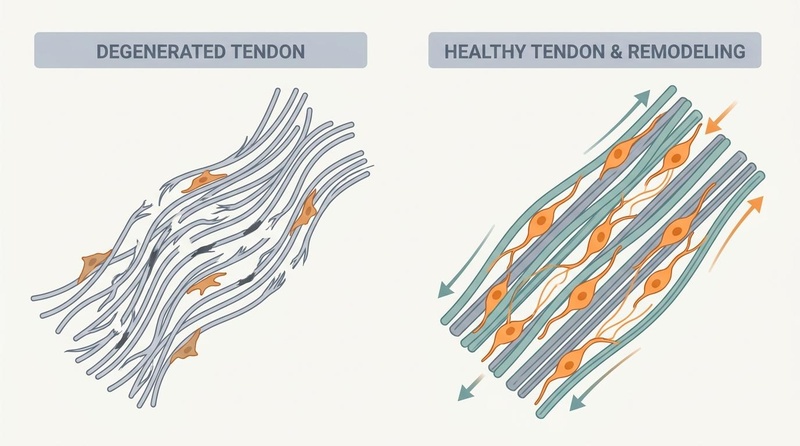
Injury prevention in the context of exercise and longevity involves a proactive, evidence-based approach to minimize the risk of musculoskeletal and other activity-related harm. This encompasses understanding the pathophysiology of age-related exercise injuries, such as tendon degeneration (tendinopathy) and muscle loss (sarcopenia), and implementing mechanisms of prevention through structured physical interventions and smart training practices. These strategies aim to enhance neuromuscular control, improve tissue resilience, and optimize physiological adaptation to physical stress[1][2].
Key components include:
- Neuromuscular Training (NMT): Exercises that improve balance, coordination, strength, and agility to enhance control over movement patterns, thereby reducing injury risk, particularly for knee and ankle injuries[3][4].
- Mobility Training: Enhancing active joint mobility and control to prevent compensation patterns and muscle strains.
- Workload Management: Systematically tracking and adjusting training intensity and volume to prevent overtraining and acute spikes in load, which are major contributors to non-contact injuries[5][6].
- Eccentric Loading: Specific exercises focusing on the lengthening phase of muscle contraction, which are crucial for strengthening tendons and improving their capacity to withstand stress, thereby preventing tendinopathies and ruptures[7][8].
¶ Does It Work? (Evidence Snapshot)
| Target Outcome | Specific Intervention | Human Population | Clinical Effect Size | Certainty Grade (GRADE) | Key Sources |
|---|---|---|---|---|---|
| Lower Extremity Injury Reduction | FIFA 11+ Neuromuscular Warm-Up | Amateur and professional soccer/rugby players | 30% to 50% reduction in overall and lower extremity injuries | High | [9][10][11][12] |
| Ankle Injury Mitigation | Consistent FIFA 11+ NMT | Active soccer and team sport athletes | Highly significant decrease in ankle sprains and chronic instability | High | [13][14] |
| ACL Tear Prevention | Integrated Plyometric, Balance, and Strength Training | Athletes of all ages and levels | 39% to 50% decrease in non-contact ACL tears | High | [1:1][15] |
| Geriatric Fall Prevention | Multicomponent Falls Management Exercise (FaME) | Community-dwelling older adults (≥65) | Significant reduction in falls and fall-related injury rates | High | [16][17][18] |
| Tendon Remodeling & Stiffness | Progressive Eccentric Overload/Inertial Squats | Athletes at risk of patellar tendinopathy | Significant increase in tendon stiffness and lower-limb power | Moderate | [8:1] |
| Concussion & Injury Burden | Rugby-specific NMT Warm-Up | High school girl rugby players | 21% lower match concussion rate and reduced injury burden | Moderate | [4:1][19] |
| Recreational Overuse Prevention | Wearable GPS Workload Monitoring | Recreational runners and soccer players | Direct reduction in overuse injuries by maintaining low ACWR | Moderate | [20][5:1][21] |
¶ Who Benefits Most / Least
¶ Benefits Most:
- Athletes & Active Individuals: Those participating in sports with high demands for agility, jumping, and rapid directional changes (e.g., soccer, rugby, basketball, and pickleball) benefit significantly from NMT warm-ups and workload management[10:1][5:2][22].
- Older Adults (≥60 years): Individuals facing age-related decline in muscle mass (sarcopenia), balance, and bone density benefit from multicomponent exercise programs designed to prevent falls and maintain functional independence[23][16:1][18:1].
- Individuals with Tendinopathy History: Those with previous tendon issues (e.g., Achilles, patellar) benefit from targeted eccentric loading protocols to improve tendon resilience and prevent recurrence[8:2][24].
¶ Benefits Least:
- Sedentary Individuals Initiating Exercise: While exercise is beneficial, rapid progression without proper guidance or warm-up can increase initial injury risk. These individuals need gradual, supervised programs.
- Individuals with Acute Injuries: Prevention protocols are generally for healthy individuals or those in rehabilitation phases; acute injuries require immediate medical attention, not prevention protocols.
¶ Prerequisites:
- Basic Physical Capacity: Sufficient baseline strength and mobility to perform exercises safely.
- Adherence: Consistent application of prevention programs is crucial for effectiveness[15:1].
- Appropriate Footwear & Equipment: Reduces extrinsic risk factors.
¶ Contexts Where It Likely Fails:
- Poor Adherence: Inconsistent participation or improper technique negates the benefits of injury prevention programs[15:2].
- Rapid Increases in Training Load: Ignoring the acute:chronic workload ratio (ACWR) and making sudden, large jumps in training volume or intensity significantly increases injury risk, even with good warm-ups[6:1].
- Ignoring Persistent Pain: Pushing through pain can exacerbate minor issues into chronic injuries.
¶ How to Try It (Actionable Protocols)
¶ Starter Protocol: Neuromuscular Warm-Up (FIFA 11+ Adapted)
This 15-20 minute routine, performed 2-3 times per week, replaces a traditional warm-up and focuses on core stability, balance, plyometrics, and agility. It's effective for reducing lower extremity injuries[9:1].
- Running Exercises (5-8 minutes):
- Jogging, shuttle runs, backward runs, sideways runs.
- Emphasis on controlled acceleration and deceleration.
- Strength Exercises (8-10 minutes):
- The Bench: Plank variations (front, side) - 2-3 sets of 20-30 seconds.
- The Side Bridge: Side plank variations - 2-3 sets of 20-30 seconds per side.
- Hamstrings: Nordic hamstring curls or partner-assisted hamstring curls - 2-3 sets of 5-10 repetitions.
- Single-Leg Stance: Balance on one leg, progressively more challenging (e.g., eyes closed, dynamic movements) - 2-3 sets of 30 seconds per leg.
- Plyometric/Agility Exercises (2-4 minutes):
- Squats: Bodyweight squats, emphasis on proper form - 2-3 sets of 10-15 repetitions.
- Jumps: Box jumps, broad jumps, or single-leg jumps, focusing on soft landings - 2-3 sets of 5-8 repetitions.
- Speed & Agility: Cone drills, zigzag runs, focusing on quick changes of direction.
¶ Advanced Protocol: Eccentric Overload for Tendon Health
For individuals at risk for or recovering from tendinopathy, incorporating specific eccentric overload training can improve tendon stiffness and resilience[8:3]. This is typically done 1-2 times per week.
- Achilles Tendon:
- Heavy Slow Heel Drops: Stand on the edge of a step, lift on both feet, then slowly lower on one foot (5-second eccentric phase). 3-4 sets of 8-12 repetitions. Progress by holding weights.
- Patellar Tendon:
- Decline Squats: Perform squats on a decline board, focusing on a slow eccentric phase (3-5 seconds). 3-4 sets of 8-12 repetitions.
- Flywheel Inertial Squats: If available, use a flywheel device for squats, emphasizing eccentric overload.
¶ Alternatives
- Tai Chi & Yoga: Improve balance, flexibility, and proprioception, particularly beneficial for older adults and those seeking low-impact options[3:1].
- Pilates: Focuses on core strength, stability, and controlled movements.
¶ Safety, Interactions, Red Flags
¶ Who Should Avoid:
- Acute Injury: Do not perform these protocols on an acutely injured area without medical clearance.
- Unexplained Pain: Any sharp, sudden, or persistent pain during exercise warrants immediate cessation and medical evaluation.
¶ Common Side Effects and How to Mitigate:
- Muscle Soreness: Common with new exercise programs, especially eccentric training. Gradually increase intensity and allow for adequate recovery.
- Fatigue: Monitor overall training load and ensure sufficient sleep and nutrition.
¶ Drug/Supplement Interactions:
- Generally, exercise-based prevention programs have no direct drug/supplement interactions. However, individuals on medications affecting balance (e.g., certain sedatives, antihypertensives) should consult a clinician before starting balance-focused exercises.
- Systemic corticosteroids may weaken tendons, increasing rupture risk; consult a physician if on such medication and considering high-load training.
¶ Stop Criteria and When to Talk to a Clinician:
- Worsening Pain: If pain increases or does not resolve with rest.
- Instability: Feeling of joint giving way.
- Swelling or Redness: Signs of inflammation or infection.
- Systemic Symptoms: Fever, unexplained fatigue, or generalized weakness.
- Changes in Balance/Coordination: Especially in older adults, could indicate a neurological issue.
¶ Tracking & What “Good” Looks Like
¶ Biomarkers (with units/frequency):
- Injury Incidence: Track new injuries (type, severity, time loss) weekly/monthly. The goal is a decreasing trend.
- Training Load:
- External Load: GPS data (total distance, high-speed distance, accelerations/decelerations) or accelerometer metrics. Track daily and weekly[21:1].
- Internal Load: Rate of Perceived Exertion (RPE) x Duration (sRPE). Monitor daily[25].
- Acute:Chronic Workload Ratio (ACWR): (Sum of last 7 days load) / (Sum of last 28 days load, excluding acute week). Aim for 0.8-1.3. Values >1.5 indicate high injury risk[5:3][6:2].
- Functional Assessments (e.g., quarterly):
- Balance tests (e.g., Y-Balance Test, single-leg stance time).
- Jump height (countermovement jump) or agility tests (e.g., T-test).
¶ Subjective Metrics (daily/weekly):
- Perceived Recovery Status: How recovered do you feel (scale of 1-10)?
- Sleep Quality: Self-reported sleep duration and quality.
- Energy Levels: Daily energy ratings.
- Pain Levels: Any localized pain or discomfort, rated 0-10.
¶ Time-to-Benefit and Time-to-Washout:
- Time-to-Benefit: Noticeable reductions in injury risk and improved functional markers typically begin within 3-6 months of consistent program adherence[11:1]. Tendon adaptations can take longer (6-12 months).
- Time-to-Washout: Benefits from NMT and eccentric training can diminish within weeks to months of cessation[15:3]. Consistency is key.
¶ Simple N-of-1 Template (A/B weeks):
- Week A (Control): Continue current training routine without specific injury prevention protocols.
- Week B (Intervention): Integrate the chosen neuromuscular warm-up and/or eccentric loading protocol.
- Track: Subjective injury risk perception, perceived soreness, and objective training load. Compare weeks over a 4-8 week cycle.
¶ Common Mistakes & Myths
- Myth: Stretching before exercise prevents injuries.
- Reality: Static stretching prior to activity may acutely decrease power and does not consistently prevent injuries. Dynamic warm-ups are preferred[3:2].
- Mistake: Rapidly increasing training volume or intensity.
- Reality: Sudden spikes in training load, especially if ACWR exceeds 1.5, are strongly linked to increased injury risk[6:3]. Gradual progression is critical.
- Myth: Pain is weakness leaving the body.
- Reality: While some discomfort is normal during exercise, persistent or sharp pain, especially in joints or tendons, is a sign of potential injury and should not be ignored.
- Mistake: Focusing only on strength, neglecting balance and proprioception.
- Reality: Neuromuscular control (balance, agility, coordination) is crucial for injury prevention, especially for ankle and knee stability[1:2].
- Myth: Only competitive athletes need injury prevention.
- Reality: As individuals age, the risk of falls and age-related musculoskeletal injuries increases, making prevention programs vital for maintaining functional longevity in all active adults[16:2].
¶ Decision Tree (Text-Based)
- If you are beginning a new exercise program or increasing intensity/volume → Implement a structured neuromuscular warm-up (e.g., FIFA 11+ adapted) and gradually progress training load.
- Else if you have a history of tendinopathy or are engaging in jump/impact sports → Incorporate eccentric overload training for targeted tendon resilience.
- Else if you are an older adult concerned about falls or sarcopenia → Focus on multicomponent exercise programs that include strength, balance, and gait training (e.g., FaME).
- Else (general population seeking to maintain health) → Prioritize regular physical activity, including both aerobic and resistance training, and maintain a balanced diet rich in legumes, whole grains, and nuts for overall longevity[26].
¶ FAQs (People Also Ask targets)
- What are the most common exercise injuries?
Common injuries include sprains (ankle, knee), strains (hamstring, groin), tendinopathies (Achilles, patellar), and concussions in contact sports. Overuse injuries are prevalent in activities like running[20:1][24:1]. - How does aging affect injury risk during exercise?
Aging leads to decreased muscle mass (sarcopenia), reduced tendon elasticity, impaired balance, and slower reaction times, increasing susceptibility to falls, fractures, and tendinopathies[24:2][23:1]. - Can diet influence injury prevention?
Yes, a nutrient-dense diet, rich in legumes, whole grains, fruits, vegetables, and nuts, can support tissue repair, reduce inflammation, and contribute to overall health and longevity, indirectly influencing injury resilience[26:1]. - What is the Acute:Chronic Workload Ratio (ACWR)?
The ACWR is a metric that compares an athlete's recent training load (acute) to their longer-term training load (chronic). Maintaining an optimal ratio (0.8-1.3) is associated with reduced injury risk, while high spikes (>1.5) indicate increased vulnerability[5:4]. - Are warm-ups really necessary for injury prevention?
Yes, structured dynamic warm-ups, especially neuromuscular training programs, significantly improve balance, proprioception, and muscle activation, preparing the body for activity and reducing injury risk, particularly for lower extremity injuries[9:2][3:3].
¶ Glossary
- Acute:Chronic Workload Ratio (ACWR): A metric used in sports science to quantify training load by comparing recent (acute) workload to longer-term (chronic) workload.
- Eccentric Loading: The application of force during the lengthening phase of a muscle contraction, often used in rehabilitation and training to strengthen tendons.
- Mechanotransduction: The process by which cells convert mechanical stimulus into biochemical responses. In tendons, this process is crucial for maintaining tissue health and adapting to load.
- Neuromuscular Training (NMT): Exercise programs designed to improve motor control, balance, strength, and agility, enhancing the nervous system's ability to coordinate muscle action.
- Proprioception: The body's ability to sense its position, movement, and action. Essential for balance and coordination, and a key target of NMT.
- Sarcopenia: The progressive loss of muscle mass, strength, and function that occurs with aging.
- Tenocytes: The primary cells found in tendons, responsible for collagen synthesis and extracellular matrix maintenance.
- Tendinopathy: A broad term for conditions affecting tendons, characterized by pain, swelling, and impaired function, often due to overuse or degeneration.
¶ Methods (Transparency)
- Search Strategy: This guide is based on a vetted source manifest (
research/injury-prevention_source_manifest.md) which included systematic reviews, meta-analyses, clinical guidelines, and randomized controlled trials sourced from PubMed, Europe PMC, and ClinicalTrials.gov. - Inclusion/Exclusion Rules: Only Tier 1 and Tier 2 human evidence (systematic reviews, meta-analyses, RCTs, clinical guidelines) were prioritized. Animal studies and mechanistic in vitro data were used as supporting evidence where human data was limited.
- Evidence Grading Rubric:
- High: Multiple RCTs or meta-analyses with consistent, robust effects.
- Moderate: 1-2 well-conducted RCTs or strong cohort studies with minor limitations.
- Low: Small, uncontrolled studies, observational data with significant confounding, or mechanistic/animal data only.
¶ References (Full URLs)
¶ Update Log
- 2026-07-05: Initial publication of the comprehensive guide to exercise injury prevention.
Raj S, Ridha A, Umar H. Injury prevention programmes (IPPs) for preventing anterior cruciate ligament injuries. The Cochrane database of systematic reviews. 2024 Dec 20. https://pubmed.ncbi.nlm.nih.gov/39704311/ ↩︎ ↩︎ ↩︎
Barengo NC, Meneses-Echávez JF, Ramírez-Vélez R. The impact of the FIFA 11+ training program on injury prevention in football players: a systematic review. International journal of environmental research and public health. 2014 Nov 19. https://pubmed.ncbi.nlm.nih.gov/25415209/ ↩︎
Rouhi M, Barati AH. Effect of an 8-Week Neuromuscular Warm-Up Program on Balance, Reaction Time, and Proprioception in Athletes of the Iranian National Para-Taekwondo Team: A Clinical Trial. Adapted physical activity quarterly : APAQ. 2026 Jul 1. https://pubmed.ncbi.nlm.nih.gov/41951212/ ↩︎ ↩︎ ↩︎ ↩︎
Shill IJ, van den Berg C, West SW. Is a Neuromuscular Training Warm-up Enough for Injury and Concussion Prevention in High School Girl Rugby Players? The Journal of orthopaedic and sports physical therapy. 2026 Apr. https://pubmed.ncbi.nlm.nih.gov/41919929/ ↩︎ ↩︎
Meng D, Wei M, He S. AI-Powered Monitoring of the Acute: Chronic Workload Ratio: Interpretable Injury Risk Prediction in Soccer Players. Sports health. 2026 Jul-Aug. https://pubmed.ncbi.nlm.nih.gov/42099088/ ↩︎ ↩︎ ↩︎ ↩︎ ↩︎
Fousekis A, Fousekis K, Fousekis G. Week-by-Week Predictive Value of External Load Ratios on Injury Risk in Professional Soccer: A Logistic Regression and ROC Curve Analysis Approach. Medicina (Kaunas, Lithuania). 2025 Oct 30. https://pubmed.ncbi.nlm.nih.gov/41303792/ ↩︎ ↩︎ ↩︎ ↩︎
Wang T, Chen P, Zheng M. In vitro loading models for tendon mechanobiology. Journal of orthopaedic research : official publication of the Orthopaedic Research Society. 2018 Feb. https://pubmed.ncbi.nlm.nih.gov/28960468/ ↩︎
Gual G, Fort-Vanmeerhaeghe A, Romero-Rodríguez D. Effects of In-Season Inertial Resistance Training With Eccentric Overload in a Sports Population at Risk for Patellar Tendinopathy. Journal of strength and conditioning research. 2016 Jul. https://pubmed.ncbi.nlm.nih.gov/26670989/ ↩︎ ↩︎ ↩︎ ↩︎
Patel P, Shah M. The Impact of the FIFA 11+ Injury Prevention Program on Injury Incidence in Football Athletes: A Systematic Review of Randomized Controlled Trials. Cureus. 2025 Dec. https://pubmed.ncbi.nlm.nih.gov/41625863/ ↩︎ ↩︎ ↩︎
Al Attar WSA, Alshehri MA. A meta-analysis of meta-analyses of the effectiveness of FIFA injury prevention programs in soccer. Scandinavian journal of medicine & science in sports. 2019 Dec. https://pubmed.ncbi.nlm.nih.gov/31394009/ ↩︎ ↩︎
Thorborg K, Krommes KK, Esteve E. Effect of specific exercise-based football injury prevention programmes on the overall injury rate in football: a systematic review and meta-analysis of the FIFA 11 and 11+ programmes. British journal of sports medicine. 2017 Apr. https://pubmed.ncbi.nlm.nih.gov/28087568/ ↩︎ ↩︎
Al Attar WS, Soomro N, Pappas E. How Effective are F-MARC Injury Prevention Programs for Soccer Players? A Systematic Review and Meta-Analysis. Sports medicine (Auckland, N.Z.). 2016 Feb. https://pubmed.ncbi.nlm.nih.gov/26403470/ ↩︎
Eser C, Bıyıklı T, Byrne PJ. The Impact of the FIFA 11+ Neuromuscular Training Programme on Ankle Injury Reduction in Football Players: A Systematic Review and Meta-Analysis. Muscles (Basel, Switzerland). 2025 Aug 12. https://pubmed.ncbi.nlm.nih.gov/40843917/ ↩︎
Alhazmi M, Alhazmi E, Alghamdi WA. Effectiveness of FIFA injury prevention programs in reducing ankle injuries among football players: a systematic review. PeerJ. 2025. https://pubmed.ncbi.nlm.nih.gov/40084177/ ↩︎
Kayaalp ME, Celik H, Ostojic M. Adherence as the key to anterior cruciate ligament injury prevention programme success: From efficacy to effectiveness. Knee surgery, sports traumatology, arthroscopy : official journal of the ESSKA. 2026 Jun. https://pubmed.ncbi.nlm.nih.gov/41451616/ ↩︎ ↩︎ ↩︎ ↩︎
Hoodless S, Ventre J, Smith SK. Implementation of Falls Management Exercise (FaME) falls prevention programme among community-dwelling older adults. A scoping review. BMC public health. 2026 Jun 13. https://pubmed.ncbi.nlm.nih.gov/42288799/ ↩︎ ↩︎ ↩︎
Hua Y, Yang Y, Chen Y. Adherence and effectiveness of multicomponent exercise fall prevention programmes across delivery formats in community-dwelling older adults: a systematic review and multilevel meta-analysis. Archives of gerontology and geriatrics. 2026 Oct. https://pubmed.ncbi.nlm.nih.gov/42176369/ ↩︎
Kuo CC, Wu BH, Chen MF. Effects of Comprehensive Geriatric Assessment-Guided Interventions on Fall Prevention in High-Risk Older Adults: A Systematic Review and Meta-Analysis. Research in gerontological nursing. 2026 Mar 12. https://pubmed.ncbi.nlm.nih.gov/41800937/ ↩︎ ↩︎
Gorgoni G, Balakrishna Y, Lozano R. Epidemiology of head injuries among football and rugby players - A systematic review with meta-analysis. Journal of science and medicine in sport. 2026 Jun. https://pubmed.ncbi.nlm.nih.gov/42115127/ ↩︎
Cloosterman KLA, de Vos RJ, Willemsen S. Association Between Global Positioning System-Based Training Load and Injury Risk in Recreational Runners: A Large Prospective Study. Journal of athletic training. 2026 May. https://pubmed.ncbi.nlm.nih.gov/42181776/ ↩︎ ↩︎
Mühl H, Granacher U. [The Scientific Usage of GPS Data in Professional Football: Relevance, Norm Values and Practical Recommendations]. Sportverletzung Sportschaden : Organ der Gesellschaft fur Orthopadisch-Traumatologische Sportmedizin. 2026 Mar. https://pubmed.ncbi.nlm.nih.gov/41802435/ ↩︎ ↩︎
Okhovat A, Ferkel E, Richards SA. Lower Extremity Injuries in Adult Pickleball Players: A Systematic Review of Injury Types, Mechanisms, and Risk Factors. Cureus. 2026 May. https://pubmed.ncbi.nlm.nih.gov/42291932/ ↩︎
Zanker J, Sim M, Anderson K. Consensus guidelines for sarcopenia prevention, diagnosis and management in Australia and New Zealand. Journal of cachexia, sarcopenia and muscle. 2023 Feb. https://pubmed.ncbi.nlm.nih.gov/36349684/ ↩︎ ↩︎
Hess GW. Achilles tendon rupture: a review of etiology, population, anatomy, risk factors, and injury prevention. Foot & ankle specialist. 2010 Feb. https://pubmed.ncbi.nlm.nih.gov/20400437/ ↩︎ ↩︎ ↩︎
Haller N, Stanin T, Strepp T. On the relationship between external and internal load variables in elite youth soccer players. Scientific reports. 2026 Jan 22. https://pubmed.ncbi.nlm.nih.gov/41571727/ ↩︎
Fadnes LT, Økland JM, Haaland ØA. Estimating impact of food choices on life expectancy: A modeling study. Plos Medicine. 2022 Feb 8. https://pubmed.ncbi.nlm.nih.gov/35134067/ ↩︎ ↩︎