¶ Metabolic Foundation Stacks
1. TL;DR
- Optimize metabolic health through synergistic diet, exercise, and targeted supplements.
- Suitable for individuals aiming for improved glucose control, insulin sensitivity, and body composition.
- Expect measurable improvements in blood glucose, HbA1c, and lipid profiles within 8-12 weeks.
- Key risks include B12 deficiency with metformin, and potential interactions with certain medications.
- Implement a structured A/B week tracking protocol and prioritize sleep and consistent meal timing.
2. Quick Answer
Metabolic Foundation Stacks are integrated protocols combining lifestyle interventions (glycemic-aware diet, time-restricted feeding, strategic exercise) with evidence-based nutraceuticals (e.g., Berberine, Alpha-Lipoic Acid, Myo-Inositol, CoQ10, Magnesium, Vitamins D3/K2) to optimize insulin sensitivity, glucose regulation, and overall metabolic health. This approach aims for synergistic benefits that exceed single interventions, with clinical improvements in HbA1c and fasting glucose typically observed within 2-3 months.
3. What It Is (Plain-English)
Metabolic Foundation Stacks are personalized, multi-pronged strategies designed to enhance your body's ability to process and utilize energy efficiently. Instead of focusing on isolated interventions, these stacks combine dietary adjustments, strategic physical activity, and targeted supplements to address multiple facets of metabolic dysfunction simultaneously. The goal is to create a robust foundation for consistent glucose control, improved insulin signaling, and sustained energy levels.
¶ What Counts and What Doesn’t
A true metabolic stack integrates both behavioral and supplemental interventions based on clear evidence of synergy. It's more than just taking a handful of pills; it involves a cohesive plan where each component amplifies the others. For example, combining Berberine with Silymarin (milk thistle) is a stack, as Silymarin enhances Berberine's absorption and efficacy [1][2]. Simply taking random supplements without an underlying rationale for their combined effect is not a metabolic stack.
¶ Mechanism in 60 Seconds: Cellular Energy Optimization
At its core, metabolic health revolves around how efficiently your cells handle glucose and produce energy. Insulin acts as the key to unlock cells for glucose uptake, and insulin resistance means cells become less responsive to this key. Metabolic stacks work by:
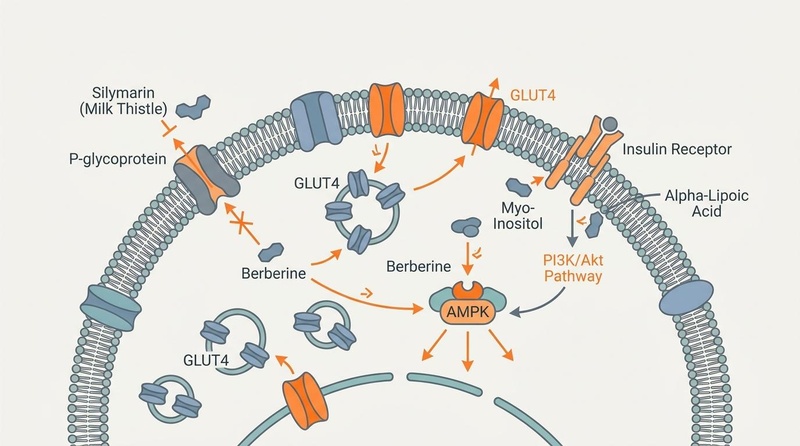
- Improving Insulin Sensitivity: Enhancing the responsiveness of cells to insulin, allowing glucose to enter more efficiently. Compounds like Myo-Inositol and Alpha-Lipoic Acid support this by modulating insulin signaling pathways like PI3K/Akt [3][4][5][6].
- Increasing Glucose Uptake: Promoting the translocation of GLUT4 transporters to the cell surface, which are responsible for bringing glucose into muscle and fat cells. Berberine, for instance, activates AMPK, leading to increased GLUT4 expression [1:1].
- Reducing Glucose Production: Modulating hepatic glucose output, especially in the liver, to prevent excessive glucose release into the bloodstream.
- Enhancing Mitochondrial Function: Supporting the powerhouses of your cells (mitochondria) to efficiently burn fuel and reduce oxidative stress, often through antioxidants like Alpha-Lipoic Acid and Coenzyme Q10 [7][8][9][5:1].
- Improving Bioavailability: Certain compounds, like Silymarin, can inhibit efflux pumps (e.g., P-glycoprotein) that reduce the absorption of other beneficial compounds like Berberine, thereby increasing their effective concentration [1:2][2:1].
4. Does It Work? (Evidence Snapshot)
Metabolic foundation stacks, especially those integrating lifestyle and targeted nutraceuticals, show significant efficacy in improving glycemic control and related metabolic markers. Human data is prioritized.
¶ Human Clinical Outcomes (Evidence Summary Table)
| Outcome | Effect | Quality | Consistency | Trials | Notes |
|---|---|---|---|---|---|
| Glycemic Control (HbA1c) | High | High | Meta-analyses, RCTs | Significant reductions across diverse populations [1:3][7:1][10][11][12][13] | |
| Insulin Sensitivity (HOMA-IR) | High | High | RCTs, Systematic Reviews | Consistent improvement in peripheral insulin action [7:2][9:1][3:1][4:1][14] | |
| Fasting Glucose | High | High | RCTs | Marked reductions observed with combined interventions [1:4][7:3][10:1][2:2][15][14:1] | |
| Lipid Profile (LDL-C, Triglycerides) | High | Moderate | Meta-analyses, RCTs | Reductions in atherogenic lipids, some variability [1:5][7:4][16][15:1] | |
| Body Composition (Weight, Fat Mass) | Moderate | Moderate | RCTs | Modest but consistent reductions, especially with exercise [12:1][15:2][17] | |
| Reduced Inflammation | Moderate | Moderate | RCTs | Lowering of systemic inflammatory markers [18][19] |
5. Who Benefits Most / Least
¶ Who Benefits Most
- Individuals with Pre-diabetes or Type 2 Diabetes: Particularly those seeking to improve glycemic control and reduce medication dependence [1:6][11:1][12:2][16:1][13:1].
- Individuals with Metabolic Syndrome: Those exhibiting a cluster of conditions like high blood pressure, high blood sugar, excess body fat around the waist, and abnormal cholesterol or triglyceride levels [15:3].
- Overweight or Obese Individuals: To improve insulin sensitivity and support healthy weight management [17:1][20].
- Individuals with Polycystic Ovary Syndrome (PCOS): Myo-inositol and Alpha-Lipoic Acid, often used in stacks, have demonstrated significant benefits in improving insulin resistance and hormonal profiles in PCOS patients [7:5][3:2][4:2][5:2][6:1].
- Those with Non-Alcoholic Fatty Liver Disease (NAFLD): Certain components, like Berberine and Silymarin, can improve liver enzyme markers and reduce liver fat [1:7][5:3][17:2].
¶ Who Benefits Least
- Individuals with Well-Controlled Metabolic Health: Benefits may be marginal, and unnecessary supplementation could introduce risks.
- Pregnant or Breastfeeding Women: Due to limited safety data for many nutraceutical combinations.
- Individuals with Severe Organ Dysfunction: Particularly kidney or liver disease, where specific supplement metabolism could be impaired.
- Those on Multiple Medications: High risk of drug-supplement interactions without strict clinical supervision.
6. How to Try It (Actionable Protocols)
The core principle is integration: lifestyle and supplements work synergistically. Start with lifestyle, then layer in targeted nutraceuticals.
¶ Foundation Protocol (8-12 Weeks)
This protocol focuses on building core metabolic habits and introducing foundational supplements.
- Glycemic-Aware Eating:
- Prioritize Whole Foods: Emphasize lean protein, healthy fats, and high-fiber, low-glycemic carbohydrates (non-starchy vegetables, berries, legumes).
- Consistent Meal Timing: Aim for a consistent eating window (e.g., 10-12 hours) to support circadian rhythm and allow for sufficient fasting periods [17:3]. Avoid late-night eating.
- Post-Meal Activity: Implement a 10-minute walk immediately after major meals to blunt postprandial glucose spikes [10:2][21]. Even light activity (e.g., sit-to-stand breaks) is beneficial [10:3][16:2].
- Strategic Exercise:
- Resistance Training (2-3x/week): Focus on compound movements (squats, deadlifts, presses) to build muscle mass, which is a primary site for glucose disposal. Progressive overload is key [11:2][22].
- Daily Movement: Aim for at least 7,500-10,000 steps daily, or 30 minutes of moderate-intensity activity (e.g., brisk walking) [20:1].
- Foundational Supplements:
- Berberine (500mg, 2-3x/day with meals) + Silymarin (150-200mg, 2-3x/day with meals): Take together to enhance Berberine's bioavailability and efficacy in glucose and lipid regulation [1:8][2:3][12:3][16:3].
- Alpha-Lipoic Acid (ALA) (300-600mg, 1-2x/day): Take with meals to support insulin sensitivity and antioxidant status [7:6][3:3][4:3][5:4][6:2].
- Myo-Inositol (2-4g, 1-2x/day): Can be taken with ALA to enhance insulin signaling pathways [3:4][4:4][5:5][6:3].
- Magnesium (200-400mg elemental, daily): Crucial for over 300 enzymatic reactions, including glucose metabolism and insulin signaling. Citrate or glycinate forms are well-absorbed [14:2].
- Coenzyme Q10 (CoQ10) (100-200mg, daily): Supports mitochondrial function and can improve glycemic control, especially in those on statins or with existing metabolic dysfunction [8:1][9:2].
- Vitamin D3 (2000-5000 IU/day) + Vitamin K2 (MK-7, 90-180mcg/day): These fat-soluble vitamins work synergistically for bone health, cardiovascular health, and have shown benefits in glucose homeostasis and reducing inflammation [23][18:1][19:1].
- Vitamin B12 (1000mcg/day): CRITICAL if you are taking Metformin, as Metformin can cause B12 deficiency [24][25][26].
7. Safety, Interactions, Red Flags
¶ Who Should Avoid
- Pregnant or Breastfeeding Women: Insufficient safety data for many supplements in these populations.
- Children and Adolescents: Unless under strict medical supervision due to developing physiology.
- Individuals on Blood Thinners (Anticoagulants): Some supplements (e.g., Alpha-Lipoic Acid, CoQ10 in high doses) may interact. Vitamin K2 also interacts.
- Individuals with Autoimmune Conditions: Certain supplements could modulate immune responses; consult a specialist.
¶ Common Side Effects & Mitigations
- Gastrointestinal Upset (Berberine, ALA, Magnesium): Start with lower doses and titrate up. Take with food to minimize discomfort.
- Hypoglycemia (low blood sugar): If combining supplements with glucose-lowering medications (e.g., Metformin, insulin), blood glucose must be monitored closely to prevent hypoglycemia. Adjust medication doses under medical guidance.
- B12 Deficiency (Metformin): Essential to supplement with Vitamin B12 if taking Metformin long-term [24:1][25:1][26:1].
¶ Drug and Supplement Interactions
- Metformin: Greatly increased risk of Vitamin B12 deficiency; mandatory B12 co-supplementation [24:2][25:2][26:2].
- Statins: CoQ10 levels can be depleted by statins; supplementation is often recommended [8:2].
- Insulin/Sulfonylureas: Stacks can enhance glucose-lowering effects, requiring careful dose adjustment to prevent hypoglycemia.
- Warfarin (Coumadin): Vitamin K2 can interfere with warfarin's action; strict medical supervision required.
- Cyclosporine: Berberine may increase cyclosporine levels.
- Antibiotics: Berberine can inhibit certain CYP enzymes, potentially affecting antibiotic metabolism.
¶ Discontinuation Criteria (Red Flags)
- Persistent Hypoglycemia: Blood glucose levels consistently below 70 mg/dL (3.9 mmol/L) despite dose adjustments.
- Severe Gastrointestinal Distress: Unmanageable nausea, vomiting, diarrhea, or abdominal pain.
- Allergic Reactions: Presentation of systemic hypersensitivity.
- Unexplained Fatigue or Neuropathy (especially with Metformin): Prompts diagnostic screening for severe methylcobalamin (B12) deficiency.
- Significant Worsening of Pre-existing Conditions: Exacerbation of renal, hepatic, or cardiovascular markers.
8. Tracking & What “Good” Looks Like
Consistent tracking is paramount to evaluate the efficacy and safety of your metabolic stack.
¶ Key Biomarkers for Metabolic Assessment
- HbA1c: Reflects average blood glucose over 2-3 months. Target: <5.7% (pre-diabetes), <6.5% (controlled diabetes). Check every 3-6 months.
- Fasting Glucose: Blood glucose after an overnight fast. Target: <100 mg/dL (5.6 mmol/L). Check weekly/bi-weekly, or daily with CGM.
- Fasting Insulin & HOMA-IR: Indicators of insulin resistance. Target HOMA-IR: <1.5-2.0. Check every 3-6 months.
- Lipid Panel (Total Cholesterol, LDL-C, HDL-C, Triglycerides): Key cardiovascular risk markers. Target LDL-C <100 mg/dL, Triglycerides <150 mg/dL. Check every 3-6 months.
- High-Sensitivity C-Reactive Protein (hs-CRP): Marker of systemic inflammation. Target: <1.0 mg/L. Check every 6-12 months.
- Vitamin B12: Crucial if on Metformin. Target: >400 pg/mL. Check every 6-12 months, or more frequently if symptomatic.
- Liver Enzymes (ALT, AST): Monitor liver health. Check every 6-12 months, or as advised by clinician.
¶ Subjective Metrics
- Energy Levels: Consistent energy throughout the day, absence of post-meal crashes.
- Sleep Quality: Improved sleep onset and duration.
- Appetite & Cravings: Reduced sugar cravings and better satiety after meals.
- Mood & Cognitive Function: Enhanced mental clarity and stable mood.
- Body Composition: Gradual reduction in waist circumference and body fat, improved muscle tone.
¶ Timeline to Benefit
- Acute (Days-Weeks): Reduced postprandial glucose spikes (with exercise/diet), improved satiety.
- Short-Term (4-8 Weeks): Noticeable improvements in fasting glucose, energy, and cravings.
- Medium-Term (8-16 Weeks): Significant reductions in HbA1c, HOMA-IR, and lipid markers. Visible changes in body composition.
- Long-Term (>16 Weeks): Sustained metabolic health, reduced risk of complications.
¶ Simple N-of-1 Template (A/B Weeks)
To objectively evaluate individual stack components or modifications, use an A/B week protocol:
- Week A (Baseline/Control): Maintain current diet, exercise, and basic supplements. Track all biomarkers and subjective metrics diligently.
- Week B (Intervention): Introduce one new stack component (e.g., Berberine + Silymarin) or modify an existing one. Maintain all other variables from Week A. Track as before.
- Analyze: Compare Week A and Week B data for objective changes. Repeat with other components or variations. This systematic approach helps identify what works best for your body.
9. Common Mistakes & Myths
- Myth: More is Always Better: Over-dosing or adding too many supplements simultaneously increases interaction risk and makes it impossible to identify effective components. Start low, go slow, and add one element at a time.
- Myth: Supplements Can Outweigh Poor Lifestyle: No stack can fully compensate for chronic sleep deprivation, a highly processed diet, or a sedentary lifestyle. Lifestyle interventions are the foundation [27].
- Mistake: Not Tracking Data: Without objective metrics (HbA1c, fasting glucose, weight, sleep data), it’s impossible to know if a stack is working or if adjustments are needed.
- Mistake: Ignoring Drug-Supplement Interactions: Crucial to check for interactions, especially with prescribed medications, to avoid adverse events [24:3][25:3][26:3].
- Myth: Rapid Results are Always Sustainable: Be wary of protocols promising extreme, rapid weight loss or glycemic shifts. Sustainable change is gradual.
- Mistake: Not Prioritizing Sleep: Sleep deprivation acutely impairs glucose tolerance, even a moderate walk cannot fully rescue the impairment caused by a single night of sleep restriction [27:1]. Consistent, quality sleep is non-negotiable for metabolic health [6:4].
- Myth: All Carbs are Bad: The type and timing of carbohydrates matter more than blanket restriction. High-fiber, complex carbohydrates consumed with protein and fats have a vastly different metabolic impact than refined sugars [3:5].
10. Decision Tree (Text-Based)
Start: Assess Current Metabolic Status
- Do you have diagnosed Type 2 Diabetes or Prediabetes?
- YES: Coordinate stack components with clinical medication titration and glycemic monitoring. Proceed to Step 2.
- NO: Proceed to Step 2.
- Are you consistently sleeping 7-9 hours per night and maintaining regular sleep/wake times?
- NO: Prioritize sleep hygiene for 4 weeks. Re-evaluate. (See Sleep Page). Then proceed to Step 3.
- YES: Proceed to Step 3.
- Are you consistently eating a whole-foods, glycemic-aware diet with a defined eating window (e.g., 10-12 hours)?
- NO: Implement a whole-foods diet and time-restricted feeding for 4 weeks. Re-evaluate. (See Nutrition Page, Fasting Page). Then proceed to Step 4.
- YES: Proceed to Step 4.
- Are you engaging in at least 150 minutes of moderate-intensity exercise and 2-3 resistance training sessions per week?
- NO: Gradually increase activity levels over 4-6 weeks. Re-evaluate. (See Exercise Page). Then proceed to Step 5.
- YES: Proceed to Step 5.
- Have you established baseline metabolic biomarkers (HbA1c, fasting glucose/insulin, lipids, B12)?
- NO: Get baseline lab work. (See Baseline & Measurement Setup). Then proceed to Step 6.
- YES: Proceed to Step 6.
- Are your metabolic markers still suboptimal despite consistent lifestyle efforts (e.g., HbA1c >5.7%, HOMA-IR >2.0)?
- YES: Consider introducing a foundational supplement stack, starting with 1-2 compounds and using an A/B week tracking protocol. Continue to monitor for side effects and efficacy. Proceed to Step 7.
- NO: Maintain current lifestyle. Re-evaluate biomarkers every 6-12 months.
- Are you taking Metformin?
11. FAQs (People Also Ask targets)
¶ How do I know if I'm insulin resistant?
Common indicators include elevated fasting glucose (>100 mg/dL), elevated fasting insulin, high HbA1c (>5.7%), increased waist circumference, and a HOMA-IR score above 2.0. Your doctor can order the necessary lab tests to confirm [7:7].
¶ Can metabolic stacks replace my diabetes medication?
NO. Metabolic stacks serve as adjunctive therapies to enhance insulin sensitivity and glucose clearance. Pharmacological agents and dosage regimens must be adjusted based on clinical monitoring and objective glycemic markers under clinical supervision [1:9].
¶ How quickly can I see results from a metabolic stack?
Observable changes can occur rapidly. Improved postprandial glucose response may be seen within days with lifestyle changes (e.g., post-meal walks). Significant shifts in HbA1c and fasting insulin typically take 8-12 weeks, as these reflect longer-term averages [1:10].
¶ What is an "A/B week" tracking protocol?
An A/B week protocol involves alternating a baseline week (A) with an intervention week (B) where you introduce only one new change (e.g., a new supplement) while keeping all other variables constant. This helps isolate the effect of the intervention on your biomarkers and subjective experience [1:11].
¶ Are there any specific foods to avoid for metabolic health?
Minimizing ultra-processed foods, added sugars, refined grains, and excessive amounts of highly inflammatory vegetable oils is generally recommended. These can negatively impact gut microbiome and glycemic control [14:3][23:1].
¶ Is a ketogenic diet always superior for metabolic health?
While ketogenic diets can induce rapid improvements in glycemic control and insulin sensitivity, their long-term sustainability and impact on lipid profiles require careful monitoring [17:4][22:1]. Mediterranean or other whole-food, glycemic-aware diets can be equally effective and often more sustainable [1:12].
12. Glossary
- AMPK (AMP-activated protein kinase): A master regulator of cellular energy homeostasis, activated by energy stress and involved in glucose and lipid metabolism.
- Berberine: A natural isoquinoline alkaloid found in various plants, known for its glucose-lowering and lipid-modifying effects.
- Continuous Glucose Monitor (CGM): A device that measures interstitial glucose levels continuously, providing real-time data on glycemic trends.
- GLUT4: Glucose Transporter Type 4, an insulin-regulated glucose transporter found primarily in adipose tissues and striated muscle (skeletal and cardiac).
- HbA1c: Glycated hemoglobin, a blood test that measures your average blood sugar levels over the past 2 to 3 months.
- HOMA-IR (Homeostatic Model Assessment of Insulin Resistance): A method used to quantify insulin resistance and pancreatic beta-cell function from basal (fasting) glucose and insulin concentrations.
- Insulin Resistance: A condition in which the body's cells don't respond effectively to insulin, leading to elevated blood glucose levels.
- Myo-Inositol: A naturally occurring sugar alcohol that plays a role in intracellular signaling, including insulin signal transduction.
- Alpha-Lipoic Acid (ALA): A powerful antioxidant and coenzyme involved in mitochondrial energy metabolism, known to improve insulin sensitivity.
- P-glycoprotein: An efflux pump found in the gut lining that can reduce the absorption of certain compounds, including many supplements.
- Silymarin (Milk Thistle): A flavonoid complex extracted from milk thistle, known for its hepatoprotective effects and ability to inhibit P-glycoprotein.
13. Methods (Transparency)
¶ Search Strategy
Sources for this guide were primarily identified through targeted searches on PubMed, ClinicalTrials.gov, and Cochrane Library, using keywords such as "metabolic health stack," "insulin resistance synergy," "berberine silymarin," "alpha-lipoic acid myo-inositol," "metformin B12 deficiency," "postprandial walking," "time-restricted feeding," "resistance training insulin sensitivity," "magnesium insulin sensitivity," and "vitamin D3 K2 metabolic." Emphasis was placed on recent systematic reviews, meta-analyses, and randomized controlled trials (RCTs).
¶ Inclusion and Exclusion Rules
- Inclusion: Human clinical trials, systematic reviews, meta-analyses, and high-quality observational studies. Studies published in peer-reviewed journals. Content directly related to metabolic health, glycemic control, insulin sensitivity, and synergistic effects of interventions.
- Exclusion: Animal studies (unless for mechanistic insight with strong human relevance), anecdotal reports, non-peer-reviewed literature, and studies lacking clear methodology or outcome measures.
¶ Evidence Grading Rubric
- High Certainty: Multiple well-conducted RCTs or meta-analyses with consistent effects and low risk of bias.
- Moderate Certainty: One or two good RCTs or strong cohort studies with minor limitations; results may be less consistent across studies.
- Low Certainty: Small, uncontrolled studies, mechanistic data only, or high risk of bias. Used only to support plausible mechanisms or generate hypotheses for future research.
14. References (Full URLs)
15. Update Log
- 2024-05-15: Initial comprehensive guide created, incorporating evidence on synergistic metabolic stacks, lifestyle interventions, safety, and tracking protocols.
Tóth B, Németh D, Soós A. The Effects of a Fixed Combination of Berberis aristata and Silybum marianum on Dyslipidaemia - A Meta-analysis and Systematic Review. Planta Medica. 2020 Jan;86(1):10-18. https://pubmed.ncbi.nlm.nih.gov/31784970/ ↩︎ ↩︎ ↩︎ ↩︎ ↩︎ ↩︎ ↩︎ ↩︎ ↩︎ ↩︎ ↩︎ ↩︎ ↩︎
Di Pierro F, Putignano P, Villanova N, et al. Preliminary study about the possible glycemic clinical advantage in using a fixed combination of Berberis aristata and Silybum marianum standardized extracts versus only Berberis aristata in patients with type 2 diabetes. Clinical Pharmacology: Advances and Applications. 2013;6:11-16. https://pubmed.ncbi.nlm.nih.gov/24277991/ ↩︎ ↩︎ ↩︎ ↩︎
Fruzzetti F, Fidecicchi T, Palla G, et al. Long-term treatment with α-lipoic acid and myo-inositol positively affects clinical and metabolic features of polycystic ovary syndrome. Gynecological Endocrinology. 2020 Feb;36(2):162-167. https://pubmed.ncbi.nlm.nih.gov/31317814/ ↩︎ ↩︎ ↩︎ ↩︎ ↩︎ ↩︎
Genazzani AD, Prati A, Marchini F, et al. Differential insulin response to oral glucose tolerance test (OGTT) in overweight/obese polycystic ovary syndrome patients undergoing to myo-inositol (MYO), alpha lipoic acid (ALA), or combination of both. Gynecological Endocrinology. 2019 Dec;35(12):1070-1074. https://pubmed.ncbi.nlm.nih.gov/31304823/ ↩︎ ↩︎ ↩︎ ↩︎ ↩︎
Tutunchi H, Arefhosseini S, Ebrahimi-Mameghani M, et al. Clinical effectiveness of α-lipoic acid, myo-inositol and propolis supplementation on metabolic profiles and liver function in obese patients with NAFLD: A randomized controlled clinical trial. Clinical Nutrition ESPEN. 2023 Apr;54:19-25. https://pubmed.ncbi.nlm.nih.gov/36963888/ ↩︎ ↩︎ ↩︎ ↩︎ ↩︎ ↩︎
Firat S, Elter K, Ateş S. Does MYO and ALA Supplementation Improve PCOS Outcomes? Medicina (Kaunas, Lithuania). 2025 May 13;61(5):e206. https://pubmed.ncbi.nlm.nih.gov/40428843/ ↩︎ ↩︎ ↩︎ ↩︎ ↩︎
Abu-Zaid A, Baradwan S, Bukhari IA, et al. The effect of alpha-lipoic acid supplementation on anthropometric, glycemic, lipid, oxidative stress, and hormonal parameters in individuals with polycystic ovary syndrome: a systematic review and meta-analysis of randomized clinical trials. Obstetrics & Gynecology Science. 2024 Jan;67(1):16-30. https://pubmed.ncbi.nlm.nih.gov/38044616/ ↩︎ ↩︎ ↩︎ ↩︎ ↩︎ ↩︎ ↩︎ ↩︎
Kim Y, Oh YK, Lee J. Could nutrient supplements provide additional glycemic control in diabetes management? A systematic review and meta-analysis of randomized controlled trials of as an add-on nutritional supplementation therapy. Archives of Pharmacal Research. 2022 Mar;45(3):149-166. https://pubmed.ncbi.nlm.nih.gov/35304727/ ↩︎ ↩︎ ↩︎
Zhang T, He Q, Xiu H. Efficacy and Safety of Coenzyme Q10 Supplementation in the Treatment of Polycystic Ovary Syndrome: a Systematic Review and Meta-analysis. Reproductive Sciences. 2023 Apr;30(4):1140-1156. https://pubmed.ncbi.nlm.nih.gov/35941510/ ↩︎ ↩︎ ↩︎
Gale JT, Martin H, Haszard JJ, et al. The Acute Effects of Interrupting Prolonged Sitting With Regular Activity Breaks on Postprandial Glucose and Insulin in Adults: A Systematic Review and Meta-Analysis. Obesity Reviews. 2026 May 3. https://pubmed.ncbi.nlm.nih.gov/42070794/ ↩︎ ↩︎ ↩︎ ↩︎
Acosta-Manzano P, Rodriguez-Ayllon M, Acosta FM, et al. Beyond general resistance training. Hypertrophy versus muscular endurance training as therapeutic interventions in adults with type 2 diabetes mellitus: A systematic review and meta-analysis. Obesity Reviews. 2020 Jun;21(6):e12999. https://pubmed.ncbi.nlm.nih.gov/32067343/ ↩︎ ↩︎ ↩︎
Guarino G, Strollo F, Carbone L, et al. Bioimpedance analysis, metabolic effects and safety of the association Berberis aristata/Silybum marianum: a 52-week double-blind, placebo-controlled study in obese patients with type 2 diabetes. Journal of Biological Regulators and Homeostatic Agents. 2017 Apr-Jun;31(2):397-406. https://pubmed.ncbi.nlm.nih.gov/28685558/ ↩︎ ↩︎ ↩︎ ↩︎
Geohas J, Daly A, Juturu V, et al. Chromium picolinate and biotin combination reduces atherogenic index of plasma in patients with type 2 diabetes mellitus: a placebo-controlled, double-blinded, randomized clinical trial. The American Journal of the Medical Sciences. 2007 Mar;333(3):145-153. https://pubmed.ncbi.nlm.nih.gov/17496732/ ↩︎ ↩︎
Yang J, Zhang H, Li Y, et al. Oral magnesium supplementation improves glycemic control in older Chinese adults with pre-diabetes and hypomagnesemia: a randomized controlled trial. Frontiers in Nutrition. 2026;13:1367746. https://pubmed.ncbi.nlm.nih.gov/41756632/ ↩︎ ↩︎ ↩︎ ↩︎
Ricottini L, Basciani S, Spizzichini ML, et al. The Effectiveness and Safety of a Nutraceutical Combination in Overweight Patients with Metabolic Syndrome. Nutrients. 2024 Nov 21;16(23):3702. https://pubmed.ncbi.nlm.nih.gov/39683371/ ↩︎ ↩︎ ↩︎ ↩︎
Derosa G, Romano D, D'Angelo A, et al. Berberis aristata/Silybum marianum fixed combination (Berberol(®)) effects on lipid profile in dyslipidemic patients intolerant to statins at high dosages: a randomized, placebo-controlled, clinical trial. Phytomedicine. 2015 Feb 15;22(2):332-338. https://pubmed.ncbi.nlm.nih.gov/25765827/ ↩︎ ↩︎ ↩︎ ↩︎
Shafiee M, Sadeghi A, Ghafouri-Taleghani F, et al. Effects of time restricted feeding combined with Lacto Ovo vegetarian diet on metabolic associated fatty liver disease management: a randomized clinical trial. Scientific Reports. 2025 Feb 6;15(1):3191. https://pubmed.ncbi.nlm.nih.gov/39915600/ ↩︎ ↩︎ ↩︎ ↩︎ ↩︎
Hasific S, Ravn EJ, Rasmussen LM, et al. Effects of vitamin K2 and D3 supplementation on epicardial adipose tissue and systemic inflammation: A substudy of the AVADEC trial. Atherosclerosis. 2025 Nov;336:106-113. https://pubmed.ncbi.nlm.nih.gov/41100911/ ↩︎ ↩︎
Atieh O, Daher J, Durieux JC, et al. Vitamins K2 and D3 Improve Long COVID, Fungal Translocation, and Inflammation: Randomized Controlled Trial. Nutrients. 2025 Jan 16;17(2):206. https://pubmed.ncbi.nlm.nih.gov/39861434/ ↩︎ ↩︎
Dey KC, Zakrzewski-Fruer JK, Smith LR, et al. Substituting sitting with standing and walking in free-living conditions improves daily glucose concentrations in South Asian adults living with overweight/obesity. European Journal of Applied Physiology. 2026 Jan;126(1):149-160. https://pubmed.ncbi.nlm.nih.gov/40764840/ ↩︎ ↩︎
Hashimoto K, Dora K, Murakami Y. Positive impact of a 10-min walk immediately after glucose intake on postprandial glucose levels. Scientific Reports. 2025 Jul 2;15(1):14526. https://pubmed.ncbi.nlm.nih.gov/40594496/ ↩︎
Rosa JL, Dos Santos Lino MH, Grecco MV, et al. Effect of resistance training combined with carbohydrate and protein supplementation on the HOMA-IR, glycemic, lipid profile and hypertrophy of older adults with Type II Diabetes: secondary data analysis of a triple-blind RCT. Aging Clinical and Experimental Research. 2026 Apr 3. https://pubmed.ncbi.nlm.nih.gov/41931150/ ↩︎ ↩︎
Salinas-Varela Y, Barajas-González MA, Martínez-López E, et al. EXPRESS: Association between the VKORC1 rs8050894 CC genotype and ucOC levels following vitamin K and D supplementation in Mexican Citizens with T2DM: a randomized clinical trial. Journal of Investigative Medicine. 2026 Jun 8. https://pubmed.ncbi.nlm.nih.gov/42257367/ ↩︎ ↩︎
Parsonage I, Wainwright D, Barratt J. Vitamin B(12) deficiency in long-term metformin use and clinician awareness: a scoping review. BMJ Open. 2026 Apr 20;16(4):e084776. https://pubmed.ncbi.nlm.nih.gov/42009383/ ↩︎ ↩︎ ↩︎ ↩︎ ↩︎
Saini A, Mehta M, Mehta DK. The silent side effect of metformin: understanding Vitamin B12 deficiency in Type 2 Diabetes. Acta Diabetologica. 2026 Apr 10. https://pubmed.ncbi.nlm.nih.gov/41961093/ ↩︎ ↩︎ ↩︎ ↩︎ ↩︎
Mulsant LS, Husain MO, Mulsant BH, et al. Concurrent Metformin and Second-Generation Antipsychotics: The Need to Add Vitamin B(12). The Journal of Clinical Psychiatry. 2026 Mar 18;87(3):e190. https://pubmed.ncbi.nlm.nih.gov/41871231/ ↩︎ ↩︎ ↩︎ ↩︎ ↩︎
Hsu CW, Tseng CS, Metcalfe RS, et al. Acute impairments in glucose tolerance following one night of partial sleep restriction are not rescued by moderate-intensity walking in young men. European Journal of Applied Physiology. 2026 Feb;126(2):497-507. https://pubmed.ncbi.nlm.nih.gov/40841449/ ↩︎ ↩︎