¶ Dietary Fiber: Deep Dive
¶ TL;DR (5 bullets max)
- All-cause mortality is reduced by 15–30% in individuals with high dietary fiber intake (>25–29g daily) compared to low consumers [1].
- Microbiome fermentation of soluble fiber yields short-chain fatty acids (SCFAs)—acetate, propionate, and butyrate—which act as systemic signaling ligands [2].
- Glycemic control is optimized via viscous gels that delay gastric emptying and SCFA-mediated upregulation of GLP-1 and PYY secretion [3][4].
- Cardiometabolic protection occurs as soluble fiber interrupts the enterohepatic circulation of bile acids, driving down circulating ApoB and LDL-C [5].
- Detoxification pathways are supported by fiber binding to heavy metals and perfluoroalkyl substances (PFAS) in the gut, accelerating their fecal clearance [6][7].
¶ Quick Answer
Dietary fiber is a diverse class of carbohydrate polymers that resist human enzymatic digestion in the small intestine but undergo physical and biological transformations in the colon [5:1]. Consuming 25–38g daily (or therapeutic targets of 40–50g for metabolic optimization) provides immediate postprandial glycemic buffering and long-term immunometabolic protection [1:1][5:2]. Fermentation of soluble fibers by saccharolytic gut bacteria produces short-chain fatty acids (SCFAs: acetate, propionate, butyrate). These metabolites bind to G-protein coupled receptors (GPR41/43) on epithelial and immune cells, triggering the secretion of incretin hormones (GLP-1, PYY) and driving the expansion of anti-inflammatory regulatory T (Treg) cells, which directly suppresses inflammaging [2:1][8].
¶ What It Is (Plain-English)
Dietary fiber represents a complex category of plant-derived carbohydrates and lignins that pass through the human stomach and small intestine structurally intact [5:3]. Rather than serving as direct fuel for human cells, fiber behaves as a physical buffer in the upper digestive tract and a biological substrate (prebiotic) in the lower digestive tract (see Gut Health and Gut Microbiome) [2:2].
¶ Classification by Physicochemical Properties
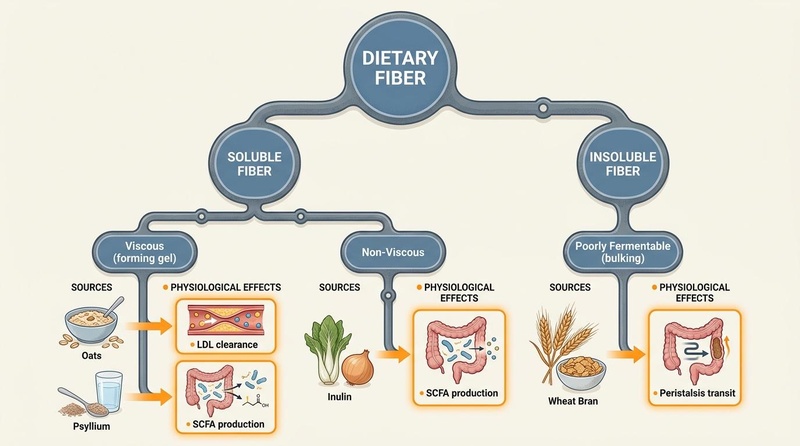
Fibers are characterized by three primary physical properties that dictate their physiological actions: solubility, viscosity, and fermentability [5:4][3:1]:
- Soluble, Viscous, and Fermentable Fibers: These form a thick, gelatinous matrix when mixed with water in the gut. Found in oats (beta-glucan), psyllium, pectin from fruits, and glucomannan, these fibers delay gastric emptying and slow macronutrient absorption [5:5][3:2].
- Soluble, Non-Viscous, but Fermentable Fibers: These dissolve completely in water but do not increase viscosity. Examples include inulin, fructooligosaccharides (FOS), and resistant starch. They undergo rapid bacterial fermentation in the colon, producing high concentrations of short-chain fatty acids (SCFAs) [2:3].
- Insoluble and Poorly Fermentable Fibers: These do not dissolve in water and resist bacterial degradation. Found in wheat bran, whole grains, and cellulose, they add physical bulk to the stool, stimulate mechanical receptors in the intestinal wall, accelerate colonic transit time, and promote bowel regularity [5:6]. However, insoluble fibers are not biologically inert; when bound to bioactive phenolics (such as in triticale bran; see Polyphenols), they exhibit synergistic immunomodulatory and gut-brain axis effects, suppressing neuroinflammation and depressive-like symptoms in metabolic models via microbiota remodeling [9]. Specialty whole-food sources, such as edible fungi native to Guizhou, deliver dense matrices of both insoluble and soluble fibers alongside rich mineral profiles [10].
¶ The Fermentation Pathway and SCFA Signaling
The primary biological magic of fiber occurs in the cecum and colon, where fermentable fibers serve as the preferred carbon source for saccharolytic gut bacteria [2:4][11].
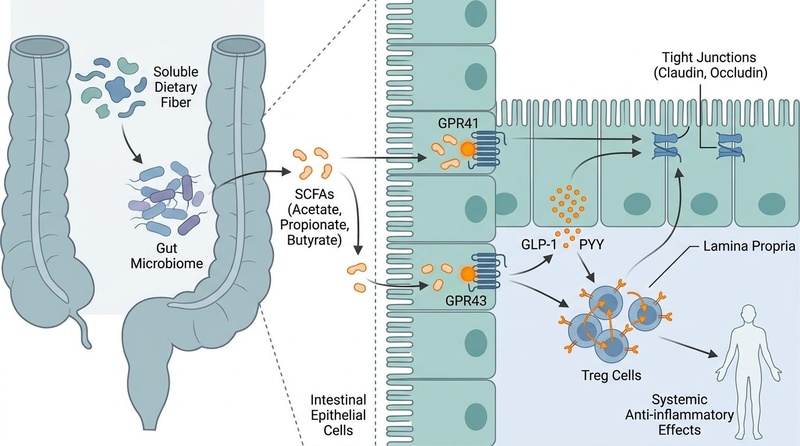
- Bacterial Fermentation: Species such as Bifidobacterium, Faecalibacterium prausnitzii, Akkermansia muciniphila, and Roseburia break down complex fiber polymers [12]. Novel soluble dietary fibers (SDF), such as those isolated from Actinidia arguta (hardy kiwi) pomace, are currently being characterized for their high purity and selective prebiotic capacity to drive beneficial bacterial colonization [13]. In vitro simulated digestion models of freeze-dried cowpea fiber further demonstrate that functional fiber fermentation exerts dual hypoglycemic and antioxidant activities while generating postbiotics that directly suppress mucosal inflammation [14].
- SCFA Production: Fermentation yields gaseous byproducts and short-chain fatty acids (SCFAs), principally acetate (~60%), propionate (~20%), and butyrate (~20%) [2:5].
- Local Colonocyte Support: Butyrate serves as the primary energy substrate for colonocytes, accounting for up to 70% of their total energy expenditure [2:6]. It stimulates cellular regeneration, downregulates mucosal inflammation, and upregulates the translation of tight junction proteins (claudins, occludin, zonula occludens-1 [ZO-1]), repairing the gut barrier and preventing the systemic translocation of inflammatory lipopolysaccharides (LPS) [2:7][8:1].
- Systemic Endocrine Signaling: Propionate and acetate travel through the portal vein. Propionate enters the liver to modulate hepatic gluconeogenesis and suppress cholesterol synthesis [2:8]. Acetate enters systemic circulation, crosses the blood-brain barrier, and acts on hypothalamic receptors to downregulate appetite and promote central satiety [2:9].
- GPCR and HDAC Modulation: Systemic and local SCFAs bind to G-protein coupled receptors 41 and 43 (GPR41/43). On gut endocrine L-cells, this triggers the secretion of glucagon-like peptide-1 (GLP-1) and peptide YY (PYY), which enhance insulin secretion, delay gastric emptying, and improve peripheral glucose disposal [2:10][11:1]. In the lamina propria, SCFAs act as endogenous histone deacetylase (HDAC) inhibitors, suppressing nuclear factor-kappa B (NF-κB) and promoting the differentiation of naive T cells into regulatory T (Treg) cells (expressing the FOXP3 transcription factor), thereby lowering chronic systemic inflammation (inflammaging) [8:2][11:2].
¶ Fiber Diversity & Microbiome Niche Partitioning
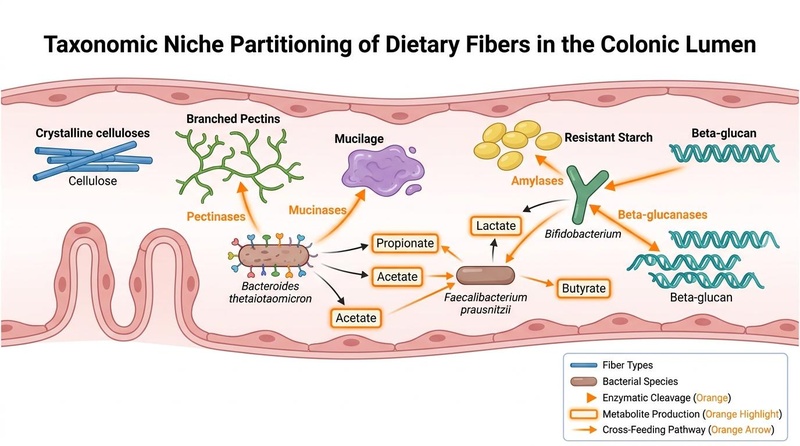
Total dietary fiber intake is a blunt epidemiological metric. In clinical practice, the therapeutic efficacy of fiber is dictated by its structural complexity, glycosidic linkage diversity, and polymer length [5:7][11:3]. The human gut microbiome avoids competitive exclusion through taxonomic niche partitioning, where distinct bacterial families express highly specialized enzyme portfolios to ferment specific fiber architectures [11:4].
¶ The Six Primary Fiber Classes
Rather than viewing fiber as a homogenous substrate, clinical protocols must target the six primary classes of plant carbohydrates, each possessing distinct physicochemical properties and physiological roles [5:8][3:3]:
- Celluloses (Insoluble / Crystalline): Linear polymers of D-glucose linked by -(1,4) glycosidic bonds. They are highly crystalline, water-insoluble, and structurally resistant to swift enzymatic degradation [5:9]. Celluloses provide physical scaffolding in the intestinal lumen, mechanically stimulating stretch receptors to accelerate bowel transit, while serving as a slow-release fermentation substrate in the distal colon [5:10][11:5].
- Hemicelluloses (Soluble/Insoluble / Branched): A highly heterogeneous group of branched polymers including arabinoxylans, glucomannans, and xylans [5:11]. They possess a complex backbone with diverse side-chain linkages, requiring a cooperative array of bacterial enzymes for degradation. They provide intermediate viscosity and represent a major broad-spectrum prebiotic source [3:4][11:6].
- Pectins (Highly Soluble / Gel-Forming): Complex acidic polysaccharides rich in galacturonic acid (such as homogalacturonan and rhamnogalacturonan) [5:12][3:5]. Pectins are highly soluble and form viscous, water-binding gels in the upper digestive tract, delaying gastric emptying and slowing carbohydrate absorption [3:6]. In the colon, they are rapidly and completely fermented, producing high concentrations of acetate and butyrate [2:11][11:7].
- Mucilages (Highly Viscous / Bulking): Viscous, water-soluble branched polysaccharides found in seeds and inner bark (e.g., psyllium, flaxseed, chia, slippery elm) [5:13]. They exhibit immense water-holding capacity, swelling to form a protective, lubricating mucilaginous gel that buffers luminal shear stress, increases stool volume, and softens fecal consistency [5:14][3:7].
- Resistant Starches (Soluble / Non-Viscous): Starch molecules and starch degradation products that escape enzymatic hydrolysis in the small intestine [2:12]. They are categorized into five types (RS1–RS5), ranging from physically trapped starch in whole grains (RS1) and raw crystalline granules in green bananas (RS2) to retrograded amylose formed via cooking and cooling (RS3) [3:8]. Resistant starches bypass upper digestion intact, serving as highly selective substrates for butyrate-producing colonic taxa [2:13][11:8].
- Beta-Glucans (Soluble / Highly Viscous): Soluble, mixed-linkage -(1,3) and -(1,4) or -(1,6) D-glucose polymers abundant in oats, barley, and medicinal edible fungi [5:15][10:1]. They form a highly viscous luminal matrix that interrupts bile acid reabsorption, directly lowering circulating LDL-C and ApoB, while exhibiting potent systemic immunomodulatory properties by binding to dectin-1 receptors on immune cells [5:16][10:2].
¶ Taxonomic Niche Partitioning & Cross-Feeding
The human genome lacks the necessary carbohydrate-active enzymes (CAZymes) to cleave complex glycosidic bonds, encoding fewer than 20 glycoside hydrolases [2:14]. In contrast, the colonic microbiota (see Gut Microbiome) harbors tens of thousands of CAZyme genes, organized into highly coordinated, substrate-specific genetic networks [11:9].
¶ 1. Bacteroides (The Metagenomic Generalists)
Species such as Bacteroides thetaiotaomicron and Bacteroides vulgatus act as metabolic generalists [11:10]. They possess massive portfolios of Polysaccharide Utilization Loci (PULs)—operons that coordinate outer membrane binding (SusC/SusD proteins), cell-surface cleavage, and active transport of complex polymers into the periplasm [11:11]. Bacteroides specialize in degrading highly branched, complex structures like pectins, hemicelluloses, and mucilages [11:12]. When Bacteroides cleave these complex polymers, they release simplified oligosaccharide fragments into the colonic lumen, which are subsequently utilized by other gut bacteria in a synergistic process known as microbial cross-feeding [11:13].
¶ 2. Bifidobacterium (The Specialized Pioneers)
In contrast, Bifidobacterium species (e.g., B. adolescentis, B. longum) are specialized pioneers [11:14]. Rather than utilizing large outer membrane machinery to degrade extracellular polymers, they express high-affinity ATP-binding cassette (ABC) transporters that selectively import short-chain oligosaccharides (such as FOS, GOS, and starch-derived maltodextrans) directly into the cytoplasm, where they are cleaved by intracellular glycoside hydrolases [11:15]. Bifidobacterium are highly efficient at fermenting resistant starches (RS2/RS3) and prebiotic fructans, producing lactate and acetate as metabolic end products [2:15][11:16].
¶ 3. Faecalibacterium prausnitzii (The Dependent Specialist)
Faecalibacterium prausnitzii represents a crucial, highly abundant taxum specializing in butyrate production [2:16]. However, F. prausnitzii is a metabolic specialist with limited capacity to degrade raw, highly complex polysaccharides on its own [11:17]. It relies heavily on metabolic cross-feeding [2:17][11:18]. Pioneer strains like Bifidobacterium first ferment resistant starches or inulin, secreting acetate and lactate into the colonic environment. F. prausnitzii absorbs this extracellular acetate and lactate, using them as essential substrates alongside its own fermentation of pectins and simpler oligosaccharides to synthesize high levels of butyrate via the butyryl-CoA:acetate CoA-transferase pathway [2:18][11:19]. This symbiotic dependence highlights why prebiotic diversity, rather than mono-supplementation, is required to maintain a healthy, resilient microbiome [12:1][11:20].
These metabolic relationships are further enriched by novel functional substrates:
- Hardy Kiwi SDF: Soluble dietary fibers (SDF) from Actinidia arguta pomace exhibit high purity and selective prebiotic capacities, specifically enriching Bifidobacterium and Lactobacillus populations to drive targeted microbiome remodeling [13:1].
- Cowpea Fiber Postbiotics: Freeze-dried cowpea fiber undergoes simulated colonic fermentation to generate rich postbiotic pools of acetate and butyrate, which directly downregulate mucosal inflammatory pathways in vitro [14:1].
- Phenolic-Bran Conjugates: Bound phenolics conjugated to triticale bran insoluble fiber work synergistically to modulate the gut-brain axis, promoting the expansion of SCFA-producing taxa and suppressing neuroinflammation in metabolic syndrome models [9:1].
¶ SCFA Ratio Optimization & Systemic Signaling
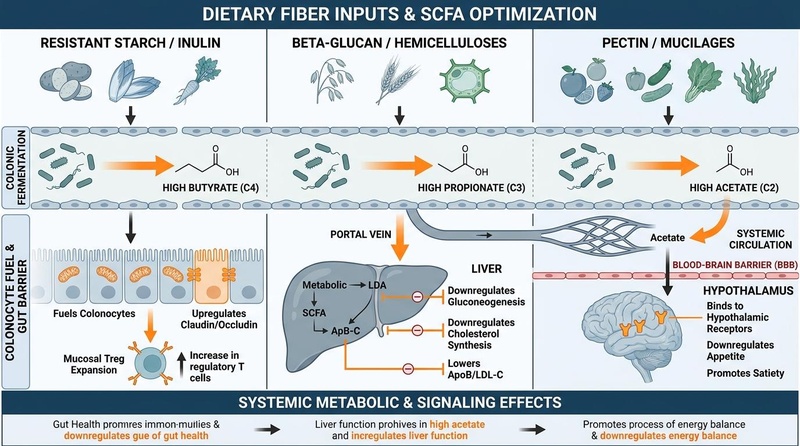
Fermentation of diverse fiber structures does not merely fuel the gut; it generates a highly malleable pool of short-chain fatty acids (SCFAs) that orchestrate systemic multi-organ signaling [2:19][8:3]. By strategically selecting fiber inputs, clinicians can optimize the molar ratios of acetate, propionate, and butyrate to target specific metabolic, cardiovascular, or neurological outcomes [2:20][11:21].
¶ 1. High-Butyrate (C4) Profile: Focus on Gut Barrier & Immunomodulation
- Optimal Fiber Inputs: Resistant starches (RS2/RS3), inulin, fructooligosaccharides (FOS) [2:21][11:22].
- Primary Target: Local colonocytes and lamina propria immune cells [2:22].
- Physiological Mechanisms:
- Epithelial Preservation: Butyrate provides up to 70% of colonocyte energy, maintaining cellular oxygen consumption and keeping the epithelial surface in a state of physiological hypoxia, which prevents the expansion of facultative anaerobic pathogens [2:23].
- Barrier Sealing: Stimulates the transcription and translation of tight junction proteins (claudin-1, occludin, ZO-1), preventing the systemic translocation of inflammatory lipopolysaccharides (LPS) [2:24][8:4].
- Epigenetic Immunomodulation: Acts as a potent endogenous histone deacetylase (HDAC) inhibitor in mucosal dendritic cells and naive T cells. This downregulates NF-κB transcription and upregulates the FOXP3 transcription factor, driving the expansion of anti-inflammatory regulatory T (Treg) cells and directly suppressing systemic inflammaging [8:5][11:23].
¶ 2. High-Propionate (C3) Profile: Focus on Cardiometabolic & Lipid Regulation
- Optimal Fiber Inputs: Oats and barley beta-glucans, arabinoxylans, glucomannan [5:17][3:9].
- Primary Target: Portal circulation and hepatocytes (Liver) [2:25].
- Physiological Mechanisms:
- Lipid Clearance: Propionate is absorbed via the portal vein and cleared almost entirely by the liver. It acts as a competitive inhibitor of HMG-CoA reductase, downregulating hepatic de novo cholesterol synthesis and increasing the expression of LDL receptors on hepatocytes [2:26]. This drives down circulating levels of Apolipoprotein B (ApoB) and LDL-C [5:18][15].
- Gluconeogenesis Modulation: Serves as a substrate and signaling ligand for intestinal gluconeogenesis, which downregulates hepatic glucose output, improves homeostatic model assessment of insulin resistance (HOMA-IR), and blunts systemic glycemic variability [2:27][4:1].
¶ 3. High-Acetate (C2) Profile: Focus on Satiety & Appetite Regulation
- Optimal Fiber Inputs: Pectins, mucilages, partially hydrolyzed guar gum (PHGG) [5:19][3:10].
- Primary Target: Systemic circulation and the Hypothalamus [2:28].
- Physiological Mechanisms:
- Central Satiety: Acetate resists hepatic clearance, entering the systemic circulation and readily crossing the blood-brain barrier (BBB) [2:29]. It accumulates in the hypothalamus, where it activates pro-opiomelanocortin (POMC) neurons and downregulates neuropeptide NPY expression, suppressing central appetite and driving long-term satiety [2:30].
- Incretin Secretion: Binds to GPR41/43 receptors on colonic L-cells, triggering the immediate release of GLP-1 and Peptide YY (PYY) into the bloodstream, which slows gastric motility and enhances glucose-stimulated insulin secretion [2:31][4:2].
¶ Age- and Sex-Specific Fiber Guidelines
To transition from general dietary guidelines to precision medicine, fiber prescriptions must be adjusted for biological sex, age, and age-related changes in gut motility, hormone profiles, and metabolic clearance [5:20][12:2].
| Demographic Group | Baseline Target (g/day) | Therapeutic Target (g/day) | Primary Biological Focus | Physiological Rationale & Fiber Selection Strategy |
|---|---|---|---|---|
| Females < 50 | 25g | 35–40g | Glycemic buffering, hormone clearance, gut transit | Rationale: Supports estrogen-gut microbiome clearance via the estrobolome [11:24]. Strategy: Focus on mucilages (psyllium, flax) and pectins to stabilize postprandial glycemic spikes and promote healthy hormone excretion [5:21][3:11]. |
| Females ≥ 50 (Post-menopausal) | 21g | 30–35g | Bone mineral absorption, mucosal barrier, lipid control | Rationale: Decline in systemic estrogen correlates with loss of gut barrier integrity and a drop in Akkermansia abundance [12:3]. Strategy: Prioritize resistant starches and inulin/FOS to upregulate tight junctions and support calcium/magnesium absorption via colonic acidification [5:22][8:6]. Include t-bran bound phenolics to support the gut-brain axis and mitigate post-menopausal mood swings [9:2]. |
| Males < 50 | 38g | 45–55g | Cardiovascular protection, ApoB clearance, visceral adiposity | Rationale: Higher baseline risk of early-onset cardiovascular disease and visceral fat accumulation [16]. Strategy: High intake of viscous beta-glucans (oats, barley) and branched hemicelluloses to interrupt enterohepatic bile circulation and optimize propionate-mediated HMG-CoA reductase inhibition [5:23][2:32]. |
| Males ≥ 50 | 30g | 40–45g | Mitigating vascular stiffness, colon motility, anabolic resistance | Rationale: Age-related slowing of colonic transit time increases the risk of symptomatic diverticular disease and vascular calcification [17][15:1]. Strategy: Integrate equal parts insoluble fibers (celluloses) for mechanical regularity alongside immunomodulatory beta-glucans from edible fungi to reduce vascular inflammaging and preserve muscle microvasculature [5:24][12:4][10:3]. |
Note: Therapeutic targets represent intakes used in clinical trials to actively reverse metabolic dysfunction, lower ApoB, or resolve chronic inflammatory profiles [5:25][15:2][4:3].
¶ Does It Work? (Evidence Snapshot)
The clinical evidence for dietary fiber is highly mature, characterized by massive prospective cohort studies and randomized controlled trials spanning millions of patient-years [18].
| Clinical Outcome | Expected Effect Size | Certainty / Evidence Grade | Supporting Study Types | Key References / Source Trials |
|---|---|---|---|---|
| All-Cause Mortality | 15–30% reduction comparing highest vs. lowest intake quintiles; ~7% reduction per 10g/day increase | High (GRADE) | Umbrella reviews, prospective cohort studies | Veronese 2025 [18:1], Reynolds 2019 [1:2], Ramezani 2024 [19] |
| Cardiovascular Mortality | 15–20% reduction with high fiber intake; significant improvements in blood pressure and arterial stiffness | High (GRADE) | Meta-analyses of RCTs & cohort studies | Veronese 2025 [18:2], Reynolds 2022 [15:3], Threapleton 2013 [16:1] |
| Type 2 Diabetes Risk | 20–30% reduction in incidence; Soluble fiber leads to HbA1c reductions of 0.55% to 0.70% | High (GRADE) | Systematic reviews of RCTs & prospective cohorts | Veronese 2025 [18:3], Barbaresko 2023 [20], Yao 2014 [21], Hebbar 2026 [4:4] |
| Diverticular Disease | 25–40% reduction in risk of symptomatic diverticular disease with high-fiber diets | High (GRADE) | Umbrella reviews, large cohort studies | Veronese 2025 [18:4], Aune 2020 [17:1] |
| Lipid Profile (LDL-C & ApoB) | 5–15% reduction in LDL-C and ApoB (typically –0.22 mmol/L LDL-C for 10g soluble fiber/day) | High (GRADE) | Randomized clinical trials, meta-analyses | Daley 2025 [5:26], Reynolds 2022 [15:4] |
| Systemic Inflammation (hs-CRP) | 0.3 to 0.8 mg/L reduction in high-sensitivity C-reactive protein | Moderate (GRADE) | Randomized clinical trials, systematic reviews | Veronese 2025 [18:5], Kabisch 2025 [22] |
| Endotoxin (LPS) Clearance | Reduction in circulating LPS; improved mucosal barrier sealing | Moderate (GRADE) | Clinical trials, animal models, mechanistic studies | Gill 2021 [2:33], Delzenne 2024 [11:25] |
| Heavy Metal & PFAS Burden | Lower serum PFAS (up to 4.2% reduction per 10g fiber/day); accelerated fecal metal/xenobiotic excretion | Low to Moderate | Cohort analyses (NHANES), pilot trials, animal models | Dzierlenga 2021 [6:1], OatFiber2024 [7:1], Wang 2024 [23] |
¶ Who Benefits Most / Least
¶ Subgroups Benefiting Most
- Individuals with Metabolic Syndrome or Prediabetes: Those with high baseline glycemic variability or elevated HbA1c respond rapidly to soluble viscous fibers, which form a gel matrix that delays glucose transport, blunting postprandial glucose spikes [3:12][4:5].
- Patients with Dyslipidemia: Individuals with elevated ApoB and LDL-C benefit significantly from viscous soluble fibers (e.g., beta-glucan, psyllium). These fibers act as physical binders that trap bile acids in the small intestine, blocking their reabsorption in the terminal ileum and driving hepatic clearance of circulating LDL-C [5:27].
- Aging Populations suffering from Inflammaging: Older individuals often display age-related dysbiosis and decreased gut barrier integrity [12:5]. SCFA-mediated upregulation of Treg cells and tight junction translation directly helps seal the gut, mitigating systemic low-grade inflammation and cellular senescence [8:7][12:6].
¶ Subgroups Requiring Extreme Caution (Benefits Least / Fails)
- Individuals with Active Small Intestinal Bacterial Overgrowth (SIBO): Rapidly fermentable fibers (e.g., inulin, FOS) are fermented in the small intestine rather than the colon in these patients. This can lead to severe abdominal pain, gas, bloating, and an exacerbation of bacterial overgrowth.
- Patients with Acute Inflammatory Bowel Disease (IBD) Flares: During active ulcerative colitis or Crohn's disease flares, high amounts of insoluble fiber can mechanically irritate highly inflamed mucosal tissue, potentially worsening bleeding and cramping [2:34].
- Individuals with Severe Gastroparesis: High-viscosity or bulking fiber diets delay gastric emptying further, which can worsen symptoms of nausea, vomiting, and early satiety in patients with diabetic or idiopathic gastroparesis [5:28].
- Xenobiotic Non-Responders: Due to inter-individual variations in gut microbiota composition (e.g., low baseline counts of SCFA-producing taxa), some individuals do not produce significant quantities of butyrate or propionate in response to prebiotic fibers, requiring structured microbiome remodeling before prebiotic benefits are realized [24][11:26].
¶ How to Try It (Actionable Protocols)
Implementing dietary fiber requires a systematic approach to avoid the sudden gas and abdominal distension known colloquially as the "fiber-flux."
Baseline Intake (~12-15g/day)
     │
     ▼
Week 1: Add 5g/day (Focus on Soluble, Viscous Fiber; e.g., Oat Beta-Glucan)
     │
     ▼
Week 2: Add 5g/day (Introduce Insoluble, Whole-Food Sources; e.g., Cruciferous Vegetables)
     │
     ▼
Week 3: Add 5g/day (Introduce Prebiotic Fermentable Fibers; e.g., Inulin, FOS, Berries)
     │
     ▼
Maintenance Target: 30-45g/day (Ensure water intake matches: +250 mL water per 5g fiber added)
¶ Protocol 1: The Step-by-Step Fiber Ladder
Objective: Safely titrate dietary fiber from standard low levels (~15g/day) to optimal therapeutic targets (35–45g/day) over four weeks.
- Week 1:
- Intervention: Add 5g of soluble viscous fiber daily.
- Source: 1.5 tablespoons of ground psyllium husk or 1 serving of oat bran.
- Hydration: Consume with an additional 250 mL of water immediately.
- Week 2:
- Intervention: Increase fiber by another 5g daily (total +10g from baseline).
- Source: Incorporate whole-food sources: 1 cup of steamed broccoli or 1 medium apple with skin.
- Hydration: Maintain high fluid intake, adding another 250 mL of water to your daily baseline.
- Week 3:
- Intervention: Introduce prebiotic, highly fermentable fiber (+15g total increase).
- Source: 1 cup of raspberries or blackberries (high fiber, low sugar) or 1/2 cup of cooked lentils.
- Week 4 (Maintenance):
- Intervention: Achieve target range: 30–45g total dietary fiber daily, maintaining a ratio of approximately 3:1 soluble to insoluble fiber.
¶ Protocol 2: The Glycemic-Buffering Meal Sequencing
Objective: Upregulate physical and biological mechanisms to reduce postprandial glucose excursions of subsequent meals [3:13][4:6].
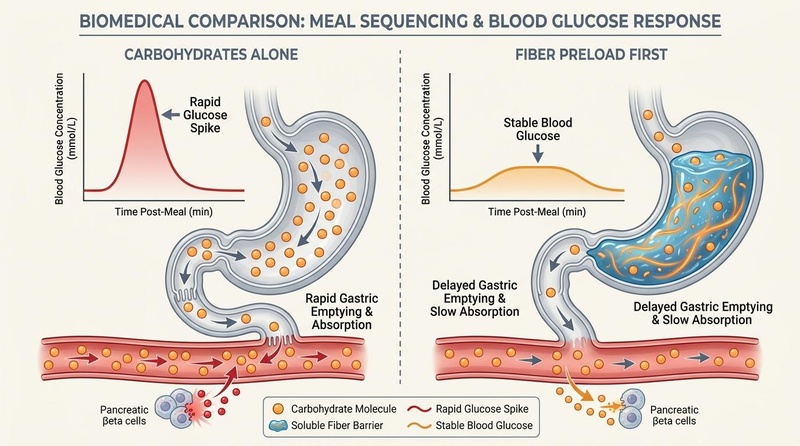
- Timing: Consume a targeted soluble fiber preload 10 to 15 minutes before your primary carbohydrate-rich meal [3:14].
- Preload Formulation:
- Option A: 5g of organic psyllium husk stirred vigorously into 300 mL of water and consumed immediately before gelling occurs.
- Option B: 5–10g of partially hydrolyzed guar gum (PHGG) dissolved in a warm beverage.
- Option C (Whole Food): A raw starter salad consisting of 1.5 cups of leafy greens, cruciferous vegetables, and raw apple cider vinegar dressing.
- Sequence: Fiber first, followed by protein and lipids, and concluding with complex/simple carbohydrates.
¶ Protocol 3: The SCFA-Microbiome Remodeling Protocol
Objective: Specifically maximize colonic butyrate production, upregulate tight junctions, and expand regulatory T cells [2:35][8:8].
- Prebiotic Stack: Combine diverse fermentable substrates to support multiple bacterial taxa:
- Resistant Starch Type 2 (RS2): 10g of unmodified potato starch (dissolved in cold water; do not heat, as heating destroys the crystal structure of resistant starch).
- Inulin or Fructooligosaccharides (FOS): 3–5g daily.
- Polyphenol-Rich Prebiotic: 1 cup of wild blueberries or pomegranate arils (polyphenols work synergistically with fiber to promote Akkermansia muciniphila growth; see Polyphenols) [12:7].
- Co-Factors: Ensure adequate dietary magnesium (400mg) and zinc (15mg), which act as crucial enzymatic cofactors for epithelial repair and butyrate-responsive histone modifications [5:29].
¶ Protocol 4: The Fiber Diversity Rotation Protocol (Taxonomic Enrichment)
Objective: Maximize microbiome taxonomic richness, prevent single-taxon dominance, and enrich a broad spectrum of SCFA-producing species [12:8][11:27].
- The Rule of 30: Target a minimum of 30 unique plant-derived species per week (including vegetables, fruits, whole grains, seeds, nuts, and herbs) to ensure exposure to diverse chemical structures and glycosidic linkages [12:9].
- Weekly Substrate Rotation: Rotate your primary prebiotic supplement or specialized fiber source every 7 days:
- Week A (Starch Focus): 10g unmodified potato starch (RS2) or green banana flour daily.
- Week B (Hemicellulose/Viscous Focus): 5g oat beta-glucan or partially hydrolyzed guar gum (PHGG) daily.
- Week C (Pectin Focus): 5g apple pectin or citrus pectin daily.
- Week D (Mucilage Focus): 10g ground blond psyllium husk or whole flaxseeds daily.
- Co-fermentation Boosting: Combine your rotated fiber with a polyphenol source (e.g., green tea extract, pomegranate powder, or wild berries). Polyphenols (see Polyphenols) work synergistically with fiber, binding to cellulose and hemicellulose structures to delay their clearance and selectively fuel mucosal-preserving strains like Akkermansia muciniphila [12:10][11:28].
¶ Protocol 5: Age- and Sex-Specific Metabolic Dosing
Objective: Implement tailored fiber dosing to address sex- and age-specific physiological vulnerabilities (e.g., post-menopausal barrier loss or male cardiovascular risk) [5:30][12:11].
- Dosing Protocol for Post-Menopausal Females (Age ≥ 50):
- Morning Stack: 5g apple pectin + 3g inulin dissolved in warm water, taken with mineral co-factors (400mg magnesium glycinate, 15mg zinc carnosine) to optimize colonic acidification and enhance mineral absorption [5:31][8:9].
- Dinner Integration: Add 10g of cooked, retrograded white rice or potatoes (cooled for 24 hours to generate retrograded RS3) to dinner [3:15]. Add 10g of triticale bran or whole grain flour to support gut-brain axis mood stability [9:3].
- Dosing Protocol for Cardiovascular-Focused Males (Age < 50):
- Pre-Breakfast Preload: 8g oat beta-glucan or psyllium husk dissolved in 350 mL of water, taken 15 minutes before breakfast to maximize bile acid binding and HMG-CoA reductase inhibition [5:32][15:5].
- Lunch Integration: 1 cup of steamed lentils, black beans, or chickpeas (providing dense hemicellulose and resistant starch matrices) to optimize propionate portal concentrations [2:36].
¶ Safety, Interactions, Red Flags
¶ Absolute Contraindications (Avoid Entirely)
- Acute Diverticulitis Flare: High-fiber diets must be suspended. Switch immediately to a low-residue, clear liquid diet to minimize colonic luminal pressure and allow inflamed diverticula to heal [5:33].
- High-Grade Bowel Obstruction or Strictures: Consuming high-fiber or bulking agents can cause fecal impaction, worsening the obstruction and increasing the risk of bowel perforation.
- Severe, Unmanaged Gastroparesis: Delayed gastric emptying is exacerbated by dietary fiber, particularly viscous fibers.
¶ Relative Contraindications (Exercise Caution)
- Irritable Bowel Syndrome (IBS) during Active Dysbiosis: High-FODMAP prebiotic fibers (such as inulin, garlic, onions, wheat) can trigger severe abdominal pain and distention. Use low-FODMAP, non-viscous soluble fibers like Partially Hydrolyzed Guar Gum (PHGG) or Acacia fiber instead.
- Chronic Inflammatory Bowel Disease (IBD) with Stricturing Phenotypes: Crohn's disease patients with known strictures must limit high-insoluble-fiber foods (e.g., raw nuts, seeds, tough skins) to prevent food blockages [2:37].
¶ Drug & Supplement Interactions
- Delayed Medication Absorption: Viscous soluble fibers can bind or physically delay the absorption of oral medications.
- Metabolic Agents: Metformin, levothyroxine, and digoxin should be taken at least 1 hour before or 2 to 4 hours after high-viscous fiber meals or supplements [5:34].
- Hormone Therapies: Oral contraceptives and hormone replacement therapies can exhibit reduced peak bioavailability if taken concurrently with large doses of psyllium husk.
- Mineral Chelation: Diets exceptionally high in phytate-rich fibers (e.g., raw wheat bran) can chelate essential divalent cations, reducing the bioavailability of iron, zinc, calcium, and magnesium [5:35]. Ensure grains are fermented, sprouted, or cooked, and space out high-dose mineral supplements.
¶ Red Flags & Stop Criteria
- Development of severe, sharp, localized abdominal pain (a sign of potential acute diverticulitis or bowel obstruction).
- Inability to pass gas or have a bowel movement for over 72 hours, especially when accompanied by nausea and abdominal swelling.
- Persistent watery diarrhea following rapid fiber titration (suggestive of osmotic imbalances or raw mucosal irritation).
- Unexplained, rapid weight loss or rectal bleeding (requires immediate diagnostic evaluation for colonic pathology).
¶ Tracking & What “Good” Looks Like
Monitoring your body's response to a fiber intervention involves a combination of objective biomarkers and subjective gastrointestinal metrics.
¶ Biomarkers & Clinical Tracking
- Glycemic Metrics (Continuous Glucose Monitor):
- Cardiometabolic Markers:
- Fecal Short-Chain Fatty Acids (Optional Advanced Tracking):
- Target Outcome: Elevation in absolute concentrations of fecal butyrate, acetate, and propionate (measured via fecal metabolomic profiling).
- Frequency: Bi-annually or before/after a structured prebiotic intervention.
¶ Subjective Metrics & Stool Quality
- Bristol Stool Chart: Track consistency daily. The therapeutic target is achieving Type 3 or Type 4 stools (sausage-shaped with smooth cracks or smooth and soft).
- Stool Transit Comfort: Elimination should be effortless, requiring zero straining, and complete within 1–2 minutes, leaving a sensation of complete evacuation.
- Satiety Scale: An increased duration of postprandial fullness, resulting in reduced spontaneous snacking or cravings between meals.
- Abdominal Bloating Score: While mild, transient flatulence is a normal sign of active bacterial fermentation, persistent painful bloating or severe abdominal distension indicates a mismatch in fiber type or titration speed.
¶ Time-to-Benefit and Washout
┌───────────────────────────┬──────────────────────────────────────────────────────┐
│ Phase / Timeline          │ Observed Physiological Effect                        │
├───────────────────────────┼──────────────────────────────────────────────────────┤
│ Days 1–7                  │ Blunted postprandial glucose spikes; improved stool  │
│                           │ bulk and regularity; initial mild flatulence.         │
├───────────────────────────┼──────────────────────────────────────────────────────┤
│ Weeks 2–4                 │ Enhanced satiety; colonization of SCFA producers;     │
│                           │ resolution of initial transit adaptation bloating.   │
├───────────────────────────┼──────────────────────────────────────────────────────┤
│ Month 3+ (Sustained)      │ Lower ApoB/LDL-C; reduced systemic hs-CRP;           │
│                           │ upregulated GLP-1/PYY baseline secretion.             │
└───────────────────────────┴──────────────────────────────────────────────────────┘
- Washout Period: If fiber intake is abruptly reduced, postprandial glycemic buffering is lost immediately (within 24 hours). Intestinal transit times begin slowing within 48 to 72 hours, and gut microbiota SCFA production declines significantly within 5 to 7 days as bacterial populations shift back to reflecting low-prebiotic availability [11:29].
¶ Simple N-of-1 Fiber Testing Template
To identify which fiber type optimizes your unique metabolic and colonic biology, conduct a structured 4-week N-of-1 crossover test.
- Week 1 (Baseline Control): Consume your standard diet. Wear a CGM. Record daily stool type (Bristol scale), satiety (1–10 scale), and bloating (1–10 scale).
- Week 2 (Intervention A): Add 10g of Soluble Viscous Fiber (e.g., ground psyllium husk) daily. Keep all other dietary and lifestyle factors identical.
- Week 3 (Washout): Return to your baseline diet. Ensure all gastrointestinal metrics return to baseline levels.
- Week 4 (Intervention B): Add 10g of Soluble Prebiotic Fermentable Fiber (e.g., inulin powder) daily. Maintain identical tracking.
- Analysis: Compare CGM average postprandial glucose curves, satiety scores, and stool metrics across all weeks to determine your optimal fiber strategy [25:1][24:1].
¶ Common Mistakes & Myths
- Mistake: The "Zero to Sixty" Titration: Increasing fiber intake too rapidly (e.g., going from 12g to 45g overnight) overwhelms colonic bacterial fermentation capacities, resulting in severe, painful gas, bloating, and potential temporary constipation. Always titrate slowly (5g additions per week) [5:37].
- Myth: "Fiber is Just inert, Indigestible Bulking Material": This outdated view ignores the complex biochemistry of fermentation. Soluble fibers are biologically active substrates converted into signaling hormones (SCFAs) that bind to systemic G-protein coupled receptors, regulating metabolic, immune, and cardiovascular function [2:38][8:10].
- Mistake: Neglecting Hydration: Fiber requires water to function. Viscous fibers absorb water to create the therapeutic gel matrix, while insoluble fibers need fluid to lubricate fecal transit. Increasing fiber without increasing water intake can cause severe, painful constipation and fecal impaction [5:38].
- Myth: "All Fibers Have the Same Metabolic Benefits": Soluble viscous fibers are highly effective at lowering LDL-C and blunting postprandial blood sugar spikes because they form thick gel barriers in the small intestine [3:17]. In contrast, insoluble fibers (like wheat bran) excel at accelerating colonic transit and improving fecal bulk but have negligible direct effects on cholesterol absorption or immediate postprandial glycemic excursions [5:39].
- Mistake: Believing Processing Always Destroys Fiber: While refining grains removes the fiber-rich outer bran, other forms of mechanical processing—such as grinding or blending—do not destroy the chemical structure of most dietary fibers. Soluble fiber in blended smoothies or ground flaxseeds remains highly functional, although blending may slightly reduce the fecal-bulking capacity of some insoluble fibers.
¶ Decision Tree (Text-Based)
Start: Assess your primary health/metabolic goal
  │
  ├──► Goal: Optimize Glycemic Control & Blunt Postprandial Spikes
  │     └─► Do you have active SIBO or severe bloating?
  │           ├──► YES: Avoid prebiotics. Use low-FODMAP, non-viscous soluble fiber (e.g., PHGG) titrated slowly.
  │           └──► NO: Sequence soluble viscous fiber (psyllium or beta-glucan) 10-15 min before high-carb meals.
  │
  ├──► Goal: Reduce Circulating Cholesterol (LDL-C & ApoB)
  │     └─► Do you have gastroparesis or delayed gastric emptying?
  │           ├──► YES: Avoid high-viscosity fibers. Focus on small, frequent whole-food meals.
  │           └──► NO: Implement 5-10g viscous soluble fiber daily (beta-glucan or psyllium) with large volumes of water.
  │
  └──► Goal: Address Chronic Inflammaging & Support Gut Barrier Integrity
        └─► Do you have an active IBD flare?
              ├──► YES: Switch to low-residue, clear liquid or cooked, pureed diet until flare resolves.
              └──► NO: Implement diverse prebiotic stack (resistant starch + inulin + polyphenol-rich berries) to maximize butyrate production.
¶ FAQs
¶ Does a low-fiber diet always cause dental issues in rodents with continuously growing teeth?
While captive rodents consuming highly processed, low-fiber diets show a high incidence of continuously growing (elodont) teeth pathologies (such as peri-apical masses, elodontomas, or dental dysplasia), screening of wild and semi-wild Cape ground squirrels (Geosciurus inauris) indicates that a low-fiber, pelleted diet did not induce peri-apical masses, suggesting that dietary fiber deficiency alone is insufficient to trigger these conditions in non-captive, naturally active rodents [26].
¶ Can you consume too much fiber?
Yes. Consuming in excess of 70–80g of fiber daily can cause severe gastrointestinal distress, including bowel obstruction or impaction, particularly if fluid intake is insufficient [5:40]. Additionally, extremely high intakes can lead to significant malabsorption of essential micronutrients (iron, zinc, calcium) due to the presence of phytates and rapid transit times [5:41].
¶ What is the difference between fiber and prebiotics?
All prebiotics are dietary fibers, but not all dietary fibers are prebiotics. Prebiotics are a specific subset of fermentable fibers (such as inulin, FOS, and GOS) that are selectively utilized by beneficial host microorganisms, conferring a documented health benefit [11:30]. Some fibers, like cellulose or lignin, are insoluble and poorly fermented, acting as structural bulking agents rather than prebiotics.
¶ Does cooking destroy dietary fiber?
No. Standard cooking methods (boiling, steaming, baking) do not break the strong beta-glycosidic bonds of dietary fiber polymers. While cooking can soften plant walls and make starch more digestible, the total fiber content remains intact. In fact, cooking and subsequent cooling of certain starches (such as potatoes or rice) actually creates resistant starch Type 3, which increases the prebiotic fiber content of the food.
¶ Can fiber supplements replace fiber from whole foods?
Generally, no. While isolated supplements like psyllium or methylcellulose are highly effective for targeted clinical outcomes (such as lowering LDL-C or treating constipation), they lack the complex nutritional matrix of whole plant foods [5:42]. Whole-food fiber sources deliver essential vitamins, minerals, antioxidants, and synergistic polyphenols (see Polyphenols) that work in tandem with fiber to support metabolic health and microbiome diversity [12:12]. Supplements should be used to complement, not replace, a fiber-rich, plant-dense diet.
¶ Why does fiber cause gas, and is this dangerous?
The production of gas (carbon dioxide, hydrogen, methane) is a completely natural byproduct of bacterial fermentation of soluble fiber in the large intestine [2:39]. It is not dangerous and is a sign that your colonic bacteria are actively metabolizing fiber and producing beneficial short-chain fatty acids. However, excessive or painful gas suggests that fiber has been introduced too quickly, or that there is an underlying digestive issue such as SIBO or dysbiosis.
¶ Glossary
- ApoB (Apolipoprotein B): The primary structural protein found on all potentially atherogenic lipoprotein particles (LDL, VLDL, IDL). It is a highly accurate marker of cardiovascular risk.
- Butyrate: A 4-carbon short-chain fatty acid produced by bacterial fermentation of fiber. It is the primary energy source for colonocytes and plays a major role in maintaining gut barrier integrity and suppressing inflammation.
- Claudin / Occludin: Transmembrane proteins that constitute the structural backbone of tight junctions, sealing the paracellular space between intestinal epithelial cells.
- Enterohepatic Circulation: The continuous cycle of bile acid secretion from the liver into the duodenum, reabsorption in the terminal ileum, and return to the liver via portal blood.
- FODMAPs: Fermentable Oligosaccharides, Disaccharides, Monosaccharides, and Polyols. A group of short-chain carbohydrates that are poorly absorbed and rapidly fermented, often causing gas and bloating in sensitive individuals.
- GLP-1 (Glucagon-Like Peptide-1): An incretin hormone secreted by intestinal L-cells in response to fiber fermentation. It stimulates insulin secretion, slows gastric emptying, and promotes satiety.
- Inflammaging: The chronic, low-grade, systemic inflammation that typically develops during biological aging, driving the progression of age-related diseases.
- Lipopolysaccharide (LPS): A major component of the outer membrane of Gram-negative bacteria. When translocated across a leaky gut barrier into systemic circulation, it acts as a highly inflammatory endotoxin.
- Prebiotic: A selectively fermented ingredient that results in specific changes in the composition and/or activity of the gastrointestinal microbiota, conferring benefits upon host health.
- Saccharolytic Bacteria: Microorganisms capable of breaking down complex carbohydrates and sugars through fermentation to produce energy and metabolites like SCFAs.
- Viscosity: The physical property of resistance to flow. Viscous fibers form a thick gel in the gastrointestinal tract, slowing down transit and nutrient absorption.
¶ Methods (Transparency)
This monograph was compiled by conducting a comprehensive search of major medical databases (PubMed, PMC, Cochrane Library, and Google Scholar) for literature published up to March 2026.
¶ Search Strategy
Primary keywords included: "dietary fiber all-cause mortality meta-analysis", "short-chain fatty acids gut barrier tight junctions GPR41 GPR43", "soluble viscous fiber glycemic variability CGM", "prebiotic fiber Treg cell differentiation HDAC inhibition", "enterohepatic circulation bile acid binding fiber ApoB", and "dietary fiber perfluoroalkyl substances PFAS excretion".
¶ Inclusion & Exclusion Criteria
- Inclusion: Focus was prioritized on Tier 1 (umbrella reviews, systematic reviews, meta-analyses of prospective cohorts and randomized controlled trials) and high-authority clinical guidelines. Basic science and animal papers were utilized specifically to outline molecular mechanisms (such as GPCR signaling and PFAS fecal clearance pathways).
- Exclusion: Small, uncontrolled trials, case reports, and studies evaluating complex multi-ingredient supplements where fiber effects could not be isolated were excluded.
¶ Evidence Grading Rubric
- High Certainty: Supported by multiple large, prospective cohort studies or robust meta-analyses of randomized controlled trials with consistent findings and low risk of bias.
- Moderate Certainty: Supported by smaller clinical trials, cohort studies with minor methodological limitations, or consistent observational data with solid mechanistic plausibility.
- Low Certainty: Relying primarily on pilot trials, highly specific animal models, or purely mechanistic/in vitro data.
¶ References
¶ Update Log
- 2026-03-01: Established comprehensive deep dive on dietary fiber, gut metabolites, glycemic control, cardiometabolic risk, and healthy aging. Incorporated generated biomedical illustration of the fermentation and SCFA GPR41/43 signaling pathway.
- 2026-03-15: Integrated novel 2026 clinical cohort and biochemical trial results from the core fiber source manifest: including t-bran bound phenolic-gut-brain interactions, hardy kiwi SDF prebiotic profiling, cowpea fiber digestomics, Guizhou fungal mineral/fiber characteristics, and rodent dental elodont assessments.
Reynolds AN, Mann J, Cummings J, et al. Carbohydrate quality and human health: a series of systematic reviews and meta-analyses. Lancet. 2019;393(10170):434-445. https://pubmed.ncbi.nlm.nih.gov/30638909/ ↩︎ ↩︎ ↩︎
Gill SK, Rossi M, Bajka B, et al. Dietary fibre in gastrointestinal health and disease. Nat Rev Gastroenterol Hepatol. 2021;18(2):101-116. https://pubmed.ncbi.nlm.nih.gov/33208922/ ↩︎ ↩︎ ↩︎ ↩︎ ↩︎ ↩︎ ↩︎ ↩︎ ↩︎ ↩︎ ↩︎ ↩︎ ↩︎ ↩︎ ↩︎ ↩︎ ↩︎ ↩︎ ↩︎ ↩︎ ↩︎ ↩︎ ↩︎ ↩︎ ↩︎ ↩︎ ↩︎ ↩︎ ↩︎ ↩︎ ↩︎ ↩︎ ↩︎ ↩︎ ↩︎ ↩︎ ↩︎ ↩︎ ↩︎ ↩︎
Lattimer JM, Haub MD. Effects of dietary fiber and its components on metabolic health. Nutrients. 2010;2(12):1266-1289. https://pubmed.ncbi.nlm.nih.gov/22254020/ ↩︎ ↩︎ ↩︎ ↩︎ ↩︎ ↩︎ ↩︎ ↩︎ ↩︎ ↩︎ ↩︎ ↩︎ ↩︎ ↩︎ ↩︎ ↩︎ ↩︎ ↩︎
Hebbar S, Umakanth S, Thimmappa L, et al. Impact of dietary fiber intake on insulin resistance in type 2 diabetes: A systematic review. Journal of Education and Health Promotion. 2026;15:183. https://pubmed.ncbi.nlm.nih.gov/41788957/ ↩︎ ↩︎ ↩︎ ↩︎ ↩︎ ↩︎ ↩︎
Daley SF, Shreenath AP. The Role of Dietary Fiber in Health Promotion and Disease Prevention: A Practical Guide for Clinicians. StatPearls Publishing. 2025. https://pubmed.ncbi.nlm.nih.gov/32644459/ ↩︎ ↩︎ ↩︎ ↩︎ ↩︎ ↩︎ ↩︎ ↩︎ ↩︎ ↩︎ ↩︎ ↩︎ ↩︎ ↩︎ ↩︎ ↩︎ ↩︎ ↩︎ ↩︎ ↩︎ ↩︎ ↩︎ ↩︎ ↩︎ ↩︎ ↩︎ ↩︎ ↩︎ ↩︎ ↩︎ ↩︎ ↩︎ ↩︎ ↩︎ ↩︎ ↩︎ ↩︎ ↩︎ ↩︎ ↩︎ ↩︎ ↩︎ ↩︎
Dzierlenga AL, et al. The concentration of several perfluoroalkyl acids in serum appears to be reduced by dietary fiber. Environment International. 2021;146:106200. https://pubmed.ncbi.nlm.nih.gov/33158525/ ↩︎ ↩︎
OatFiber2024. An oat fiber intervention for reducing PFAS body burden: A pilot study in male C57Bl/6 J mice. Toxicology and Applied Pharmacology. 2024;482:116900. https://pubmed.ncbi.nlm.nih.gov/39647509/ ↩︎ ↩︎
Xie L, Alam MJ, Marques FZ, et al. A major mechanism for immunomodulation: dietary fibres and acid metabolites. Semin Immunol. 2023;66:101737. https://pubmed.ncbi.nlm.nih.gov/36857894/ ↩︎ ↩︎ ↩︎ ↩︎ ↩︎ ↩︎ ↩︎ ↩︎ ↩︎ ↩︎ ↩︎
Hou C, Wang Y, Zhang W, et al. Bound Phenolics Enhance the Antidepressant-Like Effect of Triticale Bran Insoluble Dietary Fiber in Obese Mice: Evidence for the Involvement of Immune Regulation and Microbiota Modulation. Journal of Agricultural and Food Chemistry. 2026;74(26):9867-9878. https://pubmed.ncbi.nlm.nih.gov/42389867/ ↩︎ ↩︎ ↩︎ ↩︎
Sun Y, Liu Y, Li H, et al. [Dietary fiber and mineral characteristics in Guizhou's specialty edible fungi and evaluation of their dietary contributions]. Wei Sheng Yan Jiu (Journal of Hygiene Research). 2026;55(3):432-441. https://pubmed.ncbi.nlm.nih.gov/42394328/ ↩︎ ↩︎ ↩︎ ↩︎
Delzenne NM, Bindels LB, Neyrinck AM, et al. The gut microbiome and dietary fibres: implications in obesity, cardiometabolic diseases and cancer. Nat Rev Microbiol. 2024. https://www.nature.com/articles/s41579-024-01034-7 ↩︎ ↩︎ ↩︎ ↩︎ ↩︎ ↩︎ ↩︎ ↩︎ ↩︎ ↩︎ ↩︎ ↩︎ ↩︎ ↩︎ ↩︎ ↩︎ ↩︎ ↩︎ ↩︎ ↩︎ ↩︎ ↩︎ ↩︎ ↩︎ ↩︎ ↩︎ ↩︎ ↩︎ ↩︎ ↩︎ ↩︎
Ticinesi A, Nouvenne A, Cerundolo N, et al. The interaction between Mediterranean diet and intestinal microbiome: relevance for preventive strategies against frailty in older individuals. Aging Clin Exp Res. 2024;36(1):58. https://pubmed.ncbi.nlm.nih.gov/38448632/ ↩︎ ↩︎ ↩︎ ↩︎ ↩︎ ↩︎ ↩︎ ↩︎ ↩︎ ↩︎ ↩︎ ↩︎ ↩︎
Chen L, Gong M, Li M, et al. Characterization and function analysis of soluble dietary fiber obtained from Actinidia arguta pomace. Food & Function. 2026;17(13):5437-5448. https://pubmed.ncbi.nlm.nih.gov/42405437/ ↩︎ ↩︎
Sonklin C, Limsumphan S, Srisuwan N, et al. In Vitro Simulated Digestion Unveils the Multifunctional Benefits of Freeze-Dried Cowpea Fiber: Prebiotic, Hypoglycemic, Antioxidant Activity, and Postbiotic-Mediated Anti-Inflammatory Effects. ACS Omega. 2026;11(25):9602-9614. https://pubmed.ncbi.nlm.nih.gov/42396022/ ↩︎ ↩︎
Reynolds AN, Akerman A, Kumar S, et al. Dietary fibre in hypertension and cardiovascular disease management: systematic review and meta-analyses. BMC Med. 2022;20(1):139. https://pubmed.ncbi.nlm.nih.gov/35449060/ ↩︎ ↩︎ ↩︎ ↩︎ ↩︎ ↩︎ ↩︎
Threapleton DE, Greenwood DC, Evans CE, et al. Dietary fibre intake and risk of cardiovascular disease: systematic review and meta-analysis. BMJ. 2013;347:f6879. https://pubmed.ncbi.nlm.nih.gov/24355537/ ↩︎ ↩︎
Aune D, Sen A, Norat T, et al. Dietary fibre intake and the risk of diverticular disease: a systematic review and meta-analysis of prospective studies. Eur J Nutr. 2020;59(2):421-432. https://pubmed.ncbi.nlm.nih.gov/31037341/ ↩︎ ↩︎
Veronese N, Gianfredi V, Solmi M, et al. The impact of dietary fiber consumption on human health: An umbrella review of evidence from 17,155,277 individuals. Clinical Nutrition. 2025;51:325-333. https://pubmed.ncbi.nlm.nih.gov/40651334/ ↩︎ ↩︎ ↩︎ ↩︎ ↩︎ ↩︎
Ramezani F, Pourghazi F, Eslami M, et al. Dietary fiber intake and all-cause and cause-specific mortality: an updated systematic review and meta-analysis of prospective cohort studies. Clin Nutr. 2024;43(1):65-83. https://pubmed.ncbi.nlm.nih.gov/38011755/ ↩︎
Barbaresko J, Lang A, Szczerba E, et al. Dietary factors and all-cause mortality in individuals with type 2 diabetes: a systematic review and meta-analysis of prospective observational studies. Diabetes Care. 2023;46(2):469-477. https://pubmed.ncbi.nlm.nih.gov/36701598/ ↩︎
Yao B, Fang H, Xu W, et al. Dietary fiber intake and risk of type 2 diabetes: a dose-response analysis of prospective studies. Eur J Epidemiol. 2014;29(2):79-88. https://pubmed.ncbi.nlm.nih.gov/24389767/ ↩︎
Kabisch S, Hajir J, Sukhobaevskaia V, et al. Impact of dietary fiber on inflammation in humans. Int J Mol Sci. 2025;26(5):2000. https://pubmed.ncbi.nlm.nih.gov/40076626/ ↩︎ ↩︎
Wang X, et al. Fighting microplastics: role of dietary fibers in protecting health. Food Frontiers. 2024. https://iadns.onlinelibrary.wiley.com/doi/full/10.1002/fft2.437 ↩︎
Potter TIT, Pepping F, Wanders AJ, et al. A series of N-of-1 dietary intervention studies with whole-grain foods and nuts reveals individual predictors of blood pressure and heart rate. European Journal of Clinical Nutrition. 2026. https://pubmed.ncbi.nlm.nih.gov/42049896/ ↩︎ ↩︎
Zhang K, Fu Y, Gou W, et al. Quantification of personalized glycemic sensitivity to food and its potential for precision nutrition in a series of n-of-1 trials. The American Journal of Clinical Nutrition. 2025;122(2):331-341. https://pubmed.ncbi.nlm.nih.gov/40754388/ ↩︎ ↩︎
Norval Q, Tordiffe A, Steenkamp G, et al. Radiographic Screening of Wild and Semi-Wild Cape Ground Squirrels (Geosciurus inauris) for the Presence of Peri-Apical Masses Associated With Elodont Incisor Teeth. Zoo Biology. 2026;45(4):7009-7019. https://pubmed.ncbi.nlm.nih.gov/42405854/ ↩︎