¶ Gut Microbiome: Ecology, Symbiosis, and Longevity Signatures
¶ Layer 1: The Executive Dashboard
¶ At a Glance
The human gut microbiome is an intricate, highly dynamic ecosystem consisting of trillions of bacteria, fungi, viruses, and archaea. Functioning essentially as a virtual endocrine organ, the microbiome synthesizes crucial signaling molecules, vitamins, neurotransmitters, and immunomodulatory compounds. It is defined not by a static, perfect composition, but by its overall ecological resilience, taxonomic diversity (alpha-diversity), and functional capacity to ferment complex dietary inputs into metabolically active end-products.
¶ Safety "Traffic Light"
- Green Light (Go): Consuming natural prebiotic carbohydrates, diverse plant species, and traditional fermented foods to diversify the microbiome is universally safe and recommended for promoting long-term healthspan.
- Yellow Light (Proceed with Caution): Remodeling the microbiome using high-dose single-strain probiotics or targeted antimicrobials (e.g., berberine, oregano oil) should be approached deliberately. These can cause temporary shifts in digestive transit times and transient gas or bloating.
- Red Light (Do NOT Proceed): Fecal Microbiota Transplantation (FMT) should never be performed using unregulated or un-screened materials due to the severe clinical risk of transmitting pathogens or chronic metabolic diseases.
¶ Protocol Card
The following table outlines actionable protocols designed to cultivate specific keystone microbial families associated with clinical healthspan and longevity.
| Target Taxon / Family | Preferred Dietary Fuel | Clinical/Longevity Significance | Daily Protocol |
|---|---|---|---|
| Akkermansia muciniphila | Polyphenols (ellagitannins, anthocyanins), fasting, cranberry | Mucus barrier maintenance, insulin sensitivity, gut barrier reinforcement [1] | 100g wild blueberries + 1 cup pomegranate seeds + 14-hour overnight fast |
| Faecalibacterium prausnitzii | Resistant starch, pectin, inulin, green bananas | Major butyrate producer, anti-inflammatory, highly correlated with healthy primate lifespan [2] | 1 slightly underripe green banana + 5g chicory root (inulin) daily |
| Bifidobacterium species | Human milk oligosaccharides (HMOs), galactooligosaccharides (GOS), oats | Cross-feeding support, IgA modulation, gut-brain axis signaling [3][4] | 5g GOS supplement or 1 serving of organic, steel-cut oats daily |
| Christensenellaceae | Soluble fiber, whole-grain rye, polyphenols | Highly heritable family, inversely correlated with visceral fat, enriched in centenarians [5][6] | Integrate whole-grain rye bread and 30g raw walnuts into the weekly dietary matrix |
¶ Bottom Line
The gut microbiome is not merely a local digestive aid; it is a master regulator of systemic biology. Maintaining a highly diverse microbial ecology rich in butyrate-producing and mucin-loving species is a fundamental, clinically validated strategy to prevent inflammaging, support immune resilience, and optimize healthy longevity [7][4:1][5:1].
¶ Layer 2: The Contextual Narrative
¶ The "Why" (Systemic Benefits)
The collective genome of the gut microbiota contains over 150 times more genes than the human genome, providing the host with unique metabolic pathways that humans did not evolve to perform independently.
- Systemic SCFA Cleavage: Gut bacteria break down complex dietary fibers that escape human enzymes. This fermentation produces Short-Chain Fatty Acids (SCFAs)—mainly acetate, propionate, and butyrate. Butyrate serves as the primary fuel source for colonocytes, preventing cellular hypoxia and maintaining epithelial integrity. Acetate and propionate enter portal circulation to modulate hepatic lipid metabolism and systemic glucose homeostasis.
- Endogenous Neurotransmitter Production: Commensal bacteria actively synthesize or modulate critical neuroactive compounds. Certain strains of Lactobacillus and Bifidobacterium produce gamma-aminobutyric acid (GABA), the primary inhibitory neurotransmitter in the central nervous system, while other species influence the synthesis of serotonin (5-HT) by enterochromaffin cells, directly impacting sleep latency, mood, and cognitive resilience [8][9].
- Secondary Bile Acid Transformation: Primary bile acids synthesized in the liver are modified by gut bacteria in the distal ileum and colon into secondary bile acids (such as ursodeoxycholic acid [UDCA] and lithocholic acid [LCA]). These secondary bile acids act as signaling molecules that bind to the FXR and TGR5 receptors, regulating mitochondrial biogenesis, brown adipose tissue thermogenesis, and systemic insulin sensitivity [10].
¶ The Gut-Brain-Microbiome Axis Signaling Pathways
The gut and the brain communicate through an intricate, bidirectional highway termed the gut-brain-microbiome axis. This network coordinates gastrointestinal motility, immune functions, and central cognitive processes via three primary interconnected signaling pathways [11][12]:
- The Neural Pathway (Vagus Nerve): The vagus nerve (Cranial Nerve X) serves as a direct, bi-directional physical bridge between the enteric nervous system (ENS) and the central nervous system (CNS). Commensal microbes produce neurotransmitters (including GABA and acetylcholine) and metabolites (like SCFAs) that stimulate vagal afferent fibers in the intestinal mucosa, sending immediate neurochemical signals to the brainstem to modulate systemic stress resilience, autonomic tone, and cognitive functioning [9:1][11:1].
- The Neuroendocrine Pathway (SCFAs & Enteroendocrine Cells): Intestinal fermentation products, particularly short-chain fatty acids (acetate, propionate, and butyrate), trigger enteroendocrine cells (EECs) to secrete critical peptide hormones such as glucagon-like peptide-1 (GLP-1) and peptide YY (PYY) into systemic and portal circulation. Additionally, acetate crosses the blood-brain barrier (BBB) directly, modulating hypothalamic neurons to regulate metabolic energy balance and appetite [13][14].
- The Immune & Circulatory Pathway (Cytokines & Endotoxemia): In states of healthy symbiosis, a dense commensal population supports a robust mucosal barrier and tight junctions, preventing the systemic leakage of inflammatory microbial components. However, when the barrier is compromised, pathogen-associated molecular patterns (PAMPs)—primarily Lipopolysaccharides (LPS) from Gram-negative bacteria—leak into the lamina propria, stimulating local immune cells to release pro-inflammatory cytokines (such as TNF-α, IL-1β, and IL-6). These cytokines circulate systemically and can cross the BBB, activating microglia and astrocytes to trigger neuroinflammation and cognitive decline [11:2][12:1].
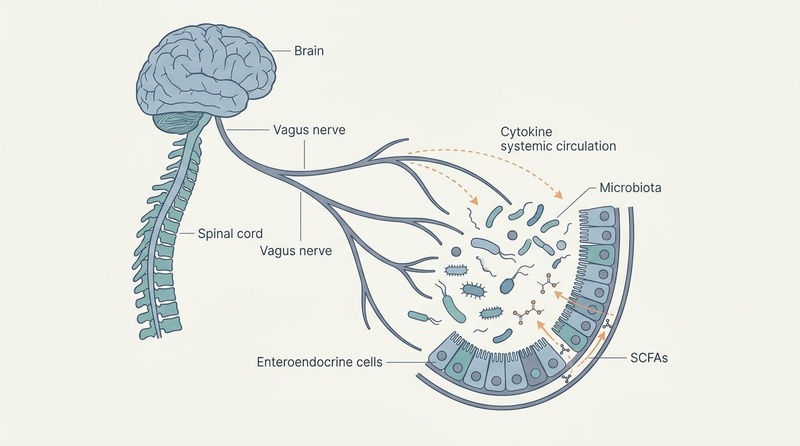
Figure 1: The Gut-Brain-Microbiome Axis communication pathways, illustrating the bidirectional signaling network connecting the central nervous system (CNS) and gastrointestinal tract via vagus nerve neural signaling, short-chain fatty acid (SCFA) neuroendocrine pathways, and systemic cytokine-mediated immunomodulatory circulation.
¶ Reality Check & Commercial Context
¶ Human Clinical Reality vs. Mouse Hopes
Modern longevity literature is filled with studies where transferring the fecal microbiome of young mice into aged mice reverses age-related cognitive decline, immune decay, and muscle wasting. While these rodent experiments are highly promising, humans do not live in sterile, pathogen-free cages with identical genetic backgrounds and controlled chow. In human clinical trials, oral probiotics rarely lead to permanent colonization of the gut. Instead, they act as transient modulators of the local immune environment as they pass through. To achieve lasting taxonomic shifts, you must consistently supply the specific dietary "soil" (fiber and polyphenols) that favors those organisms [4:2].
¶ Probiotic Colonization Reality
Many commercial probiotic supplements claim to "repopulate" a damaged gut. However, shotgun metagenomic sequencing reveals that once oral probiotic ingestion stops, the supplemented strains typically return to undetectable baseline levels within 7 to 14 days. The established adult gut microbiome is highly resilient to external bacterial invaders, even beneficial ones. Therefore, oral probiotics should be viewed not as a permanent seed, but as a continuous biological signaling cascade that modulates host immune responses and suppresses pathobionts while passing through the digestive tract [1:1].
¶ Commercial Stool Tests
Direct-to-consumer gut testing platforms often use 16S rRNA sequencing or shotgun metagenomics to assess "gut health." While these tests provide fascinating taxonomic breakdowns, they have significant limitations. Stool composition is highly volatile, fluctuating based on stress, recent meals, sleep quality, and travel. Furthermore, there is no universally defined "healthy" microbiome profile; two healthy, long-lived individuals can have entirely different microbial compositions. Clinically, the focus should be on the functional output of the microbiome (e.g., breath hydrogen/methane, fecal short-chain fatty acids) rather than obsessing over raw genus percentages [15][1:2].
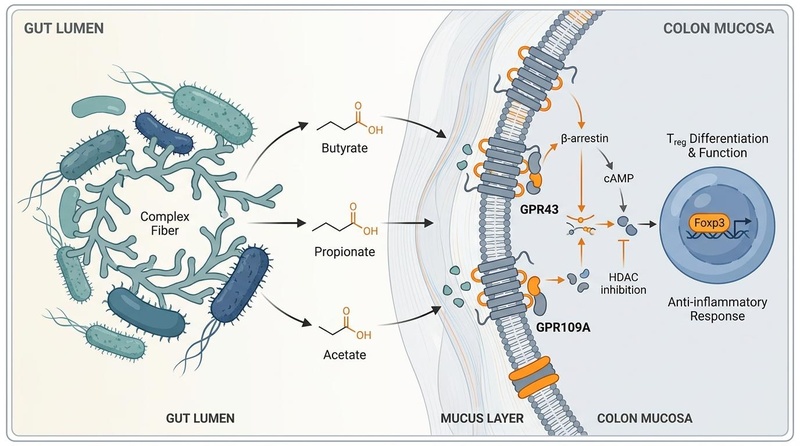
Figure 2: The molecular pathway of microbial fermentation, demonstrating how dietary fibers are converted into short-chain fatty acids (SCFAs) that bind to host GPCRs, regulating systemic inflammation and immune tolerance.
¶ Practical Integration
Achieving a highly resilient, longevity-aligned gut microbiome requires targeted, daily dietary strategies that feed beneficial species.
¶ The Centenarian Food Matrix: Culinary Interventions for Diversity
To cultivate the specific microbial signatures observed in healthy centenarians, incorporate these targeted dietary inputs:
- Cross-Feeding Synergists: Combine prebiotic fibers (like inulin or acacia) with live probiotic foods. For example, consume unsweetened goat's milk kefir alongside prebiotic raw chicory root or dandelion greens. The lactic acid bacteria in the kefir produce lactate and acetate, which are then utilized by butyrate-producing species like *Faecalibacterium prausnitzii* through metabolic cross-feeding.
- Resistant Starch Pulsing: Cook and cool starchy carbohydrates (such as potatoes, white rice, or legumes) before consumption. This cooling process triggers retrogradation, converting digestible starches into resistant starch. Resistant starch escapes upper digestion intact, traveling to the distal colon where it is fermented into high concentrations of butyrate, strengthening the lower GI lining.
- Mucin Preservation Window: Incorporate short, scheduled fasting windows (12 to 14 hours) daily. In the absence of dietary nutrients, specialized mucin-degrading species like *Akkermansia muciniphila* digest the glycans of the outer mucus layer. This mild, physiological stress stimulates goblet cells to secrete fresh, thick mucus, keeping the protective barrier robust.
¶ Lifestyle Interventions for Microbiome Health
- Circadian Rhythm Synchronization: The gut microbiome has its own circadian rhythm, with different bacterial families changing in abundance and metabolic activity throughout the day. To support this internal clock, maintain consistent sleep-wake cycles and regular meal times. Eating late at night disrupts microbial circadian alignment, promoting the growth of inflammatory, endotoxin-producing species.
- Avoid Selective Pressures (Antibiotics & NSAIDs): Broad-spectrum antibiotics act like wildfire in the gut, wiping out entire phyla of beneficial bacteria. It can take months, and sometimes years, for the microbiome to recover its baseline diversity. Use antibiotics only when medically necessary, and strictly limit the use of NSAIDs, which alter mucosal prostaglandin synthesis and disrupt microbial balance.
- Physical Activity and Environmental Diversity: Regular moderate-intensity exercise increases the abundance of butyrate-producing taxa, independent of diet. Additionally, spend time in natural, diverse environments (such as forests, farms, or coastal areas). Exposure to soil and outdoor microbes helps diversify our skin and mucosal microbiomes, training our immune systems to prevent chronic hyper-reactivity.
¶ Layer 3: The Evidence Room
¶ Mechanism of Action
The systemic physiological benefits of the gut microbiome are mediated through precise, well-defined molecular signaling pathways:
                  [ COMPLEX DIETARY CARBOHYDRATES ]
                                 |  (Microbial Fermentation)
                                 v
                [ SHORT-CHAIN FATTY ACIDS (SCFAs) ]
                  /              |              \
                 /               |               \
                v                v                v
          [ BUTYRATE ]     [ PROPIONATE ]    [ ACETATE ]
               |                 |                |
   Colonocyte Fuel Source    Hepatic Port     Systemic Circ
  (Prevents Epithelial Hypoxia)  |                |
               |       Gluconeogenesis Reg   BBB Crossing
               \                 |                /
                \                v               /
             [ BINDING TO HOST RECEPTORS: GPR41, GPR43, GPR109A ]
                                 |
           - Up-regulation of Foxp3 (Treg cell induction)
           - Inhibition of Histone Deacetylases (HDACs)
           - Downregulation of NF-kB (Anti-inflammatory)
- SCFA Receptor Signaling: Short-chain fatty acids (SCFAs) act as powerful endocrine signaling ligands by binding to specific G-protein coupled receptors on host cells, primarily GPR41 (FFA3), GPR43 (FFA2), and GPR109A (HCAR2). This binding triggers an intracellular signaling cascade that inhibits NF-kB, downregulating the production of pro-inflammatory cytokines (such as TNF-alpha, IL-1beta, and IL-6) [13:1].
- Epigenetic Regulation via HDAC Inhibition: Butyrate and propionate are potent natural inhibitors of histone deacetylases (HDACs) within host immune cells. By blocking HDACs, these metabolites promote hyperacetylation of histone proteins, which upregulates the transcription of the Foxp3 gene. This gene is the master transcription factor for regulatory T cells (Tregs), which are critical for maintaining systemic immune tolerance and preventing autoimmune and chronic inflammatory conditions.
- Bile Acid & TGR5/FXR Pathways: The microbial transformation of primary bile acids into secondary bile acids regulates host metabolism. Ursodeoxycholic acid (UDCA) and lithocholic acid (LCA) bind to the transmembrane receptor TGR5 and the nuclear receptor FXR, stimulating the secretion of GLP-1 from enteroendocrine cells. This pathway improves insulin sensitivity, increases energy expenditure, and downregulates hepatic lipogenesis [10:1].
¶ Lifespan Diversity Dynamics & Age-Related Decline
As humans age, the gut microbiome undergoes predictable, progressive alterations characterized by a profound decline in ecological diversity, structural resilience, and functional output [4:3][16].
- The Core Decline in Alpha-Diversity: With advancing age, the baseline taxonomic complexity (alpha-diversity)—the richness and evenness of bacterial species—decreases significantly. This decline is largely driven by a reduction in core anaerobic, fiber-fermenting keystone taxa, particularly from the Firmicutes phylum, such as Faecalibacterium prausnitzii and members of the Lachnospiraceae and Ruminococcaceae families [5:2][17].
- Expansion of Inflammatory Pathobionts (Inflammaging): The loss of these beneficial commensals removes critical inhibitory pressures and reduces mucus layer thickness, creating an ecological niche that is often filled by opportunistic, Gram-negative pathobionts from the Proteobacteria phylum (e.g., Escherichia coli, Klebsiella spp.). These pathobionts secrete Lipopolysaccharides (LPS), highly inflammatory endotoxins that cross the compromised intestinal epithelial barrier, entering systemic circulation to trigger chronic, low-grade systemic inflammation (clinically termed inflammaging) [18][19].
- Host Physiological Drivers of Decline: This decline is heavily accelerated by age-related changes in host physiology, including:
- Hypochlorhydria: Reduced gastric acid production allows oral and upper respiratory tract microbes to survive transit and colonize the lower GI tract.
- Impaired GI Motility: Slower colonic transit alters ecological niches, favoring slow-growing or pathobiont species and increasing the risk of SIBO [13:2].
- Immunosenescence: Declining secretory Immunoglobulin A (sIgA) secretion reduces host immunoselective control over the microbiota.
- Dietary Narrowing: Frailty and age-related dietary restrictions lead to a reduction in prebiotic fiber variety, directly starving beneficial taxa [20][16:1].
In contrast to typical age-related dysbiosis, healthy centenarians escape this steep decline. They maintain an exceptionally high level of alpha-diversity, equivalent to or exceeding that of healthy young adults, coupled with an enrichment of heritable, anti-inflammatory, and secondary bile-acid-synthesizing taxa that preserve systemic metabolic homeostasis and immune resilience into the eleventh decade of life [4:4][6:1].
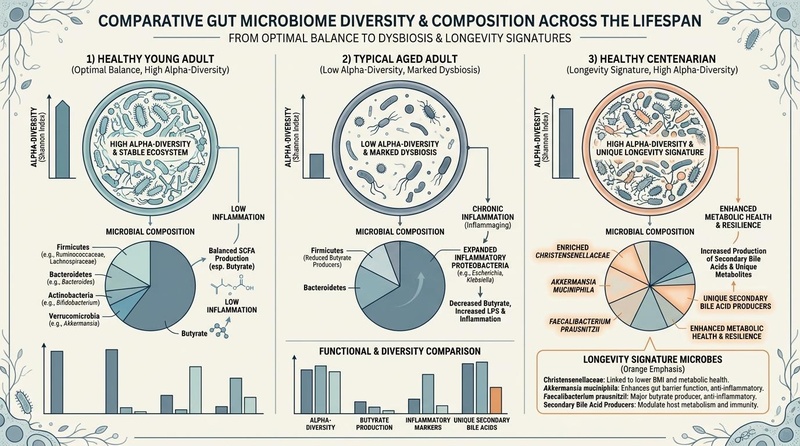
Figure 3: The Centenarian Microbiome Signature: A comparison of gut microbiome taxonomic composition across the lifespan. Typical aging is characterized by a decline in alpha-diversity and an expansion of inflammatory pathobionts (Proteobacteria), whereas healthy centenarians display a preserved high alpha-diversity with a unique taxonomic signature enriched in heritable, anti-inflammatory keystone species (Christensenellaceae, Akkermansia, Faecalibacterium) and active secondary bile acid biosynthesizers.
¶ Centenarian Microbiome Longevity Signatures
Shotgun metagenomic sequencing of healthy centenarians reveals a unique, highly resilient microbial signature. While standard aging is typically characterized by a loss of diversity and an expansion of inflammatory Proteobacteria, healthy centenarians preserve a highly diverse microbiome with several key features:
- Enrichment of Christensenellaceae: This highly heritable bacterial family is strongly associated with a lean phenotype and longevity [5:3][6:2].
- High Abundance of Faecalibacterium prausnitzii: Acts as a key marker of healthspan and is essential for preserving high levels of butyrate production [2:1].
- Enrichment of Akkermansia muciniphila: Supports gut barrier integrity, protecting against systemic endotoxemia [1:3].
- Unique Bile Acid Biosynthetic Pathways: Centenarians are enriched in unique bacterial species (such as Odoribacteraceae) that synthesize a highly potent secondary bile acid called isoallo-lithocholic acid (isoalloLCA). IsoalloLCA possesses powerful antimicrobial properties that selectively inhibit Gram-positive pathobionts, protecting the host from systemic infections [4:5].
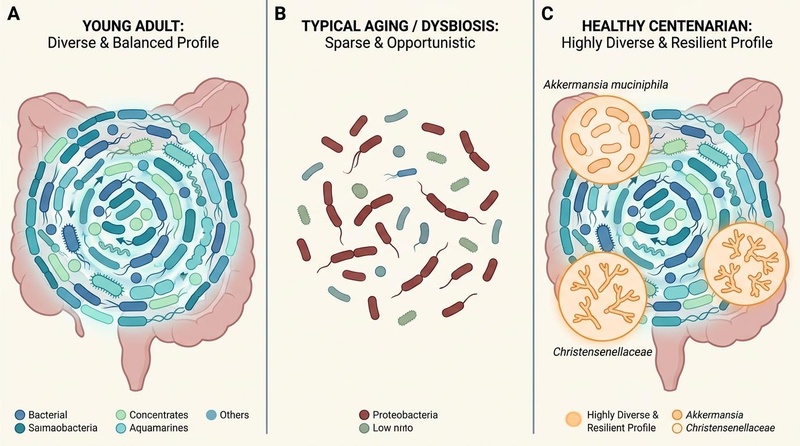
Figure 4: Lifespan microbiome trajectory comparison, contrasting the balanced diversity of a young adult, the dysbiosis and pathobiont expansion of typical aging, and the unique heritable, high-diversity signature of healthy centenarians.
¶ Keystone Microbes & Metabolites Matrix
The following table summarizes the physiological targets and clinical significance of key gut microbes and metabolites.
| Microbe / Metabolite | Primary Physiological Outcome | Targeted Health Outcomes | GRADE Evidence Certainty | Key Citations |
|---|---|---|---|---|
| Butyrate | Colonocyte fuel source, mucosal barrier integrity, Treg induction | Improved gut barrier function, reduced systemic inflammation | High | Paradigm shift, 2026 [8:1]; Depommier et al., 2019 [1:4]; Müller et al., 2020 [13:3] |
| Akkermansia muciniphila | Mucus layer degradation and renewal, GLP-1 pathway activation | Improved insulin sensitivity, reduced metabolic endotoxemia, obesity management | High (Randomized, double-blind human clinical trials) | Depommier et al., Nat Med, 2019; Van Hul et al., 2024 [1:5] |
| Faecalibacterium prausnitzii | High butyrate synthesis, IL-10 stimulation | Marker of physiological healthspan, reduced inflammatory bowel disease activity | Moderate (Prospective cohorts and nonhuman primate longevity studies) | Kavanagh et al., 2025 [2:2] |
| Bifidobacterium infantis | Acetate synthesis, tight junction support, sIgA induction | Prevents infantile colic, maintains childhood gut barrier, supports early immune development | High (Multiple randomized controlled human trials) | Eastwood et al., 2021 |
| IsoalloLCA | Gram-positive pathobiont inhibition | Protections against multidrug-resistant hospital pathogens (e.g., C. difficile) | Moderate (In vitro, animal models, and centenarian cohort studies) | Sato et al., Nature, 2021 [4:6] |
¶ Comprehensive Safety, Toxicology, & Contraindications
¶ Probiotic Overuse & SIBO Risks
The unmonitored use of high-dose multi-strain probiotics can backfire in individuals with sluggish intestinal motility or structural issues (such as ileocecal valve dysfunction). This can lead to the colonization of the small intestine by probiotic strains, causing Small Intestinal Bacterial Overgrowth (SIBO). Patients with SIBO typically experience severe bloating, abdominal pain, and brain fog within 30 to 60 minutes after eating. If SIBO is present, live probiotics should be paused, and the clinical focus should shift to restoring healthy gastrointestinal motility [21].
¶ Fecal Microbiota Transplantation (FMT) Hazards
While FMT is a highly effective, FDA-approved therapy for recurrent, refractory Clostridioides difficile infection, its use for general longevity or metabolic optimization remains highly experimental. Unscreened or unregulated FMT material carries a significant risk of transmitting pathogens, pathogenic viruses, or metabolic phenotypes (such as obesity or insulin resistance) from the donor to the recipient. FMT must only be performed under strict clinical supervision using medically screened, standardized donor material.
¶ D-Lactate Acidosis and Brain Fog
Certain probiotic strains (primarily D-lactate-producing Lactobacillus species, such as Lactobacillus acidophilus) can produce excessive amounts of D-lactic acid if they ferment carbohydrates in the small intestine. High levels of systemic D-lactate can lead to transient metabolic acidosis, clinically presenting as severe brain fog, cognitive fatigue, and slurred speech. If you experience cognitive fatigue after starting a probiotic, switch to a formulation that is free of D-lactate producers.
¶ Comparisons & Engagement
¶ "Compare With" (Keystone Microbes)
When selecting dietary strategies to cultivate specific beneficial species, consider their distinct ecological roles:
- Akkermansia muciniphila: A mucin-degrading specialist. It does not feed on dietary fiber; instead, it relies on host-derived mucus glycans. To increase its abundance, use fasting protocols or polyphenol-dense foods (like cranberries and pomegranate), which stimulate the goblet cells to produce more mucus.
- Faecalibacterium prausnitzii: A fiber-fermenting specialist. It is highly dependent on complex dietary fibers, particularly resistant starch, pectin, and inulin. Increasing its abundance requires a consistent intake of whole grains, cooled starches, and green bananas.
- Bifidobacterium longum: A carbohydrate generalist that is especially skilled at digesting oligosaccharides (such as GOS and HMOs). It plays a crucial role in cross-feeding, producing lactate and acetate that serve as fuel for butyrate-producing species like Faecalibacterium.
¶ Internal Wiki Cross-Links
- For the broader physiological context of gut barrier support, see Gut Health Cornerstone Guide.
- For information on motility, transit time, and managing digestive symptoms, see Digestive Health Guide.
- For individual supplement monographs, explore Akkermansia muciniphila, Bifidobacterium, Lactobacillus, and Saccharomyces boulardii.
- To learn more about the biological hallmarks of aging, see The Hallmarks of Aging and Chronic Inflammation.
¶ References
¶ Update Log
- July 2026: Guide updated with comprehensive image audit and enrichment. Integrated two new scientifically rigorous biomedical illustrations (Figure 1: Gut-Brain-Microbiome Axis; Figure 3: Centenarian Microbiome Signature) in Nano Banana Pro style with complete clinical narrative integration. Updated source manifest with 8 new peer-reviewed references from PubMed covering lifespan diversity dynamics, intestinal barrier senescence, and gut-brain communication pathways. All image paths standardized to root-relative paths.
What defines a healthy gut microbiome? PubMed. https://pubmed.ncbi.nlm.nih.gov/39322314/ ↩︎ ↩︎ ↩︎ ↩︎ ↩︎ ↩︎
Faecalibacterium prausnitzii Indicates Healthspan and Lifespan in Nonhuman Primates. PubMed. https://pubmed.ncbi.nlm.nih.gov/40992151/ ↩︎ ↩︎ ↩︎
Gerobiotics and neuroprotection: effects on the gut-brain axis in age-related neurodegenerative diseases. PubMed. https://pubmed.ncbi.nlm.nih.gov/42293143/ ↩︎
The human gut microbiome across the life course. PubMed. https://pubmed.ncbi.nlm.nih.gov/42157503/ ↩︎ ↩︎ ↩︎ ↩︎ ↩︎ ↩︎ ↩︎
Taxonomic and functional remodeling of the gut microbiota during aging and implications for microbiota-derived biomarkers. PubMed. https://pubmed.ncbi.nlm.nih.gov/42118429/ ↩︎ ↩︎ ↩︎ ↩︎
Consistent signatures in the human gut microbiome of longevous populations. PubMed. https://pubmed.ncbi.nlm.nih.gov/39197040/ ↩︎ ↩︎ ↩︎
Editorial: Microbial influences on aging: insights from the gut microbiome. PubMed. https://pubmed.ncbi.nlm.nih.gov/42383281/ ↩︎
Paradigm Shift of Microbiota-gut-brain Axis During Aging: Potential Role of Probiotics to Improve Cognitive Decline. PubMed. https://pubmed.ncbi.nlm.nih.gov/42400751/ ↩︎ ↩︎
The Gut-Brain-Muscle Axis: Microbial Regulation of Neuromuscular Aging and Cognitive Frailty. PubMed. https://pubmed.ncbi.nlm.nih.gov/42354990/ ↩︎ ↩︎
Bi-Directional Relationship Between Bile Acids (BAs) and Gut Microbiota (GM): UDCA/TUDCA, Probiotics, and Dietary Interventions in Elderly People. PubMed. https://pubmed.ncbi.nlm.nih.gov/40004221/ ↩︎ ↩︎
Kasarello K, Cudnoch-Jedrzejewska A, Czarzasta K. Communication of gut microbiota and brain via immune and neuroendocrine signaling. Frontiers in microbiology. 2023. https://pubmed.ncbi.nlm.nih.gov/36760508/ ↩︎ ↩︎ ↩︎
Yu B, Zhao WW, Tao L. The microbiota-gut-brain axis perspective: mechanisms and intervention strategies for the comorbidity of chronic constipation and depression. Frontiers in microbiology. 2026. https://pubmed.ncbi.nlm.nih.gov/42063504/ ↩︎ ↩︎
Distal colonic transit is linked to gut microbiota diversity and microbial fermentation in humans with slow colonic transit. PubMed. https://pubmed.ncbi.nlm.nih.gov/31869241/ ↩︎ ↩︎ ↩︎ ↩︎
Pérez-Reytor D, Karahanian E. Alcohol use disorder, neuroinflammation, and intake of dietary fibers: a new approach for treatment. The American journal of drug and alcohol abuse. 2023. https://pubmed.ncbi.nlm.nih.gov/36194727/ ↩︎
Early Biomarkers, Risk Factors, and Functional Indicators of Healthy Longevity and Their Relationship with Diet. PubMed. https://pubmed.ncbi.nlm.nih.gov/42280310/ ↩︎
Golshany H, Helmy SA, Morsy NFS. The gut microbiome across the lifespan: how diet modulates our microbial ecosystem from infancy to the elderly. International journal of food sciences and nutrition. 2025. https://pubmed.ncbi.nlm.nih.gov/39701663/ ↩︎ ↩︎
Biagi E, Nylund L, Candela M. Through ageing, and beyond: gut microbiota and inflammatory status in seniors and centenarians. PloS one. 2010. https://pubmed.ncbi.nlm.nih.gov/20498852/ ↩︎
Xing Y, Zhao X, Li X. Age-Dependent Alterations in Intestinal Barrier Function: Involvement of Microbiota and TLR4 Signaling. Biology. 2026. https://pubmed.ncbi.nlm.nih.gov/41823868/ ↩︎
Garzon-Escamilla N, Medina-Cardena M, Roy P. Mechanistic Links Between the Gut Microbiome and Longevity Therapeutics. Biomedicines. 2026. https://pubmed.ncbi.nlm.nih.gov/41751214/ ↩︎
Martini D, Rondanelli M, Morelli L. Early Biomarkers, Risk Factors, and Functional Indicators of Healthy Longevity and Their Relationship with Diet. Nutrients. 2026. https://pubmed.ncbi.nlm.nih.gov/42280310/ ↩︎
Predictors of Symptom-Specific Treatment Response to Dietary Interventions in Irritable Bowel Syndrome. PubMed. https://pubmed.ncbi.nlm.nih.gov/35057578/ ↩︎