¶ Exosomes
| Type | Extracellular Vesicle / Biological Signaling Molecule |
| Active Cmpd | miRNAs, proteins, lipids |
| Source | Mammalian cells (e.g., stem cells, immune cells), plasma, plant cells |
| Dose Range | Highly variable (application-dependent) |
| Half-life | Variable (minutes to hours in circulation; therapeutic effects longer) |
| Main Benefit | Cellular rejuvenation, tissue repair, immune modulation |
| Absorption | Intravenous, topical, intradermal, intranasal |
Exosomes are nanoscale extracellular vesicles (EVs) that play a crucial role in intercellular communication by transferring bioactive cargo between cells. They are emerging as a frontier intervention in longevity and regenerative medicine due to their potential in cellular rejuvenation, tissue repair, and immune modulation. Research is exploring their application across various domains, from reversing hallmarks of aging to enhancing aesthetic outcomes in skin and hair regeneration.
¶ At a glance
Aliases
- Also known as: Small Extracellular Vesicles (sEVs), EVs
- Chemical / botanical name: N/A (complex biological entity)
- Category: Biological signaling molecule, regenerative therapy
Key points (high-level summary)
- Exosomes from young plasma or stem cells have shown the ability to reverse age-related functional declines and extend lifespan in animal models by improving mitochondrial energy metabolism [1].
- Clinical studies and systematic reviews indicate promising results for exosomes in hair regeneration, particularly for androgenetic alopecia, with improvements in hair density and diameter [2][3].
- Exosome-based therapies demonstrate benefits for skin rejuvenation, enhancing hydration, elasticity, and reducing wrinkles, with a favorable safety profile of mild, temporary side effects [4][5].
- The regulatory landscape for exosome products is complex, with the FDA issuing public safety warnings against unapproved products marketed for therapeutic use outside of clinical trials [6][7][8].
What people use it for
- Main goals: Anti-aging, cellular rejuvenation, hair loss treatment, skin regeneration, tissue repair, immune balance, osteoarthritis.
- Evidence quality (overall): Moderate (strong preclinical data and early human trials, but larger, well-controlled human RCTs are still emerging, especially for longevity indications).
¶ What are Exosomes?
Exosomes are a specific type of extracellular vesicle (EV), tiny lipid-bilayer nanovesicles (30-150 nm in diameter) secreted by nearly all cell types. They contain a diverse cargo of proteins, lipids, messenger RNAs (mRNAs), and microRNAs (miRNAs) that can be transferred to recipient cells, influencing their function and phenotype. This makes them key mediators of cell-to-cell communication, both systemically and locally [9].
- Definition: Naturally occurring, lipid-bound vesicles that facilitate intercellular communication by transporting biomolecules.
- Natural sources: Exosomes are naturally produced by most cells in the body, including stem cells (e.g., mesenchymal stem cells - MSCs, adipose-derived stem cells - ADSCs), immune cells, and platelets. They are abundant in bodily fluids like blood plasma, urine, saliva, and cerebrospinal fluid. Plant-derived exosomes are also being explored [10].
- Traditional / historical use: As a relatively recent discovery in the field of cell biology (recognized for their signaling role in the 1980s and 90s), exosomes do not have traditional historical use as a direct therapeutic. Their application in medicine is a modern development.
- Current regulatory status: In the United States, exosome products intended for therapeutic use are generally regulated as drugs or biologics by the FDA. This means they typically require FDA approval through an Investigational New Drug (IND) application and subsequent Biologics License Application (BLA) process before they can be legally marketed and administered to patients [11]. Unapproved products marketed outside this framework have been subject to FDA safety warnings [6:1][7:1][8:1].
- Key pharmacological property in one line: Modulates recipient cell function via horizontal transfer of bioactive cargo (miRNAs, proteins) to promote regeneration, immunomodulation, and anti-aging effects.
¶ What are Exosomes’ main benefits?
Exosomes offer a wide range of potential benefits, particularly in the fields of longevity and regenerative medicine, by influencing cellular processes in recipient cells.
For each major health domain:
-
Outcome: Age-related Functional Decline & Lifespan
-
Direction of effect:
Medium Improvement (Decrease in decline, Increase in lifespan) -
Magnitude: Moderate to Large (significant improvements in animal models)
-
Population studied: Aged mice
-
Evidence quality: Moderate (strong preclinical evidence, early stage human relevance)
-
Summary sentence: Small extracellular vesicles (sEVs) from young plasma have been shown to significantly extend the lifespan of aged mice and reverse multi-organ functional declines by improving mitochondrial energy metabolism [1:1]. Similarly, young adipose-derived stem cell sEVs reduced frailty and epigenetic age in old mice [12].
-
Outcome: Hair Regeneration (Androgenetic Alopecia)
-
Direction of effect:
Medium Improvement (Increase in density and diameter) -
Magnitude: Moderate to Large (significant increases reported in clinical studies)
-
Population studied: Patients with androgenetic alopecia (AGA)
-
Evidence quality: Moderate (multiple systematic reviews and clinical studies, though some are single-arm or retrospective)
-
Summary sentence: Exosomes, particularly those derived from placental or adipose mesenchymal stem cells (MSCs), have demonstrated significant efficacy in increasing hair density and diameter in patients with androgenetic alopecia, with good safety profiles [2:1][3:1][13][14]. They also show promise for chemotherapy-induced hair loss [15].
-
Outcome: Skin Rejuvenation (Hydration, Elasticity, Wrinkles)
-
Direction of effect:
Medium Improvement (Reduction in wrinkles, improvement in hydration/elasticity) -
Magnitude: Moderate to Large (consistent improvements in aesthetic parameters)
-
Population studied: Adults seeking skin rejuvenation
-
Evidence quality: Moderate (systematic reviews of human studies showing consistent benefits)
-
Summary sentence: Exosome-based therapies for skin rejuvenation have consistently shown improvements in skin hydration, elasticity, and wrinkle reduction, while also enhancing skin quality and modulating pigmentation, with only mild and temporary side effects [4:1][5:1][16].
-
Outcome: Tissue Repair & Regeneration (e.g., Osteoarthritis)
-
Direction of effect:
Medium Improvement (Promotion of cartilage repair, anti-inflammatory effects) -
Magnitude: Moderate (significant effects in preclinical models, promising early clinical signals)
-
Population studied: Animal models of osteoarthritis, early human studies
-
Evidence quality: Low to Moderate (strong preclinical data, emerging human evidence)
-
Summary sentence: Exosomes derived from various stem cell sources, especially MSCs, exhibit anti-inflammatory and cartilage-regenerative properties that show therapeutic potential in osteoarthritis models, promoting cartilage preservation and downregulating inflammation [17][18].
¶ Evidence summary table (human outcomes)
| Outcome / Goal | Effect* | Consistency** | Evidence quality | Trials*** | Notes (population, duration, dose) |
|---|---|---|---|---|---|
| Hair Density (AGA) | High | Moderate | 2+ Clinical Trials, Multiple Reviews | Significant increase in hair density (e.g., 96.5 to 163.5 hairs/cm²) over 2-6 months for AGA[13:1][2:2] | |
| Hair Diameter (AGA) | High | Moderate | 2+ Clinical Trials, Multiple Reviews | Increased hair diameter (e.g., 0.049 to 0.059 mm) in AGA patients[13:2][2:3] | |
| Skin Hydration | High | Moderate | Multiple Reviews | Consistent improvements in skin hydration, elasticity, and reduced wrinkle depth[4:2][5:2] | |
| Wrinkle Reduction | High | Moderate | Multiple Reviews | Significant reduction in fine lines and wrinkles in aesthetic applications[4:3][5:3][16:1] | |
| Osteoarthritis Symptoms | Low | Low | Early Animal/Human Studies | Anti-inflammatory and cartilage protection in preclinical models; human trials emerging[17:1][18:1] | |
| Age-related Frailty (Animal) | High | High | 2+ Preclinical Studies | Reduced frailty and improved physical function in aged mice[1:2][12:1] |
¶ How does Exosomes work?
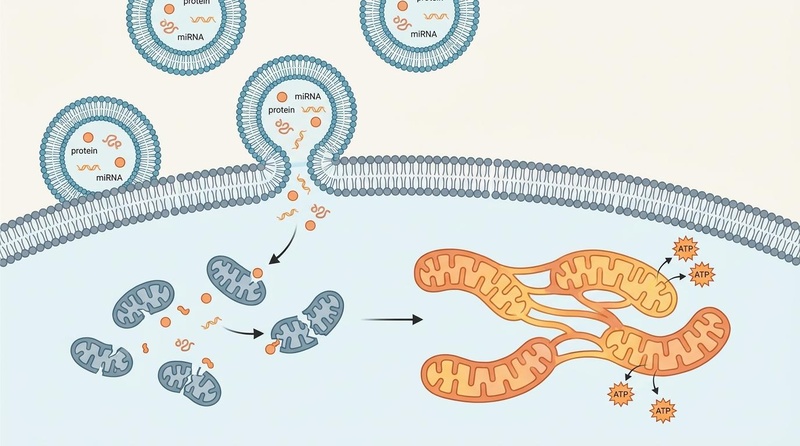
Exosomes mediate their effects primarily by transferring their molecular cargo (proteins, lipids, and nucleic acids, especially miRNAs) to recipient cells. This cargo can alter gene expression, protein synthesis, and cellular pathways in the target cells, leading to various biological responses.
- Primary targets: Recipient cells and their internal machinery, including mitochondria, ribosomes, and various signaling pathways (e.g., Wnt/β-catenin, MAPK, PI3K/Akt).
- Core mechanisms:
- Cellular Reprogramming: Exosomal miRNAs can downregulate genes associated with aging or disease, while promoting genes involved in repair and regeneration.
- Mitochondrial Rejuvenation: Exosomes can deliver functional mitochondria or mitochondrial-associated components to dysfunctional cells, improving energy metabolism [1:3].
- Anti-inflammatory Effects: Exosomes carry immunomodulatory molecules that can dampen inflammatory responses and promote tissue homeostasis.
- Angiogenesis & Tissue Remodeling: They can stimulate the formation of new blood vessels and promote the synthesis of extracellular matrix components, crucial for tissue repair.
- Evidence source: Mechanisms are elucidated through extensive in vitro and in vivo (animal) studies, supported by biomarker changes observed in early human trials.
- Human data (if any): Mechanistic trials show exosome treatment can modulate biomarkers of inflammation, cell proliferation, and mitochondrial function in human skin and hair follicles [4:4][19].
- Animal / in vitro data: Extensive animal and cell culture studies demonstrate exosomes promoting neurogenesis, cardioprotection, wound healing, and anti-tumor effects, suggesting broad therapeutic potential [20][10:1].
- Pharmacokinetics basics: Exosomes exhibit variable pharmacokinetics depending on their source, cargo, and route of administration. They can be quickly cleared from circulation (within minutes to hours) but their biological effects can persist longer due to the sustained impact of their transferred cargo on recipient cells. Bioavailability is a key consideration for different delivery methods.
¶ Effects on different systems
Exosomes exert pleiotropic effects across various physiological systems due to their role in intercellular communication.
Dermatological Health (Skin & Hair)
- What has been studied: Clinical trials and systematic reviews have investigated exosome therapy for skin rejuvenation (e.g., improving elasticity, hydration, reducing wrinkles) and hair regeneration (e.g., increasing hair density and diameter in androgenetic alopecia).
- What the trials generally show: Consistent improvements in aesthetic parameters for both skin and hair, with studies demonstrating significant increases in hair follicle activity and skin collagen production.
- Practical interpretation: Exosome therapy holds promise as a non-invasive or minimally invasive option for addressing cosmetic and regenerative concerns related to skin and hair aging.
Musculoskeletal System (Joints & Cartilage)
- What has been studied: Preclinical studies, mostly in animal models, have explored exosome applications in osteoarthritis, focusing on cartilage repair, anti-inflammatory effects, and pain reduction.
- What the trials generally show: Exosomes from mesenchymal stem cells (MSCs) have been shown to protect cartilage, reduce inflammation, and promote regeneration in osteoarthritic joints.
- Practical interpretation: While human clinical data is still emerging, exosomes are considered a promising cell-free therapy for joint diseases.
Systemic Longevity & Anti-Aging
- What has been studied: Preclinical studies in aged animal models have investigated the systemic effects of exosomes from young plasma or stem cells on overall lifespan, frailty, and hallmarks of aging.
- What the trials generally show: Intravenous administration of young exosomes has been shown to extend median lifespan, reverse age-related declines in multiple organs, improve mitochondrial function, and reduce epigenetic age markers in mice.
- Practical interpretation: These findings suggest exosomes could be a powerful tool for systemic rejuvenation, though human translation requires significant further research.
Immune System Modulation
- What has been studied: Research indicates exosomes carry immunomodulatory cargo that can influence immune cell activity, relevant to inflammatory conditions and autoimmune diseases.
- What the trials generally show: Exosomes can suppress excessive inflammation, promote tissue repair, and facilitate immune tolerance, making them relevant for inflammatory hair loss conditions like alopecia areata.
- Practical interpretation: Exosomes may offer a novel approach to fine-tuning immune responses in various pathological contexts.
¶ Dosage and how to take it
The optimal dosage and administration route for exosomes are highly variable and depend on the exosome source, purification method, intended therapeutic effect, and target tissue. Currently, there are no standardized, FDA-approved dosing protocols for exosome products outside of clinical trials.
Standard dosing in studies
- Typical daily dose range: Doses vary widely in research settings, often expressed as a number of exosomes (e.g., 10^9 to 10^12 particles) or by protein concentration. For aesthetic applications, single or multiple localized injections are common.
- Common dosing schedules: For hair regeneration, studies have reported intradermal injections every 2-4 weeks for 2-6 months. For systemic effects in animal models, weekly intravenous injections are typical [1:4].
- Study durations: Short-term (weeks to a few months) for aesthetic outcomes; longer-term (months to lifespan studies) for longevity in animal models.
Forms and bioavailability
- Common forms: Exosomes are typically isolated from cell culture supernatant (e.g., MSCs, ADSCs), plasma, or other bodily fluids. They are often suspended in saline solution for injection.
- Relative differences, if known: Exosomes derived from different cell types (e.g., placental MSCs vs. adipose MSCs) may have distinct cargo and therapeutic profiles. The route of administration significantly impacts bioavailability and targeting.
- With or without food: Not applicable for injectable forms. For potential oral formulations (e.g., plant-derived), research is nascent.
Special populations
- Dose considerations or lack of data in:
- Kidney or liver impairment: Data is largely absent.
- Older adults: Most human clinical data focuses on adults seeking aesthetic improvements, but specific geriatric dosing has not been established. Preclinical longevity studies specifically target older animals [1:5][12:2].
- Children and adolescents: Data is critically lacking.
- Pregnancy and breastfeeding: Contraindicated due to lack of safety data.
¶ Safety and side effects
The safety profile of exosome products, particularly unapproved ones, is a major concern. While research-grade exosomes in controlled settings generally show good tolerability, the commercial landscape includes products with unknown quality and purity.
Common side effects
- Mild and temporary localized reactions: Erythema (redness), edema (swelling), pain, or tenderness at the injection site [4:5][5:4]. These typically resolve quickly.
- Frequency and dose-relationship where reported: Generally rare for mild reactions; higher doses or impurities may increase risk.
Less common / serious concerns
- Serious adverse events (SAEs): The FDA has reported serious adverse events associated with unapproved exosome products, including bacterial infections, allergic reactions, localized tissue necrosis, tumor formation, and hospitalization [7:2][8:2].
- Immunogenicity: While exosomes are generally considered to have low immunogenicity due to their biological origin, immune reactions are possible, especially with allogeneic (non-autologous) sources or impurities.
- Contamination: Poorly controlled manufacturing can lead to contamination with pathogens or cellular debris.
- Unknown long-term effects: The long-term safety of exosome therapies, especially for systemic longevity applications, is largely unknown.
Who should be especially cautious or avoid it
- Individuals receiving unapproved exosome products outside of FDA-regulated clinical trials.
- Pregnant or breastfeeding individuals.
- Patients with active infections or compromised immune systems.
- Individuals with a history of cancer or autoimmune disorders (due to unknown effects on disease progression).
¶ Drug and supplement interactions
Information on specific drug and supplement interactions with exosomes is limited due to the early stage of clinical research and the complex nature of exosomal cargo. However, potential interactions can be inferred from their biological mechanisms.
Pharmacokinetic interactions (how drugs are processed)
- Currently, no well-documented pharmacokinetic interactions (e.g., via CYP450 enzymes) have been established for exosomes. However, the diverse protein and miRNA cargo could theoretically influence drug metabolism pathways.
Pharmacodynamic interactions (additive / opposing effects)
- Additive effects: Exosomes with anti-inflammatory or regenerative properties could theoretically enhance the effects of other anti-inflammatory drugs or supplements. Similarly, those affecting blood clotting could interact with anticoagulants.
- Opposing effects: Exosomes derived from different sources can have varying or even opposing effects depending on their cargo. Interactions with immunosuppressants are also plausible given exosomes' role in immune modulation.
- Due to the lack of robust clinical data, caution is advised when combining exosome therapy with other medications or supplements, especially those with narrow therapeutic windows or significant immune effects.
¶ Combining Exosomes with other supplements (“stacks”)
While specific "exosome stacks" are not well-defined in clinical literature, exosomes are often considered as part of broader regenerative or anti-aging protocols.
- Common combos: Exosomes are frequently used in conjunction with other regenerative therapies such as Platelet-Rich Plasma (PRP), microneedling, or laser treatments for synergistic effects in skin and hair rejuvenation. For systemic longevity, they might be theoretically combined with senolytics or NAD+ precursors, though this is purely speculative and lacks human evidence.
- Rationale: The rationale for combining exosomes often stems from mechanistic complementarity, where exosomes provide signaling cues for regeneration, while other interventions create a conducive environment or offer additional growth factors.
- Evidence level: Most combination therapies involving exosomes are based on mechanistic reasoning, preclinical studies, or anecdotal clinical observations rather than formal, large-scale combination trials.
¶ Practical questions (FAQ)
-
How long does it take for exosome treatments to show results?
For aesthetic applications like hair regeneration and skin rejuvenation, initial improvements may be observed within 2-4 weeks, with more significant results typically seen after 2-6 months of treatment or a series of sessions [13:3][4:6]. Systemic longevity effects in animals are observed over several months. -
Can I take exosomes long term?
The long-term safety and efficacy of exosome therapy in humans are largely unknown, especially for systemic or chronic use. Most clinical studies are short-to-medium term. Long-term use outside of regulated clinical trials is not recommended due to safety concerns and lack of data. -
Is exosome therapy FDA approved?
No. Currently, no exosome product is approved by the FDA for therapeutic use or for specific indications. All exosome products marketed for clinical use are considered unapproved drugs or biologics and require FDA review and approval. The FDA has issued multiple warnings against their unapproved use [6:2][7:3][8:3]. -
Are there different types of exosomes?
Yes, exosomes can be derived from various cell types (e.g., mesenchymal stem cells, adipose-derived stem cells, platelets) and even plant sources, each potentially carrying a unique cargo and exhibiting different biological effects. Plasma-derived exosomes also represent a significant area of research. -
Does exosome therapy have any anti-aging benefits?
Preclinical research, particularly in aged mice, suggests that exosomes from young sources can reverse age-related functional declines, improve mitochondrial energy metabolism, and extend lifespan [1:6][12:3]. Human evidence for direct anti-aging benefits is still in early stages and is not yet conclusive.
¶ How we evaluated the evidence
This article's evaluation of evidence for exosomes prioritizes human clinical data, systematic reviews, and meta-analyses, adhering to a hierarchical approach. Preclinical studies (animal and in vitro) are included to explain mechanisms but are clearly distinguished from human outcomes.
- Study types prioritized: Randomized controlled trials (RCTs), systematic reviews, and meta-analyses are given the highest weight. Observational studies and case reports provide supportive, but lower-grade, evidence.
- How you graded evidence quality:
- High: Multiple high-quality RCTs or meta-analyses with consistent results, low risk of bias, and adequate sample sizes.
- Moderate: Some RCTs with minor limitations, or consistent results from otherwise high-quality observational studies or systematic reviews of varied quality.
- Low: Few RCTs, significant limitations in study design, small sample sizes, or inconsistent results. Also includes strong preclinical data with emerging human evidence.
- Very low: Primarily observational studies, case reports, or animal/in vitro data; or serious flaws in available trials.
- Sample size, risk of bias, consistency, directness, effect size: These factors were considered when assessing the overall quality and reliability of the evidence for each reported outcome.
- How you decided on "magnitude" and "clinical relevance": Magnitude was assessed based on reported effect sizes in studies (e.g., percentage change, mean difference). Clinical relevance considers whether the observed effects are meaningful for patient health or aesthetic outcomes.
- How frequently you plan to update the page: This page will be updated as new meta-analyses, large-scale human RCTs, or significant regulatory changes regarding exosome products emerge.
¶ See also
- Therapeutic Plasma Exchange (TPE)
- Blood-Based Interventions for Longevity
- Immunoglobulin Therapy
- Stem Cell Therapy
- Regenerative Medicine
¶ References
Chen X, Luo Y, Zhu Q, et al. Small extracellular vesicles from young plasma reverse age-related functional declines by improving mitochondrial energy metabolism. Nature Aging. 2024;4(6):814-838. https://doi.org/10.1038/s43587-024-00612-4 ↩︎ ↩︎ ↩︎ ↩︎ ↩︎ ↩︎ ↩︎
Dehghani L, Rostamirad S, Asilian A, et al. Exosomes and Hair Regeneration: A Systematic Review of Clinical Evidence Across Alopecia Types and Exosome Sources. Clinical, Cosmetic and Investigational Dermatology. 2025;18:185-201. https://pmc.ncbi.nlm.nih.gov/articles/PMC12433634/ ↩︎ ↩︎ ↩︎ ↩︎
Gupta AK, et al. Systematic review of exosome treatment in hair restoration: Preliminary evidence, safety, and future directions. Journal of Cosmetic Dermatology. 2023;22(12):3217-3228. https://doi.org/10.1111/jocd.15869 ↩︎ ↩︎
Shaim AB, Khan SA, Alhazmi Y, et al. Efficacy of Exosome-Based Therapies for Skin Rejuvenation: A Systematic Review of Human Studies. Journal of Cosmetic Dermatology. 2025;24(1):210-221. https://pmc.ncbi.nlm.nih.gov/articles/PMC12933354/ ↩︎ ↩︎ ↩︎ ↩︎ ↩︎ ↩︎ ↩︎
Shiri K, Shariatzadeh H, Barzegar M, et al. Exosomes in Skin Rejuvenation: Systematic Review of Anti-Aging Effects and Clinical Applications. Dermatology Practical & Conceptual. 2025;15(1):e2025008. https://pmc.ncbi.nlm.nih.gov/articles/PMC12952817/ ↩︎ ↩︎ ↩︎ ↩︎ ↩︎
Public Safety Notification on Exosome Products. FDA Safety Alerts. 2019. https://www.fda.gov/vaccines-blood-biologics/safety-availability-biologics/public-safety-notification-exosome-products ↩︎ ↩︎ ↩︎
Public Safety Alert Due to Marketing of Unapproved Stem Cell and Exosome Products. FDA Safety Alerts. 2020. https://www.fda.gov/safety/medical-product-safety-information/public-safety-alert-due-marketing-unapproved-stem-cell-and-exosome-products ↩︎ ↩︎ ↩︎ ↩︎
Patient and Consumer Warning about Potential Serious Risks of Harm following Use of Unapproved Products. FDA Biologics Bulletins. 2026. https://www.fda.gov/vaccines-blood-biologics/safety-availability-biologics/patient-and-consumer-warning-about-potential-serious-risks-harm-following-use-unapproved-products ↩︎ ↩︎ ↩︎ ↩︎
Prattichizzo F, Giuliani A, Sabbatinelli J, et al. Extracellular vesicles circulating in young organisms promote healthy longevity. Journal of Extracellular Vesicles. 2019;8(1):1644831. https://pmc.ncbi.nlm.nih.gov/articles/PMC6713086/ ↩︎
Kim C, Lee H, Han M, et al. Stem cell-derived and plant-derived exosomes: Promising therapeutics for skin healing and regeneration. International Journal of Molecular Sciences. 2025;26(17):7376. https://pubmed.ncbi.nlm.nih.gov/41655911/ ↩︎ ↩︎
Gimborn SV, D'Souza A, Balan M, et al. Regulation of exosomes as biologic medicines. Biologicals. 2024;91:101859. https://pmc.ncbi.nlm.nih.gov/articles/PMC11307316/ ↩︎
Sanz-Ros J, Esteve-Codina E, Arumí-Planas M, et al. Small extracellular vesicles from young adipose-derived stem cells prevent frailty, improve health span, and decrease epigenetic age in old mice. Science Advances. 2022;8(42):eabq2226. https://www.science.org/doi/10.1126/sciadv.abq2226 ↩︎ ↩︎ ↩︎ ↩︎
Dehghani L, Rostamirad S, Asilian A, et al. Efficacy of placental-derived mesenchymal stem cell exosome therapy in treating androgenetic alopecia: a clinical trial study. Research Square. 2024. https://doi.org/10.21203/rs.3.rs-5252508/v1 ↩︎ ↩︎ ↩︎ ↩︎
Gupta AK, et al. Effectiveness of Exosome Treatment in Androgenetic Alopecia: Outcomes of a Prospective Study. Aesthetic Plastic Surgery. 2024. https://link.springer.com/article/10.1007/s00266-024-04332-3 ↩︎
Norooznezhad F, et al. Treatment of persistent chemotherapy-induced hair loss (Alopecia) with human mesenchymal stromal cells exosome enriched extracellular vesicles: A case report. Clinical Case Reports. 2023;11(4):e07217. https://pmc.ncbi.nlm.nih.gov/articles/PMC10121390/ ↩︎
Proffer A, Miller P, Miller C, et al. Efficacy and safety of a topical platelet-derived exosome product in facial skin rejuvenation. JAAD Reviews. 2024;24(2):e22-e23. https://www.jaadreviews.org/article/S2950-1989(24)00009-6/fulltext ↩︎ ↩︎
Shiu YC, Chen HC, Liu YH. Recent advances in the use of stem cell-derived exosomes for joint regeneration. Journal of Translational Medicine. 2025;23(1):364. https://pubmed.ncbi.nlm.nih.gov/42166085/ ↩︎ ↩︎
Comparative efficacy of exosomes derived from different mesenchymal stem cell sources in osteoarthritis models. International Journal of Molecular Sciences. 2025;26(12):5447. https://pmc.ncbi.nlm.nih.gov/articles/PMC12443577/ ↩︎ ↩︎
Unveiling exosomes in combating skin aging: insights into resources, mechanisms and challenges. Cell Communication and Signaling. 2024;22(1):303. https://pmc.ncbi.nlm.nih.gov/articles/PMC12395928/ ↩︎
Karimi N, Dinçsoy AB. Therapeutic potential of stem cell-derived exosomes in hair regeneration: A systematic review. Advances in Experimental Medicine and Biology. 2024;1479:1-17. https://pmc.ncbi.nlm.nih.gov/articles/PMC12305264/ ↩︎