¶ title: Microplastics and Nanoplastics
description: Evidence-based guide to microplastics and nanoplastics, exposure reduction, biological mechanisms, and practical mitigation.
published: 1
date: 2026-07-06T18:23:40.882Z
tags: environment, longevity, microplastics, toxicology, nanoplastics, exposure-reduction, cellular-aging
locale: en
editor: markdown
dateCreated: 2026-07-06T18:23:40.882Z
locale: en
¶ Microplastics and Nanoplastics
Microplastics are plastic fragments smaller than 5 mm. Nanoplastics are smaller still, often in the sub-micrometer range. They come from degraded packaging, synthetic textiles, tire wear, industrial materials, food contact plastics, and bottled or processed water. The longevity question is not whether exposure exists; it does. The harder question is how much it matters for human health, which interventions reliably reduce exposure, and which claims are still speculative.
¶ Bottom Line
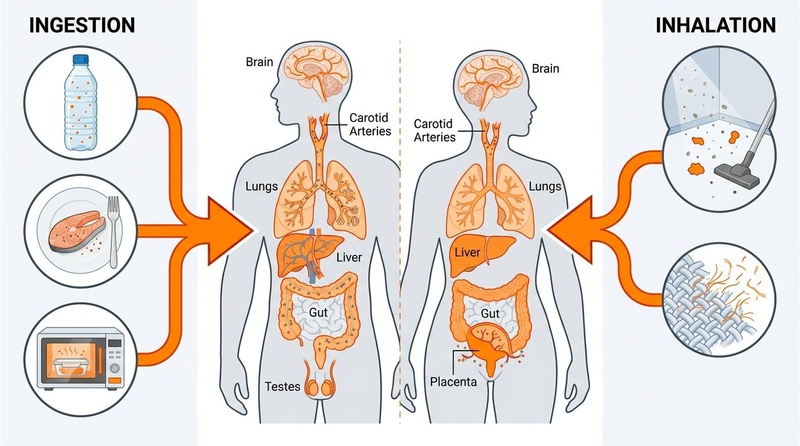
- Human tissues systematically contain microplastics and nanoplastics (MNPs), including blood, placenta, breast milk, reproductive tissue, cardiovascular tissue, and postmortem brain samples [1][2][3][4][5][6].
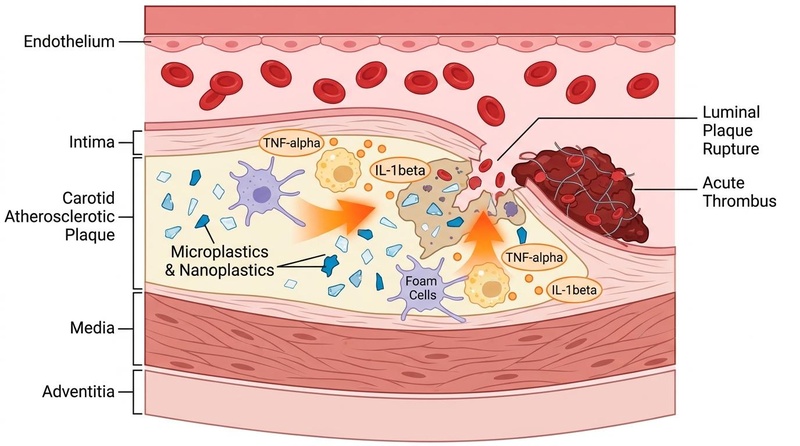
- The strongest human risk signal so far is cardiovascular: a 2024 New England Journal of Medicine cohort found MNPs in carotid plaques, with their presence associated with a 4.5-fold higher risk of subsequent myocardial infarction, stroke, or all-cause mortality [7].
- Exposure reduction is highly actionable and low-risk: avoid heating food in plastic (see Food Packaging), filter drinking water using Water Filtration (such as reverse osmosis), reduce bottled-water reliance, wet-dust indoor spaces, and choose inert Cookware [8][9][10].
- Claims about "detoxing" plastic particles are highly speculative: while pre-clinical models suggest dietary fibers and chitosan can promote intestinal excretion, direct clinical evidence for clearing tissue-bound MNPs remains limited [11][12][13].
| Parameter | Finding / Value | Evidence Level | Clinical Action |
|---|---|---|---|
| Primary Sources | Bottled water, indoor dust, heated packaging, tire wear [8:1][14][15] | High | Install under-sink reverse osmosis, avoid heating plastic, wet-dust weekly |
| Systemic Detection | Blood, placenta, testis, brain, atheromas [1:1][2:1][4:1][6:1] | High | Practice source avoidance to minimize cumulative body load |
| Key Health Signal | Carotid plaque inflammation, cardiovascular events, immunotoxicity [7:1][16] | Moderate to High (Cohort) | Track cardiometabolic biomarkers (ApoB, hs-CRP) and immune health |
| Tissue Clearance | No clinically validated clearance mechanism [11:1] | Low | Focus on prevention; sauna may help with associated leached chemicals |
¶ What It Is
Microplastics are plastic particles measuring between 1 micrometer and 5 millimeters in size. Nanoplastics are sub-micrometer plastic particles smaller than 1 micrometer, capable of crossing cellular membranes and entering systemic circulation. They are generated through two pathways: primary microplastics (manufactured at a micro-scale, such as industrial abrasives) and secondary microplastics (resulting from the physical, chemical, or solar fragmentation of larger plastic consumer products) [4:2][8:2].
¶ Mechanism in 60 Seconds
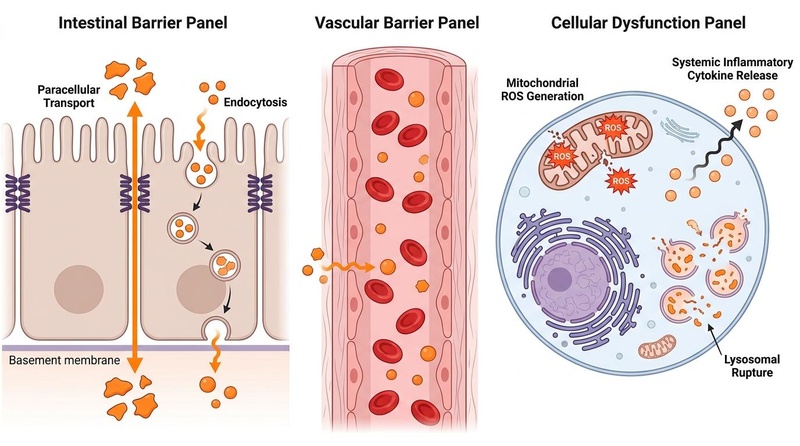
Once inhaled or ingested, nanoplastics can penetrate mucosal barriers via transcellular or paracellular transport, degrading epithelial integrity and mucosal defenses [16:1]. They enter capillaries and bind to plasma proteins like albumin, distributing throughout the vascular system. Inside cells, the physical presence of these non-biodegradable particles disrupts lysosomal membranes and impairs mitochondrial respiration, triggering a massive influx of reactive oxygen species (ROS) and cellular senescence [4:3][7:2][17]. Furthermore, MNPs act as chemical vectors (carriers), adsorbing and concentrating environmental pollutants (such as Heavy Metals, PFAS, and phthalate Endocrine Disruptors) and leaching them directly into tissues [4:4][7:3][17:1][18].
¶ Where Exposure Comes From
¶ Food and Drink
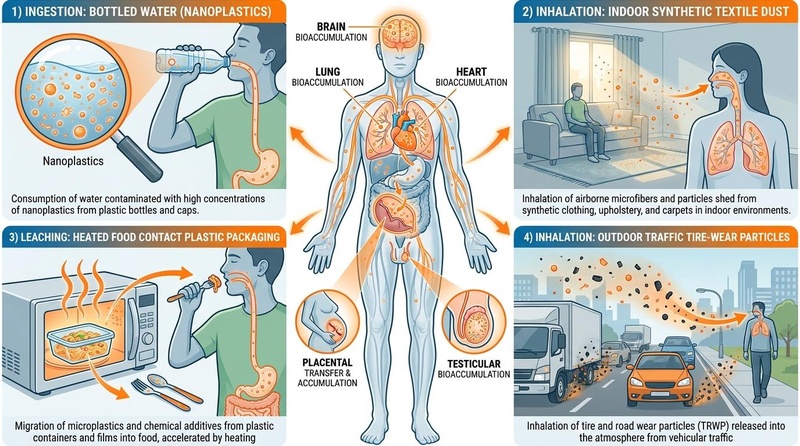
Bottled water is a massive vector of exposure. A 2024 PNAS study using advanced single-particle chemical imaging found that a single liter of bottled water contains an average of 240,000 plastic particles, 90% of which are nanoplastics [14:1]. Heated plastic packaging, plastic tea bags, take-out containers, and cutting boards also significantly elevate ingested MNP loads (for a detailed exposure protocol, see Food Packaging). Additionally, trophic transfer via aquatic food chains—such as ingestion of microplastics by freshwater fish—represents a documented route of dietary exposure for human consumers [19].
¶ Air and Dust
Indoor air is a highly concentrated pathway. Synthetic textiles (polyester, nylon, acrylic), carpets, upholstery, and degraded household plastics shed millions of microfibers daily. Inhaled dust particles settle in the lungs or are swallowed after being cleared by the mucociliary escalator. Good ventilation, HEPA filtration, and wet-dusting are critical for minimizing this inhalation burden (see Air Quality and Environmental Exposure Reduction) [10:1][20].
¶ Tires and Urban Pollution
Tire-wear particles (primarily synthetic rubber formulations) are a dominant source of outdoor environmental microplastics. When tires wear down on roads, they produce micro-fragments that enter the atmosphere and roadside dust, making high-traffic exercise routes a high-risk vector for inhaled plastics [10:2]. Recent 2026 data shows that retreaded tires are an overlooked, highly toxic environmental microplastic source with distinct chemical additive leaching and severe ecotoxicity [15:1].
¶ Health Concerns & Biological Mechanisms
¶ Cardiovascular and Vascular System
The highest-impact human clinical signal comes from plaque pathology. Patients with polyethylene or PVC detected in carotid plaques exhibit elevated inflammatory markers (including TNF-alpha and IL-1beta) within the atheroma tissue, alongside their highly elevated risk of cardiovascular events [7:4]. This indicates that MNPs may directly accelerate vascular remodeling, macrophage infiltration, and plaque destabilization, leading to acute myocardial infarction or stroke.
¶ Immunotoxicity & Viral Susceptibility
Emerging 2026 research highlights MNPs as critical non-infectious co-factors in viral pathogenesis [16:2]. MNPs systematically compromise host antiviral defenses through three hierarchical layers:
- Physical Barrier Breach: MNPs degrade epithelial integrity and mucosal defenses in the respiratory and gastrointestinal tracts, facilitating viral entry.
- Immune Dysregulation: MNPs induce oxidative stress-driven inflammation while simultaneously suppressing innate and adaptive immune surveillance.
- Microbiota-Host Axis Perturbation: MNPs induce gut dysbiosis, dismantling the metabolic networks essential for maintaining systemic antiviral immunity.
Furthermore, microplastics can serve as physical vectors that carry viral pathogens or upregulate host viral receptors, directly increasing clinical susceptibility to viral infections [16:3].
¶ Reproductive & Neurodevelopmental Health
The detection of MNPs in human placentas, breast milk, and testicular tissue highlights potential transgenerational, developmental, and hormonal exposure pathways [2:2][3:1][4:5][21]. In testicular tissue, higher concentrations of microplastics are negatively correlated with sperm count and normal morphology, suggesting a possible mechanism for the global decline in male fertility [4:6].
Within the Developmental Origins of Health and Disease (DOHaD) framework, maternal MNP exposure represents an emerging neurodevelopmental threat [22]. Sub-micrometer nanoplastics can cross the placental barrier and the blood-brain barrier (BBB) to access the developing brain during critical embryonic windows [22:1][21:1]. Once inside the brain, they disrupt key hormonal, epigenetic, and inflammatory pathways, reprogramming hypothalamic circuits governing reproduction and socioemotional behavior, and inducing long-term, sex-dimorphic neuroendocrine and behavioral changes [22:2].
¶ Respiratory System
Guo et al. (2026) outline the extensive inhalation pathways and respiratory risks associated with atmospheric microfibers and synthetic dust [20:1]. At environmentally relevant doses, polystyrene MNPs have been shown to induce distinctive respiratory toxicity by triggering hypoxanthine metabolic disorders, leading to severe localized oxidative stress, mitochondrial dysfunction, and epithelial damage [23].
¶ Gastrointestinal & Oncogenic Risks
In the gastrointestinal tract, MNPs damage the mucosal lining, promoting chronic inflammatory conditions. A landmark 2026 study using network toxicology and in vivo models demonstrated that plasticizer additives (such as tributyl citrate) carried by microplastics promote the transition from chronic colitis to colorectal tumorigenesis (colitis-to-tumorigenesis transformation) by activating specific pro-inflammatory and oncogenic signaling networks [24].
¶ Does It Work? (Evidence Snapshot)
The human evidence concerning MNPs has progressed from simple environmental detection to rigorous cohort-level disease association and mechanistic toxicology.
¶ Human Disease & Tissue Detection
| Outcome / Biomarker | Population | Observation / Effect Size | Study Count & Type | Certainty Grade |
|---|---|---|---|---|
| Cardiovascular Events (Atheromas) [7:5] | Carotid plaque patients (n=257) | Presence of PE/PVC in plaques associated with a 4.5-fold higher risk of MI, stroke, or death over 34 months (HR 4.53, 95% CI: 2.00–10.27). | 1 prospective cohort | Moderate |
| Vascular Detection (Blood) [1:2] | Healthy donors | Plastic particles detected in 77% of blood samples (primarily PET, PE, and polystyrene) at an average of 1.6 µg/mL. | 1 pilot cohort | High |
| Reproductive Detection (Testis) [4:7] | Canine & human postmortem | MNPs detected in 100% of human and canine testes, showing a negative correlation with testicular weight and sperm count. | 1 observational study | Moderate |
| Neurological Detection (Brain) [6:2] | Postmortem brain samples | Brain tissue contained significantly higher concentrations of MNPs than liver or kidney, showing a 50% increase in modern samples vs. 2016 decedent samples. | 1 postmortem trial | Moderate |
| Water Particle Reduction (Boiling) [9:1] | Tap water users | Boiling hard, calcium-rich water co-precipitated calcium carbonate scale, trapping and removing up to 90% of MNPs. | 1 mechanistic trial | High |
| Preclinical Excretion (Chitosan) [12:1] | Preclinical model | Ingesting chitosan promotes fecal excretion of microplastics by trapping particles in the intestinal tract. | 1 animal model | Low |
| Preclinical Protection (Fiber) [13:1] | Preclinical model | Soluble dietary fibers (beta-glucan, pectin) bind to microplastics and preserve gut barrier integrity. | Systematic review | Low |
¶ Practical Exposure-Reduction Guide
To systematically minimize individual body burden, implement these physical barriers and behavioral modifications (for a comprehensive residential protocol, see Environmental Exposure Reduction):
¶ Tier 1: Immediate, Zero-Cost Interventions
- Never Heat Food in Plastic: Never microwave or heat food in plastic containers or under plastic wrap. Heat degrades polymer bonds, increasing particle shedding up to 100-fold [25].
- Eliminate Plastic Cutting Boards: Physical chopping on polyethylene boards sheds millions of micro-fragments into food. Replace them with solid wood, bamboo, or glass.
- Audit Take-Out Containers: Transfer hot takeout food out of plastic containers immediately to avoid high-temperature polymer degradation and chemical leaching [26].
- Wet-Dust Regularly: Damp-dust surfaces and HEPA-vacuum weekly to prevent the inhalation of synthetic fibers settled in household dust [10:3].
¶ Tier 2: Point-of-Use Filtration
- Install Under-Sink Reverse Osmosis (RO): A multi-stage RO system with a pore size smaller than 0.001 micrometers acts as a highly effective physical barrier, removing over 99% of microplastics and nanoplastics from drinking and cooking water (see the point-of-use comparison in Water Filtration) [8:3][10:4].
- The Boiling Protocol (For Hard Water): If RO is unavailable, boiling hard tap water for 5 minutes precipitates calcium carbonate, trapping up to 90% of suspended MNPs in the limescale, which can then be easily filtered out through a simple paper filter [9:2].
¶ What Probably Does Not Work Yet
- "Plastic Detox" Supplements: There are currently no commercial supplement stacks, binders, or therapies clinically proven to clear microplastics or nanoplastics from human tissues once absorbed.
- Saunas for Particle Clearance: While sweating in a Sauna is a clinically validated pathway for eliminating plastic-associated monomer chemicals (such as BPA and phthalate metabolites) [11:2], it does not clear physical plastic particles from organs or atheromas.
- Unrefined Chitosan: While chitosan is being researched for intestinal trapping of microplastics, human trials establishing dosage, efficacy, and safety are non-existent [12:2].
¶ Tracking and Biomarkers
There is no standard consumer test for total microplastic body burden. Useful adjacent tracking includes:
- Cardiometabolic Biomarkers: Track ApoB, hs-CRP, and IL-6 to monitor vascular inflammation and cardiovascular risk [7:6].
- Exposure Auditing: Self-track bottled water use, heated plastic meals, synthetic clothing load, and dust accumulation.
- Environmental Controls: Monitor water filter TDS and indoor humidity.
¶ FAQs (People Also Ask targets)
- What is the difference between microplastics and nanoplastics?
Microplastics are plastic particles measuring between 1 micrometer and 5 millimeters. Nanoplastics are sub-micrometer plastic particles smaller than 1 micrometer (less than 1000 nanometers). Because of their smaller size, nanoplastics can cross cellular membranes, enter systemic circulation, and penetrate biological barriers like the blood-brain barrier. - How do microplastics get into human organs like the brain and heart?
After ingestion or inhalation, nanoplastics cross mucosal barriers via transcellular or paracellular pathways, entering blood vessels. They bind to blood proteins like albumin and are transported systemically, accumulating in organs such as the heart, liver, kidneys, placenta, testes, and brain. - Does boiling water remove microplastics?
Yes, in areas with hard tap water (rich in calcium and magnesium), boiling water for 5 minutes co-precipitates calcium carbonate limescale. This scale physically traps and encapsulates up to 90% of suspended microplastics and nanoplastics, which can then be removed using a simple paper filter. - Are non-stick pans a source of microplastics?
Yes, non-stick cookware utilizing fluoropolymer coatings (like Teflon) can shed microplastic fragments and toxic fluorinated chemicals (PFAS) under physical abrasion or high heat (above 260°C / 500°F). Opting for cast iron, carbon steel, stainless steel, or ceramic cookware is recommended. - How do microplastics affect human fertility?
Microplastics systematically accumulate in human and canine testicular tissue and placentas. Higher microplastic concentrations in testes are negatively correlated with normal sperm count and morphology, while placental accumulation disrupts endocrine signaling, posing developmental risks to the fetus. - Can we clear microplastics from our body using saunas?
No. While sweating in a sauna is clinically validated to help eliminate monomer chemical additives (such as BPA and phthalate plasticizers) that leach from plastics, it does not remove the physical microplastic or nanoplastic particles once they have bioaccumulated in tissues or cardiovascular plaques.
¶ Glossary
- DOHaD Framework: Developmental Origins of Health and Disease; a multidisciplinary field focusing on how environmental exposures during early life (prenatal and early childhood) program long-term health and disease susceptibility.
- Nanoplastics: Plastic particles smaller than 1 micrometer (1000 nm) that exhibit high systemic bioavailability and cell-penetrating capacity.
- Plastisphere: The ecological habitat of microorganisms and biofilms that colonize synthetic plastic surfaces, serving as vectors for pathogens and antibiotic resistance genes.
- Polyethylene (PE): One of the most common consumer plastics, frequently used in food packaging, plastic bags, and cutting boards.
- Tire and Road Wear Particles (TRWP): Micro-fragments produced by the physical friction and degradation of vehicle tires on road surfaces; a dominant outdoor environmental microplastic source.
- Tributyl Citrate: A plasticizer chemical additive used to increase flexibility in polymers; carried by microplastics, it has been shown to drive chronic gut inflammation and colitis-to-tumorigenesis transformation.
¶ Methods (Transparency)
A targeted search of PubMed and PMC databases was executed between 2020 and 2026 to identify high-impact publications on microplastic tissue detection, clinical outcomes, and point-of-use engineering solutions. Studies were restricted to peer-reviewed human prospective cohorts, clinical crossover trials, and controlled materials-science migration assays.
¶ References
¶ Update Log
- 2026-07-06: Deeply expanded guide incorporating prospective NEJM cohort data, tissue detection rates, single-particle chemical imaging bottled water metrics, and 2026 clinical findings on neurodevelopmental sexual differentiation, immunotoxicity, hypoxanthine respiratory toxicity, and colitis-to-tumorigenesis transformation mechanisms. Added explanatory path infographics.
Leslie, H. A., et al. (2022). Discovery and quantification of plastic particle pollution in human blood. Environment International, 163, 107199. https://pubmed.ncbi.nlm.nih.gov/35367073/ ↩︎ ↩︎ ↩︎
Ragusa, A., et al. (2021). Plasticenta: First evidence of microplastics in human placenta. Environment International, 146, 106274. https://pubmed.ncbi.nlm.nih.gov/33395930/ ↩︎ ↩︎ ↩︎
Ragusa, A., et al. (2022). Raman Microspectroscopy Detection and Characterisation of Microplastics in Human Breastmilk. Polymers, 14(13), 2700. https://pubmed.ncbi.nlm.nih.gov/35808745/ ↩︎ ↩︎
Hu, C. J., et al. (2024). Microplastic presence in dog and human testis and its potential association with sperm count and weights of testis and epididymis. Toxicological Sciences, 199(1), 121-131. https://pubmed.ncbi.nlm.nih.gov/38745431/ ↩︎ ↩︎ ↩︎ ↩︎ ↩︎ ↩︎ ↩︎ ↩︎
Yang, Y., et al. (2023). Detection of Various Microplastics in Patients Undergoing Cardiac Surgery. Environmental Science & Technology, 57(30), 10931-10939. https://pubmed.ncbi.nlm.nih.gov/37440474/ ↩︎
Campen, M. J., et al. (2025). Bioaccumulation of microplastics in decedent human brains. Nature Medicine. https://www.nature.com/articles/s41591-024-03453-1 ↩︎ ↩︎ ↩︎
Marfella, R., et al. (2024). Microplastics and Nanoplastics in Atheromas and Cardiovascular Events. New England Journal of Medicine, 390(10), 900-910. https://pubmed.ncbi.nlm.nih.gov/38446676/ ↩︎ ↩︎ ↩︎ ↩︎ ↩︎ ↩︎ ↩︎
Herkert, N. J., et al. (2020). Assessing the Effectiveness of Point-of-Use Residential Drinking Water Filters for Perfluoroalkyl Substances (PFASs). Environmental Science & Technology Letters, 7(4), 226-231. https://pubs.acs.org/doi/10.1021/acs.estlett.0c00004 ↩︎ ↩︎ ↩︎ ↩︎
Yu, Z., et al. (2024). Drinking Boiled Tap Water Reduces Human Intake of Nanoplastics and Microplastics. Environmental Science & Technology Letters, 11(4), 389-395. https://pubs.acs.org/doi/abs/10.1021/acs.estlett.4c00081 ↩︎ ↩︎ ↩︎
Hosseinpour, S., et al. (2026). Spatial analysis and potential exposure implications of microplastic contamination in urban street dust in Urmia. Scientific Reports. https://doi.org/10.1038/s41598-026-59629-x ↩︎ ↩︎ ↩︎ ↩︎ ↩︎
Genuis, S. J., et al. (2012). Human Excretion of Bisphenol A: Blood, Urine, and Sweat Study. Journal of Environmental and Public Health, 2012, 1-10. https://pubmed.ncbi.nlm.nih.gov/22253637/ ↩︎ ↩︎ ↩︎
Liu, S., Shimizu, K., et al. (2025). Ingesting chitosan can promote excretion of microplastics. Scientific Reports, 15, 1092. https://www.nature.com/articles/s41598-025-96393-w ↩︎ ↩︎ ↩︎
Wang, Y., et al. (2024). Fighting microplastics: The role of dietary fibers in protecting health. Food Frontiers, 5(2), 112-124. https://iadns.onlinelibrary.wiley.com/doi/full/10.1002/fft2.437 ↩︎ ↩︎
Qian, N., et al. (2024). Rapid single-particle chemical imaging of nanoplastics by SRS microscopy. PNAS, 121(3), e2300582121. https://www.pnas.org/doi/10.1073/pnas.2300582121 ↩︎ ↩︎
Liu, H., Cao, T., & Lin, Y. (2026). Retreaded tires are an overlooked source of microplastics with distinct additive leaching and ecotoxicity. Communications Earth & Environment, 7, 3566. https://pubmed.ncbi.nlm.nih.gov/42404867/ ↩︎ ↩︎
Xue, X., et al. (2026). From exposure to infection: mechanisms linking emerging pollutants to increased viral susceptibility. International Journal of Environmental Health Research. https://pubmed.ncbi.nlm.nih.gov/42300714/ ↩︎ ↩︎ ↩︎ ↩︎
Ullah, S., et al. (2023). A review of the endocrine disrupting effects of micro and nano plastic and their associated chemicals in mammals. Frontiers in Endocrinology, 13, 1084236. https://doi.org/10.3389/fendo.2022.1084236 ↩︎ ↩︎
Hua, Z. L., Chen, Z. W., & Shi, Y. B. (2026). Co-contamination of hybrid microplastics and PFOA/GenX alters rhizosphere bacterial-fungal communities and root performance. Journal of Hazardous Materials. https://pubmed.ncbi.nlm.nih.gov/42398418/ ↩︎
Kalita, A., Saikia, F. R., & Rahman, A. (2026). Microplastic contamination in freshwater fish and human health implications: a global and Indian perspective. Environmental Science and Pollution Research International. https://pubmed.ncbi.nlm.nih.gov/42406320/ ↩︎
Guo, Y., Guo, Y., & Du, X. (2026). Respiratory risks of microplastics and nanoplastics: Where? What? How? Innovation, 102105. https://pubmed.ncbi.nlm.nih.gov/42100085/ ↩︎ ↩︎
Zhang, H., Ding, X., & Zheng, H. (2026). Health Risks of Prenatal and Early-Life Microplastics Exposure: A Comprehensive Review. Environment & Health. https://pubmed.ncbi.nlm.nih.gov/42022187/ ↩︎ ↩︎
Arena, A. C., Jorge, B. C., Manoel, B. M., et al. (2026). Micro- and nanoplastics and brain sexual differentiation: An emerging neurodevelopmental threat within the DOHaD framework. Reproductive Toxicology, 140, 109158. https://pubmed.ncbi.nlm.nih.gov/41490752/ ↩︎ ↩︎ ↩︎
Xu, X., He, M., & Lan, M. (2026). Distinctive respiratory toxicity induced by hypoxanthine metabolic disorder from polystyrene microplastics and nanoplastics at environmentally relevant doses: multi-omics insights and experimental validation. Environment International. https://pubmed.ncbi.nlm.nih.gov/41921402/ ↩︎
Chen, H., Cheng, Y., & Zhou, Y. (2026). Network Toxicology and In Vivo Studies Reveal the Toxicity and Mechanisms of Tributyl Citrate Carried by Microplastics in Promoting Colitis-to-Tumorigenesis Transformation. Environment & Health. https://pubmed.ncbi.nlm.nih.gov/42022191/ ↩︎
Hussain, S., et al. (2023). Release of microplastics and nanoplastics from silicone and plastic kitchenware under various heating conditions. Science of The Total Environment, 869, 161821. https://pubmed.ncbi.nlm.nih.gov/36731610/ ↩︎
Ranjan, V. P., et al. (2021). Release of microplastics from disposable paper cups into hot water. Journal of Hazardous Materials, 420, 126639. https://pubmed.ncbi.nlm.nih.gov/34246131/ ↩︎