¶ title: Microplastics and Nanoplastics
description: Evidence-based guide to microplastics and nanoplastics, exposure reduction, biological mechanisms, and practical mitigation.
published: 1
date: 2026-07-06T18:23:40.882Z
tags: environment, longevity, microplastics, toxicology, nanoplastics, exposure-reduction, cellular-aging
locale: en
editor: markdown
dateCreated: 2026-07-06T18:23:40.882Z
locale: en
¶ Microplastics and Nanoplastics
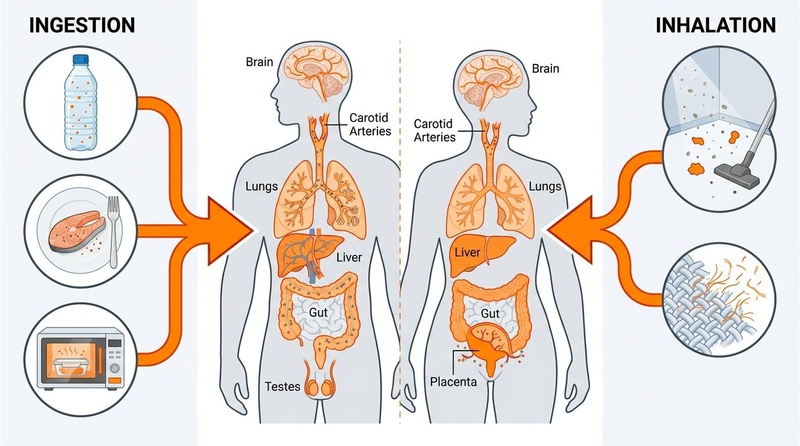
Microplastics are plastic fragments smaller than 5 mm. Nanoplastics are smaller still, often in the sub-micrometer range. They come from degraded packaging, synthetic textiles, tire wear, industrial materials, food contact plastics, and bottled or processed water. The longevity question is not whether exposure exists; it does. The harder question is how much it matters for human health, which interventions reliably reduce exposure, and which claims are still speculative.
¶ Bottom Line
- Human tissues systematically contain microplastics and nanoplastics (MNPs), including blood, placenta, breast milk, reproductive tissue, cardiovascular tissue, and postmortem brain samples [1][2][3][4][5][6].
- The strongest human risk signal so far is cardiovascular: a 2024 New England Journal of Medicine cohort found MNPs in carotid plaques, with their presence associated with a 4.5-fold higher risk of subsequent myocardial infarction, stroke, or all-cause mortality [7].
- Exposure reduction is highly actionable and low-risk: avoid heating food in plastic (see Food Packaging), filter drinking water using Water Filtration (such as reverse osmosis), reduce bottled-water reliance, wet-dust indoor spaces, and choose inert Cookware [8][9][10].
- Claims about "detoxing" plastic particles are highly speculative: while pre-clinical models suggest dietary fibers and chitosan can promote intestinal excretion, direct clinical evidence for clearing tissue-bound MNPs remains limited [11][12][13].
| Parameter | Finding / Value | Evidence Level | Clinical Action |
|---|---|---|---|
| Primary Sources | Bottled water, indoor dust, heated packaging, tire wear [8:1][14][15] | High | Install under-sink reverse osmosis, avoid heating plastic, wet-dust weekly |
| Systemic Detection | Blood, placenta, testis, brain, atheromas [1:1][2:1][4:1][6:1] | High | Practice source avoidance to minimize cumulative body load |
| Key Health Signal | Carotid plaque inflammation, cardiovascular events, immunotoxicity [7:1][16] | Moderate to High (Cohort) | Track cardiometabolic biomarkers (ApoB, hs-CRP) and immune health |
| Tissue Clearance | No clinically validated clearance mechanism [11:1] | Low | Focus on prevention; sauna may help with associated leached chemicals |
¶ What It Is
Microplastics are plastic particles measuring between 1 micrometer and 5 millimeters in size. Nanoplastics are sub-micrometer plastic particles smaller than 1 micrometer, capable of crossing cellular membranes and entering systemic circulation. They are generated through two pathways: primary microplastics (manufactured at a micro-scale, such as industrial abrasives) and secondary microplastics (resulting from the physical, chemical, or solar fragmentation of larger plastic consumer products) [4:2][8:2].
¶ Mechanism in 60 Seconds
Once inhaled or ingested, nanoplastics can penetrate mucosal barriers via transcellular or paracellular transport, degrading epithelial integrity and mucosal defenses [16:1]. They enter capillaries and bind to plasma proteins like albumin, distributing throughout the vascular system. Inside cells, the physical presence of these non-biodegradable particles disrupts lysosomal membranes and impairs mitochondrial respiration, triggering a massive influx of reactive oxygen species (ROS) and cellular senescence [4:3][7:2][17]. Furthermore, MNPs act as chemical vectors (carriers), adsorbing and concentrating environmental pollutants (such as Heavy Metals, PFAS, and phthalate Endocrine Disruptors) and leaching them directly into tissues [4:4][7:3][17:1][18].
¶ Where Exposure Comes From
¶ Food and Drink
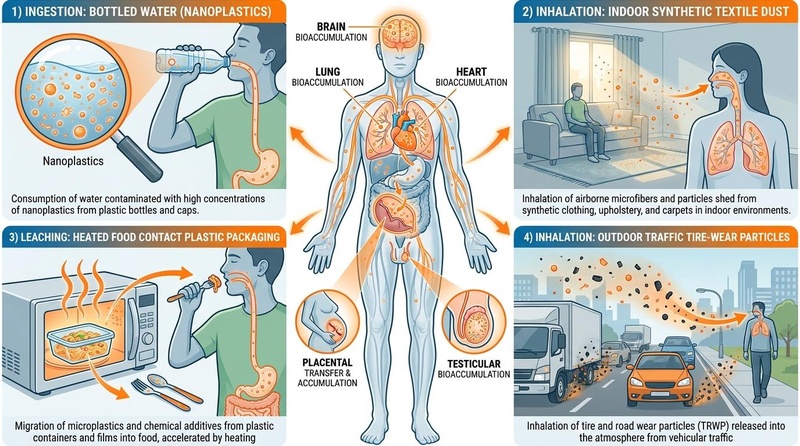
Bottled water is a massive vector of exposure. A 2024 PNAS study using advanced single-particle chemical imaging found that a single liter of bottled water contains an average of 240,000 plastic particles, 90% of which are nanoplastics [14:1]. Heated plastic packaging, plastic tea bags, take-out containers, and cutting boards also significantly elevate ingested MNP loads (for a detailed exposure protocol, see Food Packaging). Additionally, trophic transfer via aquatic food chains—such as ingestion of microplastics by freshwater fish—represents a documented route of dietary exposure for human consumers [19].
¶ Air and Dust
Indoor air is a highly concentrated pathway. Synthetic textiles (polyester, nylon, acrylic), carpets, upholstery, and degraded household plastics shed millions of microfibers daily. Inhaled dust particles settle in the lungs or are swallowed after being cleared by the mucociliary escalator. Good ventilation, HEPA filtration, and wet-dusting are critical for minimizing this inhalation burden (see Air Quality and Environmental Exposure Reduction) [10:1][20].
¶ Tires and Urban Pollution
Tire-wear particles (primarily synthetic rubber formulations) are a dominant source of outdoor environmental microplastics. When tires wear down on roads, they produce micro-fragments that enter the atmosphere and roadside dust, making high-traffic exercise routes a high-risk vector for inhaled plastics [10:2]. Recent 2026 data shows that retreaded tires are an overlooked, highly toxic environmental microplastic source with distinct chemical additive leaching and severe ecotoxicity [15:1].
¶ Health Concerns & Biological Mechanisms
¶ Cardiovascular and Vascular System
The highest-impact human clinical signal comes from plaque pathology. Patients with polyethylene or PVC detected in carotid plaques exhibit elevated inflammatory markers (including TNF-alpha and IL-1beta) within the atheroma tissue, alongside their highly elevated risk of cardiovascular events [7:4]. This indicates that MNPs may directly accelerate vascular remodeling, macrophage infiltration, and plaque destabilization, leading to acute myocardial infarction or stroke.